You’ve scrubbed, you’ve sprayed, and you’ve bleached, only to watch in frustration as those ugly mould spots creep back into your home. If you’re tired of a battle that never seems to end, you’re not alone. Many homeowners get trapped in a cycle of using off-the-shelf products, believing a simple mould treatment is the answer. The problem is, these quick fixes often just hide the issue, leaving the hidden spores and root cause to thrive, which can continue to pose a health risk to your family.
Don’t let the confusion between terms like ‘treatment’ and ‘removal’ lead to a bigger problem. In this guide, we cut through the jargon to give you clear, straightforward answers. You will learn why a surface-level treatment almost always fails and why comprehensive mould removal is the only effective, long-term solution. By the end, you’ll have the confidence to make the right decision to protect your property and ensure a safe, healthy environment for your loved ones. It’s that simple.
What is Mould Treatment? Understanding the Surface-Level Fix
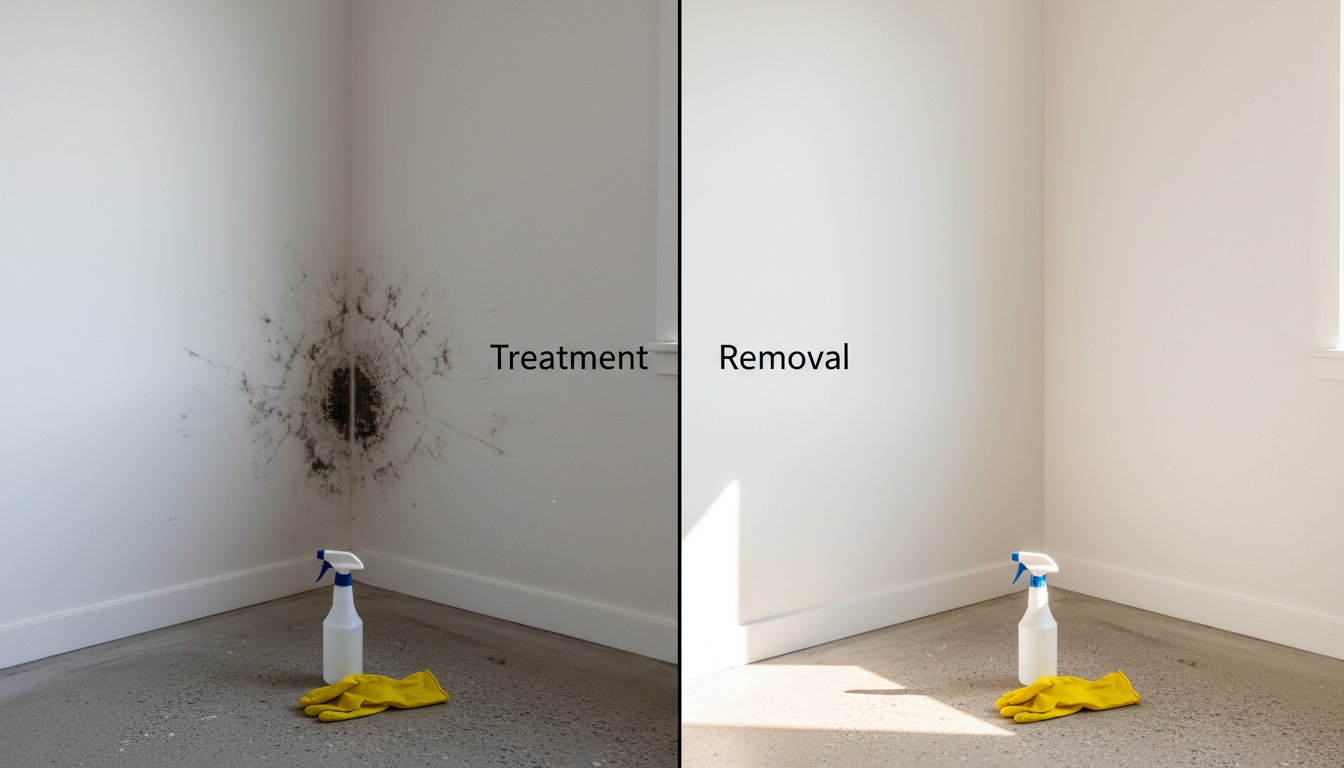
When you spot black, green, or white fuzz on your walls or ceilings, your first instinct is to clean it off. This action-applying a substance to kill or wipe away visible mould-is what we define as a mould treatment. It’s a reactive, surface-level approach that targets the symptom you can see, not the entire infestation. While it might seem effective initially, understanding what mould is-a fungus with deep, microscopic roots-reveals why simply spraying and wiping is rarely a permanent solution. Don’t let a temporary fix give you a false sense of security; the problem is often much deeper.
Common DIY Mould Treatments
Many homeowners in Australia turn to readily available products, hoping for a quick and affordable fix. These common treatments include:
- Household Solutions: Mixtures of white vinegar, baking soda, or clove oil are popular natural options for cleaning hard, non-porous surfaces.
- Store-Bought Sprays: Products like Exit Mould are designed to quickly bleach and kill surface mould, delivering immediate visual results.
- The Bleach Myth: Contrary to popular belief, chlorine bleach is often ineffective on porous materials like plasterboard or wood. It can kill surface mould but leaves the deeper root structure intact. Worse, the water content in bleach can feed the hidden mould, encouraging it to grow back even stronger.
The Critical Limitations of Surface Treatment
The core issue with any surface-level mould treatment is that it doesn’t solve the underlying problem. Its effectiveness is temporary because it fails to address three critical factors:
- It ignores hidden mould: Mould’s root system, or mycelium, grows deep into porous materials. Wiping the surface is like cutting a weed at the stem-the roots remain, ready to regrow.
- It doesn’t fix the moisture source: Mould needs moisture to survive. Without identifying and repairing the source of the dampness (e.g., a leak, condensation, poor ventilation), the mould will inevitably return.
- It leaves airborne spores: Agitating visible mould without proper containment releases millions of invisible, airborne spores, which can spread throughout your property and create new colonies, worsening the problem and posing serious health risks.
What is Professional Mould Removal? The Comprehensive Solution
Unlike a surface-level mould treatment that might only address visible stains, professional mould removal is a comprehensive process designed to physically eliminate mould colonies and their spores from your property. The goal is complete remediation-returning your home or business to a safe, normal state. This isn’t about a quick fix; it’s about identifying and permanently resolving the moisture problem that allowed mould to grow in the first place. Don’t wait for the problem to worsen, because it will.
Finding the Source: The Crucial First Step
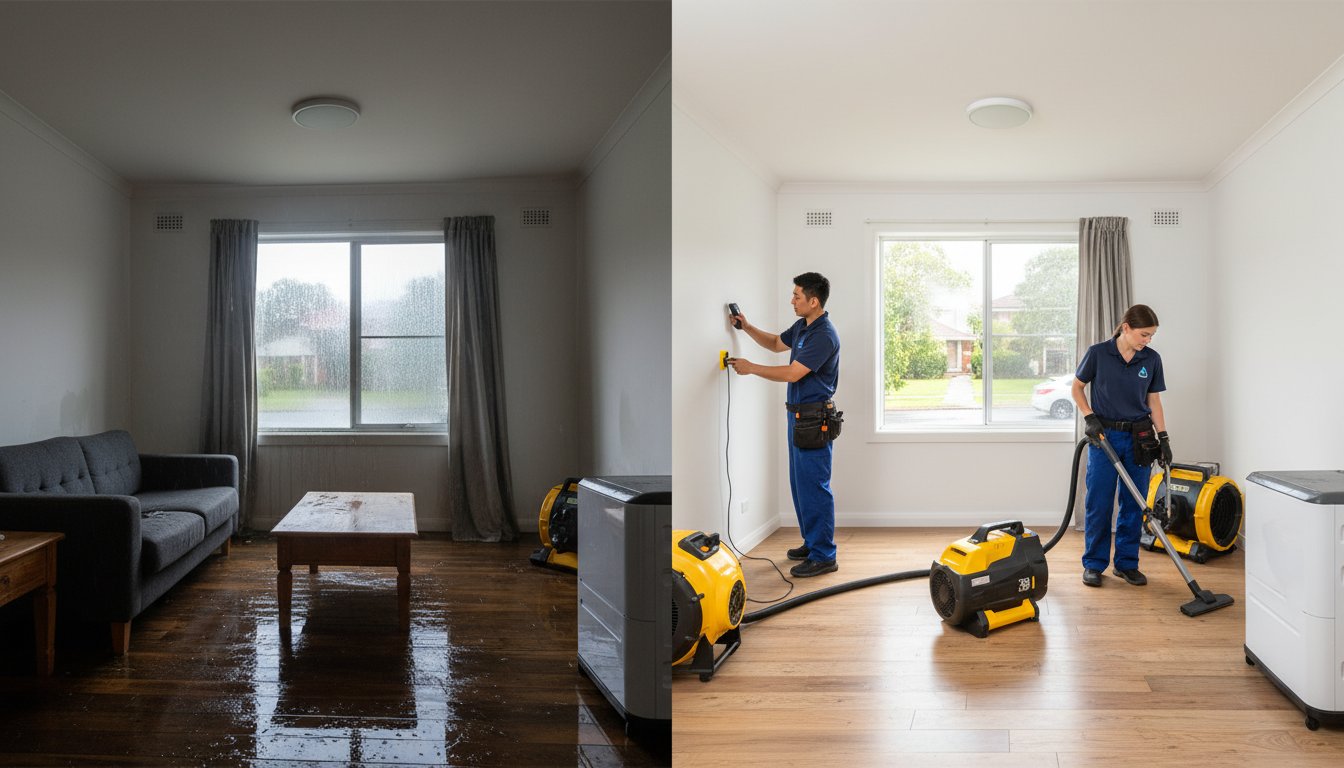
Effective removal always begins with a professional mould inspection. A certified technician doesn’t just look for visible mould; they use specialised tools like moisture meters to detect hidden dampness within walls, floors, and ceilings. This crucial diagnostic step uncovers the root cause-whether it’s a slow plumbing leak, rising damp, or a critical ventilation issue-ensuring the problem doesn’t return once the mould is gone.
Containment and Physical Removal
Once the source is identified, the contaminated area must be isolated. Professionals set up containment barriers using plastic sheeting to prevent cross-contamination to other parts of your property. They use industrial-grade HEPA (High-Efficiency Particulate Air) vacuums to capture mould spores during the removal process. For extensive growth, removing contaminated materials like plasterboard or insulation may be necessary, a task that requires careful handling as detailed in resources like the EPA guide to mould cleanup.
Addressing Airborne Spores: Air Scrubbing
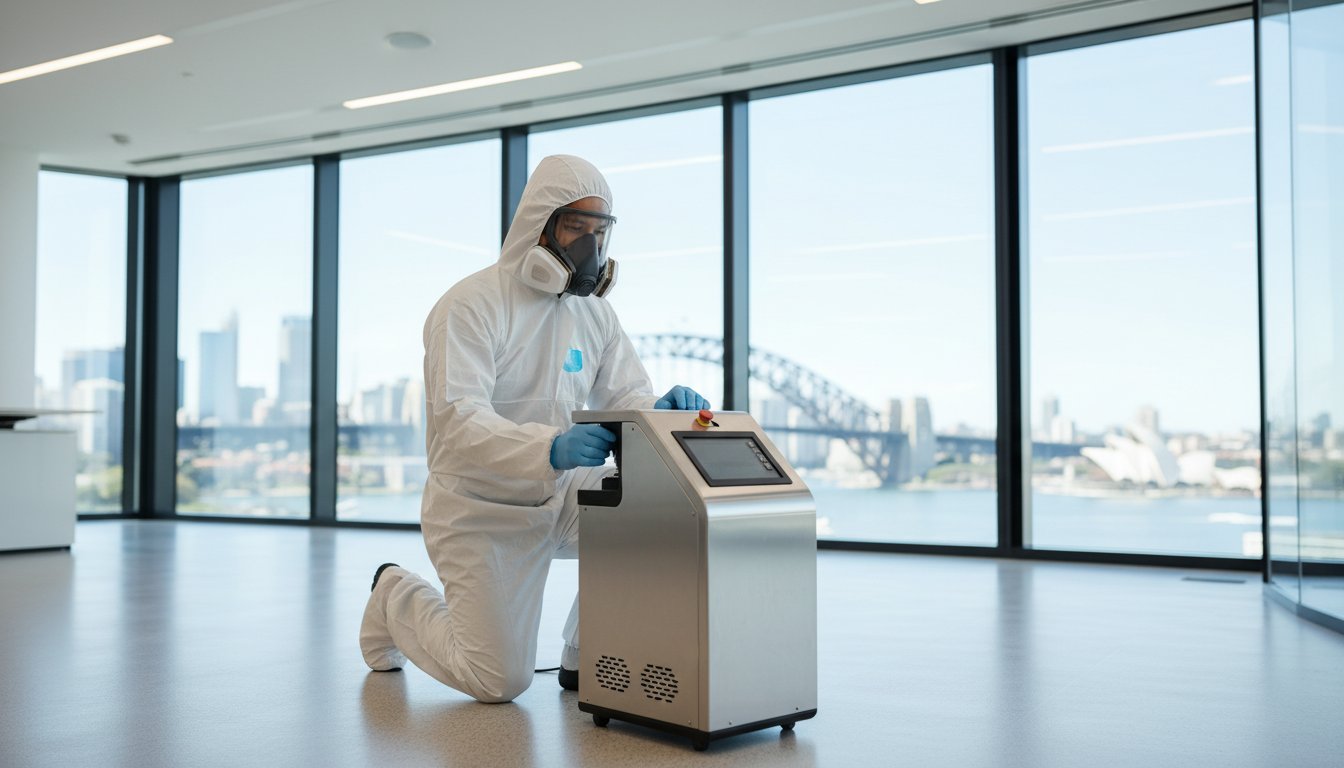
What you can’t see can still harm you. Microscopic mould spores become airborne and pose significant health risks. Professional Mould Removalists use powerful air scrubbers with HEPA filters to capture these invisible particles from the air. For a truly thorough result, advanced methods like the Goldmorr System’s non-mechanical air scrubbing and fogging are used to eliminate even the most stubborn spores, ensuring the air you breathe is clean. This final step is what truly separates professional remediation from a simple mould treatment.
Key Differences: Treatment vs. Removal at a Glance
When you discover mould in your home, your first instinct is to get rid of it fast. But how you tackle it makes all the difference. While the terms are often used interchangeably, a simple mould treatment is worlds apart from professional mould removal. One is a temporary cosmetic fix, while the other is a permanent solution for a healthy home. Don’t wait until the problem worsens-understand the critical differences now.
Here’s a clear breakdown of what you can expect from each approach:
| Aspect | Mould Treatment (e.g., DIY Spray & Wipe) | Professional Mould Removal |
|---|---|---|
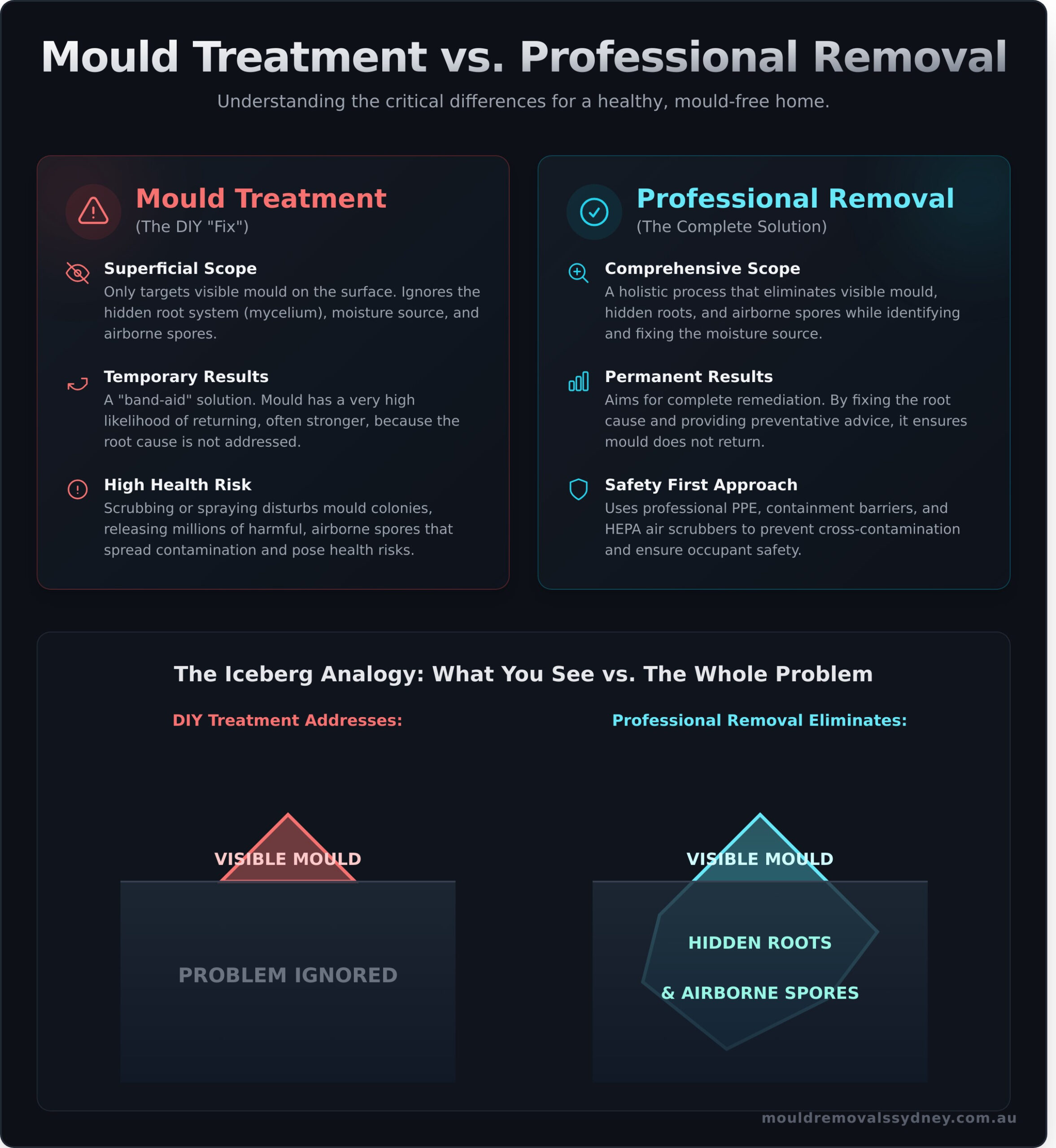
| Scope of Work | Targets only the visible mould on surfaces. Ignores the underlying cause and hidden mould. | A comprehensive process that eliminates visible mould, hidden mould, and airborne spores. Includes identifying and advising on the moisture source. |
| Long-Term Effectiveness | A temporary “band-aid” solution. The mould has a very high likelihood of returning quickly. | Aims for a permanent solution by fixing the root cause. Includes preventative recommendations to stop future growth. |
| Health & Safety | High risk of disturbing mould, releasing toxic spores into the air. Potential exposure to harsh, ineffective chemicals. | Professionals use full Personal Protective Equipment (PPE) and containment barriers to protect occupants and prevent cross-contamination. |
| Final Outcome | A surface that looks clean for a short time, while the underlying problem continues to grow. | A structurally sound, safe, and healthy environment with air quality returned to normal levels. It’s that simple. |
Scope of Work
A typical DIY mould treatment involves spraying a chemical and wiping the visible growth. This approach is purely superficial. Professional mould removal, or remediation, is a far more thorough process. Our Mould Removalists investigate behind walls, under floors, and in ceilings to find the full extent of the infestation and, most importantly, the moisture source that’s feeding it.
Long-Term Effectiveness
Because a surface treatment doesn’t address the moisture problem, you are virtually guaranteed to see the mould return-often within weeks. It creates a frustrating and costly cycle of cleaning. True mould removal is designed to break that cycle. By eliminating the mould colony and working with you to fix the leak or ventilation issue, we provide a reliable, long-term solution.
Health & Safety
Scrubbing mould without proper precautions can be dangerous. This action releases millions of microscopic spores into your air, which can cause serious health risks. Our certified technicians are trained to handle hazardous materials safely. We establish containment zones and use specialised air-scrubbing technology, adhering to strict professional mould remediation guidelines to ensure the air in your home is safe to breathe again.
Why Ineffective Treatment Can Make Your Mould Problem Worse
When you see mould, your first instinct is to get rid of it fast. It’s tempting to grab a supermarket spray or a bucket of bleach, but choosing the wrong approach can do more harm than good. An ineffective mould treatment doesn’t just fail to solve the problem-it can actively spread the contamination, create hidden health risks, and lead to much higher costs down the track. Don’t let a quick fix turn into a long-term disaster.
Spreading the Contamination
Mould colonies are fragile. When you scrub or wipe at visible mould without proper containment procedures, you can easily release millions of microscopic spores into the air. These airborne spores travel through your ventilation systems and settle in other areas of your home, starting new colonies in places that were previously clean. Common DIY mistakes that worsen the problem include:
- Aggressive scrubbing: This aerosolises spores, turning a localised issue into a whole-house problem.
- Using the wrong tools: A standard household vacuum lacks the HEPA filtration needed to capture tiny spores. Instead of removing them, it simply blasts them back into your air.
- Ignoring cross-contamination: Using the same cloth to wipe multiple areas can drag spores from one surface to another.
A False Sense of Security
Superficial treatments often create a dangerous illusion of safety. Painting over a mouldy wall is one of the most common mistakes; it temporarily hides the stain, but the fungus is still growing and eating away at the plasterboard underneath. You might think the problem is gone, but that musty smell is a clear warning sign of active growth. Even though you can’t see it, the hidden mould continues to release mycotoxins, which can compromise your home’s air quality and pose ongoing health risks to your family.
Increased Remediation Costs
Ignoring the root cause or using a failed mould treatment allows the infestation to grow unchecked. A small patch of mould in a bathroom corner can penetrate deep into the wall cavity, feeding on timber framing and insulation. What might have been a simple, affordable fix can quickly escalate into a major remediation project requiring structural repairs, plasterboard replacement, and extensive decontamination. The longer you wait for a proper solution, the more damage is done-and the higher the final bill will be. Don’t wait until the problem gets worse, because it will.
The only way to ensure your home is safe is with a professional assessment. If you’re concerned about mould, contact a certified Mould Removalist to understand the true scope of the problem and find a permanent solution.
Our Process: Complete Mould Remediation, Not Just Treatment
When you’re facing a mould problem, you need a definitive solution, not a temporary fix. While a basic mould treatment might clean a visible patch on the wall, it often fails to address the underlying cause and the invisible airborne spores. At Mould Removalist Sydney, we don’t just treat the symptoms; we provide a complete, methodical remediation process designed to eliminate mould for good and restore the health of your home. You can trust our team to provide you with peace of mind.
Here’s how our approved master technicians deliver a safe and effective solution every time. It’s that simple.
Step 1: Thorough Inspection and Assessment
Our process begins with a comprehensive investigation to understand the full extent of the issue. A quick glance isn’t enough. Our experts are trained to:
- Identify all affected areas, including hidden mould growing inside wall cavities, under floors, or in ceiling spaces.
- Locate the moisture source that is feeding the mould growth. Without fixing the leak or ventilation issue, mould will always return.
- Provide a detailed report of our findings along with a transparent, no-obligation quote. You’ll know exactly what needs to be done and why.
Step 2: Safe Removal and Air Purification
Your family’s safety is our top priority. We follow strict industry standards to contain and remove the contamination without cross-contaminating other areas of your property. This critical phase involves:
- Full containment of the work area using plastic sheeting and negative air pressure to stop spores from spreading.
- Physical removal of mould colonies from all affected non-porous surfaces using specialised, non-toxic agents.
- Air purification using our industry-leading Goldmorr System. We use a non-mechanical air scrubber to fog the entire space, eliminating airborne mould spores that other methods miss.
Step 3: Prevention and Final Verification
Our job isn’t finished once the mould is gone. We ensure your property is left clean, safe, and protected against future growth. We conclude our service by:
- Providing expert advice on moisture management, ventilation improvements, and preventative measures tailored to your property.
- Conducting a final verification to ensure the area is clean, sanitised, and ready for your family to enjoy safely.
Don’t let mould take over your property. Stop treating the symptom. Get a permanent solution.
Secure Your Home’s Health: Choose Removal Over Treatment
When it comes to the health of your home and family, the distinction between a surface-level mould treatment and comprehensive removal is critical. As we’ve seen, simply spraying a visible patch of mould does little to address the hidden airborne spores and underlying moisture issues. This approach often allows the problem to return, sometimes even worse than before. True mould remediation goes deeper, eliminating the infestation at its source to ensure it’s gone for good.
As Approved Master Technicians using the industry-leading Goldmorr System, we provide a complete, safe, and effective solution, not just a cosmetic fix. We’re so confident in our professional service that we promise to beat any written quote by 10%.
Don’t guess with your family’s health. Schedule a professional mould inspection today! Let our team provide the peace of mind that comes with a truly safe and mould-free environment.
Frequently Asked Questions About Mould Treatment
Can’t I just paint over mould to treat it?
Painting over mould is a dangerous mistake. It doesn’t kill the mould; it only hides it. The mould will continue to grow underneath, feeding on the paint and damaging your wall. This traps moisture, making the problem worse and eventually, the mould will reappear through the new paint. A proper solution requires eliminating the mould at its source, not just covering it up. Don’t risk your property’s integrity or your family’s health with a temporary fix.
Is bleach an effective mould treatment?
While many people reach for bleach, it is not an effective mould treatment for porous surfaces like gyprock, wood, or grout. Bleach can remove the surface colour of mould, making you think the problem is solved, but it doesn’t kill the underlying roots. The water content in bleach can also feed the mould, encouraging it to grow back stronger. For a safe and truly effective solution, you need professional-grade products that eliminate mould completely.
What’s the difference between mould removal and mould remediation?
Mould removal is the physical act of cleaning visible mould from a surface. Mould remediation, however, is a much more comprehensive process. A professional Mould Removalist will not only remove the mould but also identify and address the moisture source causing it. Remediation involves containing the area to prevent cross-contamination, scrubbing the air to remove airborne spores, and creating a plan to stop the mould from returning. It’s a complete solution, not just a surface clean.
How do you treat invisible mould spores in the air?
Invisible mould spores in the air pose a significant health risk and must be addressed. DIY methods can’t capture these microscopic particles. As professional Mould Removalists, we use specialised equipment like HEPA air scrubbers to filter the air and capture airborne spores. We also use a process called ‘fogging’ with non-toxic, biodegradable solutions that neutralise any remaining spores in the air and on surfaces, ensuring your home’s air is clean and safe to breathe.
Is professional mould removal worth the cost compared to a DIY treatment?
Absolutely. While a DIY mould treatment might seem cheaper initially, it often fails to solve the root cause, leading to recurring mould and more expense down the track. Professionals have the correct safety gear, specialised equipment, and effective solutions to eliminate mould safely and permanently. Investing in a professional service protects your family’s health and your property’s value, saving you from costly repairs and repeated efforts. It’s peace of mind that is well worth the cost.
How do I know if I need a simple treatment or a full removal service?
If you have a very small patch of surface mould (less than a square metre) from a simple spill, a targeted treatment might suffice. However, if the mould covers a large area, keeps returning after you clean it, or is accompanied by a persistent musty smell, you have a deeper issue. These are clear signs you need a full removal and remediation service to address the moisture source and hidden mould. Don’t wait-call for a professional assessment.