That persistent musty smell you can’t seem to locate? The one that returns no matter how much you clean or air out your Sydney home? Don’t ignore it. This is often the first warning sign of a serious problem lurking beneath your feet: trapped moisture in your subfloor. This damp, stagnant air is the perfect breeding ground for mould, timber rot, and pests, threatening both your family’s health and your home’s structural integrity. The most effective, long-term solution is often surprisingly simple: professionally installed passive subfloor ventilation systems.
But what does that actually mean? Are simple vents enough, or do you need fans? This guide is designed to give you clear, straightforward answers. We’ll break down exactly how these systems work to draw out damp air and replace it with fresh, dry air. You will learn how to permanently eliminate musty odours, protect your foundation from costly damage, and improve the overall air quality inside your home. It’s time to gain peace of mind and ensure your home is safe, dry, and healthy from the ground up.
Key Takeaways
- Understand how passive ventilation uses natural air pressure-not electricity-to protect your home’s foundation from dampness and decay.
- Learn why removing stagnant, humid air from under your home is the most effective strategy to stop destructive mould growth at the source.
- Discover that effective passive subfloor ventilation systems are strategically engineered, not just a few random vents drilled into a wall.
- Identify the key warning signs in your Sydney home (like musty odours or warped floors) and determine if a passive or mechanical solution is right for you.
What is a Passive Subfloor Ventilation System?
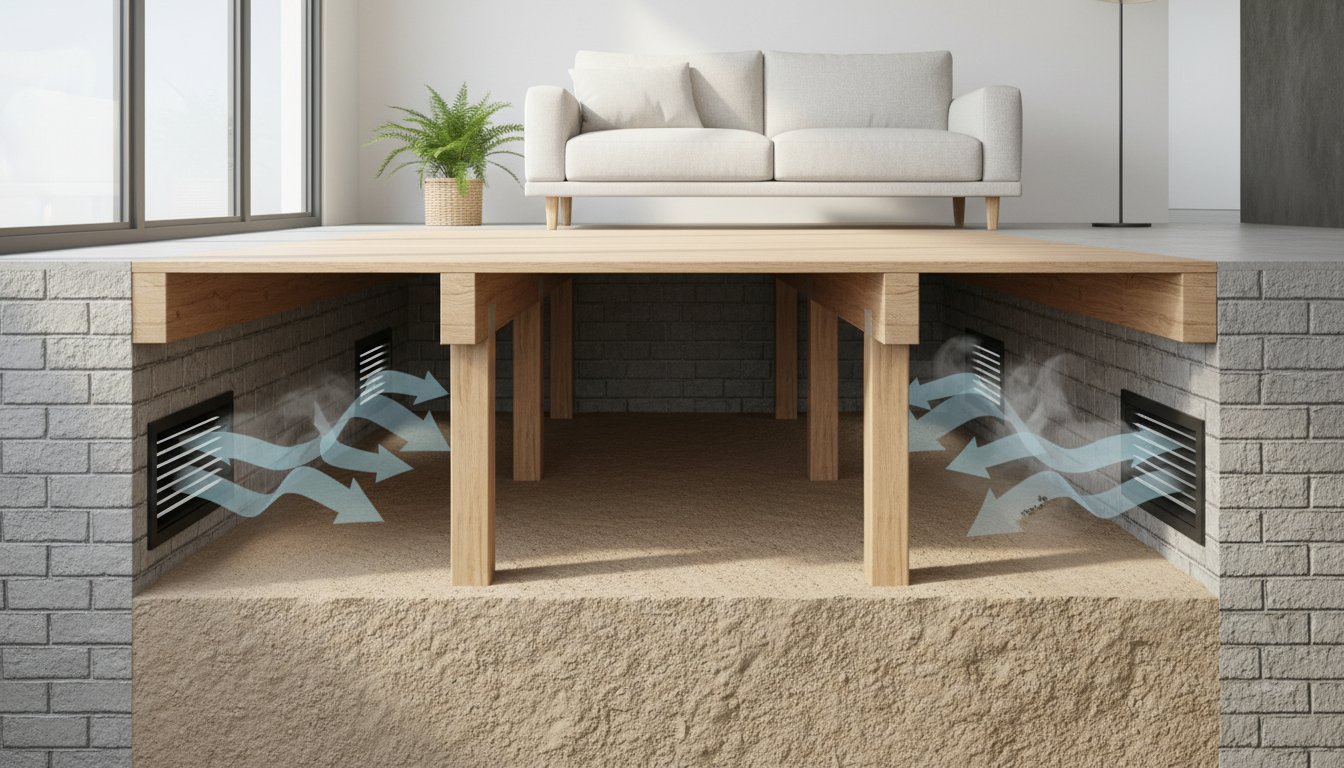
A passive subfloor ventilation system is a non-mechanical, natural solution designed to combat dampness and prevent mould growth under your home. It operates without electricity, relying entirely on natural air pressure and wind to create consistent airflow. The primary goal is to exhaust damp, stale air from the underfloor area-often called a crawl space, you can read more about what is a crawl space and its ventilation needs-and replace it with fresh, drier air from outside. By creating this crucial cross-flow, the system works to equalise the humidity levels between your subfloor and the external environment, protecting your home’s structural integrity and the health of its occupants.
Ignoring subfloor moisture is a critical mistake. It creates the perfect breeding ground for destructive mould, timber rot, and pest infestations. An effective ventilation strategy is not a luxury; it’s an essential defence for your property.
The Science of Natural Airflow (The ‘Stack Effect’)
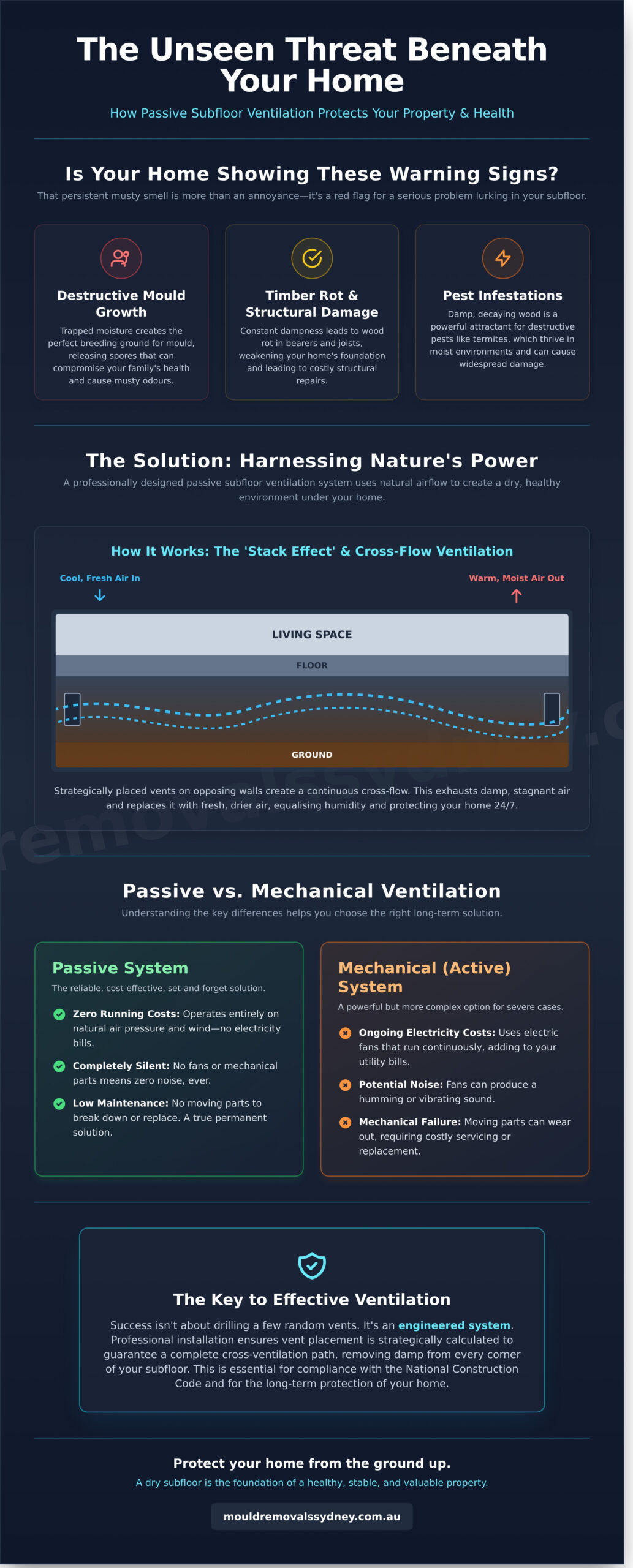
The effectiveness of passive subfloor ventilation systems hinges on proven scientific principles. Air moves from high-pressure areas to low-pressure areas, and warmer air naturally rises. This phenomenon, known as the ‘stack effect’, creates a subtle but constant air current. As air inside the subfloor warms slightly, it rises and exits through higher vents, drawing cooler, denser, and drier air in through lower vents. Wind also plays a powerful role, creating positive pressure on the windward side of your home and negative pressure on the leeward side, effectively pushing and pulling air through the subfloor cavity. For this to work, vent placement is critical. Vents must be installed strategically on opposing walls to ensure a complete cross-ventilation path.
Passive vs. Active Systems: A Clear Distinction
Understanding the difference between passive and active systems is key to choosing the right solution for your home. The distinction is simple: passive systems use nature, while active systems use technology. One relies on natural forces, while the other uses electric fans to force air movement.
- Passive Ventilation: Requires no electricity, has zero running costs, and operates in complete silence. It is a set-and-forget solution that works 24/7.
- Active Ventilation: Uses electric-powered fans to guarantee a specific rate of air exchange. This offers more powerful airflow but comes with installation costs, ongoing electricity bills, and potential noise.
While an active system may be necessary for severe damp issues or in homes with complex layouts, a professionally designed passive system is often the most reliable and cost-effective long-term solution for maintaining a healthy, dry subfloor.
How Passive Ventilation Protects Your Home from Mould & Damp
The dark, damp space beneath your floor can be an incubator for problems that compromise your home’s health and structural integrity. Stagnant air traps moisture from the soil and condensation, creating the perfect breeding ground for mould, rot, and pests. A well-designed passive subfloor ventilation system works silently and constantly to protect your biggest investment from the ground up.
By promoting natural airflow, these systems remove the foundational element every major subfloor problem needs to thrive: excess moisture. This simple, non-mechanical solution is your most effective frontline defence against costly damage and unhealthy living conditions.
Starving Mould of Moisture
Mould spores are everywhere, but they only become a dangerous infestation when activated by moisture. A damp subfloor provides this in abundance. By creating consistent airflow, passive subfloor ventilation systems continuously exhaust humid, stale air and replace it with drier, fresh air. This process dries out the soil surface and timber building materials, breaking the mould lifecycle at its source and stopping an infestation before it begins.
Preventing Costly Structural Damage
Prolonged exposure to moisture is disastrous for your home’s timber framework. It leads directly to wood rot, causing bearers, joists, and stumps to weaken and decay, potentially resulting in structural failure and repairs costing tens of thousands of dollars. Worse still, this damp environment is a magnet for termites, which thrive in moist wood. Protecting your home’s foundation is so critical that specific National Construction Code ventilation requirements are in place to mandate adequate airflow in Australian homes.
If you’re concerned that this damp environment has already attracted termites or other pests, seeking a professional inspection from a specialist like ABC Pest Control Sydney is a crucial step in protecting your property.
Improving Your Home’s Air Quality
That persistent musty smell you can’t locate is often rising from a damp subfloor. This odour is caused by gases released by active mould and mildew. These unhealthy airborne particles seep into your living spaces through gaps in floorboards, affecting your family’s health and aggravating conditions like asthma and allergies. By keeping the subfloor dry, you eliminate the source of these odours and ensure the air inside your home is significantly cleaner and healthier.
Key Components and Design of an Effective Passive System
Creating a dry and healthy subfloor is about more than just drilling a few holes in your brickwork. An effective solution is a strategically engineered system designed to promote constant, reliable airflow. Many DIY attempts fail because they don’t create true cross-flow, leaving pockets of stagnant, damp air where mould and rot can thrive. A professionally designed passive subfloor ventilation system is custom-built for your property’s unique challenges.
Types of Subfloor Vents
The vents themselves are the most visible part of the system, and choosing the right type is crucial for both performance and aesthetics. Our technicians select from a range of high-quality options:
- Heritage-Style Terracotta Vents: Ideal for older Sydney homes, these vents preserve the classic look of your property while providing essential airflow.
- Modern Metal or Plastic Grilles: For contemporary buildings, durable options like stainless steel or UV-stabilised plastic offer longevity and a clean, modern finish.
- Telescopic Vents: These are essential for double-brick or cavity walls, as their adjustable depth ensures a clear and unobstructed air channel from outside to inside.
Strategic Placement for Maximum Airflow
Where vents are placed is more important than how many are installed. The core principle is achieving cross-flow ventilation. This means installing vents on opposite sides of the building to allow fresh air to enter, push out damp, stale air, and exit on the other side. Our assessment ensures:
- Correct Opposing Placement: We map out the optimal locations to create a consistent air current across the entire subfloor.
- Clear Internal Pathways: Internal foundation walls can block airflow. We identify these “dead spots” and may install vents through them to ensure no area is left stagnant.
- Obstruction-Free Installation: Vents must be clear of decks, paths, garden beds, and hot water systems that could block them and render the system useless.
Calculating Ventilation Needs
While Australian building standards provide a general rule for ventilation area, this is only a baseline. A professional assessment is the only way to guarantee your system is effective. Simply meeting the minimum code might not be enough to combat serious dampness, which can lead to significant structural issues and the serious health risks of mould. Our experts analyse critical factors that DIY calculations miss, including your property’s specific layout, local soil conditions, and the height of the water table, to design a robust passive subfloor ventilation system that truly protects your home.
Passive vs. Mechanical Ventilation: Which Is Right for You?
Choosing between passive and mechanical subfloor ventilation is a crucial decision. It isn’t about which system is inherently “better,” but which is the right tool for your home’s specific situation. Think of it this way: passive subfloor ventilation systems are the ideal first-line defence for many properties, while mechanical systems are a powerful problem-solving tool for severe cases. Understanding the difference is key to a lasting solution.
This simple framework will help you identify the most effective and affordable path forward for protecting your home.
When Passive Systems Excel
For many Sydney homes dealing with typical humidity and musty odours, a passive system is the most logical and cost-effective solution. It works silently and continuously, using natural air pressure to prevent moisture build-up without any ongoing costs. A passive approach is the expert choice in the following scenarios:
- Your home has only moderate dampness and good surrounding airflow.
- You are building a new home or renovating and want an effective preventative measure.
- You want a completely silent, zero-running-cost, and virtually maintenance-free solution.
Not sure if your home is a good candidate? Get a professional assessment from our experts.
When Mechanical Fans are Necessary
Sometimes, natural airflow isn’t enough to combat a serious moisture problem. Mechanical fans become essential when you need to forcibly extract damp, stagnant air. Don’t wait for structural damage or mould to take hold. A mechanical system is required when:
- You have severe dampness, active water seepage, or very low ground clearance.
- Your subfloor has a complex layout with numerous internal walls that block cross-flow ventilation.
- Your home is built into a hillside or is obstructed by neighbouring properties, limiting natural airflow from two or more sides.
- The situation demands immediate, powerful moisture removal to halt a worsening problem.
Cost, Noise, and Maintenance Comparison
The long-term implications for your budget and lifestyle are also critical. Here’s a direct comparison to make your decision clearer.
Passive Ventilation
- Installation Cost: Lower initial investment.
- Running Costs: A$0. Completely free to run.
- Maintenance: Minimal. Occasional check to ensure vents are clear.
- Noise Level: Silent.
Mechanical Ventilation
- Installation Cost: Higher due to fans and electrical work.
- Running Costs: Ongoing electricity costs (A$).
- Maintenance: Requires fan checks and potential future repairs.
- Noise Level: Low but audible hum from the fans.
Signs Your Sydney Home Needs Better Subfloor Ventilation
Your home has a way of telling you when something is wrong. Underneath your floors, a hidden problem could be developing, especially in Sydney’s humid climate where trapped moisture creates the perfect breeding ground for mould and rot. Ignoring these warning signs is a costly mistake. Poor subfloor ventilation allows dampness to fester, leading to serious health risks and expensive structural damage. Don’t wait until the problem worsens-because it will.
Acting on these early warnings is crucial for protecting your property’s value and your family’s health. Understanding what to look for is the first step toward implementing an effective solution, such as one of the many reliable passive subfloor ventilation systems available.
The Most Common Warning Signs
If you notice any of the following issues, your subfloor is sending out an urgent distress signal. These are not isolated problems; they are direct symptoms of excess moisture and poor air circulation beneath your home.
- A persistent musty or earthy smell: This is the most common indicator. That damp, stale odour is caused by mould and mildew growth in the dark, stagnant air of your subfloor, with airborne spores rising into your living spaces.
- Warped, cupped, or bouncy timber floors: When floor joists and floorboards absorb excess moisture from the subfloor, they swell, warp, and weaken. This can lead to uneven, soft, or “bouncy” spots underfoot.
- Visible mould growth: Finding mould on walls, inside cupboards, or behind furniture is a serious red flag. It often means the problem is so advanced in the subfloor that it is now affecting your indoor environment.
- Peeling paint or condensation: Moisture from the subfloor can travel up through wall cavities, causing paint to bubble and peel. It also increases indoor humidity, leading to condensation on windows.
How a Professional Assesses Your Needs
Guesswork doesn’t solve moisture problems. A certified technician will conduct a thorough assessment to diagnose the exact cause and extent of your subfloor issue. This professional process is the only way to ensure you get the right solution for your property.
An expert inspection involves a visual check of the entire subfloor for pooling water, leaks, and mould, followed by the use of specialised moisture meters to get accurate readings from timber bearers, joists, and masonry. Identifying the source of the moisture-whether it’s poor drainage, leaking pipes, or humidity-is critical. Based on these findings, our experts will provide a tailored recommendation. This could be an expertly installed passive subfloor ventilation system for consistent issues or a mechanical system for severe cases. If you recognise any of these signs in your home, contact a professional for an assessment before minor issues become major disasters.
Protect Your Sydney Home from the Ground Up
As we’ve explored, the humid Sydney climate creates a perfect breeding ground for mould, damp, and termites beneath your floors. Ignoring musty smells or signs of moisture can lead to serious health issues and threaten your home’s structural integrity. A professionally designed and installed passive subfloor ventilation system is a silent, energy-efficient, and highly effective way to safeguard your property’s foundation and your family’s well-being for years to come.
Don’t wait for a small damp issue to become a costly disaster. As Sydney’s trusted mould and damp experts, ABC Mould Cleaning Solutions provides professional installation guaranteed to protect your home from costly structural damage and pests. Taking proactive steps today is the most affordable way to secure your biggest investment.
Stop subfloor damp and mould before they take hold. Schedule Your Professional Ventilation Assessment Today! Let our expert team give you the peace of mind you deserve.
Frequently Asked Questions About Passive Subfloor Ventilation
How many subfloor vents do I actually need for my house?
The number of vents required is not a one-size-fits-all answer. It depends on your home’s total subfloor area, local climate, and soil conditions. The Building Code of Australia (BCA) provides minimum requirements, but achieving effective cross-flow ventilation is critical. A professional assessment is the only way to guarantee you have enough vents, correctly placed, to eliminate damp air and protect your home’s foundation. Don’t guess when your property’s health is at stake.
Can I install passive subfloor vents myself?
While DIY installation is possible for those with the right tools and masonry skills, it carries significant risks. Incorrect placement can fail to create proper airflow, rendering the vents useless and leaving your home vulnerable to moisture damage and mould. Professional installation ensures optimal positioning for cross-ventilation, compliance with Australian standards, and a clean, secure finish. To guarantee an effective result, we always recommend using a certified and experienced technician for the job.
Do passive ventilation systems work during winter?
Yes, absolutely. Passive ventilation is a year-round solution. While airflow may be gentler than on a hot day, the natural pressure and temperature differences between the subfloor and the outside air continue to circulate air. This is crucial for preventing condensation and stagnant, damp conditions that encourage mould growth and wood rot during the colder, wetter months. A well-designed system provides constant, silent protection for your home’s structural integrity, regardless of the season.
Will subfloor vents let pests like rodents or snakes into my house?
No. This is a common but unfounded concern. Every professionally installed subfloor vent is fitted with high-quality, durable vermin mesh. This strong wire screen is specifically designed to block entry for pests like mice, rats, snakes, and large insects while still allowing for maximum airflow. You get all the benefits of a dry, healthy subfloor with the complete peace of mind that your home remains secure from unwanted wildlife.
How much does professional installation of a passive ventilation system cost in Sydney?
In Sydney, the cost for professional installation of passive subfloor vents typically ranges from A$90 to A$160 per vent. The final price depends on factors like the number of vents needed, your wall material (e.g., double brick is more complex than single), and overall site accessibility. For a precise and affordable quote tailored to your property, contact our expert team. We provide transparent pricing to ensure you get the most effective solution for your budget.
Are passive vents noisy?
No, passive vents are completely silent. Because they contain no fans, motors, or any moving parts, they generate zero noise. The entire ventilation process is driven by natural air pressure and wind, making passive subfloor ventilation systems a perfect, non-intrusive solution. They work silently in the background to protect your home from the serious health and structural risks associated with subfloor dampness and mould, without any disruptive hum or operational sounds.
My house is on a concrete slab. Do I need to worry about this?
If your home is built on a concrete slab-on-ground, you do not have a subfloor cavity that requires ventilation, so these vents are not necessary. However, you must still be vigilant about moisture. Poor site drainage or waterproofing failures can allow moisture to penetrate the slab edges, leading to serious damp and mould problems inside your home. If you notice any signs of dampness, a professional assessment is critical to identify and fix the source immediately.