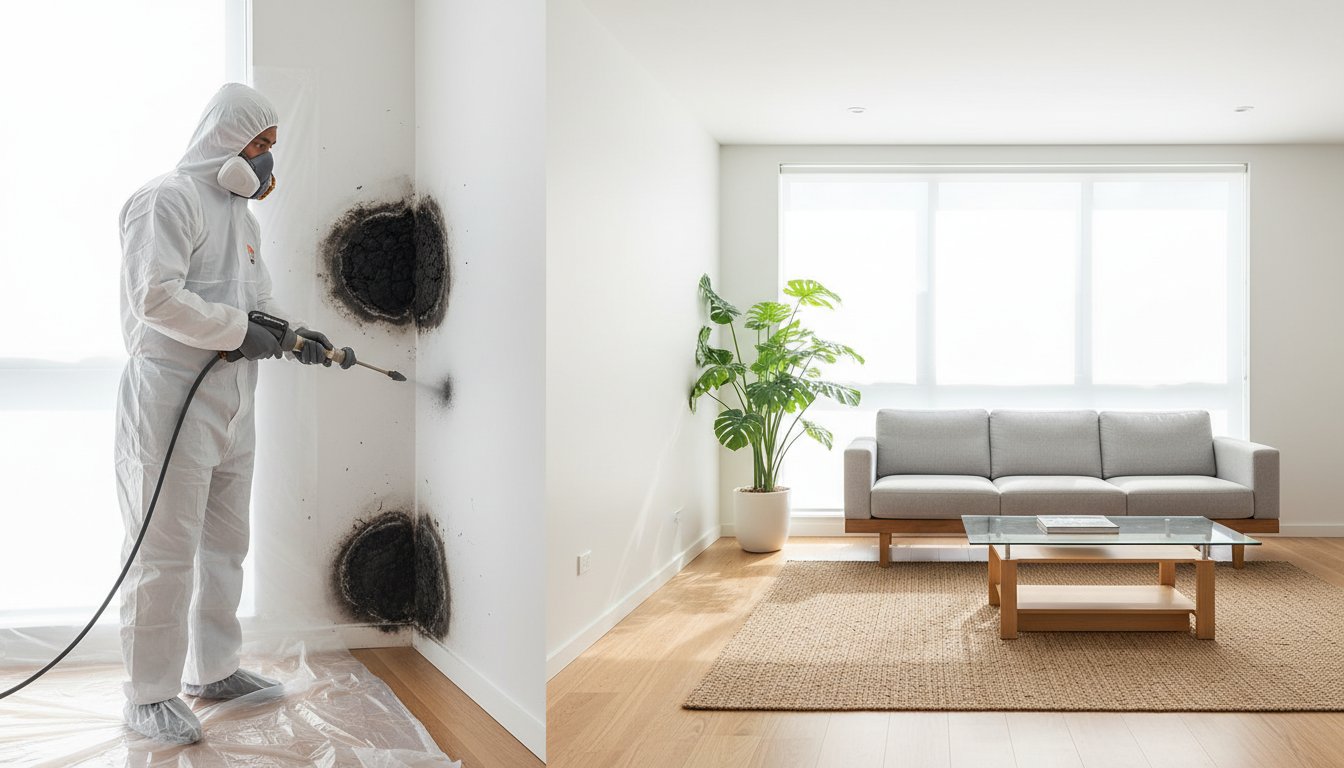
When you discover mould in your home, the first instinct is often to grab a bottle of bleach and start scrubbing. But what you can see is often just the tip of the iceberg. True, lasting mould removal requires a professional approach that addresses not just the stain, but the entire colony-including the invisible spores in the air.
Understand the expert process, why DIY fails, and how to choose a trusted professional to permanently solve your home’s mould problem.
Why DIY Mould Removal Fails (And Can Make Things Worse)
While tackling the problem yourself seems cost-effective, it often leads to recurring issues and can even spread the contamination. Professionals understand the science of mould, which is why their methods succeed where home remedies fall short.
The Bleach Myth: Cleaning vs. Killing
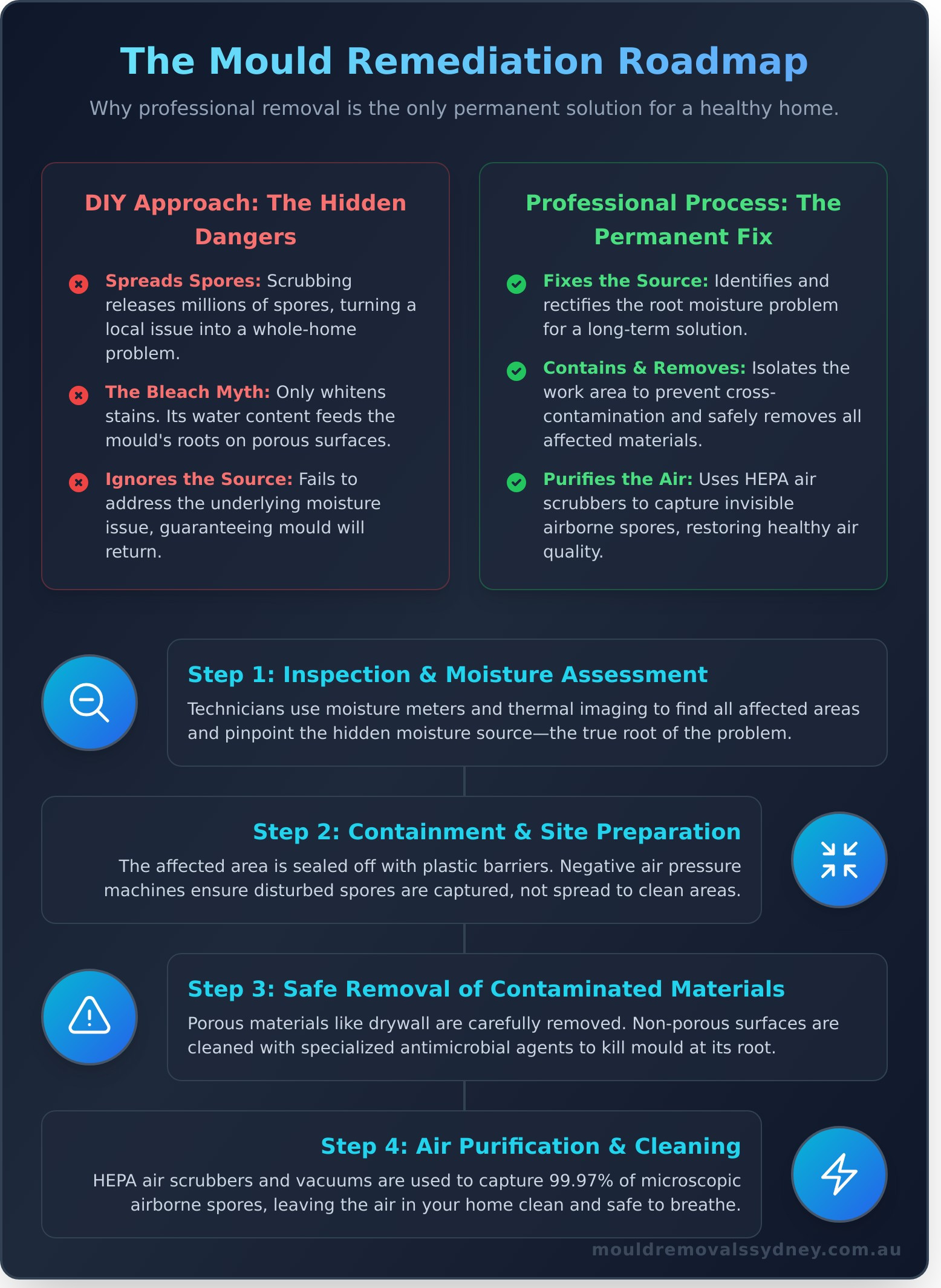
It’s a common misconception that bleach kills mould. In reality, bleach can whiten the surface stain, making it look like the problem is gone. However, it often fails to penetrate porous materials like drywall or wood to kill the mould’s roots (hyphae). Worse, bleach is mostly water, which can feed the remaining roots and encourage faster regrowth.
Airborne Spores: The Invisible Threat
The greatest danger of DIY removal is disturbing a mould colony without proper containment. When you scrub or wipe at mould, you release millions of microscopic spores into the air. These spores travel through your HVAC system and settle in other areas of your home, starting new colonies and turning a localised issue into a whole-house problem. Inhaling these high concentrations of spores can also pose significant health risks to your family.
Failure to Address the Source
Mould is not the problem; it’s a symptom of a moisture problem. Unless you find and fix the underlying source of water-be it a slow pipe leak, high humidity, or poor ventilation-the mould will inevitably return. A key part of professional mould removal is identifying and providing recommendations to fix this root cause.
The Professional Mould Removal Process: A Step-by-Step Breakdown
A reputable mould removal company follows a systematic process to ensure the mould is not just removed, but completely eradicated from your property. This methodical approach protects your home and ensures the air you breathe is safe.
Step 1: Comprehensive Inspection and Moisture Assessment
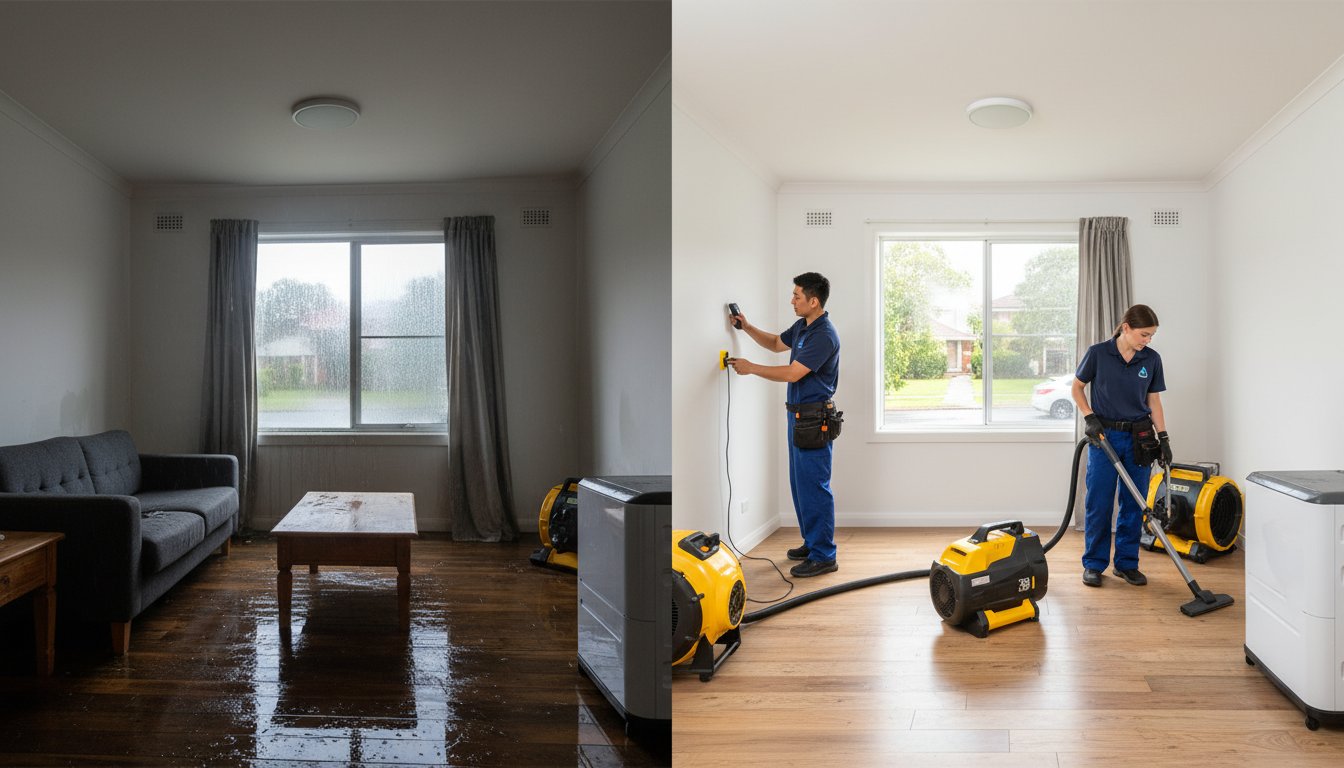
The process begins with a thorough inspection. A trained technician will visually assess the extent of the visible mould growth and use specialised tools like moisture meters and thermal imaging cameras to find hidden water damage. The goal is to understand the full scope of the problem and pinpoint the exact moisture source that’s feeding it.
Step 2: Containment and Site Preparation
To prevent cross-contamination, the affected area is sealed off from the rest of your home. Professionals use heavy-duty plastic sheeting to create containment barriers. They may also establish negative air pressure within the contained area, which ensures that any disturbed spores are vented outside rather than spreading through your house. HVAC vents in the area are also sealed to protect your system.
Step 3: Safe Removal of Contaminated Materials
Some materials are impossible to salvage once mould has taken root. Porous materials like drywall, insulation, and carpet are carefully cut out, bagged, and disposed of according to industry regulations. Non-porous surfaces like glass, metal, and sealed wood can be cleaned using specialised antimicrobial agents that effectively kill mould at the source.
Step 4: Air Purification and Final Cleaning
Once the physical mould is removed, the air itself must be treated to eliminate the invisible airborne spores. This is the most critical step that DIY methods miss. After the air is purified, technicians perform a detailed cleaning of the entire contained area, typically using HEPA vacuums to capture any remaining microscopic particles from all surfaces.
Advanced Techniques Professionals Use: Beyond Scrubbing
True mould remediation is a science. It involves advanced technology that goes far beyond what a handyman with bleach can offer. These techniques are what justify the value of a professional service, as they deliver a permanent solution.
Modern Air Purification: Fogging vs. Mechanical Scrubbers
For years, the standard for cleaning the air was using large, loud HEPA (High-Efficiency Particulate Air) air scrubbers. These machines work by pulling air through filters for hours or days to physically capture spores.
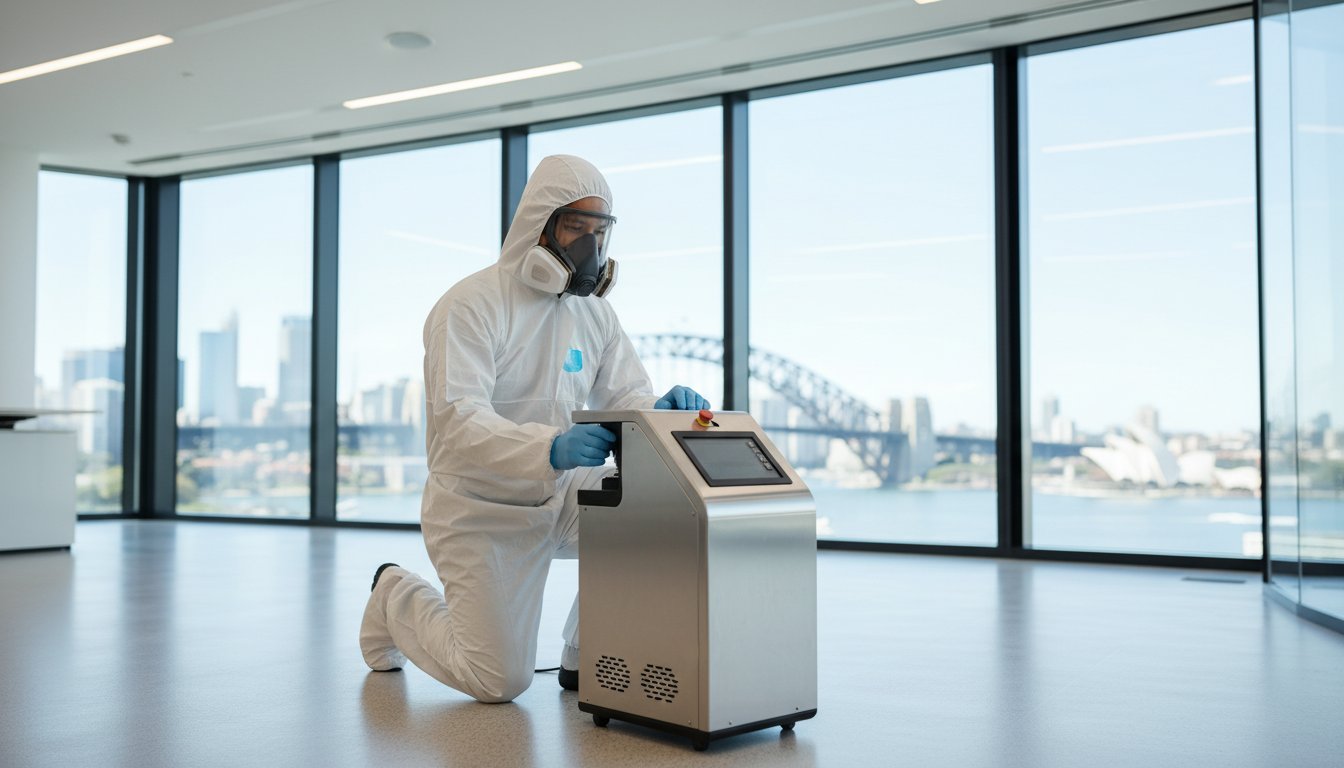
However, modern specialists now use a more advanced and effective method: antimicrobial fogging. Instead of passively filtering the air, this technique actively treats the entire volume of a room. It is a faster, more thorough, and less intrusive way to ensure the air in your home is clean and safe.
Antimicrobial Fogging: Treating the Unseen with the Goldmorr System
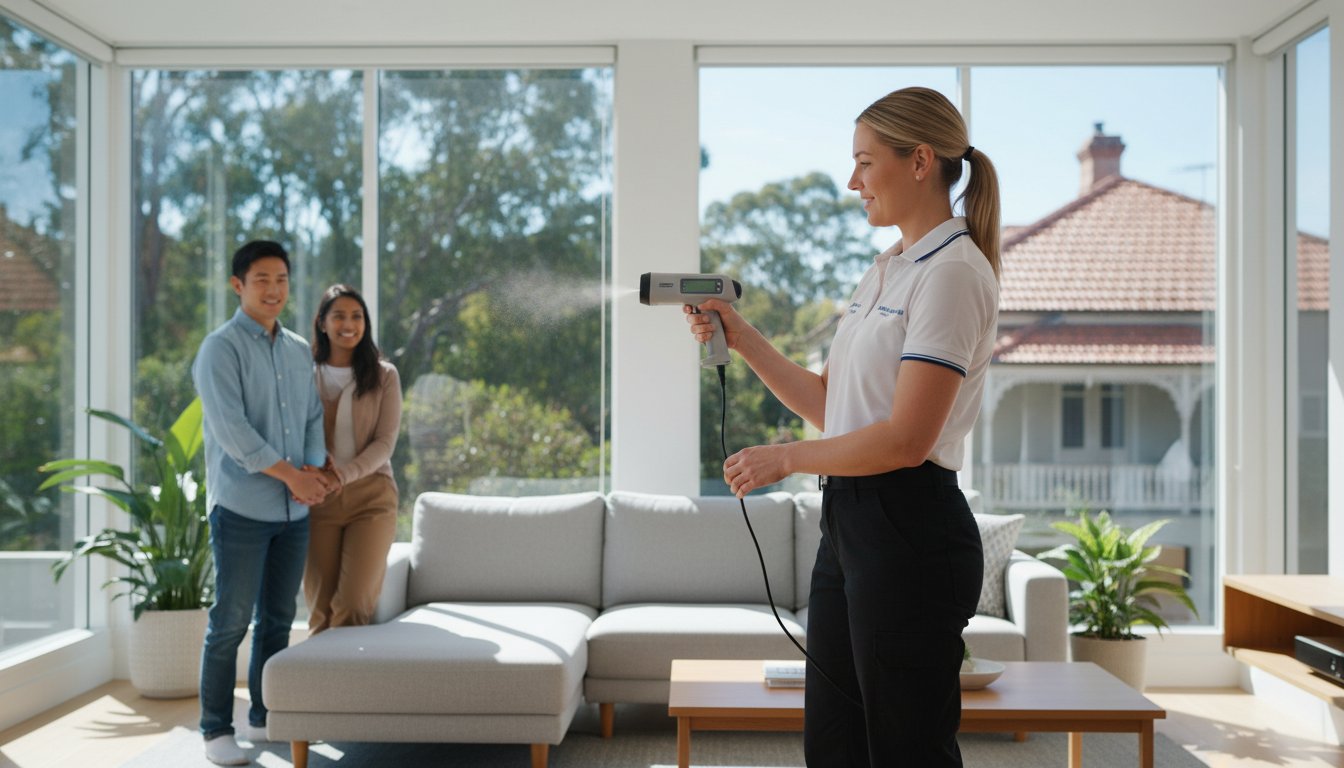
We utilize the industry-leading Goldmorr System, a revolutionary process that treats both surface mould and airborne spores. This multi-step system first applies a product that eliminates surface mould without abrasive scrubbing. Next, a fine, non-toxic, biodegradable fog is dispersed throughout the affected area. This fog penetrates every nook and cranny, neutralising the airborne spores that other methods leave behind. It effectively performs a "non-mechanical air scrubbing," ensuring a complete and lasting result.
Learn about our advanced fogging technology.
Post-Remediation Verification
The job isn’t done until it’s proven to be successful. A final inspection is conducted to ensure all visible mould is gone and the moisture source has been addressed. For ultimate peace of mind, third-party air quality testing can be performed to scientifically verify that the spore count in your home has returned to a normal, healthy level.
How to Choose the Right Mould Removal Company: A Vetting Checklist
Hiring a qualified expert is crucial. Use this checklist to vet potential companies and ensure you’re choosing a true professional.
Certifications and Insurance
- Are you certified? Look for technicians certified by the IICRC (Institute of Inspection, Cleaning and Restoration Certification), the global standard for the industry.
- Are you fully insured? A reputable company must have Public Liability Insurance. Ask if they also carry specific mould and pollution liability coverage for your protection.
Methodology and Process
- Can you provide a detailed remediation plan? They should be able to walk you through their step-by-step process, from inspection to verification.
- How do you prevent cross-contamination? Ask specifically if they use containment barriers and negative air pressure.
- How do you treat airborne spores? Inquire about their air purification methods. Do they use a modern fogging system or older mechanical scrubbers?
Reputation and Guarantees
- Can I see your reviews? Check their reputation on independent platforms like Google.
- Do you offer a service guarantee? A confident company will stand behind their work with a guarantee that the mould will not return.
See why Sydney trusts us with their homes.
Understanding the Cost of Professional Mould Removal
Cost is a major concern for any homeowner, and it’s important to understand what you’re paying for. While we can’t give a flat price without an inspection, we can explain the factors that determine the final quote.
Factors Influencing the Price
- Size of the affected area: A small patch in a bathroom will cost less than a fully contaminated basement.
- Level of contamination: Light surface mould is easier to treat than deeply embedded mould that requires material removal.
- Accessibility: Mould in an open room is easier to access and treat than mould inside a wall cavity or a tight crawlspace.
- Necessary repairs: The cost of replacing removed drywall or other building materials will factor into the total price.
Why the Cheapest Quote Isn’t Always the Best
Be wary of quotes that seem too good to be true. Low-ball offers often come from companies that cut critical corners, such as skipping containment or failing to treat airborne spores. An improper remediation job will fail, allowing the mould to return and costing you much more in the long run. Investing in a comprehensive, professional service is the most cost-effective way to solve your mould problem for good.
As a commitment to fair and competitive pricing, we will beat any legitimate written quote by 10%.
Frequently Asked Questions
How long does the professional mould removal process take?
This depends on the scope of the job. A small, localised project might take a few hours, while a large-scale remediation in a basement or attic could take several days.
Do I need to leave my house during mould remediation?
For your safety and comfort, it’s generally recommended that occupants, including pets, stay out of the immediate work area. For extensive projects, you may need to make arrangements to be away from the home for a day or two.
Are the chemicals used in professional mould removal safe for children and pets?
We use the Goldmorr System, which consists of non-toxic, biodegradable, and environmentally safe products. Once the process is complete and the area is ventilated, it is perfectly safe for your entire family.
What is the difference between mould removal and mould remediation?
Mould removal is simply the act of cleaning the visible mould. Mould remediation is a comprehensive process that involves removal, cleaning, containment, air purification, and addressing the root moisture cause to prevent recurrence.
Will the mould come back after professional treatment?
When performed correctly by a certified professional who also addresses the moisture source, the mould should not return. Reputable companies will offer a guarantee on their work.
Can you test the air to confirm the mould is gone?
Yes. Post-remediation air quality testing can be performed by an independent third party to verify that the airborne spore count has been reduced to a safe, normal level, providing you with complete confidence in the results.