
Is that persistent cough making its way through your family? Do you catch a musty, earthy smell in certain rooms but can’t find the source? These aren’t just minor annoyances; they are serious warning signs of an invisible threat. The constant worry about your home’s air quality is valid, and the challenge of protecting family from mould spores can feel overwhelming, especially when DIY cleaning attempts fail and the problem quickly returns. You deserve peace of mind, not lingering anxiety about what your loved ones are breathing in.
This guide is your complete action plan. Forget the guesswork and ineffective solutions. Here, you will learn how to identify the hidden sources of mould, understand the real health risks without scaremongering, and implement a clear, professional strategy to reduce and eliminate airborne spores for good. By the end, you will have the expert knowledge and confidence to ensure your family breathes clean, healthy air, transforming your home back into the safe haven it should be.
Key Takeaways
- Trust your nose, not just your eyes. A persistent musty smell is often the first and most reliable sign of a hidden mould colony threatening your home’s air quality.
- Warning: Attempting to scrub visible mould without proper containment can release millions of spores into the air, making the problem significantly worse.
- While immediate actions can temporarily reduce exposure, the key to truly protecting your family from mould spores is a professional strategy that eliminates the source.
- The real threat is invisible. Airborne spores travel through your entire home via HVAC systems, requiring more than just surface cleaning to ensure safe, healthy air.
Understanding the Invisible Threat: What Are Mould Spores?
You may not see it, but it could be everywhere in your home. Mould spores are the invisible ‘seeds’ released by mould colonies to reproduce. These microscopic particles are incredibly light, allowing them to travel silently through the air, circulate through your HVAC system, and settle on virtually any surface. While a small number of spores are a natural part of our environment, high concentrations indoors pose a serious threat. For a deeper scientific look into what mould spores are and how they form, this resource provides excellent detail. The key takeaway is simple: spores are the primary way mould spreads and the main cause of mould-related health issues. You don’t need a large, visible patch of black mould to have a problem; airborne spores can be present long before you notice any growth, making professional assessment crucial for protecting your family from mould spores.
How Mould Spores Impact Your Family’s Health
When inhaled, mould spores can trigger a range of health problems, acting as potent allergens and irritants. The danger isn’t just theoretical; it’s a daily reality for many Australian families. Certain mould species also produce mycotoxins, toxic compounds that can lead to more severe health complications. Continuous exposure can even lead to mould sensitivity, where an individual becomes increasingly reactive to smaller amounts of spores over time.
- Allergic Reactions: Sneezing, runny or stuffy nose, coughing, and itchy, watery eyes.
- Asthma Attacks: Spores are a known trigger for people with asthma, causing wheezing and shortness of breath.
- Respiratory Irritation: Persistent coughing, chest tightness, and irritation of the throat and lungs.
Who is Most Vulnerable to Mould Spores?
While mould can affect anyone, some family members are at a significantly higher risk of developing severe symptoms. Their developing or weakened systems struggle to fight off the effects of airborne contaminants. Protecting these vulnerable family members is paramount, as their reactions can be more immediate and severe.
- Infants and Children: Their immune and respiratory systems are still developing.
- The Elderly: Age can weaken the immune system, reducing the body’s ability to combat spore exposure.
- Individuals with Pre-existing Conditions: Anyone with asthma, allergies, or a compromised immune system is at heightened risk.
The Difference Between Mould and Mildew
While often used interchangeably, mould and mildew are different types of fungi. Understanding the distinction can help you identify the problem, but remember: both are threats to your property and health.
- Mildew is typically a surface fungus that appears powdery and is grey or white. It’s often found on damp surfaces like bathroom grout.
- Mould is often fuzzy or slimy in texture and can be black, green, or even pink. It penetrates beneath the surface of materials like drywall and wood, causing more significant damage.
Crucially, both release spores into the air. Do not underestimate mildew; it requires professional attention just like mould to ensure your home’s air is safe and clean.
How to Identify a High Spore Count in Your Home
The most dangerous mould isn’t always the one you can see. Airborne mould spores are invisible, and they can pose a serious risk to your health long before visible patches appear. Truly protecting family from mould spores means learning to trust your other senses. A high spore count often reveals itself through persistent smells, unexplained health issues, and signs of excess moisture.
Don’t wait for the problem to become visible-because it will. Pay close attention to these key indicators to catch a mould problem early and take effective action.
Common Mould Hotspots in Sydney Homes
Due to Sydney’s humidity and weather patterns, certain areas in the home are particularly vulnerable. Be extra vigilant and regularly check these common hotspots:
- Bathrooms: Around shower screens, in tile grout, under sinks, and around exhaust fans where steam collects.
- Kitchens: Look under the sink, behind the refrigerator (especially near the drip pan), and inside poorly ventilated pantries.
- Bedrooms: Mould often grows in built-in wardrobes, on window sills, and behind furniture pushed against cool, external walls.
- Hidden Areas: Subfloor and roof cavities are prime breeding grounds due to poor ventilation and potential water leaks from pipes or roofing.
Telltale Signs of a Hidden Mould Problem
If you can’t see mould, how do you know it’s there? Your home will often give you clues that a moisture problem is feeding a hidden mould colony. Look for:
- Damaged Surfaces: Paint or wallpaper that is peeling, bubbling, or cracking for no apparent reason.
- Warping and Stains: Discoloured or warped floorboards, ceiling panels, or skirting boards can indicate moisture intrusion from below or above. Many homeowners first learn about how to clean up residential mold problems after discovering these subtle signs.
- A Persistent Musty Smell: If you notice a damp, earthy odour that worsens in certain rooms or during humid weather, you are likely smelling the gases released by active mould growth.
When to Consider Professional Mould Testing
While your senses are a powerful tool, professional testing provides definitive answers. It is a critical step when you need to confirm the presence, type, and concentration of airborne spores. We strongly recommend professional testing in these situations:
- Unexplained Health Symptoms: If your family is experiencing persistent allergy-like symptoms (sneezing, coughing, itchy eyes) inside the home but not elsewhere.
- Post-Water Damage: After a flood, burst pipe, or significant leak, spores may have spread even if you can’t see any growth.
- For Peace of Mind: When you suspect a problem but can’t find the source, air quality testing can confirm if your efforts in protecting family from mould spores need to be escalated to professional remediation.

First-Response Actions: Immediately Reducing Spore Exposure
Discovering mould in your home is alarming, but taking swift, correct action can make all the difference. The following steps are critical first-response measures designed to immediately lower the risk to your loved ones. Think of these as temporary controls to improve air quality while you arrange for a professional solution. Your priority is protecting family from mould spores without making the problem worse.
Safety First: Before you do anything, protect yourself. Always wear a P2-rated mask, disposable gloves, and safety glasses. Airborne spores can be highly irritating and hazardous. Crucially, do not attempt to scrub, wipe, or disturb large areas of mould (more than a square metre). This will release a massive number of spores into the air, contaminating other parts of your home.
Step 1: Isolate the Contaminated Area
Your immediate goal is to contain the spores. Mould spreads through the air, so you must stop it from travelling throughout your house. Take these simple, effective steps right away:
- Close Doors: Shut any doors leading to the affected room or area.
- Cover Vents: Use plastic sheeting and tape to seal off any heating, ventilation, or air conditioning (HVAC) vents in the room. This prevents your system from circulating spores.
- Avoid Fans: Do not use fans for drying or circulation in the contaminated room, as this will actively spread spores into the air.
Step 2: Control Moisture and Increase Ventilation
Mould cannot thrive without moisture. By cutting off its water source, you slow its growth and reduce spore production. Focus on drying the environment safely:
- Stop Leaks: Immediately address the source of the water. This could be a leaking pipe, a faulty roof seal, or condensation from a window.
- Use a Dehumidifier: Place a dehumidifier in the affected area to pull moisture from the air. Aim to keep the indoor humidity below 50%.
- Ventilate Unaffected Areas: Open windows in other parts of the house to allow fresh air to circulate, which can help dilute the concentration of any spores that may have escaped.
Step 3: Consider Using a HEPA Air Purifier
An air purifier with a High-Efficiency Particulate Air (HEPA) filter is a powerful tool for improving indoor air quality. HEPA filters are specifically designed to capture microscopic particles, including airborne mould spores. Placing one in a bedroom or main living area can significantly reduce your family’s exposure. Remember, this is a control measure that traps spores-it does not kill the mould at its source. A professional solution is still required for complete removal.
Have a serious problem? Don’t wait until it worsens. Send us photos for a free expert assessment. Our certified technicians can provide you with a clear, effective plan.
Why DIY Cleaning Fails to Protect Your Family from Spores
When you spot mould, the first instinct is to grab a sponge and a bottle of cleaner. This is a critical mistake. Vigorously scrubbing a mould colony disturbs it, releasing a massive, invisible cloud of spores into the air. This action doesn’t solve the problem; it aerosolises it, turning a contained issue into a potential whole-house contamination risk and failing the primary goal of protecting family from mould spores.
Furthermore, standard household cleaners are simply not designed for mould remediation. They may work on non-porous surfaces like glass or tiles, but they cannot penetrate porous materials like gyprock, wood, or grout. The mould’s root system, or hyphae, remains embedded deep within the material, ready to regrow as soon as conditions are right.
The Bleach Myth: A Temporary and Ineffective Solution
Many homeowners reach for bleach, believing it’s the ultimate mould killer. Unfortunately, this is a dangerous myth. The chemical structure of bleach prevents it from soaking into porous surfaces to kill the mould at its root. Instead, it often just whitens the visible mould, giving you a false sense of security while the problem continues to fester unseen. Worse, the high water content in bleach can actually feed the remaining mould structure.
- Ineffective on Porous Surfaces: It only removes the colour from mould on materials like wood or drywall, leaving the root system intact.
- Harsh Chemical Fumes: Bleach releases harsh fumes that can be a serious respiratory irritant, creating a hazardous indoor environment, especially for children, the elderly, and pets.
You Cleaned the Wall, But What About the Air?
The most significant health threat from mould comes from the microscopic spores you and your family breathe in every day. Wiping down a wall does absolutely nothing to address the millions of spores already circulating in your home’s air. Without specialised equipment like professional-grade air scrubbers, these spores will simply land on another damp surface and start a new colony.
Attempting to clean mould yourself is like weeding a garden by just plucking the leaves and leaving the roots and seeds behind. For a solution that truly works, you must address the contamination on surfaces and in the air. Don’t risk making the problem worse; effective mould removal requires a professional strategy. Learn more about our certified mould remediation process and ensure your home is truly safe.
The Professional Solution: Total Spore Eradication for Peace of Mind
While DIY methods can address surface-level mould, they often miss the microscopic spores that pose the greatest risk to your health. Simply wiping away visible mould can even spread these airborne contaminants, making the problem worse. For true peace of mind and guaranteed results, a professional remediation process is the only answer. This is not just cleaning; it’s a systematic approach to eliminate the mould threat at its source.
Containment and Source Removal
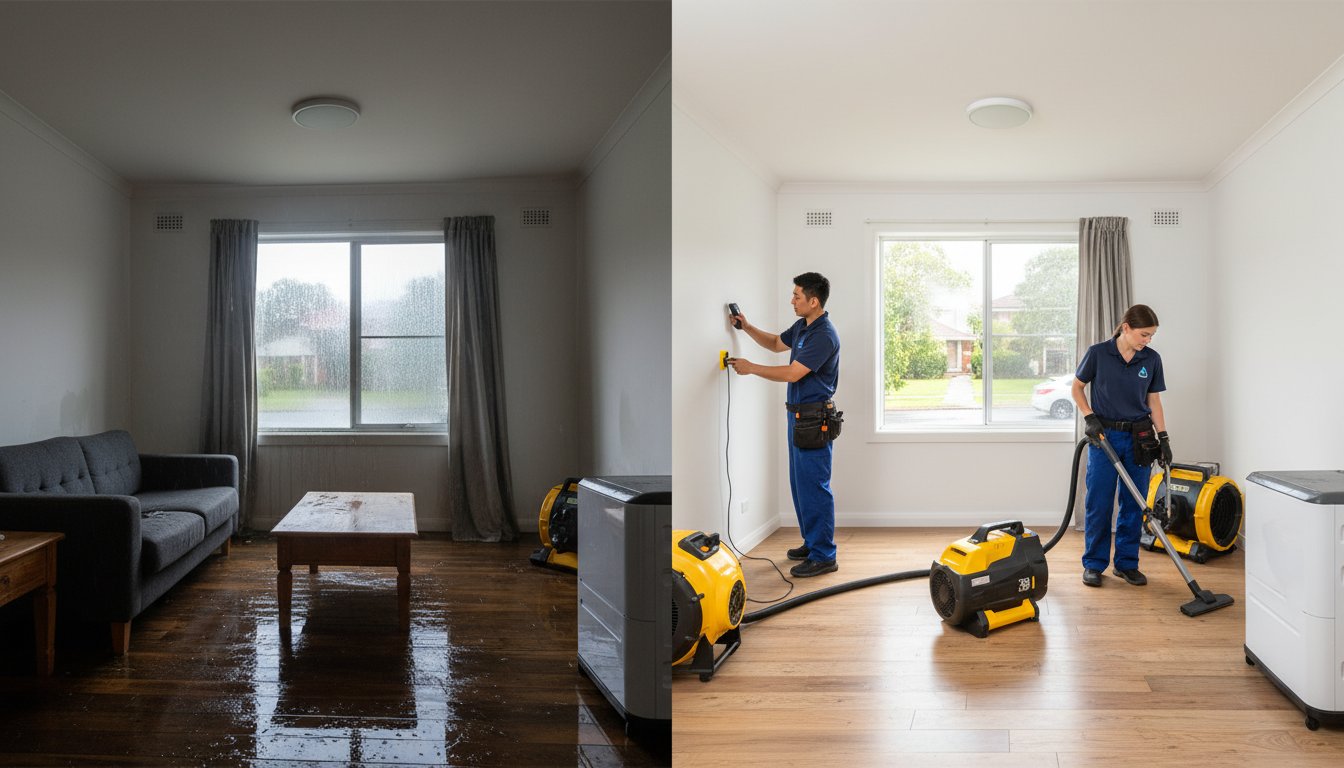
Our expert process begins where it must: with the source. Our master technicians first identify and address the moisture problem-a leaking pipe, poor ventilation, or water ingress-to ensure the mould cannot return. We then establish critical containment barriers, using heavy-duty sheeting and negative air pressure to completely isolate the affected area. This stops spores from spreading to clean parts of your home during the safe removal of contaminated materials like drywall and insulation.
Advanced Air Scrubbing with HEPA Filtration
During the removal phase, millions of spores are disturbed and become airborne. To counter this, we use powerful air scrubbers fitted with High-Efficiency Particulate Air (HEPA) filters. These machines run continuously, drawing in contaminated air and capturing 99.97% of particles, including invisible mould spores. This step is non-negotiable for protecting family from mould spores, ensuring the air you breathe is thoroughly purified and safe once our work is complete.
Specialised Fogging: The Final Step for a Safe Home
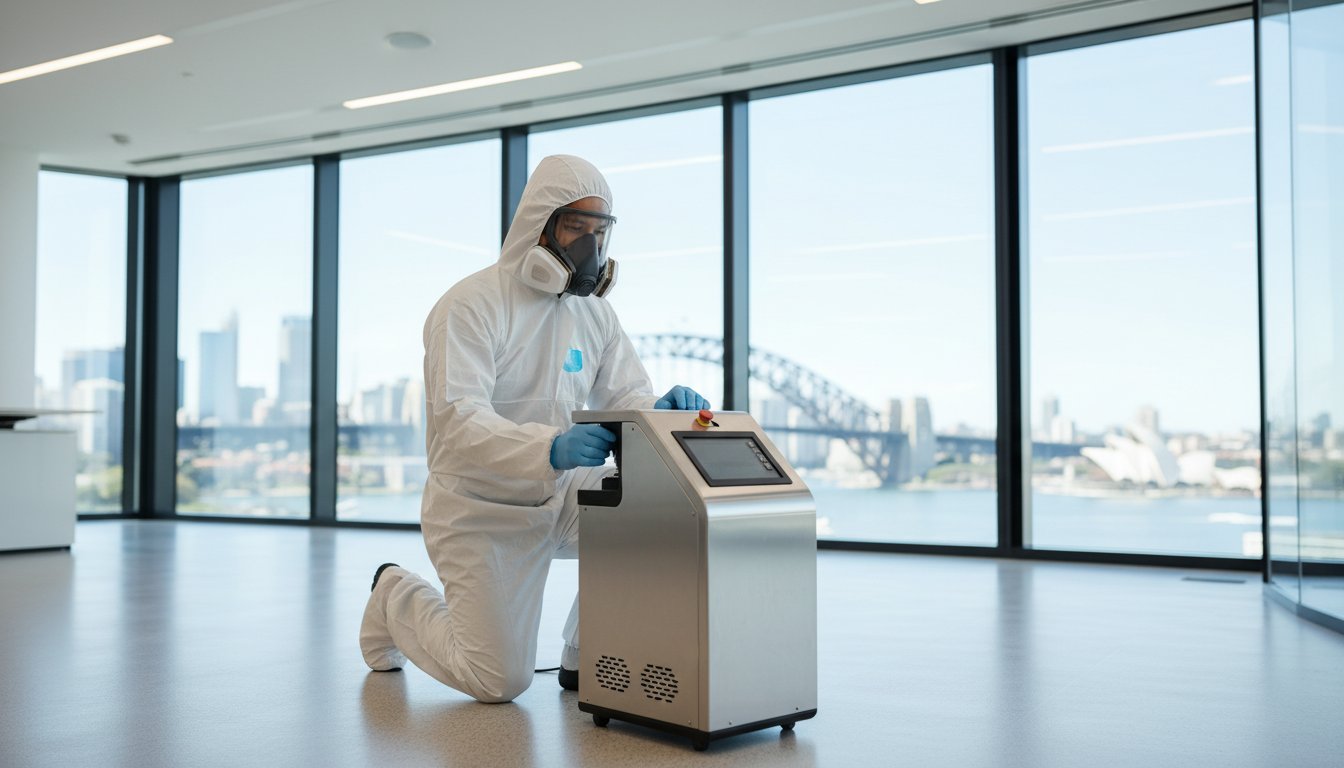
The final, decisive step in our industry-leading Goldmorr System is a specialised fogging treatment. This process releases a non-toxic, biodegradable mist that permeates the entire space, neutralising any remaining spores in the air and on every single surface. It reaches deep into cracks, fabrics, and cavities that are impossible to clean manually. This ensures a comprehensive treatment that leaves your home not just looking clean, but hygienically safe. Don’t leave your family’s health to chance.
Protect your family today. Get a free, no-obligation quote from our experts.
Secure Your Home and Breathe Easy: The Professional Solution
Throughout this guide, we’ve uncovered the hidden dangers of mould spores and why they demand a serious response. You now understand that a musty smell can signal a widespread airborne issue and that surface cleaning with store-bought products often makes the problem worse. Ultimately, the most crucial takeaway is this: for the non-negotiable task of protecting family from mould spores, only a professional, scientific approach can guarantee total eradication.
Don’t let mould win. At ABC Mould Cleaning Solutions, we are Sydney’s trusted and certified Goldmorr System technicians. We don’t just clean mould; we eliminate it at its source. Our industry-leading process is powerful enough to destroy airborne spores yet is completely safe for your family, pets, and the environment. We stand by our work and our value, which is why we proudly promise to beat any written quote by 10%.
Your peace of mind is our priority. Stop the worry and take decisive action to reclaim your home’s health and safety. Don’t risk your family’s health. Schedule your free mould inspection today!
Frequently Asked Questions
How long does it take to get rid of mould spores professionally?
Most professional mould remediation jobs in a standard residential property are completed within 1 to 3 days. The exact timeline depends on the extent of the contamination, the size of the affected area, and the underlying moisture issues that need to be addressed. Our certified technicians use the industry-leading Goldmorr System to ensure the process is not only thorough but also highly efficient, minimising disruption to your family and getting your home back to a safe state quickly.
Are the chemicals used in professional mould removal safe for kids and pets?
Yes, your family’s safety is our top priority. We exclusively use advanced, non-toxic, and biodegradable solutions that are proven to be safe for people, pets, and the environment. Unlike harsh bleach-based products, our formulas effectively eliminate mould and its spores without leaving behind dangerous residues or fumes. You can have complete peace of mind knowing our process restores healthy air quality without introducing new hazards into your home, which is crucial when protecting family from mould spores.
How much does professional mould remediation cost in Sydney?
The cost for professional mould remediation in Sydney can vary significantly based on the severity and location of the mould. A small, localised treatment might cost between A$500 – A$1,200, while extensive contamination in multiple rooms or sub-floor areas could range from A$2,500 to A$5,000+. For an accurate and affordable quote, simply send us images of the affected areas. Plus, we will beat any written quote from a competitor by 10%. It’s that simple.
Can mould spores get into my air conditioning system?
Absolutely. Your air conditioning (HVAC) system can be a major pathway for spreading mould spores throughout your entire home. If mould is growing near an intake vent or inside the unit itself, the system will circulate airborne spores every time it runs, compromising your indoor air quality. A comprehensive professional mould inspection should always include your HVAC system to ensure it is not contributing to the problem. Don’t let your air conditioner spread the contamination.
My landlord won’t fix the mould problem. What are my rights in NSW?
In New South Wales, landlords have a legal obligation to provide a reasonably clean and habitable property. Mould caused by structural issues like leaks is the landlord’s responsibility. You should formally notify your landlord or agent in writing, requesting repairs. If they fail to act, you can issue a breach notice and may apply to the NSW Civil and Administrative Tribunal (NCAT) for orders. We recommend contacting the Tenants’ Union of NSW for specific advice on your situation.
Will painting over mould protect my family from the spores?
No, painting over mould is a dangerous mistake. While it may temporarily hide the unsightly stain, the live mould colony continues to grow and release harmful spores behind the paint. This does nothing to solve the underlying moisture problem and fails at the critical task of protecting family from mould spores. The mould will eventually eat through the new paint, and the problem will be worse. Professional removal is the only effective and safe solution.