Rising Damp Treatment Cost: Your Complete 2025 Sydney Price Guide
Watching damp patches creep up your walls is stressful enough. The fear of a massive, unknown repair bill only makes it worse. You’re not just worried about the musty smell or peeling paint; you’re concerned about hidden structural damage and the prospect of being overcharged for a complex treatment you don’t fully understand. This is where clarity becomes your greatest asset. Understanding the factors that determine the final rising damp treatment cost is the first, most critical step towards protecting your home and your budget.
Don’t let uncertainty stop you from taking action. In this complete 2025 Sydney price guide, we demystify the entire process. We provide a clear, itemised breakdown of every potential expense, from average costs per linear metre to the specialist fees that can catch you off guard. By the end, you won’t just have a vague estimate; you’ll have the expert knowledge to confidently evaluate quotes, understand exactly what you’re paying for, and invest in a permanent solution that restores your property’s value and your peace of mind.
Understanding the Average Cost of Rising Damp Treatment in Sydney
When you discover the tell-tale signs of rising damp-peeling paint, a musty smell, or crumbling plaster-the first question is often: “How much will this cost to fix?” Understanding the average rising damp treatment cost in Sydney helps you budget effectively and avoid the far greater expense of ignoring the problem. The industry standard for quoting is based on a per-linear-metre rate, which allows for a clear and scalable estimate based on the extent of the issue.
Before diving into figures, it’s crucial to understand the enemy. Rising damp occurs when groundwater travels up through the porous materials of your walls, like bricks and mortar, due to a failed or non-existent Damp Proof Course (DPC). For a detailed technical overview, it’s helpful to understand what is rising damp? This foundational knowledge highlights why a professional, targeted solution is non-negotiable for protecting your property’s value and structural integrity.
Typical Cost Per Linear Metre
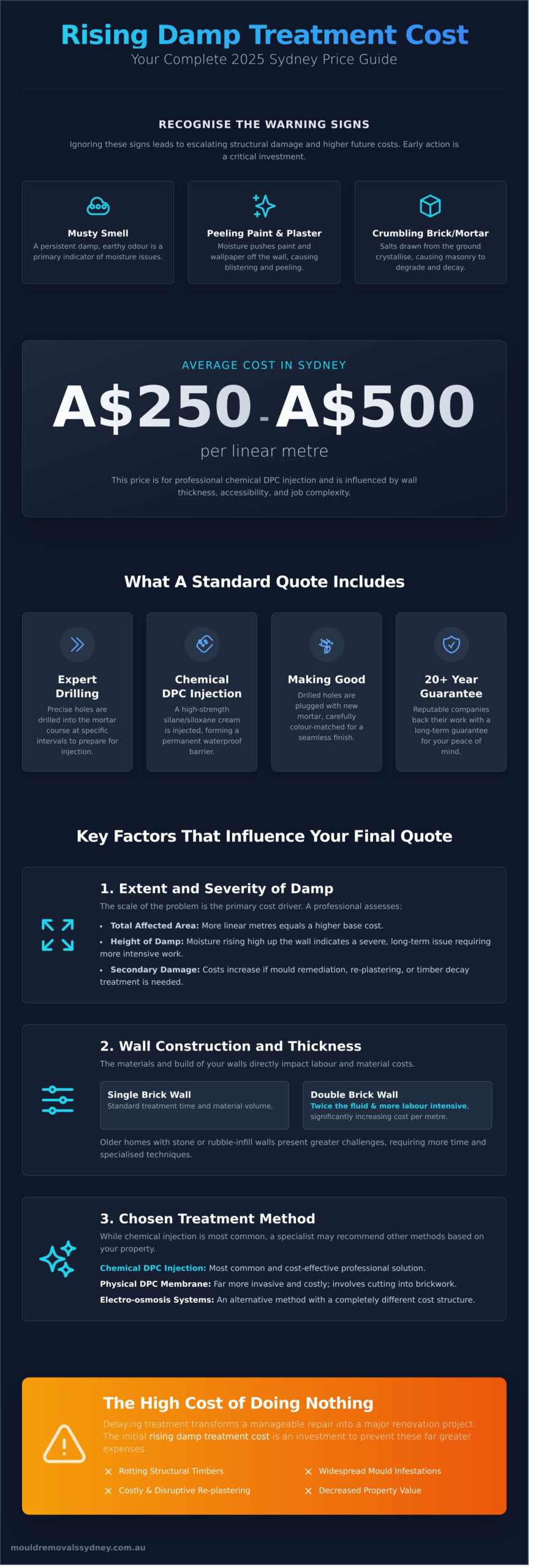
In Sydney, you can expect to pay between A$250 and A$500 per linear metre for a professional chemical DPC injection. This price bracket covers the direct application of the treatment to the affected walls. Factors that influence where your quote will fall within this range include the thickness of the walls, the type of brickwork, and the accessibility of the site. It’s also important to note that most professional services will have a minimum charge to cover their operational costs for smaller jobs.
What Does the Standard Treatment Price Usually Include?
This per-metre cost isn’t just for the chemical solution; it covers a precise, multi-step professional service designed for long-term effectiveness. A standard quote typically includes:
- Expert Drilling: Technicians drill precise holes into the brickwork or mortar course at specific intervals.
- Chemical DPC Injection: A high-strength silane/siloxane cream is injected into the holes. This cream penetrates the masonry to form a new, permanent waterproof barrier.
- Making Good: The drilled holes are plugged with new mortar, carefully colour-matched to your existing brickwork for a seamless finish.
- A Comprehensive Guarantee: Reputable companies will back their work with a long-term guarantee, often for 20 years or more, giving you complete peace of mind.
While the upfront rising damp treatment cost may seem significant, it is a critical investment. Leaving rising damp untreated will lead to escalating damage, including rotting structural timbers, widespread mould infestations requiring remediation, and costly replastering. Acting decisively saves you from far more expensive and disruptive repairs in the future.
Key Factors That Influence Your Final Treatment Quote
When you receive a quote for damp proofing, it’s crucial to understand that the final bill is more than a simple per-metre calculation. The true rising damp treatment cost is a detailed assessment of your property’s unique situation. A professional inspection identifies several critical variables that determine the scope, complexity, and ultimately, the price of the job. Understanding these factors will help you see why your quote is tailored specifically to your home.
The Extent and Severity of the Damp
The most immediate cost driver is the scale of the problem. A technician will assess several key indicators:
- Affected Area: The total linear metres of wall needing treatment is the starting point. This includes both internal and external walls. A single affected wall will be significantly cheaper than a property with widespread issues.
- Height of the Damp: Moisture that has risen 2 metres high indicates a more severe, long-term problem than damp contained to the first few brick courses. This requires more intensive treatment.
- Secondary Damage: Rising damp is rarely an isolated issue. The presence of crumbling plaster, timber decay, mould growth, or salt contamination (efflorescence) requires extra labour. This involves hacking off and replacing damaged plaster, treating for mould, and applying salt-retardant primers before any finishing work can begin.
Wall Construction and Thickness
The materials your home is built from directly impact the labour and material costs. Double brick walls, common in many Australian homes, require more time and twice the amount of injection fluid compared to a single brick wall. Older homes with stone or rubble-infill walls present a greater challenge, as their non-uniform structure makes standard drilling and injection difficult and time-consuming. The overall thickness of the wall determines the drilling depth and the volume of chemical DPC fluid needed, making it a primary factor in material costs.
Chosen Treatment Method
While a chemical DPC injection is the most common and cost-effective solution, it isn’t the only option. The best method depends on your wall type and the severity of the damp. Understanding the complexities of how salts and moisture move through masonry, as detailed in the Heritage Council guide to rising damp, is why a professional assessment is vital. A physical DPC membrane, which involves cutting into the brickwork, is far more invasive and costly. Alternative systems like electro-osmosis have a different cost structure entirely. Each method has unique material and labour requirements that will be reflected in your final quote.
Comparing Rising Damp Treatment Methods and Their Costs
When you receive a quote, the proposed treatment method will be the biggest factor influencing the price. While a certified specialist will always recommend the best solution for your property’s specific needs, understanding the main options empowers you to have a confident, informed discussion. This knowledge is vital for accurately assessing the final rising damp treatment cost.
Chemical Damp Proof Course (DPC) Injection
This is the most common and cost-effective professional solution for existing Australian homes. The process involves drilling a series of small, precise holes into the mortar course of the wall and injecting a specialised damp-proofing cream. This cream then permeates the masonry to form a new, continuous water-repellent barrier, effectively stopping moisture from rising.
- Pros: Highly effective, minimal disruption to your home, and significantly more affordable than physical methods.
- Cons: May be less suitable for very thick or old stone walls with irregular mortar joints.
- Best For: The vast majority of brick cavity and solid brick homes.
Physical DPC Membrane Installation
A physical DPC involves the intensive process of cutting a channel into the wall, one small section at a time, and inserting a solid plastic membrane to create a permanent physical barrier. While this method offers unparalleled effectiveness, it is also highly disruptive, structurally invasive, and comes with a much higher price tag due to the significant labour costs. It is rarely the recommended solution for a standard rising damp issue in an occupied home.
- Pros: A permanent, physical barrier that is guaranteed to last the life of the building.
- Cons: Extremely expensive, messy, and requires structural work.
- Best For: Major home renovations, extensions, or new constructions.
Associated Repair Costs: The Full Picture
It is crucial to understand that installing a new DPC only stops further moisture from rising. It does not fix the damage that has already occurred. To complete the job properly, any salt-contaminated plaster must be hacked off and replaced. This is not an optional step; leaving old plaster will lead to persistent damp spots and decorative spoiling, even with a new DPC in place.
These essential repairs, including replastering with specialised renders and redecorating, must be factored in. When you budget for the project, ensure your quote covers these elements to get a true picture of the complete rising damp treatment cost.
Beyond the Injection: ‘Hidden’ Costs to Budget For
One of the biggest surprises for property owners is that the chemical damp proof course (DPC) injection is only the first step. To ensure a permanent solution and restore your home’s interior, several follow-up stages are non-negotiable. Factoring these into your budget from the start provides a realistic picture of the total rising damp treatment cost and prevents unexpected expenses down the line.
Ignoring these essential repairs means that even with a new DPC, residual moisture and damaging salts left in the plaster and timber will continue to cause problems. A professional treatment plan always includes these restorative works.
Replastering and Redecorating
After treating rising damp, the original plaster on the affected walls is contaminated with hygroscopic salts. These salts will continue to draw moisture from the air, causing persistent damp patches and ruining new paintwork. It must be removed.
- Salt-Retardant Plaster: The wall must be replastered, often using a specialist salt-retardant render or plaster system. This acts as a final barrier against any residual salts.
- Estimated Cost: Expect to pay between A$100 – A$200 per square metre for professional removal and specialist replastering.
- Final Finish: Remember to also budget for the final skim coat and repainting once the new plaster has fully cured.
Timber Repair and Replacement
Prolonged damp creates the perfect environment for wood rot and decay. Timbers in direct contact with affected walls are highly vulnerable and require a thorough inspection by an expert.
Commonly damaged items include skirting boards, floorboards, and, more critically, structural floor joists. The cost for timber repairs can vary significantly, from a few hundred dollars for new skirting boards to several thousand if structural joists need replacement. This is a critical component of the overall rising damp treatment cost that cannot be overlooked.
Improving Subfloor Ventilation
Often, poor subfloor ventilation is a primary contributor to the initial damp problem. Without adequate airflow, moisture gets trapped under your home, raising the water table and putting pressure on your DPC. Installing new air vents is a crucial preventative measure to protect your home from future issues. This is typically quoted as a separate job but is essential for a complete, long-term solution.
Don’t just treat the symptom; fix the cause. Ask us about a complete damp and ventilation solution.
The Cost of Inaction: Why Delaying Treatment is More Expensive
Viewing the initial rising damp treatment cost as an investment in your property’s future is crucial. The truth is simple: waiting allows the problem to worsen, leading to far more extensive and expensive repairs down the line. Don’t let a manageable issue today spiral into a structural and financial crisis tomorrow. The cost of inaction will always be higher than the cost of a timely, professional solution.
Progressive Structural Damage
When moisture continually soaks into your walls, it begins a systematic process of destruction. The damage isn’t just cosmetic; it’s structural, and it escalates quickly. This includes:
- Crumbling Materials: Plaster, paint, and wallpaper will peel and blister. Mortar joints between bricks will decay, weakening the wall itself.
- Wall Tie Corrosion: In cavity walls, the essential steel wall ties that hold the structure together can rust and fail, compromising your home’s stability.
- Timber Decay & Rot: Floorboards, skirting boards, and critical structural beams absorb the moisture, leading to devastating and costly timber rot.
These secondary repairs can easily dwarf the original cost of installing a new damp-proof course.
Health Risks from Associated Mould Growth
A damp, humid wall is the perfect breeding ground for toxic mould. This isn’t just an unsightly problem; it’s a direct threat to your family’s health. Airborne mould spores can trigger a range of serious issues, including allergies, asthma attacks, and chronic respiratory problems. Protecting your home from rising damp is the first step in protecting your loved ones. The cost of professional mould remediation is an additional expense that becomes almost inevitable when damp is ignored.
Decreased Property Value
In the Australian property market, rising damp is a major red flag for potential buyers and a guaranteed issue in any building inspection report. Failing to treat it can drastically reduce your home’s market value, scaring off buyers or forcing you to accept a significantly lower offer. The upfront rising damp treatment cost is a smart, strategic investment that protects the long-term value of your most significant asset.
How to Get an Accurate Quote for Your Sydney Property
Understanding the true rising damp treatment cost for your property goes beyond a simple phone estimate. A quick guess over the phone can lead to unexpected expenses and ineffective treatments. To get a reliable figure and a lasting solution, you need a professional, on-site assessment from a certified expert. This is the only way to accurately diagnose the problem and determine the precise scope of work required.
Why a Professional Inspection is Non-Negotiable
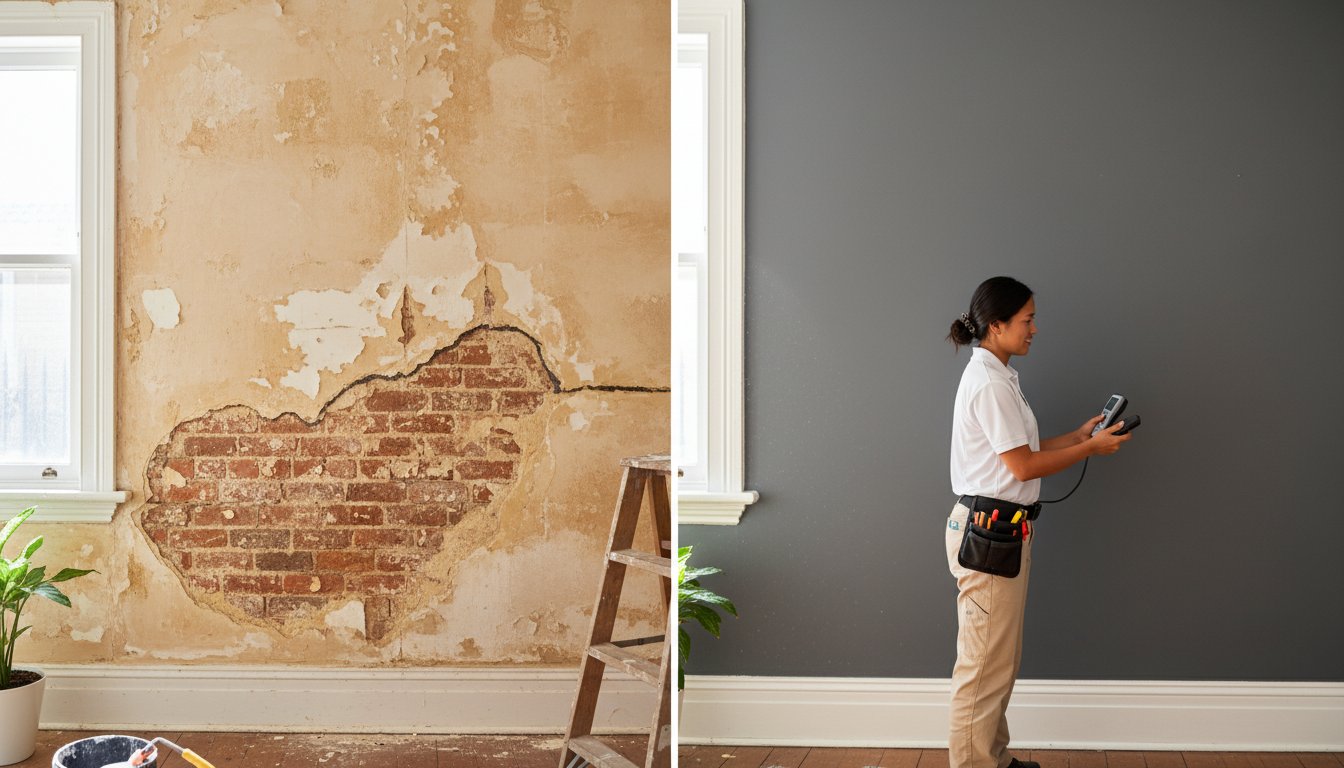
A damp specialist doesn’t just look at the wall; they investigate the root cause. Issues like penetrating damp, condensation, or leaking pipes can often be mistaken for rising damp by an untrained eye. Our technicians use specialised moisture meters to map the extent of moisture migration within your walls. This expert diagnosis ensures you are not paying for the wrong treatment and that the solution addresses the entire problem, not just the visible symptoms.
What to Look For in a Reputable Quote
A professional quote is more than just a final price; it’s a detailed plan of action. It should provide complete transparency and give you the confidence that the job will be done right. Insist on a written quote that includes:
- A clear breakdown of costs: This should separate the damp-proofing treatment from associated work like hacking off old plaster, replastering with salt-retardant render, and waste removal.
- Specific methods and materials: The quote must detail the exact type of damp-proof course (DPC) to be used, such as a high-strength chemical injection system.
- Guarantee details: A reputable company will provide a long-term, written guarantee on both the materials and their workmanship. Clarify what is covered and for how long.
- No hidden fees: The price you are quoted should be the final price you pay. Ensure the document is transparent and all-inclusive.
Get Your Free, No-Obligation Sydney Quote
Don’t guess what your rising damp treatment will cost. Stop the damage before it gets worse. Our certified Sydney experts provide a thorough, on-site inspection to identify the precise source and extent of your damp issue. We will give you a clear, written quote detailing a reliable and lasting solution tailored to your property.
Protect your investment and restore a healthy home environment. Schedule your inspection and get a precise quote today!
Secure Your Investment: The Final Word on Rising Damp Costs
Understanding rising damp treatment in Sydney is the first step to protecting your property. As we’ve explored, your final quote isn’t a one-size-fits-all number; it’s influenced by factors like wall material, property size, and the chosen treatment method. The most crucial takeaway, however, is that the cost of inaction is always greater. Delaying repairs invites escalating structural damage and potential health hazards, making a proactive approach the most financially sound decision.
Now that you’re equipped with this knowledge, you can confidently assess the rising damp treatment cost and choose a solution that offers lasting value. As Sydney’s trusted damp and mould remediation experts, we deliver professional results backed by long-term guarantees on all our DPC treatments. We stand by our work and our commitment to unbeatable value-we will beat any written quote by 10%.
Take the definitive step towards a dry, healthy home. Stop the damp for good. Get your free, no-obligation quote today!
Frequently Asked Questions
Is rising damp treatment covered by home insurance in Australia?
Unfortunately, standard home insurance policies in Australia almost never cover rising damp. Insurers typically classify rising damp as a building defect or a gradual deterioration issue, which falls under general maintenance. Policies are designed to cover sudden and unforeseen events, like fire or storm damage, not problems that develop over a long period. Always check your specific policy, but expect treatment to be an out-of-pocket property maintenance expense.
How long does a new chemical damp proof course last?
A professionally installed chemical damp proof course (DPC) is a durable, long-term solution. When applied by certified experts using high-quality materials, you can expect the DPC to remain effective for at least 20-30 years. Reputable companies will provide a long-term guarantee for their work, offering you complete peace of mind and protecting your property’s value for decades to come. It’s a reliable investment in your home’s structural integrity.
Can I save money by treating rising damp myself?
While DIY kits seem like a cheaper option, they often lead to greater costs later. The biggest risk is misdiagnosis-what looks like rising damp could be another issue, rendering your efforts useless. Improper application of DIY products can be ineffective and fail to create a complete barrier, allowing the damp to return. For a guaranteed and permanent solution, a professional assessment is crucial to fix the problem correctly the first time.
What is the average cost of a professional rising damp inspection in Sydney?
In Sydney, a comprehensive rising damp inspection from a qualified specialist typically costs between A$350 and A$750. This professional assessment involves more than a quick look; it includes the use of specialised equipment like moisture meters and thermal imaging cameras. The fee covers a detailed report that identifies the source and extent of the problem, along with a precise quote for the necessary remediation work.
Does the type of brick or stone on my house affect the treatment cost?
Yes, the construction materials of your home are a major factor in the final rising damp treatment cost. Thicker walls, such as double-brick, sandstone, or bluestone, require more extensive drilling and a larger volume of injection fluid to establish a continuous damp proof course. This directly increases the cost of both labour and materials compared to treating a standard single-brick cavity wall. Our experts assess this during the initial inspection.
How long after treatment can I redecorate my walls?
Patience is essential after treatment. Walls must be allowed to dry out completely before you replaster or paint, a process that can take many months. A general guideline is to allow one month of drying time for every 25mm of wall thickness. Redecorating too early will trap residual moisture, leading to peeling paint and potential mould growth. Your technician will provide a specific drying timeline based on your wall’s condition.