Discovering damp patches on your walls can be alarming. That peeling paint, musty smell, or crumbling plaster is more than just an eyesore-it could be a sign of rising damp, a serious issue that compromises your home’s structure and your family’s health. This guide will walk you through the most effective rising damp treatments, help you understand the costs involved, and explain why a professional solution is the only way to truly protect your property.
What is Rising Damp? The Signs You Can’t Afford to Ignore
In simple terms, rising damp is the process of groundwater moving up through the porous materials of your walls, like bricks and mortar, through a process called capillary action. It occurs when a property’s damp proof course (DPC) is missing, bridged, or has failed with age. Ignoring it can lead to severe consequences, including timber decay, structural damage, and the growth of unhealthy mould.
Look out for these key signs:
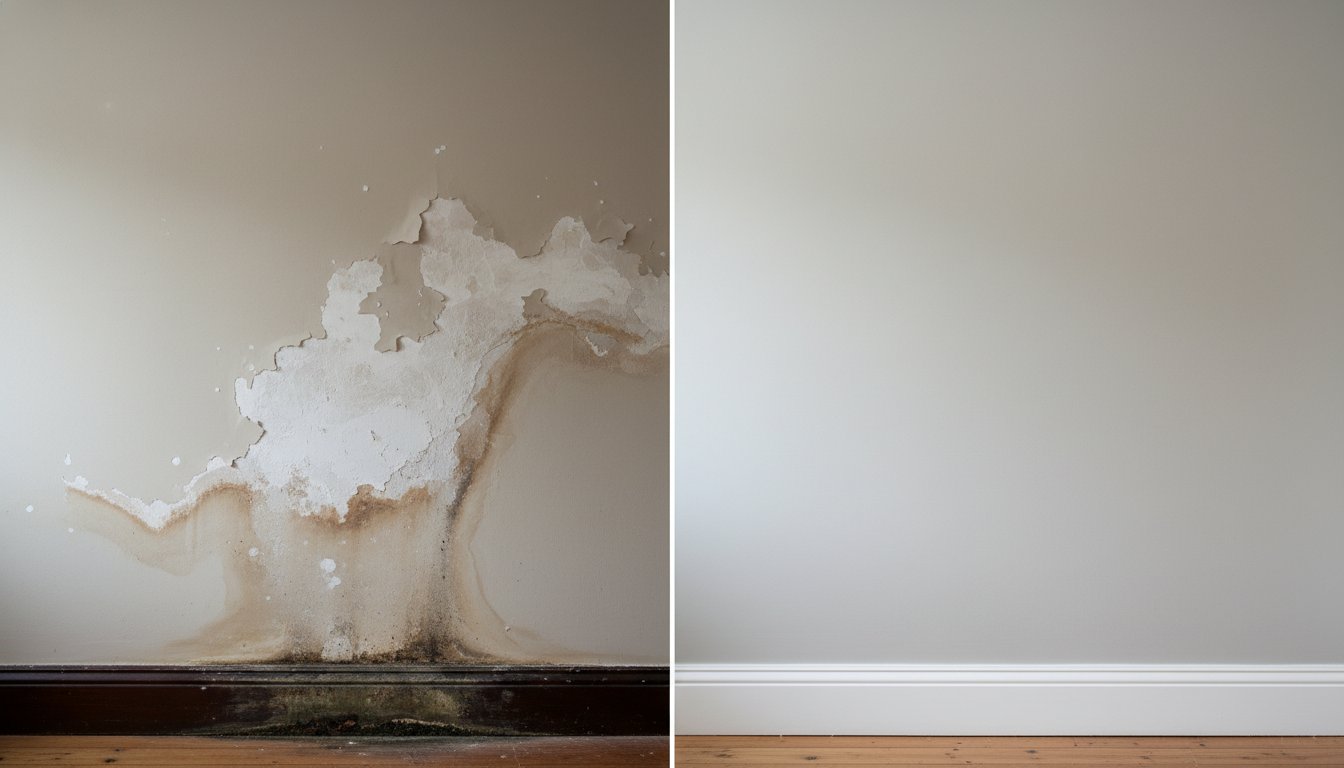
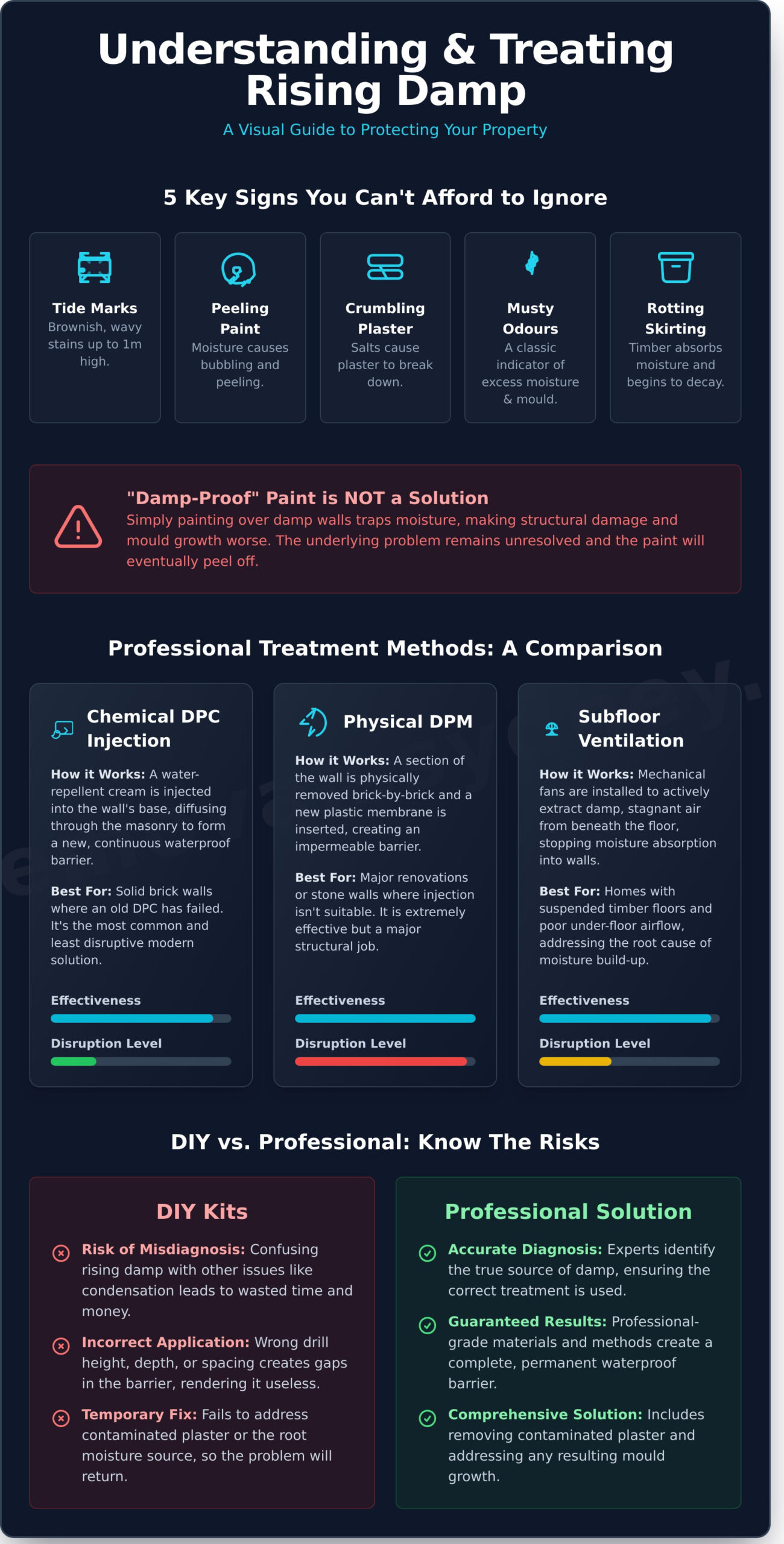
- Tide Marks: Wavy, brownish stains on walls, typically up to one metre high.
- Peeling Paint & Wallpaper: Moisture pushing through the wall causes paint to bubble and wallpaper to peel away.
- Crumbling Plaster: Salts drawn from the ground crystallise on the wall’s surface, causing plaster to break down.
- Musty Odours: A persistent damp, earthy smell is a classic indicator of excess moisture.
- Rotting Skirting Boards: Timber in contact with the damp wall will absorb moisture and begin to rot.
It’s crucial to understand that this is far more than a cosmetic issue. It’s a direct threat to the structural integrity and value of your property.
Why Simply Painting Over Damp Walls Will Fail
It’s tempting to reach for a tin of “damp-proof” paint as a quick fix. However, this is a temporary, surface-level solution that ultimately makes the problem worse. These paints create a barrier that traps moisture inside the wall. The trapped water will continue to cause damage behind the scenes and will eventually push the new layer of paint off, causing it to bubble and peel all over again. The underlying problem of moisture ingress remains completely unresolved.
The Critical Link Between Rising Damp and Black Mould
Constant moisture from rising damp creates the perfect breeding ground for mould, including the potentially toxic black mould (Stachybotrys chartarum). As mould grows, it releases microscopic spores into the air. Inhaling these spores can lead to a range of health issues, from respiratory problems and allergic reactions to severe headaches and fatigue. An effective rising damp treatment must always address both the source of the moisture and any resulting mould growth to ensure your home is not just dry, but also healthy.
Professional Rising Damp Treatment Methods: A Comparison
While there are several ways to tackle rising damp, professional solutions are designed to provide a permanent barrier. A correct diagnosis from an expert is the essential first step, as this determines which method is most suitable for your property’s specific construction and condition.
.comparison-table { width: 100%; border-collapse: collapse; margin: 2em 0; }
.comparison-table th, .comparison-table td { border: 1px solid #ddd; padding: 12px; text-align: left; }
.comparison-table th { background-color: #f2f2f2; }
| Treatment Method | How It Works | Best For |
|---|---|---|
| Chemical DPC Injection | A water-repellent cream is injected into holes drilled along the base of the wall, creating a new, continuous waterproof barrier. | Solid brick walls where an old DPC has failed or is ineffective. It’s the most common and least disruptive modern solution. |
| Physical Damp Proof Membrane (DPM) | A section of the wall is removed brick by brick, and a new physical plastic membrane is inserted. | Major renovations, new builds, or certain types of stone walls where injection is not suitable. It is highly effective but very invasive. |
| Subfloor Ventilation | Mechanical fans are installed to actively remove damp, stagnant air from beneath the floor, preventing moisture from being absorbed by walls. | Homes with suspended timber floors and poor under-floor airflow. It addresses the root cause of moisture build-up. |
Chemical Damp Proof Course (DPC) Injection
This is the most common modern method for treating rising damp. A specialised water-repellent cream is injected into a series of holes drilled into the mortar course at the base of the affected walls. The cream then diffuses through the masonry to form a powerful, continuous barrier that stops water from rising. It’s highly effective and minimally disruptive to the property.
Physical Damp Proof Membrane (DPM)
This is a more traditional and invasive method. It involves physically cutting into the wall and inserting a new sheet of impermeable plastic membrane to create a barrier. While extremely effective, it is a major structural job that is typically reserved for extensive property renovations or when other methods are not viable.
Subfloor Ventilation: Addressing the Root Cause
In many Sydney homes, especially older ones, poor under-floor airflow is a major contributor to damp problems. Moisture from the ground gets trapped in the subfloor space, creating a humid environment that saturates the foundations and lower walls. Installing a professionally designed subfloor ventilation system actively extracts this damp air and replaces it with fresh, dry air. This is a crucial step in not only treating existing damp but preventing future problems. See how our subfloor ventilation systems work.
DIY Rising Damp Treatment: Know the Risks Before You Start
The appeal of saving money with a DIY kit from a hardware store is understandable. However, treating rising damp is a complex task that requires an accurate diagnosis first. Misdiagnosing the issue-confusing it with penetrating damp or condensation, for example-means any DIY effort will be a complete waste of time and money.
The Limitations of Hardware Store Products
DIY kits are rarely as potent or effective as the professional-grade solutions used by specialists. The biggest risk is incorrect application. If the injection holes are drilled at the wrong height, spaced too far apart, or not filled correctly, the chemical barrier will be incomplete, allowing damp to bypass it easily. Failure to address the source of the moisture or remove contaminated plaster means the problem will inevitably return.
When to Call a Professional Immediately: A Checklist
Don’t attempt a DIY fix if you notice any of the following. It’s time to call an expert:
- You see extensive or crumbling plaster, or the bricks themselves appear damaged.
- There is a strong, persistent musty smell, which is a clear sign of an active mould infestation.
- The damp is affecting multiple walls or appearing on upper floors (which may indicate a different, more complex issue).
- You are fundamentally unsure what is causing the damp. A professional diagnosis is essential.
Our Proven 3-Step Rising Damp Solution for Sydney Homes
A quick fix isn’t a real fix. Our approach is designed to provide a permanent solution that guarantees you peace of mind. We don’t just treat the damp; we eliminate the damage and implement measures to prevent it from ever coming back. It’s that simple.
Step 1: Accurate Diagnosis with a Professional Inspection
Our process begins with a thorough inspection. A trained technician will use professional moisture meters to accurately map the extent and severity of the damp within your walls. We identify the true source and rule out other potential causes, ensuring the treatment plan is perfectly tailored to your property. You’ll receive a clear, jargon-free report explaining our findings and recommended solution.
Step 2: Expert Treatment and Mould Remediation
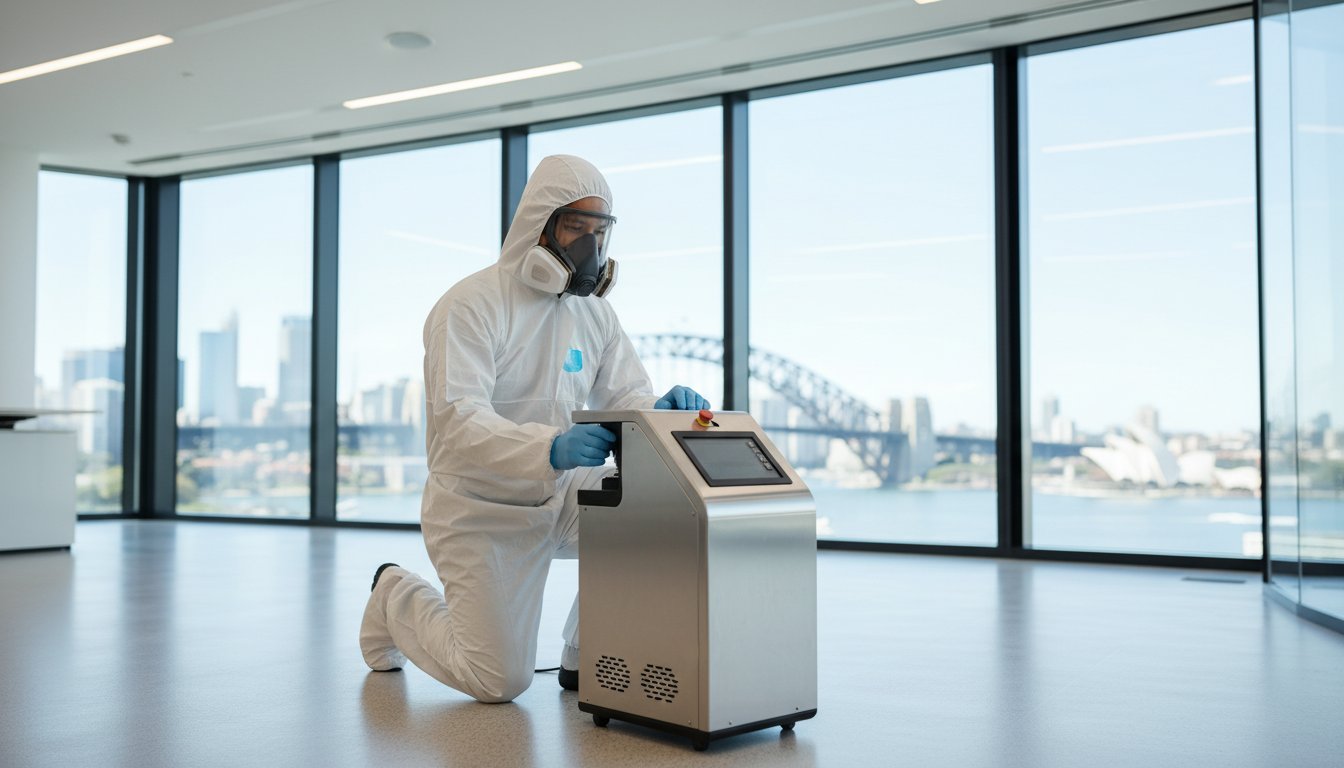
Once the plan is approved, our certified technicians apply the most suitable rising damp treatment for your home. Crucially, this step includes complete mould remediation. We use the industry-leading Goldmorr System to safely remove any associated mould growth from surfaces and purify the air of harmful spores. This dual approach ensures your home is not just dry, but also hygienically safe.
Step 3: Long-Term Prevention with Ventilation
The final step is securing your home for the future. Where necessary, we recommend and install a high-quality subfloor ventilation system to manage ground moisture and maintain a dry foundation. This protects your investment from future damp and mould issues, providing the ultimate long-term solution. Tired of damp? Get a quote from Sydney’s trusted experts.
Frequently Asked Questions About Rising Damp
How much does professional rising damp treatment cost in Sydney?
The cost varies depending on the length and thickness of the walls that need treatment and the chosen method. A professional inspection is the best way to get an accurate quote. We are committed to providing value and will beat any written quote by 10%.
Can rising damp be fixed permanently?
Yes. When diagnosed correctly and treated by a professional using industry-approved methods like chemical DPC injection and proper ventilation, rising damp can be permanently resolved. The new DPC is designed to last for decades.
How long does the rising damp treatment process take?
A chemical DPC injection for an average-sized home can often be completed in a single day. The wall will then need a significant period to dry out, which can take several months depending on its thickness and saturation level.
Will I need to redecorate after the treatment?
Yes. The treatment process requires removing any salt-contaminated and damaged plaster, up to a height of about one metre. After the new DPC is installed and the wall has had time to dry, it will need to be re-plastered and redecorated.
Does home insurance cover damage from rising damp?
Unfortunately, most standard home insurance policies do not cover rising damp. It is typically classified as a maintenance issue that results from gradual deterioration, which is an exclusion in most policies.
Don’t let damp and mould compromise your home and your health. Taking decisive action with a professional solution is the smartest investment you can make in your property. Our team of local Sydney experts is ready to provide a permanent fix, restoring your home to a dry, healthy, and safe condition. Stop damp in its tracks. Schedule your professional inspection today!