That persistent musty smell rising from under your floors isn’t just unpleasant-it’s a serious red flag for dampness, mould, and potential structural damage. If you’re wondering about the real cost to install subfloor ventilation in Sydney, you’re not alone. Many homeowners worry about confusing quotes, hidden fees, and the risk of investing in a system that might not solve the underlying problem. This uncertainty can be paralysing, but ignoring the issue will only lead to more expensive damage and serious health risks down the track.
This comprehensive price guide is designed to give you clarity and confidence. We break down the typical installation costs you can expect, from basic fan systems to more advanced solutions. You will learn exactly what factors influence the final price, what a professional quote should always include, and why this investment is critical for protecting your property’s value and your family’s health. Get the reliable information you need to make an informed decision and permanently solve the dampness under your house for good.
Key Takeaways
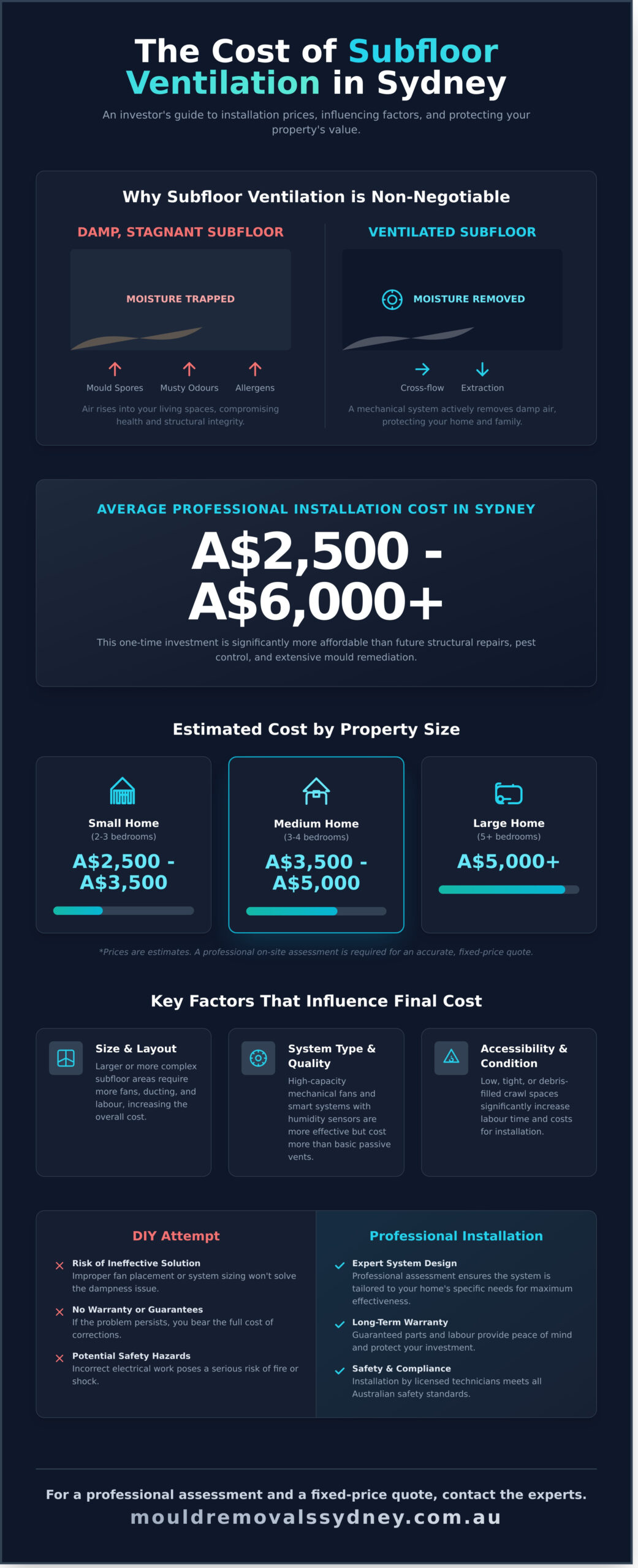
- Understand the typical price range for a professional installation in Sydney, which generally falls between A$2,500 and A$6,000+.
- Discover the key factors that determine the final cost to install subfloor ventilation, from your home’s size to the complexity of the system required.
- Learn why the one-time cost is a smart investment that protects your property from far more expensive mould remediation and structural repair bills.
- Weigh the perceived savings of a DIY attempt against the long-term effectiveness and safety guarantees that only a professional installation provides.
What is the Average Cost to Install Subfloor Ventilation in Sydney?
In Sydney, the average cost to install subfloor ventilation ranges from A$2,500 to A$6,000+ for a professional installation. While this is a significant figure, it’s crucial to view it as an investment in protecting your home’s structural integrity and your family’s health. This proactive measure is far more affordable than the future expenses of repairing rotten timber floor joists, managing serious pest infestations, or conducting extensive mould remediation.
A damp, stagnant subfloor is a breeding ground for disaster. Without proper airflow, moisture from the ground becomes trapped, creating the perfect environment for destructive fungi and termites. Don’t wait for musty smells to permeate your home; addressing the root cause with effective ventilation is the only reliable, long-term solution.
Estimated Cost by Property Size
The total cost to install subfloor ventilation depends heavily on the size of your home’s footprint, the number of fans required, and the complexity of the installation. Below is a general guide for Sydney properties to help you budget accordingly.
| Property Size | Estimated Cost Range (AUD) |
|---|---|
| Small Home (2-3 bedrooms) | A$2,500 – A$3,500 |
| Medium Home (3-4 bedrooms) | A$3,500 – A$5,000 |
| Large Home (5+ bedrooms) | A$5,000+ |
Please note: These prices are estimates only. For an accurate, fixed-price quote, a professional on-site assessment is essential to determine the specific needs of your property.
Why a Dry Subfloor is a Non-Negotiable Asset
The air in your subfloor doesn’t stay there. It rises, carrying moisture, mould spores, and allergens directly into your living spaces through gaps in floorboards and around pipes. This is why a musty smell downstairs often signals a much more serious problem with your home’s air quality. The entire purpose of this underfloor area is to provide a buffer, but if you’re unsure about what a crawl space is and its function, know that a damp one compromises your entire home. Professional subfloor ventilation is a proactive solution that stops these issues at the source, protecting your property and ensuring the air you breathe is clean and healthy.
Key Factors That Influence Your Final Installation Cost
When determining the cost to install subfloor ventilation, there is no one-size-fits-all price. Every property is unique, with different challenges and requirements. Understanding the key variables will help you see why a professional on-site assessment is essential for an accurate and effective quote. These factors directly impact the materials needed and the expert labour required to protect your home from damp, mould, and structural decay.
1. Size and Layout of Your Subfloor Area
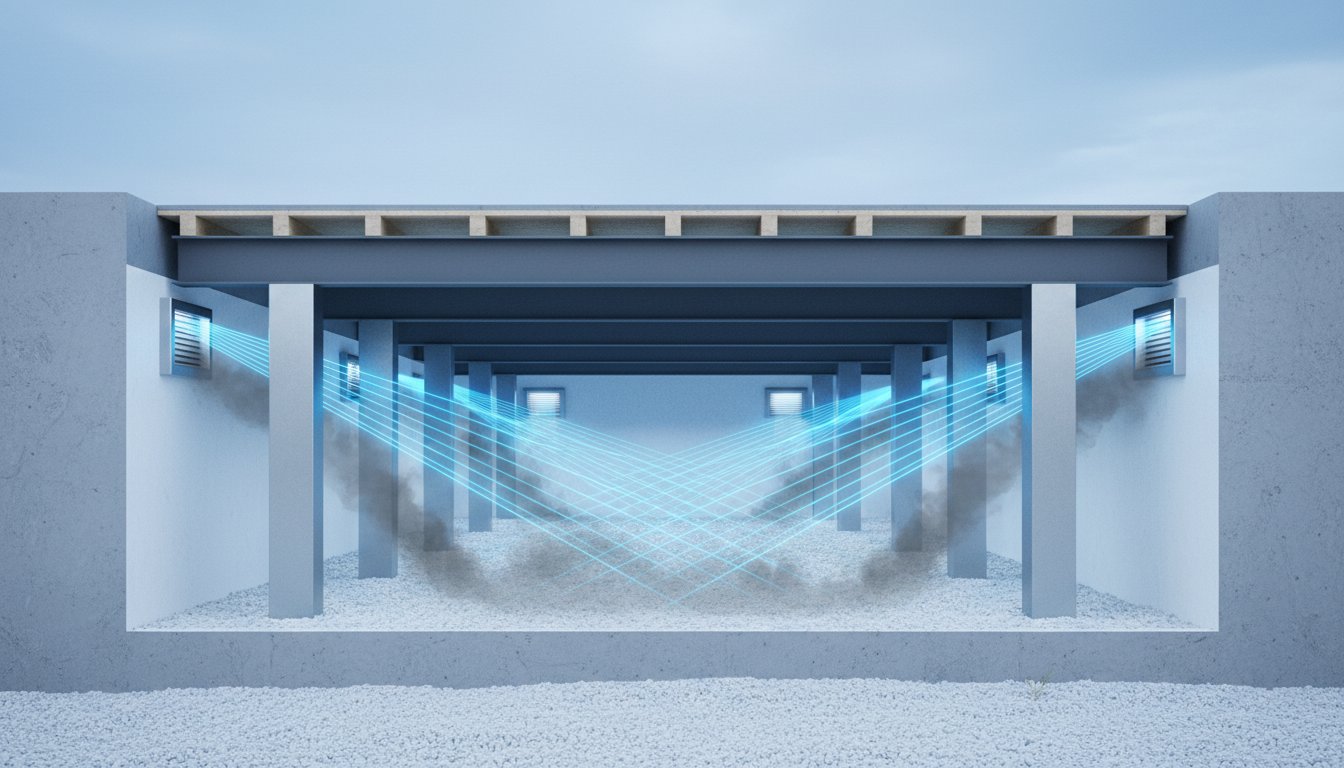
The total square meterage of your subfloor is the most direct factor influencing cost. A larger footprint naturally requires more fans, vents, and ducting to create adequate cross-flow ventilation. Similarly, a complex layout with multiple small, separated sections will demand a more strategic design and potentially more components than a simple, open rectangular space, increasing both material and labour costs.
2. Type and Quality of Ventilation System
The equipment you choose plays a significant role in the final price and, more importantly, the system’s effectiveness. Your options generally include:
- Passive Vents vs. Mechanical Fans: Passive vents are inexpensive but rely on wind, which is often insufficient for serious damp issues. Mechanical fan systems are a greater investment but provide powerful, consistent airflow to actively remove moisture, making them a far more reliable solution.
- Fan Models: High-capacity inline fans, designed to move large volumes of air through ducting, cost more than standard axial (wall-mounted) fans. The right choice depends on the severity of your moisture problem.
- Smart Systems: Advanced systems featuring built-in humidity sensors (humidistats) cost more upfront. However, they operate automatically only when needed, improving energy efficiency and providing a true “set and forget” solution.
3. Condition and Accessibility of the Subfloor
The state of your crawl space directly affects the labour involved. A very low or tight subfloor is difficult and time-consuming for technicians to work in, which increases labour charges. If the area is filled with debris, soil, or old building materials that must be cleared, this will add to the overall project cost. Furthermore, a property with severely inadequate existing ventilation may require more extensive work to meet the minimum National Construction Code (NCC) requirements for health and safety.
4. Electrical Work Requirements
Mechanical ventilation systems require a dedicated power source, and this work must be completed by a licensed electrician to comply with Australian safety standards. This is not a DIY task. The cost for electrical work depends on the proximity of your subfloor to an existing power circuit. If new wiring and a dedicated circuit need to be run from your switchboard, it will be a more significant component of the final cost to install subfloor ventilation.
What’s Included in a Professional Subfloor Ventilation Quote?
When you receive a quote, you’re looking at more than just a final price; you’re looking at a detailed plan to protect your home. A vague, one-line total is a red flag. A professional, transparent quote is a sign of a trustworthy provider who is confident in their solution. Understanding the itemised components empowers you to compare offers effectively and ensures you know exactly what you are paying for when assessing the total cost to install subfloor ventilation.
A comprehensive quote should be broken down into clear sections, detailing both the equipment and the expertise involved. Here’s what to look for:
Core Hardware Components
The physical equipment is the foundation of your system. Your quote should specify the quality and quantity of all parts, not just list “fans and ducts.”
- High-Quality Inline Fans: The quote must list the exact number, brand, and model of the fans. This allows you to verify they are powerful, energy-efficient, and durable enough for continuous operation.
- Acoustic, Insulated Ducting: Cheaper, uninsulated ducting can be noisy and inefficient. Professional quotes will specify acoustic ducting to minimise operational noise within your home and insulated materials to prevent energy loss.
- Internal & External Vents: The quote should detail the number and type of vents used for both intake (drawing fresh air in) and exhaust (expelling damp, stale air out).
Labour and Professional Services
The expertise behind the installation is just as critical as the hardware. This is where a professional service truly adds value, ensuring the system functions optimally for years to come.
- System Design & Airflow Calculation: A specialist will assess your subfloor’s unique layout, size, and problem areas to design a system for maximum cross-flow ventilation. This scientific approach is vital for achieving proper home ventilation and delivering real results.
- Full Installation by Technicians: The quote includes the time and labour for experienced technicians to correctly install, secure, and seal all components.
- Licensed Electrical Work: All electrical connections must be performed by a licensed and insured electrician to comply with Australian standards and ensure your family’s safety. This should always be itemised separately.
Potential Additional Services
Depending on the condition of your subfloor, some extra services may be required to guarantee the system’s effectiveness. A thorough quote will identify these upfront.
- Initial Moisture & Humidity Testing: Establishing a baseline reading allows for a clear, data-backed comparison after the system is running.
- Subfloor Clean-Out: Removal of building debris, soil, or organic material that traps moisture is often necessary for the system to work efficiently.
- Post-Installation Testing: A final check confirms that airflow and humidity levels have improved, giving you peace of mind that the investment was successful.
A detailed breakdown of these elements is crucial for understanding the true cost to install subfloor ventilation. Don’t get caught out by vague quotes that can hide inferior products or unexpected charges. Request a detailed, itemised estimate today!
The Real ROI: Is Subfloor Ventilation a Good Investment?
When homeowners evaluate the cost to install subfloor ventilation, it’s easy to focus only on the initial quote. This is a mistake. The real question isn’t “what does it cost?” but “what does it save?”. A professional ventilation system is not an expense; it’s a critical investment in your property’s financial future and your family’s health. It’s the proactive solution to problems that are far more expensive to fix down the line.
Cost of Ventilation vs. Cost of Mould Remediation
A damp, stagnant subfloor is the perfect breeding ground for toxic mould. Once it takes hold, professional mould remediation in Australia can cost anywhere from A$3,000 to over A$10,000. This figure doesn’t even account for the collateral damage: replacing ruined carpets, floorboards, and plaster walls. Think of your ventilation system as a one-time insurance premium against a catastrophic, recurring expense. You either pay to prevent the problem now or risk paying much more to fix it later.
Protecting Your Property’s Structural Integrity & Value
Persistent moisture under your home is a direct threat to its core structure. The damage is often silent but severe, leading to:
- Wood Rot: Critical timber bearers and joists slowly decay when exposed to constant dampness, compromising the very foundation of your house.
- Pest Infestations: Termites and other destructive pests are drawn to moist timber, creating a separate and extremely costly crisis.
A dry, structurally sound subfloor is a major asset when it comes time to sell. It provides buyers with peace of mind and directly protects your property’s market value from significant loss.
The Priceless Benefit of a Healthy Home
What’s happening under your floor directly impacts the air you breathe inside. A damp subfloor constantly releases mould spores and musty odours into your living areas, severely degrading your indoor air quality. These airborne contaminants are known triggers for serious health issues, including asthma attacks, persistent allergies, and chronic respiratory conditions. The upfront cost to install subfloor ventilation is a small price for safeguarding your family’s well-being and creating a truly healthy home environment, a goal our professional assessment team helps homeowners achieve every day.
DIY vs. Professional Installation: A Cost-Benefit Analysis
When facing a damp subfloor, the temptation to attempt a DIY fix is strong. A trip to the local hardware store for some vents and fans seems far cheaper than a professional quote, and many homeowners feel it’s a simple enough job to tackle themselves. We understand the desire to save on labour costs.
However, what appears to be a straightforward saving can quickly become a costly and dangerous mistake. Effective subfloor ventilation is a science, and a failed DIY attempt means you’ve wasted time, money, and haven’t solved the underlying damp, mould, and structural risks.
The Hidden Costs and Dangers of a DIY Approach
Before you start drilling, consider the serious risks that can turn your cost-saving project into an expensive failure:
- Ineffective Airflow: Professionals calculate the precise fan placement needed to create negative pressure and achieve proper cross-flow ventilation. A DIY guess often results in “dead spots” where damp air remains trapped, allowing mould and timber rot to continue unchecked.
- Incorrect Equipment: Consumer-grade fans are not built for the harsh, damp conditions under a house. They are often inefficient, noisy, and fail quickly, wasting the money you spent and driving up your energy bills for a poor result.
- Serious Electrical Risks: In Australia, any hardwired electrical work must be completed by a licensed electrician. Attempting this yourself is not only illegal but also poses a significant fire risk and can completely void your home insurance policy.
- No Warranty or Guarantee: If your DIY system fails to fix the dampness, you have no recourse. You are back to square one, having already spent money on a solution that didn’t work.
Why Professional Installation Guarantees Results
When you invest in a professional service, you’re paying for a guaranteed result, not just parts. Certified technicians understand the science of air exchange. We use commercial-grade, durable systems designed for maximum efficiency and longevity, ensuring your home is properly protected from moisture and structural decay.
Ultimately, the true cost to install subfloor ventilation professionally is an investment in your property’s health and your family’s safety. It eliminates guesswork and ensures full compliance with all Australian safety standards and building codes. Don’t risk it. Get it done right the first time with our expert team.
Your Next Step to a Healthier, Drier Sydney Home
As we’ve seen, the final cost to install subfloor ventilation in Sydney depends on several key factors, including your property’s size and the type of system required. While it is a significant investment, the real value is in the long-term protection it provides. A professionally installed system is your frontline defence against costly structural damage, timber pests, and the serious health risks associated with subfloor damp and mould growth.
Don’t let a musty smell or damp floorboards become a bigger problem. At ABC Mould Cleaning Solutions, our fully licensed and insured technicians provide targeted solutions to permanently solve moisture issues at the source. We are so confident in our value and expertise that we will beat any written quote by 10%, giving you complete peace of mind.
Stop damp and mould at the source. Contact us for a free, no-obligation quote today!
Frequently Asked Questions About Subfloor Ventilation
How much does it cost to run a subfloor ventilation system?
Modern subfloor ventilation systems are highly energy-efficient. A typical multi-fan system uses very little power, often comparable to a single light bulb. On average, you can expect running costs to be just A$15-A$25 per quarter on your electricity bill. This is a minor expense when compared to the high cost of repairing moisture-related structural damage or dealing with health issues from mould. It’s an affordable investment in your home’s long-term health.
How long does the installation process take?
Our professional technicians work efficiently to minimise disruption to your day. A standard subfloor ventilation installation is typically completed within 3 to 5 hours. For larger or more complex properties with difficult access, the process might extend to a full day. Your certified installer will provide a clear and accurate time estimate before any work begins, so you know exactly what to expect. It’s a fast and effective solution.
Will a subfloor ventilation system be very noisy?
Not at all. We use high-quality, modern inline fan systems specifically engineered for quiet operation. The sound produced is a very low hum, often quieter than a standard refrigerator or desktop computer. When installed correctly by our expert team in the subfloor space, the system is virtually inaudible from within the main living areas of your home, ensuring your peace and quiet is never disturbed.
Can I get a government rebate for installing subfloor ventilation in NSW?
Currently, there are no widespread, specific government rebates in NSW for the installation of subfloor ventilation systems. While some energy-saving schemes exist, they typically focus on insulation or solar. The primary financial benefit comes from protecting your property’s value by preventing costly structural decay, timber rot, and pest infestations, which far outweighs the lack of a direct rebate. We recommend checking the official NSW Government Energy Saver website for any updates.
Do you offer a warranty on your subfloor ventilation systems?
Yes, absolutely. We provide complete peace of mind by standing behind the quality of our work and products. Our professional subfloor ventilation systems come with a comprehensive 5-year manufacturer’s warranty on all fan units. Furthermore, we guarantee our own workmanship with a 2-year installation warranty. You can trust our team to provide a reliable, long-term solution to protect your home from subfloor moisture issues.
How do I know if I even need subfloor ventilation?
There are several clear warning signs. A persistent musty or damp smell inside your home is a major indicator. Other red flags include warped timber floors, visible mould on walls or subfloor timbers, and increased pest activity, as termites thrive in damp conditions. While the cost to install subfloor ventilation is a key consideration, confirming you have a problem is the first step. A professional inspection is the best way to get a definitive answer.