That persistent musty smell you can’t seem to locate, the slight dampness you feel underfoot, or the first signs of warping floorboards – these are not just minor annoyances. They are urgent warning signs from beneath your home. The culprit is often a damp, stagnant subfloor area, a breeding ground for destructive mould and timber rot caused by inadequate subfloor ventilation. Ignoring this hidden problem puts both your property’s structural integrity and your family’s health at serious risk. Don’t wait for the damage to become severe.
You have arrived at the right place. This guide is your first step towards a permanently dry and healthy home. We will demystify the entire process, helping you confidently identify the signs of a damp subfloor and understand exactly how different ventilation systems work – from simple passive vents to powerful centrifugal fans. You will gain the expert knowledge needed to choose the most effective and reliable solution for your property, putting an end to musty odours and protecting your home from costly structural damage for good. It’s time to take control.
What is Subfloor Ventilation and Why is it Crucial for Sydney Homes?
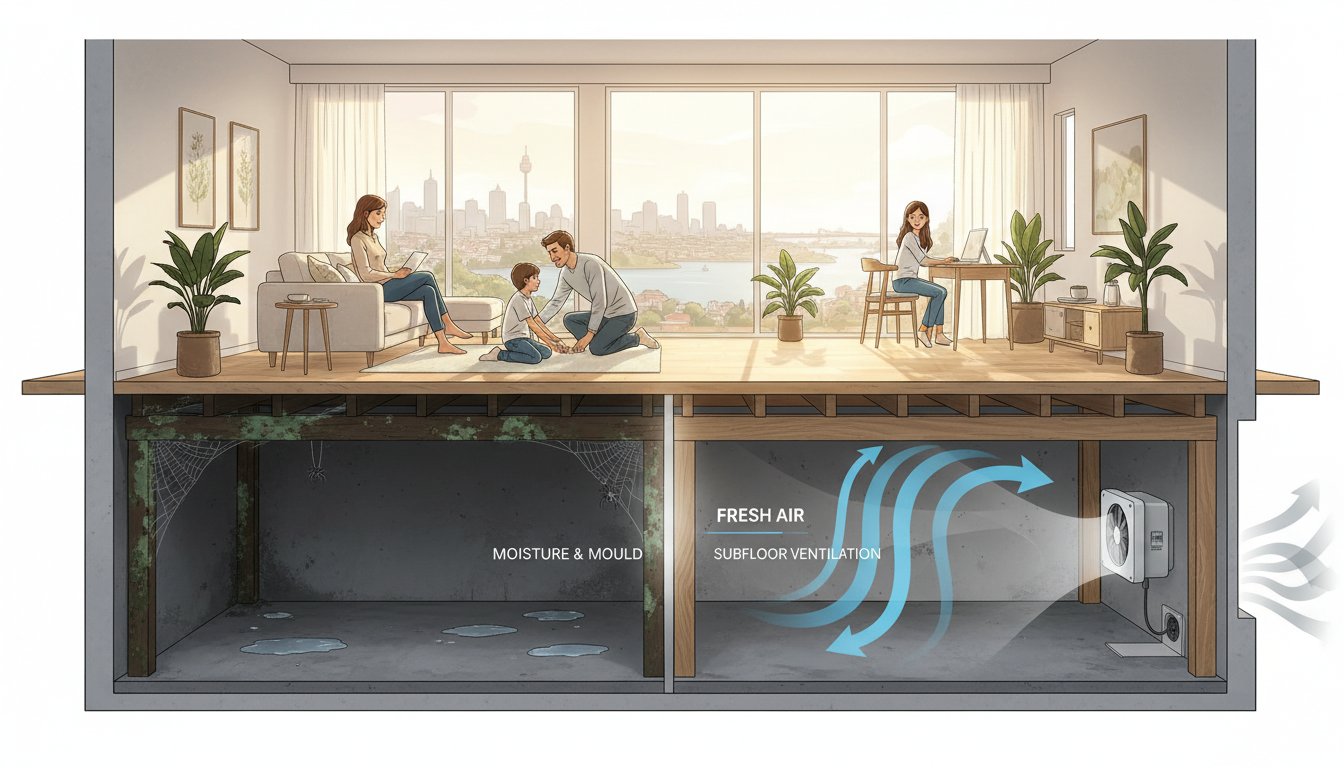
Beneath your home lies a dark, often-neglected area known as the subfloor or crawl space. Proper subfloor ventilation isn’t just about having a few air bricks in your foundation; it’s an active system designed to mechanically extract damp, stale air and replace it with fresh, dry air. This process is vital for protecting the structural integrity and health of your property.
The core problem is trapped moisture. In a city like Sydney, with its high humidity and significant rainfall, the ground under your home is often saturated. This moisture evaporates into the subfloor area, and without a clear escape path, it becomes trapped. Unlike traditional passive vents, which rely on wind and are often inadequate for modern homes or blocked by extensions, a mechanical system provides a reliable, effective solution. Don’t wait for damage to appear; proactive ventilation is the key to preventing costly mould remediation and structural repairs down the line.
The Dangers of a Damp Subfloor
A damp, stagnant subfloor is a breeding ground for serious issues that can compromise your property and your family’s health. The risks are too significant to ignore:
- Mould and Mildew: Airborne mould spores can infiltrate your living spaces, triggering allergies, asthma, and other respiratory problems.
- Timber Rot: Constant moisture causes decay in essential timber structures, including floorboards, joists, and bearers, leading to spongy floors and expensive repairs.
- Pest Infestations: Destructive pests like termites and wood borers are drawn to damp timber, posing a direct threat to your home’s foundation.
- Compromised Structural Integrity: Over time, the combination of rot and pest damage can weaken your home’s core structure, creating a major safety hazard.
How Poor Ventilation Traps Moisture
Moisture becomes a threat when it can’t escape. This happens due to several common issues in Sydney homes. The most frequent cause is a lack of cross-flow ventilation, where stale air has no exit path. This underfloor area, technically known as a crawl space, can become a pocket of stagnant, humid air if vents are blocked by garden beds, decking, or new extensions. Furthermore, rising damp, where groundwater travels up through porous materials like brick and concrete, constantly introduces new moisture. Without an effective system to remove it, this moisture accumulates, creating the perfect environment for mould and decay to thrive.
Signs Your Home is Crying Out for Better Underfloor Airflow
Your home often communicates problems long before they become disasters. When it comes to moisture under your house, the signs are subtle at first but can lead to serious structural damage and health risks if ignored. Don’t wait until the problem worsens. Learning to recognise these early warnings is the first critical step toward a healthy, mould-free home.
If you notice any of the following, it’s time to investigate your underfloor area or call a professional.
What to Look For (Visual Cues)
The most undeniable evidence of poor airflow is what you can see with your own eyes. A quick and careful look into your subfloor (if accessible) can reveal a lot about its health. These visual red flags are a direct result of trapped moisture and humidity, which often arise when the space fails to meet the minimum National Construction Code (NCC) requirements for airflow. Be on the lookout for:
- Visible mould or mildew: Black, green, or white fuzzy growth on timber joists, bearers, or the underside of your floorboards.
- Efflorescence: White, chalky stains on brickwork or concrete stumps, which are salt deposits left behind as water evaporates.
- Damp soil or pooling water: Saturated ground or visible puddles that never seem to dry out, even in dry weather.
- Rotting timber: Soft, crumbling, or darkening wood structures are a clear sign of destructive wood rot setting in.
What to Smell and Feel (Sensory Cues)
Not all warning signs are visible. Often, the first clue that something is wrong is a change in the atmosphere inside your living spaces. Don’t dismiss these sensory cues; they are your home telling you there’s a serious moisture problem that needs attention. This pervasive dampness is a clear indicator that your existing subfloor ventilation is inadequate.
- A persistent musty smell: A damp, earthy odour that lingers in rooms, cupboards, or wardrobes is the classic sign of subfloor mould releasing spores.
- Cold or spongy floors: Do your floors feel unusually cold, clammy, or bouncy underfoot? This is caused by moisture rising from below.
- Warped timber floorboards: Flooring that begins to cup, warp, or separate indicates it’s absorbing excessive moisture from the subfloor.
- High indoor humidity: If your home feels stuffy and condensation forms easily on windows, the source could be evaporating moisture from underneath.
Pest Activity as a Red Flag
Pests are not just a nuisance; they are a clear indicator of an unhealthy environment. Cockroaches, spiders, silverfish, and most destructively, termites, are all drawn to the dark, damp, and humid conditions created by poor airflow. If you’re facing a constant battle with pests, the problem might not be your spray-it’s the environment under your home. While treatments remove the immediate infestation, they don’t fix the underlying cause. Effective subfloor ventilation is the only permanent solution to make the area dry and inhospitable to these unwelcome guests.
How Subfloor Ventilation Systems Work: A Simple Guide
Think about how quickly a fan clears a steamy bathroom after a shower. A professional subfloor ventilation system operates on the same simple principle: active air exchange. The primary goal is to stop stagnant, moisture-laden air from accumulating under your home and replace it with fresh, drier air from outside. This constant airflow creates an environment where mould, mildew, and timber rot simply cannot thrive. It’s a proactive solution that addresses the root cause of underfloor dampness.
The Core Principle: Mechanical Air Exchange
Unlike passive wall vents that rely on wind, a mechanical system uses powerful, quiet fans to force consistent airflow. This is crucial for ensuring the entire subfloor area is properly ventilated, not just the sections near a vent. This mechanical process is designed to meet and often exceed the basic standards outlined in the National Construction Code (NCC) requirements. There are two main strategies:
- Negative Pressure: This is the most common method. Fans are positioned to pull damp, stale air out of the subfloor. Fresh air is then naturally drawn in through existing vents to replace it.
- Positive Pressure: In this setup, fans push fresh, dry air into the subfloor, forcing the damp air out through vents. This is often used for specific problem areas.
Key Components of a Modern System
A high-quality subfloor ventilation system isn’t just a fan in a wall. It’s an engineered solution comprising several critical parts working together for maximum efficiency:
- Inline Fans: These are the workhorses. Tucked within the ducting, these powerful yet energy-efficient fans are designed for continuous, quiet operation.
- Ducting: These flexible tubes are the system’s arteries, directing airflow precisely to damp, stagnant corners and problem spots that passive vents could never reach.
- Vents & Grilles: These are the intake and exhaust points, strategically placed to create optimal cross-flow ventilation across the entire subfloor.
- Timers & Humidistats: These smart controls automate the system. A timer can run the fans during drier parts of the day, while a humidistat activates them only when moisture levels exceed a set point, saving energy and ensuring peak performance.

Types of Subfloor Ventilation Systems: Choosing the Right Fan & Setup
If you’ve spent any time on forums like Reddit, you’ve seen the confusing and often contradictory advice about subfloor ventilation. The truth is, there is no one-size-fits-all solution. An effective system is designed specifically for your home’s unique layout, soil conditions, and moisture levels. Don’t risk your property on guesswork; understanding the components is the first step to making an informed decision.
Inline Axial Fans vs. Centrifugal Fans
The fan is the engine of your ventilation system, and choosing the right type is critical. The two most common types you will encounter are inline axial and centrifugal fans.
- Inline Axial Fans: These are great for moving high volumes of air through long, relatively straight ducting. They are generally more energy-efficient and quieter, making them ideal for simple layouts where the primary goal is to exchange a large amount of air.
- Centrifugal Fans: These fans are built to handle resistance. If your subfloor requires complex ductwork with multiple bends or long extraction points, a centrifugal fan is superior. It creates higher pressure to overcome the friction within the ducts, ensuring consistent airflow where an axial fan would struggle.
The right choice isn’t about which fan is “better,” but which is engineered for the specific demands of your property. A professional assessment will determine the correct fan to ensure your system performs effectively.
System Sizing: How Many Fans Do You Need?
This is one of the most common questions we hear. The answer depends on the volume of your subfloor (measured in cubic metres, m³), not just the floor area. Other critical factors include the current humidity levels, the source of the moisture, and the complexity of the underfloor layout. Simply adding more fans is not always better; a poorly designed system with too many fans can create air turbulence and dead spots where damp air remains trapped. A properly engineered subfloor ventilation system ensures balanced airflow across the entire space. Get a professional assessment to size your system correctly.
Passive vs. Mechanical Ventilation
It’s crucial to understand the difference between passive and active solutions. Passive vents, like the traditional terracotta or metal grilles in your foundation walls, rely entirely on natural wind to create air exchange. On a still, humid day, they do very little, allowing dampness and stale air to accumulate. For homes with persistent moisture and mould problems, passive vents are simply not enough.
A mechanical system uses fans to guarantee air exchange, creating a controlled and reliable environment under your home. It actively pulls damp, mouldy air out and replaces it with fresh, dry air, regardless of the weather. This is the only dependable way to manage subfloor moisture and stop mould growth at its source.
DIY vs. Professional Installation: A Critical Decision for Your Home
When you discover a damp, musty smell coming from under your house, taking action is critical. While DIY subfloor ventilation kits are available at hardware stores, they often fail to address the root cause of the problem. Choosing between a DIY attempt and a professional installation is not just about cost-it’s about the long-term health of your property and your family.
The Risks of a DIY Approach
Attempting to install a ventilation system without expert knowledge can be ineffective and dangerous. The risks are significant:
- Incorrect System Design: A one-size-fits-all kit doesn’t account for your home’s unique layout, airflow dead spots, and moisture sources. This often leads to poor results and wasted money.
- Illegal Electrical Work: In Australia, any hard-wired electrical components must be installed by a licensed electrician. Attempting this yourself is illegal and poses a serious fire and electrocution risk.
- Making the Problem Worse: Placing fans incorrectly can create negative pressure, pulling more damp air and even radon gas from the soil into your subfloor.
- Hazardous Working Conditions: Subfloor spaces can be confined and dangerous, containing pests like spiders or snakes, exposed wiring, and poor air quality.
The Benefits of Professional Installation
Engaging a professional “Mould Removalist” eliminates guesswork and guarantees an effective, safe solution. You gain complete peace of mind knowing the job is done right the first time.
- Expert Assessment: We identify the specific cause and extent of your subfloor moisture issues, ensuring the solution is targeted and effective.
- Custom System Design: Our team designs a complete subfloor ventilation system tailored to your home’s specific needs for maximum air exchange and moisture removal.
- Guaranteed Safety & Compliance: All work is performed to strict Australian Standards by qualified technicians, including licensed electricians for all wiring.
- Comprehensive Warranty: We provide a full warranty on both the high-quality components and our workmanship, protecting your investment.
What to Expect During a Professional Consultation
Our process is transparent and designed to give you clarity. When you call us, we will:
- Conduct a thorough on-site inspection of your subfloor area.
- Measure humidity levels and assess existing airflow patterns.
- Provide a detailed, no-obligation proposal that outlines the recommended system, installation process, and all associated costs.
Don’t leave your home’s structural integrity and air quality to chance. For a reliable and effective solution to subfloor moisture and mould, contact our expert team today for a professional assessment.
Secure Your Home’s Health from the Ground Up
Ultimately, the space beneath your floor is the foundation of a healthy home environment. As this guide has shown, recognising the signs of poor airflow-from musty odours to visible dampness-is the first critical step. An effective subfloor ventilation system isn’t just a repair; it’s a permanent solution that protects your property’s structural integrity and safeguards your family’s health from mould and allergens.
Don’t wait for a hidden moisture issue to become an expensive, damaging problem. As Sydney’s trusted mould and moisture control experts, we provide reliable, effective solutions tailored to your home. Our certified technicians conduct a thorough professional assessment and installation, ensuring we address the cause, not just the symptoms. You can trust our team to provide you with complete peace of mind.
Stop subfloor moisture for good. Get your free, no-obligation quote today! Take control of your home’s environment and breathe easier knowing your foundation is dry, healthy, and secure for years to come.
Frequently Asked Questions About Subfloor Ventilation
How much does subfloor ventilation cost in Sydney?
In Sydney, a professionally installed system typically ranges from A$2,000 to A$5,000. The final cost depends on factors like your home’s size, the number of fans needed, and ease of access to the subfloor area. This is a crucial investment in protecting your property’s structural integrity and your family’s health from mould damage. We provide transparent, itemised quotes and will beat any competitor’s written quote by 10% to ensure you receive the most effective and affordable solution.
Are subfloor ventilation fans noisy?
Not at all. Modern fans are engineered for ultra-quiet operation, often producing less noise than a standard refrigerator. Our expert technicians install them strategically to ensure any sound is virtually unnoticeable inside your home. You get the powerful benefits of a dry, healthy subfloor without any disruptive background noise. It’s a discreet and highly effective solution to protect your home from moisture and prevent mould growth before it starts.
How much electricity does a subfloor ventilation system use?
You’ll be surprised at how energy-efficient our systems are. Each fan is designed for low-power, continuous operation, typically using less electricity than a single old-fashioned light bulb. For a standard home installation, the running cost is very low, often adding only A$10 to A$20 per quarter to your electricity bill. This makes it an incredibly affordable way to provide 24/7 protection against the costly structural and health problems caused by subfloor dampness.
How long does it take to install a subfloor ventilation system?
For most standard residential homes, a complete subfloor ventilation system installation is completed within a single day, usually taking between 4 to 6 hours. Our certified technicians work efficiently and professionally to minimise any disruption to your home life. We arrive prepared to get the job done right and fast, ensuring your home is protected from subfloor moisture without delay. It’s that simple to get lasting peace of mind.
Will subfloor ventilation get rid of the musty smell in my house?
Yes, absolutely. That musty odour is a direct result of dampness, stagnant air, and mould growth under your floors. An effective subfloor ventilation system addresses the root cause by expelling the damp, spore-filled air and replacing it with fresh, dry air. This stops mould growth in its tracks and eliminates the source of the smell, dramatically improving the air quality throughout your entire home. Don’t wait for the problem to worsen; solve it permanently.
Can I claim the cost of subfloor ventilation on my home insurance?
This depends on your specific policy. Most insurance policies cover sudden and unforeseen events, not issues arising from gradual deterioration or lack of maintenance. However, if the system is required as part of a repair for an insured event, such as storm-related flooding, it may be covered. We strongly advise you to speak directly with your insurance provider to clarify your coverage. Proactively installing a system is the best way to prevent future claims.