That tell-tale bubbling paint near your skirting boards. The persistent, musty smell you can’t seem to air out. These aren’t just minor annoyances; they are urgent warning signs of a deeper problem silently damaging your Sydney home. Simply painting over the stains is a temporary fix for an issue that will only worsen, leading to costly structural damage and serious health risks from mould.
Don’t wait for the problem to escalate. The key to protecting your property value and your family’s health lies in correctly treating rising damp internal walls at the source. But where do you start? We understand the confusion and worry-that’s why we’ve created this definitive guide to give you professional clarity and peace of mind.
Here, you will learn the expert process for a permanent solution. We’ll show you how to identify the true cause of the damp, explain the most effective treatment methods used by certified technicians, and walk you through the crucial steps of restoring your plaster and eliminating harmful mould for good. You will know exactly what to expect from a professional service and how to reclaim your home.
Key Takeaways
- Correctly identify rising damp by its classic ‘tide mark’ to ensure you’re applying the right solution and not wasting money on incorrect treatments.
- Understand why surface-level DIY products fail. A permanent fix must address the failed Damp Proof Course (DPC), not just the visible symptoms.
- The expert process for treating rising damp internal walls involves creating a new, impermeable DPC to stop moisture at its source for good.
- Discover the crucial final step: replacing salt-contaminated plaster is essential for a truly permanent repair and to prevent future damp issues.
First, Confirm It’s Rising Damp on Your Internal Walls
Damp patches on your walls are alarming, but before you spend a dollar, you must be certain of the cause. Many damp issues look similar, but the wrong diagnosis leads to ineffective, costly ‘fixes’ that fail to solve the underlying problem. Successfully treating rising damp internal walls starts with a correct identification, because its source and behaviour are completely unique.
Misdiagnosing the issue means you waste time and money on treatments that don’t address the root cause. Don’t wait until the structural damage worsens-learn to spot the definitive signs first.
Key Visual Signs to Look For
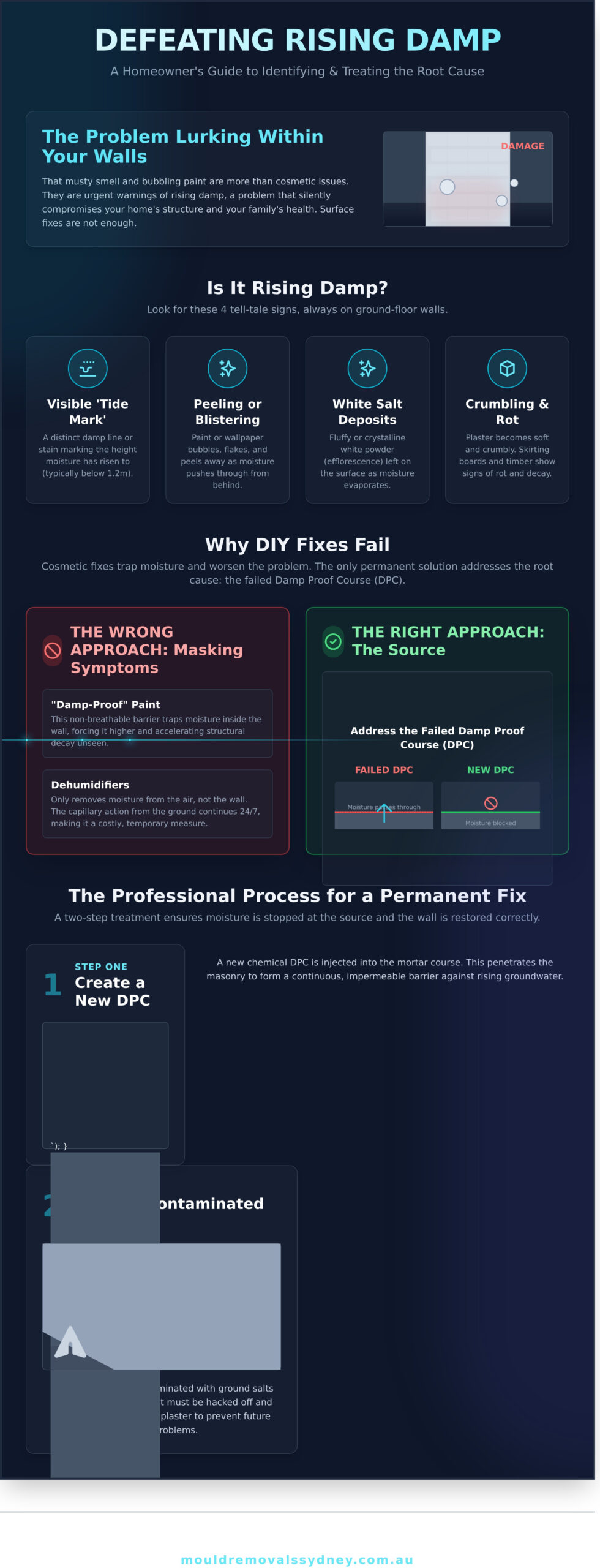
Rising damp leaves a distinct trail of evidence, always starting from the ground and moving upwards. Look for these unmistakable signs, which are exclusive to ground-floor walls:
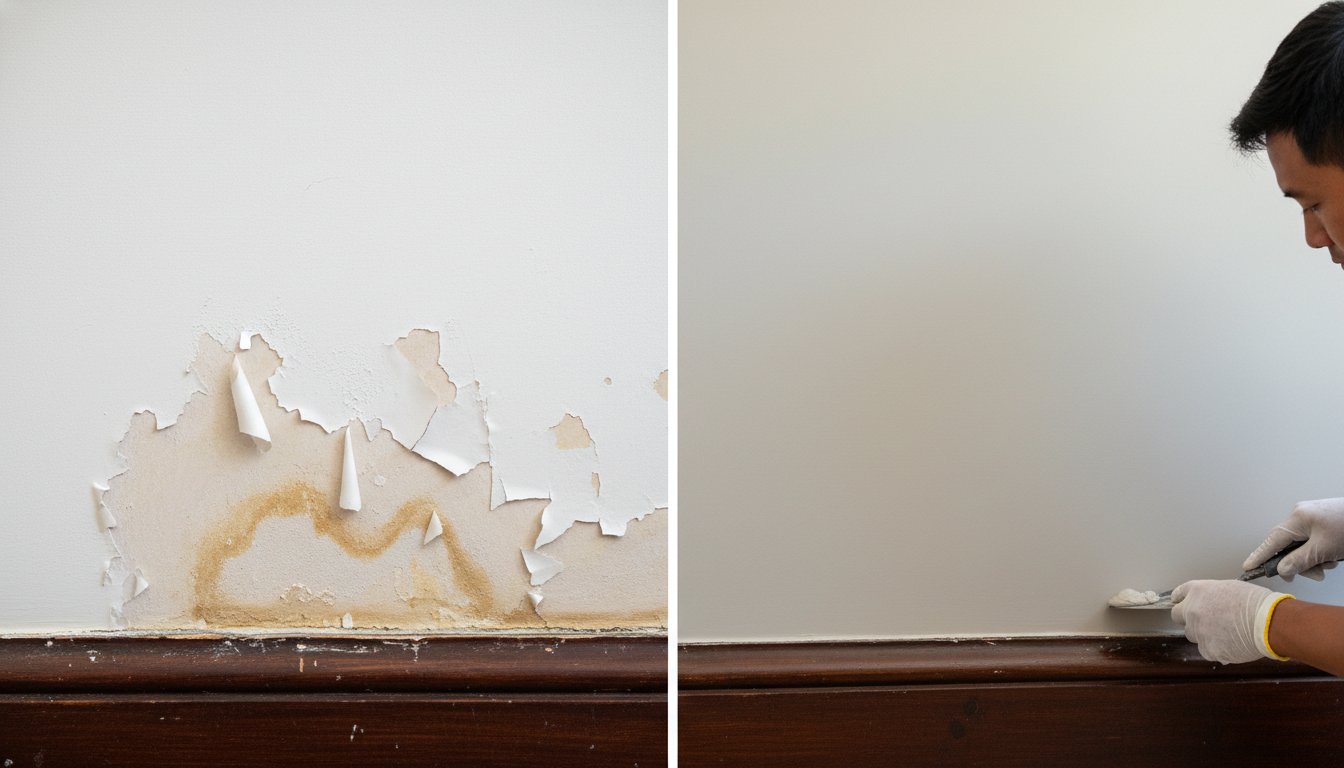
- Peeling or Blistering Paint: Moisture pushing through the plaster causes paint and wallpaper to bubble, flake, or peel away. This damage is typically concentrated below 1.2 metres from the floor.
- A Visible ‘Tide Mark’: A distinct damp line or stain appears on the wall, marking the height the water has risen to. The wall will be damp to the touch below this line and dry above it.
- White Salt Deposits (Efflorescence): As the moisture evaporates from the wall surface, it leaves behind white, fluffy, or crystalline salt deposits. This is a classic sign of moisture coming from the ground.
- Crumbling Plaster & Decaying Timber: Constant moisture saturation causes plaster to break down and become soft. Nearby skirting boards may show signs of rot, decay, or termite attraction.
Rising Damp vs. Other Common Damp Problems
It’s easy to confuse rising damp with other common moisture problems in Australian homes. The key difference is always the source of the water. Unlike condensation (which appears as surface droplets on cold walls) or penetrating damp (caused by external leaks from faulty gutters or cracked pipes), rising damp is specifically caused by groundwater being absorbed upwards through porous building materials. Understanding what is rising damp and its process of capillary action is crucial, as it explains why simply painting over the stain will never work.
If the damp patch is on an upper-level floor or starts high on a ground-floor wall, it is not rising damp. A professional diagnosis is the critical first step in effectively treating rising damp internal walls and protecting your property’s value for the long term.
Why DIY Fixes Fail: Addressing the Root Cause, Not Just the Symptom
When you see damp patches, peeling paint, or salt stains, the first instinct is often to cover them up. Many Sydney homeowners waste time and money on off-the-shelf products, hoping for a fast, affordable fix. This is a critical mistake. These cosmetic solutions only mask the visual problem; they do nothing to stop the relentless source of moisture from the ground.
Trapping this moisture can accelerate the decay of your home’s structure. When it comes to properly treating rising damp internal walls, understanding the true cause is non-negotiable, a principle backed by expert advice on damp in older homes from heritage building specialists. The only permanent solution is to rectify the failed or missing Damp Proof Course (DPC).
The Truth About ‘Damp-Proof’ Paint
So-called ‘damp-proof’ paint is one of the most common DIY errors. It works by creating a non-breathable, plastic-like barrier on the wall surface. While it might hide the stain for a short time, it traps the rising moisture within the brickwork. With nowhere to evaporate, this water is forced to travel higher up the wall, spreading the damp patch and causing even more damage. The underlying masonry remains saturated, leading to crumbling bricks and mortar decay, all hidden behind a thin layer of paint.
Why Dehumidifiers Aren’t a Long-Term Solution
A dehumidifier can make a room feel less humid, but it is not a solution for rising damp. These appliances only remove moisture from the air-they do absolutely nothing to stop groundwater from wicking up through the structure of your walls. The capillary action continues 24/7. As soon as you turn the machine off, the problem returns. Relying on a dehumidifier for treating rising damp internal walls means paying a high, ongoing energy cost for a temporary result that doesn’t protect your property’s value or structural integrity.
The Professional Process for Treating Rising Damp at the Source
Simply painting over damp patches or using a dehumidifier offers only temporary relief. A true, permanent solution requires tackling the problem at its origin. The professional approach to treating rising damp internal walls involves creating a brand new, impermeable barrier within the wall itself. This is known as installing a new Damp Proof Course (DPC).
Our certified technicians use specialised equipment and proven methods to provide a lasting solution that is far less disruptive than traditional building works. The process is systematic, effective, and designed to give you complete peace of mind.
Step 1: Expert Diagnosis and Moisture Mapping
Before any treatment begins, a precise diagnosis is essential. Our technicians use professional-grade electronic moisture meters to confirm rising damp is the culprit. We meticulously map the exact height and spread of the moisture within the wall. This crucial step ensures the treatment is targeted precisely where it’s needed for complete effectiveness and allows us to rule out other contributing sources like leaking pipes or penetrating damp.
Step 2: Installing a New Chemical DPC Injection
The most effective and widely used modern method is the installation of a chemical DPC. This advanced technique provides a powerful, permanent barrier against moisture intrusion.
- Precision Drilling: A series of small, precise holes are drilled into the mortar course at the base of the affected wall, following a specific pattern to ensure complete coverage.
- High-Strength Injection: A specialised, silicone-based cream is injected into these holes under controlled pressure. This advanced formula is designed to permeate deep into the brick and mortar.
- Creating the Barrier: Once injected, the cream diffuses through the masonry before curing. This curing process forms a continuous, water-repellent barrier, permanently blocking moisture from rising up the wall from the ground.
This systematic approach ensures the source of the damp is cut off completely. Once the new DPC is in place and has cured, the wall can begin to dry out, paving the way for the final repair and redecoration stages. Trusting an expert ensures the job is done right the first time, protecting your property’s value and your family’s health.
Crucial Steps: Restoring Your Internal Walls After Treatment
Installing a new damp proof course (DPC) is a vital first step, but it’s only half the job. The real challenge in successfully treating rising damp internal walls lies in the restoration that follows. Your existing plaster is contaminated with groundwater salts left behind as the dampness evaporated over months or years. These salts are hygroscopic, meaning they actively draw moisture from the air, making the wall feel damp even after the source is fixed.
Simply painting or plastering over this contaminated surface is a recipe for failure. The damp patches and blistering paint will inevitably return. Proper, professional restoration is the only way to guarantee a dry, long-lasting finish.
Removing Salt-Contaminated Plaster
This is not an optional step; it is the most critical part of the restoration process. All old, damaged plaster must be physically hacked off the wall to a height of at least 300mm above the highest point of the visible damp or ‘tide mark’. This is the only way to remove the hygroscopic salts embedded in the material. Failing to do this is the number one reason why DIY or amateur rising damp treatments fail. This essential removal prepares the bare brickwork for a specialised new render.
Replastering with Salt-Retardant Materials
Once the brickwork is exposed and cleaned, it cannot be replastered with standard gypsum plaster. A specialised system is required to hold back any residual salts and allow the wall to breathe. This typically involves:
- Applying a dense sand and cement render, often mixed with a salt-inhibiting and waterproofing additive.
- This new barrier prevents any residual salts deep within the brickwork from migrating into your final decorative finish.
- A final skim coat is applied to provide a smooth, professional surface ready for redecorating once fully cured.
Treating Associated Mould Growth
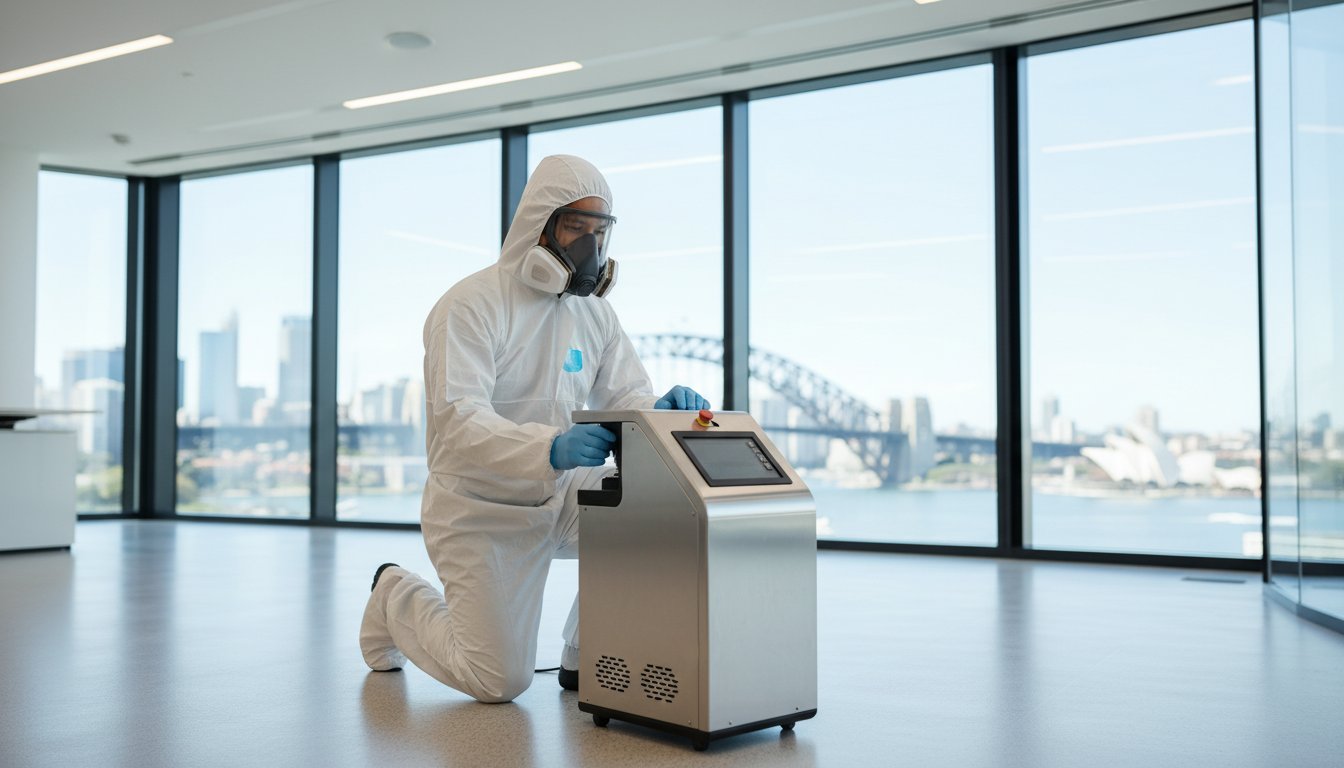
Where there’s persistent damp, mould is almost always a dangerous consequence. The constant moisture creates the perfect breeding ground for mould colonies, which can pose serious health risks. Simply painting over the mould is not a solution-it just hides the problem while harmful spores continue to contaminate your air. For a guaranteed result, professional mould remediation is essential. Experts, like those at ABC Mould Cleaning Solutions, utilize specialized techniques and products to safely eliminate all surface mould and purify the air, ensuring your home is not just dry, but healthy too.
How to Prevent Future Damp and Protect Your Property
Successfully treating rising damp internal walls is a significant achievement, but the work doesn’t stop there. Once the immediate problem is solved, simple and consistent maintenance is your best defence against future damp issues. Protecting your property isn’t just about repairs; it’s about creating a dry, healthy environment that safeguards your investment for years to come. Many of these preventative measures are simple, inexpensive, and highly effective.
Good ventilation and effective external drainage are the two most critical factors in preventing damp from returning. By taking a proactive approach, you can stop moisture issues before they have a chance to cause costly damage and affect your family’s health.
Improve Subfloor Ventilation
A damp, humid subfloor is one of the biggest contributors to rising damp. Trapped moisture under your home creates a constant source of dampness that can be drawn up into your masonry. Improving airflow is essential to keep this area dry. Regularly check that all your external air bricks are clear of soil, plants, and debris. For a more robust solution, consider installing professional subfloor ventilation fans to actively pull damp air out and promote a dry foundation. Ask about our professional subfloor ventilation solutions.
Check External Ground Levels & Drainage
Your home’s Damp Proof Course (DPC) is a physical barrier designed to stop moisture from the ground rising up your walls. However, it can be easily bypassed. It’s crucial to ensure the ground outside your home is not compromising this defence. Take these steps:
- Check Ground Levels: Ensure that soil, garden beds, paths, and patios are at least 150mm below the DPC line. If the ground level is too high, it creates a “bridge” for moisture to travel over the DPC and into your walls.
- Verify Drainage: All surfaces should slope away from your home’s foundation, directing rainwater into drains, not towards your walls.
- Clear Drains & Gutters: Check that all drains and gutters are clear and functioning correctly. A blocked downpipe can saturate the ground next to your foundation, creating the perfect conditions for damp.
These preventative steps are a crucial part of a long-term strategy. By staying vigilant with ventilation and drainage, you complement the professional work of treating rising damp internal walls and ensure your home remains safe, dry, and structurally sound. For a complete property assessment, trust the experts at mouldremovalssydney.com.au.
Secure Your Home: The Final Word on Treating Rising Damp
Rising damp is a serious structural problem, not just a cosmetic issue. As this guide has shown, painting over damp patches or trying DIY solutions will only mask the symptoms, allowing moisture to cause further damage to your property. The only permanent solution is to address the root cause: a failed or missing Damp Proof Course (DPC). A professional approach is non-negotiable for successfully treating rising damp internal walls and ensuring the problem doesn’t return.
As ABC Mould Cleaning Solutions, Sydney’s trusted damp and mould experts, we provide a comprehensive solution. Our certified technicians handle everything from installing a new, effective DPC to completely restoring your internal walls. We even eradicate any resulting mould with our specialised Goldmorr System, ensuring your home is not only dry but also healthy. Don’t let rising damp compromise your property’s value and safety. Contact our Sydney experts for a free assessment and quote today!
Take the first step towards a dry, healthy, and secure home. We’re here to restore your peace of mind.
Frequently Asked Questions About Treating Rising Damp
How much does rising damp treatment cost in Sydney?
The cost for treating rising damp in Sydney typically ranges from A$280 to A$500 per linear metre. The final price depends on factors like the thickness of your walls, the type of brickwork, and ease of access. For an accurate, obligation-free quote, our expert technicians need to assess the specific extent of the damage. Send us images of your affected walls today, and we can provide you with an affordable and precise estimate for a permanent solution.
How long does the treatment and wall restoration process take?
The chemical damp-proof course (DPC) injection itself is a fast and efficient process, often completed in just one day for an average-sized property. However, the wall itself needs time to dry out completely. As a general rule, you should allow one month of drying time for every 25mm of wall thickness. Our technicians will provide a clear timeline and advise on the best time to safely re-plaster and redecorate once the wall is sufficiently dry.
Is the chemical DPC injection process safe for my family and pets?
Absolutely. We use modern, professional-grade DPC injection creams that are water-based, low-odour, and non-flammable. The treatment is injected directly into the masonry, and once it cures inside the wall, it becomes a permanent, inert barrier. There are no harmful fumes or residues, making the process completely safe for all occupants of your home, including children and pets. You can have total peace of mind knowing our methods are both effective and safe.
Will rising damp come back after professional treatment?
No. When performed by certified experts, a chemical DPC injection is a permanent solution. It creates a powerful, impenetrable barrier deep within the brickwork that stops moisture from rising. Unlike temporary fixes, professionally treating rising damp internal walls addresses the root cause of the problem. We are so confident in our industry-leading methods that our work is backed by a long-term guarantee, ensuring your walls stay dry and protected for decades to come.
Can’t I just replaster over the damp patch on my wall?
This is a common mistake that will only make the problem worse. Simply covering a damp patch with new plaster or paint traps the moisture inside the wall. This accelerates the decay of brick and mortar, promotes hidden mould growth, and can lead to serious structural issues. You must treat the source of the damp first. A cosmetic fix is never the answer and will ultimately cost you more in extensive repairs down the line.
Does home insurance cover the cost of treating rising damp?
In Australia, most standard home and contents insurance policies do not cover rising damp. It is typically classified as a maintenance issue or a problem resulting from gradual wear and tear, which are common exclusions. While it’s always best to check the specific Product Disclosure Statement (PDS) for your policy, you should not expect your insurer to cover the cost of the treatment or the subsequent repairs to internal walls. Investing in professional treatment is a necessary property maintenance cost.