
The sound of a burst pipe, the squelch of a soaked carpet, the sight of a spreading stain on the ceiling-it’s a moment of pure panic for any Sydney homeowner. Your mind races with questions: How do I stop it? Is my home’s structure at risk? And the biggest worry of all: what will this cost? In these critical first moments, immediate and correct action is the key to effective water damage repair and preventing long-term problems.
Don’t let worry take over. This emergency guide is the clear, professional action plan you need right now. We will walk you through the crucial first steps to secure your property, explain the professional restoration process from start to finish, and show you how to ensure your home is dried completely to prevent the hidden health risks of mould growth. You can take control of the situation, and we’re here to show you how. It’s that simple.
Emergency First Steps: What to Do in the First 30 Minutes
Discovering a flood in your home triggers immediate stress, but don’t panic. The next 30 minutes are a critical window where your actions can significantly reduce the overall damage and the final cost of your water damage repair. This clear, step-by-step plan is designed to guide you through these crucial first moments before our professional team arrives. While understanding the different water damage categories is important for the long-term restoration plan, your immediate actions are universal and must prioritise safety above all else. Follow these steps to protect your family and your property.
Safety First: Protect Yourself and Your Family
Before you attempt to save any belongings, you must secure the area. Water and electricity are a dangerous combination, and wet surfaces present a serious risk. Your personal safety is the number one priority.
- Turn Off the Power: If you can safely access your main breaker box without standing in or walking through water, shut off the electricity to all affected areas of your home. If you are unsure, do not risk it.
- Beware of Slip Hazards: Wet floors, especially tiles and floorboards, are extremely slippery. Move carefully and wear sturdy, rubber-soled shoes.
- Do Not Use Household Vacuums: Never use a standard wet/dry vac or household vacuum to remove water. This poses a severe risk of electrocution and can damage the appliance.
- Keep Children and Pets Away: The affected area is a hazard zone. Ensure children and pets are secured in a safe, dry part of the house, far from the water and any potential electrical risks.
Stop the Water Source and Minimise Damage
Once the immediate area is safe to enter, your next goal is to stop more water from causing further harm. Mitigating the damage now will make the professional restoration process faster and more effective.
- Shut Off the Main Water Valve: If the flooding is from a burst pipe or plumbing failure, shut off your home’s main water valve immediately. This will stop the flow and prevent the situation from worsening.
- Move Valuables and Furniture: Relocate smaller items like rugs, electronics, photos, and important documents to a dry area. If furniture is too heavy to move, protect it.
- Protect Furniture Legs: Place small squares of aluminium foil or plastic blocks under the legs of wooden and metal furniture. This creates a barrier that prevents water from wicking up and causing rust or wood stains on your carpet.
- Contain Drips: If the leak is slow, use buckets, pots, and towels to catch as much water as possible and keep it from spreading.
By taking these decisive actions, you have laid the groundwork for a successful recovery. Now that you have controlled the immediate emergency, the next step is to bring in certified experts for a thorough assessment and professional water damage repair.
Understanding the Threat: Water Damage Categories and the Mould Risk
When your property is flooded, the first mistake is assuming all water is the same. The type of water intrusion dictates the health risks, the required safety protocols, and the entire approach to a successful water damage repair. Understanding the threat is the first step toward a safe and effective solution. Don’t wait to assess the situation; immediate action is critical.
The 3 Categories of Water Damage
To ensure safety and effectiveness, our industry follows classifications set by the Institute of Inspection, Cleaning and Restoration Certification (IICRC). These professional water damage restoration standards categorise water into three types, each demanding a specific response.
- Category 1 (Clean Water): This is water from a sanitary source, like a burst supply pipe or an overflowing sink. While it poses no immediate health threat, it can quickly degrade into Category 2 if left untreated.
- Category 2 (Grey Water): This water is significantly contaminated and can cause illness upon exposure. Common sources include discharge from a dishwasher, washing machine, or a toilet bowl with urine but no faeces.
- Category 3 (Black Water): This is grossly contaminated water containing dangerous pathogens, bacteria, and toxins. Sources include sewage backflow, rising floodwaters from rivers, or any water that has contacted raw sewage. This category presents a severe health risk and requires immediate professional intervention.
The Inevitable Link: Why Water Damage Guarantees Mould
Once water has soaked into your walls, floors, or furnishings, a new clock starts ticking. Mould spores are naturally present everywhere, and they only need one thing to activate and multiply: moisture. On a damp surface, mould can begin to colonise in as little as 24 to 48 hours.
That musty, earthy odour you smell after a water leak is not just dampness-it’s a clear sign that mould growth has already begun, even if you can’t see it. Attempting to dry the area without professional equipment almost guarantees that moisture will remain trapped, turning a manageable water damage situation into a severe and costly mould infestation. Proper, rapid drying isn’t just a suggestion; it’s the only way to prevent a secondary disaster.
The Professional Water Damage Repair Process Explained
When faced with water damage, the path to recovery can seem daunting. However, professional restoration is not a mystery; it’s a highly structured, scientific process designed to get your property back to normal safely and efficiently. Understanding these steps can provide peace of mind, knowing that a proven method is being used. Our expert team follows a rigorous, industry-standard protocol to ensure no detail is missed.
Step 1: Inspection, Assessment, and Water Extraction
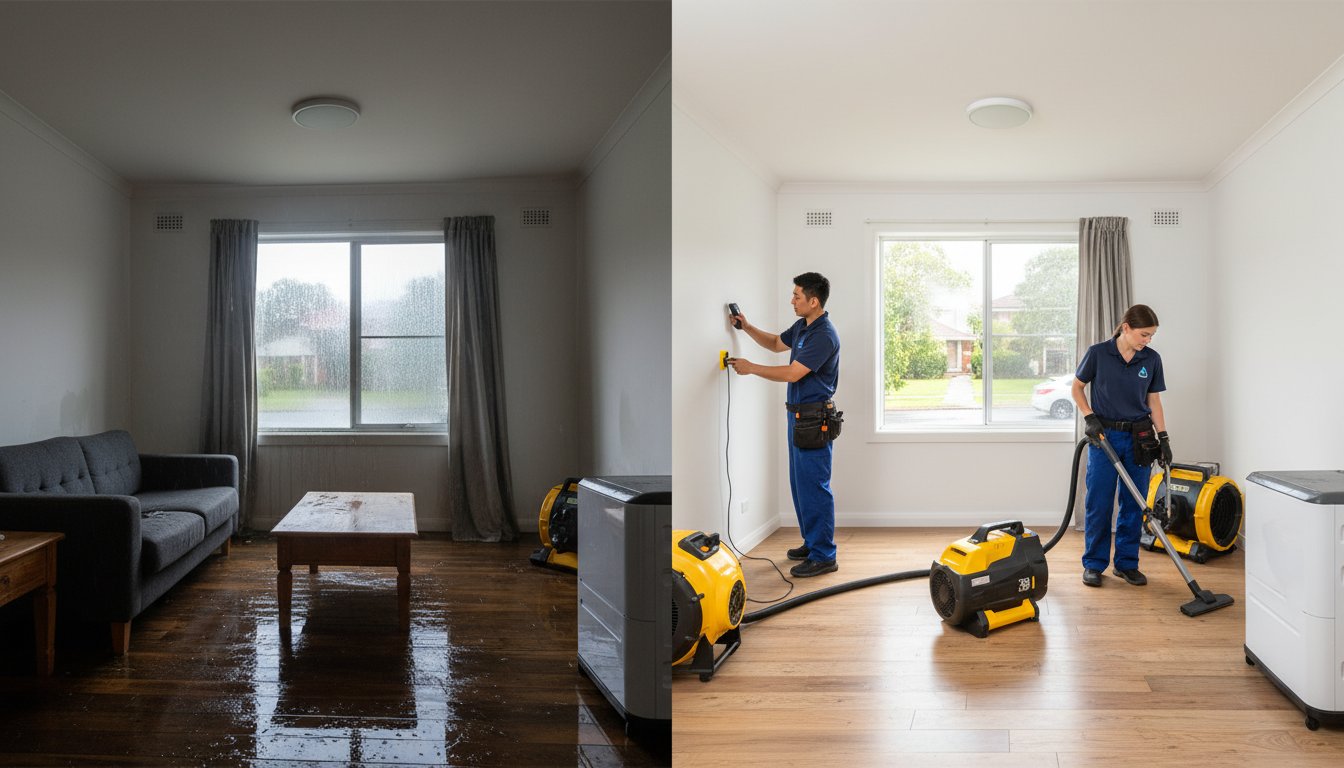
The moment our technicians arrive, their first job is to stop the water source and conduct a thorough assessment. Using advanced tools like moisture meters and thermal imaging cameras, we locate all moisture, even what’s hidden behind walls. We classify the water (from clean to highly contaminated) and map the full extent of the damage. While we handle the technical side, it’s always wise to be familiar with the emergency first steps for flooding for your family’s safety. Once the area is secure, we use powerful, truck-mounted pumps to extract all standing water immediately.
Step 2: Professional Drying and Dehumidification
After extraction, the focus shifts to removing residual moisture from the air and materials. This is where specialised equipment is critical. We strategically place industrial-grade air movers to create rapid, targeted airflow across wet surfaces, accelerating evaporation. Simultaneously, commercial dehumidifiers work to pull that moisture out of the air. This process is not guesswork; we monitor it daily with moisture readings until your property meets established drying goals.
Step 3: Cleaning, Sanitising, and Mould Prevention
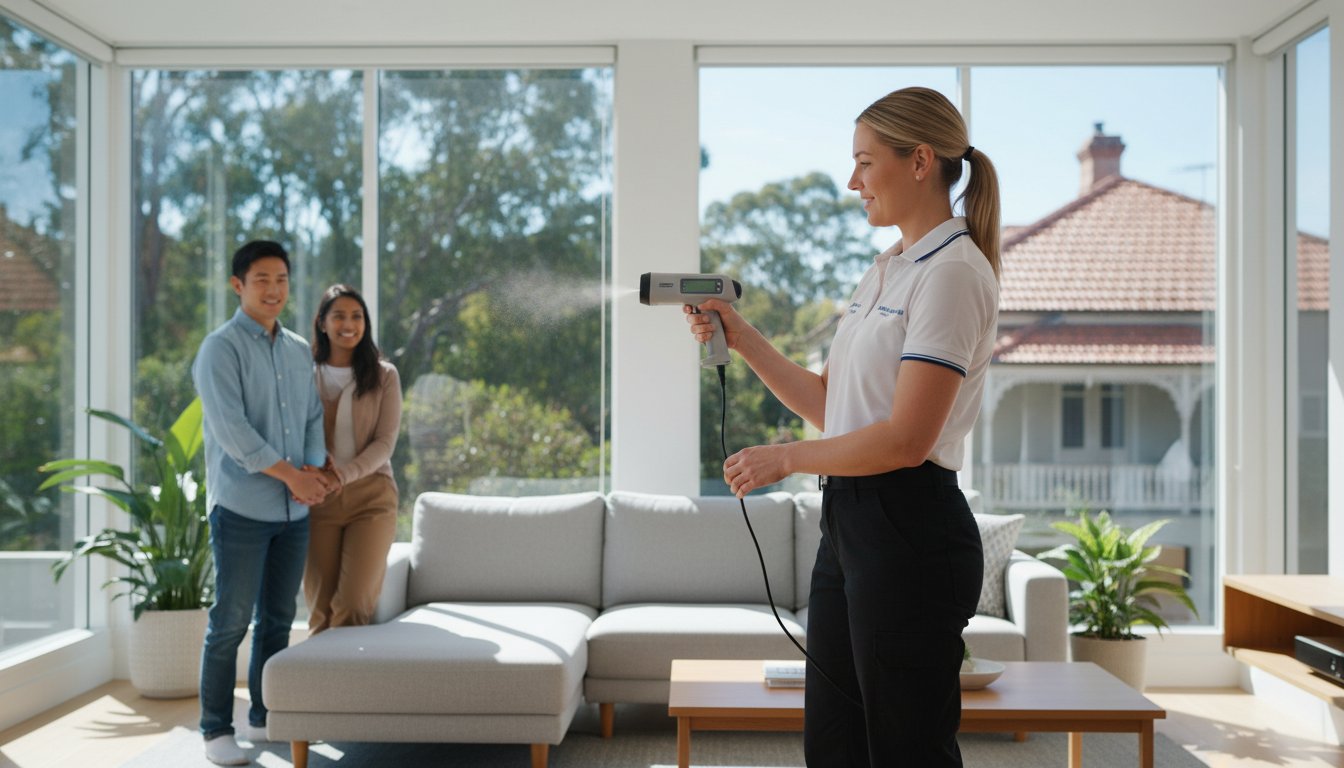
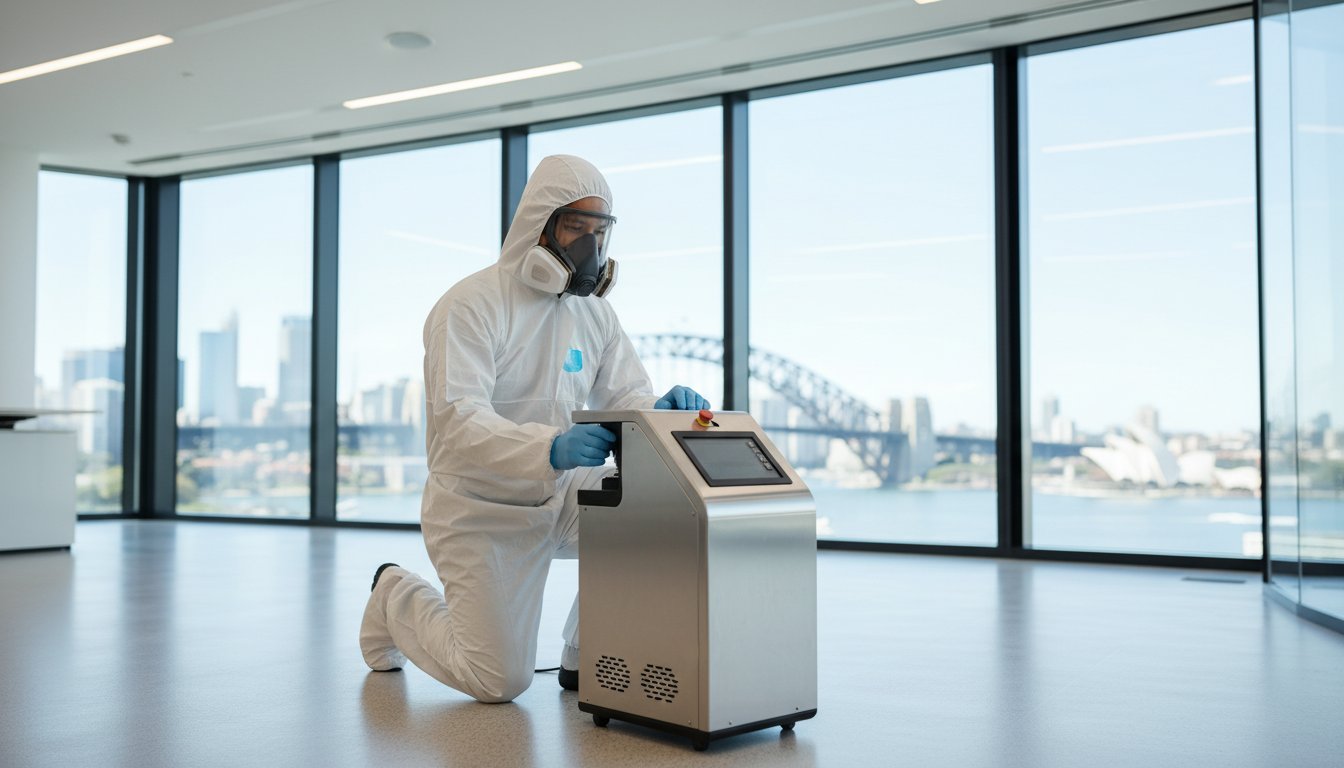
Water damage leaves behind dirt, bacteria, and the risk of mould. All affected surfaces and belongings are thoroughly cleaned and sanitised. To ensure your home remains safe, we apply professional-grade antimicrobial treatments to inhibit mould growth. For superior protection against airborne spores, we can deploy our exclusive Goldmorr System to treat the air itself, providing a comprehensive preventative measure. Need expert drying and mould prevention? Call us now.
Step 4: Restoration and Final Repairs
The final stage of the professional water damage repair process is restoring your property to its original condition. This can range from minor repairs, such as replacing sections of plasterboard and painting, to major reconstruction work like rebuilding walls or installing new flooring. Our goal is to seamlessly return your home to its pre-damage state, making the incident a distant memory. It’s that simple.
Common Causes of Water Damage in Sydney Homes (and How to Prevent Them)
Shifting from emergency response to proactive prevention can save you thousands in stress, disruption, and the need for extensive water damage repair. Understanding the common culprits behind water damage is the first step to protecting your Sydney home. Don’t wait for a disaster to happen; take control today by learning what to look for.
Top 5 Culprits of Indoor Water Damage
In our experience, most water damage incidents in Sydney stem from a handful of recurring issues. Being aware of them is half the battle.
- Burst or Leaking Pipes: Many Sydney properties, from older terraces to modern homes, can have ageing or improperly installed plumbing. Over time, pipes corrode and weaken, leading to sudden bursts or persistent, hidden leaks inside walls.
- Faulty Appliances: Your dishwasher, washing machine, or hot water system can fail without warning. A split supply hose or a malfunctioning internal part can release a significant amount of water in minutes.
- Leaking Roofs & Blocked Gutters: Sydney’s intense rainstorms put immense pressure on our roofs. Gutters clogged with leaves and debris cause water to overflow and seep into wall cavities and ceilings, leading to serious structural issues.
- HVAC System Blockages: Air conditioning is a must in our climate, but condensation drain lines can become clogged with algae and debris, causing water to back up and spill into your home.
- Clogged Toilets & Sewer Lines: A simple clog or a serious sewer line backup can cause highly contaminated water to flood your property, requiring immediate and professional water damage repair.
A Homeowner’s Prevention Checklist
You can dramatically reduce your risk with a few simple, routine checks. Here is a practical checklist to help you stay ahead of potential problems.
- Inspect Regularly: At least twice a year, check appliance hoses for any signs of cracking or bulging. Look for moisture around toilets, sinks, and hot water systems.
- Know Your Shut-Off Valve: Every homeowner must know the location of their main water shut-off valve. In an emergency, turning it off immediately can prevent catastrophic damage.
- Clear Your Gutters: Before storm season hits, ensure your gutters and downpipes are completely clear to allow rainwater to flow freely away from your property’s foundation.
- Schedule Professional Inspections: A licensed plumber can assess your pipes, and a roofer can check for damaged tiles. A small investment in maintenance can prevent a major disaster.
While prevention is key, some situations are unavoidable. If you find yourself facing an emergency, our team of professional water damage and mould removalist experts is here to provide a fast, effective solution. It’s that simple.
Choosing a Water Damage Repair Service in Sydney
When your property is flooded, the pressure to act fast is immense. But choosing the wrong company can lead to bigger problems down the line, including secondary damage and lingering health risks. Making an informed decision is crucial. Here’s what to look for to ensure you hire a professional and reliable team for your water damage repair needs in Sydney.
What to Look For in a Restoration Company
In a stressful situation, this simple checklist can help you quickly vet potential services and find a trustworthy partner:
- IICRC Certification: Always ensure technicians are certified by the Institute of Inspection, Cleaning and Restoration Certification (IICRC). This is the global standard for the industry, guaranteeing they follow proven processes for safety and effectiveness.
- 24/7 Emergency Response: Water damage doesn’t wait for business hours. A true professional offers around-the-clock service to mitigate damage immediately and prevent the problem from worsening.
- Insurance Experience: A company familiar with the insurance claims process in Australia can be a massive help, providing the correct documentation and reports to support your claim and reduce your stress.
- Local Reviews and References: Check recent Google reviews and ask for testimonials from other Sydney homeowners. A reputable company will have a strong, verifiable track record in your local area.
Why a Mould Specialist is Your Best Choice
Water damage is more than just a structural problem; it’s a health risk. Where there is moisture, mould is almost guaranteed to follow, often within just 24-48 hours. Many standard restoration companies focus only on drying the visible water, leaving behind a hidden threat that can compromise your air quality.
This is where a specialist makes all the difference. As certified Mould Removalists, we perform a complete water damage repair service that doesn’t just stop at drying. We use advanced, non-toxic techniques like the Goldmorr System to perform air scrubbing and fogging, eliminating both surface mould and the invisible airborne spores that other companies miss. This integrated approach saves you the future cost and stress of a secondary mould infestation, protecting your property and your family’s health. Don’t settle for a partial fix.
Get a complete water damage and mould prevention quote today.
Secure Your Home with Sydney’s Trusted Water Damage Experts
Water damage in your Sydney home is a stressful event, but your response makes all the difference. Remember, acting quickly is crucial to minimise long-term issues, and understanding the serious risk of mould is non-negotiable. Choosing a certified professional isn’t just a good idea-it’s essential for protecting your property and your family’s health from further harm.
When you need effective and reliable water damage repair, you can’t afford to wait. Our 24/7 Emergency Response Team is ready to act now. With IICRC-certified technicians and our specialist Goldmorr System to prevent mould, we provide a complete solution to restore your home and your peace of mind. We don’t just fix the damage; we make your home safe again.
Facing a water damage emergency? Call our 24/7 Sydney team for immediate help! Take the right step today, and let us handle the rest. It’s that simple.
Frequently Asked Questions About Water Damage Repair
How much does professional water damage repair cost in Sydney?
The cost of professional water damage repair in Sydney varies significantly based on the extent of the damage. A minor leak affecting a small area might cost between A$500 and A$2,500. However, for significant damage involving multiple rooms or structural drying, costs can range from A$3,000 to over A$15,000. Key factors include the water category (clean vs. contaminated), the size of the affected area, and the materials needing restoration. Always get a detailed, written quote for an accurate price.
How long does the water damage restoration process take?
The timeline depends entirely on the severity of the water damage. The initial water extraction and assessment can take several hours. The most critical phase, structural drying with industrial dehumidifiers and air movers, typically takes 3 to 5 days. Subsequent repairs, such as replacing drywall or flooring, can add several more days or even weeks for extensive restoration projects. A professional technician can provide a more precise timeline after a thorough inspection of the property.
Can I just use fans and open windows to dry out the damage myself?
Relying solely on household fans and open windows is a dangerous mistake. This method only addresses surface moisture and cannot extract water trapped within walls, subfloors, and insulation. This hidden moisture is a breeding ground for mould, which can appear in just 24-48 hours and lead to serious health risks and structural rot. Professional equipment is essential for comprehensive drying and preventing long-term problems. Don’t wait for the problem to worsen-it will.
Will my homeowners insurance cover water damage?
In Australia, most standard home and contents insurance policies cover water damage from sudden and accidental events, such as a burst pipe, leaking appliance, or storm damage. However, they typically do not cover damage from gradual leaks, poor maintenance, or flooding from natural watercourses (which often requires separate flood cover). It’s crucial to review your specific policy’s Product Disclosure Statement (PDS) and contact your insurer immediately to clarify your coverage.
What is that musty smell after a water leak?
That distinct musty or earthy odour is a clear warning sign of mould and mildew growth. These fungi thrive in damp, humid environments and can begin to grow within 24 to 48 hours of water exposure. The smell comes from microbial volatile organic compounds (MVOCs) released during their growth cycle. This indicates that the area is not properly dry and requires immediate professional attention to prevent health risks and further property damage.
Is it safe to stay in my house during the water damage repair process?
For your safety, it is often best to find temporary accommodation, especially during the initial stages. The repair area can present several hazards, including electrical risks from wet wiring, structural instability, and poor air quality from airborne contaminants like mould spores. The noise and disruption from industrial drying equipment can also make the environment uncomfortable. Our team will assess the situation and provide a clear recommendation based on the specific safety risks involved.