Does your Sydney home feel perpetually stuffy, no matter how much you run the air con? Are you constantly wiping condensation from your windows, only to find that musty smell-or worse, mould-creeping back? These aren’t just annoyances; they’re signs of a serious indoor air quality problem. But what if you could have a constant supply of fresh, filtered air without sending your energy bills through the roof? This is where an ERV (Energy Recovery Ventilator) becomes your home’s most effective defence.
In this guide, we break down exactly what an ERV system is and how it works to protect your property and your health. You will discover how this innovative technology tackles the root cause of mould-excess humidity and stale air-while recovering energy to keep your home comfortable and efficient. It’s time to stop fighting symptoms and start breathing clean. Read on to see why an ERV is the long-term solution for a healthier, mould-free home.
What is an ERV? A Simple Guide for Sydney Homeowners
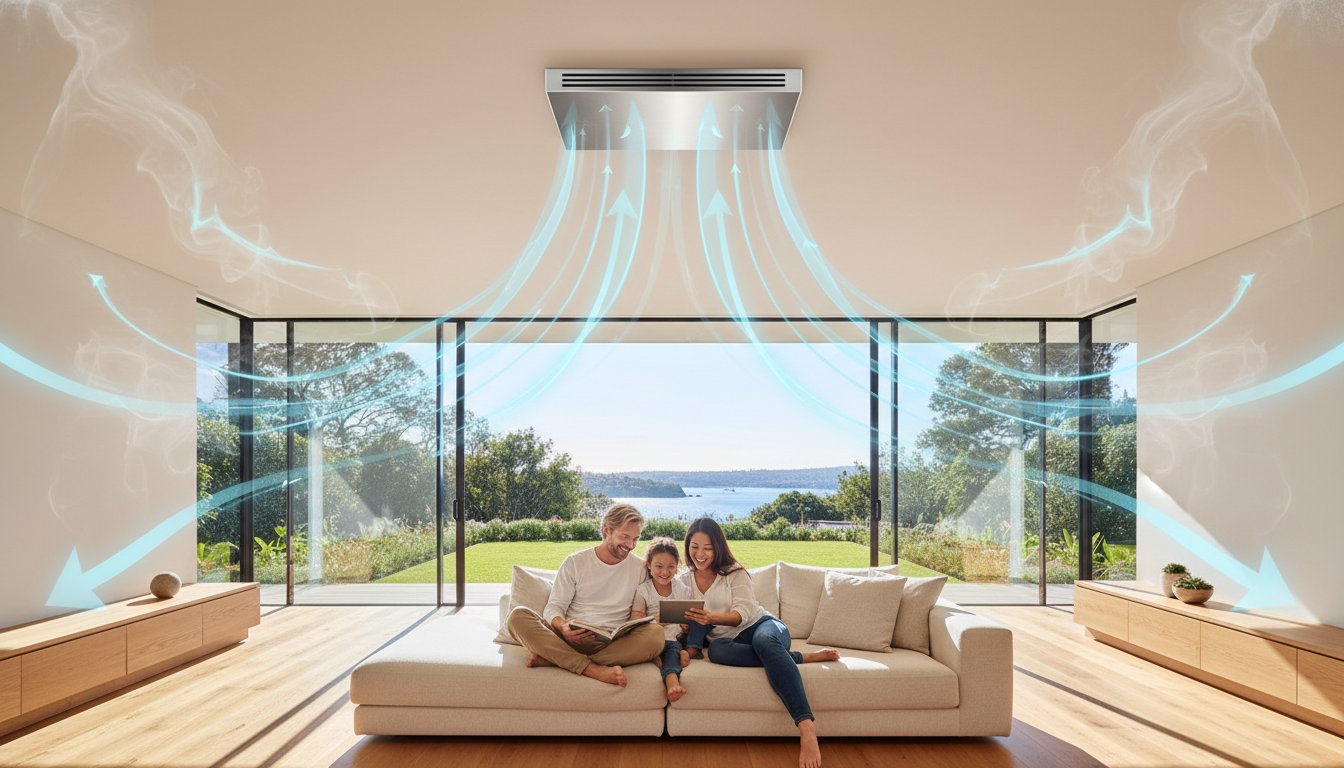
First, let’s be clear: an ERV is not a government agency. It stands for Energy Recovery Ventilator, and the simplest way to understand it is to think of it as the ‘lungs’ of your home. An ERV is a professional ventilation system designed to continuously exhaust stale, polluted indoor air and replace it with fresh, filtered air from outside.
But why not just open a window or use an exhaust fan? Unlike these simple methods, an ERV provides balanced ventilation without wasting the energy you’ve paid to heat or cool your home. It achieves this using a sophisticated heat exchanger, a core component in any Heat recovery ventilation system, that transfers heat and moisture between the outgoing and incoming air. This means you get a constant supply of fresh air without a shocking energy bill.
The Problem with Modern Airtight Homes
Modern Sydney homes are built to be airtight for energy efficiency. While this is great for your power bills, it creates a serious problem: it traps pollutants inside. Without proper ventilation, moisture from cooking and showers, allergens, dust, and chemical fumes (VOCs) build up. This stagnant, humid environment is a primary cause of condensation and a perfect breeding ground for dangerous mould.
How an ERV Solves the Stale Air Problem
An ERV system tackles this issue head-on by creating a continuous cycle of air exchange. It doesn’t just vent air out; it pulls fresh air in through filters that capture dust, pollen, and other outdoor pollutants. This process constantly dilutes the concentration of indoor contaminants and lowers humidity, taking away the moisture that mould needs to grow. It’s a reliable and effective solution for maintaining healthier indoor air quality.
How Does an ERV Work? The Science of Fresh Air & Energy Savings
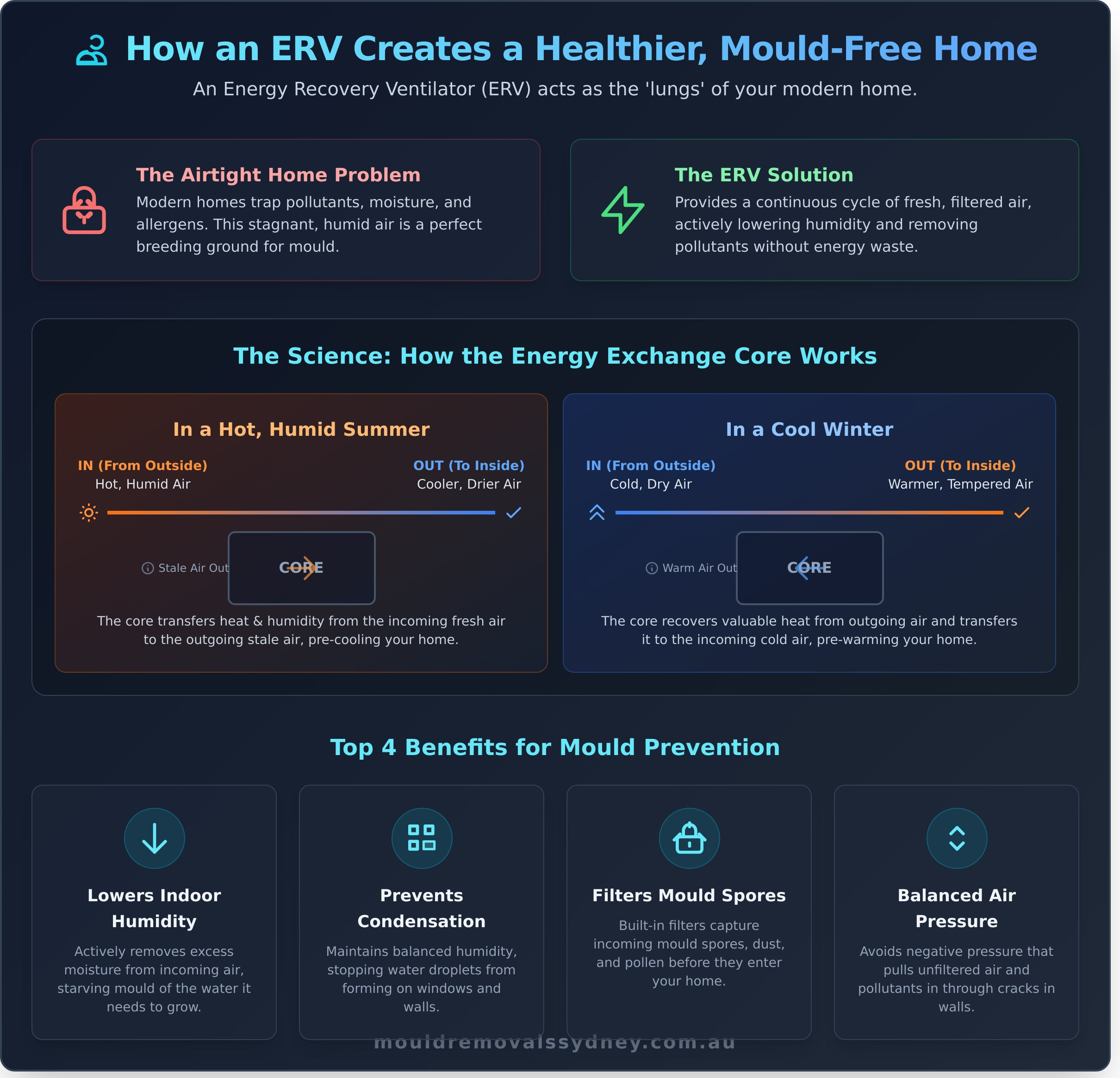
At its core, an Energy Recovery Ventilator (ERV) is a sophisticated ventilation system designed for maximum efficiency. It operates using two completely separate airstreams: one duct brings a continuous supply of fresh, filtered air from outside into your home, while a second duct expels stale, polluted indoor air. The critical design feature is that these two airstreams never mix.
Instead, they pass each other within a central component known as the energy exchange core. This specialised core is engineered to transfer both heat energy and moisture between the two airstreams. By pre-treating the incoming air, an erv lightens the burden on your air conditioning or heating system, leading to significant energy savings and a more comfortable indoor environment.
The Magic of the Energy Exchange Core
The energy exchange core is the powerhouse of the system, intelligently adapting to the seasons to keep your home comfortable and efficient. Its dual-action process is what sets it apart from simple ventilation fans.
- In a hot, humid Australian summer: The core extracts heat and excess humidity from the incoming outdoor air and transfers it to the outgoing stale air. The result? The fresh air entering your home is cooler and drier, meaning your air conditioner doesn’t have to work nearly as hard to maintain a comfortable temperature.
- In a cool winter: The process reverses. The core captures valuable heat and a healthy amount of moisture from the warm, outgoing air and transfers it to the cold, dry incoming air. This warms the fresh air and helps prevent the uncomfortably dry conditions common in heated homes.
This remarkable ability to manage indoor humidity is a key to better indoor air quality, as it helps prevent the damp, stagnant conditions that are perfect for mould growth.
Balancing Air Pressure for a Healthier Home
Standard exhaust fans, like those in bathrooms or kitchens, simply push air out. This creates what is known as “negative pressure,” which can cause a vacuum effect that pulls unfiltered air, dust, allergens, and outdoor pollutants into your living space through tiny cracks in your walls and windows.
An ERV system avoids this problem entirely by providing balanced ventilation. It is meticulously calibrated to introduce the same volume of fresh air that it exhausts. This maintains a neutral air pressure, ensuring a consistent and controlled distribution of fresh, clean air throughout your entire home without inviting unwanted contaminants inside.
Top 5 Benefits of an ERV for Preventing Mould in Sydney
While professional mould removal is essential for existing contamination, preventing its return requires controlling your indoor environment. This is where an Energy Recovery Ventilator (ERV) becomes your most powerful ally. In a humid climate like Sydney’s, simply opening a window can invite more moisture and pollutants inside. An ERV system provides a strategic, whole-home solution to create an environment where mould cannot thrive. Don’t wait for the problem to reappear; take control of your air.
1. Drastically Lowers Indoor Humidity
Mould needs one thing above all else to grow: moisture. Sydney’s high humidity provides the perfect fuel for a mould outbreak. An ERV directly tackles this by using a specialised energy exchange core. As it brings fresh air in, it transfers excess water vapour to the stale air it expels. This process is crucial for humid climates, and as the U.S. Department of Energy explains ventilation, this ability to manage moisture is what separates an erv from other ventilation systems. By actively dehumidifying the incoming air, you starve mould of the moisture it needs to survive.
2. Prevents Damaging Condensation
Have you noticed water droplets forming on your windows or damp spots on walls, especially during cooler months? This is condensation, a clear sign that your indoor humidity is too high. These damp surfaces are prime real estate for mould growth. An ERV helps maintain a balanced indoor humidity level, significantly reducing the chance of condensation forming on cold surfaces. This protects your window frames, gyprock, and paint from moisture damage and unsightly mould colonies.
3. Filters Out Airborne Mould Spores
Mould spores are microscopic and ever-present in the outdoor air. When you open a window for “fresh” air, you are often letting these invisible invaders directly into your home. Every ERV unit is equipped with high-quality filters that capture these incoming mould spores, dust, pollen, and other pollutants before they have a chance to circulate and settle inside your property. It’s like having a security guard for your home’s air supply.
4. Expels Stale Air & Existing Spores
If you’ve had a mould issue, spores are likely already present in your indoor air. A key benefit of an ERV is that it doesn’t just block new spores; it actively removes existing ones. The system works continuously, creating a balanced air exchange that pushes stale, contaminated indoor air out of your home. This constant circulation prevents the concentration of airborne spores from building up, dramatically improving your overall indoor air quality (IAQ).
5. Eliminates Musty Odours & VOCs
That distinct damp, musty smell is a tell-tale sign of mould and mildew. It’s not just unpleasant; it’s an indicator of a health risk. An ERV eliminates these odours by replacing the stale, damp air that carries them with fresh, clean, filtered air. It also helps remove other indoor pollutants like Volatile Organic Compounds (VOCs) from furniture, cleaners, and paints, creating a living environment that doesn’t just look clean, but smells and feels genuinely healthier for your family.
ERV vs. HRV: Which Ventilation System is Right for Sydney’s Climate?
When choosing a balanced ventilation system, you’ll encounter two main options: the Energy Recovery Ventilator (ERV) and the Heat Recovery Ventilator (HRV). While they sound similar, their core functions are critically different, and making the right choice is essential for managing your home’s air quality, especially in Sydney’s unique climate.
The key difference is simple but significant:
- An HRV (Heat Recovery Ventilator) transfers heat between the outgoing stale air and the incoming fresh air.
- An ERV (Energy Recovery Ventilator) transfers both heat and moisture.
This ability to manage moisture is precisely why the two systems perform very differently depending on the local climate.
Why an ERV Excels in Humid Climates
Sydney is known for its hot and humid summers. When you bring that sticky outdoor air inside, you’re not just fighting the heat; you’re also battling moisture. This is where an erv system truly shines. In summer, as the ERV expels the cool, conditioned indoor air, it uses that air to pre-cool and, crucially, dehumidify the incoming fresh air. This process, known as latent energy transfer, provides two major benefits for Sydney homeowners:
- Reduced AC Workload: By removing a significant amount of moisture before the air even enters your home, the ERV reduces the strain on your air conditioner. This leads to better energy efficiency and lower power bills.
- Mould Prevention: High indoor humidity is the primary cause of mould growth. An ERV actively helps maintain a healthy indoor humidity level, preventing the damp conditions that allow mould spores to thrive.
When an HRV Might Be Used
HRVs are highly effective, but they are designed for cold, dry climates where the main goal is to retain heat and prevent indoor air from becoming too dry during winter. In a coastal NSW climate, an HRV is less suitable. During a humid summer, it would efficiently transfer heat but would allow all the outdoor moisture to enter your home, increasing dampness and forcing your air conditioner to work overtime.
For Sydney and its surrounding regions, the conclusion is clear. An ERV system is almost always the superior choice. It provides effective, year-round management of both temperature and humidity, creating a healthier, more comfortable, and energy-efficient home. By controlling excess moisture, you are taking a powerful step in preventing serious mould problems before they start.
Is an ERV Part of a Complete Mould Prevention Strategy?
An Energy Recovery Ventilator (ERV) is a powerful tool in the fight against mould, but it’s crucial to understand its role. Think of it as a key player in your home’s long-term immune system, not an emergency cure. You can’t simply ventilate an existing mould problem away. For true, lasting protection, an erv must be part of a holistic, multi-step strategy that addresses the root cause of the issue first.
A healthy, mould-free home is built on a solid foundation of moisture control and clean air. Here’s the professional approach to getting it right.
Step 1: Professional Mould Remediation
Before you can prevent mould, you must eliminate it completely. Always start with safe, professional removal of any existing mould colonies. Our technicians are master-certified in the Goldmorr System, an advanced process that eliminates not just the visible surface mould but also the invisible airborne spores that can cause regrowth and health issues. This essential first step creates a clean slate, ensuring your home is truly ready for a long-term prevention solution.
Step 2: Address the Moisture Source
Ventilation is only effective once the primary source of moisture has been stopped. A thorough assessment is needed to identify and fix the underlying cause of the dampness. This could involve:
- Repairing leaking pipes, roofs, or windows.
- Improving exterior drainage to divert water away from the foundation.
- Addressing rising damp through professional treatment.
- Installing targeted solutions like subfloor ventilation systems for under-house humidity.
By controlling these major water sources, you remove the fuel that mould needs to grow.
Step 3: Install a Long-Term Ventilation Solution
With the mould gone and leaks fixed, an ERV system provides the final piece of the puzzle. It works 24/7 to deliver a continuous supply of fresh, filtered air while exhausting stale, humid air. This balanced air exchange is critical for maintaining low indoor humidity levels, depriving potential new mould spores of the moisture they need to thrive. It ensures the air inside your home remains clean and healthy, preventing regrowth and protecting your family’s well-being for the long term.
A complete strategy is the only effective strategy. Ask our experts about a complete healthy home assessment.
Secure a Healthier, Mould-Free Home Today
In the fight against mould in Sydney’s humid climate, knowledge is your greatest asset. We’ve explored how an Energy Recovery Ventilator acts as a powerful ally, continuously exchanging stale, damp indoor air for fresh, filtered air without wasting energy. By actively controlling humidity, an erv creates an environment where mould simply cannot flourish. Remember, this advanced ventilation is a critical component of a complete, proactive mould prevention strategy that protects both your property and your family’s health.
If you’re ready to stop worrying about musty odours and hidden mould growth, it’s time to take decisive action. As Approved Goldmorr System Master Technicians and specialists in subfloor ventilation and moisture control, we don’t just treat the symptoms-we provide comprehensive solutions for a permanently mould-free home. Don’t wait until the problem worsens.
Worried about air quality? Schedule a professional mould inspection today!
Frequently Asked Questions About ERV Systems
Does an ERV replace my air conditioner?
No, an ERV system does not replace your air conditioner. An ERV is a ventilation system designed to bring in fresh, filtered air from outside while exhausting stale indoor air. Your air conditioner’s job is to cool and dehumidify. The two systems work together to create a healthier and more comfortable indoor environment, with the ERV reducing the load on your air conditioner by pre-tempering the incoming air.
How much does an ERV system cost to install and run in Sydney?
In Sydney, a fully installed ERV system typically costs between A$5,000 and A$10,000+, depending on your home’s size and the installation’s complexity. While this is a notable investment in your property’s health, running costs are very low. An ERV uses minimal electricity, similar to a small appliance, and the energy savings from your air conditioner working more efficiently often help offset these costs over time.
Can I install an ERV in an existing home, or is it only for new builds?
You can absolutely install an ERV in an existing home. While installation is often simpler in a new build, retrofitting an ERV is a very common and effective solution for improving air quality in established properties. Our expert technicians can assess your home’s layout, typically using the roof cavity for the unit and ductwork, to ensure a seamless and efficient installation with minimal disruption to your living spaces.
How often do the filters in an ERV need to be cleaned or replaced?
For optimal performance, ERV filters require simple, regular maintenance. We recommend cleaning the pre-filters every 3 to 6 months, which can be easily done with a vacuum cleaner. The main core filters generally need a full replacement every 1 to 2 years, depending on your local air quality and system usage. Keeping the filters clean is essential for ensuring your system runs efficiently and delivers fresh, healthy air.
Will running an ERV make my house colder in the winter?
No, a key feature of an ERV is its ability to recover heat. In winter, the system’s heat exchanger core captures warmth from the stale indoor air being exhausted and uses it to pre-heat the fresh, cold air coming in. This process recovers up to 80% of the heat, providing continuous fresh air without creating cold drafts or forcing your heater to work harder to maintain a comfortable temperature inside.
Is an ERV noisy to operate?
Modern ERV systems are engineered for whisper-quiet operation. The main unit is installed away from living areas, such as in a roof space or utility closet, so you won’t hear the motor. When properly installed and balanced, the only sound is the gentle and often unnoticeable flow of air from the ceiling vents. A professionally installed system ensures you get all the benefits of fresh air without any disruptive noise.