That dark, creeping stain in the corner of your bathroom or behind the wardrobe does more than just look unsightly. It brings a wave of worry: Is this the dreaded ‘toxic’ black mould? Is my family safe breathing the air in our own home? For many Sydney homeowners, this discovery is the start of a stressful and confusing journey, filled with questions about health risks and the right way to handle the problem.
With so much conflicting advice online about DIY fixes and ‘miracle’ sprays, it’s hard to know who to trust. The truth is, the wrong approach can worsen the infestation and expose your family to serious health risks. This guide cuts through the noise. We’ll provide you with clear, expert information to help you identify the mould in your property, understand the genuine health concerns without the panic, and learn the only safe and effective way to remove it for good. It’s time to stop worrying and take control.
What Exactly Is Black Mould (Stachybotrys chartarum)?
When property owners in Australia discover a dark, slimy patch growing in a damp corner, the first fear is often “black mould.” This term specifically refers to the species Stachybotrys chartarum. Unlike many common household moulds that can thrive in general humidity, this particular fungus is more demanding. It requires a constant source of moisture and cellulose-rich materials-like wet gyprock, wood, or cardboard-to establish a colony. Understanding its specific nature is the first step in effective and safe mould remediation.
Debunking the ‘Toxic Mould’ Myth
You’ve likely heard the alarming term ‘toxic mould’ in the media, but it’s not a scientific classification. The mould itself isn’t toxic. The real danger lies in the chemical compounds it can produce, known as mycotoxins. When disturbed, these microscopic toxins can become airborne and be inhaled, leading to serious health risks. It’s crucial to understand that not every Stachybotrys colony produces mycotoxins, but without professional testing, it’s impossible to know. This is why any suspected growth must be treated as a potential threat by certified experts.
What Does Black Mould Look Like?
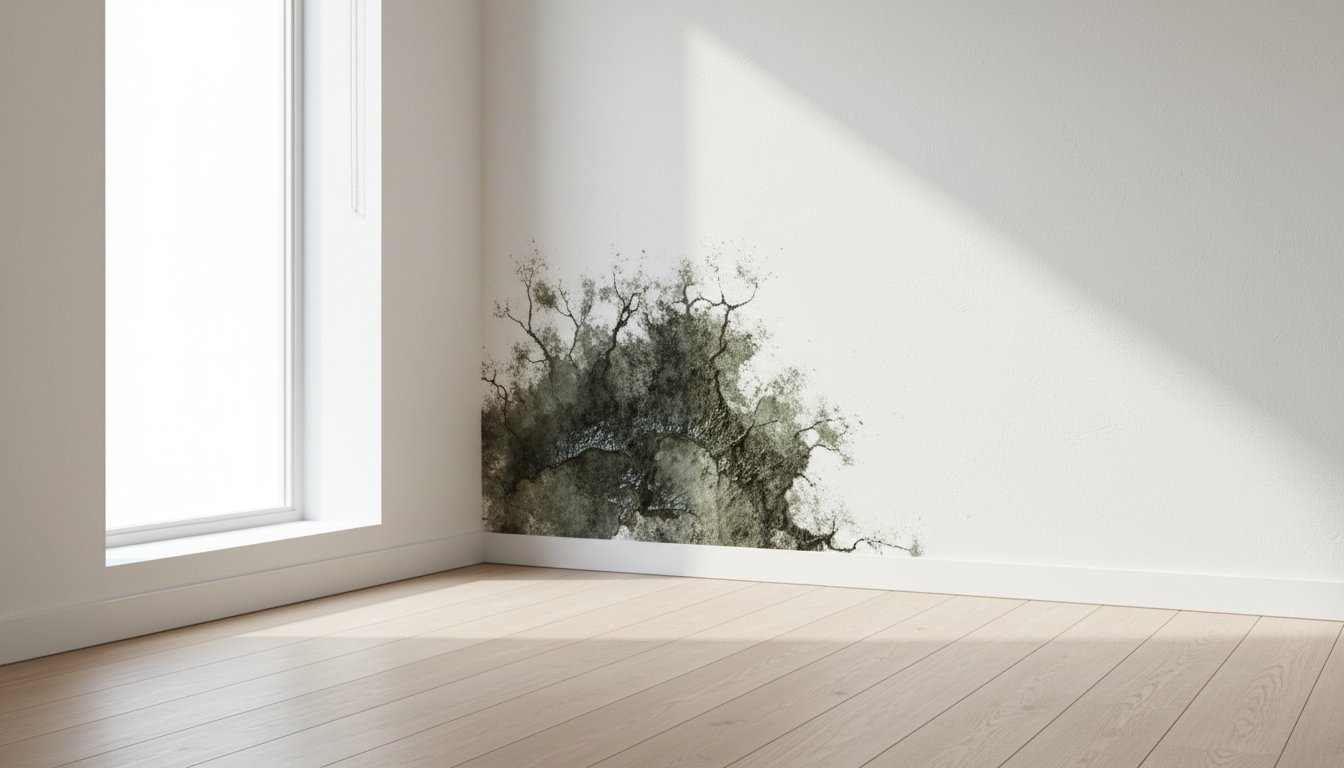
Identifying Stachybotrys chartarum can be tricky, as it is often mistaken for simple dirt or other less harmful moulds. Look for these distinct characteristics:
- Texture: It typically has a slimy or gelatinous feel when its water source is active. If the area has dried out, it may appear sooty or powdery to the touch.
- Colour: The colour is characteristically a dark, greenish-black, though it can also appear grey.
- Pattern: It grows in patches that are often circular in shape. Unlike a simple water stain, it has a tangible, slightly raised texture.
Black Mould vs. Mildew: Key Differences
It’s easy to confuse mould with mildew, but they are very different problems requiring different solutions. The distinction is critical for your property and your health.
- Growth: Mildew grows on the surface of materials and has a flat, powdery appearance, often white or grey. In contrast, black mould has a slimy texture and its root-like structure grows into the host material, causing more significant structural damage.
- Removal: Mildew can often be cleaned with surface-level products. Due to its invasive nature and the serious risk from mycotoxins, any suspected black mould growth requires professional remediation to ensure complete removal and prevent dangerous airborne spore contamination.
The Real Dangers: Health Risks and Property Damage
Discovering mould in your home is more than just an aesthetic issue. Ignoring it poses a significant threat to both your family’s health and your property’s structural integrity. The longer an infestation is left untreated, the more severe the consequences become. Don’t wait until the problem worsens-because it will.
Common Health Symptoms from Black Mould Exposure
Airborne spores from black mould can be inhaled, leading to a range of health issues that can be easily mistaken for a common cold or allergies. Symptoms vary greatly between individuals, but you should be alert for:
- Chronic coughing, sneezing, and a runny or blocked nose.
- Irritated, itchy, and watery eyes.
- Unexplained skin rashes or irritation.
- Persistent headaches and fatigue.
- Worsening of asthma, allergies, or other pre-existing respiratory conditions.
Vulnerable groups, including children, the elderly, and anyone with a compromised immune system or existing lung conditions, are at a much higher risk of severe reactions.
Structural Damage to Your Property
Mould is a living organism that needs to feed to survive. Unfortunately, its food source is your home. It actively eats away at organic materials like timber framing, drywall, insulation, and carpet, breaking them down over time. This isn’t just surface-level damage.
A long-term infestation can weaken the structural integrity of walls and ceilings, leading to rot and decay. It also causes permanent, unsightly staining on surfaces. If the root cause-the moisture source-isn’t professionally addressed, you could be facing extensive and costly repairs that go far beyond simple mould cleaning.
When to See a Doctor
If you or a family member are experiencing persistent respiratory symptoms, headaches, or skin irritation without a clear cause, it’s wise to consult your GP. Be sure to mention that you have discovered or suspect mould exposure in your home. This information is crucial for an accurate diagnosis, especially for individuals with compromised immune systems or chronic illnesses.
What Causes Black Mould to Grow in Sydney Homes?
Black mould, like all mould species, requires a specific set of conditions to thrive. Think of it as the ‘mould triangle’: a food source, warmth, and moisture. In most Sydney homes, food sources like plasterboard, wood, and even dust are abundant, and warmth is rarely an issue. This leaves one key ingredient that you can control: moisture. When excess moisture is introduced into an environment, it activates dormant mould spores, leading to rapid and destructive growth. Sydney’s humid, subtropical climate provides the perfect backdrop, making local homes particularly vulnerable.
The Role of Water Damage and Leaks
The most common trigger for a serious mould outbreak is direct water intrusion. This includes obvious issues like a leaking roof, a burst pipe, or a faulty window seal, but also slow, hidden drips inside a wall cavity. Even a past flooding event that wasn’t professionally dried can leave behind enough residual moisture to fuel a hidden colony. It is critical to address any water leak, no matter how small, immediately to prevent mould from taking hold.
Poor Ventilation and High Humidity
Sydney’s ambient humidity often creeps indoors, creating ideal conditions for mould. Everyday activities like cooking, showering, and running a dryer release large amounts of steam. Without adequate ventilation, such as powerful exhaust fans, this moisture-laden air gets trapped. It then condenses on cooler surfaces like windows and walls, providing a constant water source for spores. Persistent condensation is a major red flag that your home’s airflow is insufficient and professional intervention may be needed.
Common Problem Areas in Sydney Properties
Our expert technicians consistently find infestations of black mould growing in specific high-risk areas throughout Sydney properties. By understanding where to look, you can spot a problem before it gets out of control. Pay close attention to these common hotspots:
- Bathrooms: Around showers and bathtubs, behind toilets, and under vanities where plumbing leaks are common.
- Laundries & Subfloors: Poorly ventilated spaces that trap damp air and moisture from appliances or the ground.
- Window Sills & Walls: Anywhere condensation regularly forms, especially behind furniture placed against external walls.
- Older Homes: Areas affected by rising damp, a common issue where groundwater travels up through porous brickwork.
Identifying and controlling the moisture source is the first and most crucial step in winning the battle against mould. If you see signs of mould in these areas, don’t wait-the problem will only get worse.

Why DIY Black Mould Removal is a Dangerous Mistake
When you spot unsightly mould in your home, your first instinct might be to grab a cloth and some cleaner. This is a critical mistake, especially with potential black mould. Attempting to scrub away a visible mould colony without professional training and equipment can make the problem significantly worse, jeopardising both your property and your health. It’s a job that requires expert knowledge, not just elbow grease.
The Problem with Bleach and Vinegar
Many homeowners reach for bleach, but this is one of the least effective solutions. Bleach can whiten the surface stains, giving the illusion of a fix, but it cannot penetrate porous materials like plasterboard or wood to kill the mould’s roots. In fact, the high water content in bleach can feed the remaining mould, encouraging regrowth. While vinegar has some anti-fungal properties, it is often not potent enough for a serious infestation and does nothing to contain dangerous airborne spores.
The Danger of Spreading Airborne Spores
A single patch of mould can contain billions of microscopic spores. When you scrub or disturb it, you release these spores directly into your air. Without professional containment, they can easily spread throughout your home via your HVAC system, settling on new surfaces and starting new colonies. This cross-contamination turns a localised issue into a whole-house problem. Worse, inhaling this high concentration of spores during cleaning poses a serious, immediate health risk.
Don’t risk your health. Talk to a certified expert today.
Failing to Address the Moisture Source
Ultimately, cleaning visible mould is only treating the symptom, not the cause. Mould requires moisture to thrive. If the underlying issue-a leaking pipe, poor ventilation in the bathroom, or rising damp-is not correctly identified and fixed, the mould will always return. This is the single most common reason DIY attempts fail. A professional mould remediation expert is trained not just to remove the mould safely, but to find the source of the moisture and provide a permanent solution.
The Professional Solution: How Experts Remove Black Mould Safely
Attempting to remove extensive black mould on your own can be dangerous and ineffective. DIY methods often spread toxic spores throughout your property, making the problem worse. A professional mould remediation service uses a systematic, proven process to eliminate mould at its source and ensure your home is safe again. This isn’t just cleaning; it’s a scientific approach to restoring a healthy environment.
Our certified technicians follow a strict, multi-step process to guarantee complete eradication of mould colonies and airborne spores, with a focus on safety and long-term results.
Step 1: Inspection and Moisture Detection
The first step is to find the “why.” Our experts use advanced tools like moisture meters and thermal imaging cameras to pinpoint the exact source of the water leak or dampness fuelling the mould growth. We assess the full extent of the infestation, including behind walls and under floors, to create a targeted and effective treatment plan. You will receive a detailed report of our findings and a transparent, obligation-free quote.
Step 2: Containment and Removal
To prevent cross-contamination, the affected area is completely sealed off from the rest of your property using heavy-duty plastic sheeting. We manage the air pressure within this containment zone to ensure no spores can escape. Our technicians then safely remove any non-salvageable contaminated materials, such as plasterboard or insulation. We treat the remaining surfaces with specialised, industry-approved cleaning agents that eliminate mould without harsh chemicals.
Step 3: Air Purification and Final Clearance
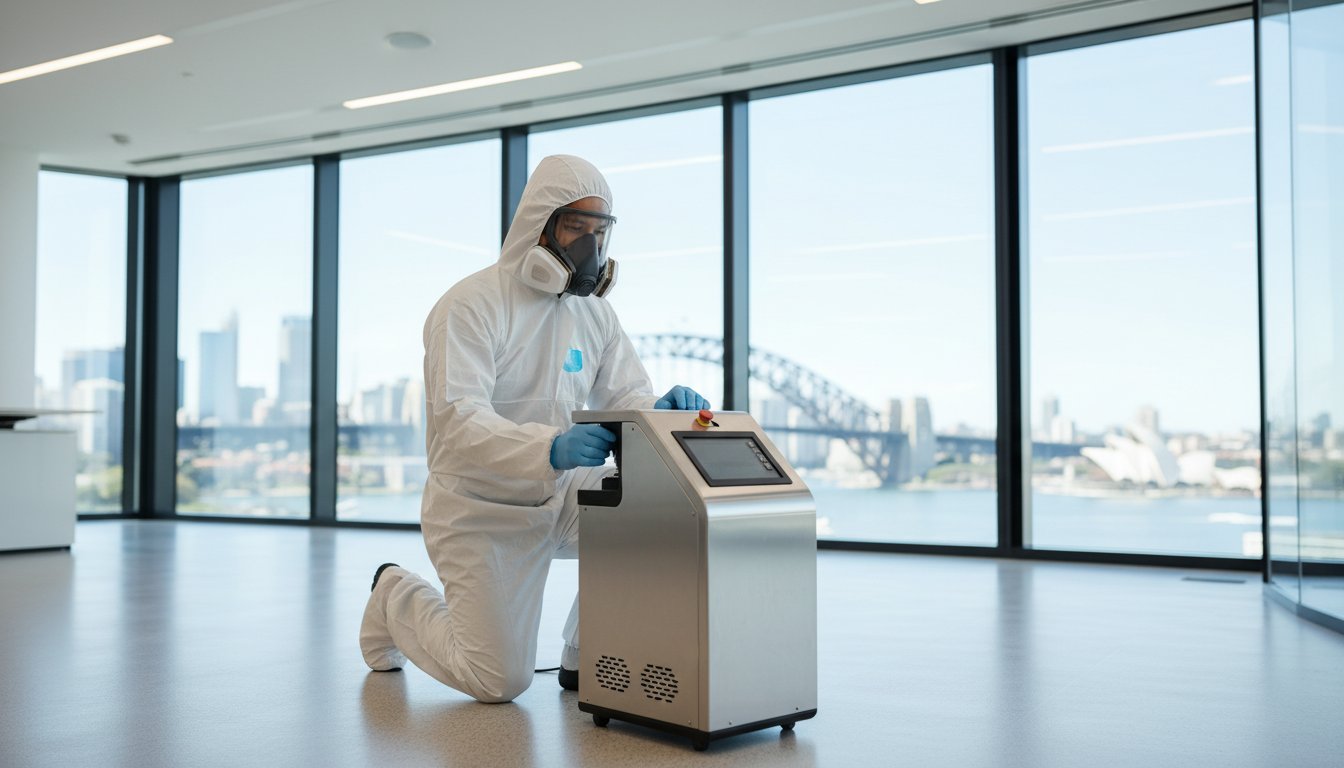
Simply removing visible mould isn’t enough. The air must be purified to remove microscopic airborne spores. We use commercial-grade HEPA air scrubbers to capture these particles. As a final, crucial step, we deploy the industry-leading Goldmorr System. This process involves a fine, non-toxic fog that penetrates every corner of the room, neutralising any lingering spores in the air and on surfaces, ensuring the air you breathe is clean and safe. Don’t wait for the problem to worsen. Get a free estimate for our professional black mould removal service.
Protect Your Home and Health from Black Mould Today
As we’ve covered, what looks like a simple stain is a serious threat to your family’s health and your property’s structural integrity. Given Sydney’s humid climate, black mould is not a problem that will resolve itself-it requires immediate, expert attention. Attempting to remove it with DIY methods often spreads harmful spores throughout your home and fails to address the underlying moisture issue, which all but guarantees it will return, often worse than before.
Don’t wait for the problem to escalate and cause further damage. Our trusted, certified, and insured Sydney experts are ready to restore safety and peace of mind to your home. We utilise the industry-leading Goldmorr System, a proven process that safely eliminates mould at the source and purifies the air. You get a reliable, effective solution, and with our price-beat promise, you’re also guaranteed the best value-we will beat any written quote by 10%.
Found black mould? Send us a photo for a fast, free and affordable quote!
Take the first step towards a healthier, mould-free home today. It’s that simple.
Frequently Asked Questions About Black Mould
Can I just paint over black mould?
Absolutely not. Painting over mould is a temporary fix that traps moisture, allowing the mould to continue growing and eating away at the material underneath. This will cause more significant structural damage in the long term. The paint will eventually peel and bubble as the problem worsens. Professional mould remediation is the only way to safely and effectively eliminate the mould colony and prevent its return. Don’t cover up the problem; eliminate it for good.
How much does professional black mould removal cost in Sydney?
The cost for professional mould removal in Sydney can vary, typically ranging from A$500 for a small, contained area to over A$3,000 for extensive contamination in multiple rooms. The final price depends on the size of the affected area, the type of surface, and the accessibility. For a fast and accurate estimate, send us images of the mould. We provide affordable, expert solutions and will beat any written quote by 10%, ensuring you get the best value.
Is black mould always black in colour?
No, this is a common misconception. While the term “black mould” often refers to the species Stachybotrys chartarum, it can also appear as a dark greenish-black or even grey. Furthermore, many other types of mould can be black in colour but are not Stachybotrys. It is impossible to identify the specific species by sight alone. Any visible mould growth, regardless of its colour, poses potential health risks and should be professionally assessed and remediated.
How long does the professional mould remediation process take?
The timeline depends on the extent of the infestation. A standard treatment for a single room can often be completed within a few hours to one full day. A larger project involving multiple rooms or an entire property might take between one to three days. Our certified technicians use the industry-leading Goldmorr System, which is designed for maximum efficiency, allowing us to resolve most issues quickly and minimise disruption to your home or business.
Can black mould come back after professional treatment?
Professional remediation is highly effective, but mould can return if the underlying moisture problem is not resolved. A crucial part of our service is identifying the source of the moisture-whether it’s a leak, poor ventilation, or high humidity-and providing you with expert advice on how to fix it. By addressing both the mould and its cause, we give you the best chance at a permanent solution and lasting peace of mind.
What should I do immediately if I find what looks like black mould?
First, do not touch, disturb, or try to clean the area with household products like bleach. This can release millions of harmful spores into the air, spreading the contamination. If possible, isolate the room by closing doors and vents. The most important step is to call a certified mould remediation professional immediately for an assessment. You can send us images directly for a fast, obligation-free quote to get the process started right away.
Is the smell of mould harmful?
Yes, that musty, earthy odour is a sign of active mould growth and should be taken seriously. The smell is caused by Microbial Volatile Organic Compounds (MVOCs), which are gases released by the mould. Inhaling these MVOCs can lead to a range of health issues, including headaches, dizziness, nausea, fatigue, and irritation of the respiratory system. The smell itself indicates that you are breathing in mould by-products, which is a clear signal to seek professional help.