That fuzzy, greyish-white patch in your bathroom corner-is it harmless mildew, or the start of a more serious black mould problem? It’s a common question for Australian homeowners, and the uncertainty, along with that persistent musty smell, can be a major source of stress. Ignoring it is not an option; without the right approach, the problem will only worsen, potentially affecting your family’s health and your home’s air quality.
This guide provides the clear, expert answers you need. We will equip you with the knowledge to confidently tell the difference between mildew and other types of mould, understand the real health risks involved, and use effective, safe methods for removal. Forget the confusion and frustration of seeing it return again and again.
You will learn not just how to clean the visible growth, but how to identify the underlying moisture source that’s causing it. By the end of this article, you’ll have a clear, actionable strategy to eliminate mildew for good and maintain a safe, healthy environment in your home. It’s time to take control and restore your peace of mind.
What is Mildew? Understanding This Common Household Fungus
You’ve seen it on your bathroom grout, on damp fabrics, or in the corner of a poorly ventilated room: a flat, greyish-white growth. This is mildew, a specific type of fungus that is closely related to mould. The critical difference lies in its behaviour. While many use the terms interchangeably, understanding what is mildew specifically is the first step to effective removal. Its primary characteristic is that it grows on the surface of materials, unlike its more destructive relatives.
Because it doesn’t penetrate surfaces, mildew is often considered less severe than mould. However, do not underestimate it. Its presence is a clear warning sign of a moisture problem in your property. Ignoring it allows damp conditions to persist, creating the perfect environment for more invasive and hazardous mould to take hold. Taking swift, decisive action is essential.
The Two Types of Mildew: Powdery vs. Downy
While several species exist, mildew is generally classified into two main categories. The type you find in your home is almost always powdery mildew, which appears as white or grey powdery spots on surfaces. Downy mildew is primarily an agricultural problem, presenting as yellow or brown spots on the underside of plant leaves and produce. Both thrive in damp, humid conditions, but for household issues, powdery mildew is your main concern.
Mildew vs. Mould: A Quick Comparison
Knowing the difference between mildew and mould is crucial because it dictates the required treatment. While mildew can often be cleaned with surface-level products, mould requires professional remediation to address its deep-rooted growth. Here’s a simple breakdown:
- Appearance: Mildew is typically flat with a powdery or downy texture. Mould is often fuzzy, slimy, or velvety.
- Colour: Mildew is usually white, grey, or occasionally yellowish. Mould can appear in many colours, including black, green, blue, and orange.
- Growth: This is the key distinction. Mildew remains on the surface of an object. Mould penetrates deep into materials like wood, grout, and drywall with its root-like structures.
- Damage: Mildew causes cosmetic discolouration and a musty odour. Because mould penetrates materials, it causes them to rot and decay, leading to serious structural damage over time.
How to Identify Mildew: Key Signs and Common Locations
Detecting mildew early is the most effective way to prevent a minor issue from becoming a major problem. Unlike more aggressive mould, mildew often stays on the surface, making it easier to manage if you act quickly. Identifying it comes down to knowing what to look for, smell for, and where to check. Don’t wait for the problem to worsen-because it will. Use these expert signs to protect your property.
Visual and Olfactory Clues
Your senses are your first line of defence. Before you even see it, you might smell it. Pay close attention to these key indicators:
- Appearance: Look for flat, powdery patches that are typically white, grey, or sometimes yellowish. It often grows in a diffuse, sprawling pattern on the surface of materials.
- Smell: A distinct musty, damp, or earthy odour is a tell-tale sign of fungal growth. If a room smells persistently damp even when it’s dry, you likely have a moisture problem encouraging mildew.
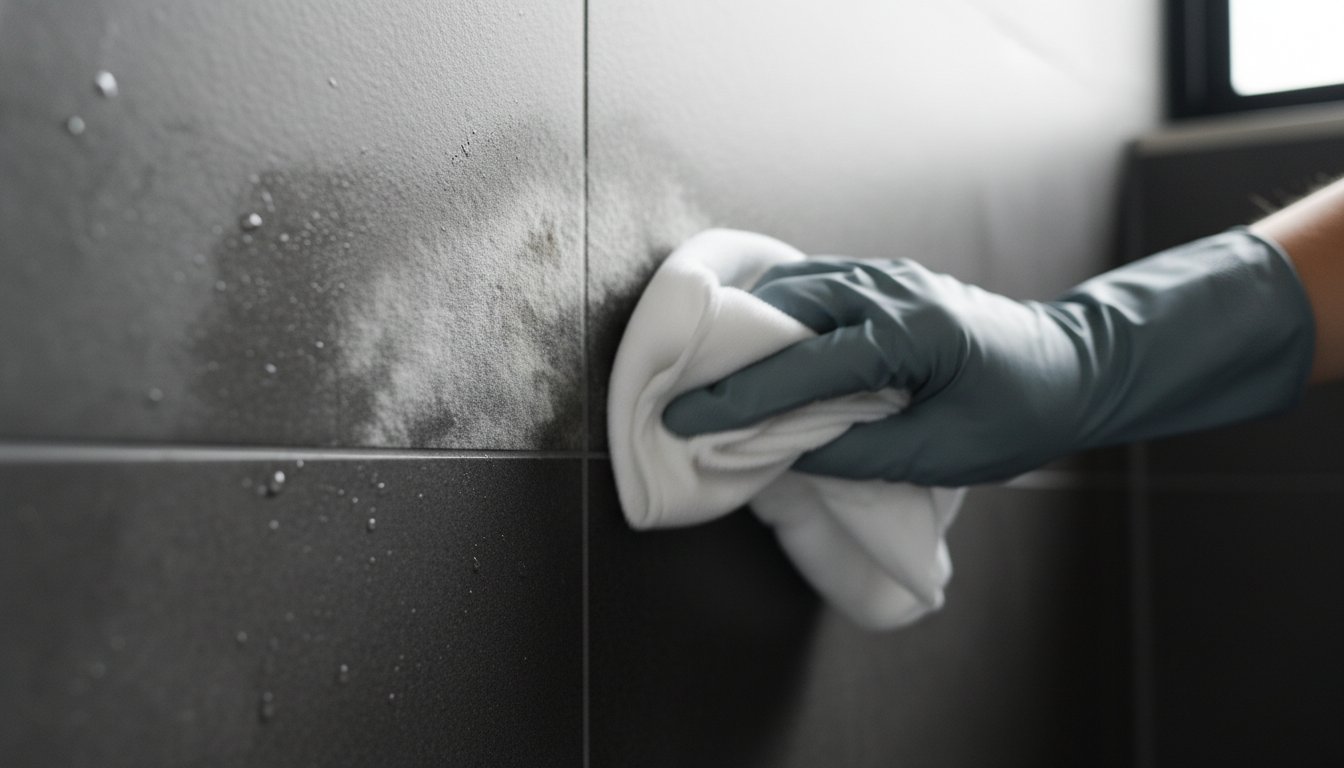
- Texture: If it’s safe to do so, touch the affected area lightly. Mildew feels dry and powdery, unlike many types of mould which can be slimy or fuzzy. A simple wipe with a cloth will often remove surface mildew easily.
Common Hotspots in Your Home
Location is one of the biggest clues. Mildew thrives in areas with high humidity, warmth, and poor air circulation. Regularly inspecting these high-risk zones is crucial for early detection and prevention. Be sure to check these common hotspots:
- Bathrooms: This is the most common area. Check shower grout and tiles, window sills, ceilings directly above the shower, and vinyl shower curtains.
- Kitchens: Look for signs under the sink where leaks can occur, around window frames affected by condensation, and on walls near cooking areas where steam is prevalent.
- Fabrics and Organics: Upholstery, curtains, carpets, and clothing stored in damp, dark wardrobes are prime targets. Also inspect paper, books, and leather goods kept in humid basements or storage areas.
By staying vigilant and knowing exactly what to look for, you can identify and address a potential problem before it takes hold. If you spot any of these signs, prompt action is essential.
Health Risks: Is Mildew Dangerous to Your Health?
When you discover a patch of mildew in your home, the first question is often: “Is this harmful?” The answer is yes, but it’s important to understand how. Unlike some toxic black moulds, mildew is primarily considered an allergen. The danger doesn’t come from toxins, but from the millions of microscopic spores it releases into the air. These airborne spores degrade your indoor air quality and can trigger a range of health issues, making professional removal essential for a safe home environment.
Ignoring even a small amount of fungal growth means allowing these allergens to circulate freely throughout your property. For many, this leads to persistent and frustrating symptoms that impact their daily well-being.
Common Allergic Reactions and Respiratory Issues
When you inhale mildew spores, your immune system can react as if it’s fighting off a cold or seasonal allergy. This constant exposure can lead to chronic symptoms that are often mistaken for other illnesses. The most common reactions include:
- Respiratory Distress: Persistent coughing, sneezing, and a stuffy or runny nose that never seems to clear up.
- Throat and Eye Irritation: A scratchy, sore throat and itchy, watery eyes are common complaints.
- Headaches: Dull, persistent headaches can be a direct result of inhaling airborne fungal spores in a poorly ventilated space.
- Skin Rashes: In some cases, direct contact with mildew can cause skin irritation or rashes.
For individuals with asthma, the risk is significantly higher. Spores are a known trigger that can irritate the airways, leading to wheezing, chest tightness, and potentially severe asthma attacks. Don’t risk it.
Who is Most at Risk?
While anyone can be affected by poor air quality, some groups are far more vulnerable to the health effects of fungal exposure. Their bodies are less equipped to handle the constant onslaught of airborne allergens. The highest-risk individuals include:
- Infants, children, and the elderly, whose developing or sensitive respiratory systems are more susceptible to irritation.
- Individuals with asthma or other chronic respiratory conditions like COPD, as spores can severely worsen their symptoms.
- People with compromised immune systems, such as those undergoing chemotherapy or living with an autoimmune disorder.
If you or a family member fall into these categories, addressing the source of the problem is not just a good idea-it’s a critical step to protect their health. If you’re experiencing symptoms, it’s time to act. Get a professional assessment.

How to Remove Mildew: DIY Methods and Professional Solutions
When you spot a small patch of surface mildew, it’s tempting to reach for a household cleaner. While DIY methods can be effective for minor, non-porous surfaces, it is critical to understand their limitations. These solutions clean what you can see, but they often fail to address the underlying moisture issue or eliminate the airborne spores that lead to a quick return.
Before you start, a note on bleach: While commonly used, bleach is not a recommended solution. It can discolour surfaces and its fumes are harsh. More importantly, on porous materials like grout or wood, the water component of bleach can absorb into the material, feeding the mildew’s roots while only killing the surface growth.
Safe DIY Cleaning for Minor Cases
For a very small, manageable spot of mildew on a hard surface like tile or a shower screen, you can try these methods. Safety First: Always wear rubber gloves, safety glasses, and a P2 mask to avoid inhaling spores. Ensure the area is well-ventilated by opening windows and using a fan.
- White Vinegar Solution: Mix equal parts white vinegar and water in a spray bottle. Spray the affected area, let it sit for an hour, and then scrub with a brush before wiping clean.
- Baking Soda Paste: For tougher spots on grout, create a paste with baking soda and a small amount of water. Apply it to the mildew, let it dry, then scrub with a damp brush and rinse.
When to Stop and Call a Professional
DIY cleaning has a strict cut-off point. Ignoring the signs of a larger problem can compromise your property and your health. Do not wait for the problem to worsen-because it will. It’s time to call an expert for professional remediation if you notice any of the following:
- The affected area is larger than one square metre.
- The mildew returns quickly and repeatedly in the same spot after cleaning.
- You can smell a strong, persistent musty odour but cannot locate the source.
- Anyone in your household is experiencing unexplained allergies, respiratory issues, or other health symptoms.
These are clear indicators of a deeper issue, such as a hidden leak or widespread moisture problem that requires specialised equipment and expertise. For a guaranteed solution that protects your home and family, contact a certified mould and mildew remediation specialist for a professional assessment.
Prevention is Key: How to Stop Mildew Growth For Good
While removing existing mildew is important, it’s a temporary fix for a recurring problem. The only way to win the battle for good is through prevention. Mildew spores are everywhere, waiting for the right conditions-namely, moisture and poor airflow-to activate and grow. By taking control of your home’s environment, you cut off its life source and stop it from ever taking hold.
Addressing the source of the problem is always more effective than repeatedly cleaning the symptoms. Focus on these three core principles: controlling moisture, improving ventilation, and regular cleaning.
Control Moisture and Humidity Levels
Moisture is the single most critical ingredient for mildew growth. By keeping your home dry, you create an environment where it simply cannot survive. Start with these essential actions:
- Fix all leaks immediately. A dripping pipe, a cracked roof tile, or a poorly sealed window are open invitations for moisture. Even a small, slow leak provides a constant water source.
- Use dehumidifiers in damp areas. Basements, laundry rooms, and poorly ventilated bathrooms are prime targets. Aim to keep your indoor humidity levels between 30-50% for optimal protection.
- Avoid leaving wet materials in piles. Don’t let damp towels fester on the bathroom floor or wet clothes sit in the washing machine. Hang them up to dry properly as soon as possible.
Improve Airflow and Ventilation
Stagnant, humid air is a breeding ground for fungal growth. Improving air circulation helps moisture evaporate and disperses spores before they can settle and colonise a surface.
- Use exhaust fans consistently. Run the fan in your bathroom during and for 15-20 minutes after a shower. Do the same in the kitchen when cooking to vent steam.
- Open windows and doors regularly. Even on cooler days, opening windows for just 15 minutes can dramatically improve air quality and reduce indoor humidity.
- Ensure subfloor areas are dry and ventilated. Rising damp from a poorly ventilated subfloor is a hidden but common cause of persistent moisture problems inside the home. Worried about subfloor damp? Ask about our ventilation solutions.
By integrating these simple habits into your routine, you can effectively protect your property. If you’ve taken these steps and still notice that musty smell or see signs of regrowth, it indicates a more serious underlying issue that requires professional diagnosis and remediation.
Your Next Step to a Healthy, Mildew-Free Home
Understanding what mildew is and how it thrives is the first critical step toward protecting your property and health. You now know how to identify its early signs, from musty odours to powdery patches, and you recognise the importance of both immediate removal and long-term prevention. While DIY methods can handle small surface issues, widespread or recurring growth often signals a deeper problem that requires professional expertise.
If you’ve found more than just a small surface issue, or suspect a more serious mould problem, don’t wait for it to worsen. Our trusted, certified technicians serve all of Sydney, using the industry-leading Goldmorr System to guarantee effective and safe remediation. We are so confident in our service that we’ll beat any written quote by 10%. Found more than just mildew? Don’t wait. Send us images for a free, expert quote today!
Take decisive action to reclaim your space and restore your peace of mind.
Frequently Asked Questions About Mildew
Can mildew turn into mould if left untreated?
While mildew is a specific type of surface mould, the real danger is what comes next. The damp conditions that allow mildew to flourish are the same conditions that invite more aggressive and destructive mould species. Left untreated, the underlying moisture problem will worsen, creating an ideal environment for toxic moulds that can penetrate deep into building materials, causing serious structural damage and health risks. Don’t wait for a small problem to become a major one.
Does bleach actually kill mildew or just whiten it?
Bleach is a common DIY ‘solution’, but it’s largely ineffective. While it can kill surface spores and whiten the unsightly stain, it does not penetrate porous surfaces like grout or plasterboard to eliminate the root system. The high water content in bleach can actually feed the remaining growth, causing it to return stronger. For complete and safe removal, a professional-grade, targeted treatment is essential to ensure the problem is eradicated permanently and safely.
What is the difference between mildew and efflorescence on concrete?
It’s crucial to distinguish between these two common issues. Mildew is a living fungal growth, appearing as powdery or downy patches of grey, white, or black, and it will have a characteristic musty odour. In contrast, efflorescence is a mineral issue. It’s a crystalline deposit of salts, appearing as a white, powdery substance on concrete or brick when water evaporates. While efflorescence also signals a moisture problem, it is not a living organism and can be brushed off.
Is it safe to just paint over a patch of mildew?
Absolutely not. Painting over mildew is one of the worst mistakes a property owner can make. It does not kill the fungus; it simply hides it. The mildew will continue to grow and feed on the organic materials in the paint, eventually reappearing on the new surface. More dangerously, this traps moisture against the wall, accelerating rot and structural damage underneath. The only effective solution is to completely remove the mildew and fix the moisture source before painting.
How quickly can mildew start to grow in a damp environment?
Mildew can appear alarmingly fast. In ideal conditions-which include moisture, warmth, and an organic food source like wallpaper or dust-spores can begin to colonise and become visible in as little as 24 to 48 hours. This rapid growth cycle is why immediate action is critical after any water event, such as a leak or even just persistent condensation. Don’t underestimate how quickly a small damp spot can become a widespread problem requiring professional remediation.
Can mildew ruin clothes and fabrics permanently?
Yes, if left unchecked, mildew can cause permanent damage to clothes, curtains, and other fabrics. The fungus feeds on natural fibres like cotton and linen, causing unsightly stains and weakening the material until it can tear or disintegrate. It also leaves behind a stubborn musty odour that can be very difficult to eliminate completely. Acting quickly to treat and dry affected items is your best chance to save them from being ruined beyond repair.