
That musty smell you can’t quite place. The dark, fuzzy patch appearing on the bathroom ceiling. For many Australian homeowners, these signs trigger immediate concern-and for good reason. When you discover potential mould in your home, it’s easy to feel worried about your property and your family’s health. Is it dangerous? What’s the difference between mould and mildew? And what should you do next?
You have arrived at the right place. This guide is designed to give you peace of mind by providing clear, professional answers. We’ll walk you through exactly what mould is, how to identify the common types found in Australian homes, and the specific conditions that cause it to grow. You’ll gain a confident understanding of the health risks involved and have a clear action plan to protect your home and loved ones. Don’t wait until the problem worsens-let’s get you the information you need right now.
What Exactly Is Mould? The Basics Explained for Homeowners
Finding unexpected growth in your home can be alarming. To effectively deal with it, it’s crucial to first understand the opponent. At its core, mould is a type of fungus that grows in multicellular structures called hyphae. In nature, it plays a vital role by breaking down dead organic matter like fallen leaves and dead trees. However, when it finds its way into your home, it becomes a serious problem, posing significant health risks and causing structural damage to your property.
Think of mould spores as tiny, invisible seeds that are constantly floating in the air, both indoors and out. They are harmless until they land on a surface with the two key ingredients they need to grow: moisture and a food source. For a deeper scientific look, you can explore what is mould in more detail. In your home, common food sources include drywall, wood, carpet, and insulation. Once a spore finds a damp spot on one of these materials, it can begin to grow into a visible colony, creating a problem that requires immediate, professional attention.
Mould vs. Mildew: What’s the Difference?
While often used interchangeably, mould and mildew are different. Mildew is a specific type of mould that is surface-level. It typically appears as a grey or white powdery patch on damp surfaces like bathroom tiles or window sills. In contrast, mould is often fuzzy or slimy, appearing in various colours like black, green, or orange. The most critical difference is that mould penetrates beneath the surface, causing far more significant and lasting damage to materials.
The Mould Lifecycle: From Spore to Colony
Understanding how quickly this fungus can spread is key to realising the urgency of the problem. The lifecycle is a simple but aggressive process. It begins when a single airborne spore lands on a suitably damp surface. If conditions are right, it will germinate and begin to grow, forming a visible colony. This colony then matures and produces thousands of new spores, releasing them into the air to find new damp areas and repeat the cycle, rapidly escalating the infestation.
Common Types of Mould Found in Sydney Homes
While thousands of mould species exist, not all pose the same risk. For Sydney homeowners, it’s helpful to understand how experts categorise mould based on its potential health effects. Generally, they fall into three groups: allergenic, pathogenic, and toxigenic. It’s crucial to remember that colour is not a reliable way to identify a mould’s danger level. Any visible mould growth in your home is a potential health risk and a sign that you need to act fast. Don’t wait until the problem worsens.
Allergenic Moulds (The Sneeze Triggers)
These are the most common types found indoors and are a primary cause of allergy-like symptoms. Species like Alternaria and Aspergillus often appear as velvety, greenish, grey, or brown patches. You’ll typically find them in damp areas like bathrooms, leaky window sills, and basements, where they release spores that can trigger reactions in sensitive individuals.
Pathogenic Moulds (A Risk for the Vulnerable)
Unlike allergenic types, pathogenic mould can cause infections, particularly in people with weakened or compromised immune systems. This includes infants, the elderly, and individuals with chronic illnesses. Some species, like Aspergillus, can be both allergenic and pathogenic, which highlights why professional assessment is so important. The potential for these infections is a key reason why experts warn about the Health problems from mould and advise against DIY removal for significant infestations.
Toxigenic Moulds (The ‘Toxic’ Mould)
This category includes the infamous Stachybotrys chartarum, often called ‘black mould’. This type is particularly dangerous because it produces mycotoxins-toxic compounds that can cause serious health issues. It typically has a slimy, dark green or black appearance and is often accompanied by a distinct, musty smell. While not all dark-coloured mould is toxigenic, any growth matching this description requires immediate, professional remediation to ensure it is handled safely.
Concerned about black mould? Learn more about the specific risks.
The Root Causes: Why Is Mould Growing in My Home?
Finding mould in your home can be alarming, but understanding why it’s there is the first step to eliminating it for good. Mould growth isn’t random; it requires a specific set of conditions known as the ‘mould triangle’: a food source, a suitable temperature, and, most importantly, moisture. Since mould spores and food sources (like wood, plasterboard, and carpet) are almost always present, the key factor you can control is moisture. Don’t wait until the problem worsens. Tackling the source of dampness is fundamental to any effective mould cleanup and remediation strategy.
Moisture and Water Sources
The most common trigger for a mould outbreak is excess water. A small, undetected leak can quickly create the perfect environment for spores to colonise and spread. You must identify and repair the source of the water to prevent it from returning after treatment.
- Leaking Infrastructure: Dripping pipes under sinks, damaged roof tiles, or blocked gutters are frequent sources of moisture.
- Condensation: Steam from cooking and showers can condense on cooler surfaces like windows and walls, creating persistent dampness.
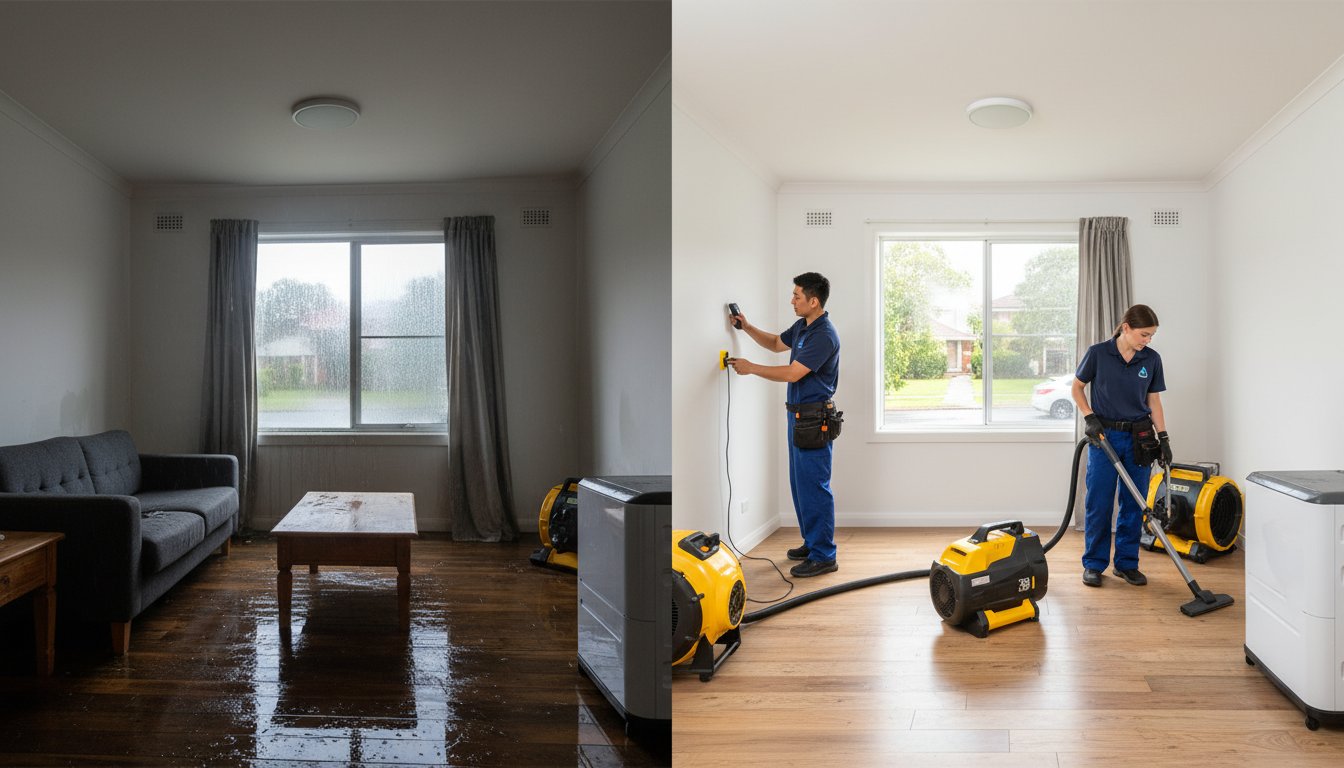
- Water Damage Events: A major event like a flood or a burst pipe can saturate building materials, leading to widespread growth if not dried professionally and immediately.
Poor Ventilation and High Humidity
Stagnant, humid air is a mould’s best friend. When moisture-laden air is trapped, it raises the humidity indoors, allowing growth even without a direct water leak. This is a significant issue across Sydney, where the naturally humid climate makes indoor environments more susceptible. Problem areas often lack adequate airflow, such as bathrooms without exhaust fans, stuffy subfloors, and laundries.
Darkness and Temperature
Mould doesn’t need light to grow; in fact, it flourishes in dark, undisturbed locations where it can spread unnoticed. This is why you often discover it hidden away. Paired with the fact that most fungi grow best in temperatures we find comfortable, it’s easy to see why our homes are so vulnerable. Always check behind furniture, inside wardrobes, in wall cavities, and in forgotten corners of the basement.
Health Risks & Symptoms of Mould Exposure
The presence of mould in your home is more than just an unsightly nuisance; it’s a significant health risk. However, it’s important to understand that exposure affects people differently. While one person may experience no symptoms, another can have a severe reaction. Individuals with weakened immune systems, infants, the elderly, and those with existing respiratory conditions like asthma are particularly vulnerable to the adverse effects of airborne spores.
Health issues stemming from mould can generally be categorised into three main areas: allergic reactions, infections, and toxic effects. If you suspect your health is being compromised by your environment, it is crucial to consult your doctor for a professional diagnosis. Don’t wait for symptoms to worsen.
Allergic Reactions and Respiratory Issues
For most people, the most common health problems caused by mould are allergic reactions. When inhaled, mould spores can trigger an immune system response, leading to a range of uncomfortable and persistent symptoms. These are often mistaken for seasonal allergies or a common cold.
- Sneezing, a runny or stuffy nose, and sinus congestion
- Red, itchy, or watery eyes
- Skin rashes or dermatitis
- A persistent, dry cough or wheezing
For those with asthma, exposure can be particularly dangerous, often triggering severe asthma attacks and significant breathing difficulties.
Other Potential Health Effects
Beyond typical allergies, prolonged or heavy exposure can lead to more systemic issues, including chronic headaches, fatigue, and difficulty concentrating. In some cases, certain species of mould can produce mycotoxins-toxic compounds that can lead to more serious health complications. While rare, these risks underscore the importance of addressing any infestation promptly and professionally. Remember, only a medical professional can diagnose a health condition.
Your family’s health is paramount. Don’t leave it to chance. Get a professional mould inspection today.

How to Identify a Mould Problem: Key Signs & Common Hotspots
A mould problem doesn’t always announce itself with large, visible patches. Often, your senses will alert you to a hidden issue long before you see it. Ignoring these early warnings allows the problem to spread, potentially damaging your property and posing health risks. Don’t wait until the problem worsens-trust your instincts and investigate.
The Smell Test and Visual Clues
Your nose is one of the most effective tools for detection. A persistent, musty, or earthy odour, often compared to damp soil or rotting leaves, is a classic sign of active microbial growth. If a room smells damp even when it’s dry, it’s a major red flag that demands immediate attention.
Beyond the smell, look for secondary signs of moisture damage, which often indicate a hidden problem behind a wall or under the floor. Keep an eye out for:
- Water Stains or Discolouration: Yellow or brown patches on ceilings, walls, or floors.
- Peeling or Bubbling Surfaces: Paint or wallpaper that is cracking, bubbling, or peeling away from the wall.
- Warped Materials: Bowing walls or floorboards can be a sign of trapped moisture.
Common Mould Hotspots in Your Home
Mould thrives in damp, dark, and poorly ventilated areas. Be extra vigilant and regularly check these common hotspots throughout your property:
- Bathrooms: Around showers, tubs, sinks, and behind toilets where humidity is consistently high.
- Kitchens: Under the sink (check for plumbing leaks), behind the fridge, and inside dark cupboards.
- Bedrooms & Living Areas: Near window frames where condensation collects, behind large furniture placed against external walls, and inside wardrobes with poor airflow.
- Basements & Subfloors: These are prime locations due to inherent dampness, potential for leaks, and lack of sunlight.
If these signs sound familiar, it’s critical not to delay. What starts as a small patch can quickly become a widespread contamination. For peace of mind and a professional assessment, contact a certified mould removalist to ensure the problem is handled safely and effectively.
Found Mould? Your Next Steps (DIY vs. Professional Removal)
Discovering mould in your home can be alarming. Your first instinct might be to scrub it away, but acting too quickly without the right knowledge can make the problem worse. The key is to understand when a DIY approach is safe and when you absolutely need professional help. Improper removal can spread airborne spores throughout your property, creating new growth and increasing health risks for your family.
Don’t wait until the problem worsens. Making the right choice now is critical for a safe and healthy home.
When Can You Clean Mould Yourself?
A DIY approach is only suitable for very specific, minor situations. Before you start, ensure all of the following conditions are met:
- The affected area is small, covering less than one square metre.
- The growth is on a hard, non-porous surface like glass, metal, or sealed tiles.
- You have already identified and completely fixed the source of the moisture.
- You are equipped with and wearing full protective gear: P2/N95 mask, safety glasses, and gloves.
When to Call a Professional Mould Removalist
Do not hesitate to call for expert help if your situation involves any of the following. Your family’s health and your property’s integrity are paramount.
- The patch is larger than one square metre or keeps returning after cleaning.
- The growth is on porous materials like plasterboard, wood, insulation, or carpet.
- You suspect hidden growth in your subfloor, wall cavities, or HVAC system.
- Someone in your household has asthma, allergies, or a compromised immune system.
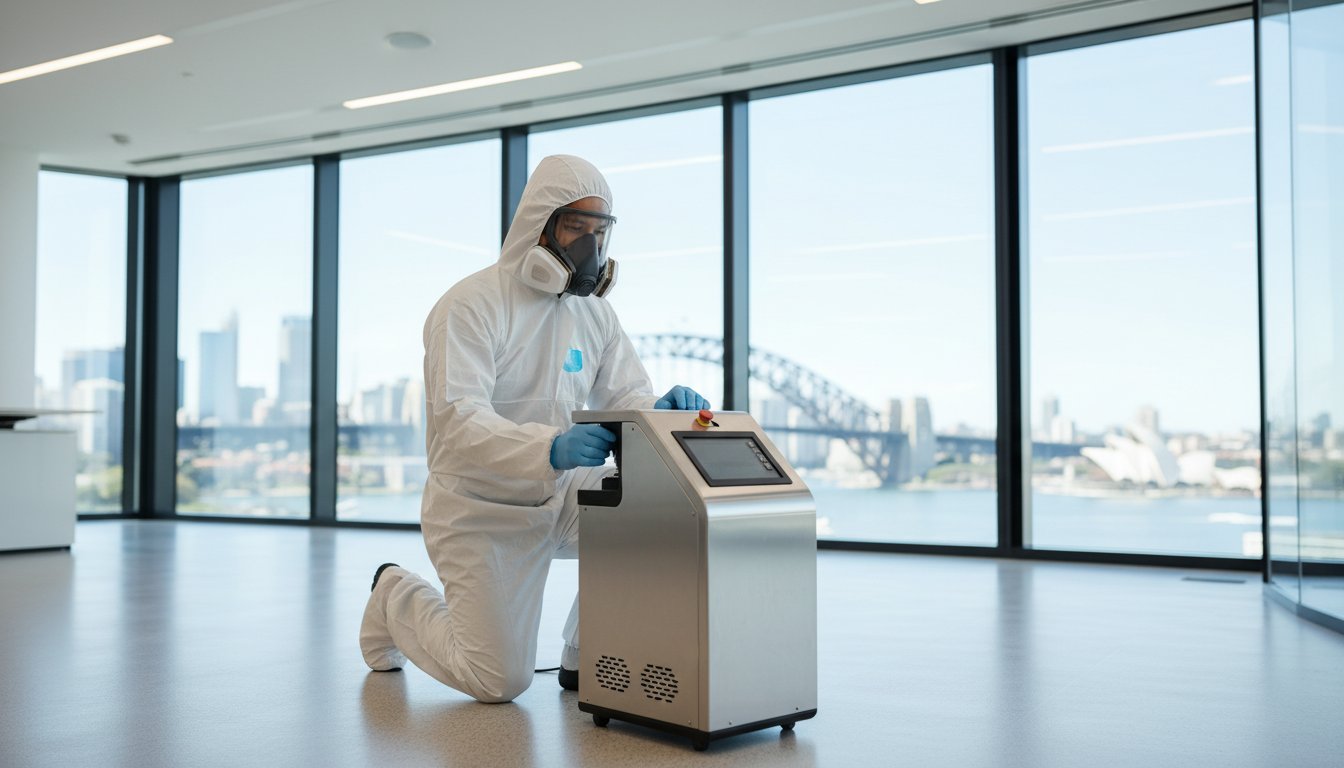
Remember, simply spraying a surface with bleach is not an effective solution. While it may kill surface growth, it doesn’t remove the dead spores, which can still cause allergic reactions, and it fails to address the underlying moisture problem. Professional remediation is a comprehensive process that goes beyond surface cleaning. It involves containing the area, removing contaminated materials safely, and purifying the air to eliminate harmful spores. If you’re facing a situation that requires expert attention, a professional Mould Removalist can provide a safe, effective, and lasting solution, giving you complete peace of mind.
Don’t Let Mould Win: Your Next Steps to a Healthy Home
Understanding the causes of mould is the first step, but taking decisive action is what truly protects your property and your family’s health. As we’ve covered, this unwelcome fungus thrives on moisture and can pose significant health risks if left untreated. While minor spots may seem manageable, complete and safe remediation often requires professional expertise to eliminate airborne spores and prevent regrowth for good.
If you’re facing a mould issue anywhere in Sydney or the surrounding regions, you have arrived at the right place. Our team of professional Mould Removalists is ready to restore your home’s safety. As approved Goldmorr System Technicians, we use an effective, industry-leading process you can rely on. We are so confident in our service and value that we promise to beat any written quote by 10%. It’s that simple.
Take back your peace of mind and ensure the air you breathe is clean. Don’t wait for mould to take over. Call us for a free, no-obligation quote! Trust our team to provide an effective, affordable solution so you can breathe easy again.
Frequently Asked Questions About Mould
Can you just paint over mould to get rid of it?
No, painting over mould is a dangerous mistake. While it may temporarily hide the unsightly stain, the mould is a living organism that will continue to grow and feed on the surface underneath. This traps moisture, allowing the problem to worsen unseen, which can lead to significant structural damage and ongoing health risks from airborne spores. The source of the mould must be completely eliminated before any repainting is done.
How quickly can mould grow after a water leak?
Mould can begin to grow astonishingly fast. In ideal conditions with sufficient moisture and an organic food source like drywall or wood, mould spores can germinate and start to colonise in as little as 24 to 48 hours. This is why it is critical to address any water leak or flooding immediately. Quick action is the best defence against a small damp spot turning into a widespread and costly contamination problem requiring professional remediation.
Is all black coloured mould the dangerous ‘toxic black mould’?
Not necessarily. Many different species of mould can appear black, and not all are Stachybotrys chartarum (so-called ‘toxic black mould’). However, it’s impossible to identify mould type by colour alone. All types of indoor mould have the potential to cause health issues, especially for those with allergies or respiratory conditions. For your safety, any visible growth should be treated as a potential hazard and handled by a certified professional.
Does bleach actually kill mould effectively?
Bleach is not an effective solution for killing mould on porous surfaces like plasterboard, wood, or grout. While it may remove the surface colour, the chemical structure of bleach prevents it from penetrating these materials to kill the mould’s root system. The water content in bleach can even feed the underlying growth. Professional mould removalists use specialised, industry-approved antimicrobial treatments that safely and effectively eliminate the entire colony.
What’s involved in a professional mould inspection?
A professional inspection is a thorough investigation to identify the extent and cause of a mould issue. A certified technician will conduct a complete visual assessment, using tools like moisture meters and thermal imaging cameras to find hidden dampness within walls, floors, and ceilings. They will identify the moisture source feeding the growth and may recommend air or surface sampling for laboratory analysis to determine the mould species and spore count, ensuring a targeted remediation plan.
Will a dehumidifier get rid of my mould problem?
A dehumidifier is a fantastic tool for prevention, but it will not get rid of an existing mould problem. By reducing the humidity in the air, a dehumidifier helps create an environment where it is difficult for mould to grow. However, it cannot kill active mould colonies. The physical mould must first be properly removed and the area decontaminated. Afterwards, using a dehumidifier is an excellent strategy to help prevent it from returning.