That sinking feeling when you see the words ‘potential rising damp’ on a building report is something no Sydney homeowner wants to experience. Immediately, your mind floods with questions: Is this a serious structural problem? How much will it cost to fix? What about the risk of mould and the health of my family? It’s a stressful situation, but you’ve come to the right place for clear, professional answers.
Don’t let confusion or worry take over. Understanding the problem is the first critical step toward solving it effectively. This guide is designed to cut through the jargon and give you the confidence you need to take action. We will explain exactly what rising damp is, how to spot the undeniable signs around your property, and how it differs from other common moisture issues. You’ll get a straightforward action plan to protect your home and your peace of mind, because with the right expert help, this is a manageable problem.
What Exactly Is Rising Damp? (A Simple Explanation)
At its core, rising damp is exactly what it sounds like: moisture from the ground being drawn upwards into the walls of your home. Think of a sponge placed on the edge of a puddle-it will naturally wick water up into itself. Your home’s brickwork and mortar can act in the same way, especially if the original damp-proof course has failed or was never installed.
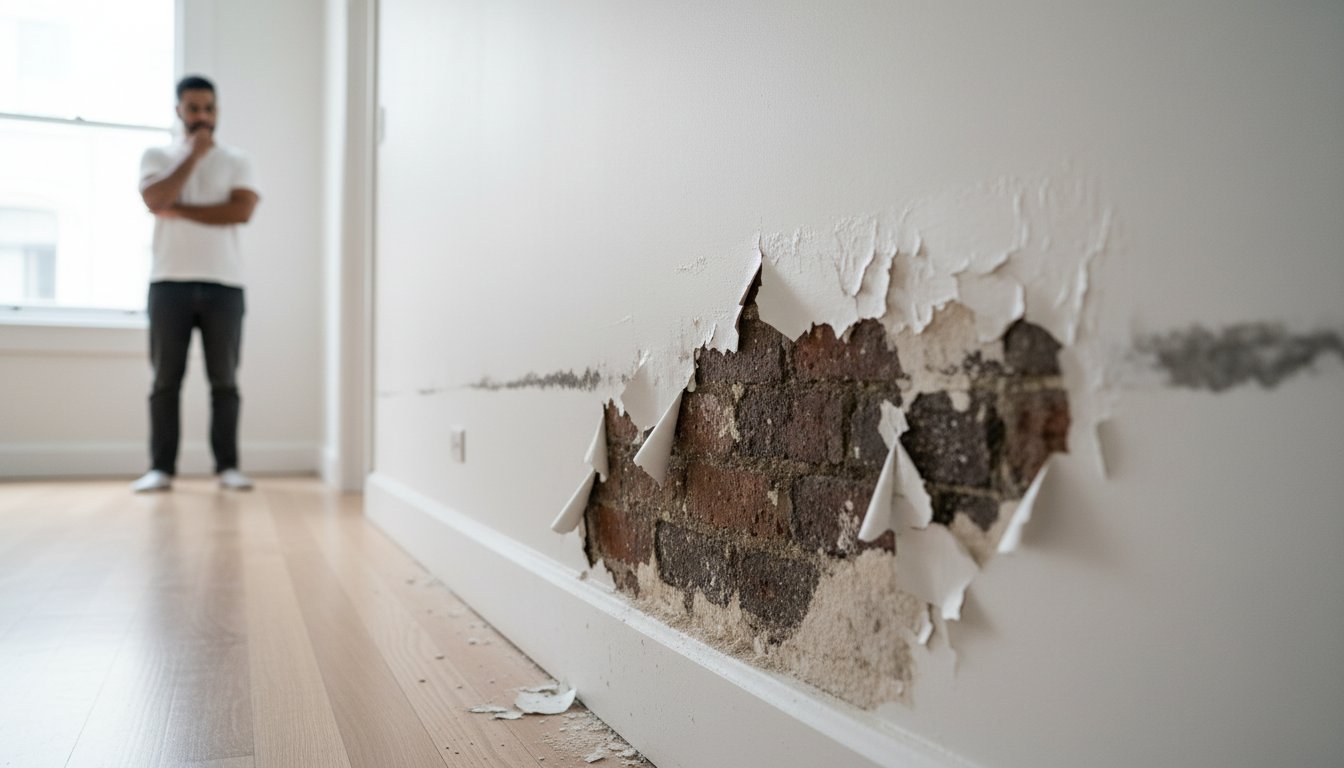
This process is driven by a natural phenomenon called capillary action, where water moves up through the tiny pores found in building materials like bricks and stone. It’s a specific form of a wider issue, and if you’re asking What is structural damp?, it’s important to know this type is unique because it only ever affects the ground floor walls of a property. The moisture typically rises to about 1.2 metres from the ground, leaving a distinct “tide mark” and causing paint to bubble, wallpaper to peel, and plaster to crumble.
Correctly identifying rising damp is the first critical step toward an effective solution. In Sydney, homeowners often mistake it for other common damp issues, but the treatment for each is completely different. Don’t wait for the problem to worsen, as persistent damp can lead to structural decay and serious health risks from mould growth.
Rising Damp vs. Penetrating Damp
Penetrating damp, or lateral damp, is caused by water leaking horizontally through walls from an external source. This is often due to issues like faulty gutters, cracked rendering, or leaking pipes. Unlike rising damp, it can appear at any height on a wall-not just at the base. You’ll typically see distinct, isolated damp patches that often look and feel worse after heavy rain.
Rising Damp vs. Condensation
Condensation is the most common type of damp and is caused by moisture from the air inside your home settling on cold surfaces. It’s prevalent in areas with poor ventilation, like bathrooms and kitchens. The key signs are streaming windows, water droplets on walls, and characteristic spotty black mould growth, especially in corners or behind furniture where air circulation is low.
Telltale Signs: How to Spot Rising Damp in Your Home
Identifying rising damp early is crucial to preventing extensive and costly damage to your property. The first clues almost always appear at the bottom of your ground-floor walls, typically up to one metre high. Don’t be fooled by a recent coat of paint; the problem can easily be hidden beneath the surface. Often, the first sign isn’t visual at all-it’s a persistent musty or earthy smell in a room that you can’t seem to get rid of.
If you suspect an issue, use this checklist to inspect your walls and floors. Remember to check behind furniture and in corners where airflow is poor.
Visible Signs on Your Walls
The most obvious evidence of rising damp is found on your interior walls. Look for a combination of these symptoms, which create a clear pattern of damage moving upwards from the floor:
- Damp Patches & ‘Tide Marks’: Staining that starts at the floor and moves up the wall, often with a distinct, wavy line marking its highest point. The wall may feel cold or damp to the touch.
- Peeling or Blistering Surfaces: Paint and wallpaper that is flaking, bubbling, or peeling away from the wall due to the moisture underneath.
- Salt Efflorescence: White, fluffy, or crystalline deposits on the plaster or brickwork. These are ground salts left behind as the water evaporates.
- Crumbling Plaster: The plaster may become soft, brittle, and start to crumble away from the wall when touched.
Damage to Skirting Boards and Floors
Moisture from the walls inevitably seeps into adjacent materials. Your skirting boards and flooring are often the next victims. Check for rotting or decaying timber; the wood may feel soft, spongy, or appear darkened and stained. In severe cases, skirting boards can begin to detach from the wall. You might also notice carpets feeling damp near the wall or vinyl flooring starting to lift at the edges.
Associated Mould Growth
Persistent dampness creates the perfect breeding ground for mould and mildew. You may see black, green, or grey spots appearing on walls, along skirting boards, or on the edges of your carpet. This is more than just an ugly stain-it’s a serious health risk that releases airborne spores into your home. The presence of mould is a definitive sign that your moisture problem is severe and requires urgent, professional attention before it worsens.
The Root Causes: Why Is Rising Damp Happening?
Rising damp doesn’t just appear by chance; it’s a clear sign that your property’s primary defence against ground moisture has been compromised. In almost every case, the problem stems from a failed, missing, or bridged barrier designed to stop water from wicking up through your walls. Understanding these root causes is the first step toward an effective, long-term solution.
For many older Sydney homes, these issues are unfortunately very common. Let’s break down the three main culprits behind a serious rising damp problem.
Failed or Missing Damp-Proof Course (DPC)
Think of a Damp-Proof Course (DPC) as a waterproof shield-a horizontal layer of non-absorbent material built into the lower part of a wall to block groundwater. In older properties, these barriers (often made of slate, bitumen, or early plastics) can degrade, crack, and fail over time. Some historic homes were even constructed without any DPC at all, leaving them completely vulnerable from day one.
Bridging of the Damp-Proof Course
Sometimes, the DPC is perfectly intact, but moisture finds a way around it. This is known as ‘bridging’. It happens when a new path is accidentally created for water to bypass the DPC and continue its journey upwards. Common causes of bridging include:
- External Ground Levels: Soil from a raised garden bed, a new patio, or paving being built up against the wall above the DPC line.
- Piled Debris: Rubbish, firewood, or building materials stacked against an external wall can trap moisture and create a bridge.
- Internal Obstructions: Plaster or floor screed applied incorrectly inside the home, covering the DPC and allowing moisture to travel past it.
Poor Subfloor Ventilation
This is a major contributing factor, especially in Sydney properties with suspended timber floors. When the space under your house (the subfloor) is poorly ventilated, moisture evaporating from the ground becomes trapped. This humid, stagnant air increases the dampness of the soil and lower brickwork, creating the perfect conditions for moisture to be drawn up into your walls. Blocked or inadequate air vents are the usual suspects. Correcting this is critical, which is why our professional subfloor ventilation systems address this root cause directly.

Is Rising Damp a Deal-Breaker? Assessing the Risks for Your Property
You’ve seen the signs during a property inspection and the question is immediate: is this a reason to walk away? While discovering rising damp is serious, it doesn’t have to be an automatic deal-breaker. Instead, you should view it as a critical issue that demands immediate and professional assessment. Ignoring the problem is not an option, as it will lead to escalating damage and costs, impacting both your property’s structure and your family’s health.
Structural Damage to Your Home
The persistent moisture from rising damp is a slow-motion threat to your home’s structural integrity. Water continuously seeping into porous building materials causes significant, long-term harm. Don’t wait until the problem worsens, because it will.
- Brick and Mortar Degradation: Moisture carries ground salts up into your walls. As the water evaporates, these salts crystallise, leading to a destructive process called ‘salt attack’ that causes bricks to fret, flake, and crumble.
- Timber Decay: Structural timbers in contact with damp walls, such as floor joists, bearers, and skirting boards, are highly susceptible to rot and decay, which can compromise the safety of your floors.
- Reduced Insulation: Damp materials are poor insulators. Affected walls will lose heat more quickly, making your home harder and more expensive to keep warm, resulting in higher energy bills.
Health Risks from Associated Mould
Where there is persistent dampness, mould is almost certain to follow. The conditions created by rising damp are the perfect breeding ground for various mould species, which pose a direct health risk to your household. This isn’t just an unsightly stain; it’s a potential hazard.
Mould releases millions of microscopic spores into the air, severely compromising your indoor air quality. For many, inhaling these spores can trigger allergic reactions, asthma attacks, sinus problems, and other respiratory issues. This is why effective treatment requires more than just fixing the damp source; you need a professional Mould Removalist to safely eliminate the contamination and ensure your home is healthy once again. It’s that simple.
Your Action Plan: What to Do If You Suspect Rising Damp
Spotting the signs of damp in your home can be worrying, but taking immediate, correct action is the key to protecting your property’s value and your family’s health. Ignoring the problem or attempting a quick fix will only lead to more extensive and costly damage down the line. Follow this simple, three-step action plan to tackle the issue effectively and achieve a permanent solution.
Step 1: Do Not Panic or Paint Over It
First, it’s important not to panic. Damp is a common problem in many Sydney properties and is completely fixable with professional intervention. Your first instinct might be to cover unsightly stains with a coat of “damp-proof” paint, but this is one of the worst things you can do. These products act as a sealant, trapping moisture inside the wall. This prevents natural evaporation and accelerates the decay of plaster, brickwork, and timber framing, making the underlying problem much worse.
Step 2: Book a Professional Damp and Mould Inspection
The only way to be certain you are dealing with rising damp is to get an expert diagnosis. A qualified damp and mould technician has the training and tools to distinguish it from other moisture sources like condensation or penetrating damp, which require entirely different treatments. Using specialised equipment like moisture meters, they can accurately identify the cause of the water ingress-whether it’s a failed Damp Proof Course (DPC), poor drainage, or another structural issue.
Step 3: Review the Treatment Plan and Take Action
After a thorough inspection, a professional will provide a detailed report and a clear treatment plan tailored to your property. An effective, long-term solution must address the root cause, not just the visible symptoms. This comprehensive plan will typically include:
- Addressing the Source: This could involve installing a new chemical DPC, improving subfloor ventilation, or rectifying external drainage problems.
- Repairing Damage: Hacking off and replacing salt-contaminated plaster is often necessary to prevent future issues.
- Mould Remediation: Any secondary mould growth must be safely and professionally removed to restore a healthy indoor environment.
A clear plan ensures the problem is solved correctly the first time. Don’t let the damage spread and become a bigger issue. Get a professional assessment from our experts today.
Take Control of Rising Damp in Your Sydney Home
Now that you can identify the signs and understand the causes, you’re equipped to protect your property. Remember, rising damp is more than a cosmetic issue-it’s a persistent threat to your home’s structural integrity and your family’s health. Ignoring symptoms like crumbling plaster or a musty smell only leads to more extensive and costly damage down the line.
The most critical step is getting an accurate diagnosis. Don’t leave it to chance. As Sydney’s trusted moisture and mould experts, we provide definitive solutions. Our specialists excel in assessing complex moisture problems, including poor subfloor ventilation, and deliver clear, actionable reports and treatment plans tailored to your property.
Don’t wait for the problem to worsen. Take control and secure your investment. Suspect rising damp? Schedule a professional inspection with our experts today. It’s the first step towards a dry, safe, and healthy home.
Frequently Asked Questions About Rising Damp
How much does it cost to fix rising damp in Sydney?
The cost to fix rising damp in Sydney typically ranges from A$150 to A$350 per linear metre. The final price depends on factors like wall thickness, the extent of the damage, and the specific treatment required, such as installing a chemical damp-proof course. For an accurate, fixed-price quote, it is essential to have a professional technician assess the property. This ensures you get a reliable solution tailored to your home’s specific needs and not just a temporary fix.
Can rising damp be fixed permanently?
Yes, rising damp can be fixed permanently with professional treatment. The most effective method involves installing a new chemical damp-proof course (DPC), which creates a lasting waterproof barrier inside the wall. This stops moisture from rising from the ground. For a truly permanent solution, it’s also crucial to address any contributing factors, such as poor drainage or inadequate subfloor ventilation, to prevent future issues and protect your property’s structural integrity.
What’s the difference between rising damp and penetrating damp?
Rising damp and penetrating damp have different sources. Rising damp is moisture that soaks up from the ground into walls due to a failed damp-proof course, typically showing a ‘tide mark’ up to 1.5 metres high. Penetrating damp, however, comes from outside the building through walls or roofs, often caused by structural defects like cracked render or faulty gutters. It appears as isolated damp patches that can occur at any height on your walls.
Will a dehumidifier or ‘damp-proof’ paint solve rising damp?
No, a dehumidifier or ‘damp-proof’ paint will not solve the root cause. A dehumidifier only removes moisture from the air, while the walls continue to draw water from the ground. Damp-proof paint is worse, as it traps moisture inside the wall, which can accelerate the decay of masonry and timber. These are temporary measures that mask the problem and can lead to more severe structural damage over time. Professional remediation is the only effective solution.
Is rising damp covered by standard home insurance in Australia?
In Australia, standard home insurance policies generally do not cover rising damp. It is typically classified as a maintenance issue resulting from gradual wear and tear or defective construction, which are common exclusions. While you should always review your specific Product Disclosure Statement (PDS), homeowners should expect to cover the cost of treatment themselves. Acting early is key to minimising the overall expense and protecting your investment from further damage.
How long does it take to treat rising damp effectively?
The physical treatment, such as injecting a new damp-proof course, is often completed within one to two days. However, the drying-out process takes much longer. Depending on the wall’s thickness, material, and the level of saturation, it can take several months or even up to a year for the masonry to dry completely. A professional assessment will provide a more accurate timeline for your specific situation, but patience is essential for the structure to fully recover.
Why is subfloor ventilation so important in preventing rising damp?
Subfloor ventilation is critical because it removes trapped, moist air from underneath your home. Without adequate airflow, this moisture evaporates from the soil and becomes concentrated, saturating the foundations and lower walls. This significantly increases the hydrostatic pressure, worsening the effects of rising damp. Proper ventilation keeps the subfloor area dry, reduces this pressure, and is a vital part of any long-term damp prevention strategy for your property.