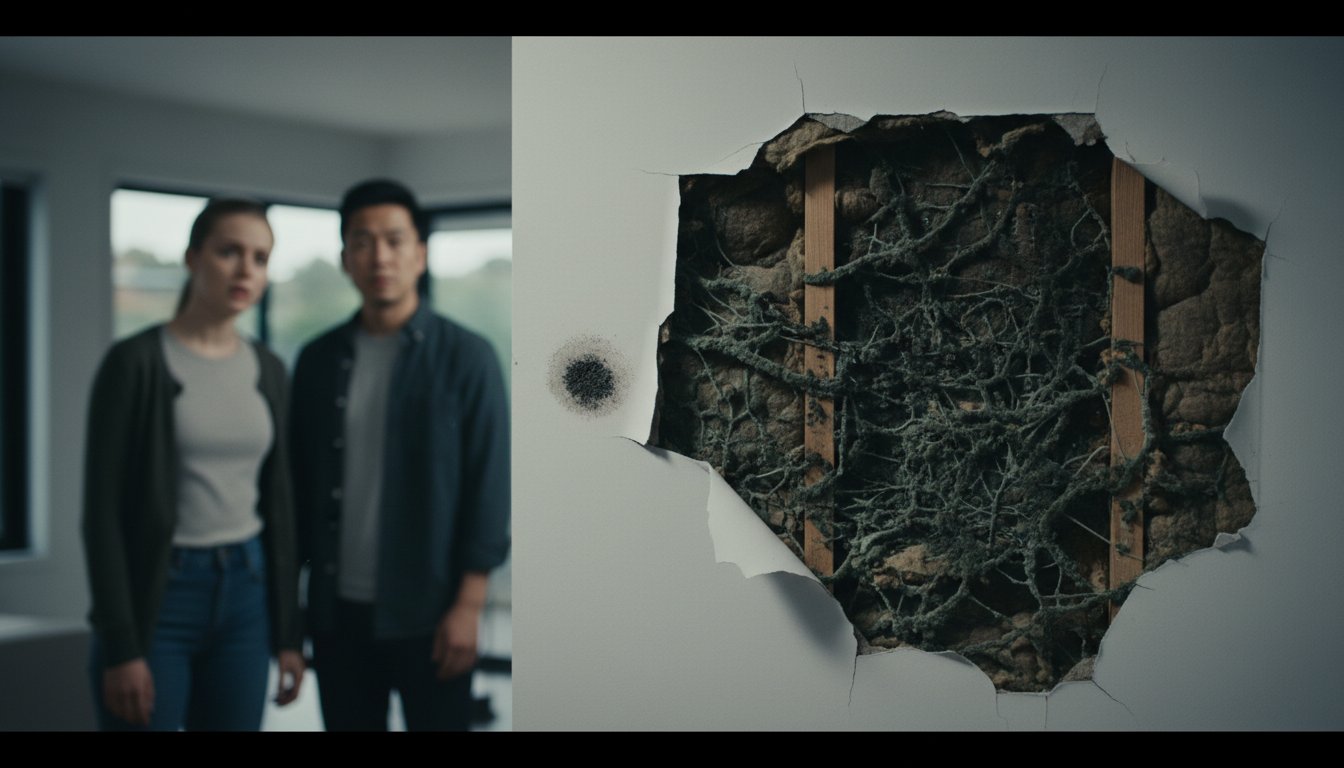
Discovering mould in your home is alarming. That musty smell or the dark, creeping stain on a wall immediately raises concerns about your family’s health and your property’s integrity. While reaching for a store-bought spray and a scrubbing brush might seem like a quick, cost-effective fix, it can often make the situation far more dangerous. This is precisely why DIY mould removal is a bad idea. Without proper containment and professional-grade solutions, you risk spreading millions of invisible spores throughout your home, potentially turning a small, contained issue into a widespread contamination that threatens your family’s respiratory health.
Are you worried that scrubbing will only make it worse, or that the mould will simply grow back? You’re not alone. This article uncovers the five hidden dangers of tackling mould yourself. We’ll provide the critical information you need to understand why a professional approach isn’t just more effective-it’s the only way to achieve a completely mould-free home, gain total peace of mind, and make a smart decision that protects both your family and your investment for the long run.
Key Takeaways
- Understand that visible mould is only a small part of a much larger, hidden infestation growing within your walls or ceilings.
- Discover how common cleaning methods can accidentally release millions of spores, turning a localised spot into a house-wide problem.
- Learn why DIY mould removal is a bad idea for your budget; ineffective store-bought products often lead to repeated costs without fixing the source.
- Recognise the critical difference between surface cleaning and professional remediation, which is designed to safely eliminate mould and prevent its return.
Danger #1: You’re Only Cleaning the Tip of the Iceberg
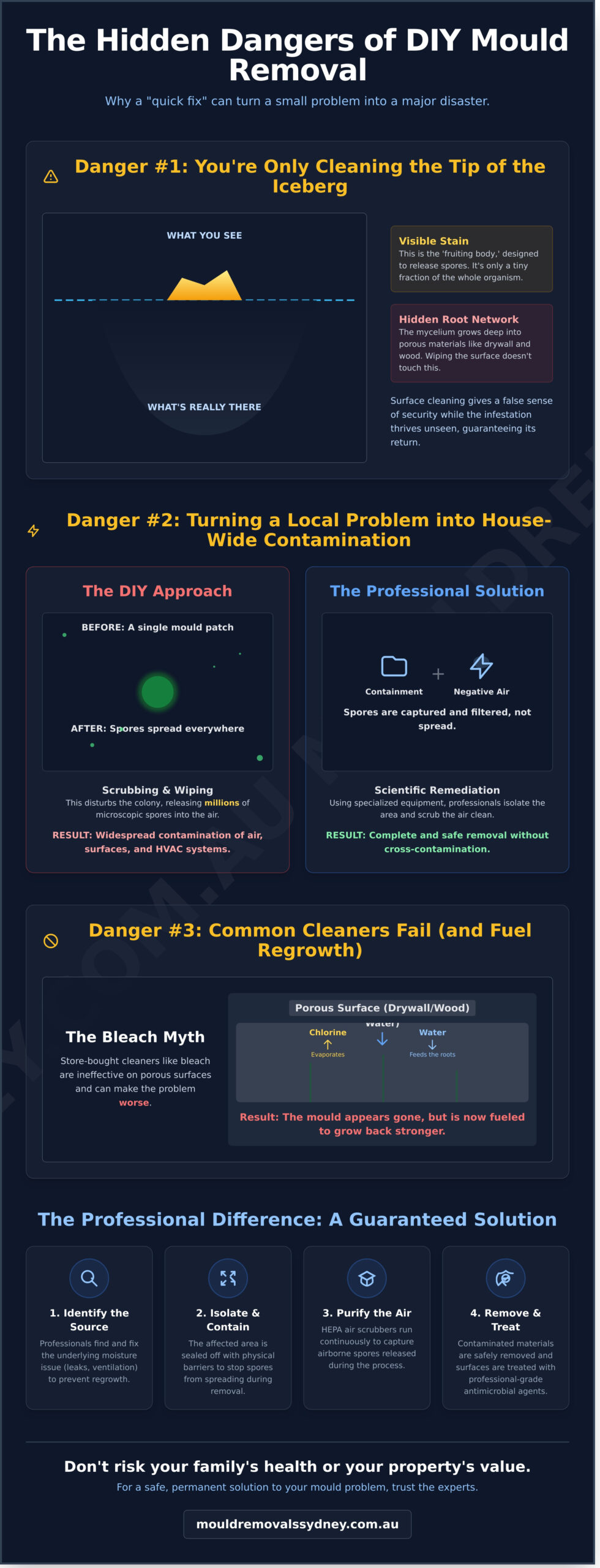
When you spot an unsightly patch of mould on your wall or ceiling, your first instinct is likely to grab a cloth and a spray bottle. But what you can see is only a fraction of the real problem. The visible mould is merely the ‘fruiting body’ of the fungus, the part responsible for releasing airborne spores. The bulk of the organism, a root-like network called the mycelium, is burrowed deep inside porous materials like drywall, wood, and grout.
Simply wiping the surface is like trimming a weed; you remove the visible part, but the roots remain untouched and ready to regrow. For a comprehensive overview of indoor mould and its structure, it becomes clear that surface treatment is fundamentally flawed. This is a primary reason why DIY mould removal is a bad idea. It provides a false sense of accomplishment while the infestation continues to thrive and compromise your property’s structure from within. Inevitably, the mould will return, often more aggressively than before.
Why Bleach and Supermarket Cleaners Fail
Many homeowners reach for bleach, believing it’s a powerful mould killer. This is a critical mistake. Bleach is comprised of about 90% water. On porous surfaces, the chlorine component quickly evaporates, leaving the water behind to soak into the material. This water actually feeds the hidden mould roots, fuelling its regrowth. It may whiten the surface stain, but the organism remains very much alive. These harsh chemicals can also damage surfaces and release toxic fumes.
Ignoring the Real Problem: The Moisture Source
Mould is not the cause of the problem; it is a symptom of an underlying moisture issue. It cannot grow without a consistent source of water, whether from a leaking pipe, poor ventilation in a bathroom, rising damp, or high indoor humidity. This is precisely why DIY mould removal is a bad idea for long-term results. No amount of scrubbing will ever provide a permanent solution if the conditions that allow mould to thrive are not professionally identified and rectified. Without fixing the moisture source, mould is guaranteed to return.
Danger #2: You’re Turning a Local Problem into a House-Wide Contamination
You see a patch of mould under the sink and your first instinct is to attack it with bleach and a scrubbing brush. This aggressive approach is one of the most critical reasons why DIY mould removal is a bad idea. A visible mould colony is a living organism, and when threatened, its defence mechanism is to release millions of microscopic spores into the air. Scrubbing, wiping, or even using a standard household vacuum cleaner instantly aerosolizes these spores, launching an invisible army into your home’s air and turning a contained issue into a widespread threat.
The Myth of ‘Airing Out the Room’
It’s a common belief that opening a window will solve the problem. Unfortunately, a simple breeze is no match for millions of airborne particles. Mould spores are lightweight and designed by nature to travel, settle on new damp surfaces, and begin growing all over again. This is why professional mould remediation is a scientific process, not just a cleaning job. As outlined in the official EPA mold remediation guidelines, true containment involves sealing off the affected area with plastic sheeting and using negative air machines to scrub spores from the air before they can escape.
Cross-Contamination: A DIY Nightmare
The danger doesn’t stop with airborne particles. Spores are incredibly sticky and will cling to your clothes, hair, shoes, and the very cleaning tools you’re using. When you walk out of that mouldy bathroom and into your living room, you are unwittingly acting as a delivery service for a new infestation. This is how a small, manageable problem in one corner becomes a recurring, frustrating issue in bedrooms, closets, and kitchens. It’s a textbook case of why DIY mould removal is a bad idea, putting your family’s health and your property’s integrity at further risk.
Ultimately, without professional protocols, you aren’t just cleaning a stain-you’re potentially seeding your entire home with an invisible contaminant that will degrade your indoor air quality for months to come.
The Direct Health Risks: A Critical Reason Why DIY Mould Removal is a Bad Idea
Beyond the visible damage to your property, the most significant danger of mould lies in the serious health risks it poses. When you attempt to scrub or disturb a mould colony without professional containment, you release millions of microscopic spores directly into your breathing space. This exposure can trigger a host of immediate and long-term health problems.
Inhaling these airborne spores can cause allergic reactions like sneezing, a runny nose, red eyes, and skin rashes. For individuals with asthma, it can trigger severe attacks. The National Institute of Environmental Health Sciences confirms the wide range of health effects associated with mold exposure, noting that even non-allergic people can experience irritation to the eyes, skin, and lungs. Certain types of mould, like the infamous Stachybotrys chartarum (black mould), can also produce mycotoxins-toxic compounds that may lead to more severe health complications with prolonged exposure.
Are Paper Masks and Gloves Enough?
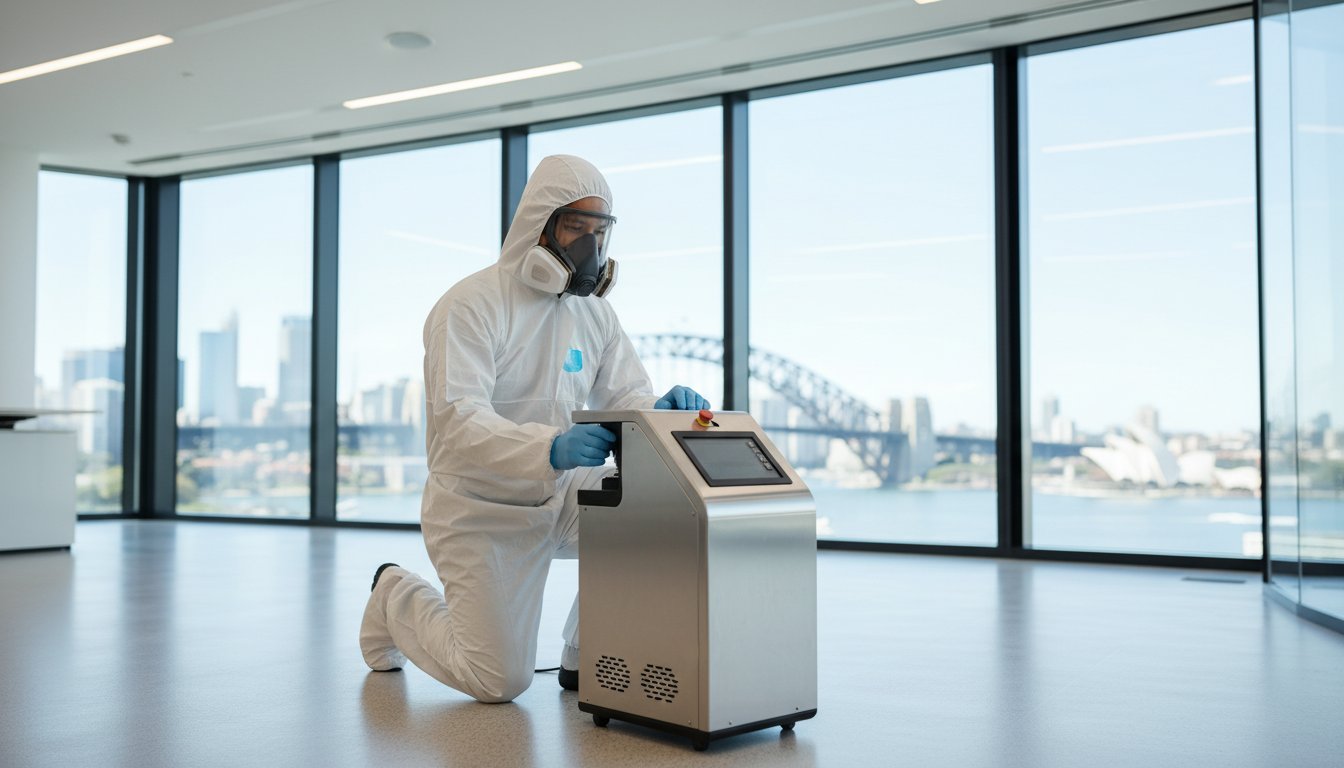
Absolutely not. A standard paper dust mask and a pair of rubber gloves from the supermarket offer almost no real protection. Microscopic mould spores can easily pass through a simple mask and be inhaled. Our certified technicians, in contrast, use professional-grade Personal Protective Equipment (PPE), including P2-rated respirators that filter out these tiny particles, along with full-body suits and sealed eye protection to prevent any contact.
Protecting Your Family and Pets
The danger doesn’t stop with the person cleaning. Once airborne, mould spores travel throughout your home via air currents and HVAC systems, contaminating the air everyone breathes. This is precisely why DIY mould removal is a bad idea; it puts the most vulnerable members of your household at risk. This includes:
- Children and infants, whose developing respiratory systems are more susceptible.
- The elderly, who may have pre-existing health conditions.
- Anyone with a compromised immune system or chronic lung disease.
Even your family pets can suffer from respiratory distress and other health issues caused by poor indoor air quality. Protecting your home means protecting everyone in it, which requires professional, safe, and effective remediation.
Danger #4: The False Economy of DIY (It Costs More Than You Think)
Many property owners believe tackling mould themselves will save money. While avoiding a professional fee seems like an immediate win, this is often a false economy. The initial saving is quickly erased by a cascade of hidden costs that homeowners rarely anticipate. This financial drain is a primary reason why DIY mould removal is a bad idea.
Think about the real expenses involved. It’s not just one bottle of spray. The true cost of a failed DIY attempt includes:
- Ineffective Products: Multiple trips to the hardware store for different “mould-killing” sprays that only clean the surface, wasting both time and money.
- Surface Damage: The cost of repainting walls, re-staining timber, or replacing fabrics damaged by using the wrong harsh chemicals like bleach.
- Structural Repairs: The most significant expense. If the underlying mould problem isn’t properly eradicated, it will continue to destroy plasterboard and rot timber, leading to repairs that can cost thousands of Australian dollars.
The Cycle of Re-Cleaning
Off-the-shelf products can’t penetrate surfaces to kill the mould’s root system. This means that even if the stain disappears, the mould will grow back in the same spot within weeks or months. You become trapped in an endless and frustrating cycle of scrubbing, costing you valuable time, physical effort, and the recurring expense of cleaning supplies. A professional remediation is done right the first time, saving you money and stress in the long run.
When a Small Problem Becomes a Major Remediation
This is the most dangerous financial risk. Improper cleaning techniques, like scrubbing dry mould, can release millions of microscopic spores into the air. This turns a contained one-square-metre issue into a whole-room contamination. The cost to professionally decontaminate an entire room and its contents is exponentially higher than treating the original small patch. Failing to contain the problem is exactly why DIY mould removal is a bad idea for your wallet and your health.
Don’t let a small issue become a big expense that compromises your property’s structural integrity and value. Get a free professional quote today.
The Professional Solution: How Experts Guarantee Mould-Free Results
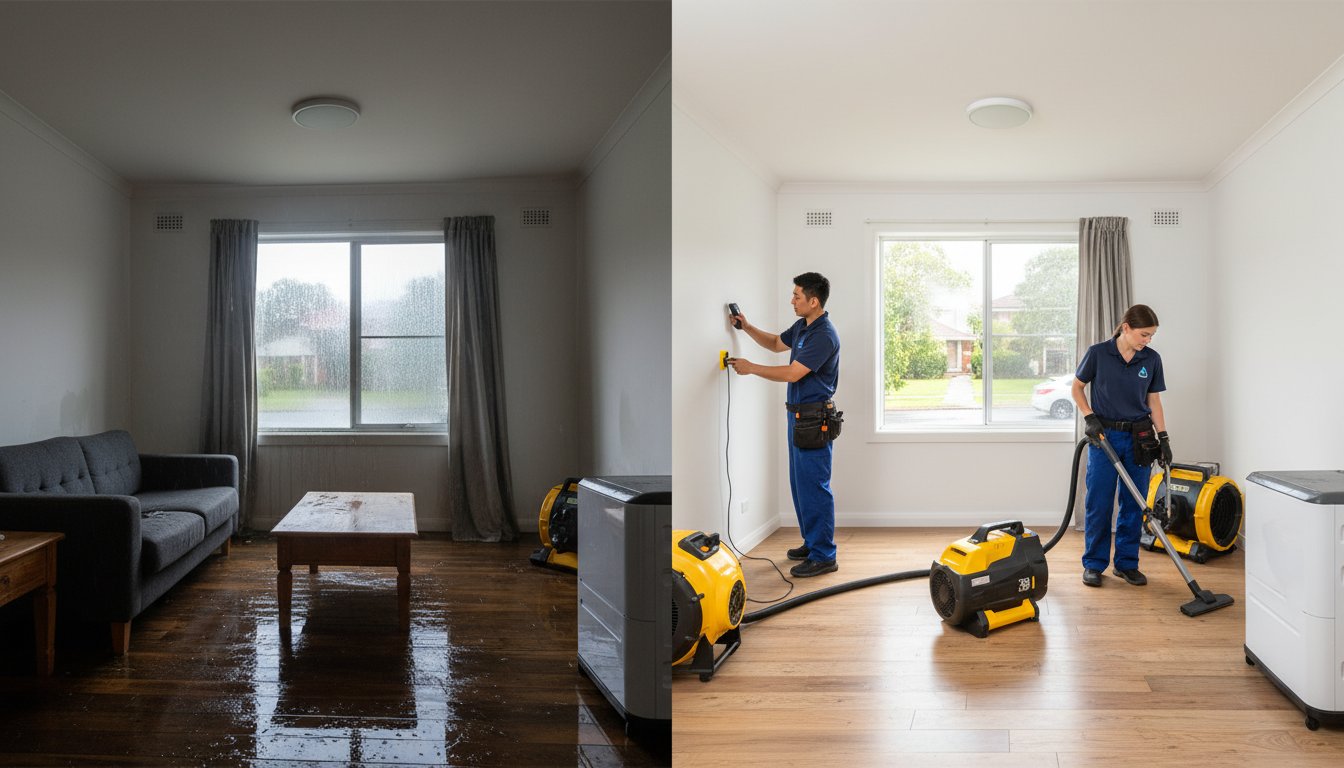
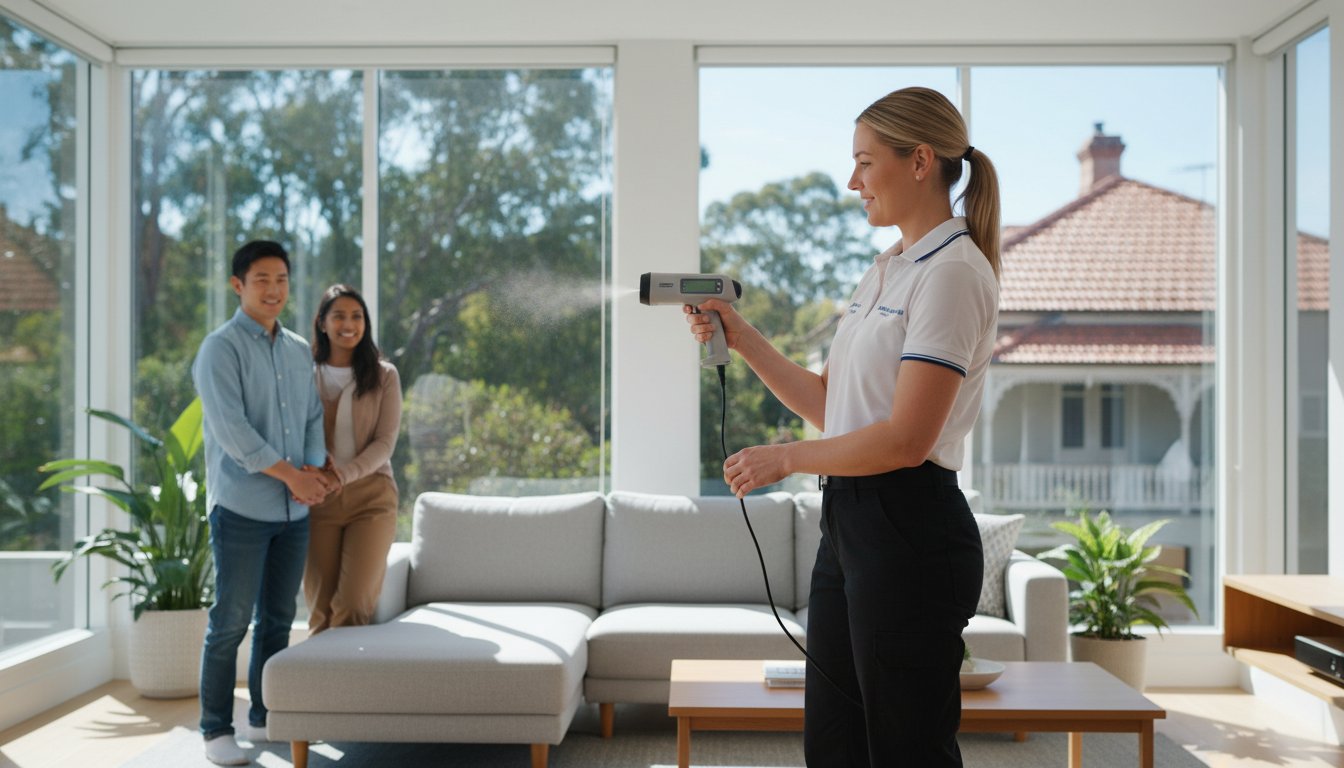
After exploring the significant risks, it becomes clear why DIY mould removal is a bad idea. A professional approach isn’t just about cleaning what you can see; it’s a comprehensive mould remediation process designed to eliminate the threat safely and permanently. Our master technicians don’t just scrub surfaces-we follow a strict, proven system to restore your home to a healthy, safe condition. Using specialised equipment and the industry-leading Goldmorr System, we tackle the problem at its source and give you lasting peace of mind.
Step 1: Inspection and Containment
Protecting your home is our absolute first priority. The process begins with a thorough inspection to identify the mould species and, critically, the source of the moisture that’s feeding it. We then establish containment by setting up physical barriers and negative air pressure machines. This crucial step prevents cross-contamination, stopping invisible airborne spores from spreading to unaffected areas of your property during the removal process.
Step 2: Air Scrubbing and Mould Removal
Before, during, and after removal, we run commercial-grade HEPA air scrubbers to capture and filter out microscopic airborne spores. Our certified technicians then apply proven, non-toxic treatments that kill mould at its root. Unlike harsh store-bought chemicals, our methods are safe for your family and pets. Any contaminated materials that cannot be salvaged, such as plasterboard or insulation, are carefully removed and disposed of according to strict Australian standards.
Step 3: Final Cleaning and Prevention Advice
Our job isn’t done until we ensure the mould won’t return. This involves a final, detailed clean of the entire remediated area to remove any lingering contaminants. Most importantly, we provide expert, practical advice on fixing the underlying moisture issue-the key to long-term success. This focus on a permanent solution is another reason why DIY mould removal is a bad idea. See how our proven process works. Learn about our mould removal services.
Your Health is Not a DIY Project: Trust the Experts
The temptation to grab a bottle of bleach and scrub mould away is understandable, but as we’ve uncovered, it’s a dangerous gamble. You risk spreading invisible spores throughout your ventilation system, only cleaning the visible surface while the hidden infestation thrives, and incurring higher costs down the track for repairs. These hidden dangers are precisely why DIY mould removal is a bad idea, turning a localised problem into a serious, house-wide contamination that compromises your family’s health and your property’s value.
Don’t wait for the problem to worsen-because it will. Choose the guaranteed, professional solution trusted by Sydney homeowners. Our certified and experienced technicians utilise the industry-leading Goldmorr System to completely eliminate mould at its source, purifying your air and restoring safety. We are so confident in our effective, reliable remediation process that we promise to beat any written quote by 10%.
Don’t risk your health. Get a free, no-obligation quote from Sydney’s trusted experts.
Take the first step towards a certified mould-free home and the complete peace of mind you deserve.
Frequently Asked Questions About Mould Removal
Is it ever okay to remove mould myself?
For a very small area of surface mould (less than one square metre) on a non-porous surface like tiles, a DIY approach might seem manageable. However, this is often why DIY mould removal is a bad idea. Disturbing mould colonies without proper containment releases millions of airborne spores, spreading contamination throughout your property. For any significant growth, or mould on porous materials like plasterboard, professional remediation is the only safe and effective solution to protect your health.
Can’t I just use vinegar or clove oil to kill mould?
While popular online, home remedies like vinegar or clove oil are not effective long-term solutions. They may kill some surface mould but cannot penetrate porous materials to eliminate the mould’s root structure. This means the mould will inevitably return. Professional-grade antimicrobial treatments, like those used in our certified Goldmorr System, are formulated to eradicate the problem completely, addressing both visible growth and invisible airborne spores for lasting results.
How do I know if mould is growing behind my walls?
A persistent musty or earthy smell is the most common sign of hidden mould. You should also look for visual clues like unexplained staining, discolouration, or bubbling and peeling paint on your walls or ceiling. If family members are experiencing heightened allergy symptoms or respiratory issues in a specific area of the house, it could also point to a hidden mould problem. Never investigate yourself; call an expert for a safe inspection.
What’s the difference between mould cleaning and mould remediation?
Mould cleaning is a surface-level action that simply wipes away visible mould. It fails to address the underlying moisture issue or the airborne spores, meaning the problem will come back. Professional mould remediation is a comprehensive process. It involves identifying and fixing the moisture source, containing the affected area to prevent cross-contamination, safely removing the mould, and treating the air to ensure your home is safe and healthy again.
How can I tell if a mould removal company is reputable?
A reputable Sydney mould removal company will be fully insured and hold industry certifications, such as from the IICRC. They should be transparent, providing a detailed written quote and explaining their process clearly. Ask if they follow established industry standards and can provide references or show you before-and-after photos of their work. A trustworthy company will focus on identifying the cause, not just cleaning the visible symptoms.
What does a professional mould inspection in Sydney involve?
A professional mould inspection is a detailed diagnostic process. Our certified technicians use specialised equipment, including moisture meters and thermal imaging cameras, to locate the source and extent of the moisture problem fueling the mould growth. The assessment includes a thorough visual inspection of the property, and if required, air and surface samples can be taken for laboratory analysis. We then provide a comprehensive report with a clear, actionable remediation plan.