Did you know that within just 24 to 48 hours, standing water can begin to breed toxic black mould and compromise the structural integrity of your Sydney home? It’s a terrifying realization for any property owner facing a burst pipe or flash flood. You’re likely feeling overwhelmed by soaked carpets and the looming fear of permanent rot. Professional water extraction and drying services are not a luxury in these moments; they are a critical, 24/7 necessity to stop Category 1 clean water from degrading into hazardous contamination. Every hour you wait increases the risk of secondary damage and escalating restoration costs.
We understand the anxiety that comes with hidden moisture and the confusion of navigating insurance requirements. This guide provides the clarity you need during this crisis. You’ll learn how specialized water extraction and drying services utilize the AS-IICRC S500 standard to ensure your property is truly dry, not just surface-dry. We’ll explain how advanced techniques like the Goldmorr System prevent secondary mould growth and restore a safe, habitable environment. We’ll walk through the essential steps of professional moisture removal, from initial thermal imaging to final air purification, so you can protect your investment and your family’s health.
Key Takeaways
- Act within the critical 24-48 hour window to stop mould spores from colonising structural materials after a water event.
- Utilise professional water extraction and drying services to address deep-seated moisture that “dry to the touch” inspections often miss.
- Distinguish between Category 1 clean water and Category 2 grey water to understand the specific health risks and remediation needs.
- Prioritise safety by isolating electricity and gas before attempting to stop the water source at the main valve.
- Leverage the Goldmorr System’s biodegradable fogging technology to eliminate airborne spores and ensure long-term property safety.
Why Immediate Water Extraction is Critical for Sydney Properties
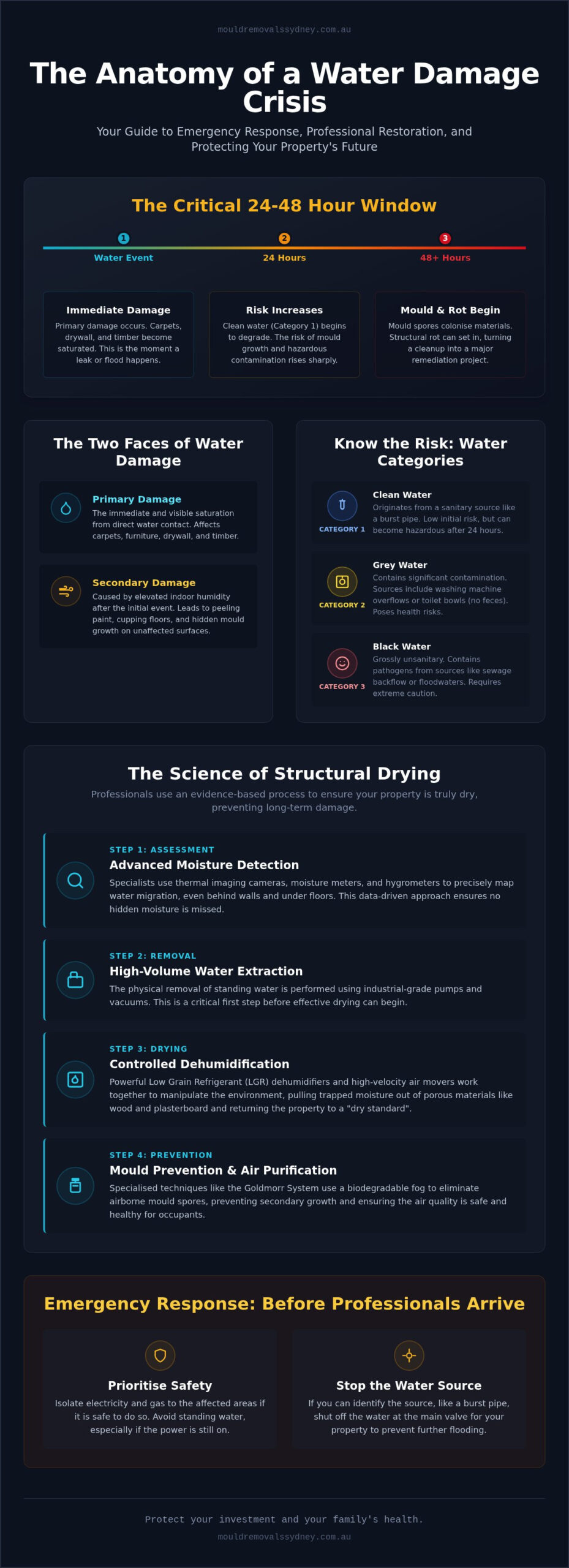
Time is your greatest enemy after a leak or flood. Water extraction is the physical removal of standing liquid from your property using high volume pumps and industrial vacuums. It’s a distinct process from drying; you can’t effectively dry a structure until the bulk water is gone. You have a critical 24 to 48 hour window before mould spores begin colonising saturated materials. If you miss this timeframe, a simple clean up job transforms into a complex remediation project. Professional water extraction and drying services stop this clock and prevent the liquid from migrating deeper into your building’s skeleton.
Sydney’s coastal climate adds another layer of risk. High ambient humidity across NSW accelerates the breakdown of building materials like MDF and plasterboard. When indoor relative humidity spikes due to standing water, structural rot sets in much faster than in drier regions. Acting quickly also protects your wallet. Insurance providers typically require homeowners to take immediate action to mitigate loss. By engaging specialists for water extraction and drying services early, you significantly reduce the overall claim cost by avoiding the need for total structural replacement.
The Escalation of Water Damage
Water damage occurs in two distinct phases. Primary damage is the immediate saturation of carpets, drywall, and timber. This happens the moment the water hits. Secondary damage is the degradation of building materials and air quality caused by unmanaged, elevated indoor humidity levels. As water evaporates from the floor, it enters the air and settles on unaffected surfaces like ceilings and furniture. Understanding The Science of Structural Drying helps specialists manage these humidity levels to prevent your wallpaper from peeling or your floorboards from cupping days after the initial event.
Health Risks of Delayed Extraction
The health implications of stagnant water are severe. “Grey” or “black” water sources often contain bacteria and pathogens that multiply rapidly in Sydney’s warmth. Even if the water looks clean, it won’t stay that way for long. Rising indoor humidity creates respiratory triggers that can affect sensitive occupants almost immediately. Don’t fall into the trap of thinking a surface feels dry. Moisture often remains trapped behind skirting boards and under floorboards, creating a hidden nursery for toxic mould that compromises your home’s air quality and safety. Professional extraction ensures these hidden pockets are identified and emptied before they become a health hazard.
The Science of Structural Drying: Beyond the Surface
Professional water extraction and drying services rely on psychrometry, which is the study of the thermodynamic relationship between air, moisture, and temperature. We don’t just blow air around a room. We manipulate the environment to force moisture out of saturated materials and into the air, where it can be captured and removed. Many Sydney residents assume their home is safe once the carpet feels dry. This is a dangerous misconception. Moisture often remains trapped deep within structural timber and masonry, even when the surface appears perfect. If left unmanaged, this hidden dampness triggers the health hazards outlined in the Categories of Water and Their Risks, leading to rapid mould colonisation.
To achieve total dry-out, we use Low Grain Refrigerant (LGR) dehumidifiers. These industrial machines are significantly more powerful than retail units; they can pull moisture from the air even in very low humidity conditions. We pair these with high-velocity air movers that break the boundary layer of saturated air sitting on wet surfaces. This combination accelerates evaporation from porous materials like plasterboard and timber. Our goal is to return your property to a “dry standard” quickly, preventing the structural rot that occurs when moisture lingers for more than 48 hours.
Advanced Moisture Detection Tools
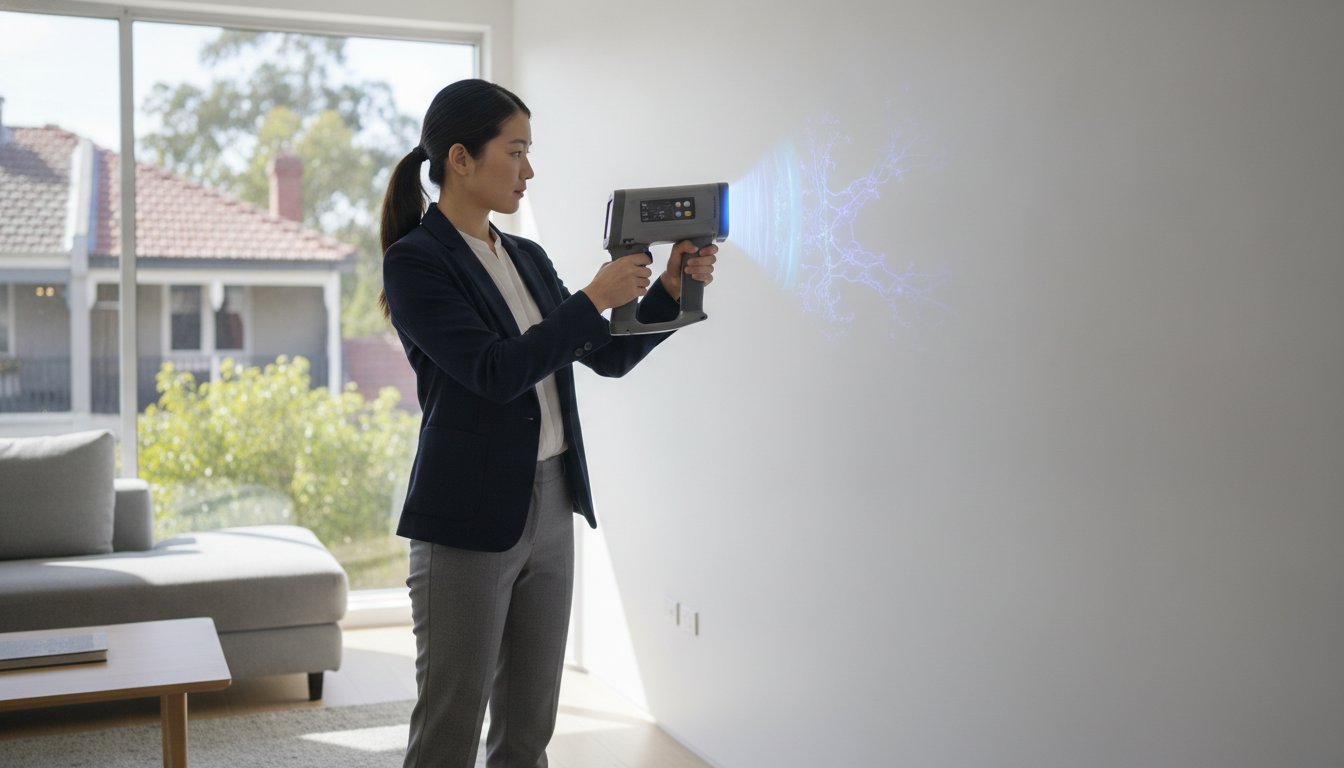
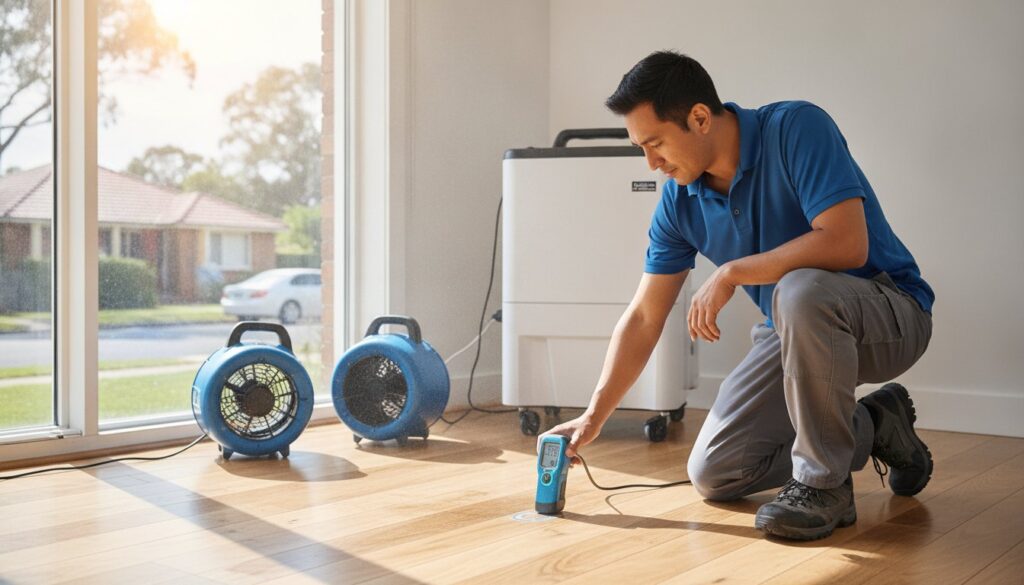
We use evidence-based methods to track water migration. Our specialists employ thermal imaging cameras to identify temperature differentials that signal water tracks behind drywall or under floorboards. We don’t guess where the water went; we see it. Moisture meters allow us to establish a baseline by comparing affected materials with unaffected areas of your home. Meanwhile, hygrometers constantly monitor the relative humidity of the restoration environment. This data ensures our equipment is placed for maximum efficiency. If you’re concerned about hidden dampness, a professional moisture assessment is the only way to be certain your home is safe.
Targeting Hidden Cavities
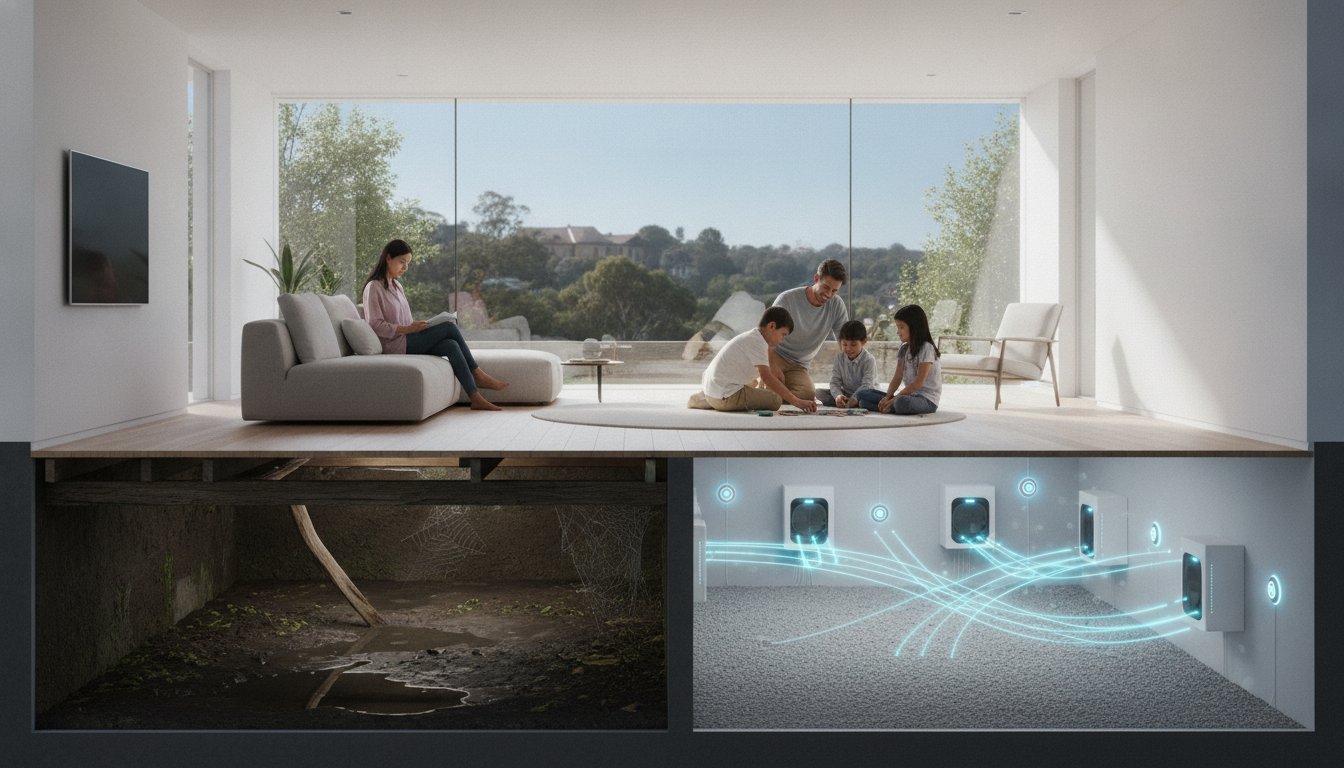
Water is opportunistic and will find its way into the smallest voids. We use specialised techniques to dry wall cavities and internal structural timber without always needing to demolish the surface. Subfloor drying is particularly critical in Sydney’s older homes. Moisture trapped beneath your floorboards can rot your foundations and create a persistent musty odour. Installing effective subfloor ventilation is often a necessary step for long-term moisture management. It ensures that once we have removed the initial floodwater, your home remains protected from ground-level dampness and future mould outbreaks.
Assessing the Damage: Categories of Water and Their Risks
Understanding the type of water that has entered your property is the first step in a safe recovery. Industry standards classify water into three distinct categories based on contamination levels. Category 1 is “clean water” originating from sanitary sources like a broken supply line or a bathtub overflow. While it poses the lowest immediate health risk, it doesn’t stay clean. If left for more than 48 hours, it can degrade into Category 2. Category 2, often called “grey water,” contains significant contamination from sources like dishwasher discharge or washing machine overflows. This water has the potential to cause discomfort or illness if contacted. Category 3 is “black water,” which is grossly contaminated. This includes sewage, rising floodwaters from rivers, and seawater. It contains pathogenic agents and requires extreme biohazard protocols during water extraction and drying services to ensure the environment is safe for habitation.
The category of water dictates our entire sanitisation strategy. For clean water, we focus on rapid moisture removal to prevent mould. For grey or black water, the process becomes a medical-grade cleanup. We must neutralise bacteria and viruses before the drying process begins to prevent these pathogens from becoming airborne. Our team uses evidence-based methods to identify the source and contamination level, ensuring that the chosen remediation path is both effective and safe for your family.
Class 1 to Class 4 Water Ingress
While categories define contamination, “Classes” define the rate of evaporation and the complexity of the dry-out. Class 1 affects only a small area with low-porosity materials. Class 2 involves an entire room with water wicking up walls. Class 3 is the most common for major leaks, involving water from overhead and saturated insulation. Class 4 represents specialty drying situations where moisture is trapped in low-evaporation materials like hardwood, brick, or concrete. ABC Mould Cleaning Solutions uses this classification system to determine exactly which industrial LGR dehumidifiers and air movers are required for your specific Sydney property.
When Materials Cannot Be Saved
In Category 3 events, many porous materials simply cannot be saved. Insulation, plasterboard, and carpets that have absorbed black water act as sponges for bacteria and pathogens. Attempting to dry these materials is dangerous and often impossible. Our safety protocols involve the controlled removal of these contaminated items to prevent the cross-contamination of unaffected areas. A professional assessment is vital here; we identify what can be salvaged through intensive sanitisation and what must be discarded. This precision-engineered approach ensures that our water extraction and drying services leave your home medically clean, not just visually dry.
Emergency Response: Before Professionals Arrive
Safety is your first priority. Before thinking about the restoration, you must secure the environment. Turn off the electricity and gas to the affected area immediately. Water and electricity are a lethal combination; never enter a flooded room until you’re certain the power is cut at the mains. If the flooding is caused by a burst internal pipe, locate and turn off the main water valve to stop the flow. Every minute the water continues to run increases the saturation level of your structural materials and raises the complexity of the eventual cleanup.
Once the area is safe, start documenting the scene. Use your phone to take clear photos and videos of the standing water and damaged items. This evidence is vital for your insurance claim and helps our team understand the initial extent of the ingress. Move valuable items, electronics, and light furniture to a dry, elevated location. For heavy furniture, place aluminium foil or plastic saucers under the legs to prevent wood stains on wet carpets. Avoid the temptation to set up household fans. While it seems helpful, standard fans aren’t powerful enough to dry structural materials. Instead, they create air currents that can spread active mould spores throughout your home before professional water extraction and drying services can begin.
Safety Precautions for Homeowners
Don’t underestimate the weight of water. Heavily saturated plasterboard ceilings can collapse without warning. If you see bulging or sagging in the ceiling, keep everyone out of that room. If you must enter a wet area to retrieve essentials, wear rubber boots and waterproof gloves. This protects you from potential contaminants in the water. Never use a standard household vacuum to suck up water. These machines aren’t designed for liquid extraction; you risk both fatal electrocution and permanent damage to the appliance. Professional water extraction and drying services use specialised, grounded equipment designed specifically for these high-risk environments.
Preparing for the Restoration Team
You can speed up the recovery process by preparing for our arrival. Clear a path from the entrance to the affected rooms so we can move heavy industrial dehumidifiers and air movers into place quickly. Have your insurance policy number and contact details ready for the technician. For a complete step-by-step checklist on managing the first hour of a flood, consult our emergency guide for Sydney homes. If the situation is escalating, don’t wait. Contact us for immediate emergency water damage restoration to secure your property and begin the recovery process.
ABC Mould Cleaning Solutions: The Goldmorr System Advantage
ABC Mould Cleaning Solutions uses the Goldmorr System to ensure your property isn’t just dry, but medically safe. Most companies stop once the moisture meters hit zero. We go further. The Goldmorr System is a proprietary, biodegradable approach to mould elimination that targets spores at a cellular level. During professional water extraction and drying services, we deploy advanced fogging technology. This non-toxic fog permeates every corner of your home, killing airborne spores that thrive the moment water ingress occurs. It’s a proactive shield against the secondary damage discussed earlier in this guide, preventing the toxic outbreaks that often follow a flood.
Clean air is as important as dry timber. We integrate high-efficiency particulate air (HEPA) scrubbing into our restoration process to restore indoor air quality. These industrial-grade air purifiers filter out microscopic contaminants, ensuring the air you breathe is free from pathogens and musty odours. Once the structural drying is complete, we perform a rigorous post-drying inspection. We use precision instruments to verify that every material meets strict “dry” and “safe” standards before we sign off on the project. This evidence-based approach ensures your home is a habitable environment once again.
Why We Are Sydneys Trusted Restoration Experts
We are locally owned and operated. Our team understands Sydney’s unique coastal climate and the specific challenges of NSW building materials. We provide a rapid-response service because we know that water damage is an emergency that doesn’t respect business hours. The ABC guarantee is our promise to you: we don’t just remove the water; we ensure a mould-free future for your family. Our staff are highly trained specialists who use systematic methods to restore your peace of mind and property value quickly.
Get Your Professional Quote Today
We’ve streamlined the recovery process to make it as simple as possible. Use our digital inquiry process to send us photos or videos of the damage for a rapid, accurate assessment. This modern efficiency removes friction and gets our specialists on-site faster. We offer transparent pricing and an aggressive price-matching guarantee to ensure you receive the best value in Sydney for water extraction and drying services. Contact our Sydney team today to start the recovery process and secure your home against long-term structural rot.
Secure Your Property and Protect Your Health Today
Water damage doesn’t wait for a convenient time. As you’ve learned, the window to prevent structural rot and toxic mould colonization is incredibly narrow. Acting within the first 24 to 48 hours is the only way to ensure your Sydney property remains a safe, habitable environment. Professional water extraction and drying services are about more than just removing liquid; they are a precision-engineered defense against the pathogens and structural decay that follow a flood.
By choosing a systematic approach, you stop secondary damage in its tracks. Our team utilizes the proprietary Goldmorr System, a biodegradable and family-safe remediation method that eliminates airborne spores. We provide a 24/7 emergency response across Sydney because your safety is our absolute priority. Don’t let a minor leak turn into a major health hazard or a massive financial burden. Take control of the situation before the damage escalates further.
Get an Emergency Water Damage Assessment in Sydney Now. Our experts are ready to restore your peace of mind and return your home to its original, safe condition.
Frequently Asked Questions
How long does the water extraction and drying process typically take?
Most professional drying projects take between three and five days to reach industry dry standards. The exact duration depends on the volume of water and the porosity of the materials involved, such as concrete versus timber. We use moisture meters to monitor progress daily. You shouldn’t turn off the equipment early, as this allows deep-seated moisture to resurface and trigger mould growth. Our team provides clear timelines after the initial inspection.
Is water damage restoration covered by my home insurance in Sydney?
Most Sydney home insurance policies cover water damage restoration resulting from sudden and accidental events like burst pipes or storm ingress. However, coverage often depends on your duty to mitigate, which means you must take immediate steps to prevent further damage. Insurance companies generally prefer professional water extraction and drying services because they reduce the total claim cost. Always check your specific Product Disclosure Statement and document everything with photos immediately.
Can I stay in my house while the drying equipment is running?
You can often stay in your home, but it’s important to consider the noise and heat. Industrial air movers and LGR dehumidifiers are loud and must run continuously to be effective. If the water is Category 3 black water, we strongly recommend vacating the premises due to significant health risks from pathogens. For smaller Category 1 leaks, staying is fine as long as you don’t mind the constant hum and slightly higher indoor temperatures.
Will professional drying prevent all mould from growing after a flood?
Professional drying significantly reduces the risk of mould, but it must be combined with proper sanitisation. We use the Goldmorr System to kill existing spores and create a hostile environment for new growth. While no one can guarantee 100% prevention in every scenario, acting within the first 48 hours is the most effective way to stop a colonisation. Our integrated approach focuses on both moisture removal and air purification to ensure your home stays safe.
What is the difference between water extraction and dehumidification?
Water extraction is the physical removal of standing liquid using high-powered vacuums and pumps. It’s the first step in any restoration project. Dehumidification is the process of removing water vapor from the air. Once the standing water is gone, LGR dehumidifiers pull moisture out of the air, which in turn pulls deep-seated dampness out of structural materials like timber and plasterboard. You need both for a successful, total structural dry-out.
How much do professional water extraction and drying services cost?
The cost of water extraction and drying services varies based on the category of water contamination and the size of the affected area. Factors like the number of industrial machines required and the duration of the drying process influence the final investment. While we don’t provide flat rates due to the unique nature of each flood, we offer an aggressive price-matching guarantee. Contact our team for a rapid assessment and a transparent, itemised quote.
What happens if I ignore water damage in my subfloor?
Ignoring subfloor moisture leads to catastrophic structural issues and persistent health hazards. Damp subfloors are the primary cause of timber rot, floorboard cupping, and musty odours that permeate the entire home. Over time, this moisture rises into your living spaces, triggering mould growth and attracting pests like termites. We specialise in subfloor ventilation and targeted drying to prevent these foundation-level problems. Addressing subfloor dampness early saves you from expensive structural repairs later.