
That musty “wet dog” smell coming from your vents isn’t just an annoyance; it’s a warning that your family is breathing in microscopic fungal spores every time you click the remote. When toxic growth takes hold inside your unit, your home’s sanctuary is compromised. You’ve likely noticed your electricity bills climbing while your living room stays stubbornly warm, leaving you worried about the health risks of the black residue appearing behind the louvres. It’s a stressful situation that requires a professional, evidence-based response to ensure your air is truly safe.
Professional air conditioner coil cleaning for mould is the only way to eliminate these risks and restore your system’s cooling performance. In this guide, you’ll discover how to identify hidden infestations and why simple hardware store sprays often fail to solve the underlying issue. We will preview the specialized Goldmorr System used by Sydney experts to neutralize airborne spores and provide the long-term relief your family deserves. By the end of this article, you’ll have a clear, actionable plan to reclaim your home’s air quality and stop the cycle of mould growth for good.
Key Takeaways
- Identify the early warning signs of “Dirty Sock Syndrome” and visible black spotting before spores compromise your family’s health.
- Understand why split system evaporator coils become the perfect breeding ground for toxic biofilms due to moisture and dust accumulation.
- Discover why professional air conditioner coil cleaning for mould is essential to avoid the corrosive damage and incomplete removal caused by DIY chemicals.
- Learn how the specialized Goldmorr System decontaminates internal components like the fan barrel to restore peak cooling performance.
- Master simple prevention strategies, such as using “Dry Mode” and regular filter maintenance, to stop mould from returning to your Sydney home.
Why Air Conditioner Coils Become a Breeding Ground for Mould
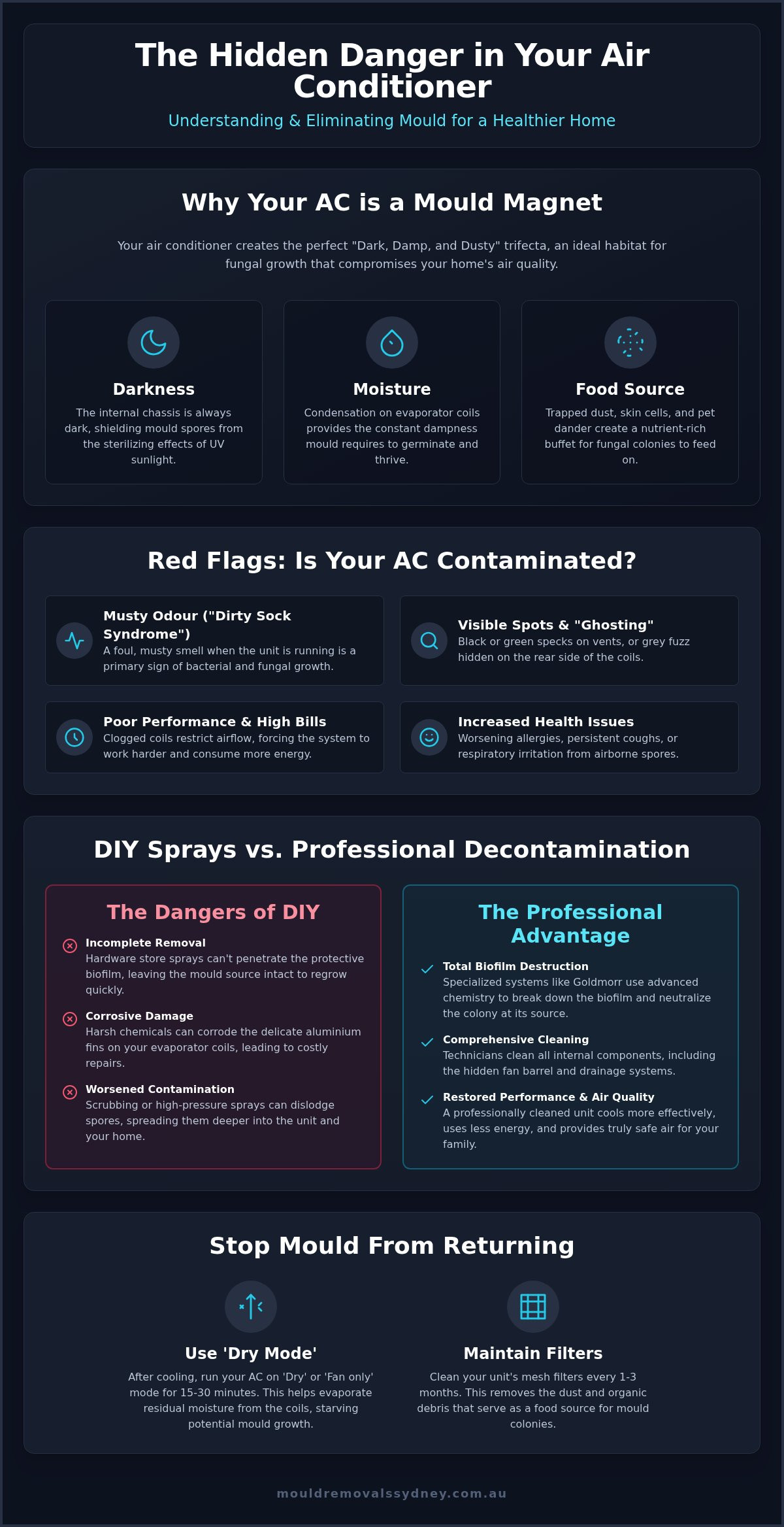
Your air conditioner does more than lower the temperature; it acts as a massive lung for your home. Inside the unit, the evaporator coils are the primary site of heat exchange. This process creates a “Dark, Damp, and Dusty” trifecta that serves as the ultimate habitat for fungal growth. As warm air passes over the cold aluminium fins, moisture condenses into liquid water. This constant state of dampness, combined with the lack of light inside the chassis, provides the perfect environment for spores to germinate and thrive.
Mould requires food to grow, and your AC system provides a constant supply of organic debris. Every time the fan runs, it pulls in microscopic particles of dead skin, pet dander, and household dust. This material gets trapped in the wet condensation on the coils. Understanding indoor mould requires recognizing that these contaminants aren’t just “dirt”; they are a nutrient-rich buffet for fungal colonies. Over time, this mixture of moisture and organic matter transforms into a thick, resilient sludge that compromises your air quality. Relying on professional air conditioner coil cleaning for mould is the only way to ensure this biological buildup is completely eradicated.
The Sydney Humidity Factor
Sydney homeowners face a unique challenge due to our coastal climate. Suburbs across the Greater Sydney region frequently experience relative humidity levels above 70%, especially during the summer months. High humidity prevents the internal components of your split system from drying out between cooling cycles. When the coils remain wet for extended periods, mould growth accelerates exponentially. Additionally, coastal salt air can cause micro-corrosion on the aluminium fins. This corrosion makes the metal surface more porous, providing microscopic “anchors” that allow mould to attach more firmly to the coils than in drier, inland environments.
Biofilm: The Hidden Layer on Your Coils
The residue you see on your AC fins isn’t just surface grime; it is often a complex biological structure called biofilm. Biofilm is a protective, slimy layer created by bacteria and fungi to shield themselves from external threats. This “shield” is why standard household detergents and hardware store sprays often fail. While a surface spray might remove the top layer of discolouration, the underlying biofilm remains intact, allowing the mould to return within weeks. Effective air conditioner coil cleaning for mould requires specialized chemistry, such as the Goldmorr System, to penetrate this protective layer and neutralize the colony at its source. Without this professional intervention, your AC unit will continue to recirculate spores throughout your living spaces.
Signs Your AC Coils Need Professional Mould Cleaning
Detecting a musty, fermented odour when you switch on your split system is a clear indicator of biological growth. This phenomenon, frequently termed “Dirty Sock Syndrome,” occurs when bacteria and fungal spores colonize the damp surfaces of your unit. It isn’t just a nuisance; it’s a sign that a biofilm has matured on your evaporator coils. You might also notice visible spotting. Look for small black or dark green specks on the louvres or the internal cooling fins. These are often the “tip of the iceberg” for a much larger infestation hiding within the chassis.
System performance issues often mirror these hygiene concerns. If your electricity bills have spiked while the air feels weaker, your system is likely struggling against a thick layer of biological sludge. Clogged coils restrict airflow and force the compressor to run longer to reach your desired temperature. Professional air conditioner coil cleaning for mould removes this physical barrier, instantly improving efficiency. Don’t ignore these mechanical warnings, as they often precede total system failure or significant health complications for your household.
Visible vs. Invisible Infestations
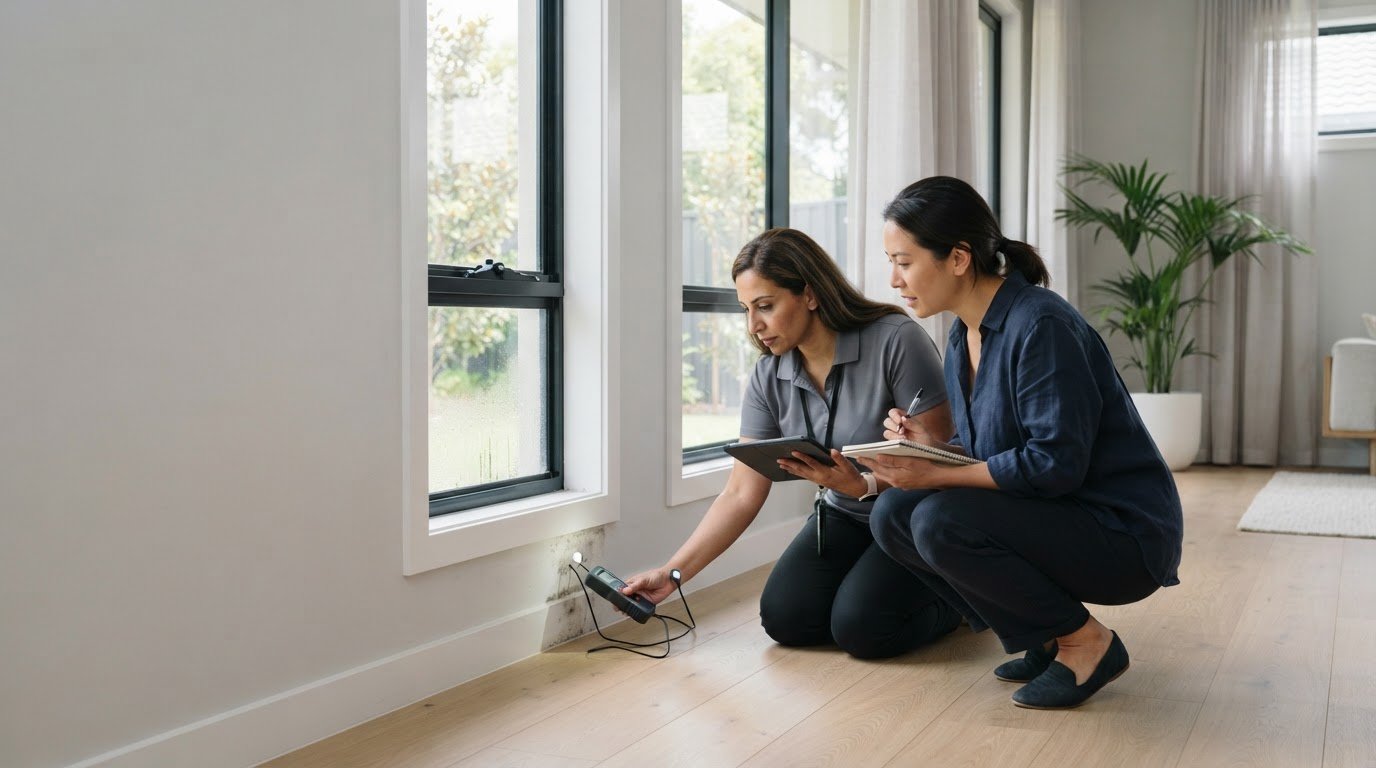
Clean filters provide a false sense of security. Many Sydney homeowners assume their unit is safe because the mesh filters look spotless. However, mould thrives deeper inside the unit. Use a torch to peer past the filters into the fan barrel and the recesses of the cooling fins. You may see a greyish “fuzz” or black accumulation. A particularly dangerous issue is “ghosting,” where mould grows on the rear side of the coils. This remains completely invisible during a standard visual check but continues to contaminate every cubic metre of air pushed into your room.
Health Risks of Contaminated Airflows
Your AC unit acts as a delivery system for airborne contaminants. When the fan spins, it dislodges microscopic spores from the coils and sprays them directly into your living space. This recirculation is why many people experience increased sneezing, coughing, or unexplained headaches when the air conditioning is running. Vulnerable groups, such as children, the elderly, and those with respiratory conditions, are at the highest risk. Consulting an EPA mould and moisture guide confirms that controlling dampness is the only way to prevent these respiratory triggers.
Exposure to these pathogens can lead to serious long-term issues. If you or your family members are experiencing persistent black mould symptoms, the source is likely your HVAC system. To protect your home’s air quality, scheduling a professional mould inspection is the most effective way to identify hidden colonies before they spread further through your property.
DIY vs. Professional AC Coil Cleaning: The Real Risks
Attempting to save money with a DIY approach often leads to expensive system damage and lingering health concerns. Professional air conditioner coil cleaning for mould is a technical task that requires specific tools and chemistry. Most household cleaners, such as bleach or vinegar, are highly corrosive to the delicate aluminium fins that make up your cooling coils. These chemicals can cause the metal to brittle and flake, permanently reducing the unit’s heat exchange capacity. Beyond the physical damage, using non-specialized pressure sprayers near sensitive electronics carries a high risk of electrical shorts. A single stray droplet on the control board can result in a total system replacement.
The “spraying and praying” method is another common DIY failure. When you spray a retail cleaner onto the face of the coils without the proper flushing equipment, you aren’t removing the mould; you’re simply pushing the biological sludge deeper into the unit. This debris eventually clogs the drain pan and creates a stagnant pool of water, which becomes a secondary breeding ground for bacteria. Our systematic process ensures that every gram of biofilm is physically removed from the system rather than just relocated. Failing to address the root cause of the infestation leaves your family vulnerable to the health risks of mould exposure, which can persist even if the unit “looks” cleaner.
Does Clove Oil Work for AC Mould?
Clove oil is often marketed as a natural miracle cure, but it is unsuitable for HVAC applications. While it may kill some surface spores, the oil leaves behind a persistent, sticky residue on the cooling fins. This residue acts like a magnet for dust and organic debris, accelerating the formation of new biofilm. Within weeks, your coils will be more congested than they were before the treatment. Avoid these amateur methods. Read our full breakdown on why clove oil for mould is not a permanent solution for air conditioning systems.
The Professional Advantage: Specialized Equipment
Effective decontamination requires more than a garden hose. Specialists use high-volume, low-pressure flushing systems designed to penetrate the entire depth of the coil pack without bending the fins. This process is paired with the use of “Wash Bags,” which are specialized funnels that encase the indoor unit to catch every drop of contaminated runoff. This setup prevents toxic water from splashing onto your walls or soaking into your carpets. Professionals also utilize industrial-grade enzymes to dissolve the protective biofilm. This systematic approach ensures the air conditioning system is sanitized to IICRC standards, providing a level of safety that retail sprays cannot match.
Our Professional AC Decontamination Process
Professional air conditioner coil cleaning for mould requires more than a superficial wipe of the external casing. Our technicians follow a systematic, evidence-based methodology designed to eliminate biological threats at their source. We begin with a comprehensive inspection of the evaporator coils, fan barrel, and drain pan to map the extent of the biofilm buildup. We then apply biodegradable, non-toxic cleaners specifically formulated to break down the resilient biological bonds holding the infestation in place. This process doesn’t just improve the look of your unit; it restores the mechanical and hygienic integrity of your entire system.
Our approach is built around the Goldmorr System, a proprietary methodology that neutralizes fungal pathogens at a molecular level. By combining high-level technical expertise with specialized chemistry, we ensure your home’s air is truly safe for all occupants. This systematic breakdown ensures that every component is addressed, leaving no room for hidden colonies to trigger respiratory issues or system failures.
Step 1: Deep Coil Flushing
We start by removing the unit casing and filters to gain total access to the heat exchanger. Our specialists use specialized probes to reach the back of the coil bank, ensuring that “ghosting” mould is physically removed. A critical part of this stage is clearing the condensate drain. Mould “sludge” frequently blocks these lines, which leads to water leaks and rapid re-infestation. We flush the system using high-volume, low-pressure water until the runoff is completely clear and the physical source of the musty odour is gone.
Step 2: The Goldmorr Fogging Process
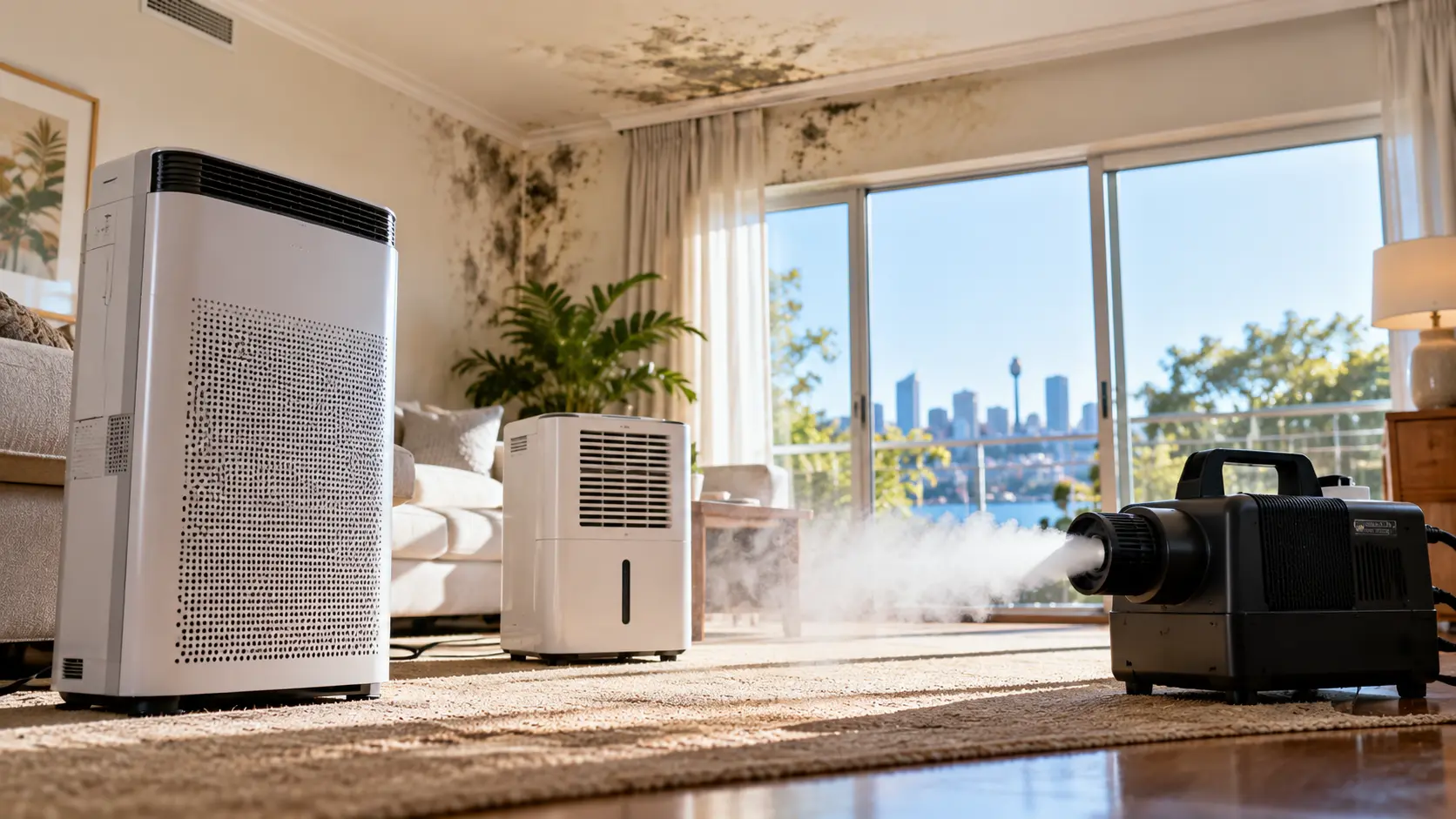
Surface cleaning alone cannot address the microscopic spores that have already entered your home’s atmosphere. We utilize a biodegradable fogging process to target these airborne pathogens. Unlike simple surface wiping, this fog permeates the internal chassis of the AC unit and the surrounding room. It neutralizes invisible spores that standard cleaning methods miss. This step is what differentiates a professional decontamination from a basic retail service, ensuring the entire environment is decontaminated rather than just the visible fins.
Step 3: Verification and Protection
We don’t consider the job done until we verify the results. Our team tests the airflow and temperature delta post-clean to confirm that your system has returned to peak cooling performance. We then apply long-term inhibitors to the coils to slow down future organic growth. As a final step, we provide Air Purification & Scrubbing to remove any residual particles from your living space, restoring hospital-grade air quality to your property. To ensure your family is breathing safe, clean air, book a professional air conditioning decontamination today.
Preventing Mould Regrowth in Your Sydney AC System
Once you have invested in professional air conditioner coil cleaning for mould, maintaining that standard is a matter of strict moisture management. Sydney’s humidity is relentless, so you must dry the internal components after every use. Use the “Dry Mode” or “Fan Only” setting for at least 20 to 30 minutes after a cooling cycle. This simple habit evaporates the condensation on the coils and prevents the damp environment mould needs to restart its colony. It’s the most effective way to protect your investment between professional services.
Filters are your first line of defence against biological buildup. During a Sydney summer, clean your filters every 2 to 4 weeks. Clogged filters restrict airflow and force the unit to work harder, which increases condensation levels. If you have pets or live near a busy road, check them more frequently. However, remember that filters only stop large particles. Microscopic spores and skin cells eventually bypass them, which is why scheduling an annual professional deep clean before the humid season hits is essential for long-term safety and system efficiency.
Managing Indoor Humidity
Keep a close eye on your indoor environment with a hygrometer. To prevent mould, aim for a relative humidity reading between 45% and 55%. If your home consistently exceeds 60%, your AC unit will struggle to keep the coils dry. In these cases, running a dedicated dehumidifier alongside your air conditioner provides the extra support needed to keep surfaces dry. If the dampness persists, the issue might be structural. Addressing underlying problems like rising damp or poor airflow is crucial. Consult our subfloor ventilation guide to see if your property requires a more comprehensive solution to humidity control.
The Role of Air Purification
Creating a healthy air environment requires a multi-layered approach. HEPA-grade air scrubbers are highly effective at removing the fine dust and spores that eventually settle on your AC coils. By reducing the “food source” available to fungi, you significantly extend the time between required professional cleanings. Additionally, consider the state of your ventilation. Regular air duct cleaning is the perfect partner for coil maintenance. If your ducts are contaminated, they’ll simply re-seed your freshly cleaned coils with new spores. This “closed-loop” strategy ensures that your home remains a sanctuary of clean, breathable air, protecting both your family’s health and your system’s longevity.
Take Control of Your Indoor Air Quality Today
Your air conditioner should be a source of comfort, not a health hazard. Sydney’s unique coastal humidity creates the perfect environment for toxic biofilms to flourish deep within your unit’s cooling fins. Ignoring musty smells or visible spotting only allows the infestation to spread, compromising your family’s respiratory health and driving up energy costs. Professional air conditioner coil cleaning for mould is the only proven way to break this cycle and ensure the air you breathe is truly decontaminated.
Relying on our IICRC Certified Technicians means choosing a systematic, evidence-based solution. With over 10 years of Sydney mould expertise, we utilize the specialized Goldmorr System to neutralize spores at a molecular level without damaging your delicate system components. This biodegradable process provides a level of safety that retail sprays simply cannot match. It’s time to reclaim your home’s sanctuary and restore your system to peak efficiency. Breathe easier today; get a free quote for professional AC mould removal in Sydney and enjoy the peace of mind that comes with professional results. Your family deserves a healthy, mould-free home.
Frequently Asked Questions
Is it safe to breathe air from an AC unit with mould on the coils?
No, breathing air from contaminated coils is not safe for your health. When the unit runs, it dislodges microscopic spores and pushes them into your living space. This constant exposure can lead to persistent headaches, fatigue, and respiratory irritation. Professional air conditioner coil cleaning for mould is required to neutralize these airborne threats and restore the hygienic safety of your home’s indoor environment immediately.
How much does professional air conditioner coil cleaning cost in Sydney?
Costs for professional decontamination in Sydney vary based on the unit’s condition, accessibility, and the extent of the infestation. While specific rates depend on the inspection findings, we offer a competitive price-matching guarantee for Sydney residents. We recommend submitting digital photos of your unit for a streamlined inquiry process. This allows our specialists to provide an accurate, obligation-free quote tailored to your specific split system remediation needs.
Can I use bleach to clean the mould out of my AC unit?
You should never use bleach on your air conditioning components. Bleach is a highly corrosive chemical that can permanently damage delicate aluminium cooling fins and compromise the unit’s structural integrity. Additionally, bleach often fails to penetrate the protective biofilm layer, leaving the roots of the mould intact. Specialized, biodegradable cleaners are necessary to dissolve the sludge safely without causing expensive mechanical failure or releasing toxic fumes.
How often should AC coils be cleaned to prevent mould growth?
We recommend a professional deep clean at least once every 12 months for most Sydney properties. However, if you live in a high-humidity coastal suburb or have family members with sensitive respiratory systems, twice-yearly cleaning is safer. Regular air conditioner coil cleaning for mould prevents the trifecta of moisture, darkness, and dust from maturing into a dangerous infestation. Consistent maintenance protects your health and ensures peak efficiency.
What is the difference between a standard AC service and a mould decontamination?
A standard service focuses on mechanical components like refrigerant levels and electrical connections. In contrast, a mould decontamination is a specialized hygienic process. It involves the physical removal of biofilms and the use of the Goldmorr System to neutralize spores at a molecular level. While a standard technician might wipe the filters, our specialists decontaminate the entire internal chassis, including the fan barrel and drain pan.
Can AC mould cause allergies or asthma in children?
Yes, contaminated airflows are a major trigger for paediatric respiratory issues. Children breathe more rapidly than adults, making them more susceptible to the inflammatory effects of airborne fungal spores. Exposure can lead to increased coughing, wheezing, and the onset of asthma symptoms. Restoring your unit to a hygienic state is a critical step in protecting vulnerable family members from the long-term health risks of chronic indoor mould.
Will cleaning my AC coils lower my electricity bill?
Yes, removing biological buildup from your coils directly reduces energy consumption. Mould and dust act as an insulating layer on the cooling fins, which forces the compressor to run longer and harder to reach your set temperature. By restoring the heat exchange efficiency of the metal surfaces, your system can cool the room much faster. This reduces the mechanical load and leads to a noticeable decrease in bills.
Do I need to leave the house during the Goldmorr fogging process?
You typically don’t need to vacate the entire property, but we advise staying out of the immediate treatment area during the process. The Goldmorr System uses a biodegradable, non-toxic fog that is safe for the surrounding environment once settled. Our technicians use specialized equipment to ensure the fog targets airborne spores effectively. After the process is complete and the room is ventilated, it is completely safe for occupants.