Could a document intended to reassure a buyer still leave important questions unanswered? Obtaining a mould clearance certificate for property sale starts with confirming what the contract, buyer or conveyancer actually requires: a record of remediation, an inspection report, or a post-remediation assessment. A mould clearance certificate is a private industry document, not a government-mandated certificate for every property sale. Its title alone doesn’t explain what was inspected or what the findings confirm.
If mould has appeared, it’s understandable to worry that it could complicate negotiations. Clear, accurate records can help answer buyer questions, particularly when they describe the work completed and whether moisture concerns were considered. A remediation invoice and an independent assessment are different forms of evidence, so match the documents to the request rather than assuming one will substitute for the other.
This guide explains what a mould clearance document can show, how to check whether one is required for your sale, and how to arrange suitable inspection, remediation and follow-up evidence. You’ll also learn what to confirm with your conveyancer and what a certificate can’t guarantee, so you can prepare for the sale without overstating the results.
Key Takeaways
- Before arranging a report, confirm the exact document and scope requested by the buyer, contract or conveyancer.
- Inspection findings, remediation records and post-remediation assessments provide different kinds of evidence.
- When obtaining a mould clearance certificate for property sale, check what the provider will document, including moisture-related recommendations and assessment limitations.
- Share the buyer’s request with your chosen provider before booking, then keep clear records of inspection and remediation work.
- ABC Mould Cleaning Solutions offers mould inspection and remediation in Sydney. Confirm directly whether it can provide the specific follow-up document you need.
What Does a Mould Clearance Certificate Mean When Selling a Sydney Property?
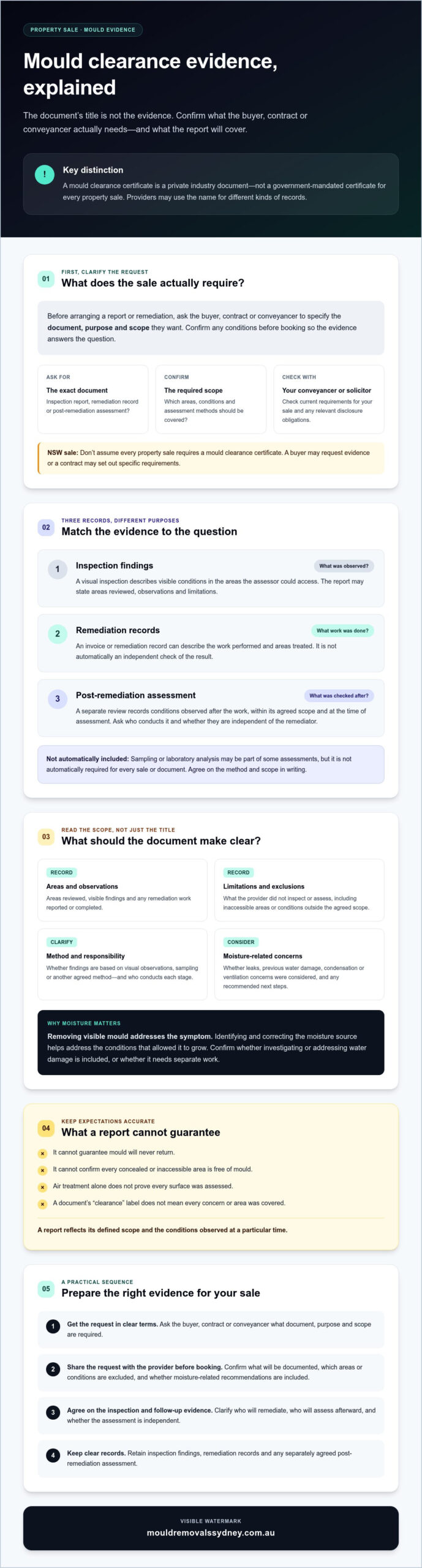
There isn’t one universally defined document called a “mould clearance certificate”. Providers may use the phrase for different records, from a visual inspection report to a post-remediation assessment. The title alone doesn’t tell you what was checked, what work was completed or what the findings mean. If you’re obtaining a mould clearance certificate for property sale, first confirm what evidence the buyer, contract or conveyancer is asking for.
A mould-related document records conditions observed within a particular scope and at a particular time. It can’t guarantee that mould will never return or that every concealed area is free of mould. For background on mould, its causes and possible impacts, see this overview of the health effects of indoor mould.
Is a mould clearance certificate legally required for a property sale?
Don’t assume every NSW property sale requires a mould clearance certificate. A buyer may request evidence, or a contract may set out specific requirements, but that doesn’t make the request a universal legal rule. Sellers may also have separate disclosure obligations depending on the circumstances.
Ask your conveyancer or solicitor to check the current requirements for your sale. If an agent or buyer has requested a document, ask them to specify its purpose, scope and any conditions. Confirm the request before arranging an inspection or remediation, so you don’t pay for evidence that fails to answer the question.
What might a mould clearance document actually include?
Depending on the provider and agreed scope, a document might state the inspection date, areas reviewed, visible observations, remediation work reported or completed, and any limitations. It may also list recommended next steps, such as addressing a moisture source. Before booking, ask what the provider will record and which areas or conditions are excluded.
Remediation records show what work was completed; a post-remediation assessment records conditions observed within its stated scope at the time of assessment. These are different forms of evidence. Sampling or laboratory analysis may be included in some assessments, but it isn’t automatically required for every sale or document. Get the scope in writing and check that it matches the buyer’s request.
What Can Mould Inspection and Clearance Evidence Prove?
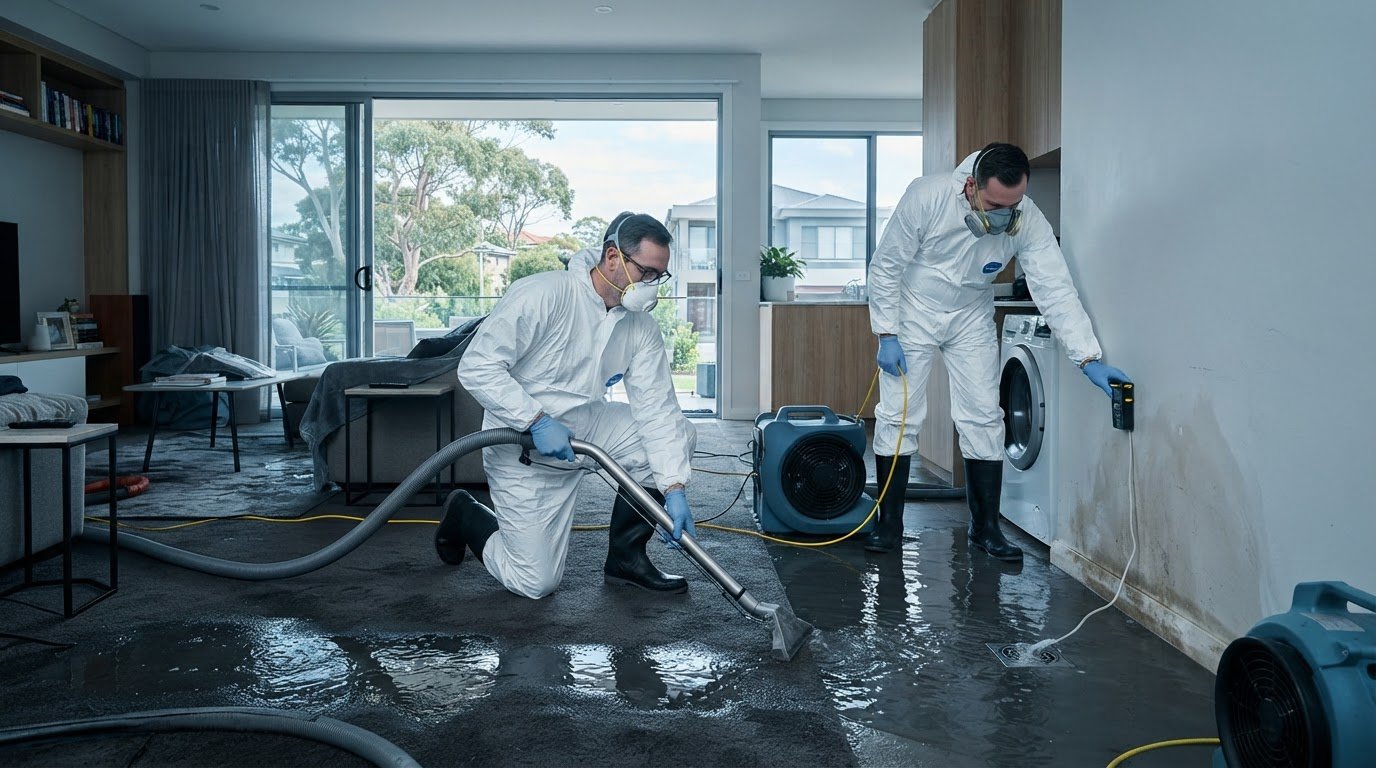
Different records answer different questions. A visual inspection describes what the assessor observed in the areas they could access. Remediation records describe the work performed, while air treatment records may show that a treatment was carried out. A post-remediation assessment is a further check, if separately agreed or requested. These documents shouldn’t be treated as interchangeable.
Any report reflects its defined scope and the conditions observed at a particular time. A visual inspection may not cover concealed cavities or inaccessible spaces, and air treatment alone doesn’t prove that every surface was assessed. No report can guarantee that hidden areas are mould-free or that mould won’t return.
Remediation completion report versus post-remediation assessment
The remediation provider can document the areas treated and the work performed. That record is useful, but it isn’t automatically an independent check of the results. A post-remediation assessment involves a separate review after the work, where agreed or requested. Before booking, ask who will conduct each stage, whether the assessor is independent of the remediator, and what the report will not assess.
Clarify whether findings will be based on visual observations, sampling or another agreed method. Ask for the scope and limitations in writing. This helps you compare the evidence with the buyer’s request instead of assuming a document labelled “clearance” covers every concern.
Why moisture source and report scope matter
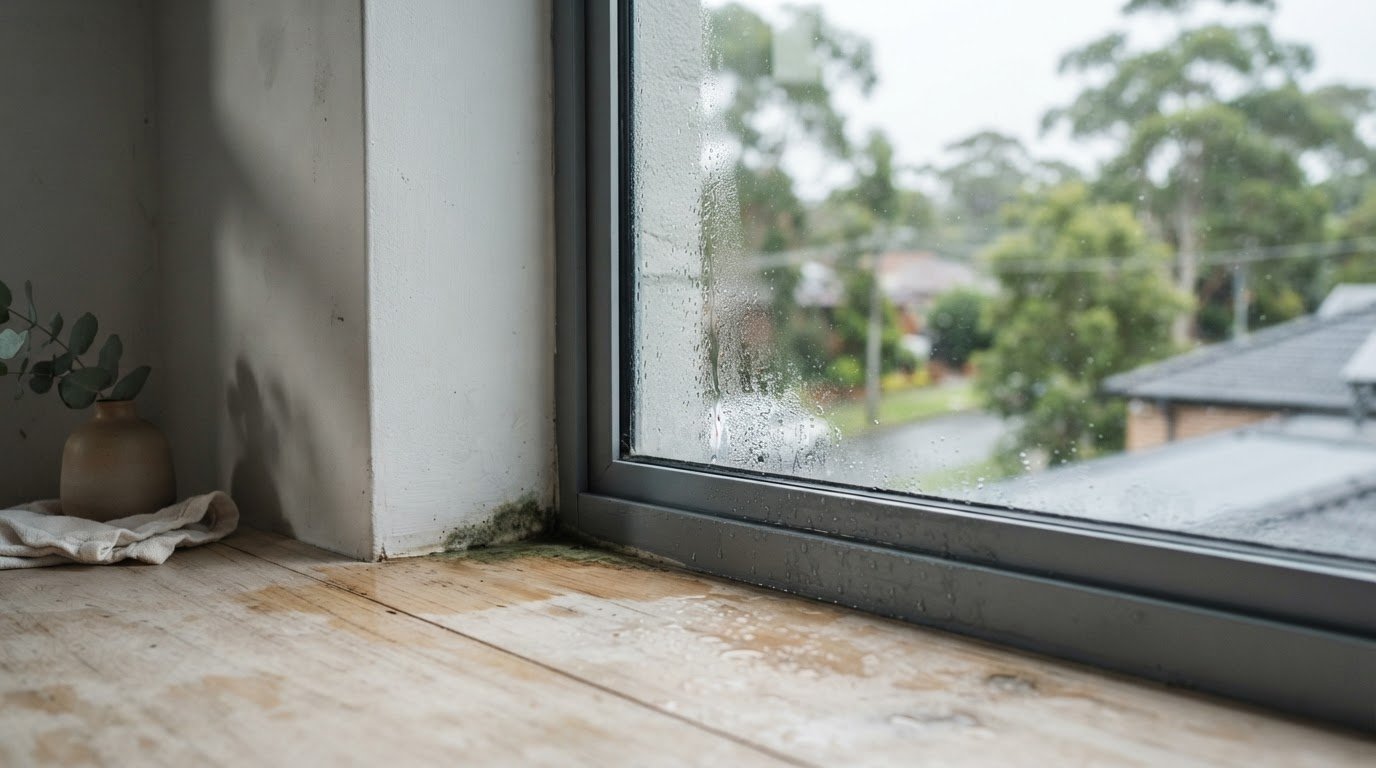
Ask whether the inspection considered signs of leaks, previous water damage, condensation or ventilation concerns. Treating visible mould without addressing the conditions that support it can leave a risk of recurrence. Removing visible mould addresses the symptom; identifying and correcting the moisture source helps address the conditions that allowed it to grow.
If water damage is suspected, clarify whether investigating or addressing it is included in the agreed work, or whether you need a separate service. A mould report may note visible moisture concerns without diagnosing every building issue. Read the scope carefully so you know what was checked, what was treated and what remains outside the assessment.
For sellers obtaining a mould clearance certificate for property sale, matching the evidence to the request is more useful than relying on a document’s title. If visible mould needs assessment or remediation, Sydney mould inspection and remediation services may be a starting point. Confirm directly what documentation is available and whether any post-remediation assessment is conducted separately.
How to Choose a Mould Assessor or Remediation Provider for a Sale
Choose a provider based on the evidence the buyer or conveyancer needs, not just the service label. Inspection, remediation and post-remediation assessment serve different purposes. Before obtaining a mould clearance certificate for property sale, ask for the proposed scope and reporting details in writing. That makes it easier to check whether the work fits the request.
| Service | What to check |
|---|---|
| Inspection | Which areas are covered, what findings are documented, and whether moisture-source recommendations or exclusions are stated. |
| Remediation | Which areas and work are recorded, whether moisture concerns are noted, and what the completion record does not verify. |
| Post-remediation assessment | Who conducts the follow-up, what areas and methods are included, and whether the assessment is independent. |
Questions to ask before booking a mould inspection
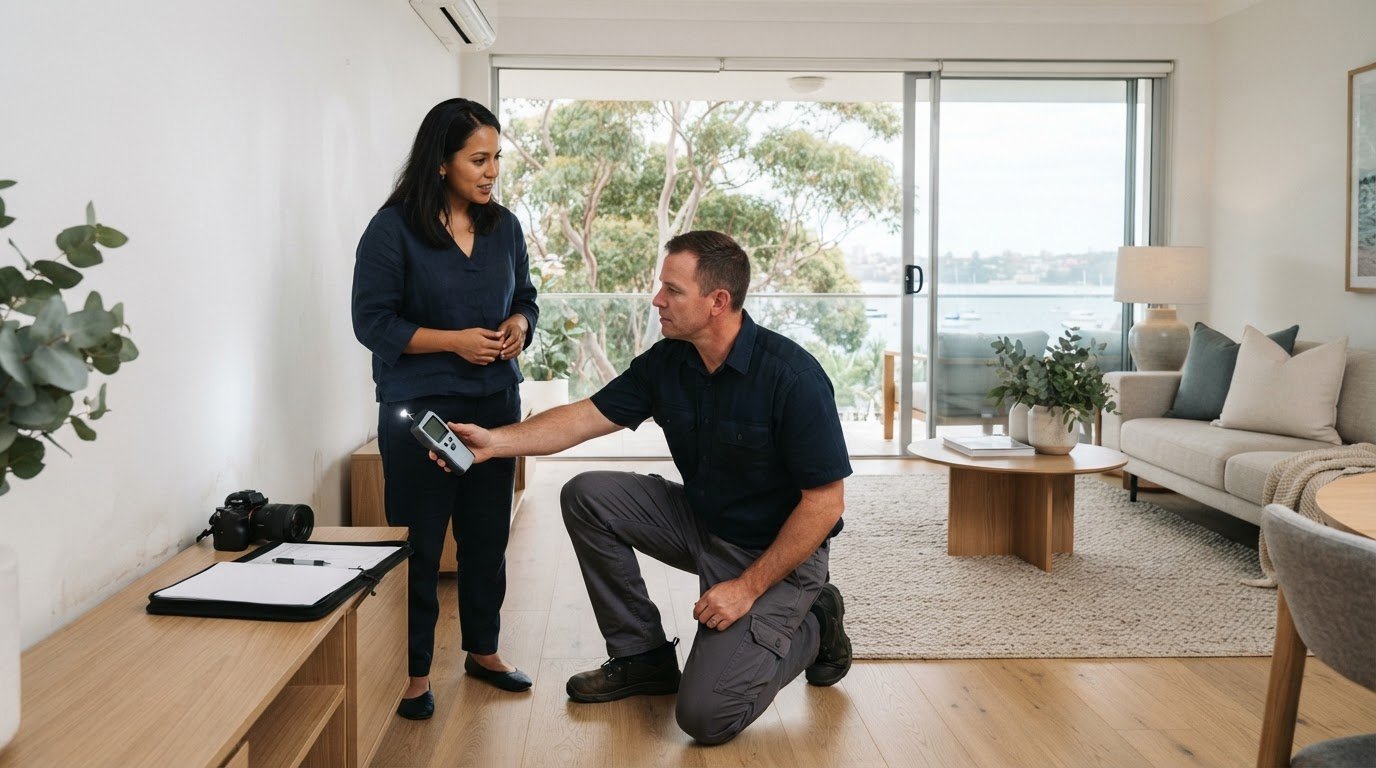
Get specific before you commit. Ask which rooms and accessible areas will be inspected, and whether concealed spaces are excluded or can be assessed. Confirm whether the service includes a written report, photographs or treatment recommendations. Ask what methods and qualifications apply, how relevant claims can be verified, and what the assessment cannot establish. A clear scope helps you avoid assuming uninspected areas are covered.
When should the assessor be independent?
A remediation provider may document its own work. A separate assessor can review conditions after remediation, if that arrangement is available and agreed. Independence isn’t automatically required for every sale, so ask the buyer or conveyancer whether they specifically expect it. If it matters, confirm who will assess the property, their relationship to the remediation provider, and what the resulting report covers.
Compare proposals using the same questions: written scope, documented findings, moisture-source recommendations and stated exclusions. A report that clearly explains its limits may be more useful than one with a broad title but little detail. Suitability depends on the property and the evidence requested, not a provider’s ranking or marketing claims.
If you need a starting point for discussing visible mould and inspection scope, explore Sydney mould inspection services. Confirm directly what the provider can document and whether it can meet the specific reporting or independent assessment request for your sale.
How to Arrange Mould Clearance Evidence Before Settlement
Start early enough to clarify the request, inspect the property, address moisture concerns and arrange follow-up if needed. For sellers obtaining a mould clearance certificate for property sale, the key step is to give the provider the exact buyer or contract request before booking. This helps align the work and records with what’s actually required.
Before inspection: confirm the request and prepare property records
Ask your conveyancer or agent to confirm the document name, required scope, intended recipient and deadline. Share the buyer’s wording or relevant contract request with the provider before booking. Gather records of leaks, repairs, water damage or previous mould treatment, and note where mould, musty odours or recurring dampness have appeared.
- Clarify the request. Confirm what evidence is expected and when it must be provided.
- Arrange an inspection. Tell the provider about affected rooms and share relevant property records. Confirm which areas the inspection will cover and what will be documented.
- Address moisture concerns. Ask what the findings suggest about possible moisture sources and whether further investigation or repairs are needed.
- Arrange remediation if recommended. Confirm the proposed work and the areas involved before proceeding.
- Agree on follow-up and records. If a post-remediation assessment is requested, clarify who will conduct it and what it will cover. Ask what written documentation will be available.
- Share evidence appropriately. Send the agreed documents through the sale channel confirmed with your conveyancer or agent.
Allow time for each step. Inspection findings may point to repairs before treatment, and a separately agreed reassessment adds another stage. Don’t assume all work and reporting can happen at once. Confirm practical arrangements and timing directly with each provider, then check progress against the settlement schedule with your conveyancer.
After treatment: organise records and communicate carefully
Keep invoices, work descriptions, photographs, recommendations and any follow-up report together. Retain copies and share documents through the agreed sale channel. Describe exactly what each record says, including its date and scope. Don’t present a treatment record as an independent assessment or promise that the property is permanently mould-free.
ABC Mould Cleaning Solutions offers mould inspection and remediation services in Sydney. Ask ABC about inspection and remediation, and confirm whether its services and available documentation match the specific request for your sale.
Next Steps: Inspection & Remediation with a Sydney Expert
Keep the process clear: confirm what the buyer or contract asks for, understand the inspection and reporting scope, choose the right assessment, and retain the records. That’s the practical starting point for obtaining a mould clearance certificate for property sale. The right evidence depends on the specific request, so confirm directly what a provider can document before booking.
What ABC Mould Cleaning Solutions can discuss
ABC Mould Cleaning Solutions provides mould inspection and remediation services across Sydney and surrounding regions. An inspection can help assess visible mould, its extent and possible contributing moisture concerns. Depending on the property and agreed work, the company also offers mould removal, air purification and scrubbing, and recommendations aimed at reducing moisture-related risks.
The business uses the Goldmorr System, a biodegradable fogging process targeting surface mould and airborne spores. Ask what approach is suitable for your property, what work is included, and what findings or recommendations can be recorded. Don’t assume an inspection or remediation service includes a formal clearance certificate or independent post-remediation assessment. Ask ABC whether it can provide the exact report or certificate requested, and who would prepare it.
Prepare a clear enquiry for your property
Help the provider understand the situation from the outset. Include:
- The property’s Sydney-area location and your sale or settlement deadline.
- Where mould is visible, which rooms are affected, and whether you’ve noticed recurring dampness or odours.
- Known moisture history, such as leaks, water damage, repairs or previous mould treatment.
- The buyer’s or conveyancer’s written request, including any specified document, inspection scope or follow-up assessment.
With those details, ABC can discuss whether its inspection and remediation services appear to match your needs and clarify what documentation may be available. Your conveyancer or solicitor can advise whether that documentation meets the sale requirement. Keep their guidance alongside provider records, and describe findings only as stated in the report.
If you’re preparing a property for sale, ask about professional mould removal and inspection options for the areas of concern. Share the buyer’s exact wording and ask what documentation ABC can provide before arranging the work. This helps you decide on the next step without assuming a particular certificate is available.
Prepare Clear, Sale-Ready Mould Records
Obtaining a mould clearance certificate for property sale starts with confirming what the buyer, contract or conveyancer actually requires. Match the inspection and any follow-up assessment to that request, and keep records clear about what was inspected, treated and documented. A report can record findings within its scope, but it can’t guarantee a permanently mould-free property.
If mould is present, consider both the visible growth and possible moisture contributors. ABC Mould Cleaning Solutions provides mould inspection and remediation services across Sydney, including mould removal, air purification and moisture-prevention recommendations. The company’s Goldmorr System uses a biodegradable fogging process. Ask ABC directly whether it can provide the specific report or certificate your sale requires, and confirm who would prepare any post-remediation assessment.
Have the buyer’s or conveyancer’s written requirements, property location, known moisture history and sale deadline ready when you enquire. Contact ABC Mould Cleaning Solutions to discuss an inspection and the documentation your sale requires. With the request clarified and the right evidence arranged, you can move forward with greater confidence.
Frequently Asked Questions
Is a mould clearance certificate legally required to sell a property in NSW?
No, a mould clearance certificate isn’t a standard government-mandated document for every NSW property sale. A buyer may request one, or a contract may specify particular evidence, but that request alone doesn’t make it a universal legal requirement. Other sale or disclosure obligations may depend on the circumstances. Ask your conveyancer or solicitor to check current requirements and your contract, then clarify the requested document’s scope with the buyer or agent.
What is included in a mould clearance certificate?
Contents vary between providers and depend on the agreed assessment. A report might record the inspection date, areas reviewed, observations, remediation work described, and any limitations or recommendations. Some assessments may include sampling or laboratory analysis, but these aren’t automatically part of every report. Check exactly what was inspected and what the findings establish. The document records a defined scope at a particular time, not a guarantee about every concealed area.
Can a mould removal company issue a clearance certificate?
A mould removal company may document the work it performed, but whether it offers a formal clearance certificate or post-remediation assessment depends on that provider’s services and the agreed scope. A treatment record isn’t automatically an independent check of the result. Ask who prepares the document, what it covers and whether the buyer expects a separate assessor. ABC Mould Cleaning Solutions offers inspection and remediation services. Contact the business to confirm what documentation it can provide.
How do I get a mould clearance certificate before settlement?
Start by asking your conveyancer, agent or buyer to confirm the document required, its scope, recipient and deadline. Share that exact request with a mould provider before booking. Arrange an inspection, address any identified moisture concerns, and discuss remediation and any separately requested follow-up assessment. Keep the inspection findings, work records and follow-up documents together. Allow time for each stage, and confirm directly with providers what they can complete and document before settlement.
Does a mould clearance certificate guarantee mould will not return?
No. A report describes observations or work within its stated scope at the time it was prepared. It can’t guarantee that concealed areas are mould-free or that mould won’t return. Recurrence may be possible if moisture conditions remain or develop again. Read the report’s limitations and recommendations, and ask whether potential moisture sources such as leaks, condensation or ventilation concerns were considered. Describe the findings accurately rather than presenting them as a permanent guarantee.
Should the mould assessor be independent from the remediation company?
Not in every case. A remediation company can document its own work, while a separate assessor may provide a distinct post-remediation review. Whether independence matters depends on the buyer’s request, contract and circumstances. Ask your conveyancer or buyer whether an independent assessment is specifically expected before arranging one. If it is, clarify who will conduct the assessment, their relationship to the remediation provider, and what areas and conditions the report will cover.
Can I use mould removal invoices instead of a clearance certificate?
Possibly, if the buyer or contract accepts them, but invoices and a clearance assessment provide different evidence. An invoice can show that work was charged for or performed; it may not record inspection findings, the areas treated, moisture recommendations or post-remediation conditions. Ask your conveyancer or agent whether invoices meet the request. If a specific report is required, confirm its scope with the provider before relying on treatment records alone.