Mould prevention is a whole-home moisture plan, not just a clean-up of visible spots. Creating a long-term mould prevention plan for your home means following five practical steps: identify what encourages mould, reduce moisture, improve airflow, keep damp-prone areas under control and recognise when professional help is needed.
Mould is a fungus that can grow indoors when damp conditions persist, particularly in poorly ventilated areas. Bathrooms and kitchens are common trouble spots, but condensation, leaks and damp materials can cause problems elsewhere in the home. It’s natural to focus on the visible patch, but lasting prevention also means addressing why the area became damp.
This guide explains what encourages mould growth and how to build prevention into everyday home care. Learn how to manage moisture in kitchens, bathrooms and laundries, improve airflow, and recognise signs that mould may extend beyond the surface. The aim is a practical, repeatable plan that helps you act early and know when professional assessment may be appropriate.
Key Takeaways
- Run bathroom exhaust fans during showers and for about 20 minutes afterwards, and ventilate kitchens and laundries when moisture builds up.
- Reduce dampness at its source by drying condensation and wet areas promptly, and addressing leaks and building faults.
- Improve airflow through mould-prone spaces by opening windows when conditions allow and avoiding blocked airflow around furniture and stored items.
- Arrange professional help when mould covers a large area, keeps returning, or may be growing behind walls, beneath floors or inside cavities.
- Build seasonal checks and regular cleaning of damp-prone areas into your home routine to catch moisture problems early.
1. Ventilation and airflow
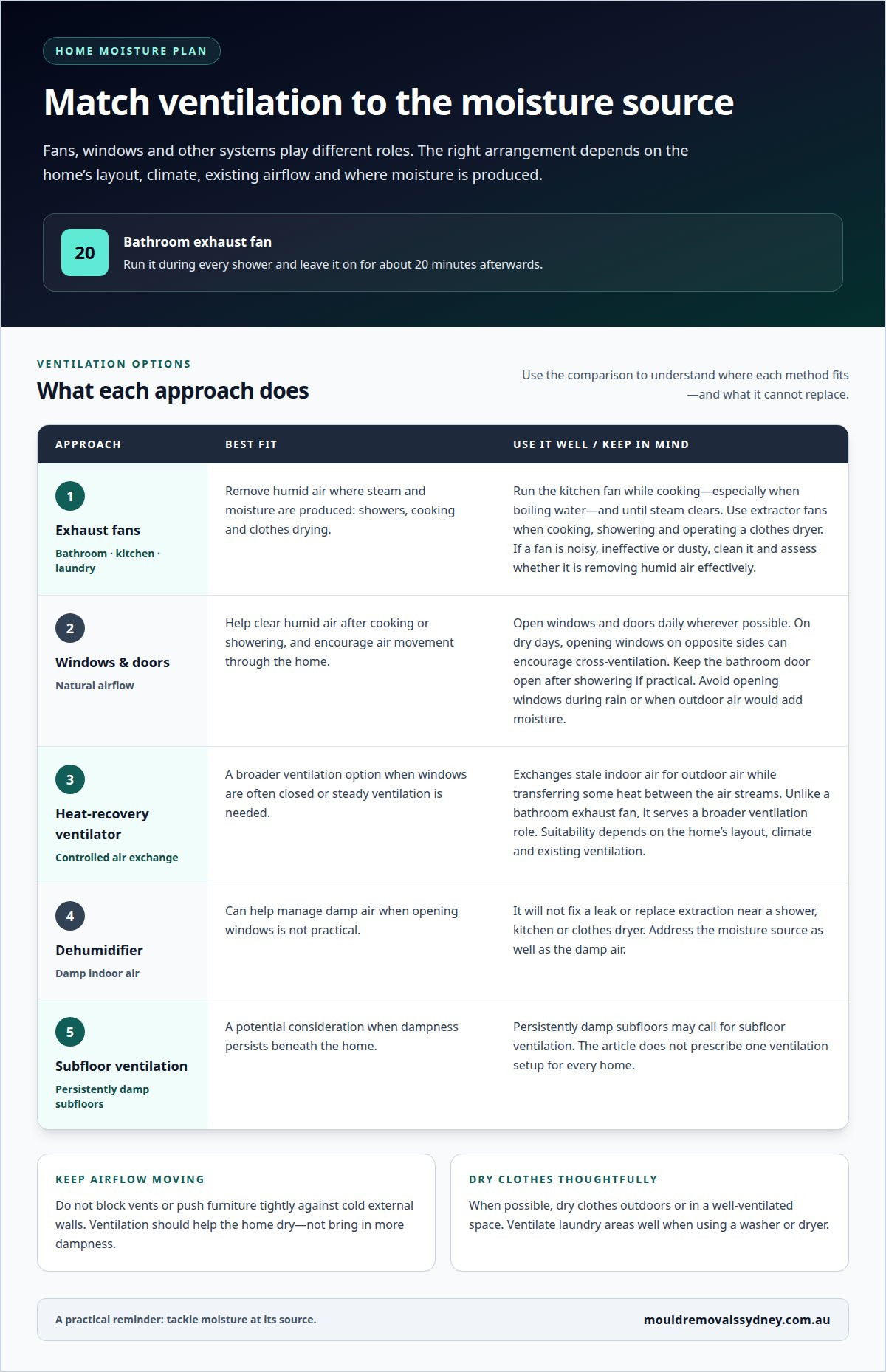
In Australian homes, use exhaust fans alongside regular window ventilation. A heat-recovery ventilator is another option when controlled air exchange is needed, as it transfers heat between outgoing and incoming air. The best arrangement depends on the home’s layout, climate and existing ventilation, rather than one solution suiting every room.
Start with the moisture sources. Run the bathroom exhaust fan during every shower and leave it on for about 20 minutes afterwards. Keep the bathroom door open after showering if practical, so damp air can move out instead of lingering on walls and ceilings. If the fan is noisy, ineffective or clogged with dust, clean it and assess whether it is removing humid air effectively.
Extract moisture where steam is produced. ACT guidance recommends using extractor fans when cooking, showering and operating a clothes dryer. Run the kitchen fan while cooking, especially when boiling water, and leave it on until the steam clears. Ventilate laundry areas well when using a washer or dryer, as advised by the Australian Centre for Disease Control. When possible, dry clothes outdoors or in a well-ventilated space.
Make natural airflow part of your routine. ACT guidance recommends opening windows and doors daily wherever possible. On dry days, open windows on opposite sides of the home to encourage cross-ventilation. This can help clear humid air after cooking or showering. Avoid opening windows during rain or when outdoor air would add moisture. Ventilation should help the home dry, not bring in more dampness.
Heat-recovery ventilation may suit a home where windows are often closed or steady ventilation is needed. It exchanges stale indoor air for outdoor air while transferring some heat between the air streams. Unlike a bathroom exhaust fan, which removes air from one room, it serves a broader ventilation role. Assess the home’s needs before choosing a system: layout, existing airflow and the moisture source all affect what will work.
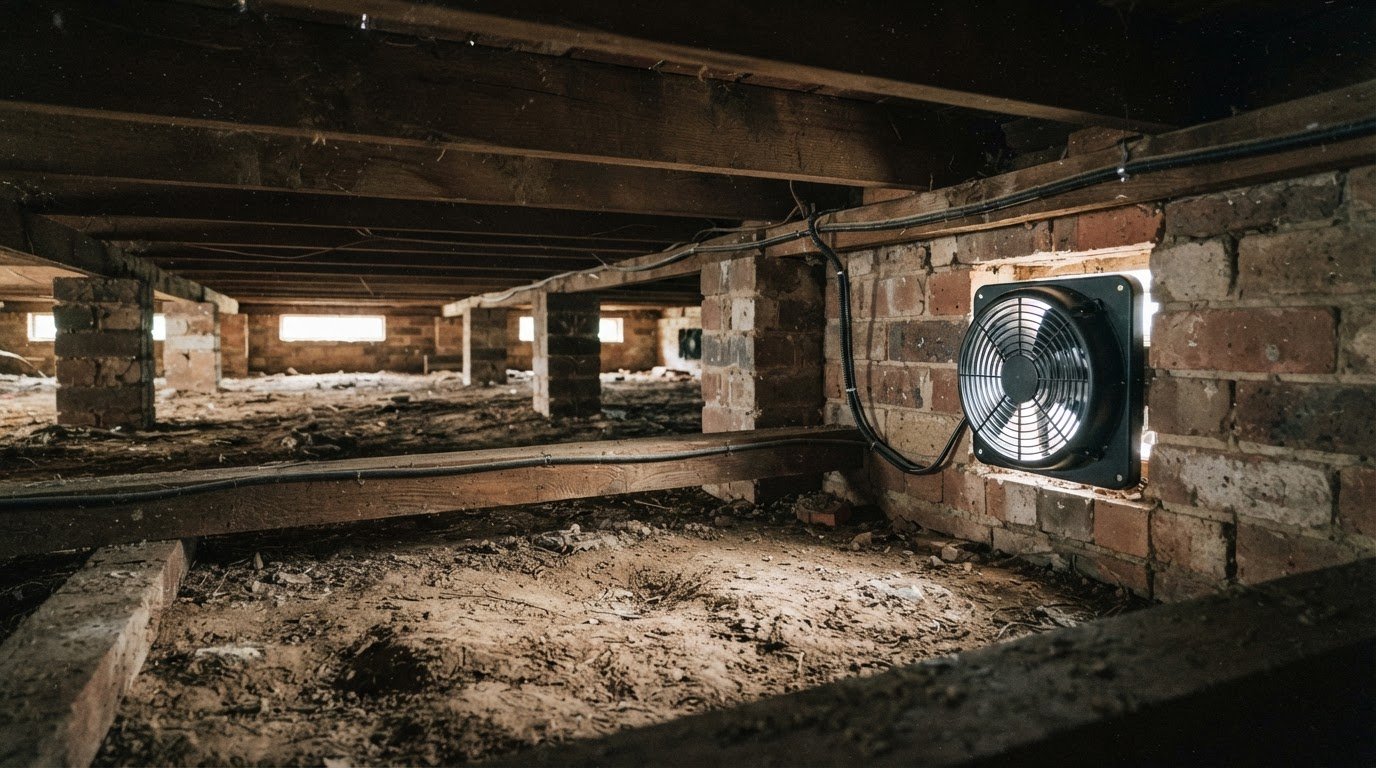
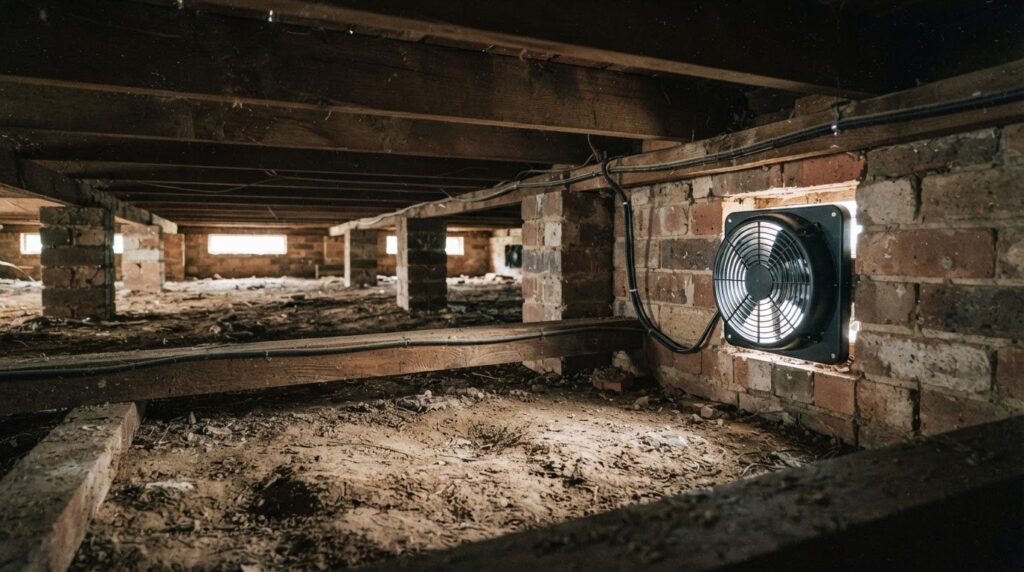
Keep air moving after fans stop. Don’t block vents or push furniture tightly against cold external walls. A dehumidifier can help manage damp air when opening windows isn’t practical, but it won’t fix a leak or replace extraction near a shower, kitchen or clothes dryer. Persistently damp subfloors may call for subfloor ventilation. In commercial properties, ventilation planning should account for how each space is used and where moisture is produced.
2. When should I call a professional mould remediator?
In Australia, landlords generally have an obligation to keep rental homes reasonably clean and fit for habitation. If damp or mould affects your rental, document the problem and report it to the landlord or property manager so the cause can be addressed.
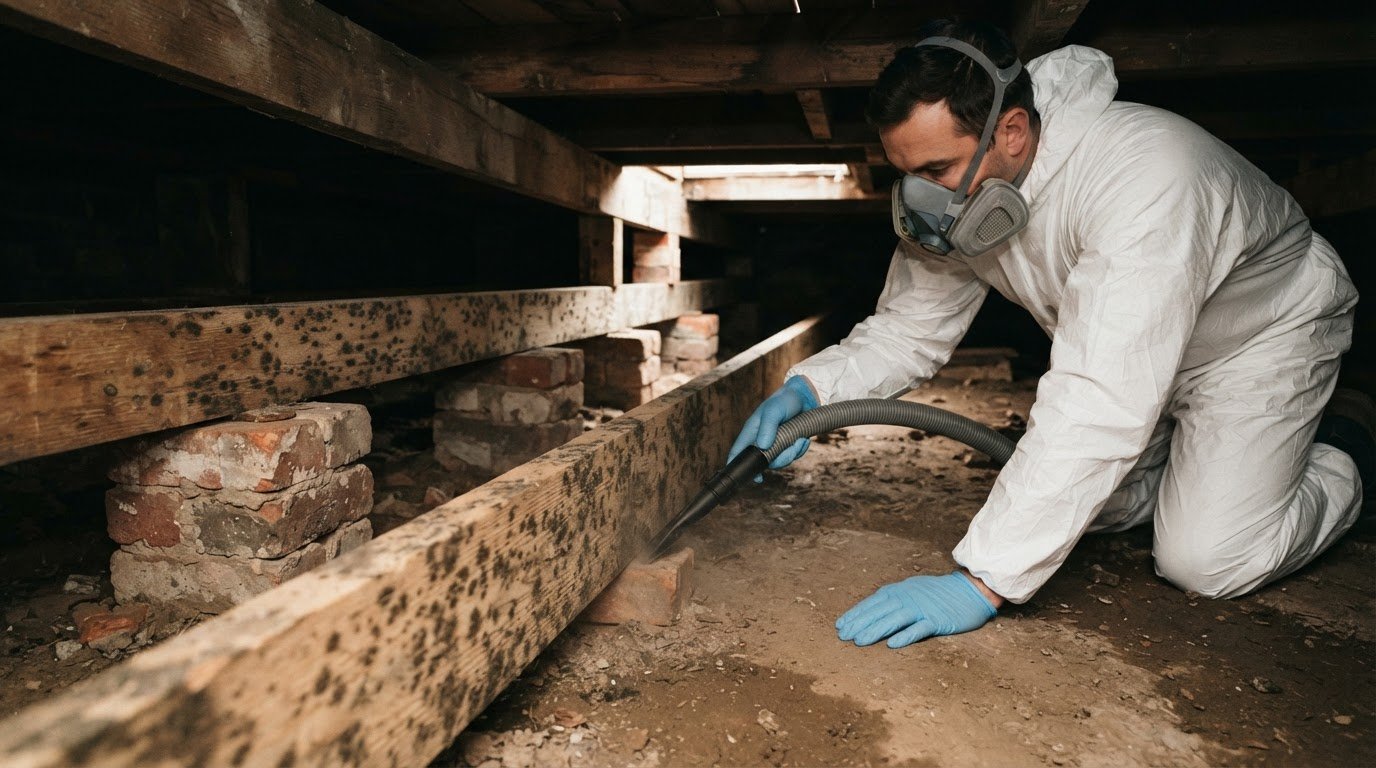
Seek professional help if mould covers more than one square metre, keeps returning, or appears to be growing behind walls, under floors or inside cavities. These signs may indicate moisture or contamination beyond the visible surface. Household cleaning can’t reach concealed growth, and removing only visible mould leaves the underlying cause unresolved.
Cleaning can also pose added risks for people with a weakened immune system, allergies, lung disease or severe asthma. These people are advised to hire professional cleaners rather than clean mould-affected areas themselves. If mould exposure or symptoms create an emergency in Australia, call 000. For persistent growth or uncertain extent, a mould inspection can help identify affected areas and inform the next steps.
For limited surface mould, use a suitable method and follow its product label. Australian Centre for Disease Control guidance advises diluting white vinegar in water at 4 parts vinegar to 1 part water for regular cleaning of mould-prone surfaces. The same organisation advises against mixing cleaning products, which can create toxic fumes. Never mix hydrogen peroxide and vinegar in one bottle: the combination forms peracetic acid, a respiratory irritant. If using them separately, clean and rinse between products.
Some household guidance describes using 3% food-grade hydrogen peroxide undiluted on mould, leaving it for 10 to 15 minutes, then wiping or scrubbing and rinsing. Keep the room ventilated, wear gloves, and follow the product label. Don’t dry-brush mould, since disturbed spores can circulate through the home. Stop if cleaning would disturb a large area or expose hidden material.
Make prevention checks part of your routine. Inspect roofs, walls and window seals each season, and keep gutters clear so water doesn’t pool. If you find a leak or damp patch, fix the moisture source rather than just cleaning the surface. A weekly wipe-down of high-risk surfaces can help prevent mould from establishing, but it won’t replace remediation when growth is extensive or concealed.
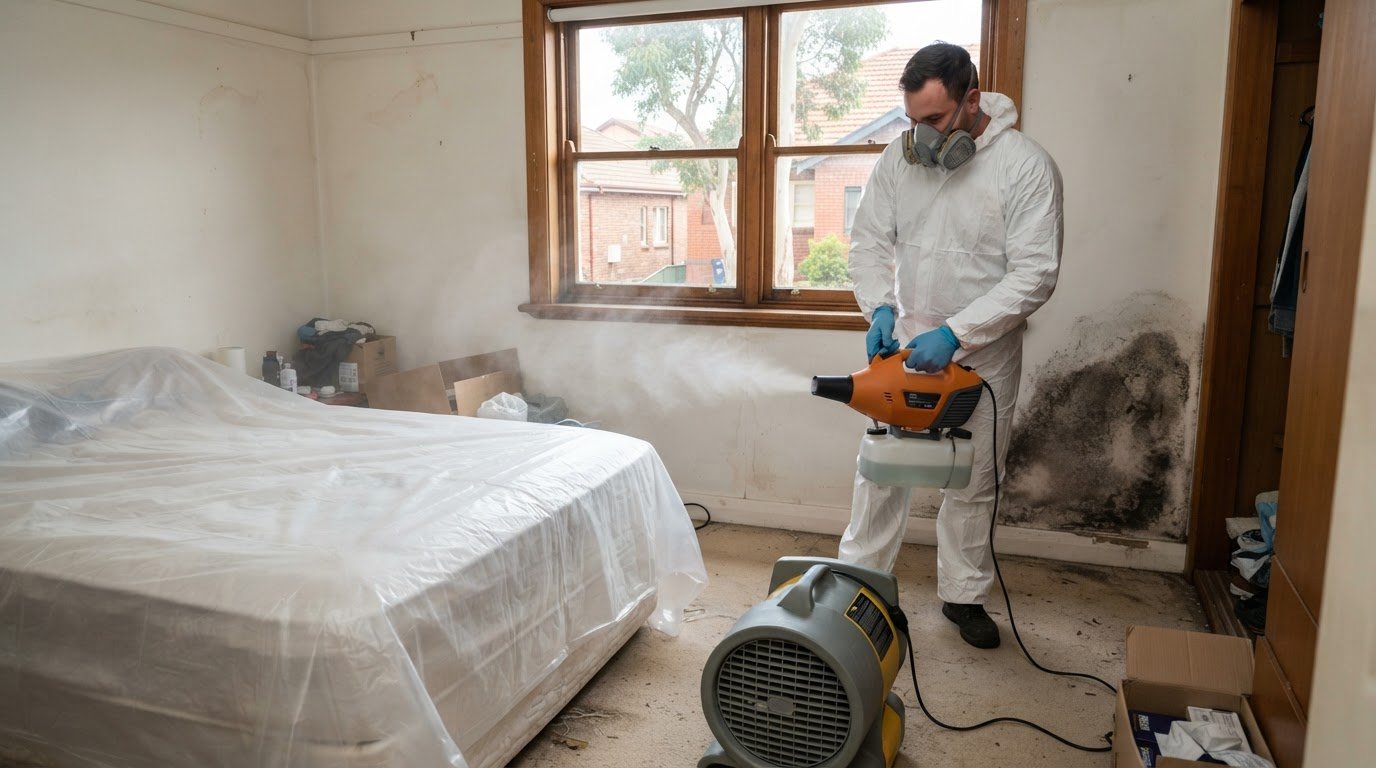
If mould returns after cleaning or you suspect hidden growth, arrange professional mould remediation. A specialist can assess the affected area, its likely moisture source and whether the problem extends into building materials.
3. Reducing moisture in kitchens, bathrooms and laundries
Control moisture at its source: cooking, showers, laundry and leaks can all leave dampness behind. In the kitchen, use a rangehood while cooking and keep pot lids on when practical. Wipe wet benchtops and splashbacks after preparing food. These steps remove surface water before it spreads into cupboards, grout or nearby walls.
In bathrooms, dry tiles and mirrors after showers, then remove water from the floor. ACT guidance recommends wiping condensation from walls and windows when it appears. If water repeatedly forms on a cold window or wall, improve airflow and consider whether insulation could reduce the cold surface. Persistent condensation needs attention, not just another wipe.
Manage laundry moisture at its source. Hang clothes outdoors when conditions allow, or dry them in a well-ventilated space. If you use a dryer indoors, make sure its moisture is exhausted appropriately. Don’t leave wet washing in a pile or let damp items sit against walls. If the laundry stays humid after each load, improve ventilation and review how moisture is escaping.
Measure relative humidity with a hygrometer placed in rooms where dampness or condensation recurs. For Queensland public housing tenants, advice is not to run evaporative air-cooling systems with water when humidity is over 65%. That specific advice is not a universal target for every Australian home. Use the reading alongside signs such as persistent condensation, damp smells or wet surfaces.
Prevent water from entering the building as well as adding moisture indoors. The Australian Centre for Disease Control advises fixing leaks, plumbing problems, roof faults and other building issues that cause dampness. Check beneath sinks, around window frames and near ceilings after rain. Arrange prompt repairs when a leak appears: drying the surface without addressing the source allows moisture to return.
Keep a simple record of recurring damp areas. Note the room, conditions and whether moisture follows a shower, cooking or rain. This can help distinguish everyday humidity from a leaking pipe or roof fault. If the same wall stays damp despite ventilation and drying, investigate the building cause rather than relying on a dehumidifier alone.
Make moisture checks part of regular home care. Dry spills promptly, wipe condensation when it forms, and inspect seals around windows and wet areas. In winter, a dehumidifier may help in persistently damp rooms, but it can’t repair leaks or prevent water entering through faulty building materials. Addressing the source is essential to limiting mould growth.
4. Conditions that allow indoor mould to grow
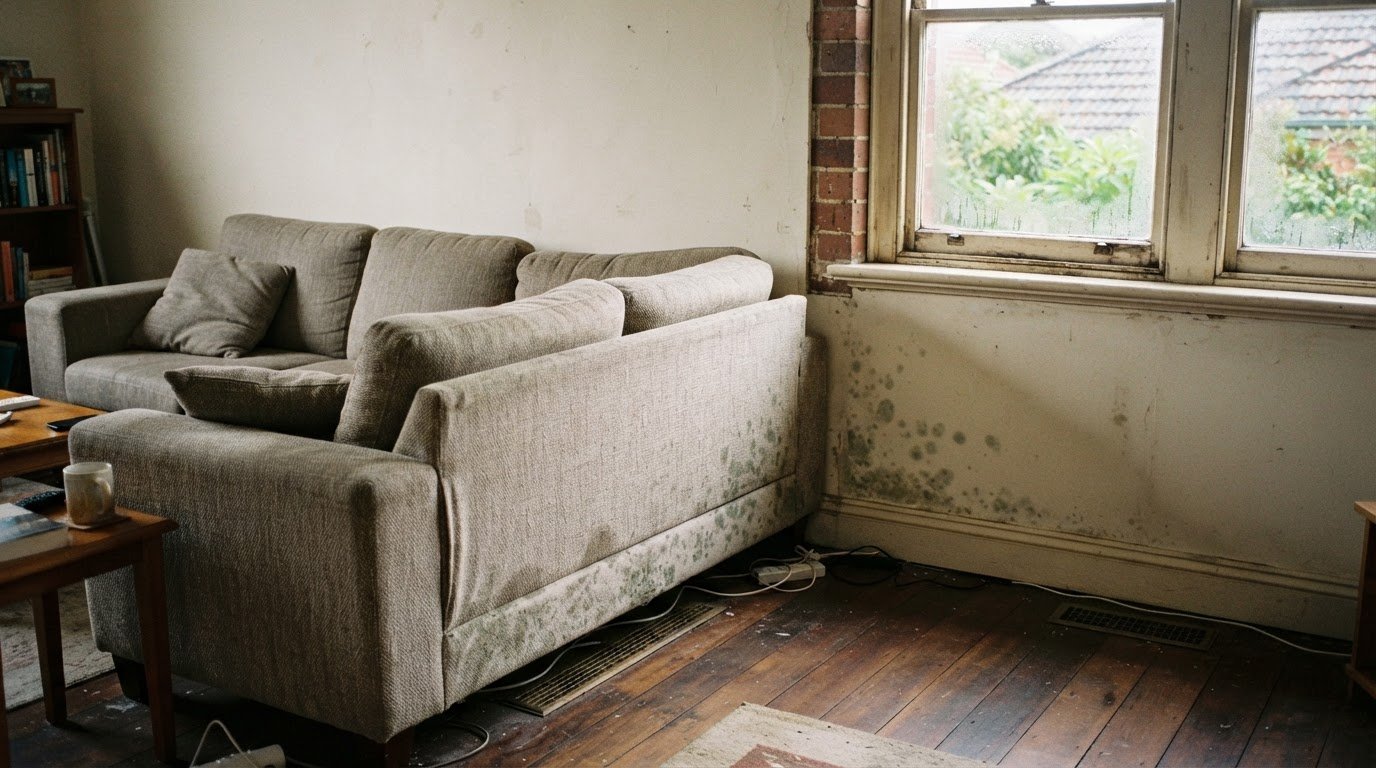
Mould is more likely to grow where dampness lingers and airflow is limited. ACT guidance notes indoor mould can grow in places that are cold, dark and damp, or lack enough airflow. Damp surfaces can begin forming mould in as little as 24 hours, so dry spills and wet materials promptly. Bathrooms, window sills and the space beneath a leaky sink are examples to check.
Different mould types can appear in different indoor settings. Alternaria commonly occurs in damp areas such as showers or beneath leaky sinks. Aspergillus can grow on household dust, powdery food and building materials such as drywall. Colour alone can’t reliably identify a mould type, so note where it appears and whether the surface stays damp. Recurrence in one spot may point to an unresolved moisture source.
Keep indoor spaces clean, dry and ventilated. The Australian Centre for Disease Control advises maintaining these conditions to help prevent mould. Open windows when outdoor conditions allow, and avoid blocking vents or trapping humid air behind closed doors. Check window frames and sills regularly, especially where condensation collects. If a window stays wet, wipe it dry and consider what is keeping the surface cold or damp.
Give air room to circulate around furniture and stored belongings. Keep furniture about 5 to 10 cm away from outside walls, and avoid stacking boxes or clothes directly against walls. A tightly packed wardrobe on a cold external wall can hide early spotting until the affected area spreads. Leave space for airflow, then notice musty smells or damp marks during routine room checks.
Indoor plants can add moisture if their pots lack drainage or trays hold standing water. Choose pots with drainage holes, empty excess water from trays, and keep damp potting mix away from walls and timber. Fabrics need attention too: dry wet towels and clothes promptly, and wash curtains, rugs and cushion covers when they become damp or musty. Check edges and backing, where moisture can linger out of sight.
If you notice mould, focus on the dampness that allowed it to grow, not just the mark. ACT guidance advises against using bleach to clean mould, as it can whiten spores rather than kill them. Use an appropriate cleaning method and address the moisture source to help prevent regrowth. If mould keeps appearing in the same place, check nearby windows, plumbing and building surfaces for persistent dampness.
5. Preventing mould throughout the home
A whole-home plan works best when small routines cover every room, not just the bathroom. Start with a room-by-room check for damp items, blocked airflow, water marks and musty smells. Dry wet areas quickly after spills, as ACT guidance advises. Even a spill beside a wardrobe can cause trouble if moisture remains against the wall.
Keep air circulating around stored belongings. Avoid stacking boxes, clothes or furniture tightly against walls, so air can move freely. ACT guidance also recommends not stacking items against walls. Keep wardrobes and storage areas accessible for checks, especially along external walls and in rooms that feel cold or musty.
Control water brought into living spaces. Hang washing outside when practical, following ACT guidance, and avoid leaving wet clothes or towels indoors. Dry soaked items fully before storing them. The Australian Centre for Disease Control advises disposing of or completely cleaning water-damaged materials to help prevent mould. Don’t return a damp rug or cushion to a closed room before it’s dry.
Build a cleaning routine around places where dust and moisture collect. Vacuum regularly with a HEPA filter, and wipe windowsills, tiles and benchtops when they become damp. Wash curtains, rugs and cushion covers to prevent mould spores settling unnoticed in fabric. Check behind bathroom toiletries and around shower edges, then inspect bedroom window corners and spaces beneath furniture.
Seasonal checks can help catch building problems early. Inspect roofs, walls and window seals each season for moisture marks, leaks or dampness. Clean air-conditioner filters regularly and arrange seasonal servicing. A blocked filter can restrict airflow, so include it in your routine. A dehumidifier may help in a persistently damp room during winter, but it won’t fix water entering through a roof or wall.
Use a simple cycle of inspection, drying, cleaning and repair. I approach creating a long-term mould prevention plan for my home as a routine built around those actions. Queensland public housing tenants are advised not to run evaporative air-cooling systems with water when humidity is over 65%. That advice is specific to those tenants, not a universal rule for every home.
Address the source if mould keeps forming in the same spot. The Australian Centre for Disease Control advises addressing the root cause because mould can return when only visible growth is removed. When I’m creating a long-term mould prevention plan for my home, I treat recurring mould as a reason to investigate persistent dampness rather than simply repeat surface cleaning. If growth returns or seems to extend beyond visible surfaces, arrange a professional mould inspection to assess affected areas and the likely cause.
ABC Mould Cleaning Solutions
ABC Mould Cleaning Solutions can help when mould returns, spreads beyond visible surfaces or appears linked to persistent dampness. Mould Inspection Services assess affected areas, while Mould Remediation addresses mould growth. Air Purification & Scrubbing can support indoor air treatment, and Subfloor Ventilation System Installation may suit homes with subfloor airflow concerns.
Professional assessment is useful when household prevention steps haven’t resolved recurring growth or mould may extend into concealed areas. Identifying the affected spaces and moisture conditions helps determine which services are relevant to your home.
Contact ABC Mould Cleaning Solutions to discuss mould concerns in your home.
Make your next step a clear one
A prevention plan should adapt as your home’s conditions change. If you’re creating a long-term mould prevention plan for your home, professional input can help when the cause is unclear or mould keeps returning. An assessment can identify affected areas and guide the next steps, helping you focus ongoing prevention on the source of the problem.
ABC Mould Cleaning Solutions provides Mould Inspection Services, Mould Remediation, and Air Purification & Scrubbing. These services can help homeowners dealing with recurring mould, affected indoor spaces or concerns that need closer assessment.
Contact ABC Mould Cleaning Solutions to discuss the mould concerns in your home. A clear next step can make ongoing prevention more manageable.
Frequently Asked Questions
What are some mould-resistant building materials?
Choose finishes that tolerate moisture and are easy to clean, such as ceramic tiles, glass and metal in wet areas. For walls, use products designed for wet areas and follow the manufacturer’s installation instructions. No material is mould-proof if it stays damp or conceals a leak. Good detailing matters too: sealed joints and surfaces that dry readily leave fewer places for moisture to linger.
When should I call a professional mould remediator?
Seek professional help if mould covers more than one square metre, keeps returning, or may be growing behind walls, under floors or inside cavities. Don’t disturb concealed or extensive growth by scraping or dry-brushing it. People with allergies, lung disease, severe asthma or weakened immune systems should avoid cleaning affected areas themselves. A professional inspection can establish the extent of the problem and whether remediation is needed.
Which method for which situation?
For regular cleaning of mould-prone surfaces, Australian Centre for Disease Control guidance advises white vinegar diluted with water at 4 parts vinegar to 1 part water. For harder-to-remove mould on surfaces, its guidance advises bleach diluted at 1 part bleach to 3 parts water, following the product label. Never mix cleaning products. If mould is extensive or concealed, household cleaning methods aren’t a substitute for professional remediation.
What causes mould growth in Australian homes and how can it be prevented long term?
Mould grows where dampness persists, including after leaks, condensation, flooding or poor ventilation. In Australian homes, bathrooms, window frames, laundries and spaces beneath leaking sinks can be vulnerable. Prevent recurrence by finding the moisture source, drying affected areas and keeping indoor spaces ventilated. During seasonal checks, look for water marks or damp materials after rain. Removing visible mould alone won’t address the conditions that allow it to return.
How do I assess and fix leaks, rising damp and drainage problems in a home?
Watch for recurring damp patches, peeling paint, musty smells or water marks near ceilings, windows, plumbing and lower walls. Note when signs appear, such as after rain or using a sink, and photograph changes to track them. Check that water isn’t pooling around the home. A plumber or building professional can investigate plumbing, drainage or suspected rising damp; mould cleaning alone won’t repair these sources.
How often should bathrooms, kitchens and laundries be ventilated to prevent mould?
Ventilate whenever these rooms produce moisture: use extraction while showering, cooking or running a clothes dryer. Leave a bathroom exhaust fan running for about 20 minutes after a shower. Open windows and doors daily where conditions allow, and ventilate laundry areas well during washing and drying. Clean exhaust fans regularly so dust doesn’t obstruct airflow. Adjust window ventilation during wet weather to avoid bringing additional damp air indoors.
How can I reduce condensation on windows and walls in Australian climates?
Wipe condensation from windows and walls when you notice it, then improve airflow around the affected surface. Keep curtains slightly clear of cold glass, and don’t place furniture flush against external walls. Use extraction during activities that produce moisture, and ventilate when outdoor conditions are dry. If the same area repeatedly gets wet, check nearby seals and building surfaces for leaks. Persistent condensation may also indicate a cold surface that needs better insulation.
Which mould-resistant building materials and paints are worth using, and what do they cost in Australia?
For wet areas, consider easy-to-clean finishes such as tiles or glass and products labelled for wet-area use. Mould-resistant paint may suit properly prepared, dry surfaces, but it won’t stop mould if moisture remains behind the wall. Material costs depend on the product, coverage, surface preparation and installation needs. Prices vary by case and are provided after a quote request; no coating replaces fixing leaks or dampness.