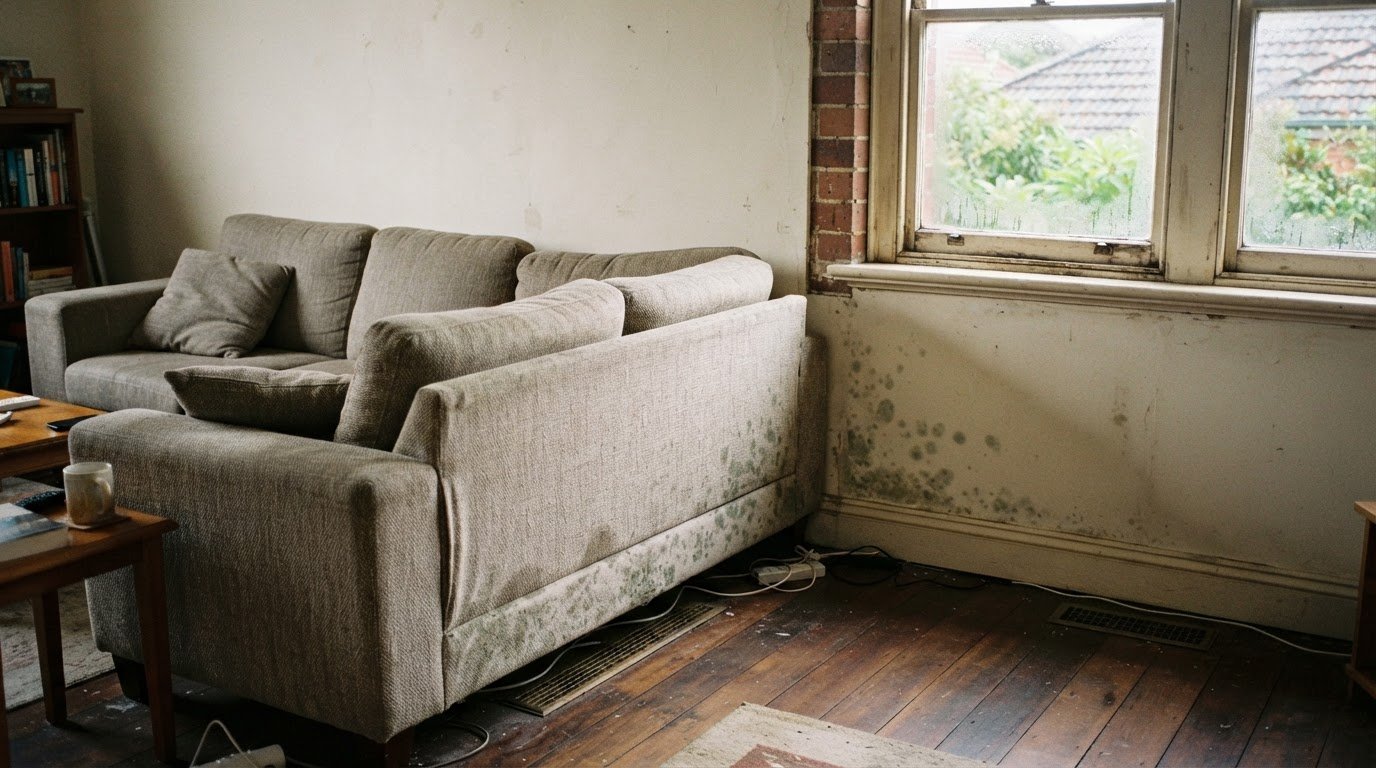
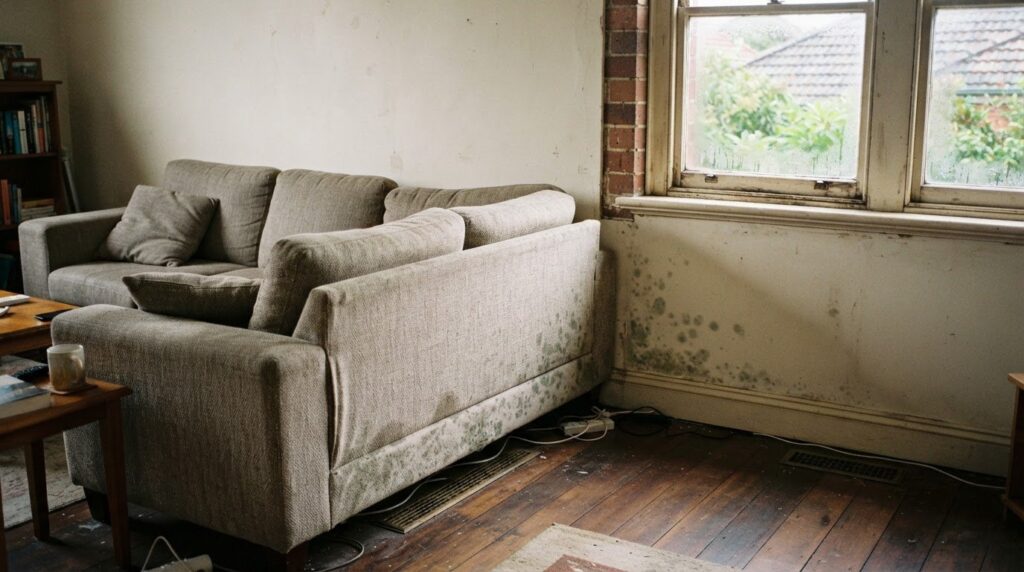
The furniture may be hiding the mould, but it often isn’t the whole problem. Mould behind furniture in Sydney can develop when dampness and limited airflow keep a wall or the back of a piece of furniture moist. Indoor relative humidity above 60% creates conditions where water vapour can settle on porous and semi-porous materials; keeping humidity between 30% and 50% can help reduce the risk.
Finding mould in a hidden corner is unsettling, especially when it returns after cleaning. The lasting solution is to identify and address the moisture source, which may involve condensation, poor ventilation or water entering the home. This guide to mould behind furniture in Sydney explains the signs to look for, how furniture placement and humidity affect mould growth, and when the clues may point to a wider moisture problem.
Key Takeaways
- Look beyond visible spots: limited airflow, persistent dampness and suitable temperatures can combine to support mould growth.
- Check the furniture and the space around it for moisture clues, including condensation, musty odours and signs of water entering the home.
- In winter, warm indoor air meeting cold surfaces can lead to condensation, so ventilation and moisture control matter.
- If mould returns after cleaning or appears in hidden areas, addressing the underlying moisture problem is key to reducing further growth.
- Professional inspection, remediation, air purification or subfloor ventilation may help when the source is difficult to identify or the affected area is extensive.
1. Mould growth in damp, poorly ventilated spaces
Mould needs moisture, a food source and suitable temperatures to grow. Limited airflow can trap damp air behind a wardrobe, bookcase or bed, where darkness also makes early growth harder to spot. Furniture may show marks first, but the wall or room could be holding the moisture that supports them.
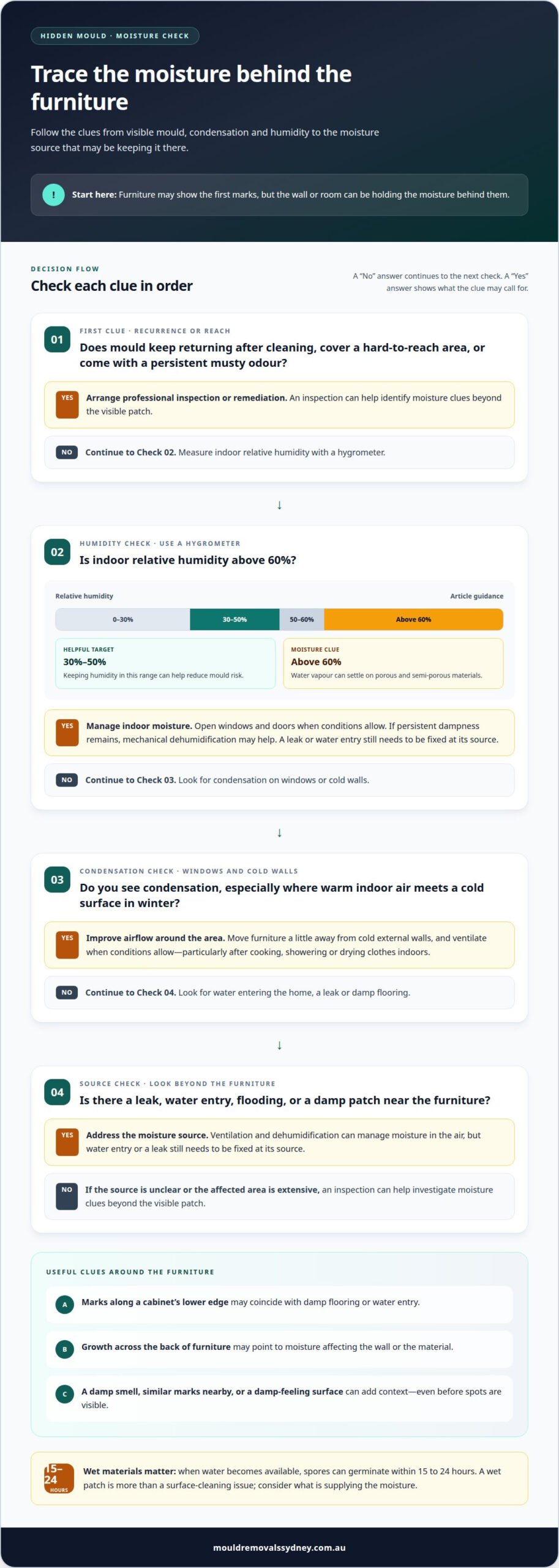
Check indoor relative humidity with a hygrometer and look for condensation on windows or cold walls. Keeping humidity between 30% and 50% can help prevent mould growth on furniture. Above 60 per cent, water vapour can settle on porous and semi-porous materials, including timber, fabric and plasterboard. A damp smell behind a cabinet can point to a problem even before you see spots.
For everyday ventilation, open windows and doors when conditions allow, particularly after cooking, showering or drying clothes indoors. Move furniture a little away from cold external walls so air can circulate behind it. If opening up the room doesn’t reduce persistent dampness, mechanical dehumidification may help manage indoor moisture. Ventilation and dehumidification address moisture in the air, but a leak or water entry still needs to be fixed at its source.
For mould on walls, choose a cleaning product labelled as suitable for the surface and follow its directions. Avoid soaking porous materials. Cleaning may not remove growth that has penetrated composite timber or reached its glue. Replacement may be necessary if porous material is deeply affected, damaged or still mouldy after appropriate treatment.
In a Sydney rental, responsibility depends on the source of dampness and the circumstances. Record the mould, notify the landlord or property manager in writing, and describe related issues such as a leak or condensation. Identifying the cause helps establish what action is needed.
In a NSW rental home, respond promptly to mould and moisture, document the affected areas, and report repairs that may be contributing to dampness. The next step depends on whether the cause is a maintenance issue, water entry or everyday moisture. Keep communication factual and retain copies of notices and photographs.
Arrange professional mould remediation when growth keeps returning, covers a hard-to-reach area, or comes with a persistent musty odour. An inspection can help identify moisture clues beyond the visible patch. Mould exposure can cause health concerns, and people with asthma or children may be more vulnerable. Seek medical advice if symptoms appear or worsen.
These conditions can overlap: dampness supplies water, while materials in the room provide nutrients. Poor air movement can allow moisture to persist, and suitable temperatures can support growth; darkness may also play a part. Opening windows and doors can improve ventilation and may help manage indoor mould. Where that is not enough, some homes may need mechanical dehumidification. Neither step removes the need to address moisture conditions that continue to support growth.
2. Causes of mould on furniture
Furniture becomes mouldy when its surface or internal materials stay damp long enough for spores to grow. Water may come from a spill, plumbing defect, rain entering through a building fault or flooding. The source can be elsewhere in the room, even if the first visible patch appears on a cupboard or chair.
Timber can absorb moisture, so mould may develop on the backs of bookcases, bedside tables and tallboys. Composite timber can be harder to restore because mould may penetrate the material or use its glue as a food source. Cleaning the visible face doesn’t necessarily remove growth deeper inside. If the material remains damp or visibly affected after cleaning, have it assessed for treatment or replacement.
Upholstery, wicker and rattan also hold moisture in different ways. Fabric can retain liquid from a spill, while mould can settle into rough fibres and weaves. Wicker and rattan have narrow gaps where moisture can remain after the surface looks dry. Dry these pieces thoroughly after cleaning, and act promptly when drinks or other liquids spill. A damp cushion left against a timber frame can transfer moisture between materials.
Mould spores become airborne during mould’s life cycle and can settle on furniture, walls or belongings. When water becomes available, spores can germinate within 15 to 24 hours. That makes a wet patch beneath a leaking pipe, a soaked rug or a poorly dried item more than a surface-cleaning issue. If mould returns in the same place, consider what is repeatedly supplying moisture rather than treating each patch as a separate event.
Use the pattern of growth as a clue. Mould along the lower edge of a cabinet may coincide with damp flooring or water entry; growth across the back of a piece of furniture may point to moisture affecting the wall or material. Check nearby belongings and surfaces for similar marks, and note whether the area feels damp or smells musty. These observations can help distinguish a one-off spill from an ongoing moisture problem.
For wooden furniture, avoid oversaturating the surface during cleaning, since extra water can cause further damage. Spot-test any cleaning solution in an inconspicuous place before treating the whole piece. Rough or porous materials may be difficult to clean completely, so persistent growth warrants closer assessment. A mould inspection can help investigate whether the furniture is affected by a broader moisture source.
3. Humidity and mould growth
Humidity describes water vapour in indoor air, while damp furniture contains moisture held by its materials. A room can feel comfortable yet still have conditions that encourage mould growth. For example, a wardrobe against a cold bedroom wall may conceal condensation that isn’t obvious from the centre of the room. Spores can settle on the furniture and grow if the moisture persists.
Use a hygrometer to track indoor relative humidity in rooms where mould has appeared. Take readings at different times, such as after a shower, while cooking and overnight. A single reading can miss short periods of elevated moisture. Compare readings between the affected room and a drier part of the home, then consider whether the furniture or wall feels damp.
Winter heating can offer another moisture clue. Warm indoor air meeting cold outdoor conditions may lead to condensation on cold surfaces, including walls behind furniture. A dark patch behind a bed or cabinet may therefore point to a cold wall and restricted airflow, rather than a spill on the furniture. Check the wall and furniture back separately to see where moisture appears.
Everyday routines can add water vapour to indoor air. Drying washing inside, boiling food without an extractor and taking hot showers can all increase moisture. After cooking or bathing, use available extraction and open windows when practical. If condensation repeatedly forms on a bedroom window each morning, improve airflow and observe whether the glass and nearby wall dry more quickly.
Dehumidification can help manage indoor moisture when ordinary ventilation isn’t enough. A portable dehumidifier removes water from the air, but it doesn’t repair a leak or dry wet building materials by itself. Keep doors and windows closed while it runs, following the appliance instructions. Empty the water container as directed, and check whether dampness returns behind the same furniture.
Furniture placement affects airflow around surfaces. A large bookcase pushed tightly against an external wall can restrict air movement and conceal condensation. Leave enough space behind furniture for air to circulate, and avoid storing damp clothes or wet items inside cupboards. If a wardrobe’s contents feel musty, inspect its back panel and the nearby wall for signs of moisture.
Treat recurring mould as a reason to investigate the moisture pattern, not simply to clean the same spot again. Record where condensation appears, when it occurs and whether ventilation makes a difference. If the room stays damp despite practical airflow and moisture-control steps, the source may involve hidden water entry or building materials retaining moisture. Identifying the broader cause is essential to preventing another patch behind the furniture.
4. Indoor mould and moisture
Indoor mould indicates that moisture has reached a surface or material. Rain entering through a roof, floodwater and plumbing defects can all introduce significant amounts of water. For example, a damp patch beside a kitchen pipe may affect cabinetry before mould becomes visible. Finding the patch means investigating nearby materials and the source, not just removing the marks.
Mould can become visible anywhere from 24 hours to weeks after spores land on a suitable surface. When water becomes available, spores can germinate within 15 to 24 hours. These timings explain why a wet carpet, wall or furniture panel needs prompt attention. They don’t establish exactly when a particular patch began growing, so use the moisture pattern and any known leak to guide inspection.
Check areas where water is used or pipes run. Laundries, bathrooms and kitchens commonly develop mould around plumbing fixtures and fittings. Look beneath sinks, around taps, beside washing machines and near shower fittings. A musty smell or discolouration may extend beyond the visible wet spot. If you suspect a pipe leak, record the affected surfaces and arrange to address the water source.
Furniture and personal belongings can also support mould growth. Timber backs on bookcases, bedside tables and tallboys can absorb moisture, particularly when a wall or floor stays damp. Inspect the back, underside and adjoining wall rather than judging only by the visible front. Check belongings stored close to the affected surface too.
Removing surface marks doesn’t always resolve mould within a material. Composite timber may have growth inside its structure or in the glue, where surface cleaning can’t reach. Rough surfaces are also harder to clean completely, and remaining spores may regrow or spread to other surfaces. Before deciding that cleaning is enough, assess whether the material is still damp, damaged or affected beneath the surface.
If you suspect a hidden leak, note where moisture appears and whether nearby areas show similar signs. Moisture testing can help assess moisture content and damage, especially when a wall or floor feels damp without a visible leak. A persistent musty odour can also point to mould that isn’t visible. Keep the affected area under observation after addressing the moisture source.
Furniture may be treatable, but the right response depends on its material and how far mould has penetrated. Don’t assume that wiping a spot has solved the moisture problem. If growth returns, spreads to belongings or appears alongside damp building materials, investigate the wider area. Address water entry or persistent dampness as well as the visible mould.
5. Mould behind furniture and in hidden areas
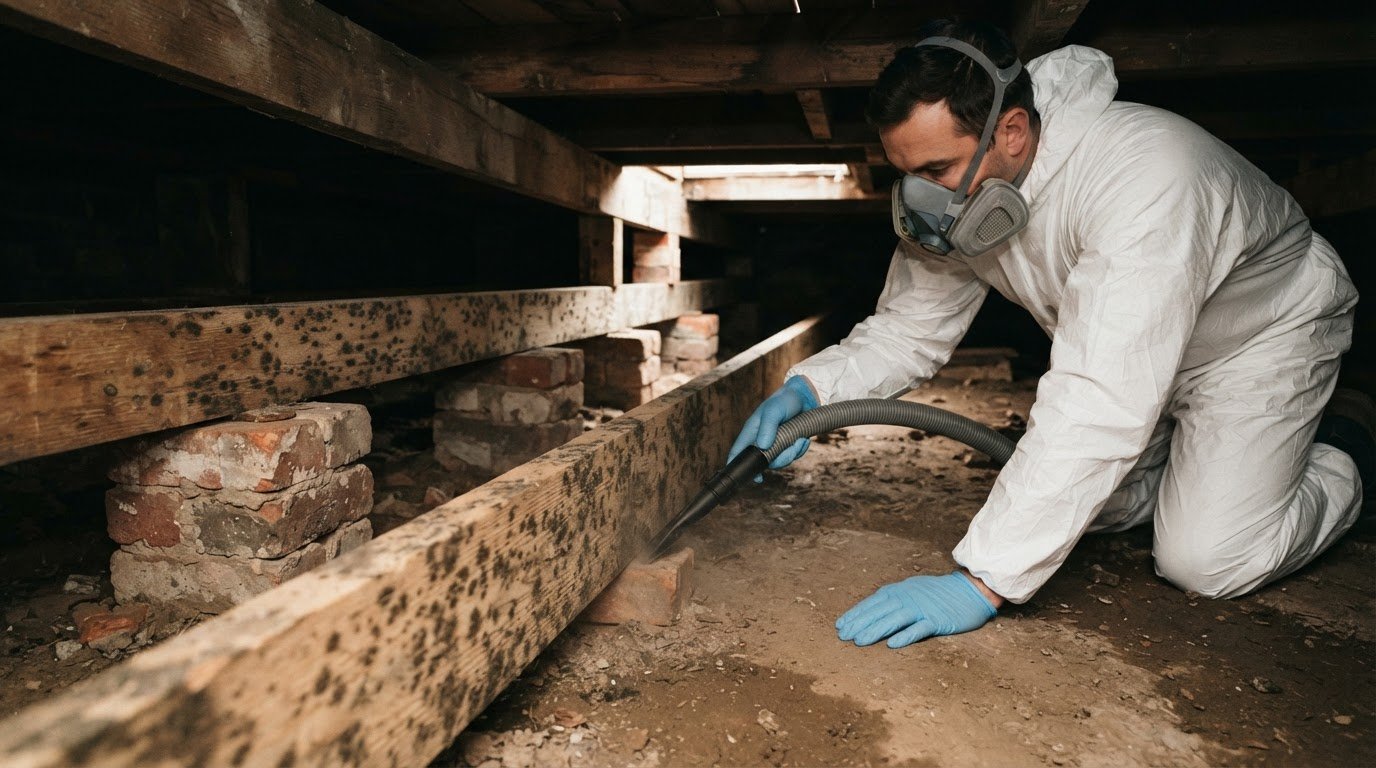
Mould behind furniture in Sydney can signal moisture affecting more than one surface. Check the wall, skirting board and floor behind the item, then inspect its back and underside. Hidden mould can also develop inside walls and subflooring, where wiping an exposed patch won’t reach. A musty smell or recurring marks may indicate that the visible growth is only part of the problem.
Look for patterns. If a bookcase, the wall behind it and nearby stored items all show marks, assess the whole corner rather than treating each spot separately. A damp skirting board draws attention to the floor edge; marks higher on an external wall make the wall and adjoining areas worth inspecting. Note where growth appears and whether it returns after cleaning.
Move furniture carefully to expose concealed surfaces. Use a torch to inspect wall junctions, floor edges and gaps around built-in cupboards. Check nearby rooms for similar odours or marks. If mould seems to extend into a wall cavity or beneath flooring, treating the exposed patch alone may leave hidden growth untouched.
Furniture design affects airflow. A bookcase with a solid base pushed flush against a wall leaves little room for air movement. Where practical, choose furniture with legs or a raised base, and leave space behind large items. This can improve circulation around surfaces that would otherwise stay concealed.
To clean a small, accessible patch safely, first check that the surface can tolerate the chosen cleaning method. Follow the cleaner’s label, don’t mix products, and avoid soaking timber, plaster or fabric. Use a damp cloth rather than vigorous dry brushing, and ventilate the room while cleaning. If growth covers rough or porous surfaces, has penetrated composite timber, or appears inside a wall, surface cleaning may not remove it completely.
Recurring mould behind furniture in Sydney calls for attention to the conditions beyond the visible patch. Growth across several surfaces, persistent dampness or mould returning after cleaning can point to a source behind a wall, beneath flooring or in the subfloor. Identifying the affected area and moisture source helps determine what needs treatment before the room is restored.
If mould keeps reappearing behind furniture, arrange a professional mould inspection to investigate concealed areas and moisture clues.
When arranging a room, consider the space beneath furniture as well as the gap behind it. Choosing pieces with legs or raised bases can improve airflow underneath and help prevent mould growth. This is especially worth considering when replacing a solid-base item that sits close to a wall, or when choosing furniture for a corner that is hard to inspect. The aim is to keep the floor and wall junction from being sealed off from airflow.
After changing the layout, make the newly accessible surfaces part of a regular visual check. Look beneath the furniture and along the concealed floor edge for dampness, odours or returning marks, and note whether the area stays clear. If signs persist, better airflow alone may not address the underlying moisture. Continue investigating the affected area rather than relying on furniture placement as a complete remedy, and keep access to hidden surfaces in mind when choosing where large pieces will stand.
ABC Mould Cleaning Solutions
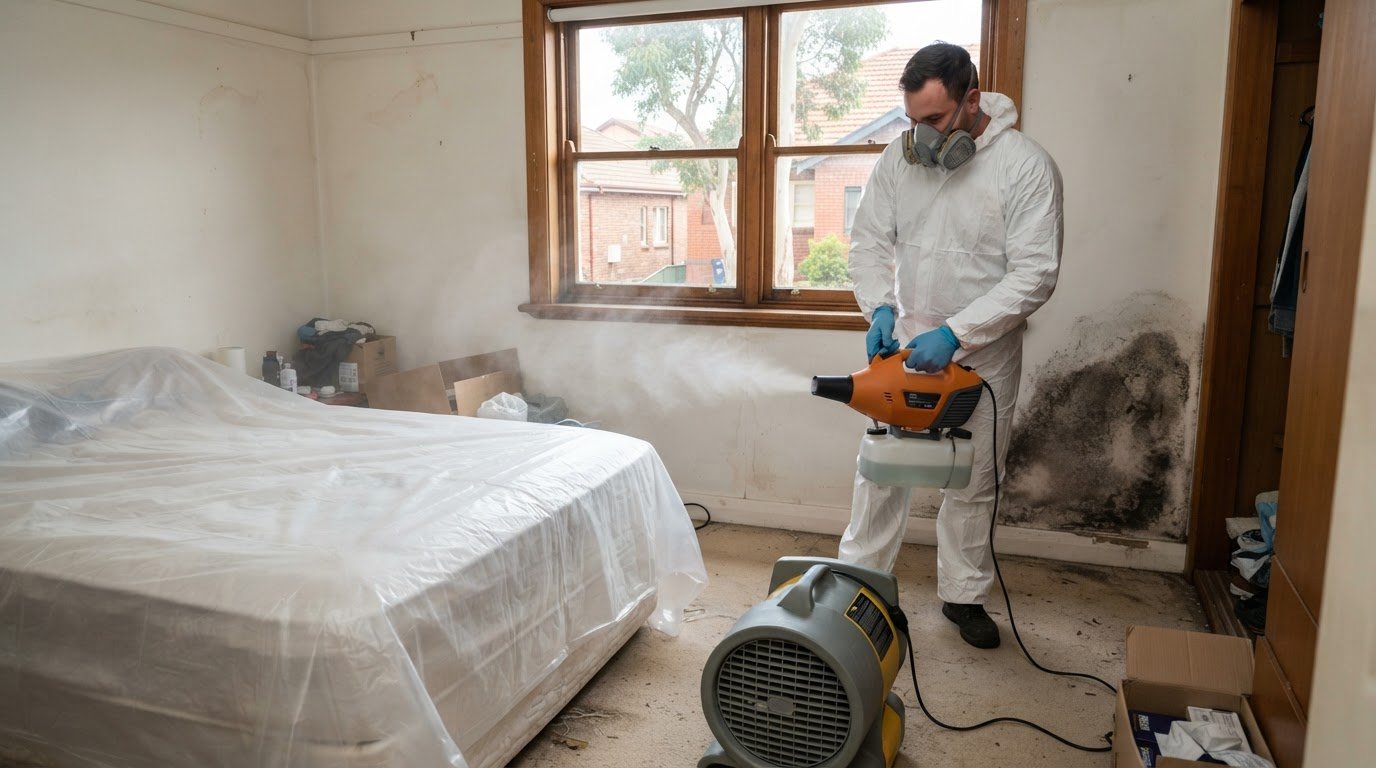
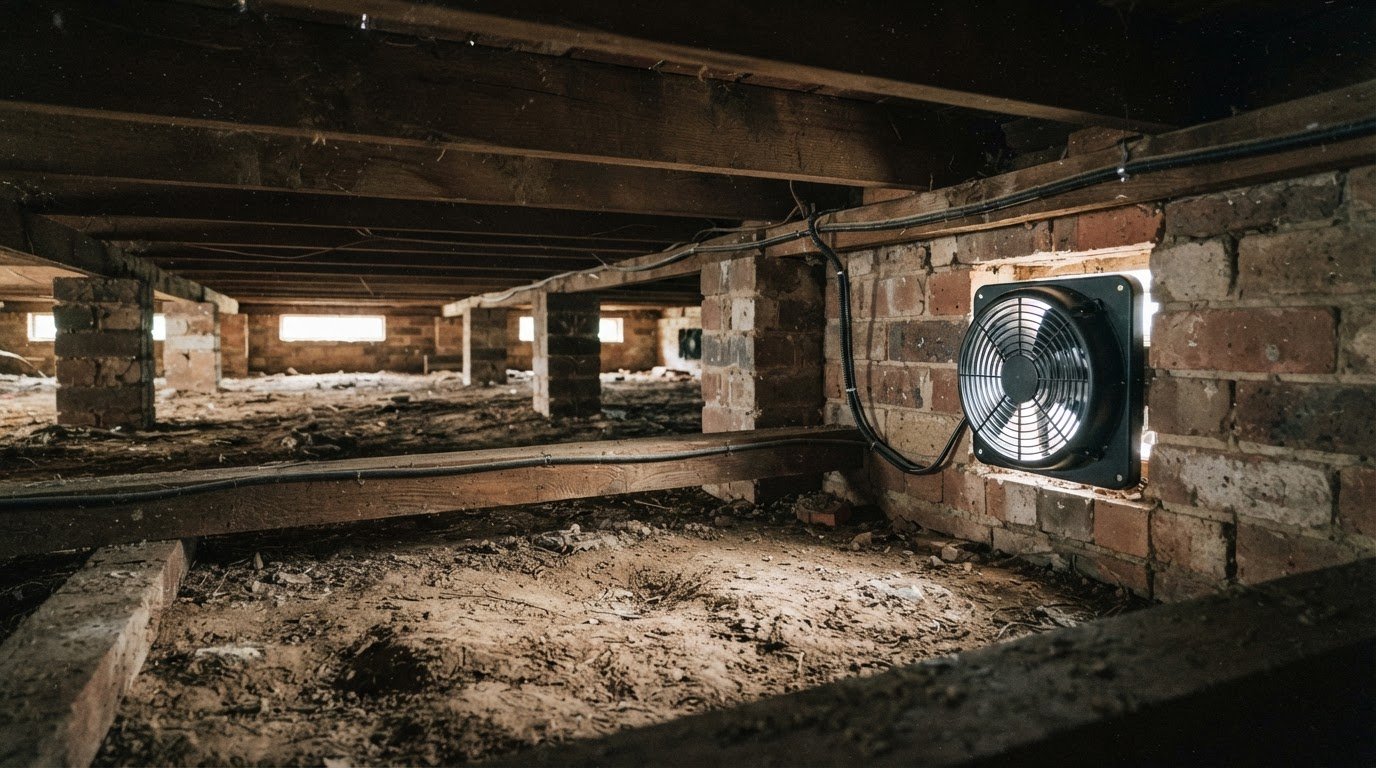
ABC Mould Cleaning Solutions can help when mould behind furniture keeps returning, spreads across surfaces, or appears alongside signs of hidden moisture. Mould Inspection Services can help assess affected areas and identify moisture clues; Mould Remediation addresses mould growth, while Air Purification & Scrubbing helps treat airborne spores. If dampness is linked to the subfloor, Subfloor Ventilation System Installation may also be relevant. The right next step depends on what the inspection reveals, including the affected materials and whether moisture extends beyond the furniture. Addressing the wider issue matters as much as treating the visible patch. For a professional assessment of recurring or concealed mould, contact ABC Mould Cleaning Solutions.
Take the Next Step Towards a Dry, Mould-Free Room
Use the discovery as a prompt to observe how the room behaves over time. Note whether dampness or odours change after rain, overnight or after the room has been closed. These patterns can help distinguish a brief moisture event from a recurring issue that needs closer attention. If you find mould behind furniture in Sydney, focus on understanding why it returns, not just making the visible patch disappear.
Before moving furniture or cleaning affected surfaces, take clear photos and record where you found the mould. This gives you a useful reference if the marks change or reappear, and helps explain the situation when seeking support. Avoid disturbing extensive or concealed growth while the underlying moisture problem remains unresolved.
If the mould keeps returning or you’re concerned about hidden areas, contact ABC Mould Cleaning Solutions to discuss the next step. A clear plan can help you move forward with greater confidence and address the problem at its source.
Frequently Asked Questions
What can I do to fix the broader problem?
Address the moisture source and affected materials; recurring or concealed mould needs assessment. ABC Mould Cleaning Solutions offers Mould Inspection Services, Mould Remediation and Air Purification & Scrubbing, plus optional mycotoxin testing referrals. The Goldmorr System uses biodegradable fogging, applied only by Goldmorr-approved and trained master technicians; Goldmorr has supplied mould-removal solutions since 1998. All treatments are safe for pets, people, and the environment. We Will Beat Any Written Quote By 10%.
Why does it keep coming back even after I’ve cleaned it off?
Mould often returns because cleaning removes visible growth without drying or correcting the damp material underneath. For example, a cabinet panel may look clean while moisture remains trapped at a wall joint or inside composite timber. Check whether the same edge, panel or stored item becomes damp again. A recurring pattern is a reason to investigate the moisture source and affected materials instead of repeatedly wiping the visible marks.
What humidity and ventilation levels help prevent mould in Australian homes?
Aim for indoor relative humidity between 30% and 50%; above 60 per cent, water vapour can settle on porous and semi-porous materials. Use a hygrometer in the affected room, including during moisture-producing activities such as cooking or showering. Open windows and doors when practical to improve ventilation. If humidity stays elevated despite airflow, mechanical dehumidification may help. Leave space around furniture so air can circulate beside walls and underneath raised pieces.