If you’re asking “is builder responsible for mould in new house” situations, the answer depends on what caused the moisture, when the problem appeared and which protections apply. Mould alone doesn’t prove the builder is at fault. However, water ingress or defective work may point to a responsibility worth investigating.
It can be difficult to tell whether the cause is construction, ventilation, maintenance or everyday moisture. Act promptly: document what you can before mould spreads or the affected area is disturbed, and notify the builder in writing. NSW statutory warranties may apply, with different timeframes depending on whether a defect is major or non-major.
This guide explains what may make a builder responsible, what evidence can help clarify the cause, and what practical steps to take next. It also covers when an independent building consultant, mould specialist or legal adviser may be useful. A professional mould assessment can complement, but does not replace, building or legal advice.
Key Takeaways
- To assess whether a builder may be responsible, consider the moisture source and available evidence, not mould alone.
- Water ingress, leaks, damp materials, condensation and inadequate ventilation can all contribute to mould. Identifying the likely source helps guide what to do next.
- Keep dated photos or videos, notes about affected areas, and a timeline of leaks, repairs and communications.
- Notify the builder in writing, request an inspection and written response, and keep your communication factual and dated.
- A Sydney mould inspection can assess visible mould and conditions that may need further investigation. It does not determine builder liability or replace building or legal advice.
Is a builder responsible for mould in a new house in NSW?
Not automatically. If you’re asking “is builder responsible for mould in new house” cases, the answer depends on the moisture source, the evidence, when the issue appeared and the obligations that apply. A builder may be responsible where evidence shows defective residential building work caused or contributed to moisture entry and the resulting mould, subject to the applicable statutory warranties and circumstances.
Mould is a sign of excess moisture and suitable conditions for growth. Its presence alone doesn’t establish that the builder’s work was defective. A leak caused by defective work may raise a different issue from condensation linked to ventilation or occupant conditions, poor maintenance, or damage that occurred after construction. Each possibility needs to be assessed on its own facts.
When might mould point to a building defect?
Defective waterproofing, plumbing installation, drainage or work on the building envelope could allow water to enter or remain in building materials. That moisture may support mould growth on surfaces and materials inside the home. Some mould species, including Stachybotrys chartarum (black mould), can grow on cellulose-rich materials. However, colour or location doesn’t identify the moisture source or prove who is responsible.
For example, mould on an internal wall might appear close to a leak, but water could have travelled from elsewhere. Condensation on a cold surface, a plumbing leak, wet materials or inadequate ventilation can produce overlapping signs. Treat these as possibilities to investigate, not conclusions. An independent building investigation may help trace the moisture pathway and assess whether the work contributed.
Why the answer depends on timing and evidence
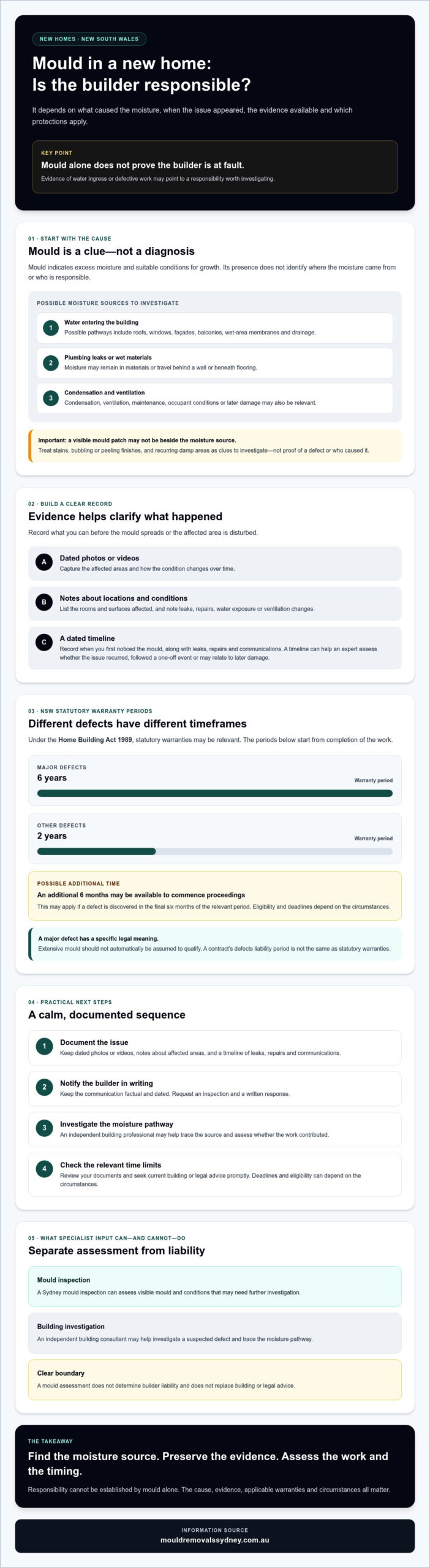
Record when you first noticed the mould, which rooms and surfaces are affected, and how the condition changes. Keep dated photos or videos, and note any leaks, repairs, water exposure or changes in ventilation. A clear timeline can help an expert assess whether the issue is recurring, followed a one-off event or may relate to later damage.
NSW statutory warranties under the Home Building Act 1989 may be relevant. The current periods are six years for major defects and two years for other defects, starting from completion of the work. A major defect has a specific legal meaning, so extensive mould should not automatically be assumed to qualify. If a defect is discovered in the final six months of the relevant period, an additional six months may be available to commence proceedings. Deadlines and eligibility can depend on the circumstances, so seek current advice promptly.
Contract terms, the work performed and the cause of the moisture may affect the options available. A contract’s defects liability period is not the same as statutory warranties. Review your documents and seek independent building or legal advice before drawing conclusions.
How moisture and building defects can lead to mould in a new home
Mould needs moisture and suitable conditions to grow. In a new home, moisture might come from water entering through the building, a plumbing leak, materials that remained damp, or condensation forming indoors. Ventilation can affect how quickly moisture clears. Any of these can contribute to mould, but mould alone doesn’t establish that construction work was defective.
Finding mould identifies a moisture problem, not its cause. Look for patterns and changes over time, and treat visible signs as clues to investigate rather than a diagnosis. NSW Health advice on mould explains why mould can grow in damp conditions and offers general health information.
Which building-related moisture sources should be investigated?
Possible pathways include defects around roofs, windows or façades, balcony waterproofing, wet-area membranes, plumbing connections and drainage. Water can travel behind a wall or beneath flooring before mould appears, so the affected surface may not be directly beside the source. A suitably qualified building professional can investigate suspected defects and assess the moisture pathway.
Use signs to guide your notes, not to decide responsibility on their own:
| Observed clue | Possible source to investigate | What it cannot prove alone |
|---|---|---|
| Recurring damp patch or water staining | Water ingress, a leak or drainage issue | Where water entered or who caused it |
| Bubbling or peeling finish | Moisture behind paint, plaster or another finish | Whether the underlying work is defective |
| Musty odour | Damp materials or concealed mould | The exact location or moisture source |
| Condensation on windows or cool surfaces | Indoor humidity, cool surfaces or limited ventilation | That a building defect is present, or absent |
Record where and when signs appear, whether they return after drying, and whether they change after rain or water use. This practical record can help an expert focus the investigation.
Could condensation or ventilation be involved instead?
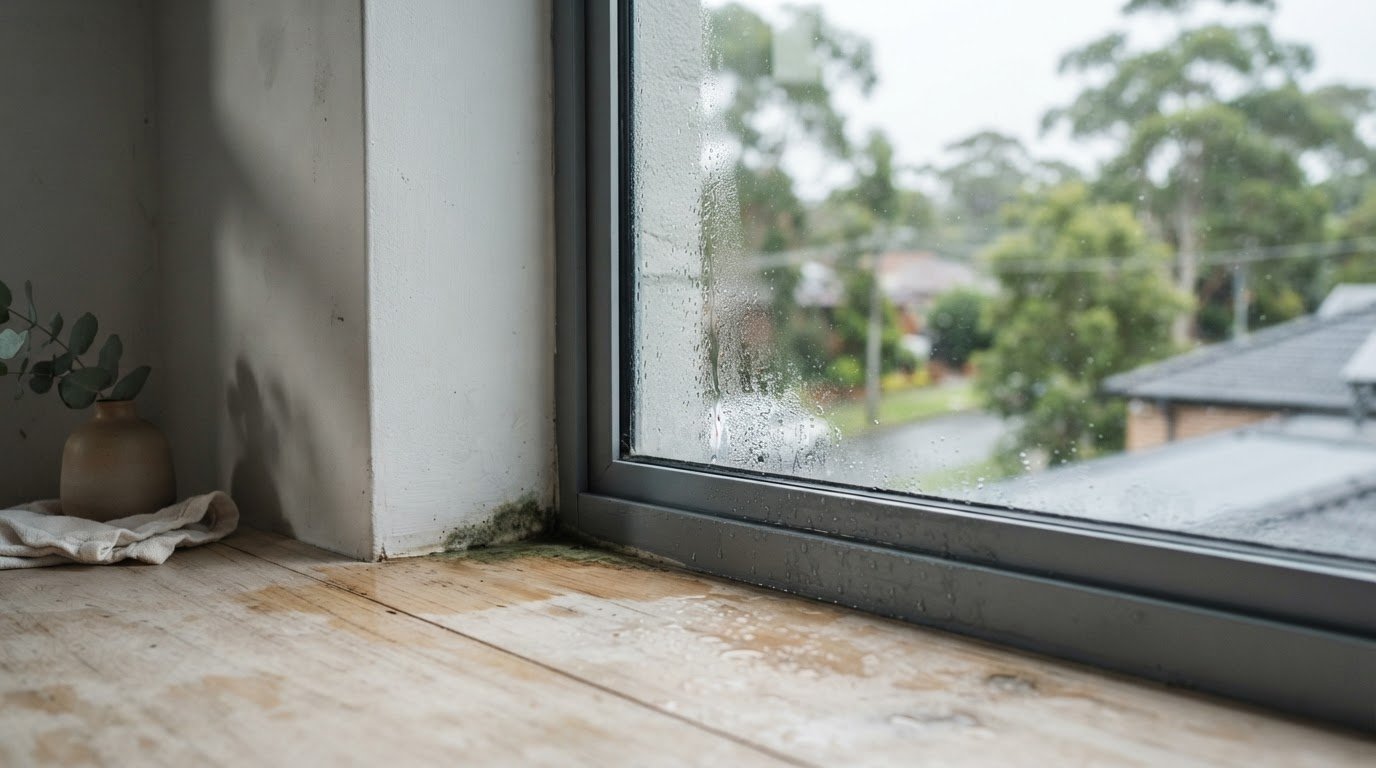
Everyday activities add moisture to indoor air. When that air meets a cool surface, condensation can form; limited ventilation may slow moisture removal. This is one possible explanation, not a reason to blame occupants without evidence. Condensation also doesn’t rule out a defect: building conditions and ventilation may need to be assessed together. For more background, the article What is Mould? A Complete Guide for Australian Homeowners explains how mould growth relates to moisture.
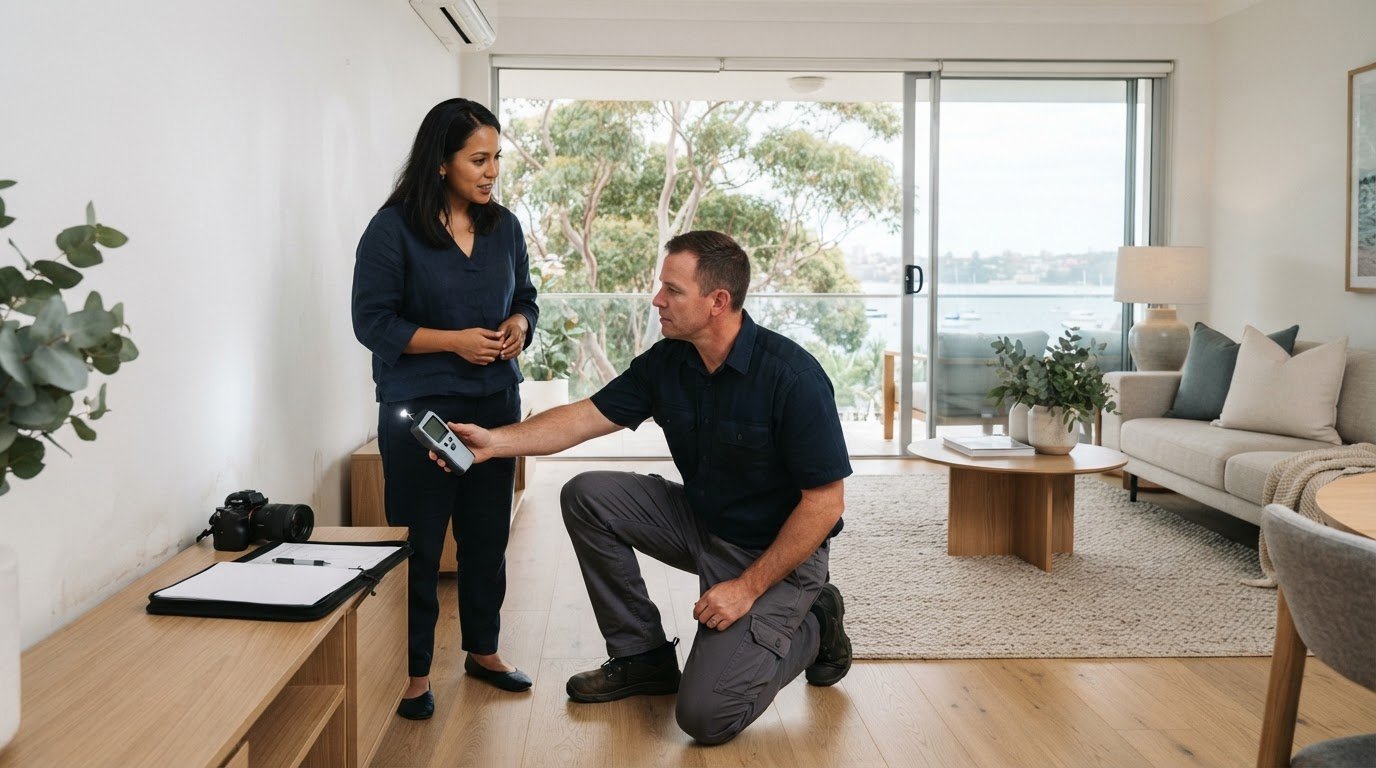
If the source remains unclear, an independent mould inspection in Sydney can help assess visible mould and identify conditions that may need further investigation. It complements, but doesn’t replace, building advice. Learn about mould inspection services.
What evidence helps determine whether the builder may be responsible?
Good records can show when mould appeared, how it changed and whether it followed a leak, rain event or repair. They won’t prove liability by themselves, but can help a building professional investigate the moisture source and help you explain the issue clearly to the builder. Evidence connecting a possible defect to moisture damage is more useful than a photograph of mould alone.
What should homeowners document before contacting the builder?
Take dated, well-lit photographs and videos of affected surfaces and nearby water sources. Capture close-up details as well as wider views that show the room and location. Note when you first noticed the mould, affected areas, odours, changes over time, and any leaks, rain events or repairs. Don’t disturb suspect materials unnecessarily to get a better image.
Keep copies of your contract, handover documents, warranty information, maintenance records, emails, inspection reports, invoices and the builder’s responses. Store them together in date order so the sequence is easy to follow.
| Evidence observed or collected | What it may suggest | What it cannot prove by itself |
|---|---|---|
| Dated photos showing a stain or mould spreading | When and where the visible condition changed | The moisture source or who is responsible |
| Notes linking dampness to rain or water use | A possible connection to water entry, plumbing or drainage | That a building component was defective |
| Records of recurring damp patches or previous repairs | The issue may be ongoing or may have returned after work | Whether the repair was inadequate or the builder caused the problem |
| Contract, handover and maintenance documents | What work and records may be relevant to the home | The legal outcome of a claim |
What can an inspection establish, and what can it not?
An independent building assessment may examine construction details and help identify a moisture pathway or suspected defect. A mould inspection can assess visible mould and conditions that may need further investigation. Neither service automatically determines legal liability. Sampling or a mould report may add information, but does not by itself show who caused the moisture or whether a warranty applies.
Keep the roles clear: building professionals investigate construction and moisture concerns, mould specialists assess mould conditions, and a legal adviser can explain how evidence, contract terms and applicable NSW obligations may affect your options. If there’s active water damage, document the affected area and repairs, and see Water Damage Repair: Your Emergency Guide for Sydney Homes for related guidance.
What to do if mould appears in a new NSW home?
Act promptly, but keep your response measured. Preserve useful evidence, limit ongoing moisture where it’s safe to do so, and notify the builder in writing. You don’t need to prove the cause before reporting what you’ve found. A clear, dated record gives everyone a useful starting point.
- Document the condition. Take dated photos or videos of the mould, affected surfaces and surrounding area. Note when you first noticed it, which rooms are affected, and any changes or related leak events. Avoid disturbing suspect materials unnecessarily.
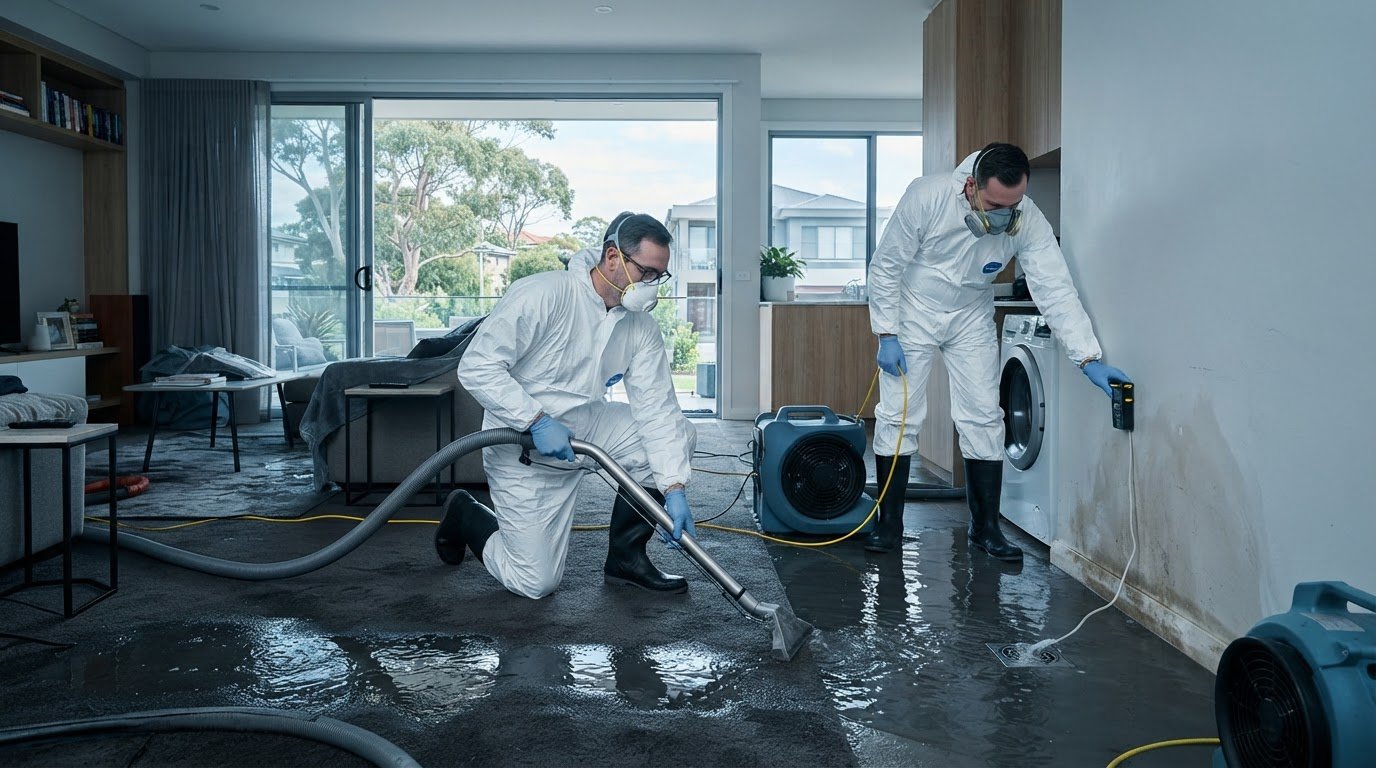
- Reduce further water exposure safely. If water is actively entering, take reasonable steps to limit damage only if it’s safe. Don’t enter areas with electrical hazards or attempt work beyond your ability. Contact an appropriately qualified professional to address an urgent leak or unsafe condition. Don’t delay urgent leak control while waiting for a builder response.
- Notify the builder in writing. State when and where you found the mould, describe what you can see, and mention any suspected leak as a possibility rather than a confirmed cause. Attach relevant dated evidence and request an inspection and written next steps.
- Keep a communication record and seek advice. Save emails and responses. Record dates of calls, site visits and proposed repairs, and keep copies of inspection reports or invoices. If the cause is unclear or you disagree with the proposed repair, consider independent building advice.
How should you notify the builder about mould?
Keep the message factual and specific. For example: “On [date], I noticed mould on the wall in [room]. The area appears damp, and I noticed it after [event, if known]. I’ve attached photos. Please arrange an inspection and confirm the proposed next steps in writing.” Avoid stating that a particular building defect caused the mould unless an investigation has established that.
After an inspection, ask for the findings and proposed work in writing. Note which areas were inspected and whether the moisture source was identified. If repairs are proposed, keep a copy of the description and any follow-up records.
When should you seek independent or formal help?
Seek independent building advice if the moisture source remains uncertain, mould returns after repairs, or you dispute the builder’s explanation. A mould inspection can assess visible mould and conditions that may need further investigation, but it doesn’t decide legal responsibility. For background, see What is Mould? A Complete Guide for Australian Homeowners.
Check current NSW Fair Trading guidance and official Building Commission NSW information for the applicable complaint and dispute process. Research available as of September 2026 indicates homeowners must first attempt to resolve a building dispute through Building Commission NSW before applying to NCAT. Verify the current pathway, eligibility and deadlines with official sources, and seek legal advice if needed. If you’re in Sydney and want an independent assessment of visible mould, explore Sydney mould inspection services as a complement to building or legal advice.
How a Sydney mould inspection can support your next steps
A mould inspection can help clarify what’s visible and where further investigation may be useful. It can be a practical step if mould keeps returning, covers a substantial area, or appears alongside signs of ongoing moisture. Inspection and remediation address mould conditions; they don’t decide whether a builder is legally responsible. That question still depends on the cause, evidence, timing and applicable obligations.
What can a mould specialist help assess?
A mould specialist can assess visible mould and its extent, and help identify moisture conditions that may need closer examination. This can clarify the mould issue, but tracing a leak or determining whether building work is defective may require a building professional or another relevant specialist. Keep those roles distinct, especially when gathering evidence for a discussion with the builder or a claim.
ABC Mould Cleaning Solutions offers mould inspection, mould remediation, air purification and water damage restoration for residential and commercial properties across Sydney and surrounding regions. Where conditions warrant, the company also offers subfloor ventilation system installation. These services may support assessment or moisture management, but they don’t replace an independent building assessment or legal advice about responsibility.
For remediation, ABC Mould Cleaning Solutions uses the Goldmorr System, which involves a biodegradable fogging process. Confirm the current method and service scope directly with the company. No remediation method should be treated as proof of the original moisture source or a guarantee about future conditions.
When should you arrange professional mould help?
Consider professional advice if mould is recurring, extensive, or associated with persistent dampness or water damage. A mould specialist can assess the visible problem and identify conditions that may need further investigation. If you suspect a construction defect, seek appropriate building advice as well. Keep your photos, timeline and communications so the assessment can be considered alongside other evidence.
Don’t rely on a mould inspection to diagnose health effects. If you or someone in your household has health concerns, speak with a qualified health professional. Address any active water issue safely and seek qualified help if conditions are unsafe or beyond your capacity to manage.
If you’re in Sydney or the surrounding region and would like an assessment of visible mould, contact ABC Mould Cleaning Solutions to enquire about mould inspection or mould removal. An assessment can help you decide what to investigate next, while builder responsibility remains a separate question.
Take the next step with clear evidence
Whether a builder is responsible for mould in a new house depends on what caused the moisture, the available evidence, timing and applicable obligations. Mould alone doesn’t establish a building defect. Record what you’ve found, keep your documents and communications, and notify the builder in writing so there’s a clear record while the cause is investigated.
A mould inspection can assess visible mould and identify conditions that may need further investigation. It doesn’t determine legal responsibility, so seek independent building or legal advice if the source or proposed repair is disputed. ABC Mould Cleaning Solutions provides mould inspection and remediation for residential and commercial properties across Sydney and surrounding regions. The company uses the Goldmorr System for mould removal and also offers air purification, water damage restoration and subfloor ventilation.
If you’d like professional help assessing visible mould, contact ABC Mould Cleaning Solutions to enquire about a Sydney mould inspection. Clear records and appropriate advice can help you decide what to do next.
Frequently Asked Questions
Can mould be considered a building defect?
Mould itself is generally a sign of moisture, not proof of a building defect. The underlying issue may involve defective waterproofing, plumbing, drainage or building-envelope work that allows water to enter or remain in materials. Other sources, such as condensation or a later leak, may also contribute. A building professional can assess suspected construction issues. The presence, colour or location of mould alone can’t establish its cause or who is responsible.
How long is a builder responsible for defects in a new NSW home?
NSW statutory warranties generally run for six years for major defects and two years for other defects, starting from completion of the work. A major defect has a specific legal definition, so mould doesn’t automatically qualify. If a defect is discovered in the final six months of the relevant warranty period, an additional six months may be available to commence proceedings. Check current official NSW guidance and get legal advice about your circumstances and deadlines.
What should I do first if I find mould in a new house?
Document it before the condition changes. Take dated photos or videos, note the affected rooms and when you first noticed the mould, and record any leaks or water events. Reduce ongoing water exposure if it’s safe, but don’t delay qualified help for an urgent leak or unsafe area. Notify the builder in writing, describe what you’ve observed without presenting an unconfirmed cause as fact, and request an inspection and written next steps.
Can I make a mould claim without a building inspection?
You can report mould to the builder before arranging an independent building inspection. Whether a formal claim or dispute needs particular evidence depends on the circumstances and process involved. An inspection may help identify a moisture pathway or assess suspected defective work, but it isn’t a substitute for checking applicable NSW requirements and deadlines. Keep your records, ask the builder to inspect, and consider independent advice if the cause is unclear or disputed.
Does a mould report prove the builder is liable?
No. A mould report may document visible growth, its extent and conditions that could need further investigation, but it doesn’t automatically prove that the builder caused the problem or breached an obligation. Responsibility may depend on evidence about the moisture source, the building work, timing and applicable terms. A building assessment may help investigate construction issues, while legal advice can explain how the evidence relates to your options.
Should I contact a mould remover or the builder first?
Document the condition and notify the builder in writing promptly, while arranging safe action to limit active water damage. If mould is extensive, recurring or linked to persistent moisture, a mould specialist can assess visible mould and conditions requiring further investigation. Don’t postpone urgent leak control to preserve evidence. Where possible, keep dated records before affected materials are disturbed, and ask the builder and any specialist to provide findings or proposed next steps in writing.
Can a mould specialist decide whether my builder is legally responsible?
No. A mould specialist can assess visible mould, its extent and conditions that may need further investigation. Identifying whether defective construction caused the moisture may require a building professional, and deciding legal responsibility may require legal advice or a formal dispute process. ABC Mould Cleaning Solutions offers mould inspection and remediation across Sydney and surrounding regions. Its inspection can complement building or legal advice, but it doesn’t determine liability.