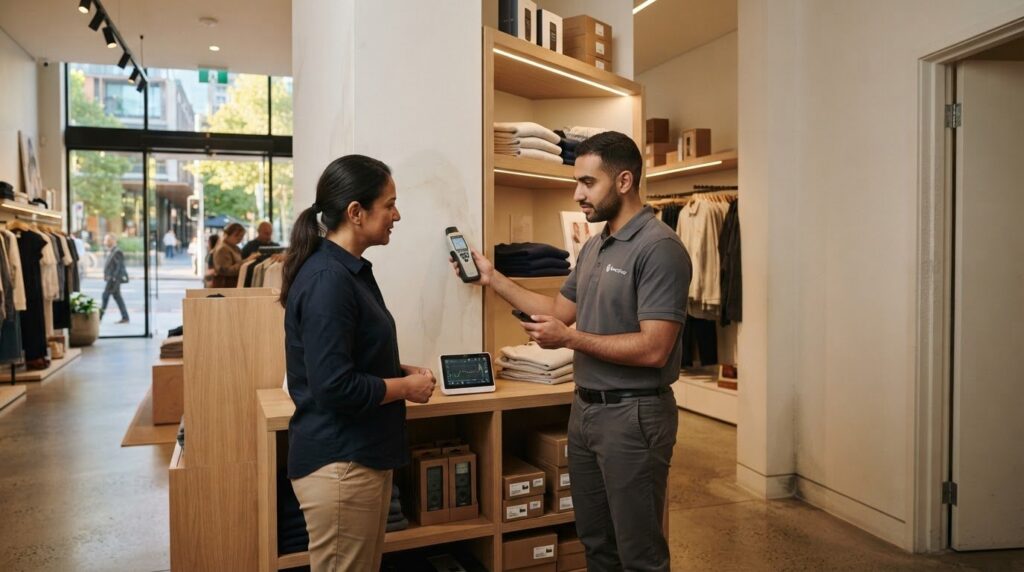
Could a musty smell near the stockroom point to hidden dampness rather than a simple cleaning issue? A retail store mould and air quality check should look beyond visible spots to connect signs of mould with possible moisture sources and indoor air concerns. Staff may notice an odour before anyone can see what is causing it, especially if the affected area is behind shelving, stock or fixtures.
A walkthrough can help identify changes, but it may not reveal what is happening inside a wall or beneath a floor. This checklist explains what to inspect, what details to record and how to decide whether a basic check is enough or a professional assessment may be appropriate.
Note odours, visible growth, water staining and leak history, and plan access around store operations. The aim is to gather useful information, reduce guesswork about moisture and choose a proportionate next step with as little disruption as possible.
Key Takeaways
- A retail store mould and air quality check should connect visible warning signs with moisture conditions and indoor air concerns.
- Stock, shelving and closed rooms can hide dampness, so note odours, staining and any history of leaks or water entry.
- A walkthrough can flag concerns, but it can’t confirm every hidden issue or airborne contaminant. Choose an assessment that fits what you’ve found.
- Record affected locations, dates, photos and maintenance history to help make a professional assessment more useful.
- Recurring moisture, extensive growth or persistent indoor concerns may call for professional inspection and a plan that addresses the moisture source as well as mould.
What a Retail Store Mould and Air Quality Check Should Cover
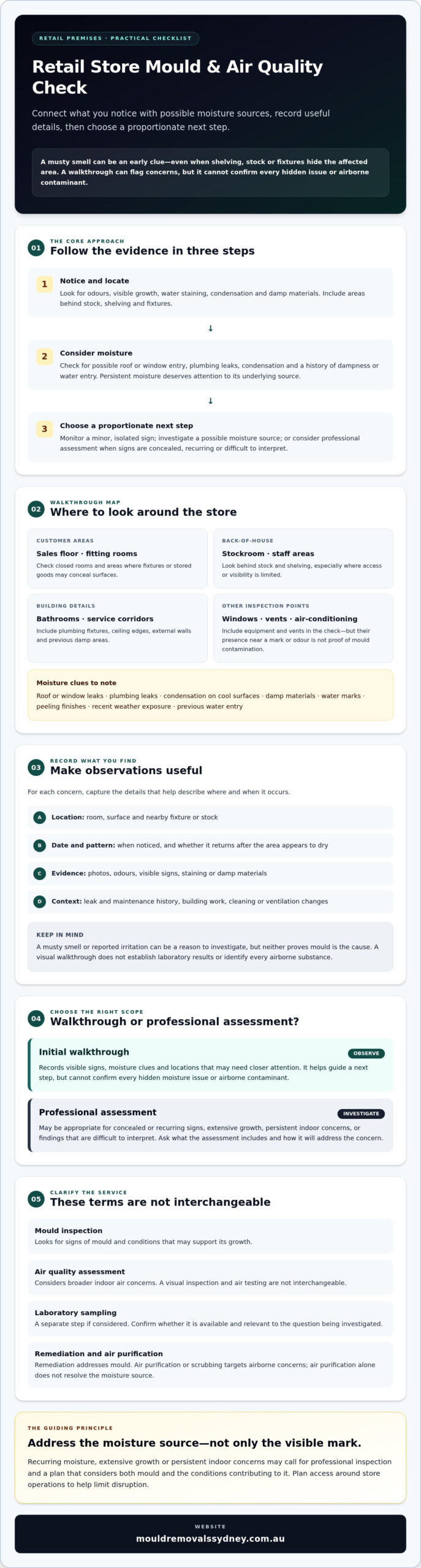
A retail store mould and air quality check is a structured review of visible signs, moisture conditions and indoor air concerns. Its purpose is to identify what may need attention and guide a proportionate next step, not to diagnose health effects or assume that every musty smell has the same cause.
An initial walkthrough records observable concerns; a specialist assessment investigates them further and recommends an appropriate response. A visual check can’t confirm every hidden moisture issue or airborne contaminant. Indoor air quality (IAQ) includes a range of factors, as outlined in this Indoor air quality (IAQ) overview, so a visual inspection and air testing aren’t interchangeable.
Keep the service terms clear. A mould inspection looks for signs of mould and conditions that may support its growth. An air quality assessment considers broader indoor air concerns. Laboratory sampling, if considered, is a separate step, so confirm whether it is available and relevant to the question being investigated. Remediation addresses mould, while air purification and scrubbing target airborne concerns. Air purification alone doesn’t resolve the moisture source.
Which parts of a retail premises belong on the checklist?
Walk through the sales floor, fitting rooms, stockroom, staff areas, bathrooms and service corridors. Check around windows, external walls, plumbing fixtures and areas affected by previous dampness or roof leaks. Include air-conditioning equipment and vents as inspection points, not as automatic proof of contamination. Note any locations that need closer access, such as areas behind stock, shelving or closed doors where staining or damp materials may be concealed.
What can a store manager establish without testing?
Record visible growth, musty odours, condensation, water staining and recent leak history. For each observation, note the location, date and whether it returns after the area appears to dry. These details help describe the concern, but a walkthrough can’t establish laboratory results or identify every airborne substance. For a plain-language introduction to mould, see What is Mould? A Complete Guide for Australian Homeowners.
Use your observations to decide whether to monitor a minor, isolated sign, investigate a possible moisture source or arrange a professional mould inspection. If signs are concealed, recurring or difficult to interpret, ask what an assessment includes and whether any proposed testing is appropriate. A clear scope helps the store plan access and avoid unnecessary disruption.
How Mould, Moisture, and Air Concerns Appear in Sydney Retail Spaces
Mould concerns often begin with moisture. Water can enter through a roof or window, escape from plumbing, or build up as condensation on cool surfaces. If materials stay damp, conditions may support mould growth. A musty smell or reported irritation can be a reason to investigate, but neither proves mould is the cause. The CDC’s review of the health benefits of remediating buildings provides broader evidence on remediation; a store’s specific concerns still need appropriate assessment.
Persistent moisture is a signal to investigate and address the underlying source, not just the visible mark. In a retail setting, stock may sit against external walls, shelving can block airflow around surfaces, and wall linings can conceal damp materials. Closed fitting rooms, storage areas and service corridors may also receive less frequent inspection. A quick glance across the sales floor can miss signs behind fixtures or stored goods.
Where should staff look for signs and moisture?
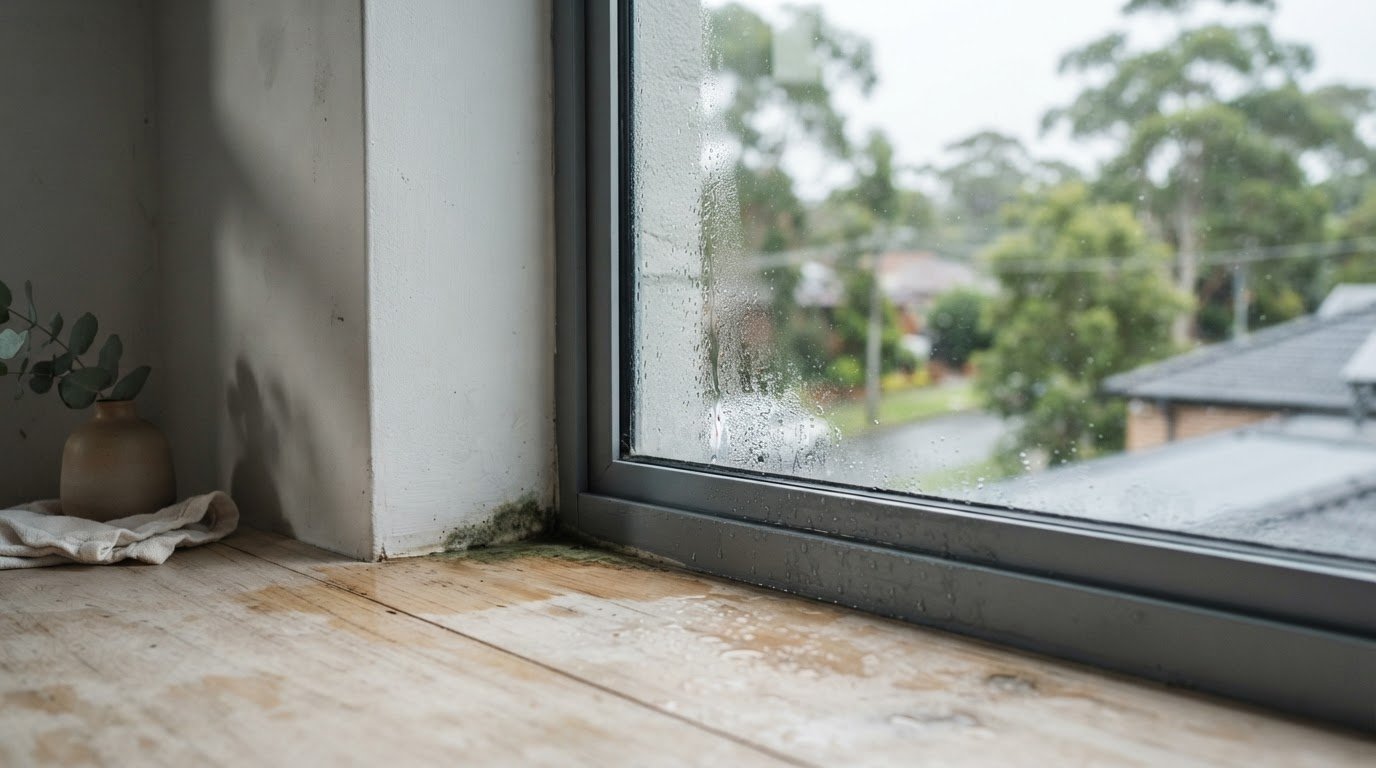
During the retail store mould and air quality check, look around window frames, ceiling edges, display fixtures and walls behind movable stock. Note leaks, damp materials, peeling finishes, water marks and recurring condensation. Consider recent weather exposure alongside the building’s maintenance history. For example, a roof leak after heavy rain may leave marks some distance from where water entered.
Include air-conditioning equipment and vents as inspection points, but don’t treat dust, an odour or a visible mark near a vent as proof of mould contamination. If equipment needs cleaning or there are concerns about ductwork, treat that as a separate issue for appropriate professional attention. The guide Professional Air Conditioner Cleaning Near Me: Sydney’s Mould & Air Quality Experts may be relevant when air-conditioning cleaning is the concern.
How can the store environment affect what you find?
Keep a simple record of recent leaks, building work, cleaning, ventilation changes and reports of dampness. Note when an odour or visible sign occurs, which room it affects, and whether the space was closed or occupied. These details can help distinguish a recurring building concern from a one-off observation without assuming a cause.
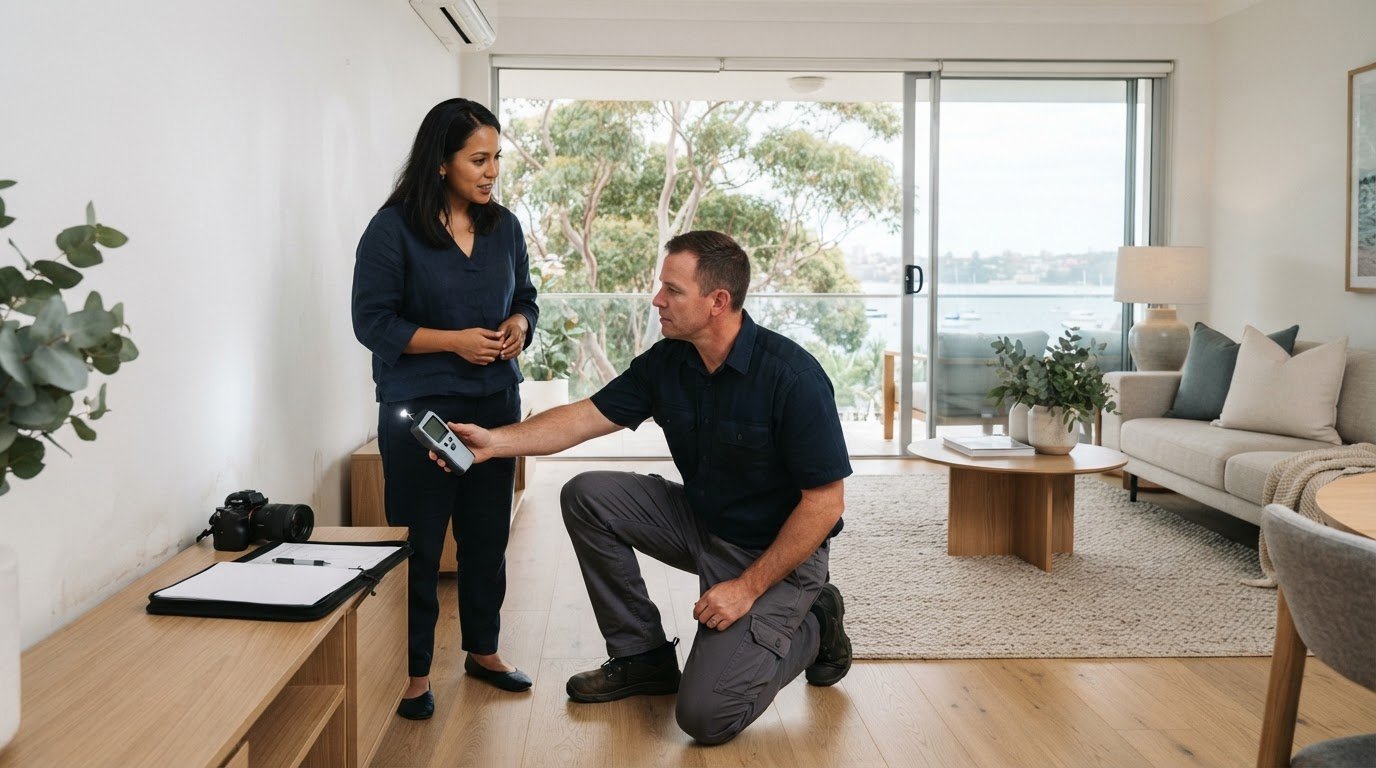
For a considered next step, compare your notes with what is visible and whether moisture keeps returning. If the source is unclear or signs are concealed, a professional mould inspection can help assess the concern and inform a response. Explore Sydney mould inspection services as one option for discussing a store’s assessment needs.
Retail Store Mould and Air Quality Check: Walkthrough or Professional Assessment?
A staff walkthrough is a useful first step, not a definitive verdict. No visible mould doesn’t automatically rule out moisture behind fixtures, inside wall cavities or in other concealed areas. The right response depends on what staff observe, the building’s history and whether concerns persist. A commercial reference such as the EPA guide to mould in commercial buildings can offer additional context, but an assessment should suit the specific site.
| Approach | Purpose and what it may reveal | Limitations | Suitable next step |
|---|---|---|---|
| Staff walkthrough | Logs visible signs, odours, dampness, leak reports and affected locations. | Won’t confirm hidden growth, identify every moisture source or provide laboratory results. | Record findings and changes; escalate recurring or concealed concerns. |
| Professional mould inspection | Assesses reported concerns and site conditions in more detail, including areas identified for closer review. | Scope varies. Ask what the inspection covers and what it can’t establish. | Agree on the inspection scope and clarify whether any testing is included. |
| Air testing or laboratory sampling | May provide information relevant to a specific airborne or material question, depending on the method used. | Not automatically included in an inspection; results need interpretation in context. | Ask whether it’s available and why it would be useful for the concern at hand. |
When is a staff walkthrough a useful first step?
Use it to create a clear record, not to make a diagnosis. Note where and when visible signs, odours or dampness occur, include leak reports, and revisit the same locations over time. A dated log can show whether a concern is isolated or recurring. Staff observations help prioritise what needs attention, but they don’t replace a specialist evaluation when the issue is unclear.
When should a professional inspection be considered?
Consider asking about a professional inspection if dampness returns, a suspected issue is concealed, leaks recur or signs appear across multiple rooms. Before arranging one, ask the provider to explain the scope, limitations and whether testing is included. Sampling methods and interpretation should relate to a clear question, so air testing isn’t automatically necessary for every store concern.
ABC Mould Cleaning Solutions offers mould inspection services. Confirm the scope available for your retail premises and what areas can be assessed. For more background on the distinction between testing and inspection, see Mould Testing: Do You Need a Professional Mould Inspection? if it’s available in the article’s content plan.
A Store Manager’s Checklist Before, During, and After an Assessment
A prepared assessment is easier to coordinate and more useful to act on. Use this retail store mould and air quality check process to document observations, arrange access, review the findings, address moisture concerns and follow up.
- Record concerns. List affected rooms, when each issue began, visible changes, odours and known water incidents. Add dates, photographs taken from a safe distance, leak records and relevant maintenance history. Note recent repairs, renovations or ventilation changes that may help explain what has changed.
- Arrange safe access. Identify the areas that may need inspection and coordinate access with staff, the landlord, strata or facilities contacts, as appropriate. Plan around store operations and customer access. Don’t move suspect materials or stock unnecessarily, and don’t ask staff to disturb or handle suspected mould.
- Review the assessment findings. Ask the assessor to explain what was inspected, what could not be accessed and any limitations. Request clear findings in writing, including whether further assessment or testing is recommended and why.
- Address moisture concerns. Discuss recommendations for investigating or addressing the moisture source. Mould treatment or air purification may form part of a response, but air purification alone doesn’t repair a leak or resolve persistent dampness.
- Follow up. Keep the report with your records. Track whether signs return, note any changes and confirm who will manage each recommended action, including any building repairs handled by the appropriate party.
What information should you prepare?
Bring together observations from different shifts and areas rather than relying on one person’s memory. Include the location and timing of each concern, any known leak or water event, and a record of repairs or building work. Photos can help show changes over time, but take them without moving stock or touching suspect surfaces.
How can you manage access and follow-up?
Before the visit, tell relevant staff which areas need access and who will coordinate with the assessor. During the assessment, clarify whether restricted spaces, rooms behind fixtures or areas above ceilings can be checked, if relevant. Afterward, compare the written recommendations with the store’s maintenance history and assign follow-up actions to the appropriate contact.
Keep the stages distinct: observe and record concerns, arrange professional assessment where appropriate, then act on the findings and follow up. If your store needs a commercial mould assessment, contact ABC Mould Cleaning Solutions to discuss its inspection services.
When to Bring in Sydney Mould and Air Quality Specialists
Consider professional input when dampness keeps returning, visible growth is extensive, signs appear in concealed areas, or indoor concerns persist despite basic checks. These patterns don’t prove a particular cause, but they can make a quick walkthrough insufficient. A specialist can assess the site and help identify a proportionate response.
A broader plan may include mould inspection, recommendations about moisture sources, mould remediation and air purification or scrubbing where appropriate. These steps address different parts of the problem. Air purification alone won’t fix a leak or persistent dampness, so clarify who will investigate and manage any underlying building issue.
What should you ask a mould remediation provider?
Before proceeding, ask which rooms, materials and conditions the proposed inspection covers, and what falls outside its scope. Confirm whether air sampling is offered for your retail premises, what question it is intended to answer, how results are interpreted, and what sampling cannot prove. Request written recommendations that distinguish moisture-source actions, mould work and any follow-up.
How can ABC Mould Cleaning Solutions support a retail property?
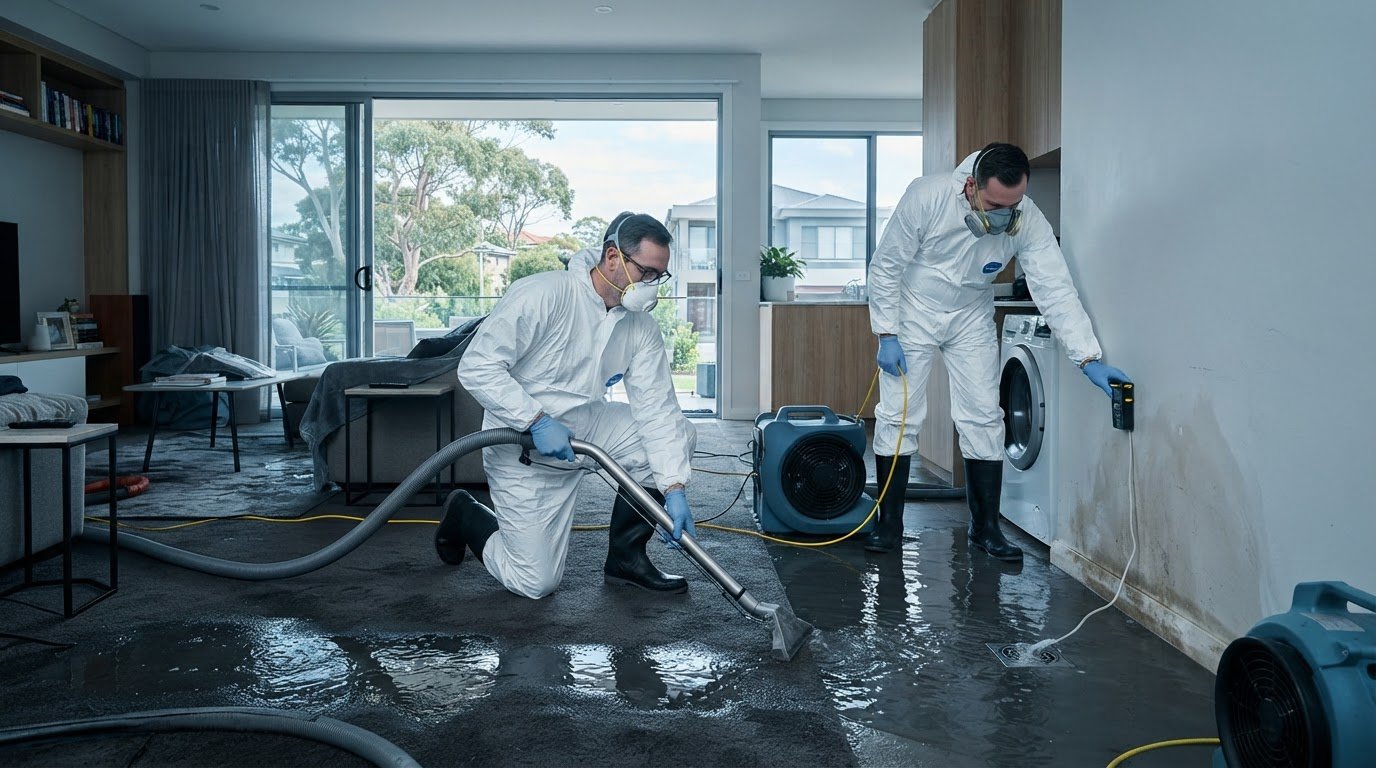
ABC Mould Cleaning Solutions offers mould inspection, mould remediation, air purification and scrubbing, and water damage restoration for residential and commercial properties across Sydney and surrounding regions. Its service information also includes recommendations to help prevent future mould growth. Ask the team to confirm the scope that would suit your site.
The business describes its Goldmorr System as a biodegradable fogging process that targets surface mould and airborne spores. Ask how it would apply to the store, what it does and doesn’t address, and what safety or occupancy instructions apply before work begins. Confirm those details for the proposed job rather than assuming the process is suitable in every situation.
If your retail store mould and air quality check points to recurring moisture, extensive growth or concerns beyond what staff can assess, discuss the site and an appropriate next step with ABC Mould Cleaning Solutions about a retail mould assessment.
Take the Next Step with a Clear Store Assessment
A practical retail store mould and air quality check connects what staff can observe with possible moisture sources and indoor air concerns. A walkthrough helps document warning signs, while a professional inspection can provide a closer assessment when dampness recurs, growth is extensive or areas are concealed. Keep the focus on evidence, scope and appropriate next steps, not assumptions about cause.
ABC Mould Cleaning Solutions offers mould services for commercial properties, including inspection, mould remediation, air purification and recommendations to help prevent future growth. Depending on the site and assessment, its approach may also include water damage restoration. Addressing moisture remains essential, since air purification alone won’t resolve its source.
If concerns persist or you’re unsure what the store needs, take the next step with a focused discussion. Arrange a professional retail mould assessment and share what you’ve observed so the appropriate next step can be considered.
Frequently Asked Questions
What does a retail store mould and air quality check include?
A check reviews areas of concern, visible signs, dampness, leak history and ventilation context. A professional may recommend further assessment based on those findings. The exact scope varies, so ask whether the service includes a visual inspection, air sampling or laboratory analysis. A basic walkthrough doesn’t measure or confirm every airborne contaminant, and any test result needs to be understood in the context of the store and the question being investigated.
Can a store manager check for mould without hiring a professional?
Yes. A manager can record visible growth, musty odours, water staining, condensation and known leaks. These observations help explain what’s happening, but they aren’t a full assessment and can’t rule out concealed moisture or establish an air test result. Don’t disturb suspect materials. If signs recur, affect multiple areas or remain unexplained, ask a professional provider what assessment may be appropriate.
How often should a retail store have a mould and air quality check?
There’s no single interval that suits every store. Consider arranging an assessment after a leak or water damage, or if dampness, odours or visible growth recur. Building changes may also warrant a closer look. Managers can include observations in routine facilities checks, then ask a professional to recommend follow-up based on the premises, assessment findings and any unresolved moisture source.
Does an air quality check always include mould testing?
No. An air quality check can have different scopes, from a walkthrough and review of indoor conditions to specific air sampling. Ask what will be inspected, measured or sent for laboratory analysis, and what the results can establish. A visual mould inspection isn’t the same as laboratory testing. Confirm in advance whether sampling is offered and whether it’s suitable for the concern being investigated.
What should I do if I find mould in a shop?
Record the location and date, take photos from a safe distance, and note any nearby leaks or dampness. Don’t disturb or dry-brush suspect material. Arrange investigation of the moisture source, and consider professional advice if growth is extensive, concealed or recurring. Coordinate access and communication with the property owner or facilities contact where relevant, so observations can be reviewed and appropriate next steps agreed.
Can a retail store stay open during a mould inspection or remediation?
It depends on the areas involved, the work required and the provider’s site-specific instructions. Before work begins, ask how staff and customer access may be affected, and discuss any barriers, scheduling needs or temporary restrictions. Don’t assume every inspection or treatment requires closure, or that every space can remain occupied. Follow the provider’s written safety and occupancy guidance for the proposed work.
For a retail property in Sydney or surrounding regions, contact ABC Mould Cleaning Solutions to discuss a mould inspection.