
What if the visible mould on a stockroom wall is only part of the problem? For Sydney retailers, effective retail store stockroom mould cleanup means identifying moisture conditions, assessing affected materials and planning how the work fits around stock and staff access. Wiping a patch may improve its appearance, but it won’t address dampness or airborne mould spores.
It’s understandable to worry about disruption, damaged inventory and how much of the stockroom may be affected. A source-led plan makes the next steps clearer. This guide explains how a commercial mould inspection assesses air quality, humidity, ventilation and structural dampness, and how those findings shape a practical cleanup plan. You’ll also learn how to prepare the area, organise stock movement and reduce interruption to store operations. A written assessment helps your team make informed decisions about the property and the work required.
Key Takeaways
- Discolouration, damp materials and persistent musty odours can signal a stockroom concern. Document them, then have the conditions assessed.
- Effective retail store stockroom mould cleanup starts with assessing moisture conditions and using the findings to guide the response.
- Surface cleaning alone doesn’t assess underlying dampness or airborne contamination. A suitable plan considers moisture management and mould removal together.
- Document affected areas and coordinate stock movement and access to prepare the stockroom while managing store operations.
- ABC’s Call, Quote, Results process provides a clear next step, with photo assessment offering same-day quotes in many cases.
Retail stockroom mould cleanup: signs, business concerns, and first priorities
Finding mould beside saleable products, a staff area or a stock access route can put a manager under pressure to act quickly. Before wiping a mark or shifting cartons, record what you can see and where it is. This gives the inspection a useful starting point and helps your team plan access while the moisture conditions and affected materials are assessed.
Discolouration, damp packaging or building materials, and a persistent musty odour are useful clues to document, but they don’t establish the extent or cause. Mould may extend beyond a visible patch, and signs of dampness can point to a moisture condition that needs attention. A source-led response considers moisture, affected materials and potential contamination beyond what’s immediately visible. In plain terms, source-led stockroom mould cleanup identifies and addresses moisture conditions while assessing affected materials and planning suitable mould removal. The overview of Mold remediation also explains why moisture sources matter to a cleanup plan.
What signs should a store manager record?
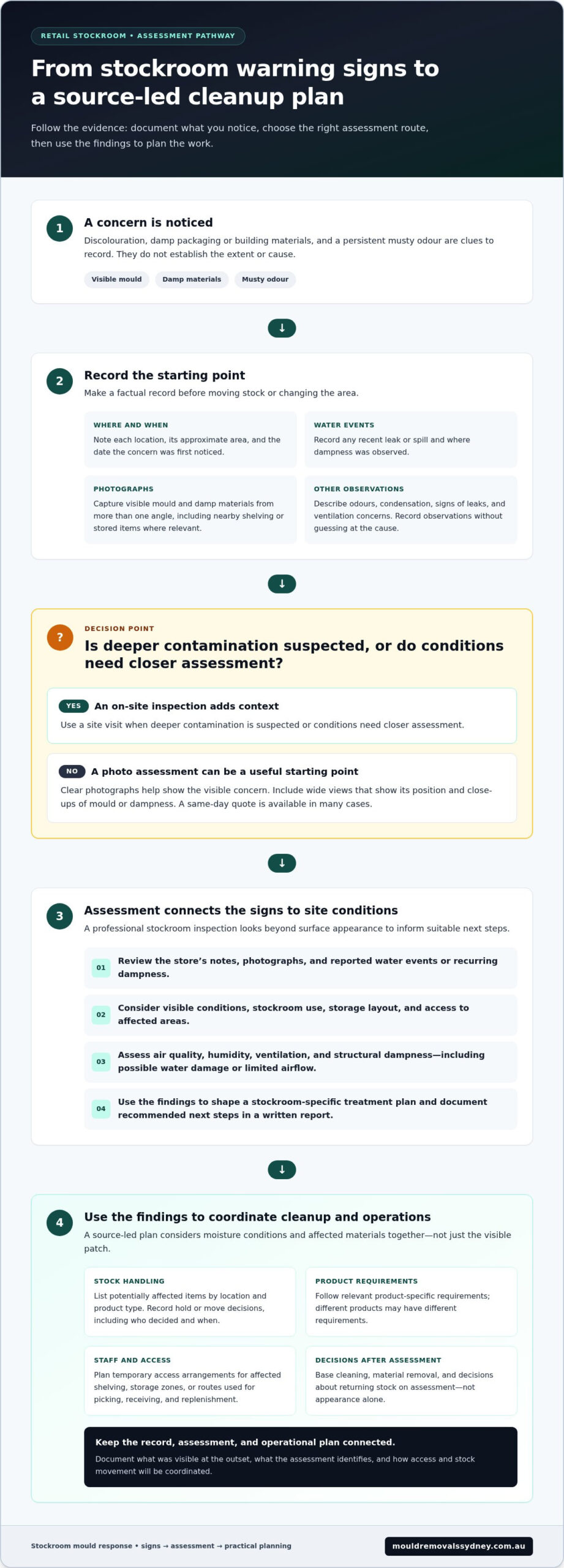
Make a clear record before moving stock or changing the area. It helps focus the inspection and gives the business a reference as decisions are made.
- Note each affected location, its approximate area, and the date the concern was first noticed.
- Record any recent water event, such as a leak or spill, and where dampness was observed.
- Photograph visible mould and damp materials from more than one angle, including nearby shelving or stored items where relevant.
- Describe persistent odours, condensation, signs of leaks and ventilation concerns. Keep observations factual rather than guessing at a cause.
Keep the notes and images together. This record helps distinguish what was visible at the outset from what an inspection identifies.
How can mould affect stockroom operations?
Affected shelving, storage zones or access routes can complicate picking, receiving and replenishment. Managers may need to plan temporary access arrangements so staff can continue routine work without disturbing the area unnecessarily. Identify potentially affected items, but don’t label them safe or unsalvageable based on appearance alone.
- List potentially affected stock by location and product type.
- Record decisions to hold or move items, including who made the decision and when.
- Follow relevant product-specific requirements when assessing inventory. Requirements differ by product, so avoid treating all stock as one category.
These are preparation steps, not removal instructions. Keep documentation and access planning separate from decisions about cleaning, discarding materials or returning stock to the area. Base those decisions on an assessment of moisture conditions and affected materials. This gives the business a clearer basis for coordinating stock handling and cleanup, without assuming that a visible patch tells the whole story.
How a professional stockroom mould inspection finds the source
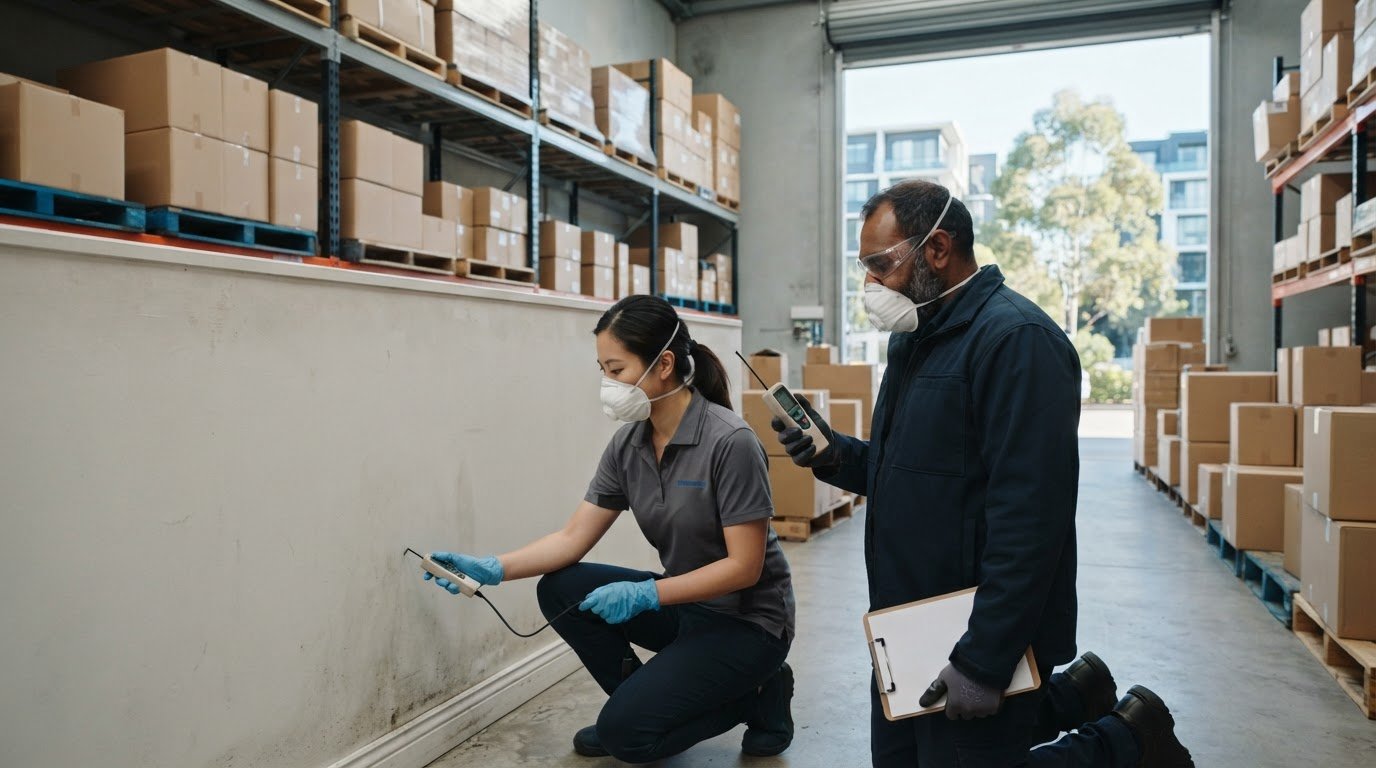
A stockroom inspection should do more than confirm that a visible mark is present. It connects observed mould and dampness with the conditions that may be sustaining them, then informs practical next steps for the premises. For retail store stockroom mould cleanup, assess the space before deciding what needs treatment, what access is required and how store operations can be managed.
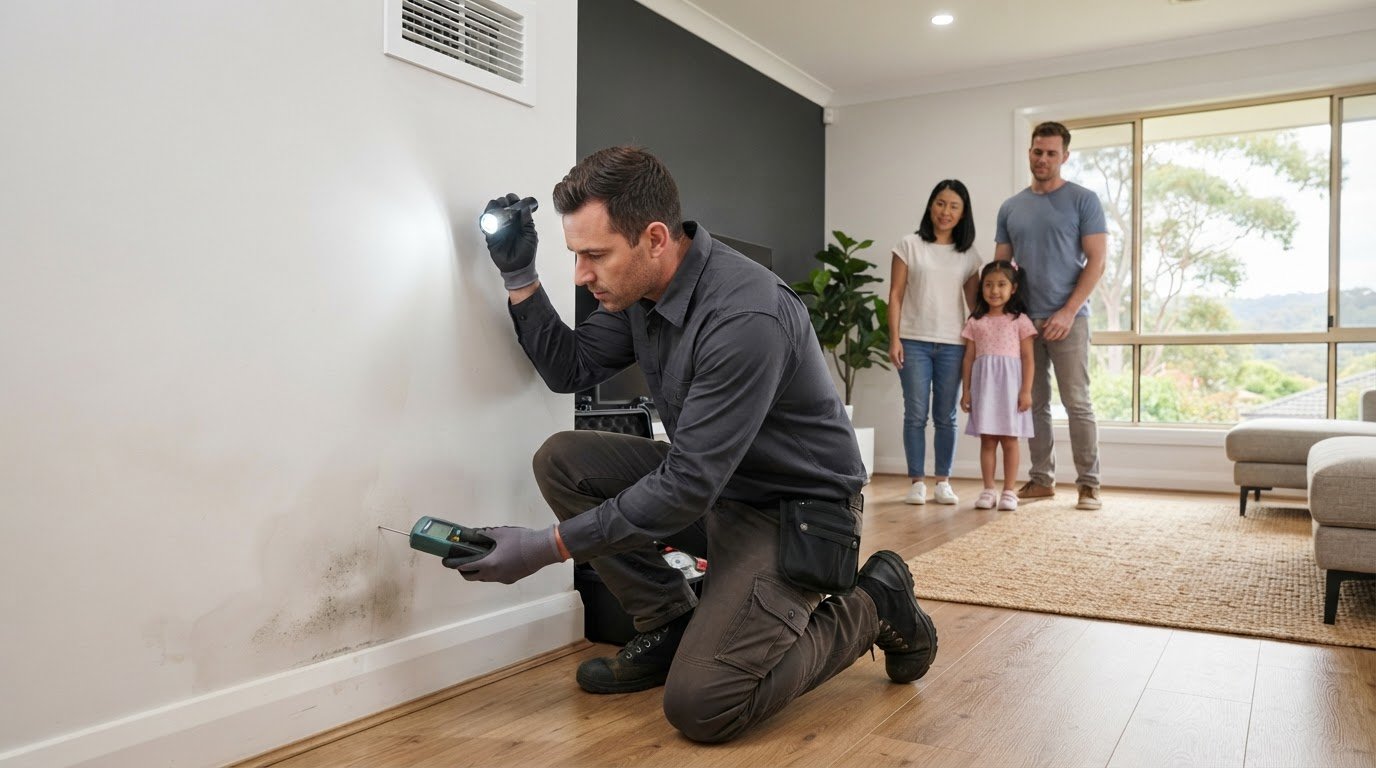
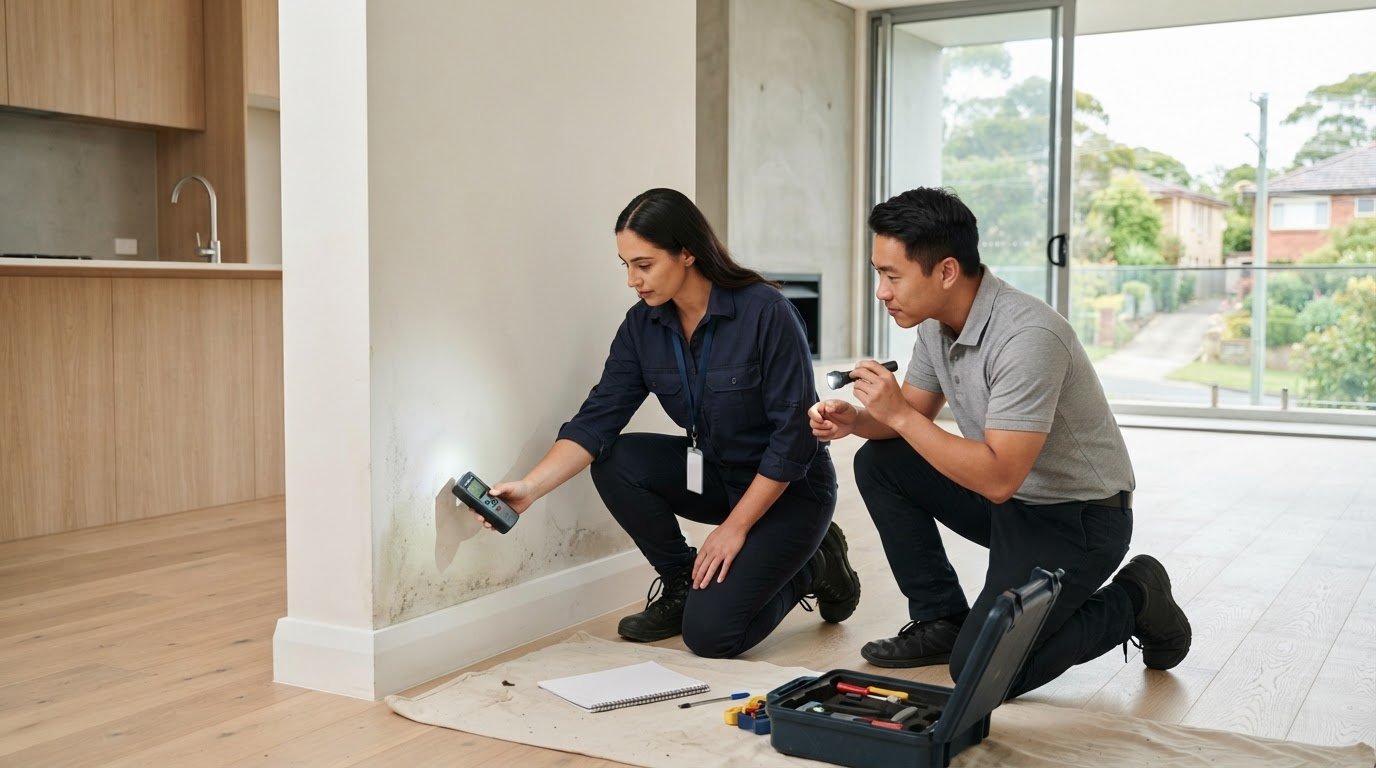
A mould inspection assesses air quality, humidity, ventilation and structural dampness to inform a suitable cleanup plan. It can also help identify hidden moisture and contamination.
- Document the concerns. Review the locations, photographs and notes supplied by the store, including any reported water event or recurring dampness.
- Assess the site. Consider visible conditions alongside how the stockroom is used, its storage layout and access to affected areas.
- Identify moisture conditions. Assess humidity, ventilation and structural dampness, including possible contributors such as water damage or limited airflow.
- Plan appropriate work. Use the findings to shape a stockroom-specific treatment plan and explain the recommended next steps in a written report.
What does a stockroom mould inspection assess?
ABC’s inspection considers air quality, humidity, ventilation and structural dampness. These factors build a clearer picture than surface appearance alone. For example, dampness near a wall may call for assessment of water damage, while recurring condensation may prompt closer attention to ventilation. The findings guide a tailored treatment plan and are documented in a written report, giving managers a practical basis for coordinating access and operations.
For broader planning context, the EPA guidelines for commercial mold remediation discuss assessment and remediation planning in commercial buildings. They can complement an assessment of the specific stockroom and its conditions.
When is a photo assessment or site visit useful?
Clear photographs help ABC understand the visible concern and provide a same-day quote in many cases. Include wide views showing the affected area’s position, as well as close-ups of visible mould or dampness. A photo assessment is a useful starting point. When deeper contamination is suspected or conditions need closer assessment, an on-site inspection provides additional context.
A quote based on photographs helps scope proposed work from the information available. An inspection assesses property conditions that inform the cleanup plan. Providing both a photo assessment and an on-site inspection where needed helps connect the proposed work to the stockroom’s conditions, rather than basing it only on the size of a visible patch.
If the assessment indicates mould removal is needed, ABC’s Sydney mould remediation service provides a practical next step. The inspection findings connect the site’s moisture conditions with the proposed work, helping managers plan treatment-area access and stockroom operations.
Surface cleaning or source-led mould remediation: what a stockroom needs
A visible mark is only one part of the picture. In a stockroom, the right response depends on which materials are affected, whether moisture remains and whether the work needs to address conditions beyond the surface. Wiping away discolouration changes what you can see, but it doesn’t assess moisture conditions or airborne contamination. This comparison explains the different roles of surface cleaning, moisture-source correction and professional remediation.
| Approach | What it addresses | What it doesn’t establish on its own |
|---|---|---|
| Visible surface cleaning | Visible marks on an accessible surface. | Whether dampness remains, which materials are affected, or whether contamination extends beyond the visible area. |
| Moisture-source correction | The dampness or water-related condition contributing to the problem. | Whether mould already present on affected surfaces or other materials has been addressed. |
| Professional remediation | An assessed response that considers affected surfaces, moisture conditions and the work needed for the specific stockroom. | It doesn’t replace managing the moisture source. Inspection findings guide the scope of appropriate work. |
These approaches serve different roles. For retail store stockroom mould cleanup, a source-led plan considers them together rather than treating a clean-looking patch as proof that the issue is resolved. The professional mould removal guidance provides broader context for the service and its role in addressing affected areas.
What can surface cleaning address, and what does it leave unanswered?
Cleaning may deal with a visible mark on an accessible surface, but discolouration alone can’t show how far dampness extends or which materials need attention. While standard commercial janitorial teams such as Valley Clean are vital for day-to-day facility maintenance and surface hygiene, managers must assess deeper moisture conditions and affected materials before addressing suspected mould. This helps avoid confusing an improved appearance with a complete assessment or assuming that one cleaning action will prevent mould from returning.
How do removal, air purification, and water restoration differ?
Each service addresses a distinct part of the problem. Mould Removal treats affected surfaces using the Goldmorr System, applied only by Goldmorr-approved and trained master technicians. Air Purification and Mechanical Air Scrubbing address airborne contaminants; air scrubbing uses a non-mechanical fogging technique. Water Damage Restoration addresses water-affected areas that may contribute to mould development. An inspection helps determine which work fits the stockroom’s conditions. All treatments are safe for pets, people, and the environment.
Think of these services as complementary, not interchangeable. Surface treatment does not correct a water source, while water restoration alone does not address mould on affected surfaces. A clear scope links the observed conditions to the work proposed, helping managers plan stockroom access and operations around the response.
How to prepare a retail stockroom for mould cleanup
Preparation helps ABC understand the affected area and lets managers plan around receiving, picking and staff access. Start by recording what’s known, coordinating stock movement and planning access. Leave decisions about treatment and specific products until the conditions have been assessed. This makes retail store stockroom mould cleanup easier to organise without disrupting more of the stockroom than necessary.
What should staff do before the inspection?
Build a concise record and keep it available for the inspection. Include affected locations, when changes were noticed, what has changed since, and any known leak, spill or other water event. Keep photographs and relevant maintenance information together so the inspection can consider the history alongside current conditions.
- Organise the information. Group notes and photographs by stockroom location. Include relevant maintenance records or details of reported water events.
- Plan access. Identify the route to the affected area and nearby storage zones that may need assessment.
- Coordinate stock movement. Discuss with ABC’s team what stock may need to be moved and how the treatment area should be accessed. Avoid disturbing affected areas unnecessarily while arranging this.
- Keep inventory decisions separate. Record potentially affected items, but don’t decide that products are safe or must be discarded based only on nearby mould. Follow relevant product-specific requirements when making stock decisions.
Share the plan with staff involved in stock handling so everyone understands which areas are under assessment and how routine tasks will be coordinated. This supports business continuity without turning preparation into an unassessed cleanup.
How can a business reduce the chance of recurring damp?
Once the moisture conditions are understood, use the findings to guide follow-up. Prioritise repair and drying of water-affected areas where required, then review ventilation or humidity concerns noted during the inspection. Addressing contributing conditions helps manage the risk of recurring damp, while ongoing moisture can allow mould to return.
- After a leak or water event: keep a record of the affected area and the response. Sydney water damage repair guidance offers context for dealing with water-affected areas.
- For ongoing dampness concerns: use inspection findings to guide attention to ventilation and humidity. General mould and damp prevention guidance can provide further background.
For a stockroom-specific plan, arrange a commercial mould inspection and use the findings to coordinate access, moisture management and next steps for affected areas.
ABC Mould Cleaning Solutions: a clear Sydney stockroom cleanup pathway
A mould concern shouldn’t leave your team guessing about the next step. ABC Mould Cleaning Solutions provides a practical pathway for Sydney businesses, connecting inspection findings with a stockroom-specific plan. The work may involve inspection, mould removal, air purification and, where water has affected the area, water damage restoration. The assessment guides the scope, and a written report documents the findings and proposed work.
What does ABC’s stockroom service pathway involve?
Call, Quote, Results. Start by describing the stockroom concern and sharing relevant details or photographs. The assessment informs a tailored treatment plan, which may include mould removal using the Goldmorr System and air purification where appropriate. If water damage needs attention, water damage restoration can address affected areas as part of the broader response. The Goldmorr Group has supplied mould-removal solutions since 1998. Goldmorr products are applied only by Goldmorr-approved and trained master technicians.
Air purification and mould removal have distinct roles, and neither replaces attention to water-affected areas where restoration is required. ABC provides a written report to document findings and proposed work, giving business managers a record to support operational planning. All treatments are safe for pets, people, and the environment.
How can a Sydney business request a quote?
Call 0488 866 853 to discuss the stockroom, or submit clear photographs for assessment. Include views that show the affected area in context as well as close-ups of visible mould or dampness. A photo assessment can provide a same-day quote in many cases. An on-site inspection can assess property conditions when a closer assessment is appropriate.
The inspection findings and written report clarify the recommended scope and next steps. Optional mycotoxin testing referrals are also available where relevant. This gives managers a clear basis for coordinating treatment-area access and considering how the work fits with stockroom operations.
For retail store stockroom mould cleanup, a clear assessment is a useful starting point when visible mould, dampness or possible water damage raises questions about the right response. ABC’s process moves from an initial concern to a quote and a plan guided by the conditions identified.
We Will Beat Any Written Quote By 10%.
Request a same-day stockroom mould quote by sharing photos for assessment or calling 0488 866 853.
Take the next step towards a workable stockroom plan
Mould in a trading environment can make routine decisions feel difficult, especially when staff need access and stock must keep moving. The most useful next step is to turn uncertainty into a clear plan: understand the affected area, coordinate access and make decisions based on property findings rather than appearance alone. That gives your team a practical way to approach retail store stockroom mould cleanup while keeping operations in view.
You don’t need to resolve every question before taking action. Start with the information you have, then use a professional assessment to clarify what needs attention and how the work can fit your stockroom. A considered response helps your business move forward with greater confidence.
Discuss a practical next step for your stockroom with ABC Mould Cleaning Solutions. Call 0488 866 853 to get started.
Frequently Asked Questions
Can a mould cleanup quote for a retail stockroom be provided from photos?
Yes, clear photos can support ABC’s assessment and provide a same-day quote in many cases. Include a wide view showing where the area sits, plus close-ups of affected surfaces. Add a brief description of the locations, any known water events and access conditions, such as tightly packed shelving. Photos help with an initial assessment. An on-site inspection is available if deeper contamination is suspected.
What does a commercial mould inspection in Sydney include?
A commercial mould inspection in Sydney assesses air quality, humidity, ventilation and structural dampness. It considers signs that may point to hidden moisture or contamination. In a stockroom, the findings help clarify whether a concern appears localised or may need broader attention. ABC documents the assessment in a written report and uses the findings to shape a tailored treatment plan.
Is the Goldmorr System safe for people, pets, and the environment?
Yes. All treatments are safe for pets, people, and the environment. The Goldmorr System uses a biodegradable fogging process and may only be applied by Goldmorr-approved and trained master technicians. For a retail setting, managers can share relevant access and operating information during planning so the treatment approach fits the stockroom’s use. Follow the site-specific guidance provided for the assessed area.
What is the difference between mould removal and air purification in a stockroom?
Mould Removal addresses mould on affected surfaces using the Goldmorr System, while Air Purification addresses airborne mould spores, allergens and contaminants. These services have different roles, so one shouldn’t be assumed to cover every stockroom concern. A manager may be concerned about visible growth on a wall as well as air quality in the surrounding area. Inspection findings help determine the appropriate treatment scope.
Should a retailer move stock before mould cleanup begins?
Not automatically. Before retail store stockroom mould cleanup begins, document potentially affected items and coordinate stock movement and treatment-area access with ABC’s team where practical. The right arrangement depends on the affected area and inspection findings. Don’t judge whether a product is safe, contaminated or suitable for sale based only on appearance or proximity to mould. Record inventory decisions and follow relevant requirements for each product type.
Can mould return after a stockroom has been cleaned?
It can, depending on moisture conditions, ventilation and whether water damage remains unresolved. That’s why a cleanup plan should consider the source of dampness as well as visible mould. Water-affected areas may need repair and drying as part of the response. Use the inspection’s recommendations to guide moisture management and follow-up if dampness or mould reappears.
Does ABC Mould Cleaning Solutions offer mycotoxin testing?
ABC offers mycotoxin testing referrals as an optional service. Retailers can discuss whether a referral is relevant to the concerns identified during a stockroom assessment. Testing isn’t required for every inspection and isn’t included in every assessment. Describe the specific concern and area involved so the discussion can focus on the property findings and appropriate next steps.