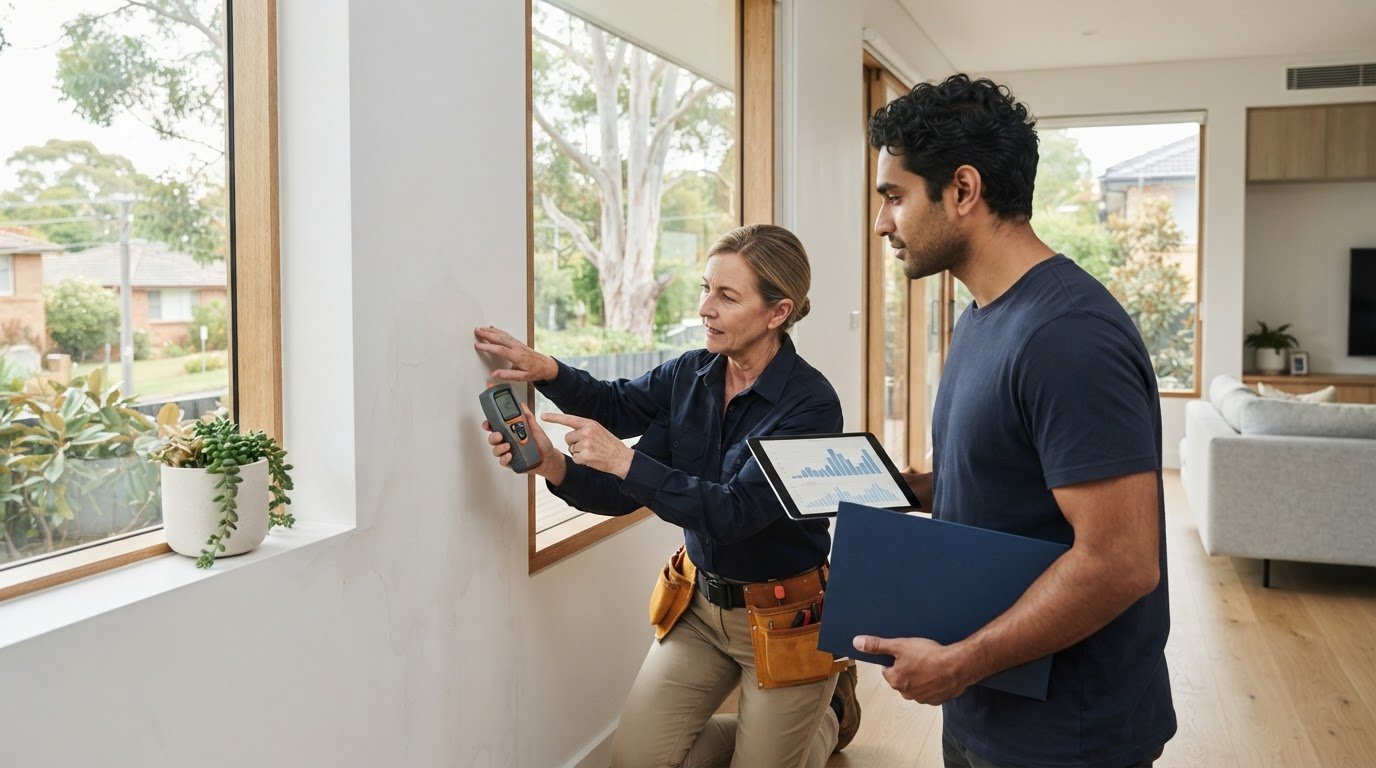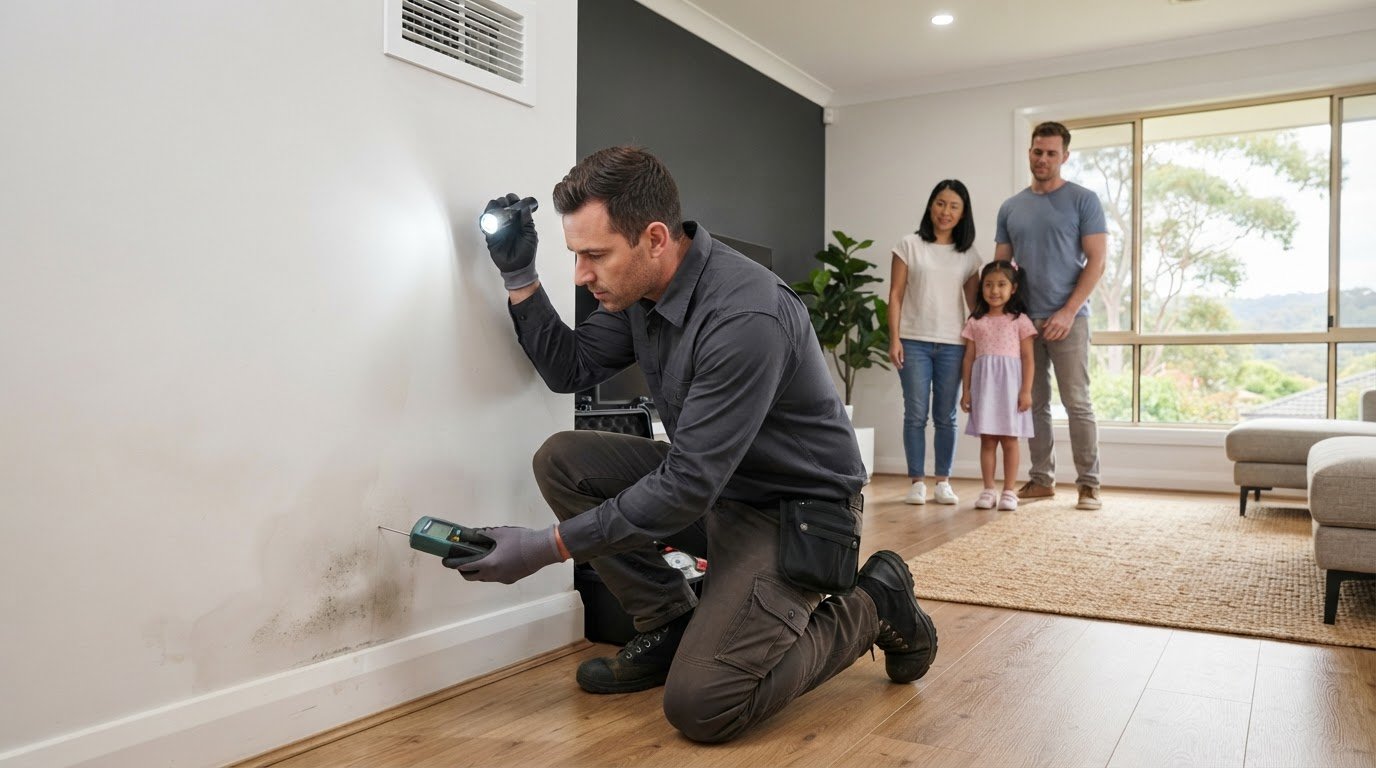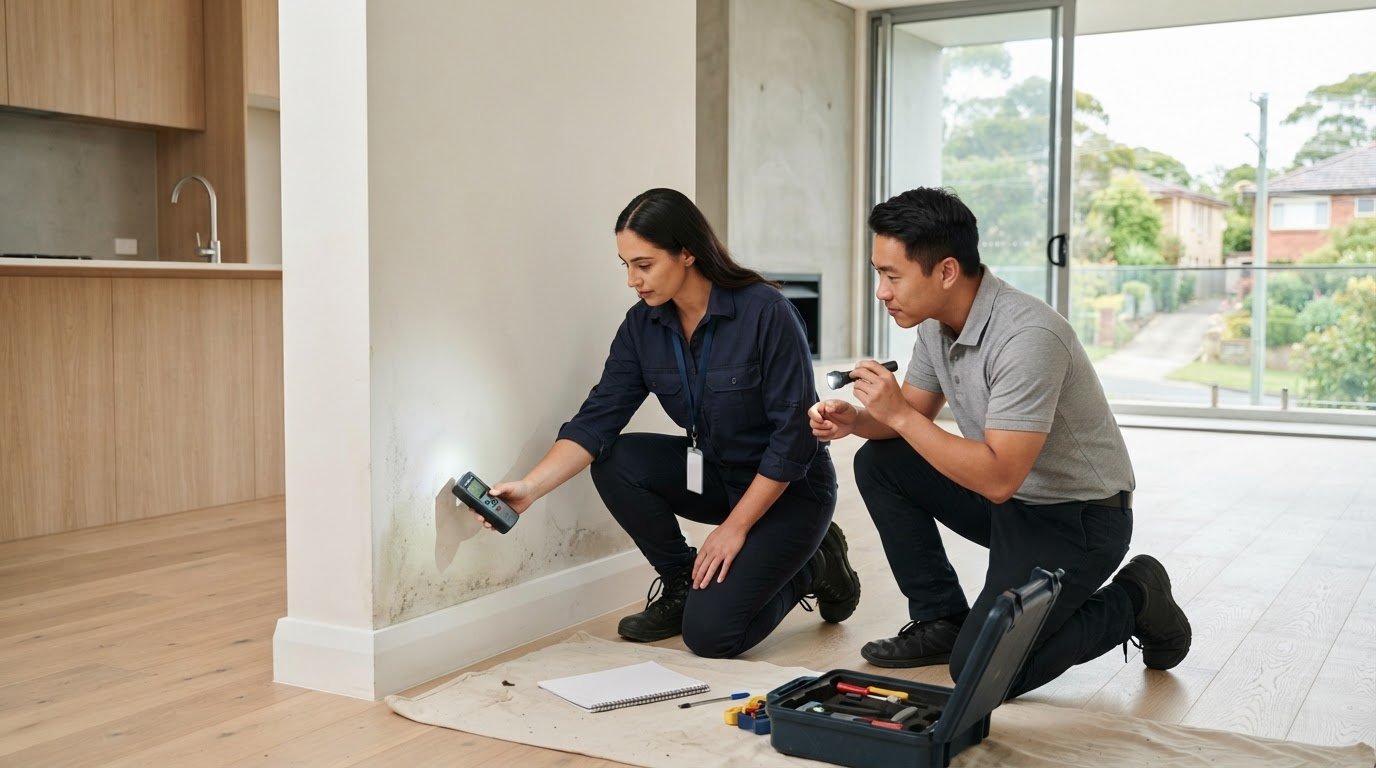
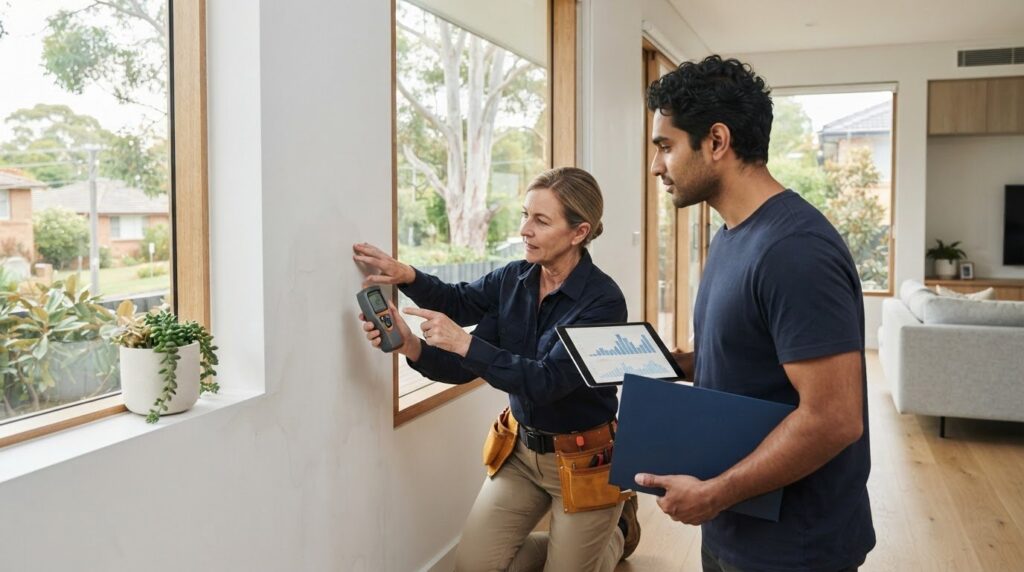
What if visible mould is a clue to a moisture problem, but not proof of who caused it? In a new home, staining, musty smells or recurring mould can be worrying. A new home mould inspection Sydney homeowners arrange can assess conditions behind the concern and give you a clearer record, without jumping to conclusions about the builder.
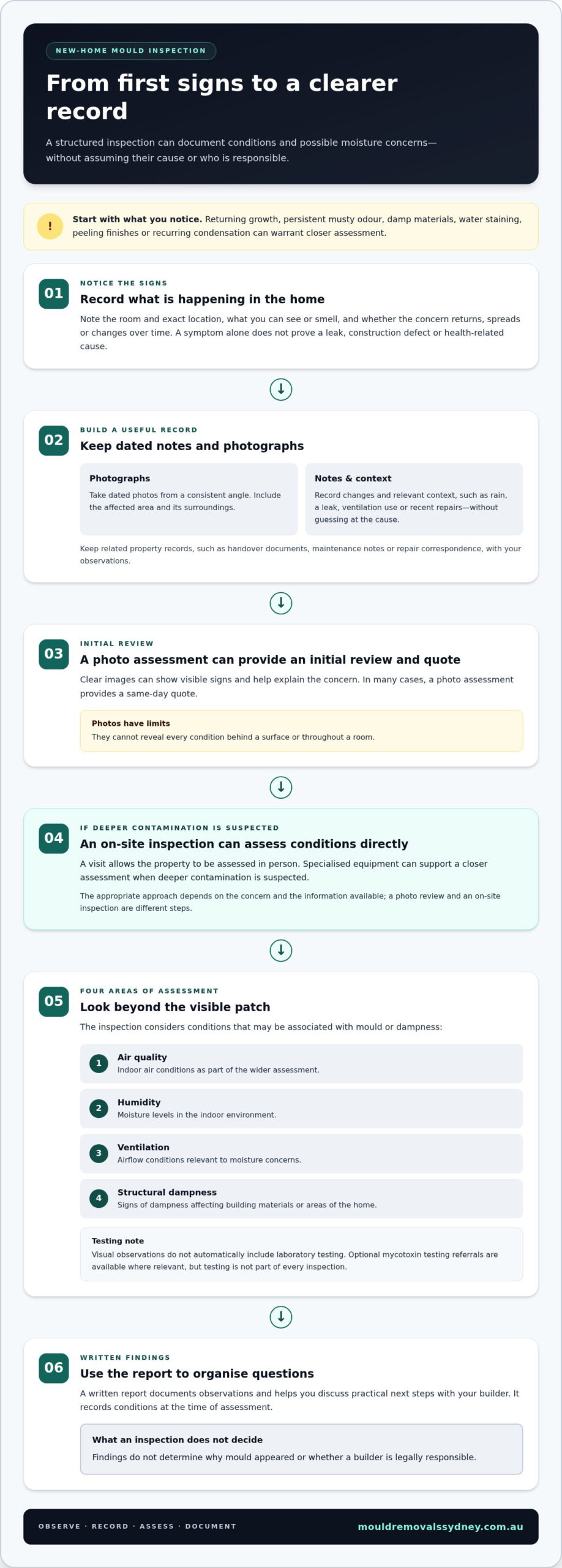
It’s understandable to want clear information before raising the issue. An inspection assesses air quality, humidity, ventilation and signs of structural dampness. A photo assessment can provide an initial review and quote. If deeper contamination is suspected, an on-site inspection with specialised equipment can investigate further. A written report documents findings and helps you organise questions, but it doesn’t decide legal responsibility.
This guide explains when to arrange an inspection, what it can and can’t establish, and how to keep useful observations, including dates, locations and changes over time. You’ll also learn how to discuss findings with your builder and consider next steps without assuming the cause or liability.
Key Takeaways
- A new home mould inspection Sydney homeowners arrange can assess moisture and ventilation concerns, even in a recently built property.
- An inspection assesses air quality, humidity, ventilation and structural dampness. Specialised equipment is used for an on-site assessment when deeper contamination is suspected.
- Keep dated photos and notes about affected rooms and changes over time to create a clearer record of the concern.
- Inspection findings document observed conditions and possible moisture concerns. They don’t determine whether a builder is legally responsible.
- A written report can help you organise questions and discuss practical next steps with your builder.
Why arrange a new home mould inspection in Sydney?
Finding mould or dampness soon after moving into a newly built home can leave you wondering what needs attention. A new build isn’t immune to moisture or ventilation concerns. If signs return after cleaning, spread to another area or appear alongside damp materials, an inspection can document what’s happening and assess conditions in the home.
An inspection records observed conditions and possible moisture concerns at the time of assessment. It can give you a clearer basis for deciding what to raise with your builder, but a symptom alone doesn’t establish its cause or who is responsible. For background on how indoor mould can relate to moisture, see this overview of Indoor mold.
Consider arranging a new home mould inspection Sydney homeowners can use to assess concerns such as:
- Growth that returns after cleaning or appears in more than one area.
- A musty odour that persists, even when mould isn’t visible.
- Damp materials, unexplained water staining or finishes that begin peeling.
- Condensation that repeatedly appears on windows, walls or other surfaces.
Which signs in a new home warrant closer assessment?
Document any visible patch, especially if growth returns or signs appear in several rooms. These patterns may indicate a broader moisture concern that deserves closer assessment. Record dampness, water staining, peeling paint or other finishes, and musty odours. Note the exact location and whether each sign changes. These observations help explain the issue clearly, but none, by itself, proves there’s a leak, construction defect or health-related cause.
Don’t dismiss a recurring sign because the home is new. Moisture may not be visible at the surface, and ventilation conditions can vary between rooms. An inspection can assess the conditions present, including possible hidden moisture concerns, without treating an initial symptom as a diagnosis.
Why timing and records matter after moving in
Start a simple record as soon as you notice a concern. Take dated photographs from a consistent angle, and write down the room, exact location, appearance and any odour or dampness. If a sign disappears and returns, record both occasions. A timeline makes it easier to explain whether the issue is isolated, recurring or changing across different areas of the home.
Add relevant context without guessing at the cause. Note whether the concern appeared after rain, a leak, a change in ventilation use or recent repairs. Keep related property records, such as handover documents, maintenance notes or repair correspondence, with your observations. This information helps an inspector understand what you’ve seen and when. It also helps you describe the conditions accurately when discussing them with your builder, without assigning fault before the evidence has been assessed.
If you’re unsure whether a mark is mould or whether a damp smell is significant, record what you can and arrange an assessment rather than relying on appearance alone. Prompt, factual notes preserve useful detail and keep the next conversation focused on what you observed.
What does a new home mould inspection in Sydney assess?
A new home mould inspection Sydney homeowners arrange is a structured assessment of conditions that may be associated with mould or dampness. It looks beyond a visible patch to consider the environment around it. A mould inspection assesses air quality, humidity, ventilation, and structural dampness. These areas help build a clearer picture of conditions in the home, but they aren’t a legal conclusion about why mould appeared.
ABC Mould Cleaning Solutions assesses these four areas using observations and, where appropriate, specialised equipment during an on-site inspection. The approach depends on the concern and whether deeper contamination is suspected. Visual observations document what can be seen; they don’t automatically include laboratory testing. Optional mycotoxin testing referrals are available where relevant, but testing isn’t part of every inspection.
- Air quality: Assesses indoor air conditions as part of the wider mould inspection.
- Humidity: Considers moisture levels in the indoor environment.
- Ventilation: Looks at airflow conditions that may be relevant to moisture concerns.
- Structural dampness: Assesses signs of dampness affecting building materials or areas of the home.
For example, visible growth near a window and recurring condensation elsewhere are separate observations. Assessing the broader conditions can help identify related moisture or ventilation concerns that merit further attention.
Photo assessment or on-site inspection: what is the difference?
A photo assessment lets you share images for an initial review and quote. Include clear views of the affected area and its surroundings so the concern is easier to assess. In many cases, a photo assessment provides a same-day quote. If deeper contamination is suspected, an on-site inspection with specialised equipment can support a closer assessment of conditions in the home.
These are different steps, not interchangeable promises. Photographs can show visible signs, but they can’t reveal every condition behind a surface or throughout a room. An on-site visit allows the property conditions to be assessed directly. The appropriate approach depends on the images and concerns you share.
What can a written inspection report help clarify?
A written report organises inspection observations, the conditions assessed and recommendations for next steps. It gives you a clear record to refer to when discussing the concern with your builder. The report describes findings at the time of assessment; it doesn’t determine legal responsibility or guarantee that every hidden condition has been identified.
Keep the report with your dated photographs, notes and relevant property records. This makes it easier to compare the inspection findings with what you observed and prepare focused questions. ABC’s mould inspection services can help document conditions and clarify practical next steps.
Can a mould inspection determine builder liability?
No. A mould inspection documents conditions; it doesn’t itself determine legal responsibility. A new home mould inspection Sydney homeowners arrange can record visible mould, dampness and relevant conditions at the time of assessment. It may identify a possible moisture source, but that observation alone doesn’t prove who caused it or whether it relates to a building defect.
Keep four questions separate: what mould or damage is visible, what conditions were assessed, what moisture sources may be relevant, and who may be responsible. The last question may depend on more than an inspection. Building history, handover records, repair documents, communications and applicable legal requirements can all be relevant. An inspection report can inform a discussion, but it isn’t a legal finding.
Inspection findings versus a legal conclusion
The distinction matters. A report can explain what was observed and assessed, while legal responsibility involves a separate evaluation of evidence and applicable law. A possible source identified during an inspection is a lead to consider, not automatic proof of its origin or cause.
| What an inspection can record | What it cannot decide by itself |
|---|---|
| Visible mould, staining, dampness or affected areas observed during assessment. | Whether a builder, homeowner or another party is legally responsible. |
| Assessed conditions such as humidity, ventilation and structural dampness. | Whether a condition amounts to a legal defect or breaches a requirement. |
| A possible moisture source or conditions that may warrant further attention. | Who caused the source, when it began, or what remedy someone is entitled to. |
For example, an inspection might note dampness near a wall and describe a possible moisture pathway. That finding can help focus further questions, but it doesn’t establish whether the condition arose during construction, from later damage or from another factor. If you need advice about legal rights, responsibility or a dispute, speak with an appropriately qualified legal professional. Don’t rely on an inspection report alone for legal conclusions.
How to raise documented concerns with a builder
Keep your first communication clear and factual. Describe the concern, where it appears and when you noticed it. Attach dated photographs and a concise timeline, then refer to relevant findings in the inspection report without presenting a possible cause as proven.
Keep copies of what you send and receive, along with repair records and follow-up observations. If work is carried out, record what was done and when, then note whether the visible condition changes or returns. An organised record helps everyone refer to the same information and keeps the discussion focused on what has been observed, assessed and documented. It also leaves room to consider further evidence or advice before drawing conclusions about responsibility.
How to prepare for a new home mould inspection in Sydney
A little preparation helps make an inspection more focused and useful. Gather what you’ve observed, when it appeared and any records that may provide context. For a new home mould inspection Sydney homeowners can prepare by following a simple sequence:
- Document the signs. Photograph each affected area, including a wider view that shows where it is in the room.
- Note dates and changes. Record when you first noticed the issue, whether it returns and how it changes over time.
- Gather relevant records. Collect handover documents, maintenance and repair records, and correspondence about the property or concern.
- Arrange an assessment. Share a concise description of the affected rooms and the signs you’ve noticed.
- Organise the findings. Keep the inspection report with your photographs, notes and property records.
This sequence helps you give a clear account without trying to diagnose the cause. Keep observations factual. For example, write “damp patch appeared on the bedroom wall after rain” rather than concluding that a particular building component is faulty. The inspection can then assess conditions with your observations as context.
What to record before the inspection
Take clear photos of each affected area and its wider room context. Note dates, musty odours, dampness, visible changes and known water events, such as a leak or heavy rain. Identify every room involved, including areas where signs disappeared and later returned. Bring relevant building, handover, maintenance and repair documents, along with correspondence that helps explain the timeline.
Keep the information easy to follow. A short timeline can show whether signs appeared once or repeatedly, and whether they changed after a known event or repair. Avoid editing photographs in a way that alters what they show. If you’re sending images for an initial photo assessment, choose clear, well-lit views and include more than one angle where useful.
What to ask during the assessment
Ask which rooms and conditions were assessed, what the observations indicate, and whether the findings suggest further assessment, moisture correction or mould remediation. Clarify any limits of the assessment so you understand what the report can and can’t establish. Request the written report, then store it with your dated photos and notes for future reference.
After the assessment, organise the report and your records by date. Keep follow-up observations and repair information together so you can compare later changes with the conditions documented during the inspection. This creates a practical record for discussions about next steps without assuming a cause or legal responsibility.
If you’re ready to arrange an assessment, send photos for an initial review and request a same-day quote. A photo assessment provides a same-day quote in many cases. Request a same-day quote by photo assessment to take the next practical step.
Arrange a new home mould inspection with ABC in Sydney
If you’ve noticed mould, dampness or unexplained condensation in a recently built home, ABC Mould Cleaning Solutions can assess the conditions and document what’s observed. The inspection covers air quality, humidity, ventilation and structural dampness, helping you understand the property findings before deciding what to raise with your builder. A new home mould inspection Sydney homeowners arrange assesses conditions; it doesn’t decide legal responsibility.
ABC offers photo assessment for an initial review and quote. Clear images of affected areas can help explain what you’ve noticed, and a same-day quote is available in many cases. If deeper contamination is suspected, an on-site inspection using specialised equipment is available. The inspection can include a written report that records findings and helps you organise practical next steps.
From inspection to practical next steps
ABC’s process is designed to be straightforward: Call, Quote, Results. Share the concern and relevant photos, receive a quote, then use the assessment findings to consider what may need attention. Keep your observations and property records together so you can refer to them when reviewing the report or discussing the issue with your builder.
If mould removal is relevant after assessment, ABC’s mould-removal approach uses the Goldmorr System. Goldmorr products are applied only by Goldmorr-approved and trained master technicians. Goldmorr Group has supplied mould-removal solutions since 1998. All treatments are safe for pets, people, and the environment. Inspection and removal are distinct steps: an assessment documents conditions, while treatment responds to the findings and needs of the property.
For mould removal, the air-scrubbing method is a non-mechanical fogging technique. The inspection findings help clarify whether further assessment, moisture correction or remediation is relevant. Optional mycotoxin testing referrals are available where appropriate. Testing isn’t implied as part of every inspection.
Request a same-day quote or speak with the team
To make the initial review useful, describe which rooms are affected and whether signs recur or change. Send clear photos showing both the concern and its location in the room. Photo assessment can provide a same-day quote in many cases, giving you a practical way to begin without assuming the cause.
We Will Beat Any Written Quote By 10%. To discuss a new home mould inspection in Sydney, request a free quote or call ABC Mould Cleaning Solutions on 0488 866 853.
Take the next step with clear information
Once you’ve documented the concern, decide what you need from the next conversation. You might want to understand what conditions were observed, whether further assessment is appropriate or what information would help clarify the moisture concern. Focusing on these questions can make it easier to move forward without treating an early suspicion as a proven cause.
A new home mould inspection Sydney homeowners arrange can be one practical step towards a clearer picture. Keep your notes and communications together as the situation develops, and consider qualified legal advice if you need guidance about responsibility or your rights. You don’t have to settle every question at once. Start with the evidence available and take the next step that fits your circumstances.
For help getting started, request a free mould inspection quote or call ABC on 0488 866 853. A clear first step can make the path ahead feel more manageable.
Frequently Asked Questions
Can a mould inspection prove that a builder is responsible?
No. An inspection can document what was observed and assessed, but it can’t decide who is legally responsible. For example, a report may note dampness near a wall without establishing when it began or what caused it. Building history, handover documents, repair records and applicable legal requirements may also be relevant. Treat inspection findings as technical information to help organise further questions, not as a legal conclusion about responsibility.
What does a new home mould inspection include?
A new home mould inspection assesses air quality, humidity, ventilation and structural dampness. The assessment considers conditions relevant to the concern, such as whether dampness appears confined to one area or occurs alongside ventilation issues. If deeper contamination is suspected, an on-site inspection with specialised equipment is available. The inspection scope depends on the situation, so don’t assume that every assessment includes laboratory testing or sampling.
Can I get a same-day mould inspection quote in Sydney from photos?
Yes. A photo assessment can provide a same-day quote in many cases. Share clear images that show the visible concern and enough surrounding context to identify its location, such as a wall corner or ceiling area. Include a short note describing what you’ve noticed. Photos support an initial assessment, but they don’t replace a site visit when deeper contamination is suspected. An on-site inspection with specialised equipment is available for those concerns.
Should I contact the builder before arranging a mould inspection?
You can first document what you’ve observed, including where it appears and the dates you noticed it, then decide how to proceed. There’s no universal sequence because circumstances differ. An inspection can provide a clearer record of assessed conditions to inform a discussion with the builder. Keep communication factual and avoid presenting an unverified cause as established. For questions about legal rights or obligations, seek appropriately qualified advice.
Does a mould inspection include mycotoxin testing?
Not automatically. A mould inspection assesses property conditions, while mycotoxin testing is a separate consideration. Optional mycotoxin testing referrals are available where relevant, but a referral doesn’t mean testing is included in every inspection. If you’re considering testing, describe the concern and ask what the inspection can assess and what a referral involves. Keep the assessment findings distinct from any separate test results.
Is mould treatment safe for pets, people, and the environment?
Yes. All treatments are safe for pets, people, and the environment. If mould removal involves the Goldmorr System, Goldmorr products may only be applied by Goldmorr-approved and trained master technicians. Let the team know about household considerations, such as pets or areas that need attention, so they can explain the treatment process relevant to the property. An inspection and treatment are distinct steps, and the appropriate response depends on the findings.
What should I keep after a mould inspection in a new home?
Keep the written report alongside dated photographs, your notes and relevant property records. Add handover documents, repair records and communications with the builder so the information stays together in one place. A simple date-based folder can make it easier to track whether a concern changes after an event or repair. Preserve original photos and messages where possible. These records help you describe events consistently, but they don’t determine legal entitlements or responsibility.