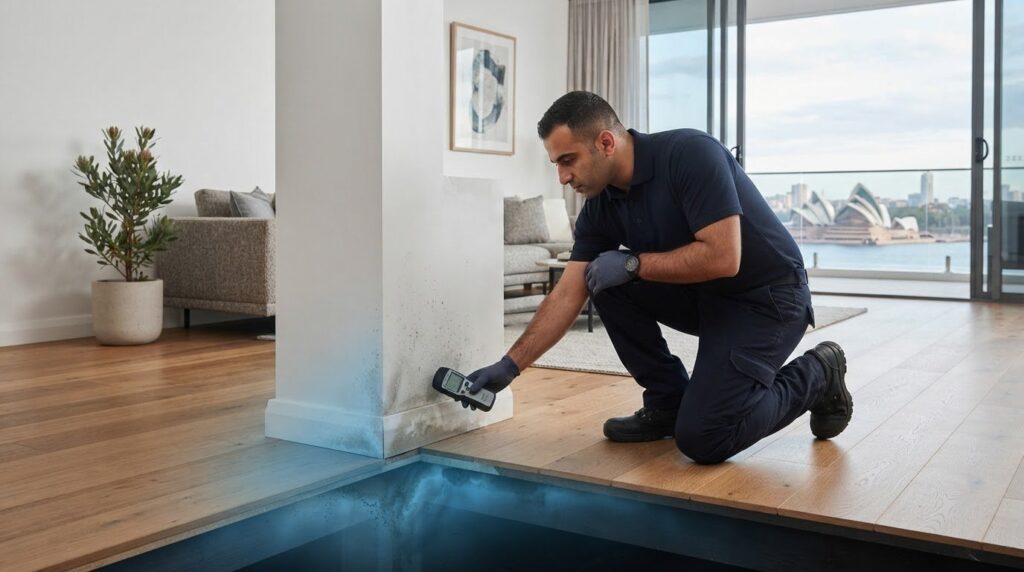
A small damp patch may be only the visible part of a leak affecting a wall, floor or subfloor. Moisture can spread beyond the area you can see, and water-affected materials that remain damp may develop mould. If you’re unsure what has been affected or what to do next, water damage restoration Sydney specialists can assess the visible signs and help plan recovery.
Before walls or flooring are disturbed, it helps to understand the likely scope of the damage. An assessment can consider structural dampness, humidity and ventilation, then guide drying and repair of water-affected areas. Mould inspection is related but distinct: it assesses mould concerns and the moisture conditions that may contribute to them.
This guide explains what signs to look for, what an assessment and restoration process may involve, and how to take a practical next step. You’ll also learn what to include in a photo assessment request. ABC Mould Cleaning Solutions provides photo-assessment quotes, with same-day quotes available for many cases, and on-site inspections when deeper contamination is suspected.
Key Takeaways
- Water marks, persistent dampness and musty odours can point to moisture hidden behind visible surfaces, but they don’t confirm the source or extent.
- An assessment considers visible signs alongside humidity, ventilation and structural dampness to help identify affected areas and plan restoration.
- Restoration addresses water-affected parts of the property. Repairing the source of the water is separate work.
- Prepare useful details by noting when signs appeared, which rooms are affected and any known water event. Take clear photos only from safe areas.
- ABC Mould Cleaning Solutions provides water damage restoration in Sydney and surrounding areas, as well as photo-assessment quotes, with same-day quotes available for many cases.
Water Damage Restoration Sydney: Why Hidden Moisture Needs Attention
A water mark on the ceiling, flooring that stays damp, or a musty smell can make it difficult to tell what is happening behind the surface. These signs warrant attention, but they don’t identify the source or show how far moisture has spread. The visible patch may be only one part of the affected area. A careful assessment helps establish what can be seen and what needs further investigation.
Water damage restoration assesses, dries and repairs property areas affected by unwanted water, with the work guided by the extent of the damage. It focuses on affected building materials and spaces, not necessarily the source of the water. For a general overview of how water damage can affect a property, see the linked background resource.
What can unexplained dampness indicate?
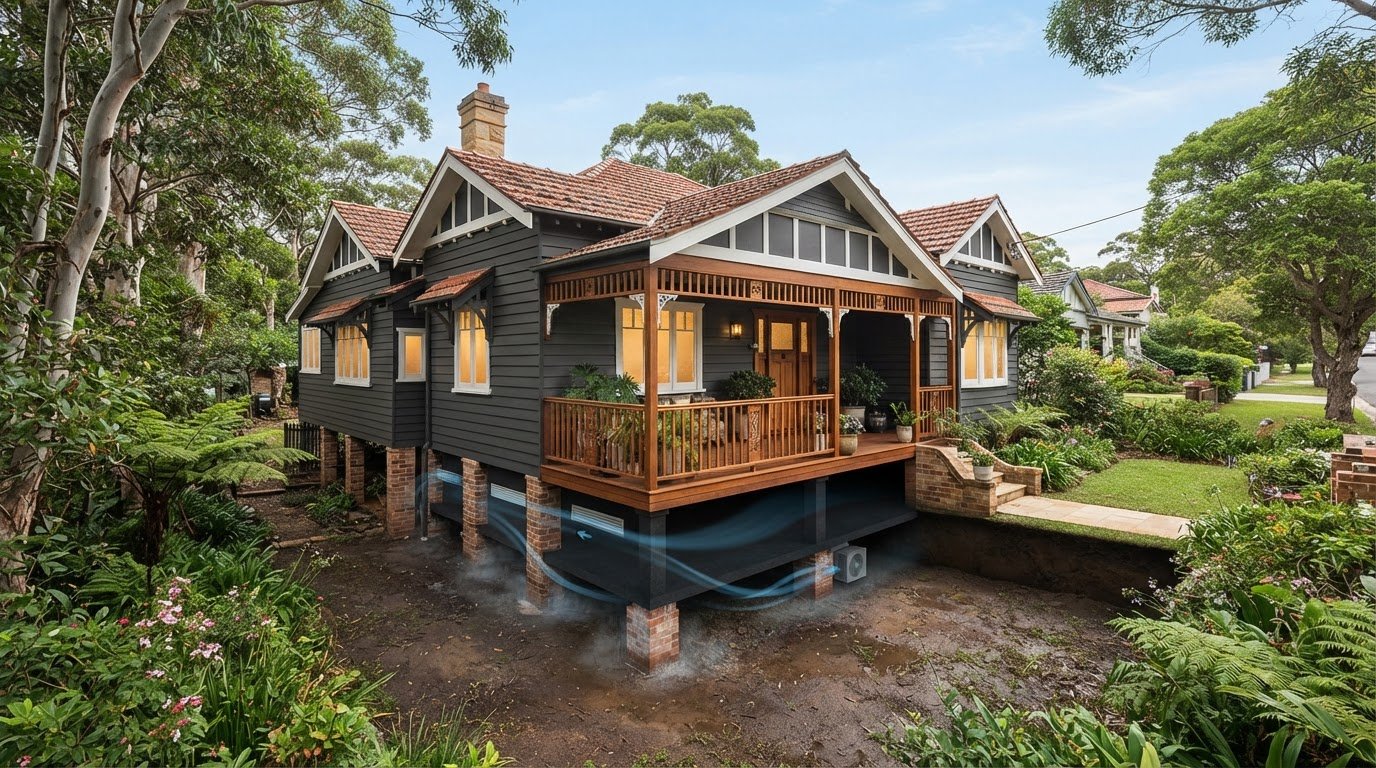
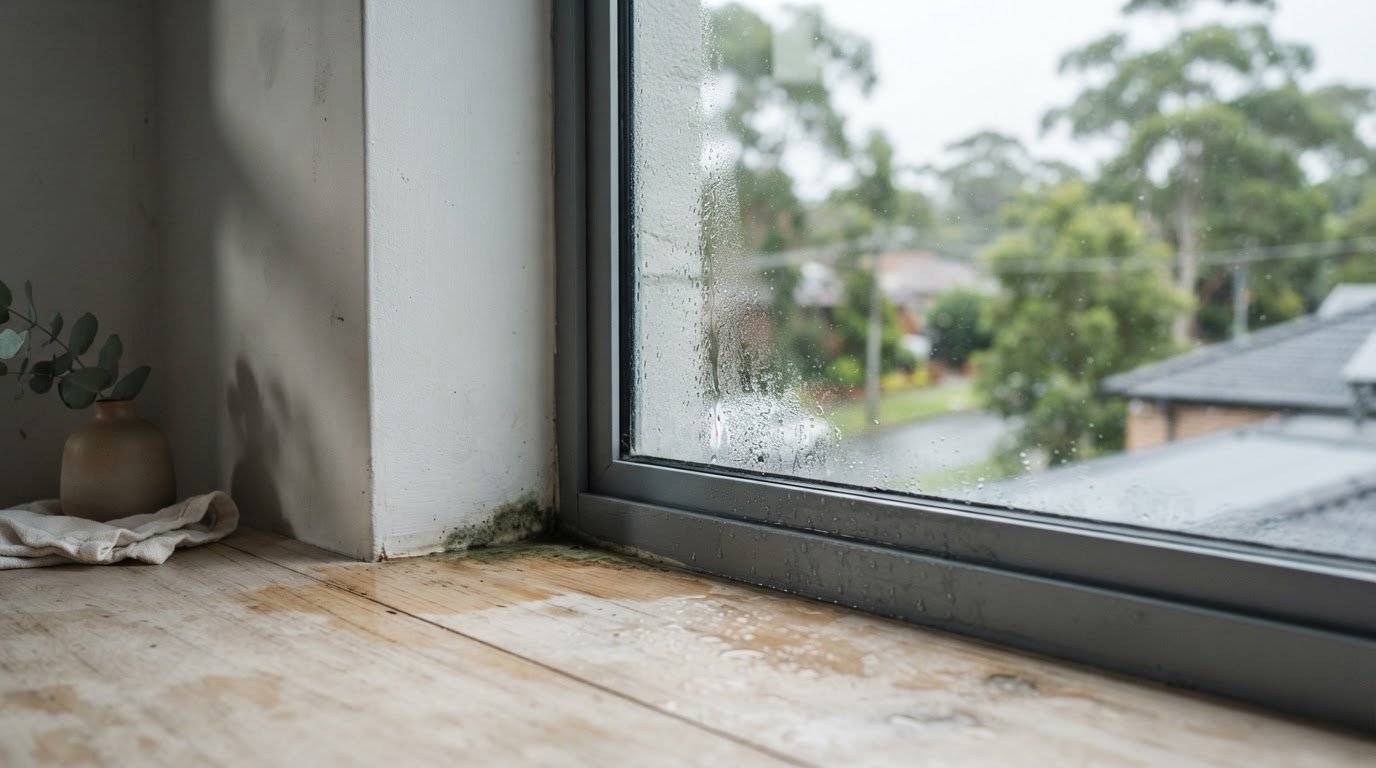
Water marks, bubbling paint, damaged skirting boards or persistent dampness are reasons to seek an assessment, not proof of a particular leak. Moisture can reach wall cavities, flooring or subfloors, where it may not be apparent from the room’s surface. If damp conditions continue, they can also contribute to mould development. A visible sign is a useful clue, but it cannot establish the full extent or cause on its own.
Notice where and when changes appear. A spreading mark, a finish that lifts, or an odour that returns after airing the room can help describe the issue during an assessment. Avoid disturbing wet or damaged materials to investigate. The aim is to understand what is affected safely and determine what restoration work is relevant.
Why act when the full damage is not visible?
Hidden moisture can make it hard to judge whether drying or repairs are needed beyond the obvious stain. An assessment can examine affected areas and inform a practical restoration plan. ABC Mould Cleaning Solutions provides water damage restoration across Sydney and surrounding areas, including repair and drying of water-affected areas to address moisture and reduce conditions that may support mould.
Restoring affected property is different from repairing the source of a leak. For example, restoration may address damp flooring or a water-marked wall, while fixing a leaking pipe or roof is separate source-repair work. Knowing the distinction helps you describe the problem clearly and understand what the restoration assessment covers.
- Record which rooms or surfaces show signs of moisture.
- Note when you first noticed the change and any known water event.
- Take clear photos from safe areas, without entering wet or damaged spaces.
An assessment can clarify what’s visible, identify areas that need attention and guide next steps without assuming a cause from symptoms alone. For broader guidance on responding to water damage in a Sydney home, the article Water Damage Repair: Your Emergency Guide for Sydney Homes covers related considerations.
How Sydney Water Damage Assessment Finds the Affected Areas
A useful assessment follows a clear sequence: discuss the signs, assess the property, identify areas of concern, then plan relevant restoration. Each stage helps build a more informed picture than a stain or odour can provide alone. It also helps distinguish water-affected building materials from mould concerns that may need separate attention.
What does a property assessment consider?
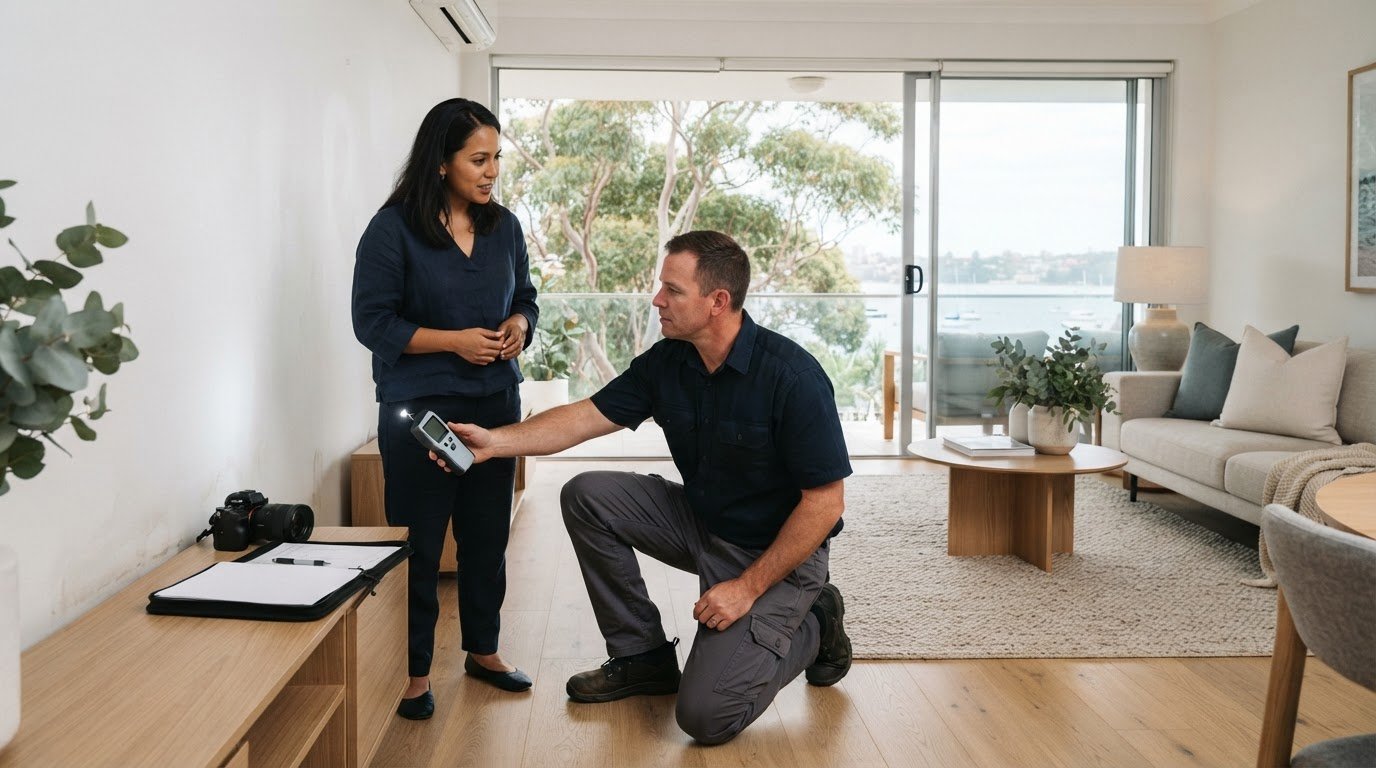
The process starts with what you’ve noticed: which rooms are affected, how the damage has changed, and whether there’s a known water event. The property assessment considers visible damage and signs of structural dampness. These observations help guide the next steps and keep the plan focused on the areas that need attention.
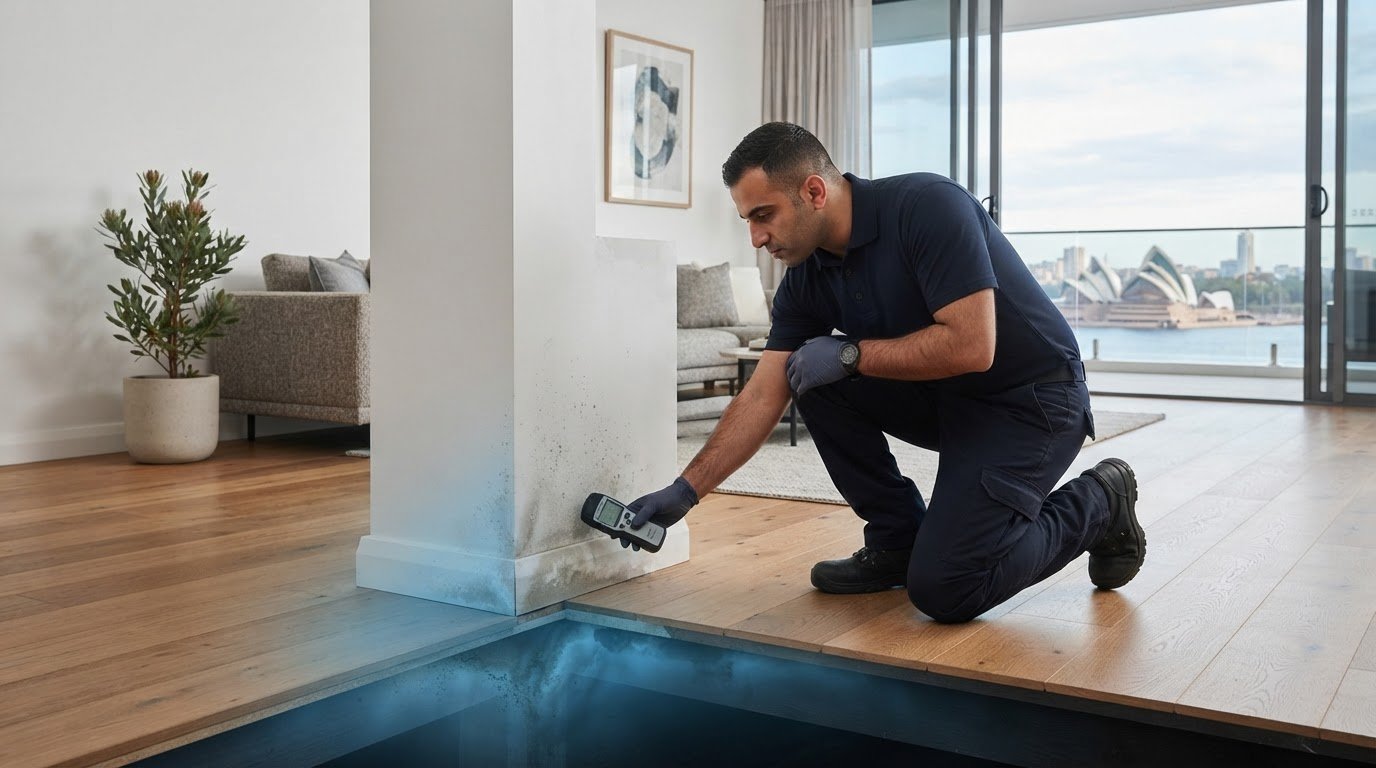
ABC Mould Cleaning Solutions’ mould inspection assesses air quality, humidity, ventilation and structural dampness. These factors add context to visible signs. For example, a musty smell alongside damp building materials can make it useful to consider both moisture conditions and possible mould concerns. The inspection helps assess the extent and source of mould concerns where relevant, so follow-up can be guided by the findings rather than assumptions.
Water damage restoration Sydney property owners need can involve more than treating the most obvious mark. Assessment findings help clarify which areas require drying or repair and whether mould-related follow-up is relevant. Restoration assessment and mould inspection are connected but have different purposes: one focuses on water-affected areas, while the other considers mould and the conditions associated with it.
When is an on-site inspection appropriate?
Photos can provide useful initial context for a quote, particularly when they clearly show the visible damage. ABC offers photo assessment for quotes, with a same-day quote available for many cases. A photo cannot confirm the location of a concealed leak or show the condition of structural areas that aren’t visible, so it may not provide the full picture.
When deeper contamination is suspected, ABC provides on-site inspections. Seeing the property in person adds context and helps clarify which areas need attention. The findings inform the next steps, whether that means restoring water-affected materials, considering mould concerns, or both. The assessment guides a suitable plan based on the available evidence.
To make an initial assessment more useful, describe when the signs appeared and where they’re visible. Share clear photos of affected areas if you’re requesting a photo assessment, but don’t enter wet or damaged spaces to take them. If persistent dampness or visible mould is also a concern, an assessment of mould concerns can help clarify appropriate follow-up.

Restoration or Leak Repair? Understand the Scope Before You Proceed
A damp wall or damaged floor can raise two separate questions: where did the water come from, and what needs to be done to the property it affected? These are related tasks, but they aren’t the same service. Understanding the distinction helps you describe the issue clearly and set realistic expectations for restoration.
- Source of water: Finding and stopping the cause, such as a leaking pipe or roof, is source-repair work. It is separate from restoration.
- Property damage: Restoration assesses and addresses water-affected building areas, which may include damp walls, flooring or other finishes.
- Restoration assessment: The assessment considers the affected areas and the drying or repair work relevant to the property.
- Mould-related follow-up: If damp conditions or suspected contamination raise concerns, mould inspection or removal may be relevant.
What water damage restoration can address
ABC Mould Cleaning Solutions provides water damage restoration, including repair and drying of water-affected areas. The focus is on the property and its recovery, not repairing the plumbing or other source that allowed water to enter. For example, a restoration assessment may consider water-damaged flooring, while fixing the pipe that caused the damage is a separate task that can be addressed by a local specialist such as budflowplumbing.com.au.
This distinction applies across different settings, from a home or strata property to an office, school or commercial premises. The work required depends on the affected areas and assessment findings. Drying and repair can address damp conditions that may contribute to mould development, but restoration should not be treated as a guarantee that mould won’t develop.
How mould concerns fit into the restoration decision
Water damage and mould concerns can overlap, but they’re not identical. Damp materials may create conditions associated with mould development, so mould inspection or removal may be relevant if there are signs of contamination. Where deeper contamination is suspected, a professional mould inspection can help inform appropriate follow-up. Optional mycotoxin testing referrals are also available; this is a referral option, not a core restoration procedure.
In practical terms, restoration addresses the affected property, while source repair addresses why water entered in the first place. Both may matter for recovery, but understanding the boundary helps define the scope of each task. If mould is also a concern, an inspection for mould concerns can add to the picture alongside water damage restoration Sydney property owners may need.
Steps Before Water Damage Restoration in Sydney
Preparing for an assessment doesn’t require investigating behind walls or moving damaged materials. A few clear notes and photos can help explain what you’ve noticed and make a quote assessment more useful. Keep safety first: don’t enter wet or damaged areas to collect information, and don’t disturb materials that may be unsafe.
Information that helps explain the damage
Record what you can see from a safe position. Note when the signs first appeared, which rooms or surfaces are involved, and whether you know of a water event. If marks have changed or appeared in more than one area, include that detail. This helps build a useful picture without assuming the cause.
- Timing: When did you first notice the dampness, odour or visible change?
- Location: Which rooms, walls, ceilings or floor areas are affected?
- Visible changes: Note staining, lifted finishes or other changes you can observe safely.
- Known event: Include relevant information about water entry, if you’re aware of it.
- Photos: Take clear, relevant pictures from a safe position, showing the affected area and its surroundings.
ABC Mould Cleaning Solutions offers photo assessment for quotes, with a same-day quote available for many cases. Photos help communicate visible signs, but they can’t confirm the location of a hidden leak or the condition of areas that can’t be seen. If deeper contamination is suspected, an on-site inspection can provide a fuller assessment than images alone.
Questions to resolve during the assessment
Use the assessment to understand the scope, not just the visible mark. Ask which areas appear affected, what the proposed restoration plan covers, and how drying and repair relate to the damage identified. If mould is a concern, ask whether inspection or removal may be relevant. ABC provides full written reports, giving you a record of the assessment findings.
It can also help to prepare practical access details. Note which rooms are affected and any safe entry instructions, such as how to reach the property or where the relevant area is located. If you’re in a strata building or commercial premises, have useful property access arrangements ready. Don’t try to make access easier by walking through standing water or moving damaged materials.
Before proceeding, make sure you understand which areas are included in the restoration plan and whether it covers drying, repair, or both. This sets clear expectations for water damage restoration Sydney and keeps attention on the affected property. The source of water may require separate repair, so share any known details without attempting an unsafe inspection yourself.
Once your notes and photos are ready, request a same-day photo assessment. It’s a practical first step towards a quote and a clearer understanding of what the affected areas may need.
Arrange Water Damage Restoration Sydney Homeowners Can Approach with Confidence
Unclear damage can make the next step feel complicated. ABC Mould Cleaning Solutions provides water damage restoration across Sydney and surrounding areas, including repair and drying of water-affected areas. Mould inspection and remediation can also be relevant if damp conditions raise mould concerns. Start by describing what you’ve noticed; an assessment can clarify the affected areas and inform what happens next.
How ABC makes the first step straightforward
The process is simple: Call, Quote, Results. Call ABC on 0488 866 853 and explain the signs you’ve observed. For many cases, you can request a quote through photo assessment, with a same-day quote available. Clear images help show visible damage, while assessment findings guide the next steps. ABC also provides full written reports.
Results means having a clearer understanding of the assessed areas and the restoration work relevant to them. The quote and report help you see what’s being addressed, including repair and drying of water-affected areas where required. A same-day quote does not mean restoration work will also take place that day.
ABC’s guarantee is: We Will Beat Any Written Quote By 10%. To take the next step, request your water damage assessment and include clear photos and a short description of the affected areas.
When water damage and mould concerns overlap
Water damage restoration and mould services address related but distinct concerns. Restoration focuses on water-affected parts of the property. If damp conditions or signs of contamination raise a mould concern, a mould inspection can assess it, and mould removal may be appropriate. ABC provides on-site inspections when deeper contamination is suspected. Follow-up should be guided by the assessment, not assumed from a water mark alone.
For mould removal, ABC uses the Goldmorr System. Goldmorr Group has supplied mould-removal solutions since 1998, and only Goldmorr-approved and trained master technicians may apply Goldmorr products. Where air scrubbing is relevant, the method is a non-mechanical fogging technique, not mechanical spraying. All treatments are safe for pets, people, and the environment.
If you’re unsure whether the issue calls for restoration, mould inspection, or both, describe the visible signs and share photos taken from a safe position. ABC can use that information for a photo-assessment quote in many cases, with same-day quotes available, then provide written findings to support a clear decision. Call 0488 866 853 or use the assessment request link above.
Take the Next Step Towards a Drier, Healthier Property
You don’t need to know exactly where moisture is coming from before requesting an assessment. Start with what you can safely observe: the affected area, when you noticed the change, and any details that may help explain it. A clear starting point makes it easier to move from uncertainty to an informed plan for your property.
If you’re weighing up water damage restoration Sydney services, take a step that helps clarify the situation rather than guessing what may be behind a surface. ABC Mould Cleaning Solutions provides photo-assessment quotes for many cases, with same-day quotes available. Full written reports document the assessment, and the guarantee is: We Will Beat Any Written Quote By 10%.
Call 0488 866 853 or request a same-day photo assessment to get started. Share clear photos taken from a safe position and explain what you’ve noticed. This practical first step can bring greater clarity and help you move forward with confidence.
Frequently Asked Questions
Can hidden water damage cause mould in a Sydney property?
Yes, hidden water damage can contribute to mould if moisture remains in building materials or enclosed spaces. Dampness behind a wall lining, for example, may not be obvious from the room, while mould concerns become noticeable later. A musty smell or changing surface finish is a reason to seek an assessment, not proof of mould or a particular leak. Avoid disturbing concealed areas yourself; an inspection can help clarify what needs attention.
What does water damage restoration include?
Water damage restoration Sydney work can include assessing affected property areas, drying them and carrying out relevant repairs. The scope depends on what’s affected, such as flooring, a wall finish or another building surface. Restoration addresses damage to the property; it doesn’t automatically repair the pipe, roof or other source of water. Understanding that distinction helps clarify whether source repair is also needed.
Can you quote for water damage from photos?
Yes, ABC can provide a quote through photo assessment. Take clear images of the affected area from a safe position, including a wider view for context and closer views of visible damage. Add a short note describing when you noticed it and which room is involved. Photos help assess what’s visible, but they can’t show every concealed condition or replace an on-site inspection when deeper contamination is suspected.
Do you provide on-site inspections for hidden water damage?
Yes, ABC provides on-site inspections when deeper contamination is suspected. As part of mould inspection, the assessment can consider air quality, humidity, ventilation and structural dampness, beyond what photographs show. This is useful when visible signs don’t explain the concern or affected areas may be out of view. The findings help clarify relevant follow-up.
How quickly can I get a water damage restoration quote in Sydney?
A same-day quote is available through photo assessment for many cases. Include the affected rooms, when you first noticed the signs and any known water event when requesting a quote. A same-day quote is not a promise that restoration work will also take place that day.
Are mould treatments safe for pets, people, and the environment?
Yes. All ABC treatments are safe for pets, people, and the environment. If you’re arranging work in an occupied home, office or other property, mention who uses the affected space and raise any practical concerns before treatment begins. Goldmorr products are applied only by Goldmorr-approved and trained master technicians.
Does ABC repair the plumbing leak as part of water damage restoration?
No. ABC’s water damage restoration addresses water-affected areas, including relevant drying and repair, rather than repairing plumbing leaks. If a pipe is the suspected source, repairing it is separate from restoring the affected wall, floor or other property area. Keeping the two tasks distinct helps you understand the restoration scope and why addressing the source may also matter for recovery.