For the best dehumidifier settings for Sydney humidity, aim for indoor relative humidity between 45% and 55%, with around 50% as a practical starting target. A dehumidifier removes moisture from the air until the room reaches its selected humidity level. Set the target, then let the unit’s controls manage when it runs.
Sticky air can make a room uncomfortable, but choosing the lowest setting is not automatically the answer. A suitable target helps reduce excess moisture without drying the air unnecessarily. Temperature, airflow and your dehumidifier’s controls all affect how well it works.
This guide explains how a dehumidifier works and how to choose a humidity target for Sydney conditions. You’ll learn how temperature affects performance, where to position the unit for airflow, and how to use auto-shutoff and adjust settings as the room changes.
Key Takeaways
- Choose a dehumidifier with capacity suited to the room’s area and how damp it is, rather than relying on room size alone.
- Account for temperature: operating conditions affect how well a dehumidifier extracts moisture.
- Place the unit centrally with space around it so air can circulate freely; keep laundry clear of the air intake and outlet.
- Use the adjustable humidity target to control when the unit runs, and understand how its auto-shutoff responds when the target is reached or the tank fills.
- If dampness or mould persists despite managing indoor humidity, learn when air purification, mould inspection or remediation may help.
Why is controlling humidity important?
Start by aiming for indoor relative humidity around 50%, then adjust the dehumidifier to maintain a comfortable range. Yes, very low humidity can cause discomfort: RACV says levels below 40% can dry the skin, eyes and nasal passages.
-
Check Indoor Humidity Targets
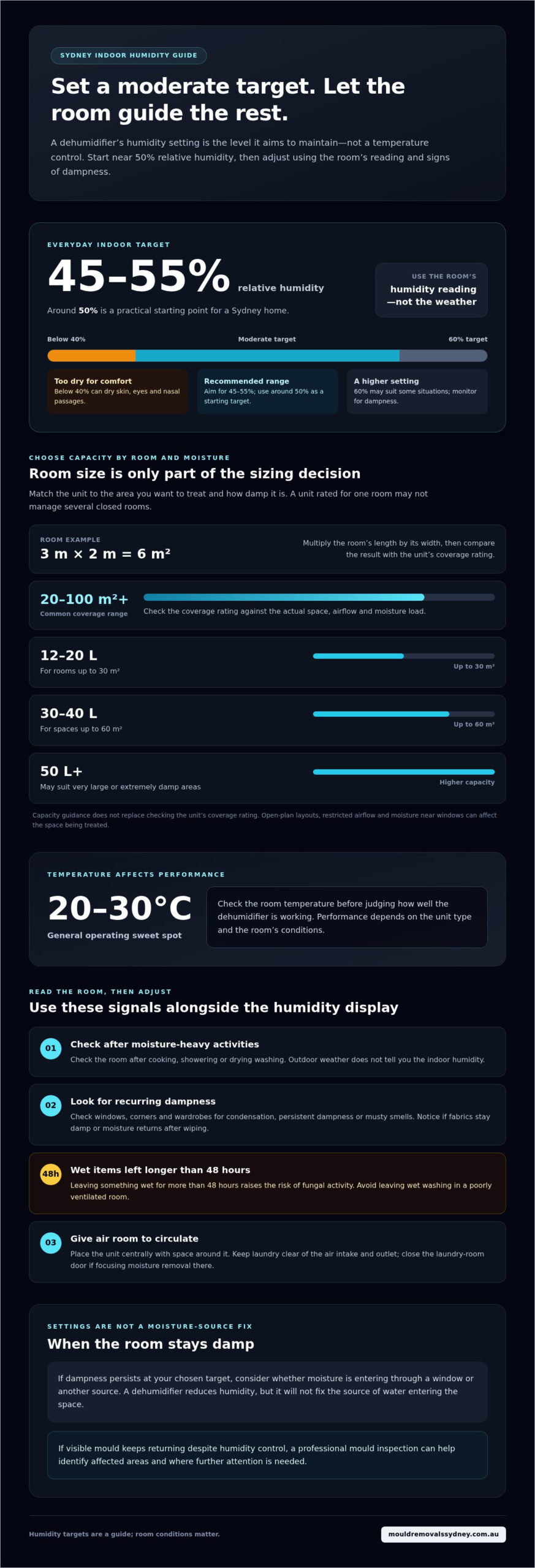
Set a target between 45% and 55% relative humidity for everyday indoor comfort. RACV recommends this range, while its guide also notes that keeping humidity in the 40s can feel comfortable. Around 50% is a practical starting point for a Sydney home. A 60% target may suit situations where slightly higher humidity is acceptable, but monitor for signs of dampness.
Use a hygrometer or your dehumidifier’s humidity reading to guide adjustments. Outdoor weather does not tell you the indoor humidity, so check the room itself, especially after cooking, showering or drying washing.
-
Recognise Excess Moisture
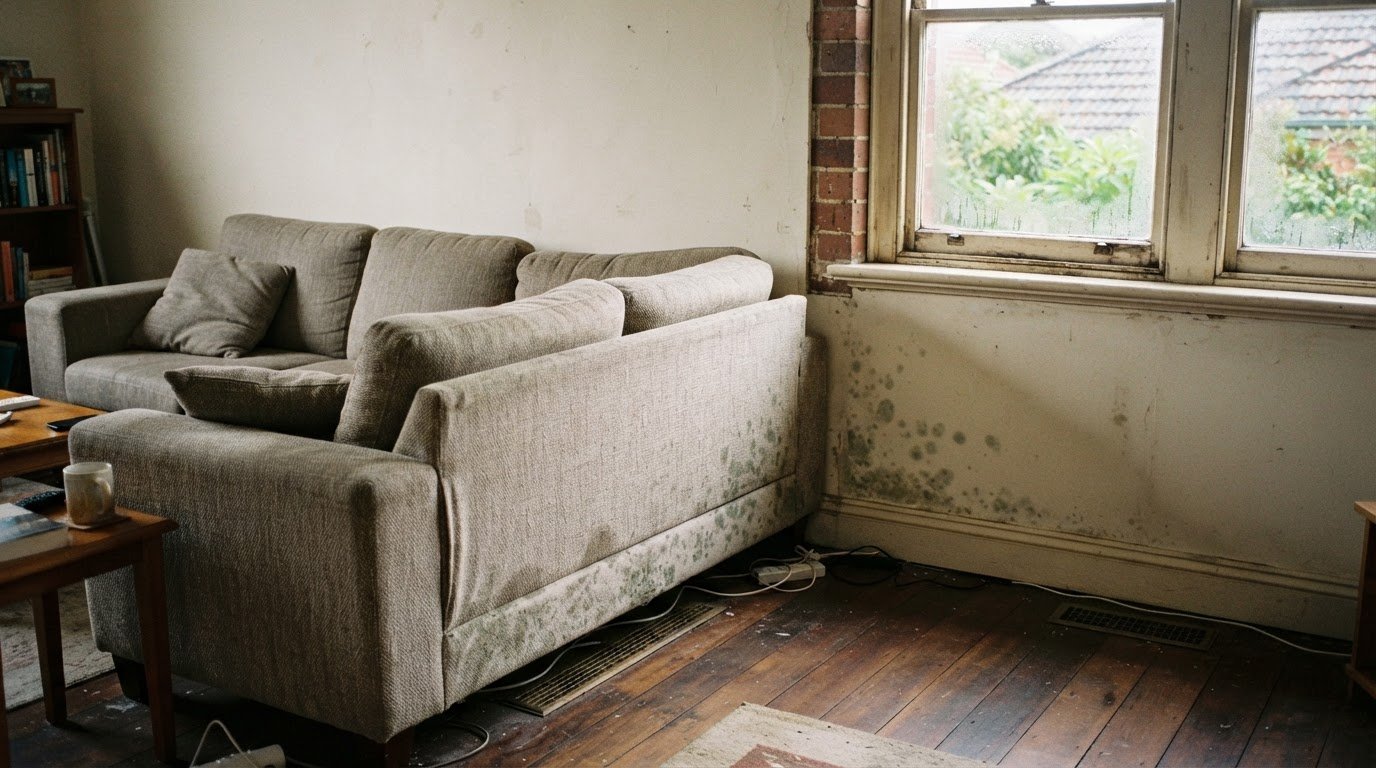
Look around windows, in corners and inside wardrobes for condensation, persistent dampness or a musty smell. Note whether towels and fabrics stay damp, or moisture returns after you wipe a surface. These signs can identify rooms that need attention, even when the rest of the home feels comfortable.
Pay particular attention to wet items and enclosed spaces. Leaving something wet for more than 48 hours raises the risk of fungal activity. If visible mould or recurring dampness appears, lowering the humidity reading alone may not address the underlying moisture source.
-
Account for Indoor Clothes Drying
When drying clothes indoors, treat the laundry area as a temporary source of extra moisture. Wet fabric releases water into the air as it dries, raising relative humidity and potentially making the dehumidifier run longer.
Keep the room’s door closed while drying clothes if you want to focus moisture removal in that space, and check its humidity reading again after the load dries. Avoid leaving wet washing in a poorly ventilated room; if fabrics or other items stay damp beyond 48 hours, fungal activity becomes more likely.
-
Consider Risks of Low Humidity
Don’t set the target as low as possible just to remove moisture faster. RACV says indoor relative humidity below 40% can make the air too dry, causing dry skin, eyes and nasal passages. If your reading drops below that level, raise the target and let the unit stop sooner.
Balance moisture control with comfort by returning to a moderate target, such as around 50%. RACV also identifies humidity over 50% as a condition that can cause bacterial growth such as mould, so use the room’s reading and visible signs together rather than chasing an extremely low figure.
Dehumidifier Humidity Settings: What Are They and Why Do They Matter?
A dehumidifier’s humidity setting is the level it aims to maintain, not a temperature control. The best dehumidifier settings for Sydney humidity depend on the room size, measured moisture and how persistently damp the space feels.
-
Assess Room Area and Humidity
Measure the floor area and note where moisture collects before choosing a model. Multiply the room’s length by its width: a room measuring 3 metres by 2 metres covers 6m². Compare this result with the unit’s coverage rating, which commonly ranges from 20m² to 100m² or more.
Match capacity to both the area and the moisture load. A 12-20L model suits rooms up to 30m², while 30-40L models suit spaces up to 60m². Very large areas or extremely damp conditions may call for a model rated at 50L or higher.
Don’t assume a unit rated for one room can manage several closed rooms. Check its coverage against the space you want to treat, and consider open-plan layouts, restricted airflow and moisture entering near windows.
-
Set Controls for Sydney Seasons
For a starting point, set the target around 50% relative humidity, then adjust within 40% to 50% as indoor conditions change. In summer, a 40% to 50% target is recommended. The best dehumidifier settings for Sydney humidity still depend on the room’s actual reading, not the season alone.
In a damp winter room, use the humidity display to guide operation. If the room remains damp at your chosen target, consider whether moisture is entering through a window or another source. A dehumidifier reduces humidity, but it won’t fix the source of water entering the space.
Choose a target based on the room’s reading and your comfort. Avoid lowering the setting without a clear reason, since the unit may run longer while trying to reach it.
-
Account for Damp-Room Concerns
Choose a unit’s capacity for the dampest room and its moisture load, not your home’s average conditions. Persistent window condensation, musty odours and damp surfaces can indicate an ongoing moisture problem. A suitably sized unit can help manage humidity, but it won’t repair leaks or remove established mould.
Use the room’s humidity reading alongside visible signs. The best dehumidifier settings for Sydney humidity can help manage moisture, but recurring mould may need attention beyond changing the target. Look for damp patches and condensation that return after drying.
If visible mould keeps returning despite humidity control, a professional mould inspection can help identify affected areas and where further attention is needed.
Dehumidifier performance at different temperatures
Check the room temperature before judging how well a dehumidifier is working. Dehumidifiers generally operate best around 20 to 30°C, while performance depends on the unit type and the room’s conditions.
-
Assess Room Temperature and Conditions
Measure the temperature in the room where you’re using the unit, then compare it with its operating range. Compressor dehumidifiers commonly operate between 5°C and 30°C, and perform optimally at 20°C. A cooler room can therefore affect how a compressor model performs.
Check for condensation on windows and cold surfaces, and look for damp items that need drying. These signs help you assess the room alongside its temperature. Before deciding that a unit is underperforming, consider whether its type suits the conditions.
Read the instructions for your specific model before changing its placement or controls. Recommended temperature ranges vary by design, so follow the unit’s stated operating limits rather than relying on a general setting.
-
Understand Temperature-Related Performance
Identify whether your model is a compressor or desiccant type. Compressor models have an average operating range of 5°C to 30°C, with optimal performance at 20°C. Desiccant models can effectively remove moisture at temperatures down to 1°C, making their operating range different in cooler rooms.
A desiccant dehumidifier can add up to 5°C to the room temperature. Account for that when choosing where to run it, especially in a smaller room. Check the product instructions for how its controls and temperature limits apply.
Don’t compare models by their humidity displays alone. Their technology and operating temperatures affect how they perform in the same room. For example, a desiccant model’s low-temperature capability may suit a cool bedroom better than a compressor model operating near the lower end of its range.
- Adjust the room conditions carefully. If you use a heater to improve dehumidifier performance in a cold room, keep it at least 2 metres from the unit. Follow the heater and dehumidifier instructions, and keep both appliances clear of obstructions.
Reassess when the room temperature changes. Check the temperature reading, the unit’s operating status and whether condensation remains on the windows. This gives you a clearer picture than changing several controls at once.
For a Sydney room within the 20 to 30°C operating range, use the dehumidifier according to its instructions and observe its response. If the room is cooler, consider the model type and its stated temperature limits before deciding what to change.
Dehumidifier placement and airflow
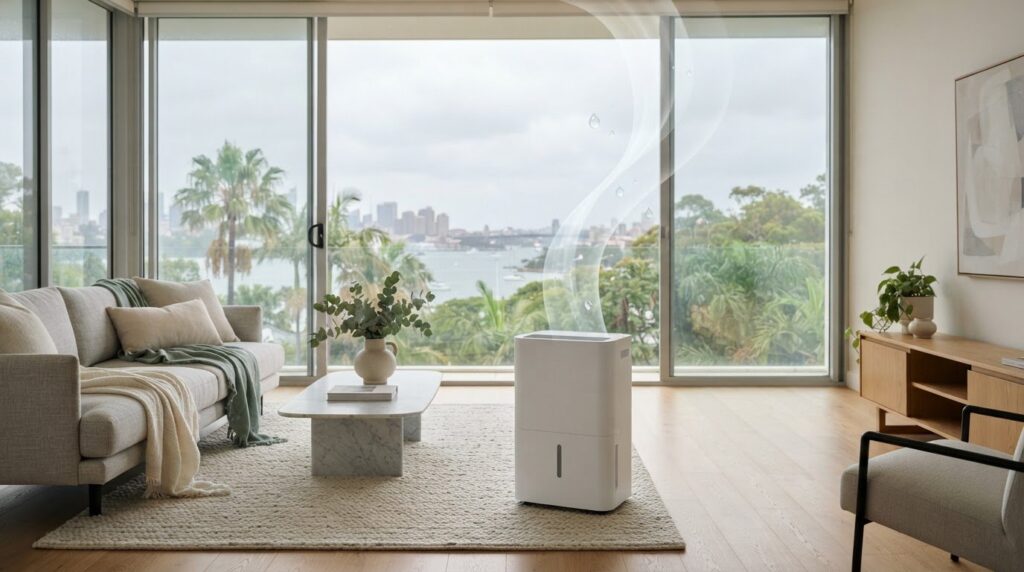
Place the unit centrally, leaving enough space for airflow around it. Good positioning helps it remove moisture effectively from the room.
- Choose a central position in the room you want to dry. Keep the dehumidifier clear of furniture, curtains and other objects that could block its air intake or outlet. For example, don’t push it behind a sofa or into a tight corner. Space around the unit supports airflow and helps it draw in indoor air.
Keep the unit on a stable, level surface and follow its operating instructions. A central position gives it access to air across the room, rather than concentrating operation in an enclosed corner.
- When treating a specific problem area, place the unit near the main moisture source while leaving room for airflow. For example, position it in the room where dampness is most noticeable, not in a hallway separated from that room by a closed door. One unit can circulate air only where it can reach.
For indoor laundry, leave at least 1 metre between drying clothes and the dehumidifier. This keeps garments clear of the appliance while allowing air to circulate around both. Arrange the rack so it doesn’t block the intake or outlet.
- Keep doors and windows consistent with the area you’re treating. If you’re drying one closed room, avoid repeatedly moving the unit, since each move changes which indoor air it can process. After repositioning it, check the humidity reading in the target room.
Don’t cover the unit or place objects on its vents. Restricted airflow can affect normal operation, even when the humidity target is unchanged. Give the appliance an unobstructed position before adjusting its settings.
- Maintain the filter and water tank so the unit can operate as intended. For a frequently used dehumidifier, check the filter every few weeks and clean it as the manufacturer directs. Dust can restrict airflow, so include filter maintenance when assessing performance.
In high humidity, the water tank may need emptying daily. Check it during regular use, especially if the unit stops collecting moisture. If the tank is full, auto-shutoff pauses moisture removal until you empty and refit it.
- Check placement before assuming the unit needs a different humidity setting. Make sure it is centrally positioned, has clear airflow and isn’t blocked by laundry or furnishings. Then check the filter and tank. These practical checks can show whether placement or maintenance is affecting operation.
Keep the unit’s instructions handy when adjusting its position or cleaning the filter. Following the model’s guidance helps maintain airflow without blocking vents or disrupting safe operation. Good air circulation lets the appliance work as intended, without unnecessary setting changes.
Adjustable humidity settings and auto-shutoff
Set a humidity target to tell the dehumidifier when to run, and understand what makes it stop. The key distinction is whether it has reached the target or its water tank is full.
- Choose a starting target of 30% to 40% when first tackling a humid room. Once the room reaches the desired level, reset the unit to maintain 40% to 50% relative humidity. This two-stage approach prioritises initial moisture removal, then avoids unnecessarily low settings during everyday operation.
For routine use, about 40% is a common target, while 40% to 50% is usually adequate depending on conditions. Around 50% is a useful example: the unit runs until the room reaches that set point.
- Use the controls to match the job, not simply to select the lowest available number. A 30% target can make a unit continue running regardless of the room’s relative humidity, until its tank is full. Reserve the lowest setting for deep drying, and return to a moderate target afterwards.
If your model uses a numbered dial, such as 1-10, consult its manual to understand the corresponding humidity levels. Don’t assume a higher dial number means higher humidity; control scales differ between models.
- Know what triggers the shutoff. When a unit reaches its humidity target, it can stop dehumidifying until the room rises above that level. A full tank can also trigger auto-shutoff, interrupting moisture removal even if the room remains damp.
If the unit stops, check the tank before assuming it has reached its target. In high humidity, the tank may need emptying daily. If your model has a drainage option, follow its instructions for setup and positioning.
- Reassess the room before changing settings during a Sydney summer. Sticky conditions that aren’t extremely hot may respond to an air conditioner’s Dry mode for 30-60 minutes before reassessment. For a hot room, use Cool mode set to 24-26°C; switch from Dry to Cool if it still feels too hot after 10 minutes.
An air conditioner and a dehumidifier have different controls. Use the dehumidifier’s humidity target to manage moisture, and adjust the air-conditioning mode for room comfort.
- After each adjustment, check the humidity reading, tank status and room comfort. If humidity remains high despite the unit operating within its specified conditions, look for recurring dampness rather than lowering the target indefinitely. Persistent mould needs attention beyond routine humidity control.
If mould keeps returning, arrange a professional mould inspection to investigate the affected area.
ABC Mould Cleaning Solutions: Air Purification & Scrubbing
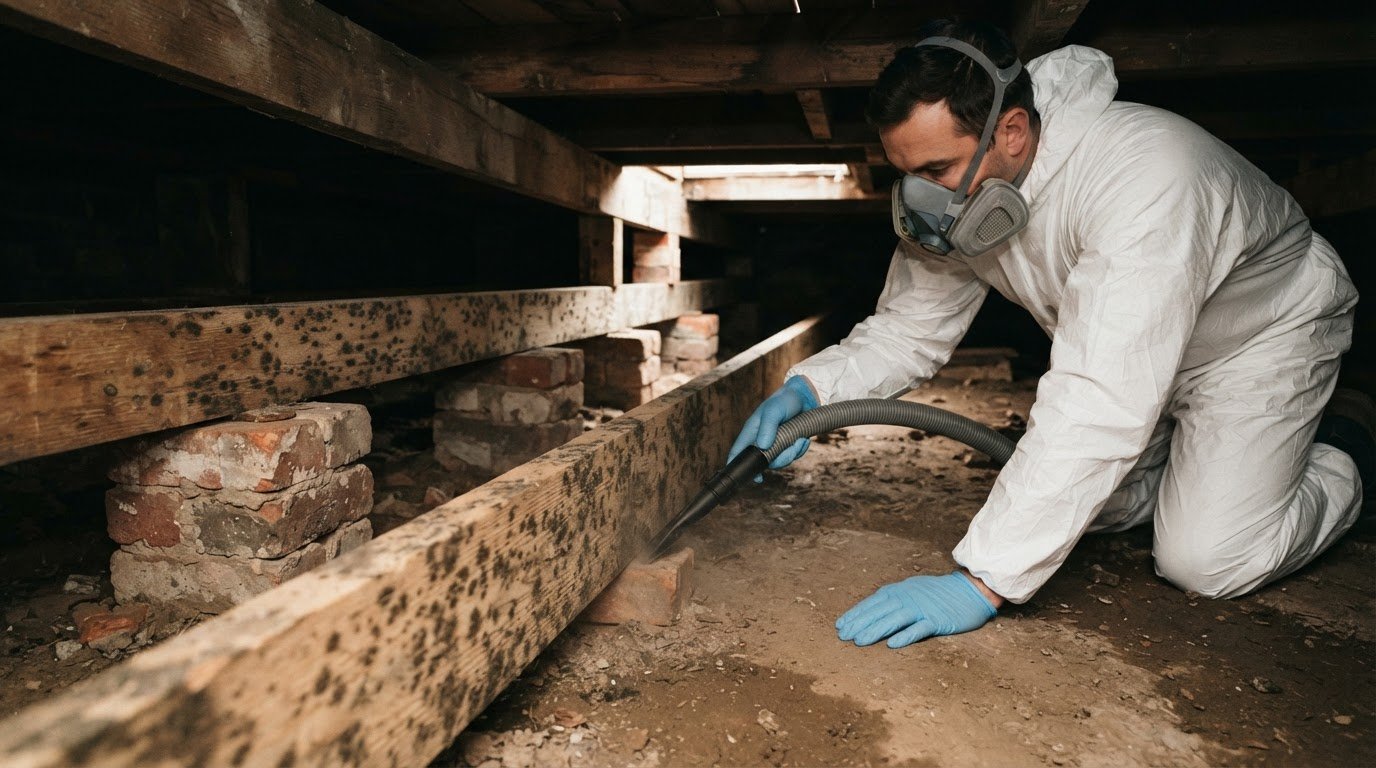
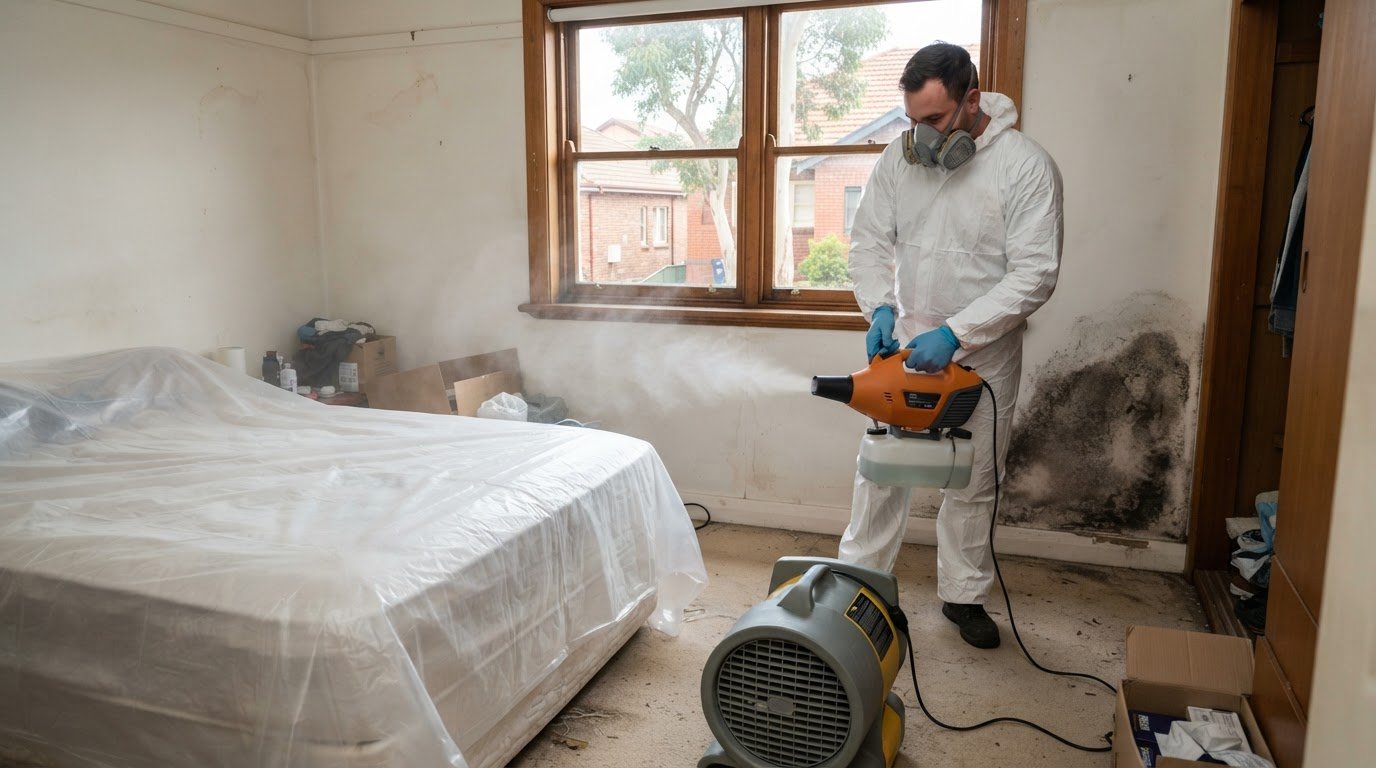
ABC Mould Cleaning Solutions provides Air Purification & Scrubbing, Mould Inspection Services and Mould Remediation when humidity control alone hasn’t resolved persistent mould or dampness. A dehumidifier manages moisture in indoor air, but recurring mould may call for inspection and remediation rather than a lower humidity target.
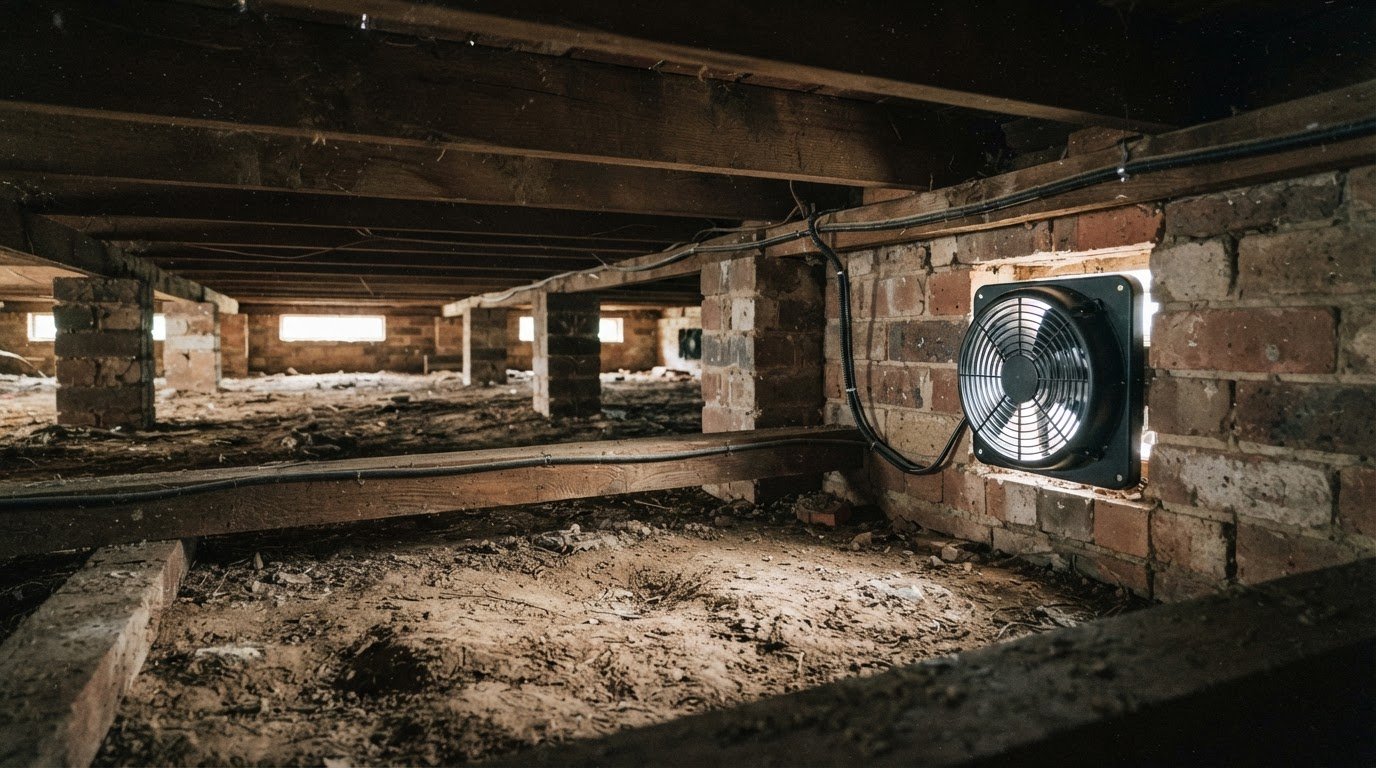
For dampness beneath a home, ABC Mould Cleaning Solutions also installs Subfloor Ventilation Systems. The right next step depends on where moisture and mould appear, and whether the problem returns despite your adjustments.
Contact ABC Mould Cleaning Solutions or visit mouldremovalssydney.com.au to discuss your property.
Take the next step towards a drier home
Use the best dehumidifier settings for Sydney humidity as a starting point, then watch how your rooms respond. If dampness keeps returning, treat that pattern as useful information rather than simply lowering the target again. Recurring mould can point to a problem that humidity controls alone won’t resolve.
ABC Mould Cleaning Solutions offers Mould Inspection Services to assess affected areas, Mould Remediation to address mould, and Air Purification & Scrubbing. The appropriate next step depends on what’s happening in your property. Contact the team to discuss your concerns and arrange a free estimate.
Contact ABC Mould Cleaning Solutions to take a practical next step. With the right information about your home, you can move forward with greater confidence.
Frequently Asked Questions
How often should I empty the water tank?
Empty the tank whenever it’s full, and check it daily during high humidity. A full tank can trigger auto-shutoff, pausing moisture removal even while the room remains damp. Before running the unit overnight, empty the tank and make sure it’s seated correctly. If the unit stops unexpectedly, check the tank first, then consult the display or manual for other shutoff indicators.
What is the right dehumidifier setting to prevent mould?
Set the target between 40% and 50% relative humidity to manage excess moisture. Treat this as a useful control range, not a guarantee that mould won’t develop. If mould returns despite the reading staying in range, look for recurring dampness, condensation or a moisture source. Lowering the target further won’t resolve the underlying cause if water continues entering or accumulating in the area.
What indoor humidity level should you aim for in Sydney homes?
Aim for around 50% relative humidity as a practical indoor target. Check the reading in the room you occupy, since a bedroom or enclosed laundry area may differ from the living room. If one space regularly feels damp, use its reading to guide the dehumidifier rather than relying on a measurement from elsewhere in the home. Adjust the target if the air feels uncomfortably dry.
What relative humidity range helps prevent mould and dust mites indoors?
A relative humidity range of 30% to 50% is recommended for managing mould growth; for basements, 40% to 50% can help manage moisture. These readings don’t guarantee mould prevention or establish that dust mites are controlled. Use humidity readings alongside practical checks, such as inspecting damp corners and promptly drying wet belongings. Address recurring mould or moisture rather than relying on the display alone.
How do Sydney’s seasonal humidity and rainfall affect dehumidifier use?
Use the room’s humidity reading to guide operation as weather and moisture levels change. In summer, a 40% to 50% target is a useful starting range; in a damp winter room, adjust based on indoor conditions rather than the season alone. After rain, check enclosed rooms, windows and areas where dampness recurs. A changing reading can help show when the unit needs to run more or less.
Should you use continuous mode, auto mode, or a set humidity target?
Use a set humidity target for routine control, allowing the unit to stop dehumidifying once the room reaches that level. Continuous mode may keep the appliance running, so reserve it for a specific drying need and monitor the tank. “Auto” functions vary by model; check the manual to learn what triggers operation and shutoff. Whichever mode you choose, make sure a full tank won’t interrupt use.
How often should you empty and clean a dehumidifier in humid conditions?
In high humidity, check the tank daily and empty it whenever it’s full, because auto-shutoff can pause operation. Check a frequently used unit’s filter every few weeks, then clean it according to the manufacturer’s instructions. These are separate tasks: emptying removes collected water, while filter care supports airflow. If the unit stops, inspect both before changing its humidity target.
What ventilation and mould-prevention steps should accompany dehumidifier use in Sydney?
Use an exhaust fan during and after a hot shower, and let it continue running for 10-15 minutes afterwards. Dry wet surfaces and belongings promptly, and check enclosed rooms for recurring dampness. Ventilate when outdoor conditions make that practical, rather than bringing humid air indoors. If mould keeps returning or moisture persists despite these steps, arrange an inspection to identify the affected areas and possible moisture source.