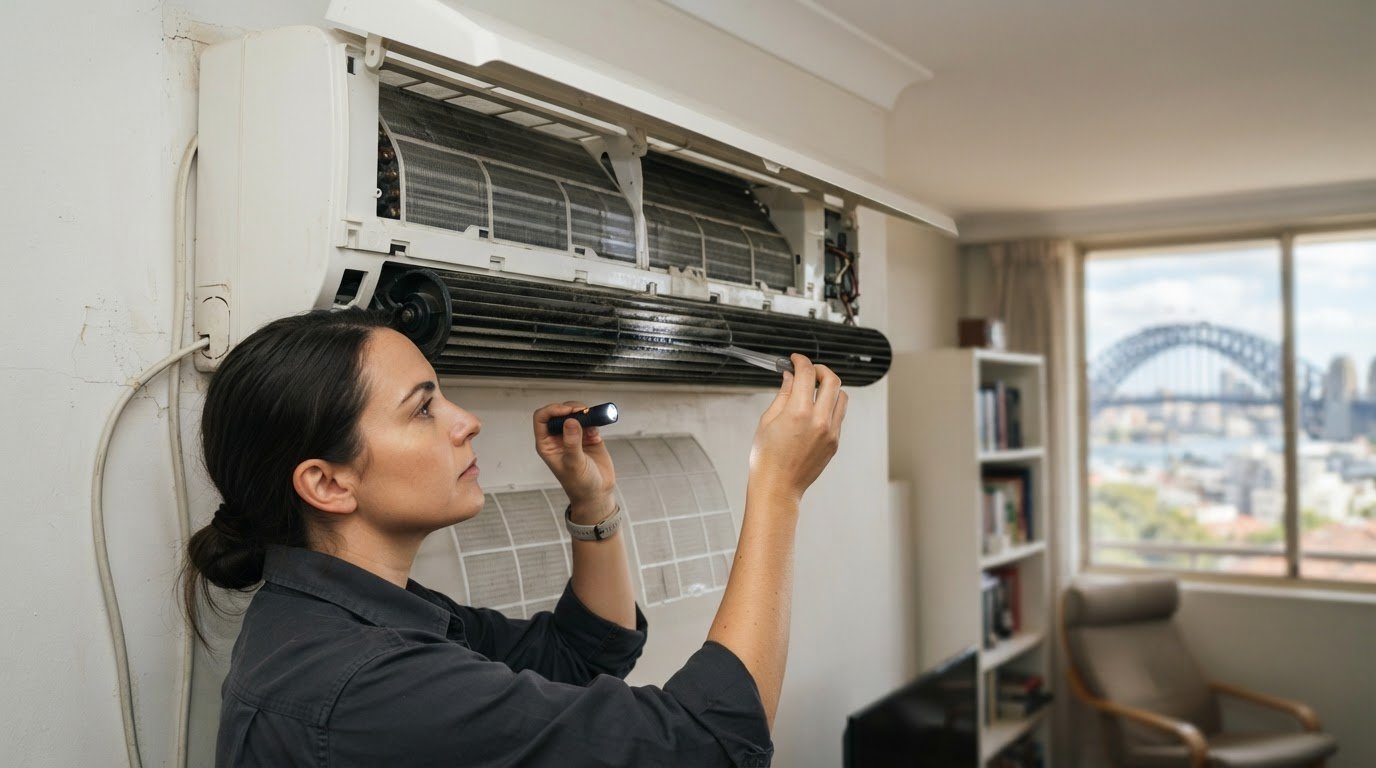
Mould in split system air conditioners in Sydney can grow beyond the visible louvres, where a surface wipe cannot reach. Professional air conditioning cleaning addresses affected internal components, including areas where moisture and dust collect. The key is finding the source, not just cleaning what you can see.
A musty smell or dark marks can be unsettling, and it’s reasonable to want the cause dealt with properly. Condensation on the indoor coil creates moisture, while dust and other organic matter can help mould grow on damp surfaces. The barrel fan, coil and drain pan are among the places growth may hide.
This article explains how professional cleaning can address mould, where it may grow inside a split system, and how coil condensation, filter care and drying habits affect the risk. You’ll also learn which maintenance steps can help limit a return and when a deeper clean may be needed.
Key Takeaways
- Professional cleaning can address mould inside a split system when it reaches the affected components, not just the visible surfaces.
- During cooling season, wash filters every two to four weeks and use fan or dry mode for fifteen to thirty minutes before switching the unit off to help dry the coil.
- Mould can sit in less visible parts of the unit, so clean-looking louvres don’t necessarily mean the inside is clear.
- Condensation is part of normal cooling; how well water drains away and how much dust collects can influence whether damp surfaces support mould growth.
- A musty smell, particularly just after start-up, can be a reason to investigate further rather than relying on a quick wipe of the louvres.
Drying habits and filter maintenance to help prevent mould
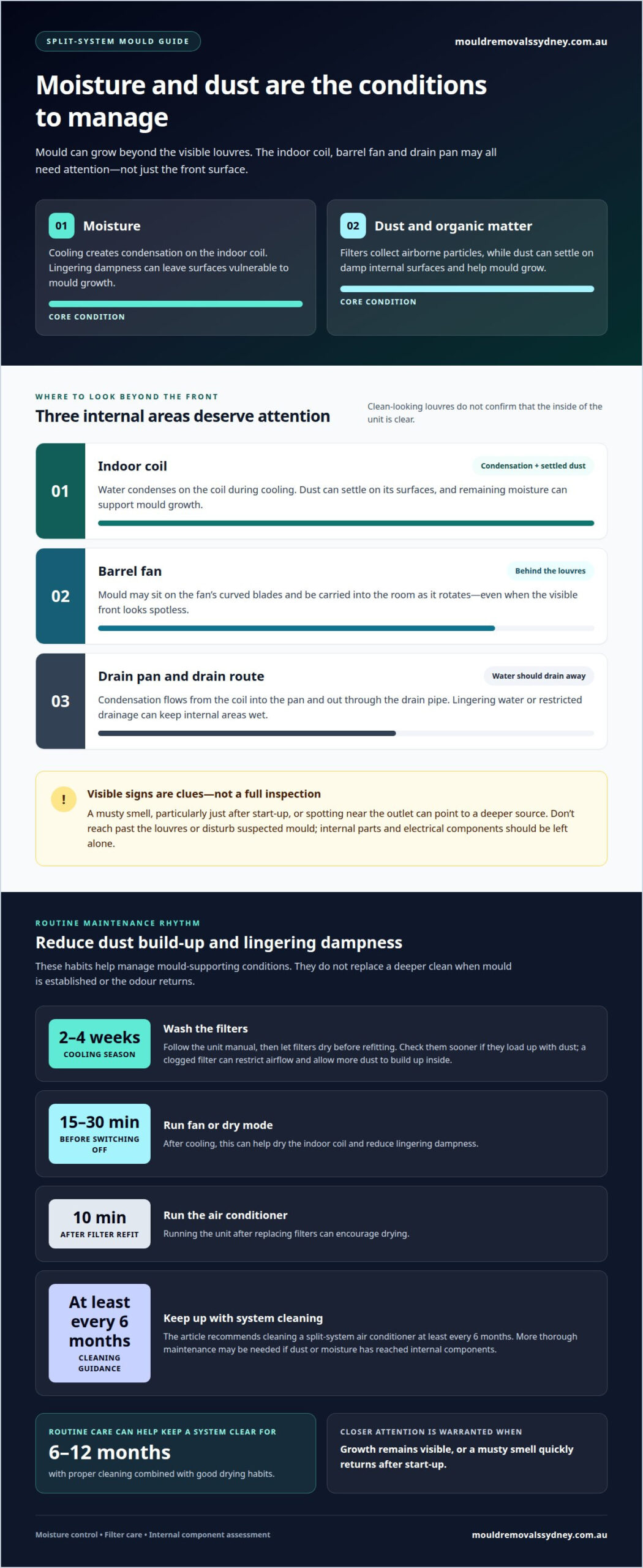
Moisture and dust are the main conditions to manage inside a split system. After cooling, dampness can remain around the indoor coil, while filters collect airborne particles. Running the fan or dry mode for fifteen to thirty minutes before switching off can help dry the coil. This habit supports prevention, but it doesn’t replace cleaning when mould is established.
For split-system upkeep in NSW, focus on moisture control, regular filter cleaning and appropriate servicing. These measures don’t determine every property’s legal obligations, which depend on the circumstances. Don’t treat filter cleaning as a complete mould-remediation plan if visible growth or a persistent musty smell remains.
Can mould in an air conditioner cause health problems? Mould exposure can affect people differently, and some may experience irritation or discomfort. A musty odour or visible growth is a reason to address the moisture and contamination, rather than relying on fragrance or a quick louvre wipe.
During the cooling season, wash split-system filters every two to four weeks. Follow the unit manual for removal and cleaning, then let the filters dry before refitting. A clogged filter can restrict airflow and allow more dust to build up inside the unit. If electrical parts get wet while replacing a filter, stop and seek professional help.
- Set a reminder for filter cleaning every two to four weeks during cooling season.
- After replacing filters, run the air conditioner for 10 minutes to encourage drying.
- Use fan or dry mode for fifteen to thirty minutes before switching the system off.
Keep the schedule practical. A Sydney household that uses cooling frequently may need to check filter condition more often than one that uses the unit occasionally. Dusty rooms, pets and nearby renovation work can also load filters sooner. Check the filter itself rather than waiting for a smell or reduced airflow to prompt maintenance.
Routine filter care is only one layer. A proper clean combined with good drying habits can help keep a system clear for the normal six to twelve month interval. The page’s maintenance guidance recommends cleaning a split-system air conditioner at least every 6 months. More thorough maintenance may be needed when dust or moisture has reached internal components.
Drying habits reduce lingering dampness, while filter cleaning limits dust circulating through the system. Together, these steps help manage the conditions that support mould. If growth remains visible after routine care, or the odour quickly returns after start-up, the issue may extend beyond the removable filters and needs closer attention.
Common mould locations inside split systems
Clean-looking louvres don’t reveal every surface inside a split system. Mould can grow on damp, dust-coated components behind the front cover, out of sight. The indoor coil, drain pan and barrel fan deserve attention because they encounter condensation, collected debris or moving air. Knowing where growth can occur explains why wiping the fascia may not address the source.
The barrel fan sits directly in the airflow. Mould on its curved blades can be carried into the room as the fan rotates. A contaminated fan may sit six centimetres behind louvres that appear clean. If you’re investigating mould in a split system air conditioner in Sydney, remember that a clean appearance doesn’t confirm the internal parts are clear.
The indoor coil is another potential growth area. During cooling, water condenses on the coil, and dust can settle on its surfaces. If moisture remains, that combination can support mould growth. Because the coil is tucked inside the unit, looking through the front opening may not reveal its full condition.
Condensation runs from the coil into a drain pan, then leaves through the drain pipe. Water may remain in the pan for prolonged periods during warm weather. Damp residue or standing water makes the pan worth assessing. The drain route matters too: restricted drainage can keep internal areas wet instead of carrying water away.
- Behind the louvres: The barrel fan can hold contamination even when the front looks spotless.
- At the indoor coil: Condensation and settled dust can combine on its surfaces.
- In the drain pan: Water may linger before flowing into the drain pipe.
- Along the drain route: Check for signs that water isn’t leaving the unit as expected.
Use these locations to guide observation, not to dismantle the system. A torch can help you view accessible areas, but don’t reach past the louvres or disturb suspected mould. The fan’s position behind the fascia makes a thorough inspection difficult without opening the unit. Keep clear of internal parts and electrical components.
Compare visible signs with how the unit behaves. A musty odour at start-up alongside spotting near the outlet may suggest a deeper source. If the smell persists after surface cleaning, the coil, fan and drain pan need closer assessment together. A single visible patch won’t show how far contamination extends. For mould in a split system air conditioner in Sydney, identifying the affected components helps determine what cleaning should address.
When mould appears to reach internal components, split-system air conditioner cleaning can address areas beyond the visible front. A focused assessment should consider the fan, coil and drainage path together, since cleaning one accessible surface may leave another damp or contaminated area untreated.
Dust and organic matter as mould food
Moisture alone doesn’t explain why mould takes hold inside a split system. Dust and other organic matter can provide material for mould to grow on when they settle on damp surfaces. The indoor coil is one example: cooling produces condensation, while airborne particles can collect on the coil and nearby components.
A split system moves large amounts of air through a room. That airflow can carry dust, organic matter and mould spores towards the filter and internal surfaces. The filter catches some particles, but it doesn’t leave every internal surface dust-free. Particles that pass the filter or settle near the fan can remain inside the unit, especially where airflow is slower.
Mould spores travel through the air and can begin growing after landing on a wet or damp spot. In a split system, a dust-coated surface near condensation can provide both moisture and organic material. Mould can grow in as little as 24 hours when conditions allow. That doesn’t mean every dusty unit will develop mould; moisture is a key part of the picture.
Everyday activity can add particles to the air. For example, opening a window beside a dusty outdoor area can bring in airborne material, while fabric fibres and household dust can circulate indoors. The air conditioner then moves that air through the room. This helps explain why dust can build up beyond the visible filter, including around the coil and barrel fan.
- Filter: Dust collected here shows what the system has captured, but not what may have passed through.
- Coil: Dampness and settled particles can combine on its surfaces during cooling.
- Barrel fan: Rotating blades can collect deposits and sit directly in the airflow.
- Drain pan: Organic debris can settle where condensate collects before draining away.
Treat dust build-up as a maintenance clue, not proof of mould. A dusty filter may simply need routine cleaning, while a musty odour or visible growth on internal components calls for closer attention. Avoid brushing or blowing debris deeper into the unit, as this can spread particles across other surfaces rather than remove them.
Reducing airborne dust and keeping accessible filters clean can limit the material entering a split system. But household dust control doesn’t reach every internal component. If contamination is visible beyond the filter, or the same musty smell returns after routine upkeep, the coil, fan and drainage area may need a more thorough assessment.
How condensation forms on an air-conditioner coil
During cooling, a split system draws room air across its indoor coil. The coil becomes colder than the surrounding air’s dew point, so water vapour forms liquid droplets on the coil surface. This condensation is a normal part of cooling, not proof of a fault or mould. For example, a cold drink can collect droplets in humid air through the same basic process.
The droplets need somewhere to go. Condensation flows from the indoor coil into the drain pan, then through the drain pipe to its outlet. That route matters because water left around the coil or pan keeps nearby surfaces damp. Dust and organic matter on those surfaces can create conditions that support mould growth.
Think of the route as three connected parts: coil, pan and drain pipe. If water moves through each part and exits, the unit can manage the moisture produced during cooling. If drainage is restricted, water may linger in the pan or collect where it shouldn’t. The location of dampness helps explain why checking only the visible louvres can miss the cause.
- Coil: Cold metal surfaces collect condensation during cooling.
- Drain pan: This receives water running off the indoor coil.
- Drain pipe: This carries water from the pan to the drainage point.
Warm weather can make the drain pan an area to watch, since water may remain there for prolonged periods. A damp patch near the indoor unit, visible water or a musty smell can prompt closer attention to the drainage route. These signs don’t identify the precise cause by themselves, but they make the coil-to-drain path important to inspect.
Drainage and drying are related but different. The drain pipe carries liquid away; airflow after cooling can help dry residual moisture on the coil. Running fan or dry mode for fifteen to thirty minutes before switching the system off can help dry the coil. This habit supports moisture control, but it won’t clear a blocked drain or remove mould established on internal parts.
Keep observations visual and safe. Note whether water exits at the drainage point during operation, and watch for water collecting around the indoor unit. Don’t reach into the system or wet electrical components to investigate. If water remains in the pan, drainage appears obstructed, or musty odours persist, the coil, pan and pipe need closer assessment together. This joined-up view helps distinguish ordinary condensation from a moisture problem that may encourage mould.
What are signs of mould in a split system air conditioner?
A musty smell in the first few minutes after start-up is a useful warning sign. Note whether it returns each time the split system runs or appears only once. A recurring odour linked to operation suggests the unit deserves closer attention, particularly if the room smells normal when the system is off.
Visible marks can offer another clue. Look at accessible louvres and the area around the indoor unit for dark or speckled patches. Marks on the front don’t reveal how much may be on internal components, though. A clean-looking fascia also doesn’t rule out growth deeper inside, such as on the barrel fan.
Look for a combination of clues rather than relying on one alone. For example, a recurring musty odour alongside visible spotting near the outlet makes an internal source more plausible. Water collecting around the indoor unit or a damp-looking area may also warrant attention to drainage. These observations can guide an inspection, but they don’t identify the exact cause by themselves.
- Smell: A musty odour appears during the first few minutes after start-up, or keeps returning during use.
- Appearance: Speckled or dark marks show on accessible louvres or nearby surfaces.
- Moisture: Water or dampness appears around the indoor unit or its drainage area.
- Pattern: The smell occurs when the air conditioner runs, rather than throughout the room all day.
Use a simple observation routine. Before switching the system on, notice whether the room already has an unusual smell. Then note the odour during the first few minutes, where it seems strongest, and whether it fades or persists. Check visible surfaces without reaching behind the louvres. This record can help distinguish a brief, isolated smell from a repeatable pattern.
Don’t treat fragrance, a quick wipe or a clean filter as proof that internal mould is gone. Those measures may change the smell or appearance without showing what’s happening on the coil, barrel fan or drain pan. Avoid dismantling the unit to investigate; internal parts and electrical components aren’t suitable for casual handling.
If the same musty smell returns after start-up, or visible marks appear beyond surfaces you can safely see, arrange a mould inspection. An inspection can assess whether the signs point to contamination inside the air conditioner or another moisture source. Clear observations, such as when the smell starts and where marks appear, help focus that assessment.
In Sydney homes, a persistent odour linked to air-conditioner use is worth addressing, especially when paired with visible growth or dampness. Record the pattern, avoid disturbing suspected mould, and have the affected area assessed. Prompt attention can help identify whether the issue is confined to accessible surfaces or extends into the system.
ABC Mould Cleaning Solutions: Air Purification & Scrubbing
ABC Mould Cleaning Solutions can help when a musty smell, visible growth or recurring contamination points beyond routine filter care. Its Mould Inspection Services assess the affected area, while Mould Remediation addresses mould on surfaces and airborne spores. Air Purification & Scrubbing can support the wider response by targeting airborne contaminants.
For mould inside a split system, professional assessment can help identify whether contamination extends beyond visible louvres and whether nearby areas also need attention. The appropriate response depends on where mould is found and the moisture conditions contributing to it. If indoor dampness is linked to the subfloor, Subfloor Ventilation System Installation may also be relevant.
Contact ABC Mould Cleaning Solutions to discuss mould concerns in your home.
Choose the next step for a cleaner indoor environment
If a musty smell or visible growth keeps returning, consider whether the issue needs more than routine upkeep. A professional assessment can help clarify where contamination is present and what response is appropriate. For mould in a split system air conditioner in Sydney, the next step may involve looking beyond the unit to other affected areas of the property.
ABC Mould Cleaning Solutions offers Mould Inspection Services to assess concerns, Mould Remediation to address mould, and Air Purification & Scrubbing as part of a broader response. The right focus depends on what the inspection identifies, rather than on the smell alone. This gives you a practical starting point for addressing the issue at its source.
Contact ABC Mould Cleaning Solutions to discuss your mould concerns and take a clear next step towards a healthier-feeling home.
Frequently Asked Questions
Does professional cleaning remove mould?
Yes, professional cleaning can remove mould when treatment reaches contaminated internal parts, not only the grille. ABC Mould Cleaning Solutions uses the Goldmorr System, applied only by Goldmorr-approved, trained master technicians; Goldmorr has supplied solutions since 1998. All treatments are safe for pets, people, and the environment. ABC offers optional mycotoxin testing referrals and states: “We Will Beat Any Written Quote By 10%.”
How often should an air conditioner be cleaned?
Clean or wash removable filters every two to four weeks during the cooling season. For the complete split system, the maintenance guidance recommends professional cleaning at least every 6 months. The filter routine and the full clean address different parts of the job: a washable filter doesn’t remove mould or accumulated debris from internal components. Follow the unit manual for filter handling and cleaning.
How can I maintain a mould-free split system air conditioner?
Keep filters clean, manage moisture and pay attention to recurring odours. After replacing filters, run the system for 10 minutes to encourage drying. After cooling, fan or dry mode for fifteen to thirty minutes can help dry the coil. These habits help limit conditions that support growth, but they don’t remove established contamination. Check for recurring smells or dampness as part of ongoing care.
Why does mould grow inside air conditioners?
Mould can grow when airborne spores land on a damp surface with organic material. Inside a split system, condensation can leave moisture on components, while dust and debris provide material for growth. For example, dust on a damp coil creates more favourable conditions than on a clean, dry one. The risk relates to the unit’s moisture and cleanliness, not simply whether it’s switched on.
What causes mould in split system air conditioners?
Moisture, settled dust and spores combine to create conditions for mould. Cooling produces condensation on the indoor coil, and water should flow into the drain pan and out through the drain pipe. If water lingers or debris accumulates, damp internal surfaces can persist. Room dust and organic particles can enter with circulating air, so mould may develop beyond the visible filter.
How can I safely clean mould from a split system air conditioner?
Limit DIY cleaning to removable filters and accessible surfaces covered by the unit manual. Turn the system off before handling filters, let washed filters dry fully, and keep water away from electrical parts. Don’t reach behind the louvres or dismantle the unit to clean the coil or fan. Mould on internal components calls for professional equipment cleaning, particularly where access involves electrical parts or working at height.
When should a split system air conditioner be professionally cleaned?
Arrange professional cleaning if a musty smell keeps returning, visible growth appears beyond accessible surfaces, or moisture collects around the indoor unit. A smell that returns after routine filter care can point to contamination deeper inside. Cleaning is also appropriate when dust or debris has built up on internal parts. Don’t wait for a visible patch to spread before investigating persistent signs.
How often should split system air conditioners be serviced in Sydney?
For mould prevention, the maintenance guidance recommends cleaning a split system at least every 6 months. That cleaning interval is separate from washing filters, which should happen more often during cooling season. Frequent use, dusty indoor conditions or recurring dampness can make closer attention useful. Follow the manufacturer’s maintenance instructions, and arrange assessment sooner if the unit develops a persistent musty odour or drainage issue.