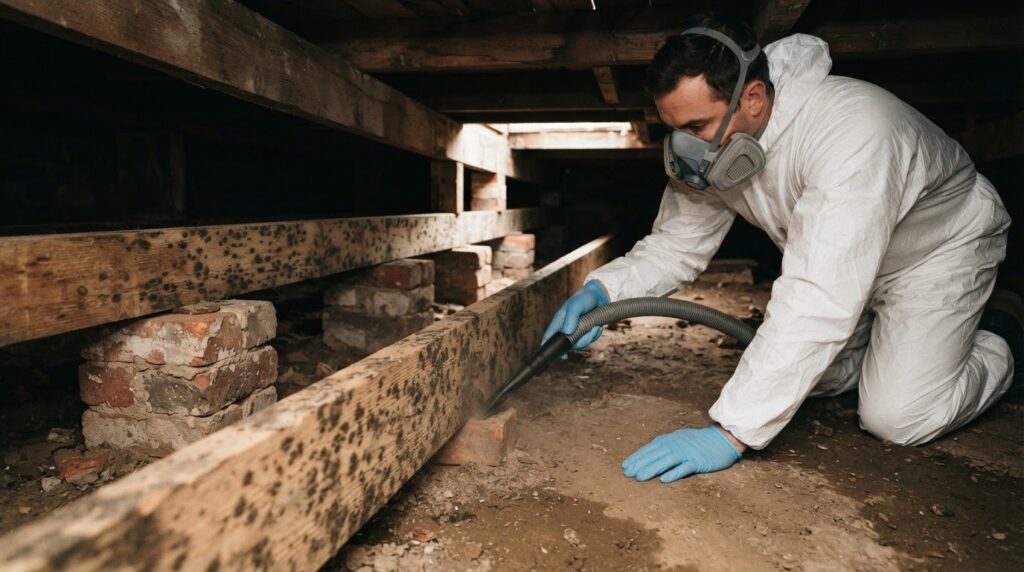
Mould on timber subfloor is a warning that moisture is lingering beneath your home. Poor ventilation, drainage issues, plumbing leaks and damp soil can all contribute. Removing visible growth without addressing the moisture may leave conditions for it to return.
Finding mould beneath your home can be concerning. Spores and fragments may affect indoor air, and children, older people, and people with allergies or weakened immune systems may be more vulnerable. A systematic response addresses both affected surfaces and the source of dampness.
This guide explains how subfloor mould develops, what health concerns to consider and how physical removal from timber, soil and brickwork fits into remediation. You’ll also learn why drainage and ventilation improvements matter, and when professional inspection and mould remediation can help address a persistent or extensive problem.
Key Takeaways
- Find and address the moisture source first, as cleaning visible growth alone may not prevent it from returning.
- Improve drainage and subfloor airflow to help reduce lingering dampness; the right approach depends on what is allowing moisture to build up.
- Watch for poor ventilation, plumbing leaks, drainage problems and persistently damp soil as possible contributors.
- Consider indoor air exposure and take particular care where children, older people or people with allergies or weakened immune systems are present.
- Effective remediation involves physically removing mould from affected surfaces, then addressing the conditions that support its growth.
What is subfloor mould?
Subfloor mould is fungal growth on materials beneath a home, including timber, particleboard, brickwork and soil. Mould on timber subfloor indicates lingering moisture; growth may appear as patches, discolouration or a surface coating. Timber and particleboard provide organic material for mould, while damp soil can keep the space below the floor humid.
Find the moisture source before treating affected surfaces. Check for plumbing leaks, water entry after flooding, damp soil, standing water and blocked airflow. A leak may be fixed while clay soil remains wet after rain, so look beyond the initial incident. Record where growth appears and whether the same area becomes damp again after rainfall.
Timber mould can look like surface staining or fuzzy growth. Dry rot is decay that can leave timber weakened, soft or crumbly; termite damage may show galleries or hollowed sections. These signs can overlap or be hidden, so appearance alone cannot confirm the cause. A moisture meter and thermal imaging can help identify damp areas, while a building inspection can assess timber damage.
Moisture control depends on both the source and the subfloor’s ability to dry. Poor ventilation allows damp air to linger around joists and flooring. Check whether vents are obstructed by soil or debris, and whether water collects beneath the house. A guide recommends at least 400 mm of clearance between ground and floor joists in Australian homes. Treat this as practical guidance, not a universal legal rule.
Ground drainage matters too. If rainwater flows towards the building, water can collect against foundations or enter the subfloor. A guide recommends ground falling away from Australian homes at a 1:100 gradient. This figure is guidance, not a substitute for assessing the site, soil and existing drainage. Flooding, leaking pipes and persistent ground moisture each require attention to the underlying water source.
Start inspecting from a safe access point. Use a torch to scan joists, soil, brickwork, vents and pipework before entering. Wear a well-fitting mask if mould exposure is possible, and don’t enter if access is unstable, flooded or restricted. Photograph affected areas and note odours, damp patches and visible leaks. Stop if conditions feel unsafe.
No single rule identified here covers every mould-remediation job and subfloor ventilation system in Australia. Building requirements depend on the property and the work involved, so ventilation guidance should not be treated as a blanket legal requirement. The practical first step is to identify the moisture source, then address drying and airflow alongside visible growth.
Drainage and ventilation improvements
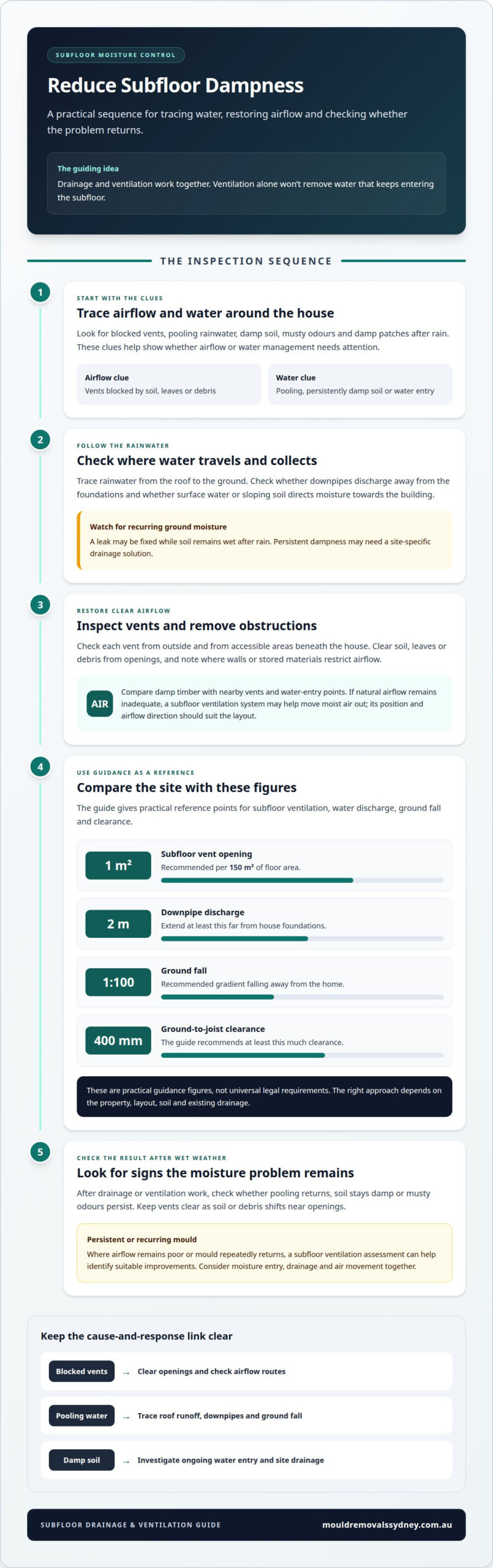
Start by tracing airflow and water around the house. Blocked vents, pooling rainwater and damp soil each need a different response.
Effects of Poor Subfloor Ventilation
Poor ventilation traps moisture beneath floorboards, leaving humid air around joists and other timber. Mould may also grow on subfloor soil, while damp conditions continue to affect timber and flooring. Look for blocked vents, persistent musty odours and damp patches after rain. These clues help pinpoint where airflow or water management needs attention, rather than treating visible mould alone.
Preventive Drainage and Ventilation
Prevention combines clear airflow routes with drainage that moves water away from the building. A guide recommends 1 square metre of subfloor vent opening per 150 square metres of floor area. It also recommends extending downpipes at least 2 meters from house foundations. These figures offer practical reference points; the building layout, existing vents and water movement determine what improvements suit the site.
Trace rainwater from the roof to the ground. Check that downpipes discharge away from foundations and that surface water does not collect beside the house. Soil sloping towards the building can direct moisture underneath. Correcting water flow may involve drainage improvements; persistently wet soil may need a site-specific solution. Ventilation alone won’t remove water that keeps entering the subfloor.
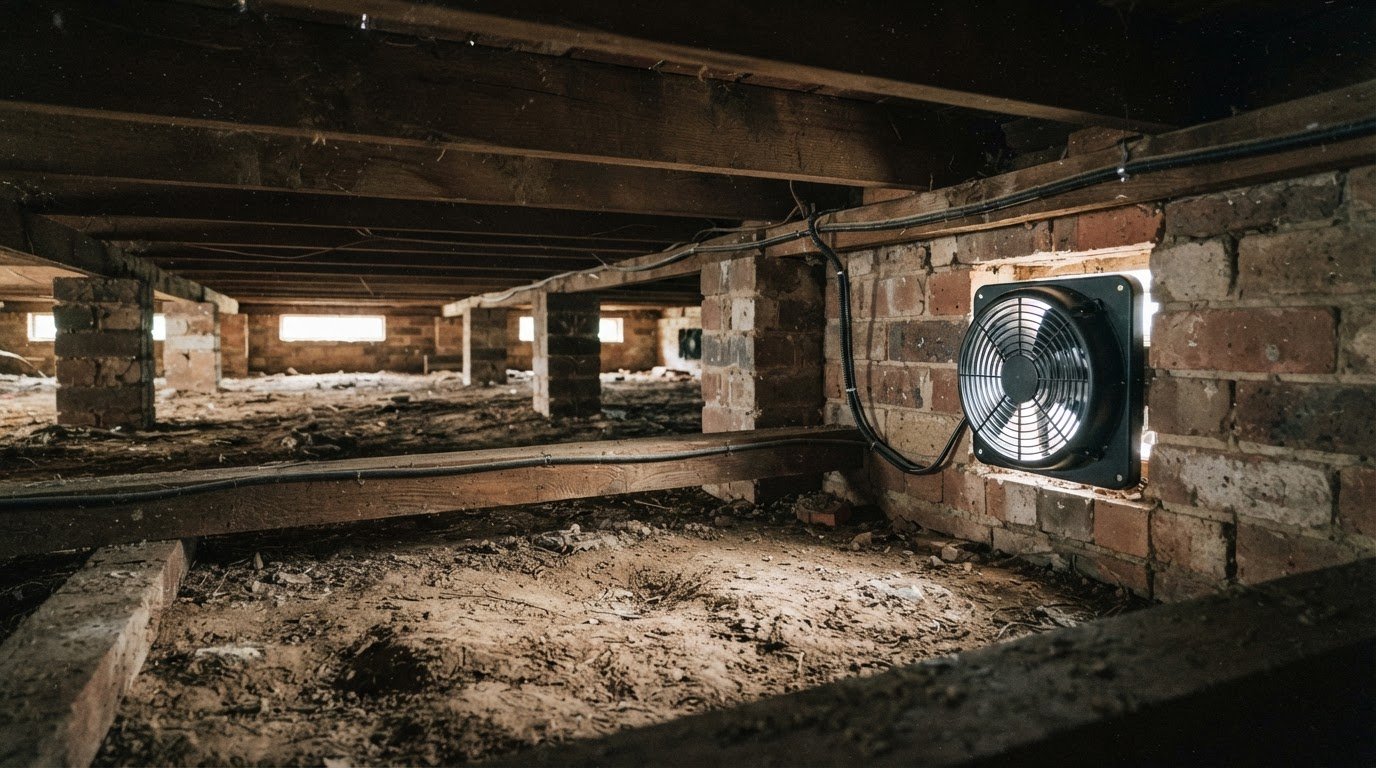
Inspect each vent from outside and from accessible areas beneath the house. Remove soil, leaves or debris blocking openings, and note where walls or stored materials restrict airflow. Compare damp timber with nearby vents and water entry points. If natural airflow remains inadequate, a subfloor ventilation system may help move moist air out. Its position and airflow direction should suit the subfloor layout.
After drainage or ventilation work, observe how the area responds to wet weather. Check whether pooling returns, soil remains damp or musty odours persist. These signs may indicate that the moisture problem still needs attention. Keep vents clear as part of ongoing maintenance, especially after soil or debris shifts near openings.
Where airflow remains poor or mould repeatedly returns, a subfloor ventilation assessment can help identify suitable improvements. Effective remediation considers moisture entry, drainage and air movement together, rather than relying on fans to solve every cause.
Common causes of mould beneath a subfloor
Mould develops when moisture remains available on surfaces beneath a house. Timber and particleboard provide organic material that supports growth. Poor ventilation can trap damp air around joists, floorboards and stored materials. Humidity above 55% can contribute to mould growth. Look for growth near damp soil, leaking pipes or areas with limited airflow. These clues help connect visible mould with conditions beneath the floors.
Plumbing leaks are a direct source of subfloor dampness. A slow leak beneath a bathroom or kitchen can wet nearby timber without causing obvious flooding indoors. Check for damp patches around pipe routes, drips, water staining and persistent moisture beneath fixtures. A repaired leak may not be the only source: soil can remain wet after rain and keep the surrounding subfloor damp.
Rainwater and poor drainage create another route for moisture. Water may collect beneath a house when runoff enters through openings or the ground slopes towards the building. Flooding can wet soil, brickwork and timber at once. Even after water recedes, damp soil may continue releasing moisture into the enclosed space. Note whether affected areas align with low points, water entry paths or ground that stays wet after rainfall.
Inadequate ventilation can worsen these problems. Restricted vents limit air movement, allowing humid air to linger rather than disperse. Soil, leaves or debris may block openings, and nearby objects can further restrict airflow. Mould may grow on soil as well as timber. Spores and fragments can then move from the subfloor towards walls, floors or heating and air-conditioning ducts.
Timber mould indicates excess moisture, but it is not the same as decay. Mould fungi can grow on treated and untreated timber; unlike decay fungi, they don’t affect its mechanical or strength properties in the same way. Persistent dampness can still harm timber, however. Untreated moisture may contribute to joist rot, floor damage and further mould growth.
Use the pattern of growth to guide your investigation. Growth beside plumbing may point to a leak; mould across soil may indicate broader ground moisture or poor airflow. A musty smell near blocked vents suggests trapped damp air. These clues don’t confirm the source. Trace water entry, inspect pipework and note ventilation obstructions before deciding which conditions to address.
Health effects and vulnerable groups
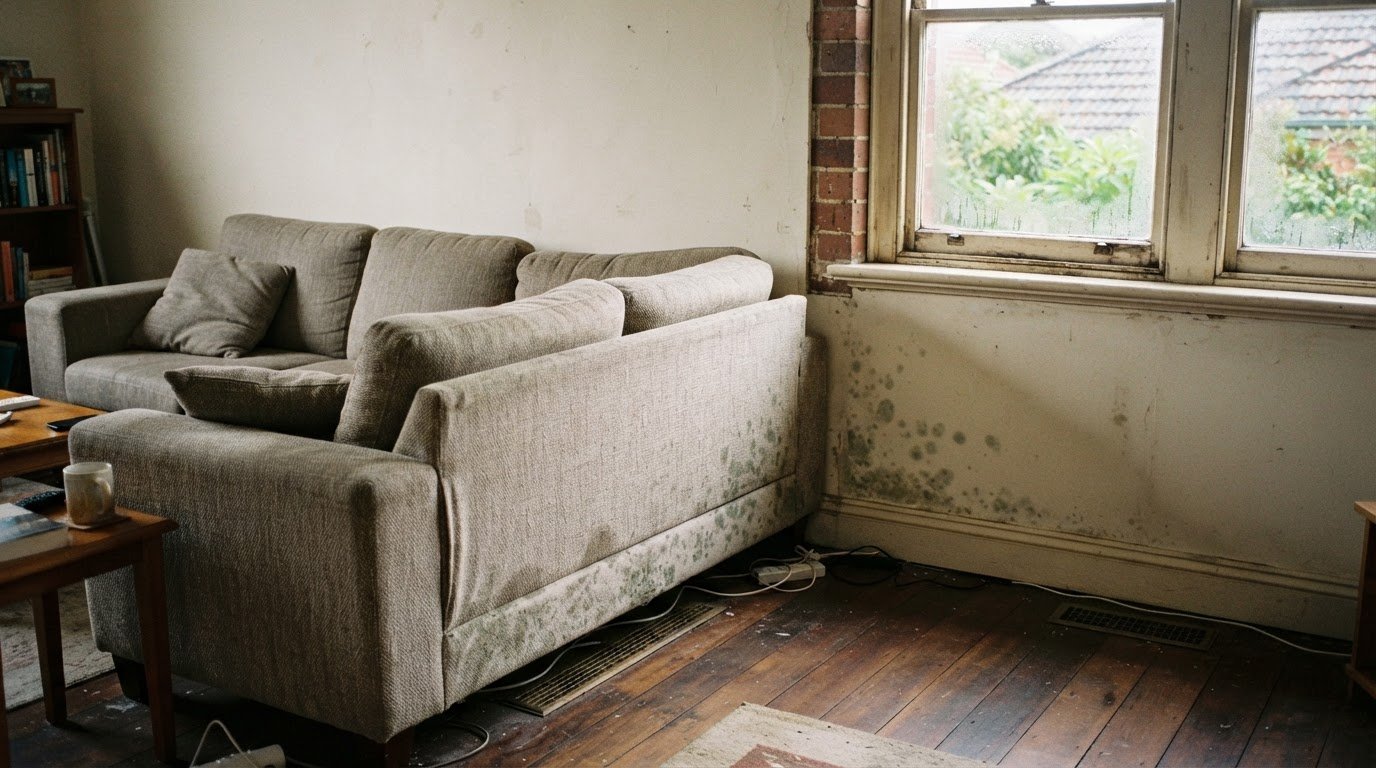
Mould beneath a house can affect more than the subfloor. Spores and fragments may move into walls, floors, and heating or air-conditioning ducts. Once they reach living spaces, occupants may encounter them in indoor air. The amount of visible growth alone does not show how far particles have travelled. Consider the whole pathway from affected joists to rooms above.
Mould spores and fragments are allergens. Some moulds also produce mycotoxins, which can have toxic health effects. Exposure may contribute to respiratory problems, particularly for people who are already more susceptible to mould. A musty smell near a floor, visible growth around a service opening or mould returning indoors can signal a problem that needs attention. These signs do not identify a specific health effect or mould type.
Some people may be more affected by subfloor mould. Take extra care if the home includes:
- People with allergies or weakened immune systems.
- Children and older people.
- Occupants who notice respiratory problems around affected rooms.
These groups should avoid unnecessary exposure while the source and spread are assessed. Keep children away from open subfloor access points, and don’t disturb visible growth casually. A patch beneath one room may connect to air pathways through floor gaps or ducts.
There is also a structural concern. Persistent moisture can harm timber and may contribute to damage in joists and flooring. Mould fungi themselves don’t weaken timber in the same way as decay fungi, but damp conditions can support timber decay. An inspection should consider both visible growth and structural timber, especially near wet areas or previous leaks.
Follow a careful inspection sequence. Start at the access hatch and scan with a torch before entering. Note mould on joists, soil, brickwork or the underside of flooring. Record musty odours, damp patches, standing water and growth near ducts or pipework. Avoid disturbing affected material, which can release spores and fragments into the air. Stop if access is unsafe or the space is flooded.
Health concerns can’t be judged by colour or appearance alone. A dark patch doesn’t identify a species, and a clean-looking floor doesn’t prove hidden cavities are unaffected. Note whether occupants report respiratory problems in particular rooms, without assuming the cause. A professional inspection can assess visible growth, moisture conditions and possible spread through floor voids.
Act promptly if mould is extensive, keeps returning or appears alongside damp or damaged joists. Treating the affected area without resolving the moisture can leave conditions that support further growth. If indoor air pathways or vulnerable occupants are a concern, a professional mould inspection can help establish the extent of contamination and the appropriate next steps.
Physical mould removal from soil, timber and brickwork
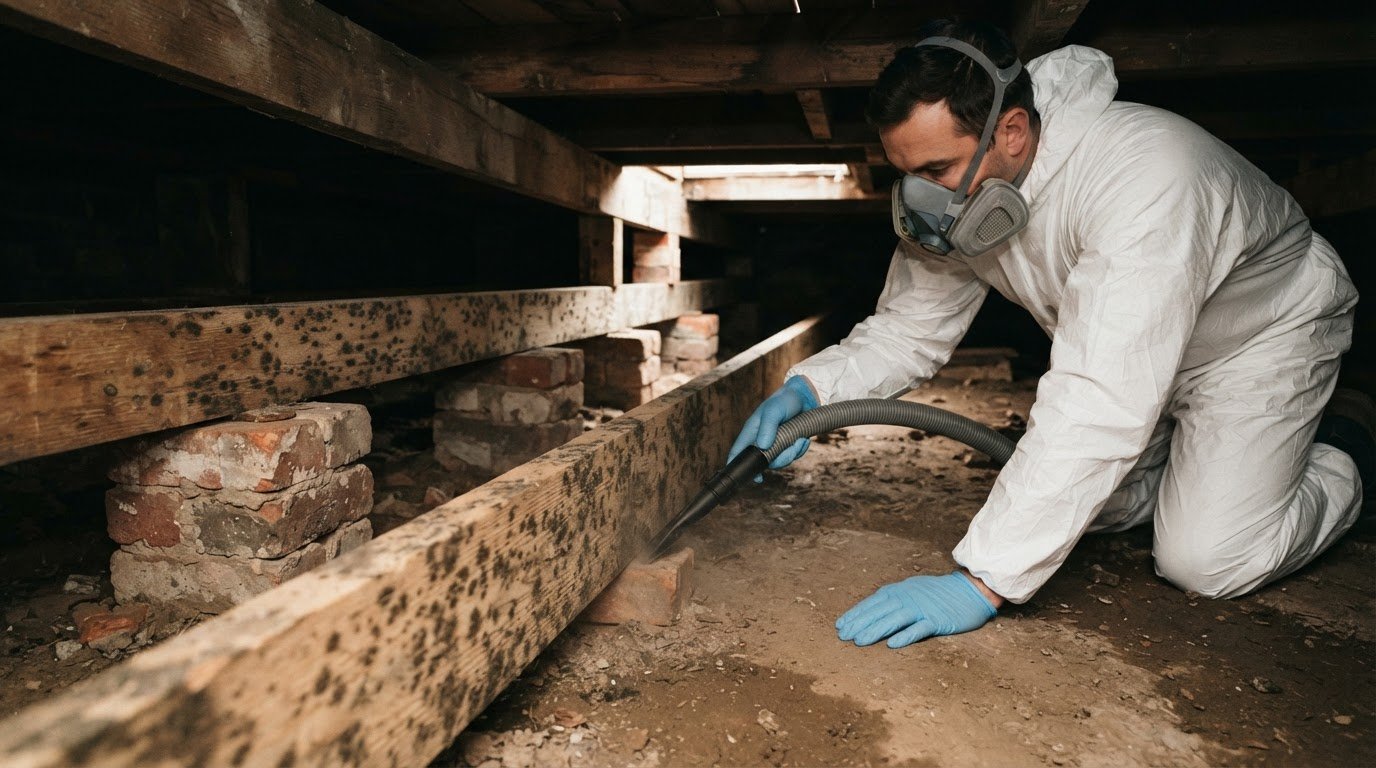
Effective treatment removes visible mould growth from affected materials. Spraying alone doesn’t remove mould or debris from timber, soil or brickwork. First, stop the moisture source and allow the subfloor to dry. Otherwise, damp conditions can support new growth after cleaning. The method should suit the material, level of contamination and surface condition.
On timber, physical removal targets mould and residue on the surface. A specialist can assess whether affected joists or boards are sound enough to clean. Mould fungi can grow on treated and untreated timber, but they don’t affect its strength like decay fungi. Persistent dampness can still damage timber, so assess both the growth and the wood beneath it.
Replace timber if inspection finds decay, loss of structural integrity or damage that cleaning cannot address. Surface mould alone does not automatically mean a board or joist needs replacing. The decision depends on the timber’s condition, the extent of damage and whether it can be cleaned safely and effectively. If joists appear soft, crumbly or compromised, arrange a professional assessment before disturbing or removing them.
Mould on soil also needs physical removal. A surface treatment or spray alone leaves contaminated material in place. Where growth is mainly on soil, carefully loosening the affected top layer can help expose it for removal. Avoid stirring up dust or spreading debris through the subfloor. The approach should account for access, soil condition and whether moisture continues to reach the area.
Brickwork can also carry visible growth and residue. Remove contamination from affected surfaces, then allow them to dry. Porous or uneven brick may hold debris in crevices, so a quick surface spray can miss material. Check adjoining timber and soil too; treating one surface while leaving nearby mould untouched can undermine comprehensive remediation.
Keep the work controlled. Avoid dry brushing or vigorous disturbance that can send spores and fragments into the air or towards floor openings. Contain removed material and debris, and don’t spread it through the home. If visible growth covers more than 1 square metre, professional help is recommended. Recurrent growth, extensive contamination or affected structural timber also calls for a careful assessment.
After removing mould, confirm that affected surfaces are dry and the moisture source has been addressed. Inspect the same area again for fresh growth or dampness. If mould keeps returning, cleaning alone hasn’t resolved the conditions supporting it. For a thorough assessment and physical removal, request professional mould remediation.
ABC Mould Cleaning Solutions: Subfloor Ventilation System Installation
ABC Mould Cleaning Solutions installs subfloor ventilation systems to improve airflow where damp conditions persist. If mould returns after removal, ventilation may be part of a broader response that also addresses the moisture source.
Mould Remediation targets affected areas, while Mould Inspection Services can assess the extent of the issue and contributing conditions. Air Purification & Scrubbing can address airborne particles as part of the response. The appropriate service depends on what the subfloor inspection finds.
Discuss your subfloor concerns and next steps directly. Contact ABC Mould Cleaning Solutions.
Take the next step towards a dry, healthier subfloor
Finding mould on timber subfloor is a reason to act, not panic. Turn what you’ve observed into a clear plan: note where growth appears, whether it returns and what changes after rain. These details can help focus an assessment on the conditions affecting your home and the work needed to address them.
If the problem persists, covers a large area or is near timber that appears damaged, avoid disturbing it further. A considered assessment can clarify the extent of the issue and the appropriate response for the property. Decisions can then be based on actual subfloor conditions rather than guesswork.
For help deciding what to do next, contact ABC Mould Cleaning Solutions. A practical next step can bring the problem into focus and help you move forward with confidence.
Frequently Asked Questions
Do you provide long-term prevention?
Yes. ABC Mould Cleaning Solutions offers Subfloor Ventilation System Installation and recommendations to help prevent future mould growth. The right preventive measures depend on what the inspection finds, such as persistent dampness or limited airflow. Goldmorr has supplied mould-removal solutions since 1998. ABC also states, “We Will Beat Any Written Quote By 10%.” Prevention focuses on addressing the conditions that let mould return, rather than relying on a one-time surface treatment.
How do you prove the mould has been removed?
A written report can document the inspection and work completed, while laboratory analysis can provide additional evidence. Pre- and post-treatment samples may be sent to an accredited laboratory for assessment. ABC Mould Cleaning Solutions provides Mould Inspection Services and written reports. Mycotoxin testing referrals are also available as an optional service. Ask what evidence is appropriate for the affected area and the purpose of the assessment, especially if contamination was hidden.
Isn’t fogging or spraying enough to fix the mould?
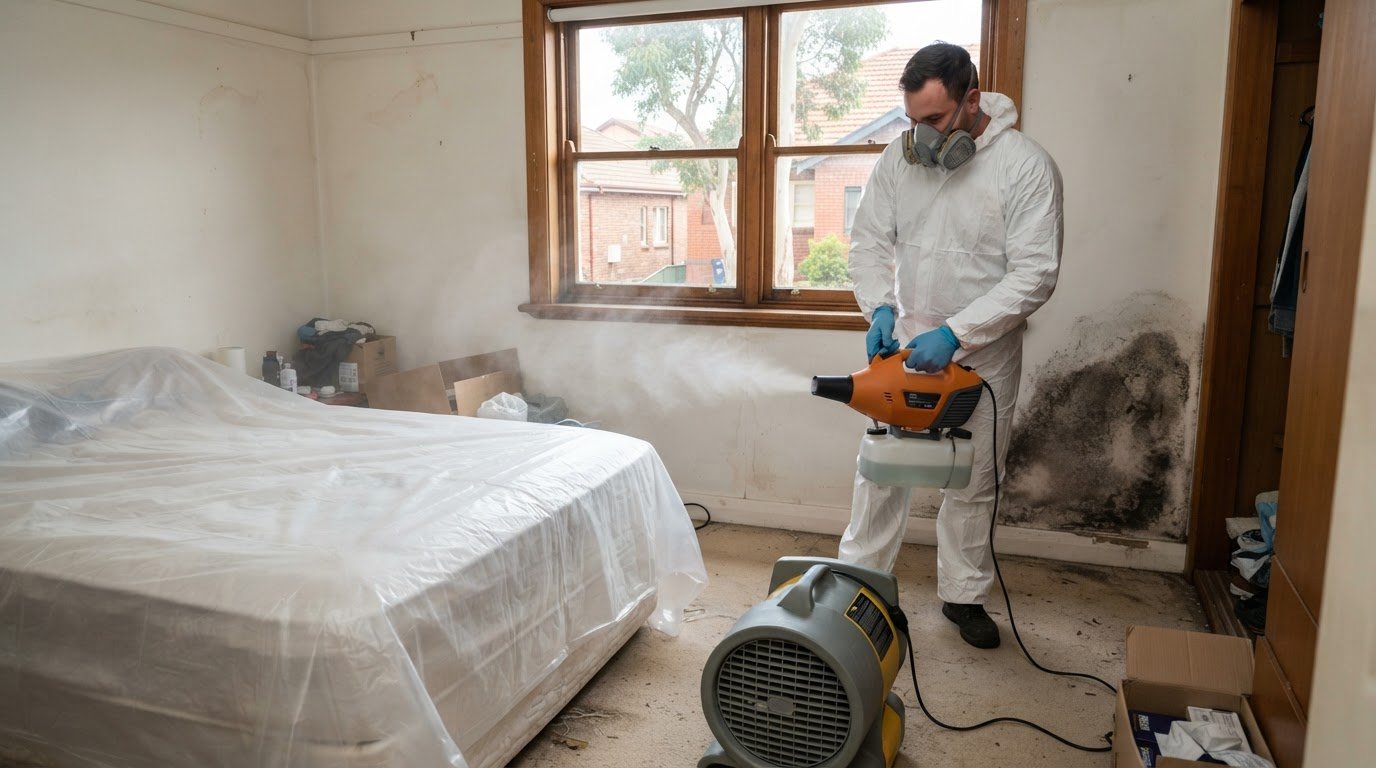
No. Fogging can address surface mould and airborne spores, but it doesn’t replace identifying moisture problems or physically removing contamination from affected materials. ABC uses the Goldmorr System, a biodegradable fogging process applied only by Goldmorr-approved and trained master technicians. Treatment safety depends on the products used and how they are applied, so ask about precautions for people, pets and the environment. A complete response considers visible growth, airborne particles and conditions that could support renewed mould growth.
What’s Actually Causing This Problem in Your Home?
The cause may be a leak, water entering after rain, damp soil or moisture trapped by restricted airflow. The location of growth can offer useful clues. For example, mould beneath a bathroom may warrant examining nearby pipework, while damp soil across a wider area may point to ground moisture. ABC’s Mould Inspection Services assess humidity, ventilation and structural dampness to help identify contributing conditions and guide a tailored treatment plan.
You’ve Tried Everything – So Why Does the Mould Keep Returning?
Mould often returns when cleaning removes visible growth but leaves the moisture source or affected material unresolved. A repaired leak may not explain damp soil after rain, and a cleaned surface may still be in a poorly ventilated space. Repeated growth in the same location is a reason to reassess moisture, airflow and hidden contamination. An inspection can help establish whether the next step involves remediation, ventilation or water-damage restoration.
What causes mould on a timber subfloor in Australia?
Common causes include plumbing leaks, flooding, damp ground, poor drainage and inadequate subfloor ventilation. Australian homes can experience several causes at once, such as rainwater collecting beneath a raised timber floor or a slow leak wetting nearby bearers. Timber provides organic material for mould when moisture persists. The location of growth offers a useful clue: near a pipe, beneath a wet area or across soil that stays damp.
What humidity and moisture levels cause mould growth in timber subfloors?
Subfloor mould growth can occur when humidity rises above 55%. That figure is a useful warning point, not a guarantee that mould will appear at a precise reading. Local dampness also matters: a wet joist beside a leak can be affected even if conditions elsewhere differ. Timber mould indicates excessive moisture. Readings should be considered alongside visible dampness, ventilation and signs of water entry.
How do you remove mould from timber floor joists and bearers?
First, identify and address the moisture source, then assess whether affected joists and bearers remain sound. Mould should be physically removed from affected surfaces; spraying alone leaves contamination in place. Avoid disturbing growth unnecessarily, since this can release spores. Timber that is soft, crumbly or structurally compromised needs assessment for decay and possible replacement, rather than surface cleaning alone. Drying and moisture control are essential parts of treatment.