Flood damage needs more than water removal. Flood restoration services in the Hills District can involve extracting floodwater, drying affected structures, assessing damage and documenting the work for an insurance claim. Prompt attention also helps address damp materials that may contribute to mould growth.
When floors are wet and belongings are damaged, it can be hard to know what needs attention first. This guide explains restoration steps, what information can support insurance documentation, and how local coverage includes areas such as Baulkham Hills, Castle Hill, Kellyville and Dural.
You’ll also learn how water damage and mould concerns fit into recovery, what to expect from an assessment, and when specialist remediation may help. The aim is to make the next steps clear so you can focus on protecting your property and planning its recovery.
Key Takeaways
- Prompt water extraction helps limit the time moisture remains in carpets and building materials.
- Structural drying addresses hidden dampness, while moisture readings can help track affected areas.
- Photographs and drying records can support insurance documentation, but your insurer decides what the policy covers.
- Local coverage includes Hills District suburbs such as Baulkham Hills, Castle Hill, Kellyville and Dural.
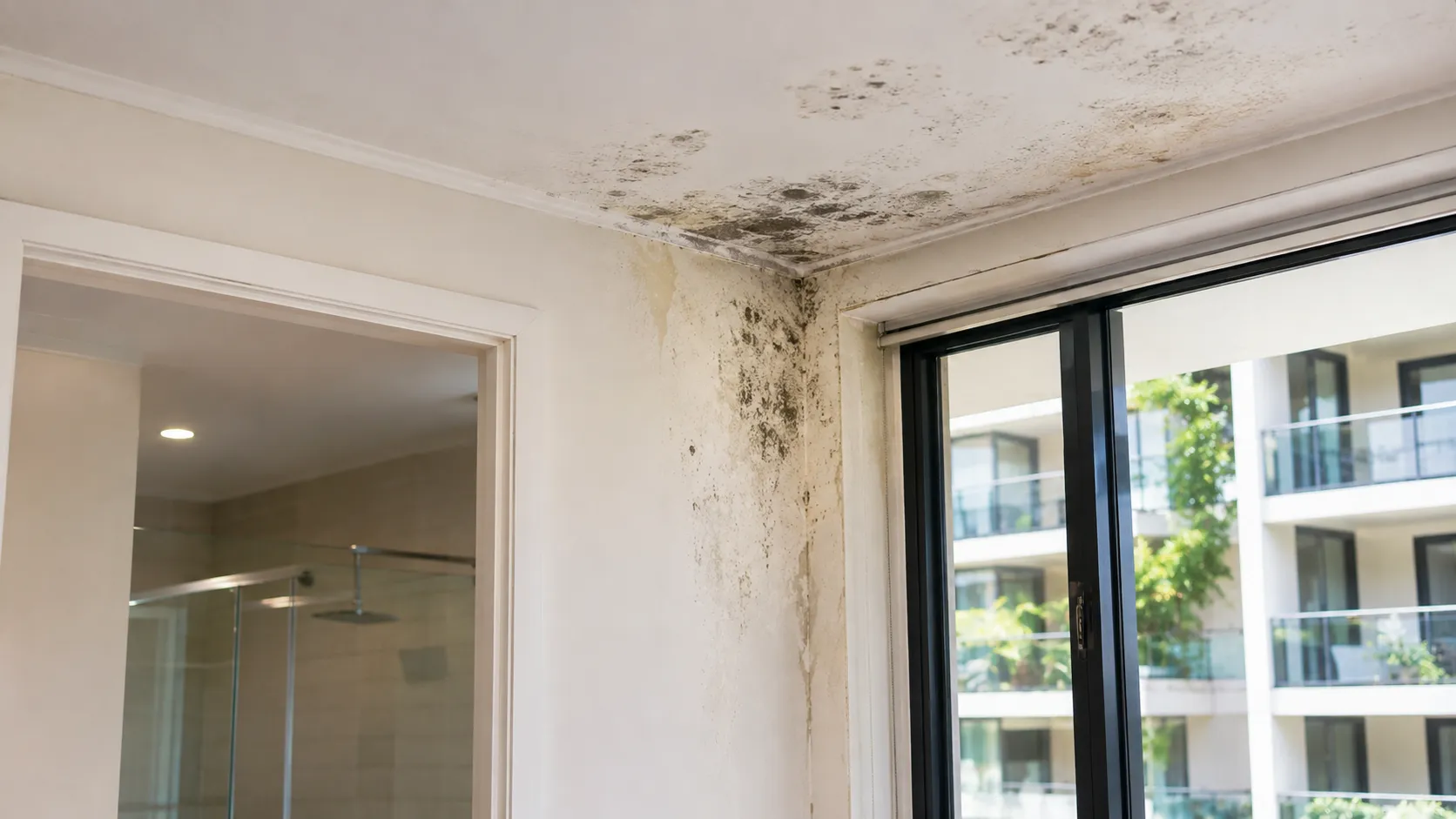
- When lingering dampness raises mould concerns, inspection and remediation can help identify the next steps.
Need Water Damage or Mould Sorted Fast Across the Hills District?
For a Hills District property, recovery starts with stopping further water entry if it’s safe, then removing standing water. In Baulkham Hills, keep clear of wet electrical areas until they’ve been assessed as safe.
Emergency Water and Flood Response
Where a service advertises 24/7 emergency water and flood restoration, that indicates advertised response availability, not a guaranteed arrival time. In Baulkham Hills, emergency water damage response is advertised as 24/7. Check what the response includes: an initial assessment, water extraction, and a plan for drying. A clear scope helps you understand the next steps for a home, shop or office.
Water Extraction and Restoration
Water extraction removes accessible standing water from floors and affected spaces. The volume and source of the water, affected materials and site access all shape the work. In a home, damage may affect carpet, skirting boards and furniture; in a business, it may reach stock, work areas or equipment. Extraction is only one part of restoration because materials can retain hidden moisture after visible water is gone.
NSW Health advises that water-damaged carpets and building materials should be completely cleaned and dried after water enters a home. Drying must address affected materials, not just make a room feel less damp. How quickly should a flooded home be dried to prevent mould? Start promptly: moisture trapped in wet carpet can contribute to mould growth and contamination. The time required depends on the materials, how far the water spread and how much moisture remains.
What affects the price of floodwater extraction and drying? It depends on the volume and source of water, the affected areas and materials, site access, and the extraction and drying work required. A quote can be prepared once the scope is understood.
Risks of Untreated Water Damage
Standing water can damage furniture and make floors slippery, creating a fall hazard. Wet areas may also pose electrical risks, so keep clear until they’re safe to access. Damp carpet and building materials can hold moisture beneath the surface even when a room looks dry. Prompt assessment helps identify affected areas and address mould concerns. Document visible damage as restoration progresses.
Choosing a Restoration Company
How can you compare flood restoration companies by response time, equipment and reviews? Compare their stated response availability, the extraction and drying equipment they describe, and whether reviews discuss clear communication and completed restoration work. Treat a 24/7 claim as availability information, not a promise of arrival at a particular time. Look for a process that explains how hidden moisture is assessed, how drying is monitored, and what the work covers. For both homes and commercial premises, a written scope makes the proposed response easier to understand.
Floodwater extraction and structural drying
Restoration progresses from water removal to checking affected materials, drying the structure and planning repairs. The sequence depends on where the water travelled, which materials were affected and whether the source was floodwater or sewage.
Floodwater Removal
Extraction begins by assessing the water’s source, spread and access points. Equipment removes standing water from affected rooms, while the assessment records which floors, carpets and building materials need further attention. A lounge room with water across carpet needs a different drying plan from a commercial storeroom with water around shelving and stock.
Removing visible water is only the first stage. NSW Health advises that water-damaged carpets and building materials should be completely cleaned and dried after water enters a home. The restoration plan therefore needs to account for damp materials beyond the obvious pool, including carpet underlay and concealed edges.
Moisture Mapping and Testing
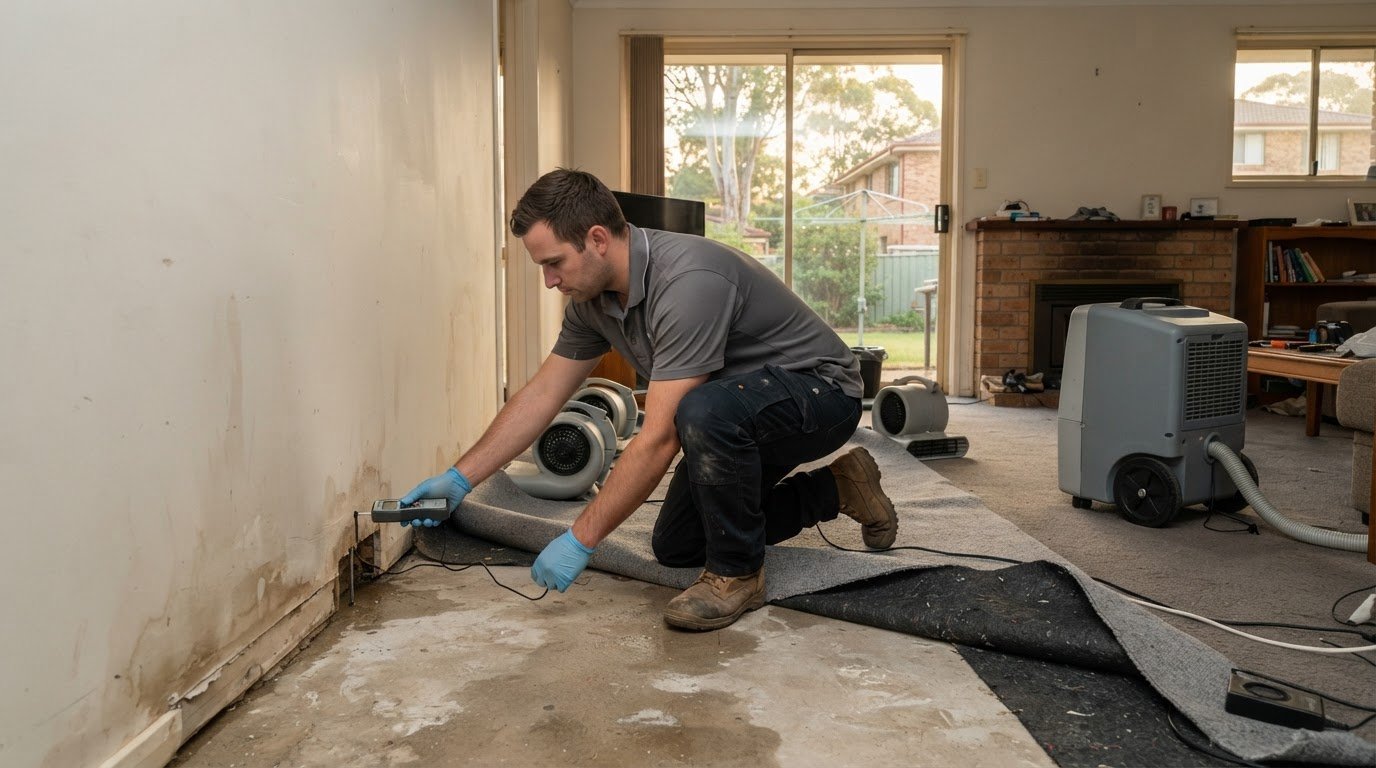
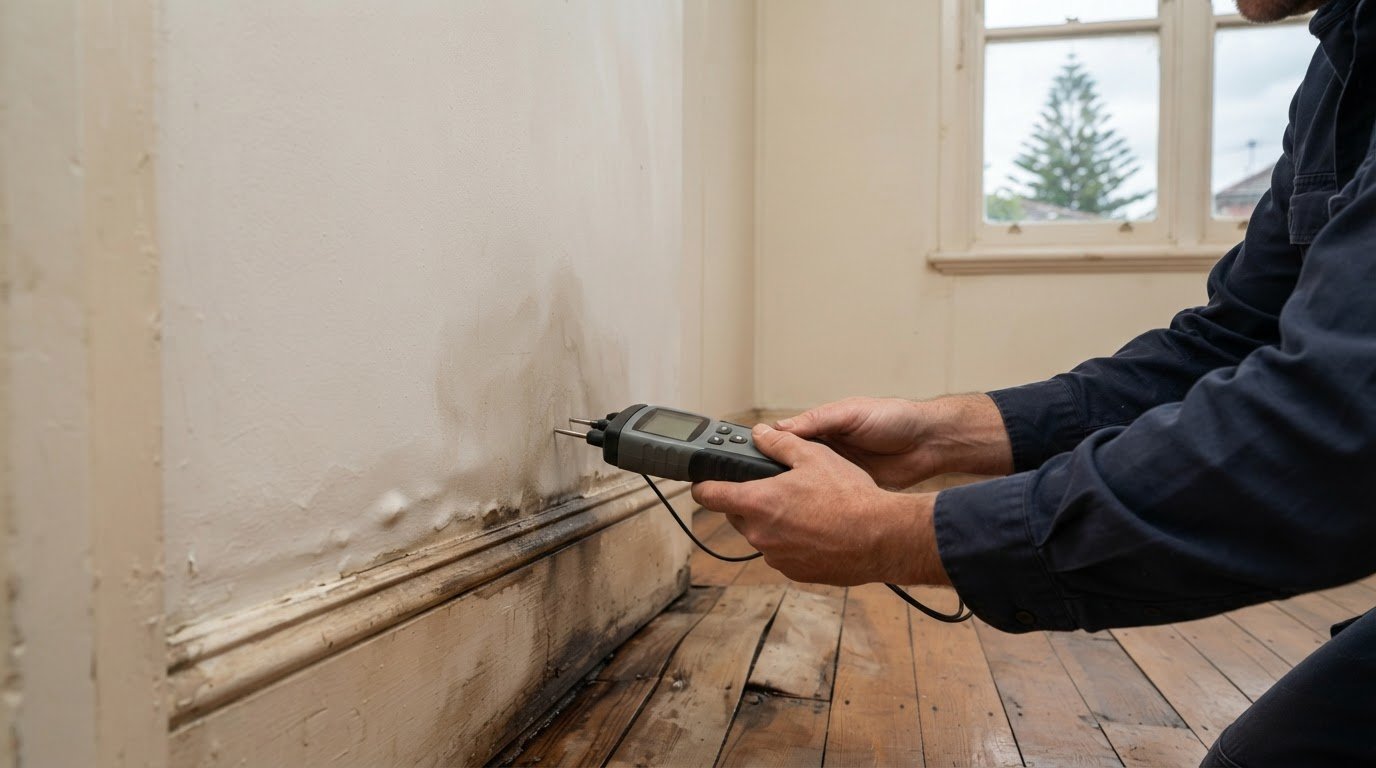
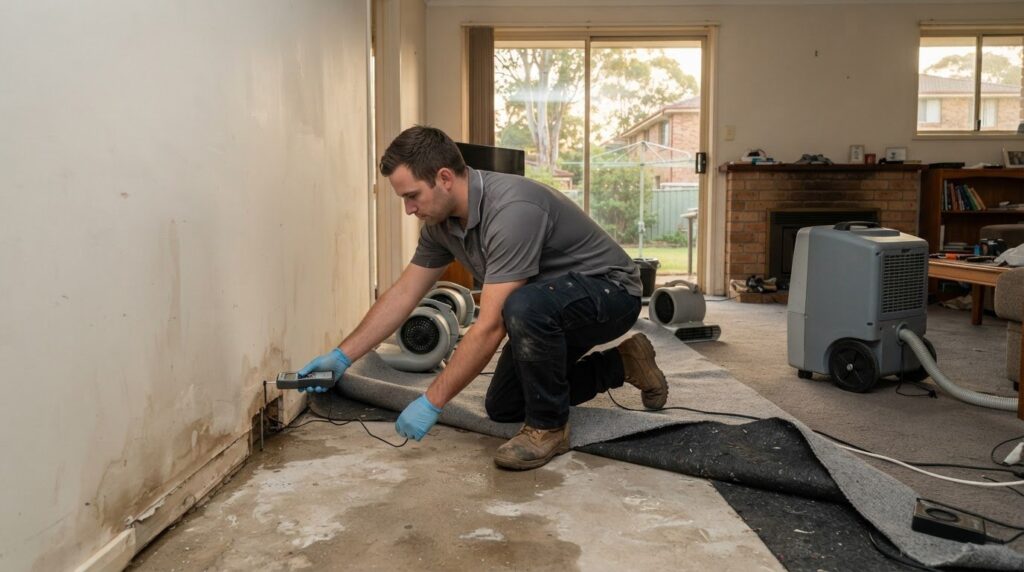
Moisture mapping records which areas and materials remain damp, directing structural drying beyond visible wet patches. A technician can compare readings in affected and less-affected areas, such as a wet hallway wall and a nearby dry section. This gives the drying plan a practical focus instead of relying on appearance alone.
Moisture testing tracks whether dampness remains as drying progresses. Readings need to be interpreted in context: timber, plasterboard, carpet and concrete retain moisture differently. Recording affected locations in a home near Baulkham Hills or a commercial property in Castle Hill helps show where further drying is needed.
Drying Equipment and Thermal Imaging
Air movers circulate air across wet surfaces, while dehumidifiers remove moisture from indoor air. Equipment placement should reflect the affected rooms and materials, not just the size of the visible water patch. Carpet, wall cavities and a concrete floor, for example, may each need different drying attention in the same property.
Thermal imaging can reveal temperature patterns that point to areas needing closer moisture testing. It guides investigation but does not replace moisture readings. Ask how visual checks, thermal images and testing are combined, particularly where a wall or floor looks dry but may conceal moisture.
Restoration Steps Through Repairs
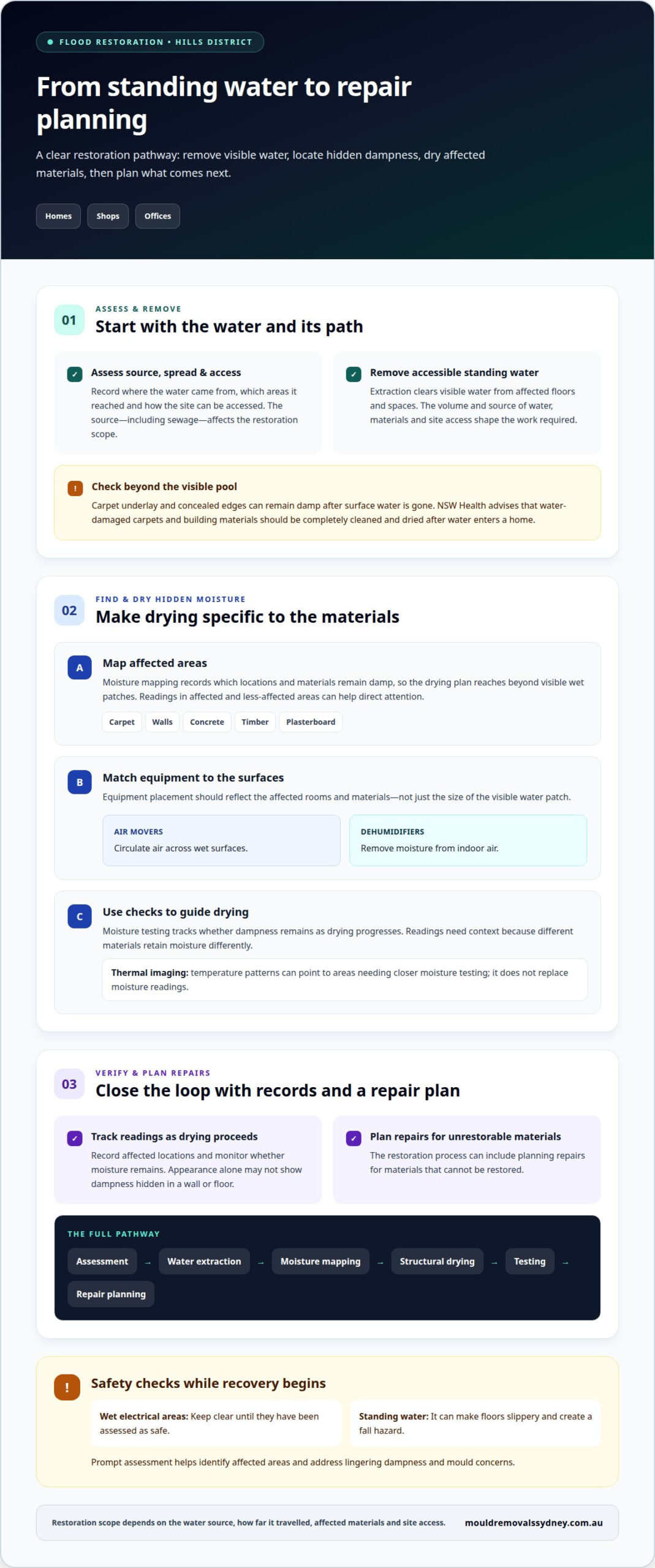
What are the steps in professional flood restoration, from water removal to repairs? They generally include assessment, water extraction, moisture mapping, structural drying, testing and planning repairs for materials that cannot be restored. If sewage is involved, the source is recorded during assessment because the restoration scope depends on the type of water.
Carpet drying across Sydney suburbs follows the same principle: assess the carpet and surrounding materials, remove water, then monitor moisture as drying proceeds. NSW Health’s advice to clean and completely dry affected carpet and building materials applies whether the property is in Kellyville, Dural or another Sydney suburb. To discuss the affected areas and next steps, share details of the water damage.
Insurance-ready reports and claim support
Clear records connect visible property damage with the restoration work completed. For eligible water damage restoration work in Baulkham Hills, documentation can include photographs, moisture readings and drying records.
Insurance Documentation and Reports
A useful report brings together evidence from affected areas and the restoration process. Photographs show damaged rooms, flooring, walls and belongings, while moisture readings record dampness at assessed locations. Drying records show how moisture changed during the work. Together, these details describe the damage and the steps taken to address it.
After water extraction, keep photographs of affected areas and organise restoration records. A clear timeline connects the initial condition with later drying checks. For example, images of wet carpet and a damp wall can be matched with readings and drying records for those locations.
Does home insurance cover flood restoration in Australia, and what evidence is needed? The insurer decides whether water damage restoration is covered by the policy. Photographs, moisture readings and drying records can support documentation for eligible work in Baulkham Hills, but they do not determine coverage.
Insurance Liaison
Insurance liaison means keeping restoration information organised to support communication about a claim. The property owner can share the report and supporting records with the insurer, while the restoration documentation describes observed damage, moisture readings and drying work. Records explain the work; the insurer assesses policy coverage.
Keep evidence linked to the affected rooms. Label photographs by location, retain matching moisture readings, and file drying records with the same property documentation. If mould growth becomes a concern after water damage, note the affected area. This gives the insurer a clearer account of what was observed and addressed.
Before submitting a claim, organise the available material: photographs of the damage, assessment information, then moisture and drying records. Identify each room and affected material, using descriptions such as “living-room carpet” or “hallway wall”. A restoration report documents the work, but the insurer determines coverage under the property’s policy.
For eligible work in Baulkham Hills, photographs, moisture readings and drying records can provide practical evidence of restoration activity. Keep copies with your claim correspondence so the damage and work are easy to follow. Organised documentation can support the discussion without guaranteeing an insurance outcome.
Flood damage assessment and insurance reports
A careful assessment connects visible flood damage with affected materials, cleaning needs and repair decisions. Photographs and clear, room-by-room notes help describe the property’s condition and support insurance documentation.
Damage Inspection and Assessment
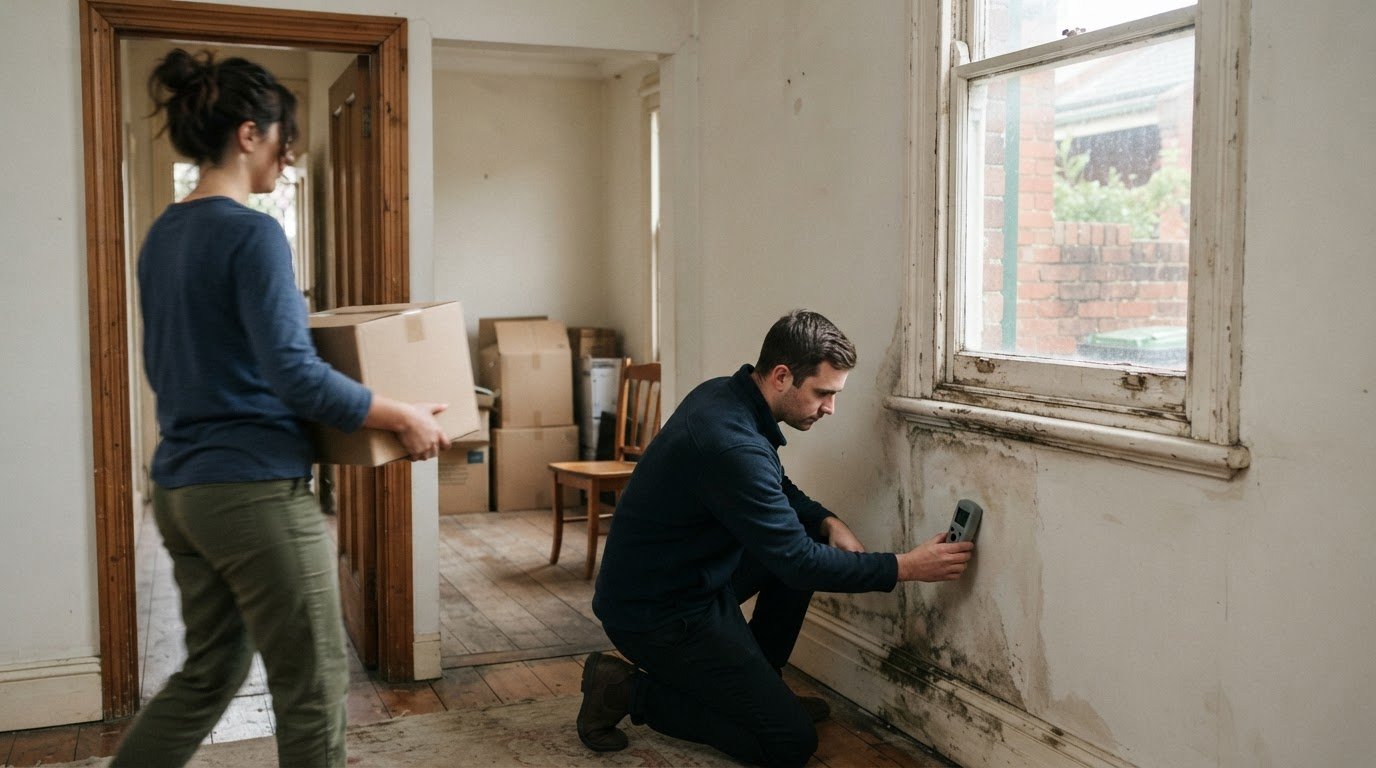
An inspection records where water entered, how far it travelled and which materials were affected. A lounge-room assessment, for example, may cover carpet, skirting boards, lower walls and nearby furniture. Photograph each area before cleaning or moving damaged items, then label images by room. This creates a practical record of the original damage.
A comprehensive assessment distinguishes visible damage from areas needing closer attention. Wet carpet may conceal moisture underneath, while wall staining can indicate water has travelled beyond the visible mark. The assessor records observations and proposed restoration work, helping separate extraction, cleaning and drying needs from later repair decisions.
Potential Structural Damage
Water affects building materials in different ways. An assessment may document damp plasterboard, swollen skirting, affected flooring or changes around door frames. These observations help identify where further inspection or repairs may be needed. Record structural concerns clearly, including their location and visible signs, rather than burying them in a general note about flood damage.
Do flood restoration companies in NSW hold relevant licences and insurance? Requirements depend on the work, so there is no single licensing answer for every restoration task. Business insurance is separate from licensing; check the relevant details for the specific work and company.
Carpet and sewage damage need distinct attention during assessment. Record wet carpet by room, condition and affected surrounding materials. If sewage has entered the property, note its source and the areas it reached to help define the cleaning and restoration scope. For properties where flooded or failing waste systems contribute to wastewater backups, septic pumping and inspection specialists such as Lil’ Stinky Septic Service illustrate how addressing the waste source is critical alongside structural restoration. NSW Health advises that water-damaged carpets and building materials should be completely cleaned and dried after water enters a home.
Flood damage restoration uses the assessment to organise the work. Steps may include recording damage, removing water, cleaning affected materials, drying the structure and identifying repair needs. Wet carpet may need cleaning and drying, while damaged skirting may require separate repair planning. Keeping these stages distinct makes the report easier to follow.
For insurance records, link each photograph and observation to a specific room or material. Note what was affected, what cleaning or restoration followed, and which repair issues remain. The insurer decides whether the work is covered by the policy. A detailed report documents the damage and work; it does not determine the claim.
The Hills District flood restoration service advises treating wet carpet promptly because trapped moisture can cause mould growth and contamination. Water Damage & Mould Specialists advises wearing a P2 mask and gloves and ventilating the room when cleaning mould yourself.
Flood restoration coverage across Sydney and surrounding areas
Flood restoration services in the Hills District cover a broad group of suburbs, but the property address still matters. Suburb and postcode information helps locate an affected property and keep assessment details tied to the right place.
Which Hills District suburbs do local flood restoration services cover? The listed suburbs include Baulkham Hills, Bella Vista, Castle Hill, Cherrybrook, Dural, Glenhaven, Kellyville, North Rocks, Norwest, Rouse Hill and Winston Hills. Seven Hills, West Pennant Hills and Stonecutters Ridge are also included.
Postcodes offer a practical way to distinguish nearby locations. Baulkham Hills is listed as 2153, Castle Hill as 2154 and Kellyville as 2155. Postcodes can help distinguish nearby suburbs. West Pennant Hills is 2125, Seven Hills is 2147, Glenhaven is 2156 and Stonecutters Ridge is 2765.
- Baulkham Hills: postcode 2153
- Castle Hill: postcode 2154
- Kellyville: postcode 2155
- Cherrybrook: postcode 2126
- Dural: postcode 2158
- North Rocks: postcode 2151
- Seven Hills: postcode 2147
- West Pennant Hills: postcode 2125
- Glenhaven: postcode 2156
- Stonecutters Ridge: postcode 2765
Bella Vista, Norwest, Rouse Hill and Winston Hills are among the suburbs named in the Hills District coverage information. When arranging flood restoration services in the Hills District, provide the property’s suburb and street address. State whether it is residential or commercial and identify the affected areas. These details connect the enquiry to the right property and its condition.
If a property is near a suburb boundary, use its actual address rather than a nearby landmark. A home in Kellyville and a workplace in Castle Hill may have different access needs and affected areas. Describe the rooms or workspaces involved, and keep photographs and restoration records linked to the address. This keeps the location clear as assessment and recovery progress.
The listed suburbs show the reach of flood restoration services in the Hills District and nearby Sydney areas. The location alone doesn’t determine the restoration scope: building type, water source, access and affected materials shape the assessment. If your property is in a listed suburb, request help with flood restoration and share its location, type and a brief description of the damage.
Suburb pages provide local response information, nearby areas and relevant restoration services. This context helps property owners consider location alongside the assistance they need. Use the information for the property’s suburb and mention nearby areas when describing the site. A clear location description is useful when people refer to an area by different suburb or district names.
When making an enquiry, identify the property’s suburb and explain the restoration issue and the areas affected. If the site is close to another listed area, give its actual address rather than relying only on a broad district label. The local information can help orient the request, while details about the building and damage explain what assistance may be relevant. Keep the location and condition of the property clear as you discuss the restoration needs, and use the suburb information to identify services relevant to the site. Coverage details offer a starting point for finding local information, not a substitute for describing the individual property.
ABC Mould Cleaning Solutions: Mould Inspection Services
ABC Mould Cleaning Solutions can assess mould concerns after water damage through Mould Inspection Services. An inspection identifies affected areas and helps clarify whether Mould Remediation or Air Purification & Scrubbing may suit the property.
Consider an inspection if dampness remains, mould appears or growth returns after cleaning. For broader recovery, ABC Mould Cleaning Solutions provides Water Damage Restoration to address water damage and help prevent mould development. The appropriate work depends on the property’s condition and affected areas.
Contact ABC Mould Cleaning Solutions to discuss mould concerns or water damage at your property.
Take the Next Step Towards a Drier, Healthier Property
Once immediate damage is under control, monitor the property’s condition. Lingering dampness, returning mould or musty odours can signal that affected areas still need attention. Addressing these concerns helps you plan the next steps.
ABC Mould Cleaning Solutions offers Mould Inspection Services to assess mould concerns, along with Mould Remediation and Air Purification & Scrubbing to address affected spaces. The right service depends on the property’s condition and the areas involved.
If you need flood restoration services in the Hills District, describe what remains wet, damaged or affected by mould. A clear account of the property and its current concerns helps focus the conversation.
Contact ABC Mould Cleaning Solutions today to discuss the next step for your property. Move forward with a clearer plan.
Frequently Asked Questions
Which flood restoration companies serve the Hills District, NSW?
ABC Mould Cleaning Solutions provides Water Damage Restoration across Sydney and surrounding regions. The Hills District suburbs discussed in this guide include Baulkham Hills, Castle Hill, Kellyville, Cherrybrook and Dural, among others. For a home or commercial site, provide the suburb, building type and affected areas when making an enquiry. This context clarifies the location and restoration issue.
Do flood restoration services in the Hills District offer 24/7 emergency response?
Some local flood restoration services advertise 24/7 emergency response, but availability and arrival time are not the same. Check the service’s stated response arrangements and explain whether water is still entering the property, which rooms are affected, and whether access is safe. For example, a flooded office with water near electrical equipment needs a different initial response from a contained leak in a dry area.
What health risks and safety precautions apply after a home flood?
Floodwater can make floors slippery, create electrical hazards and expose occupants to harmful organisms. Keep clear of wet electrical areas, and stop the water source only if it’s safe. Keep people away from unstable or heavily flooded areas, and do not touch electrical equipment surrounded by water. If floodwater has reached carpets or building materials, arrange appropriate cleaning and drying before using those areas again.