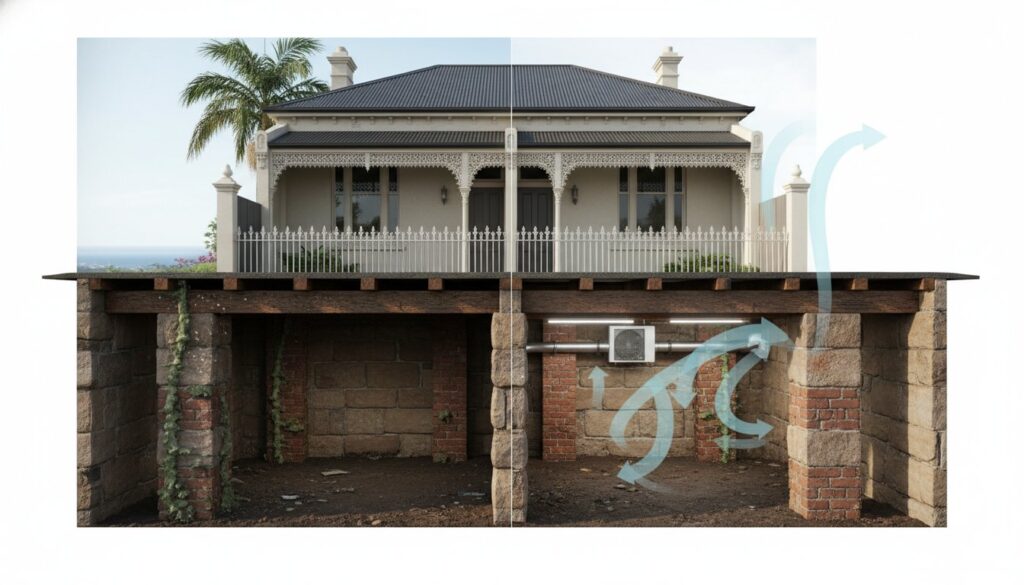
What if the persistent musty smell in your hallway isn’t just a quirk of coastal living, but a warning sign that your home’s foundation is under attack? Many residents in Bondi or Randwick mistake cupping floorboards for simple age, yet these are often symptoms of a much deeper moisture crisis. You’ve probably spent hundreds on cleaning products, only to find mould reappearing in your cupboards just weeks later. It’s exhausting to fight a battle where the enemy is hidden out of sight. Professional subfloor ventilation eastern suburbs solutions stop this cycle by addressing the root cause: trapped, humid air that fuels fungal growth.
Noise is a common concern in quiet residential streets. Our technicians use quiet-run technology and vibration-dampening mounts. These systems operate at sound levels below 30 decibels. That is quieter than a whisper. Your neighbours won’t hear a thing, and you can sleep soundly knowing your home is drying out. Our professional team at Subfloor Ventilation Sydney ensures every installation meets Australian Standards for electrical safety and airflow. It’s that simple. It’s that easy. Stop the damp before it destroys your floorboards.
Our expert technicians provide the permanent protection your property needs to stay dry and structurally sound. We’ll show you how a scientific approach to airflow eliminates dampness, prevents timber rot, and protects your family from the respiratory risks of airborne spores. You’ll learn about quiet, energy-efficient systems that transform a damp house into a fresh, healthy environment. It’s time to stop the decay before it worsens and secure the long-term safety of your investment. It’s that simple.
Key Takeaways
- Understand how the unique coastal humidity of Sydney’s East creates a “wicking effect” that drives dampness and structural decay into your living areas.
- Learn why professional subfloor ventilation eastern suburbs systems are the only permanent way to stop stagnant air from fueling dangerous mould growth.
- Compare passive and mechanical ventilation options to see which technology effectively solves the airflow restrictions common in high-density terrace streets.
- Discover how to protect heritage-listed properties in Paddington or Woollahra using non-invasive techniques that preserve sandstone foundations and property value.
- Find out how our Master Technicians use the Goldmorr System to provide an integrated, permanent fix that restores safety and peace of mind to your home.
Why Subfloor Ventilation is Critical for Eastern Suburbs Homes
Living in Sydney’s East means dealing with a unique and often harsh microclimate. From Bondi’s constant salt spray to the high humidity levels of Randwick, moisture is a permanent resident. This isn’t just an outdoor issue. Trapped moisture beneath your floorboards creates a relentless wicking effect where dampness rises directly into your living spaces. You can’t ignore it. This moisture is the primary driver of the “Eastern Suburbs musty smell” that plagues so many older builds. Many homeowners try to fix this by running air conditioning. It won’t work. Air conditioning removes moisture from the air, but it can’t stop the constant evaporation of water from the soil beneath your home. Professional subfloor ventilation eastern suburbs is the only way to stop this cycle at the source.
The Geography of Damp: From Bondi to Randwick
Proximity to the Pacific Ocean keeps relative humidity levels in subfloor voids consistently high, often staying above 75 percent for months. The topography of the Eastern Suburbs also plays a major role. Steep hills and coastal basins mean groundwater runoff often pools against foundations in suburbs like Coogee or Clovelly. If your home sits on sandstone foundations, which are prevalent in Bronte and Waverley, you’re at a significantly higher risk. Sandstone is incredibly porous. It acts like a sponge, drawing moisture directly into your structural walls. Proper Crawl space ventilation ensures this moisture is extracted before it can settle into the fabric of your building.
Signs Your Subfloor Needs Immediate Attention
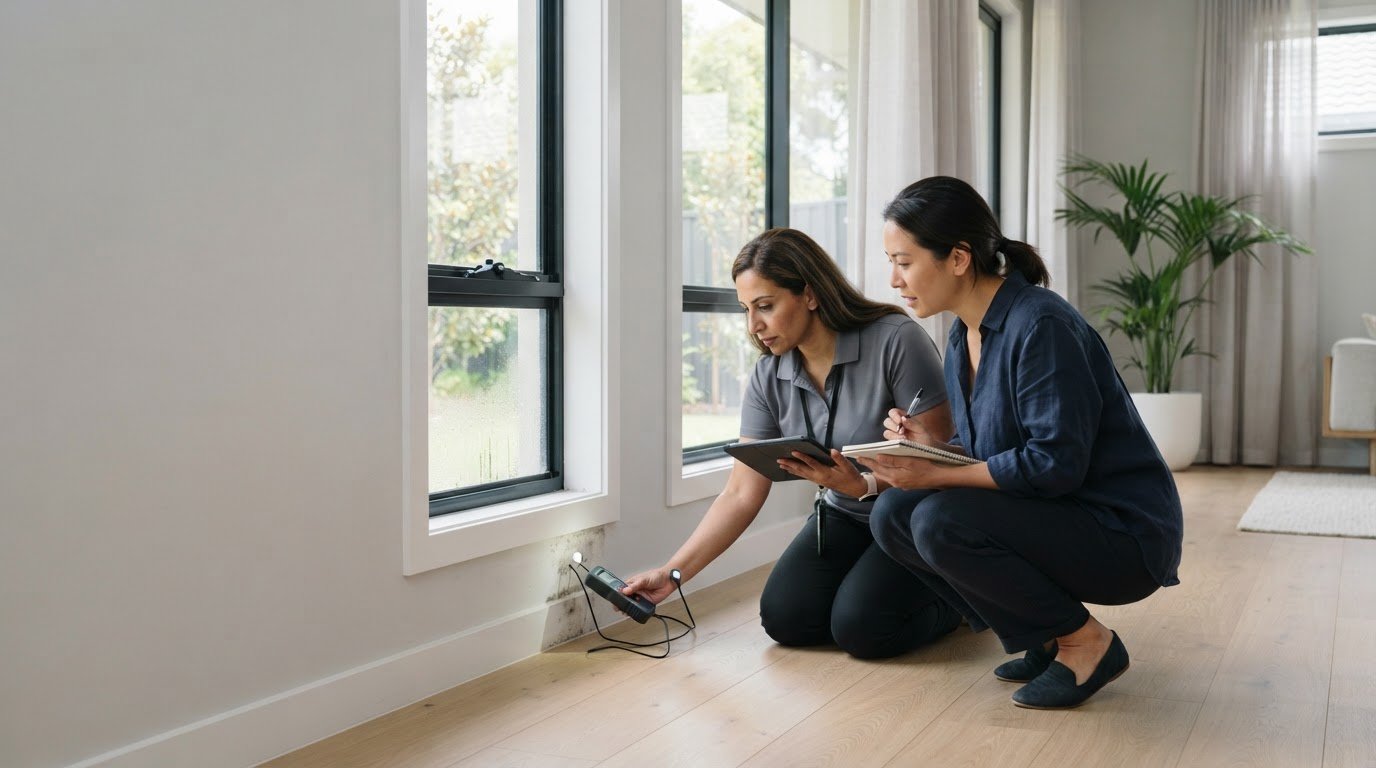
You need to act fast if you notice persistent musty odors that remain after a deep clean. Even professional cleaning can’t fix a smell that originates from rotting organic matter in the dirt beneath you. Look for physical cues like cupping floorboards, where the edges of the wood rise higher than the centre due to moisture absorption from below. Peeling paint near your skirting boards or the sudden appearance of mould on furniture are other red flags. Efflorescence is the white, salty crust found on subfloor brickwork caused by moisture moving through masonry. Don’t wait until the damage becomes structural or your health is compromised. Subfloor ventilation eastern suburbs specialists can identify these issues before they require expensive remediation.
- Persistent earthy or musty smells in ground-floor rooms.
- Visible condensation on the underside of floorboards.
- Buckling, cupping, or “spongy” timber flooring.
- High indoor humidity levels that won’t drop.
Our team at Mould Removals Sydney understands the Eastern Suburbs landscape. We don’t just mask the smell; we use the Goldmorr System to ensure your home is safe and dry. It’s that simple. It’s that easy. If you suspect your subfloor is holding onto moisture, call us now for a professional assessment. We will beat any written quote by 10 percent to ensure you get the best protection for your property.
The Science of Subfloor Moisture, Mould, and Decay
Subfloor moisture isn’t just a damp smell; it’s a biological engine that drives property destruction. In the coastal environment of Sydney, high water tables and humid sea breezes create a constant influx of vapour under your home. When air becomes stagnant, it reaches a saturation point. This creates a microclimate where microscopic mould spores stop floating and start colonising. These spores latch onto timber floor joists and bearers, using the organic material as a food source. Without consistent subfloor ventilation eastern suburbs homes often trap this moisture, leading to a cycle of decay that remains invisible until the damage is done.
The movement of air in a house isn’t isolated. Through a process known as the “stack effect,” warm air rising through the living levels draws replacement air from the lowest point of the structure. This means the air you breathe in your bedroom often originates in the dark, damp crawl space below. If that area is infested, you’re effectively pumping airborne spores and mycotoxins directly into your living environment. Damp subfloors also act as a primary attractant for termites, specifically the aggressive Coptotermes acinaciformis species common in Sydney, which seek out high-moisture timber for nesting.
Mould Biology: Why Cleaning the Surface Isn’t Enough
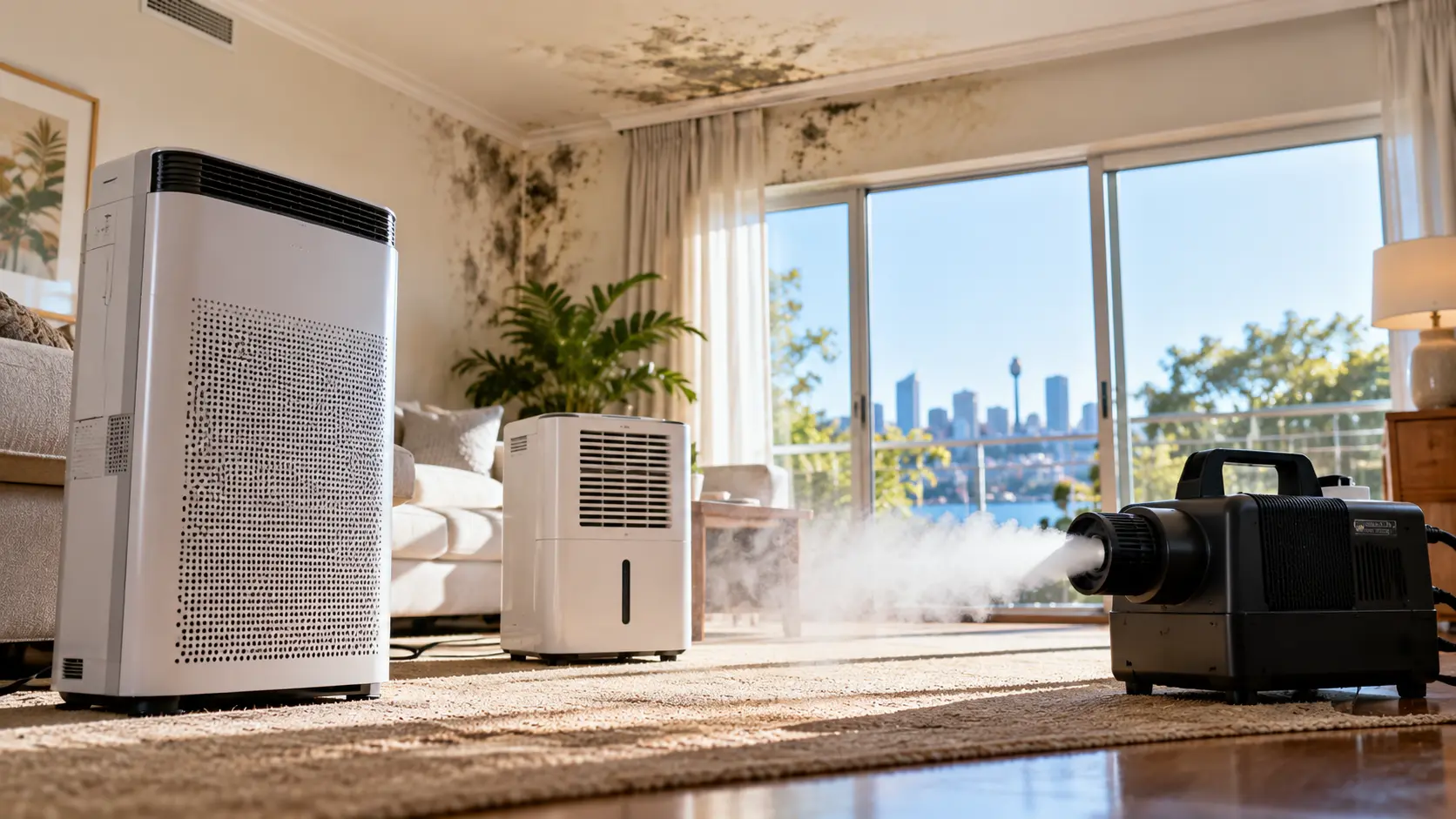
Wiping away visible black mould from floorboards only addresses the symptom, not the root cause. Mould isn’t just a surface stain. It develops a complex network of “roots” called hyphae that penetrate deep into porous timber and masonry. If you don’t neutralise the environment, the mould will return within days. We often see “ghosting” in Eastern Suburbs terrace houses, where mould patterns appear on internal walls due to temperature differentials caused by subfloor dampness. To combat this, we utilise the Goldmorr fogging process. This biodegradable system neutralises airborne spores throughout the entire subfloor cavity before we even begin the ventilation installation. It’s the only way to ensure the air being circulated is actually clean.
Structural Risks: Beyond the Smell
The structural integrity of your home relies on the health of its foundations. Poorly ventilated subfloors in older suburbs like Paddington or Randwick frequently suffer from “dry rot” (Serpula lacrymans). Despite the name, this fungus requires significant moisture to start its path of destruction, eventually turning solid timber into brittle, crumbly waste. Fungal growth accelerates rapidly once relative humidity levels in the subfloor consistently exceed 70%. This moisture also leaches into heritage brick piers, causing salt damp and mortar deterioration that can lead to floor sagging.
Ensuring your property meets the Building Code of Australia requirements for air changes is a critical step in protecting your investment. If you’ve noticed a persistent musty scent or damp patches on your carpets, don’t wait for the timber to fail. You can contact our master technicians for a professional subfloor assessment to stop the decay at its source. It’s that simple. It’s that easy.

Passive vs. Mechanical Subfloor Ventilation: Which is Right for You?
Traditional terracotta vents have served Sydney homes for over a century. They rely on natural air movement to dry out the space beneath your floorboards. While these are cost-effective, they often struggle in the high-density streets of Bondi, Paddington, or Bronte. When houses are built just centimetres apart, natural wind cannot reach the vents. This creates stagnant pockets of air where moisture levels remain dangerously high. If your home smells earthy or damp, your current setup is likely failing to protect your family from health problems from mould that thrive in these conditions.
Mechanical systems offer a modern, guaranteed solution. These use high-performance fans to force air exchange, regardless of how close your neighbour’s wall is. For effective subfloor ventilation eastern suburbs properties frequently require this active approach to overcome structural obstructions. Modern mechanical fans are incredibly energy efficient. Most systems cost less than A$20 per year to run 24/7, making them a pragmatic investment for long-term structural health.
When Passive Vents Are Sufficient
Passive ventilation can work if your property has wide-open side access and sits on a hill with natural drainage. Success requires vents to be placed every 1.5 to 2 metres to ensure a clear air path. However, even well-placed vents often suffer from the “dead zone” problem. This occurs when air flows through the centre of the subfloor but leaves the corners stagnant. Heritage-listed terraces in the Eastern Suburbs often require bespoke passive designs. We use high-flow brass or cast iron vents that satisfy strict council aesthetic codes while maximizing airflow. Don’t assume your old vents are working. Check them for debris, paint clogs, or spider webs that can reduce efficiency by 80 percent.
The Case for Mechanical Ventilation Fans
Mechanical fans are the gold standard for subfloor ventilation eastern suburbs homes. These systems use powerful extraction fans to pull damp air out and replace it with fresh, dry air. High-flow fans are essential for deep subfloors or homes built on sandstone where moisture seeps through the rock. We install smart sensors that monitor humidity levels in real-time. The system only works at full capacity when moisture peaks, saving you money on power.
Noise is a common concern in quiet residential streets. Our technicians use quiet-run technology and vibration-dampening mounts. These systems operate at sound levels below 30 decibels. That is quieter than a whisper. Your neighbours won’t hear a thing, and you can sleep soundly knowing your home is drying out. Our professional team ensures every installation meets Australian Standards for electrical safety and airflow. It’s that simple. It’s that easy. Stop the damp before it destroys your floorboards.
Installation Guide: Protecting Eastern Suburbs Heritage and Value
Installing subfloor ventilation eastern suburbs requires a delicate touch and a deep respect for local history. In heritage-protected zones like Paddington, Woollahra, or Randwick, your property’s structural integrity is directly tied to its historical value. You can’t treat a 140-year-old terrace the same way you treat a modern build. Before any mechanical system is commissioned, you must address the root cause of any standing liquid. Professional water damage repair is a mandatory first step if your crawl space has active leaks or pooling water. Installing high-powered fans over a swamp only circulates humid air, which won’t solve your mould problem.
Working with Sandstone and Federation Brickwork
Sandstone foundations are common in the Eastern Suburbs. They are porous and highly susceptible to “salt damp” if handled incorrectly. Our master technicians use non-invasive, diamond-tipped drilling techniques to prevent micro-cracks in aged masonry. We don’t just cut holes; we preserve the facade. This involves matching vent covers to specific heritage colour palettes, such as classic cream or Federation green, to ensure the upgrade remains invisible to the eye. Every vent we install features high-grade stainless steel mesh. This prevents Sydney’s local rodents and cockroaches from using your new ventilation system as an entry point into your home.
The Audit Process: What to Expect
We don’t rely on guesswork. Our audit begins with moisture mapping, using thermal imaging cameras to find hidden damp spots that the naked eye misses. We measure current air exchange rates against the National Construction Code (NCC) standards to determine exactly how much additional airflow is required. Our technicians use a non-toxic smoke test to visualise exactly how air moves, or stagnates, under your house. This visual data allows us to place extraction fans in the precise locations needed to eliminate dead air pockets. It’s a scientific approach that ensures your investment actually works.
- Clear a 1.5-metre radius around all external perimeter walls for technician access.
- Ensure the internal subfloor access manhole is unobstructed and safe to enter.
- Remove any cardboard boxes, old carpet, or timber debris stored in the crawl space.
- Identify any known plumbing leaks or drainage issues for the audit team.
- Check if your property is subject to specific local council heritage constraints.
Protecting a premium Eastern Suburbs property requires more than just a fan; it requires a tailored engineering solution. Don’t let rising dampness devalue your heritage investment. Contact our expert team today to schedule a comprehensive subfloor audit and protect your home’s future.
The ABC Solution: Integrated Remediation and Ventilation
Installing fans is only half the battle. If your crawl space already contains active colonies, new fans will simply circulate millions of microscopic spores throughout your floorboards. This is why our master technicians implement a two stage strategy. We combine the world class Goldmorr System with high performance hardware to ensure your subfloor ventilation eastern suburbs installation provides a permanent fix, not a temporary mask.
Our approach is built on scientific precision. We treat the source of the moisture and the biological growth simultaneously. This integrated method has restored over 1,500 properties across Sydney, providing homeowners with a dry, healthy environment. We understand the unique sandstone and clay foundations common in the Eastern Suburbs. Our team doesn’t guess; we use thermal imaging and moisture meters to pinpoint exactly where the dampness hides.
Price should never be a barrier to a safe home. We offer a 10% price beat guarantee on any written quote from a legitimate competitor. You get the expertise of a master technician and the industry’s best technology at the most competitive rate in the market. It’s that simple. It’s that easy.
The Goldmorr Advantage for Subfloors
The Goldmorr System is our secret weapon against persistent dampness. Unlike traditional cleaning that only hits visible surfaces, our biodegradable fogging process fills the entire subfloor cavity. This mist reaches into deep crevices and porous brickwork that mechanical fans alone cannot reach. It’s designed to eliminate the “mould seed,” ensuring that when your new ventilation system starts, it moves fresh air instead of toxic particles.
- Total Neutralisation: The fogging process kills airborne and surface spores on contact.
- Family and Pet Safe: Our products are non-toxic and biodegradable. Your family can remain in the home while we work.
- Fast Results: Most remediations are completed in a single day, allowing for immediate ventilation installation.
Long-Term Maintenance and Peace of Mind
A dry subfloor is a massive asset for your property’s longevity. In the high humidity climate of the Eastern Suburbs, structural timber rot and termite attractions are genuine risks. By maintaining a consistent cross-flow of air, you protect the structural integrity of your home. This proactive care significantly increases the resale value of your property, as savvy buyers always check for “musty” smells during inspections.
We provide comprehensive post-installation support to ensure your system continues to perform at peak efficiency. If you’ve noticed a damp smell or seen spotting on your floorboards, don’t wait for the problem to get worse. Take the first step toward a healthier home today. Contact ABC Mould Cleaning Solutions for your Eastern Suburbs subfloor audit and let our experts provide the permanent solution you need.
Secure Your Property’s Future and Health
Don’t let trapped moisture quietly destroy your home’s foundation or compromise your family’s well-being. Effective subfloor ventilation eastern suburbs homeowners can rely on prevents the structural timber decay and mould growth often found in older Sydney coastal properties. Our Certified Goldmorr Master Technicians are specialists in Eastern Suburbs heritage homes, ensuring high-performance airflow that respects your property’s history while meeting modern remediation standards. It’s time to stop musty smells and damp walls at the source with a scientifically proven system.
We’re committed to providing the most effective remediation in Sydney. We guarantee to beat any written quote by 10%, ensuring you get expert service at the best possible price. Don’t wait until the mould worsens and structural repair costs climb. You can trust our team to provide peace of mind with a solution that’s safe for your family, pets, and the environment.
Get a Professional Subfloor Ventilation Quote – We Beat Any Written Quote by 10%
Take the first step toward a drier, safer, and healthier home today. It’s that simple.
Frequently Asked Questions
How much does subfloor ventilation cost in the Eastern Suburbs?
Costs for subfloor ventilation typically range from A$400 for basic passive vents to over A$5,000 for complex mechanical systems. According to 2023 industry price guides, a standard residential setup with two high-quality fans and ducting averages A$2,500. We provide a competitive edge by promising to beat any written quote by 10 percent. Your final investment depends on the specific moisture levels and the square meterage of your crawl space.
Will subfloor ventilation fans be too noisy for my neighbours?
Modern ventilation fans are designed to operate at noise levels between 35 and 45 decibels, which is quieter than a standard conversation. We use balanced, high-efficiency units that minimize vibration and sound transfer. Your neighbours won’t be disturbed because these systems are often quieter than a domestic refrigerator. We also offer timer-based controllers so fans only run during daylight hours if noise is a particular concern in your street.
Can subfloor ventilation help with rising damp in sandstone homes?
Yes, increasing airflow is a vital step in managing rising damp for Sydney’s historic sandstone properties. Sandstone is a porous material that draws up groundwater through capillary action. By installing a robust mechanical system, we lower the humidity levels around the foundation. This prevents moisture from saturating the stone and reduces the risk of salt damp, which can cause masonry to crumble over 5 to 10 years.
How long does it take to install a full mechanical ventilation system?
A professional installation usually takes between 4 and 8 hours to complete. Our master technicians can finish most residential projects in a single day. This timeframe includes cutting external wall penetrations, mounting fans, and wiring the automated control systems. We work efficiently to ensure your home’s air quality improves immediately. We leave every site clean and perform a full system test before our team departs your property.
Do I need a professional to install vents, or is it a DIY job?
You should hire a professional because incorrect vent placement can create “dead zones” where air stagnates and mould thrives. Effective subfloor ventilation eastern suburbs requires precise calculations of air exchange rates based on the volume of your subfloor. Our certified experts use the Goldmorr System to identify hidden moisture pockets that DIYers often miss. It’s a technical task that demands specialized tools and an understanding of building physics.
What happens if I ignore the musty smell in my subfloor?
Ignoring a musty smell allows mould spores to colonize your floorboards and structural joists. That earthy scent is a sign of active fungal growth releasing microbial volatile organic compounds. Within 12 months, this moisture can cause timber rot and trigger asthma or allergies in sensitive residents. Don’t wait for the problem to worsen. Addressing the smell now prevents the need for expensive structural repairs and intensive mould remediation later.
Are mechanical ventilation fans expensive to run on my electricity bill?
Mechanical fans are highly energy-efficient and typically cost less than A$0.15 per day to operate. Most fans draw between 20 and 30 watts, which is less than a standard LED light bulb. If your system runs for 10 hours a day, you’ll likely see an increase of less than A$15 on your quarterly electricity bill. It’s a small, affordable investment compared to the thousands of dollars required to replace mould-damaged flooring.
Does subfloor ventilation prevent termites?
Subfloor ventilation prevents termites by eliminating the high-humidity environment these pests need to survive. Termites are attracted to timber with a moisture content exceeding 20 percent. By keeping your subfloor dry, you make your home a hostile environment for colony establishment. While it’s not a replacement for a chemical barrier, it’s a crucial part of a 3-step strategy to protect your property’s structural integrity from wood-destroying insects.