Why did you spend over A$1,200 on professional remediation only to see those fuzzy black spots reappear just eight weeks later? It’s incredibly frustrating to invest your hard-earned money into a service that promises a fresh start, only to have the musty smell return before the invoice is even cold. You aren’t alone in your confusion. Many Sydney property owners feel let down when they realize a standard surface wipe-down wasn’t enough to kill the root cause. It’s a common story that highlights a major gap in the industry.
Understanding why mould returns after professional cleaning is the first step to reclaiming your home’s safety and your peace of mind. You’ll discover the hidden biological triggers and environmental failures that allow airborne spores to survive even the most aggressive scrubbing. We’ll break down the science of recurrence and show you how our master technicians use the Goldmorr System to provide a permanent solution that stops the cycle for good. It’s time to stop wasting money on temporary fixes and start protecting your family’s health with a scientific approach.
Key Takeaways
- Understand the critical difference between cosmetic surface cleaning and structural remediation to ensure your home remains safe and spore-free.
- Learn how mould “roots” or hyphae penetrate porous materials like timber and plasterboard, acting as hidden reservoirs for future outbreaks.
- Discover how Sydney’s coastal humidity creates a “danger zone” and why mould returns after professional cleaning when environmental factors remain unaddressed.
- Explore how the world-leading Goldmorr System uses biodegradable fogging to eliminate airborne spores in unreachable areas like wall cavities and ceiling voids.
- Identify the essential steps to break the cycle of recurrence by locating hidden moisture sources and implementing professional containment strategies.
Understanding Why Mould Returns After Professional Cleaning
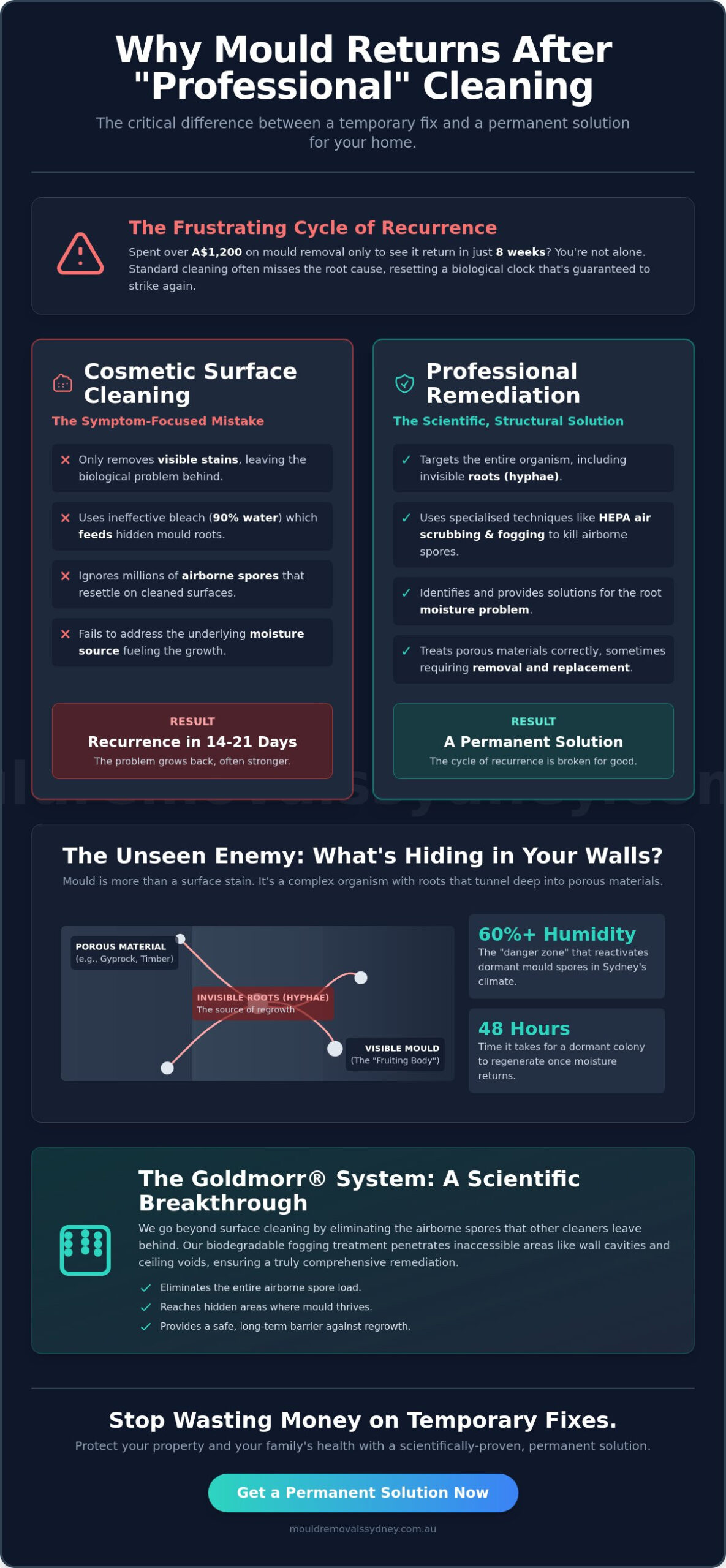
It is a common frustration for Sydney property owners. You hire a service, the walls look white again, but within 14 to 21 days, the familiar dark spots reappear. This happens because there is a fundamental difference between cosmetic mould cleaning and professional mould remediation. Most general cleaners focus on the “quick win” of removing visible stains. They treat the symptom rather than the biological root of the problem. True remediation is a structural process that addresses the organism’s entire lifecycle and the environment that sustains it.
The primary reason why mould returns after professional cleaning is that the infestation is often invisible to the naked eye. Seeing a clean surface doesn’t mean the threat is gone. Many low-cost contractors rely on high-pressure washing or heavy applications of bleach. This is a mistake. Bleach is 90% water; while it removes the pigment from the surface, the water soaks into porous materials like gyprock or timber. This actually feeds the internal roots of the Indoor mold, allowing it to grow back stronger from the inside out. Recurrence is almost guaranteed when you leave behind residual spores and fail to fix persistent moisture levels.
The Cosmetic Fallacy: Why Clean Walls Aren’t Always Safe
Many general cleaners use supermarket-grade chemicals that lack the residual efficacy needed to prevent regrowth. These products are designed for surface-level hygiene, not for killing complex fungal structures embedded in building materials. Approximately 65% of “mould washes” performed by non-specialists fail because they don’t address the biofilm protecting the colony. Recolonisation is the process where invisible spores quickly rebuild a colony on a damp surface. When a technician ignores the sub-surface roots, they’re simply hitting the “reset” button on a biological clock that will strike again within weeks.
The Missing Step: Ignoring the Airborne Spore Load
For every visible patch of growth on a bathroom ceiling or bedroom wall, there are millions of microscopic airborne spores circulating through the property. If a cleaner agitates a mould colony without professional containment or air scrubbing, they effectively launch these spores into every corner of the room. These particles are incredibly resilient. They can survive in a dormant state for months until the right conditions return.
This leads to a phenomenon known as “settling.” The moment a technician finishes wiping down a surface and leaves the property, the disturbed airborne spores begin to land on the damp, freshly cleaned areas. Without a specialized fogging process or HEPA air filtration to capture these particles, the environment remains contaminated. You aren’t just dealing with a dirty wall; you’re dealing with an active biological ecosystem that requires a scientific, two-pronged approach to keep your home safe and mould-free long-term.
The Biological Resilience of Mould Spores and Porous Materials
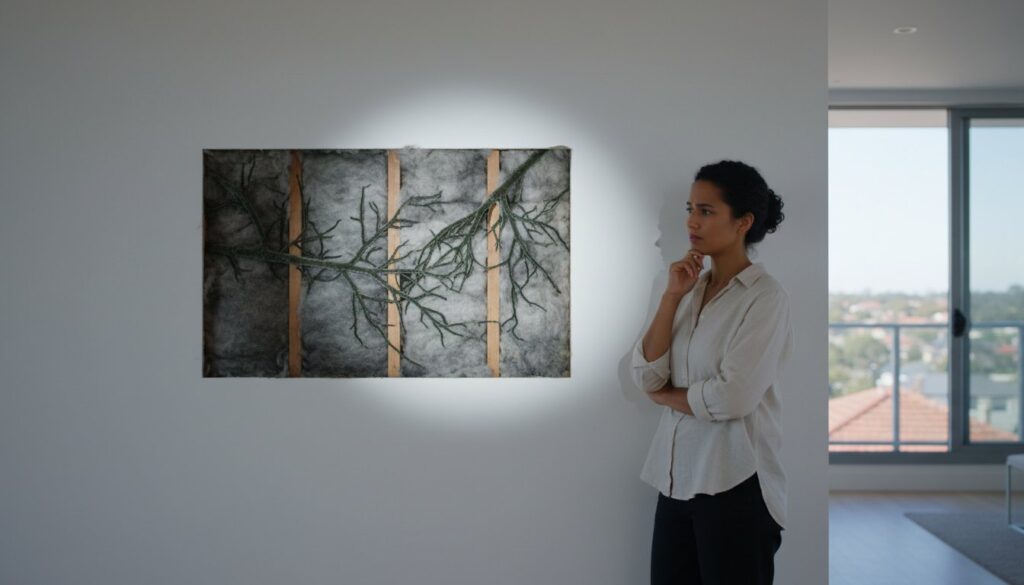
Mould is a biological organism, not a simple stain. To understand why mould returns after professional cleaning, you have to look beneath the surface. The visible part of a colony is the fruiting body, which releases spores into your indoor air. However, the real danger lies in the hyphae. These microscopic roots tunnel deep into building materials to find nutrients. While a surface wipe might remove the visible black spots, it often leaves behind these hyphae, which anchor the colony into your walls.
Porous materials like gyprock and unsealed timber act as reservoirs for these roots. Standard surface treatments fail because they cannot penetrate the dense cellular structure of wood or the gypsum core of plasterboard. These roots remain dormant until humidity levels rise above 60%. Once moisture returns, the colony regenerates within 48 hours. This biological resilience is the primary reason why amateur cleaning attempts or low-quality professional services fail to provide a permanent solution.
Porous vs. Non-Porous Surfaces in Remediation
Materials like gyprock, insulation, and unsealed wood are high-risk for recurrence. Because these materials are breathable, they trap moisture and spores deep within their fibres. In many cases, if the mould has penetrated more than 10mm into a porous surface, the material must be removed and replaced rather than cleaned. This follows established basic mold cleanup steps that prioritise moisture control and material integrity. In contrast, non-porous surfaces like glass, metal, and glazed tiles are much easier to treat. On these surfaces, the mould cannot “root,” making surface-level decontamination highly effective. If you aren’t sure if your walls are salvageable, you should request an expert assessment to avoid wasting money on temporary fixes.
The Failure of Traditional Fungicides
Household bleach is often the first tool people grab, but it’s frequently the reason why mould returns after professional cleaning done by uncertified contractors. Bleach is approximately 90% water. When applied to porous surfaces, the chlorine evaporates quickly on the surface, while the water content soaks deep into the material. This creates a “water-rebound” effect where you’re actually feeding the roots you’re trying to kill.
Modern mould strains can also develop resistance to common supermarket chemicals. Our master technicians move beyond these dated methods by using the Goldmorr System. This involves biodegradable, hospital-grade fogging agents that reach dormant spores in wall cavities and ceiling voids. Unlike bleach, these agents neutralise the mould at a cellular level without damaging your home’s structural integrity or leaving toxic residues behind.
Sydney’s Environmental Factors: Why Your Home is a Mould Magnet
Sydney’s coastal geography is a primary driver for fungal growth. The proximity to the Tasman Sea brings consistent salt-laden moisture and high humidity levels. In many Sydney suburbs, average relative humidity frequently hovers between 65% and 75%. This is a critical problem because the 60% relative humidity threshold is the “danger zone” for spore germination. When indoor air stays above this level, Mold finds the perfect environment to thrive on plasterboard, timber, and fabrics. This environmental saturation is a major reason why mould returns after professional cleaning if the home’s microclimate isn’t actively managed.
Local architectural styles also play a significant role. Sydney is famous for its historic terrace houses, particularly in areas like Paddington, Balmain, and Surry Hills. These older buildings often feature double-brick construction without modern damp-proof courses or cavities. These thick walls absorb moisture from the humid air and the ground, holding it like a sponge. Without proper airflow, this trapped dampness provides a permanent water source that bypasses surface-level cleaning efforts.
Rising Damp and Structural Moisture Traps
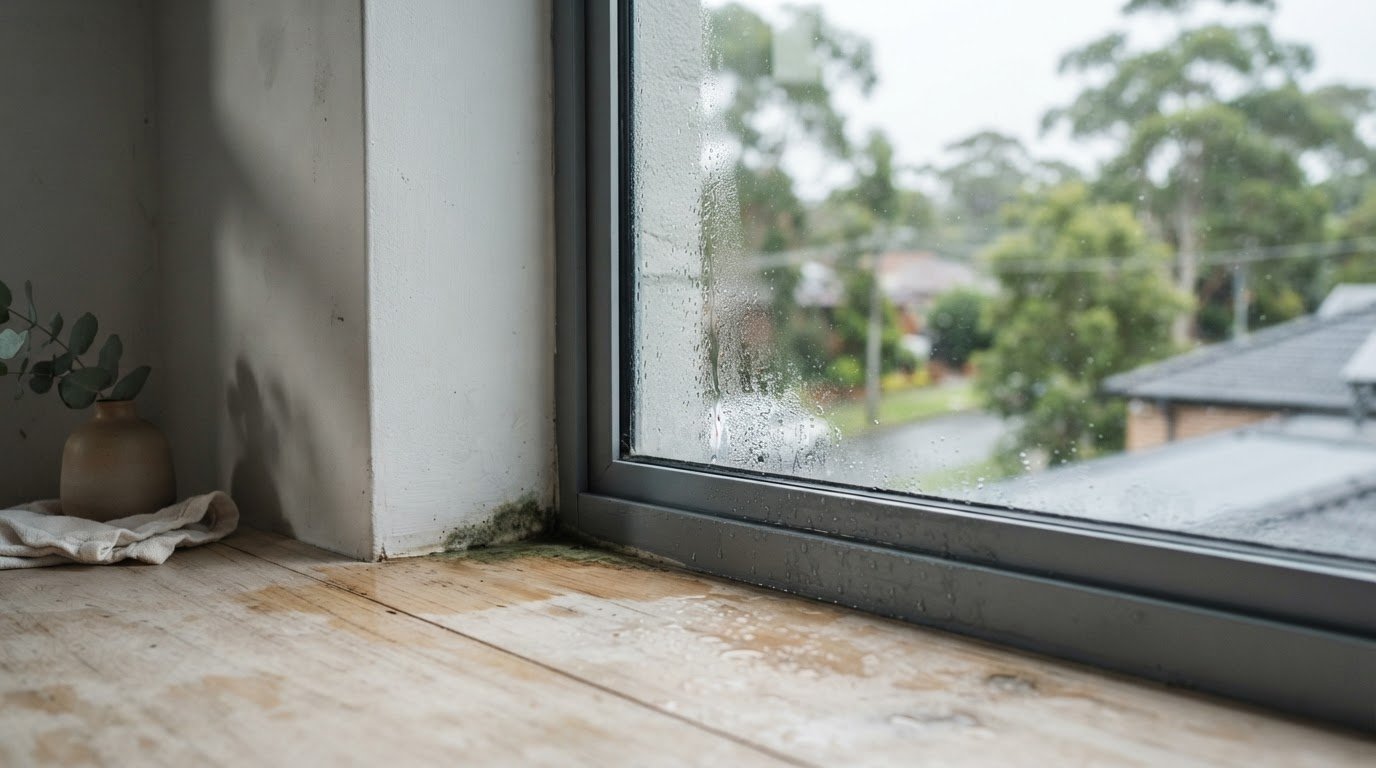
Structural issues are often the hidden culprits behind recurring infestations. When ground moisture travels upward through porous masonry via capillary action, it creates rising damp. This creates a constant supply of water for fungi. We often observe the “chimney effect,” where moisture moves vertically through the walls and evaporates into the living space, spiking indoor humidity levels. You need an expert mould removal sydney service to identify these structural leaks. If you don’t fix the “wicking” action in the bricks, the surface will continue to bloom regardless of how many times it’s scrubbed.
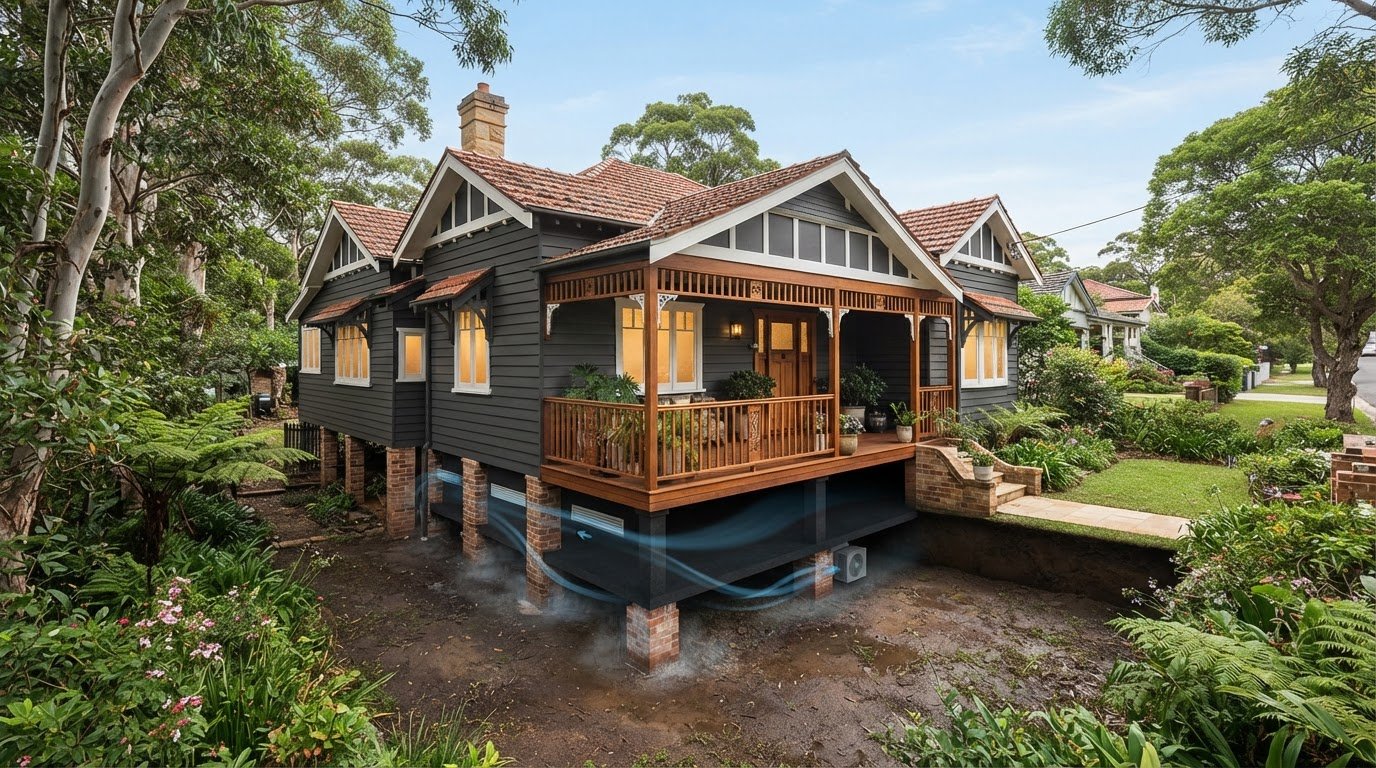
The Role of Subfloor Ventilation
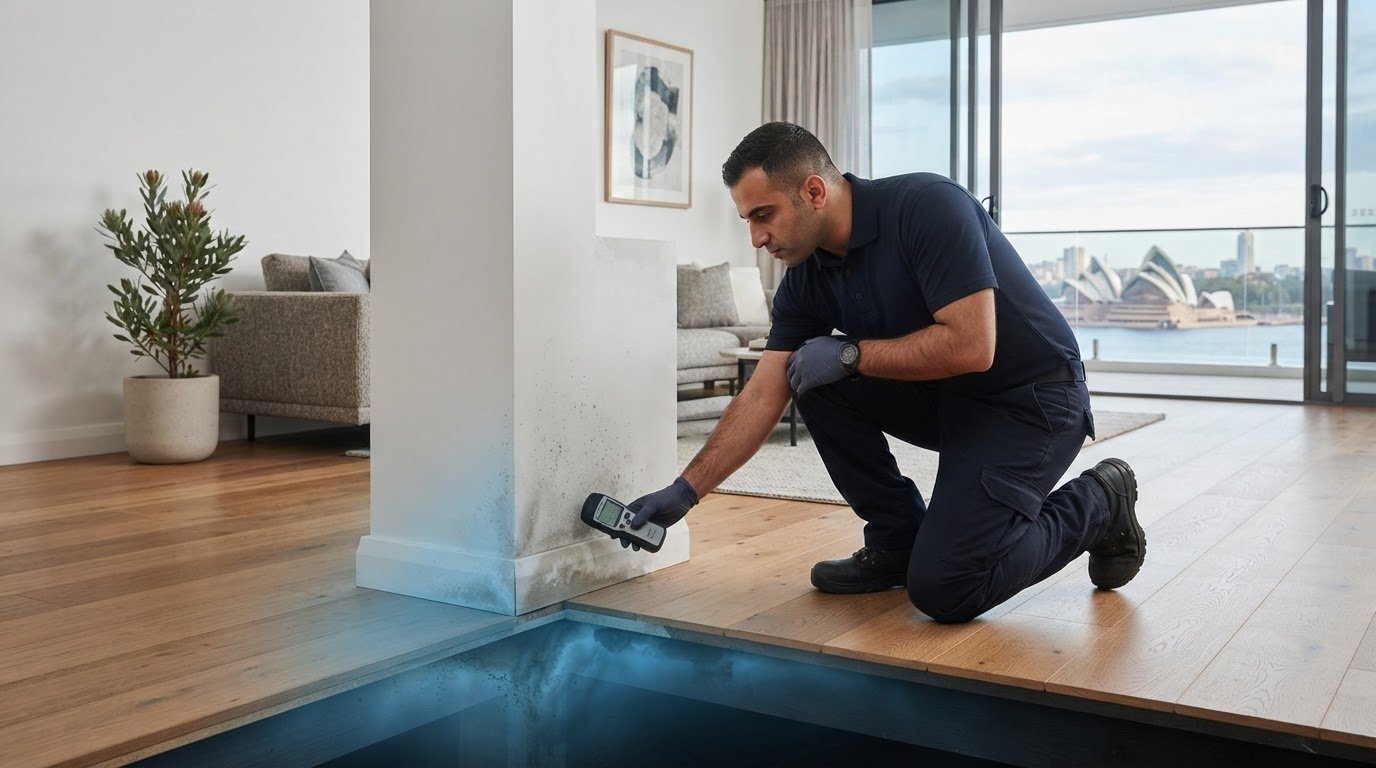
A dry interior is impossible if the subfloor area is damp. Many NSW homes are built on piers with restricted clearance, leading to pockets of stagnant air under the floorboards. This dark, cool, and moist environment is a factory for spores. As the air under the house becomes saturated, it migrates through floorboards and into your carpets or skirting boards. This explains why mould returns after professional cleaning in many ground-floor rooms. Subfloor fans can reduce indoor humidity by up to 20%. By forcing a cross-flow of fresh air, you remove the stagnant moisture before it can penetrate your living areas. It’s that simple. Protecting your home requires more than a wipe-down; it requires a strategy to keep the air moving.
Breaking the Cycle: The Professional Remediation Strategy
Mould isn’t just a surface stain; it’s a biological invader that requires a scientific response. If a service skips the rigorous stages of remediation, it’s the primary reason why mould returns after professional cleaning within weeks. Our master technicians follow a proven five-step protocol to ensure the infestation is neutralized at the source.
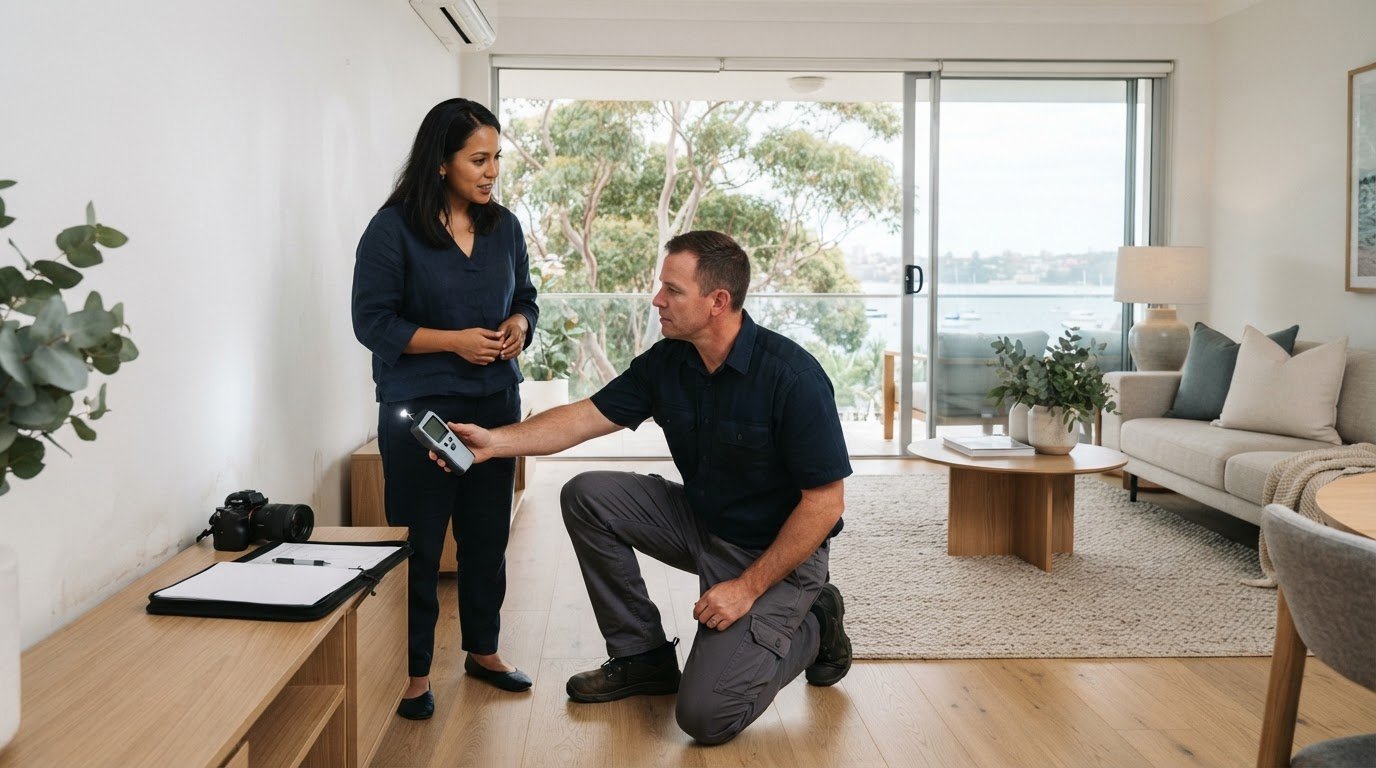
- Step 1: Comprehensive Inspection. We use thermal imaging and moisture meters to identify hidden leaks or rising damp. Without fixing the water source, mould will always come back.
- Step 2: Containment. We establish physical barriers and negative air pressure. This prevents spore drift from the affected zone to the rest of your property.
- Step 3: Elimination. Using the Goldmorr System, we apply non-toxic, deep-penetrating agents. These formulas reach into porous materials to kill the root system, not just the visible bloom.
- Step 4: Air Purification. We utilize biodegradable fogging to neutralize airborne contaminants that linger after physical scrubbing.
- Step 5: Structural Adjustments. We provide specific recommendations for sub-floor ventilation or dehumidification to change the environment that allowed mould to thrive.
Advanced Air Purification and Scrubbing
Physical cleaning only solves half the problem. Airborne spores are invisible and can settle back onto surfaces to restart the colony. We use industrial-grade HEPA air scrubbers that remove 99.97% of particles as small as 0.3 microns from your indoor environment. This process includes a critical focus on HVAC systems. We emphasize the necessity of air duct cleaning because dust and moisture in vents act as spore highways. Our scrubbers typically run for 24 to 48 hours after the physical cleaning is complete to ensure the air is medically clean.
Post-Remediation Prevention Checklist
Once our master technicians have restored your property, maintaining a “mould-free” environment requires active management. We provide a tailored checklist to stop the recurrence cycle dead in its tracks. Cleaning more often is rarely the answer. Instead, focus on these structural and lifestyle habits:
- Hygrometer Monitoring: Keep indoor humidity levels below 60%. In humid Sydney summers, a dehumidifier is a vital investment.
- Airflow and Furniture: Maintain a 10cm gap between furniture and external walls to prevent stagnant air pockets.
- Anti-Microbial Coatings: For high-risk areas like bathrooms or laundries, we apply specialized coatings that resist fungal attachment.
- Exhaust Management: Ensure exhaust fans in kitchens and bathrooms are vented externally, not just into the ceiling cavity.
Don’t let a temporary fix lead to a permanent headache. If you’ve noticed why mould returns after professional cleaning in your home, it’s time for a scientific approach that addresses the root cause.
The Goldmorr System: Why ABC Mould Cleaning Solutions Succeeds
Understanding why mould returns after professional cleaning often comes down to the specific methods used during the remediation process. Most standard cleaning services rely on surface-level treatments that fail to address the root cause or the microscopic airborne spores. ABC Mould Cleaning Solutions utilizes the Goldmorr System, a world-leading technology that changes the game for Sydney homeowners. As Master Technicians, our team doesn’t just wipe away the visible mess. We utilize a biodegradable fogging process that targets mould at a molecular level.
This system is the cornerstone of our expert identity and the primary reason we achieve long-term results. If you are frustrated because you don’t know why mould returns after professional cleaning in your property, the answer is usually found in the areas you can’t see. Our system provides a level of thoroughness that traditional cleaning cannot match. By treating the entire environment, we eliminate the hidden colonies that lead to recurrence. You get a solution that is safe, effective, and backed by scientific research.
Fogging vs. Traditional Scrubbing
Traditional remediation often involves hours of manual scrubbing and, in many cases, the costly demolition of gyprock or timber. This is where the Goldmorr System excels. Our fogging technology reaches unreachable areas like wall cavities, ceiling voids, and tight corners where spores hide and wait to regrow. While manual scrubbing might take a full day of labour, our fogging process works in minutes to kill spores on contact, even those suspended in the air. This method often requires no demolition of materials, saving you thousands in renovation costs.
- Efficiency: Rapid treatment times compared to hours of manual labour.
- Comprehensive Kill: Kills airborne spores, not just those on surfaces.
- Non-Invasive: Penetrates porous surfaces and structural voids without tearing down walls.
- Safety: Our products are non-toxic and completely safe for your families and pets.
Because we don’t have to tear your home apart, the process is significantly less stressful. It’s a pragmatic, results-driven approach that restores your property to a healthy state quickly and affordably.
Guaranteed Results and Peace of Mind
We know that dealing with persistent mould is exhausting and stressful. That’s why we offer a bold promise to our customers. We will beat any written quote from a professional competitor in Sydney by 10%. We want to ensure that high-quality, expert remediation is accessible for every household. You shouldn’t have to choose between your budget and your family’s health.
Before you book, it’s helpful to learn more about what is mould to understand the biology of the problem you’re facing. Our Master Technicians are here to provide the competent authority and technical skill needed to solve the issue for good. Don’t wait until the problem worsens and causes structural damage. Schedule your professional inspection today and experience the peace of mind that comes with a truly clean home. It’s that simple. It’s that easy.
Take Control of Your Home’s Air Quality Today
Understanding why mould returns after professional cleaning is the first step toward a permanent solution for your property. Surface scrubbing often fails because microscopic spores survive deep within porous building materials or remain dormant in the air. Our team uses the industry leading Goldmorr System to neutralise these threats at a cellular level, ensuring the biological cycle is truly broken. As Certified Goldmorr Master Technicians, we don’t just wipe away stains; we remediate your environment using a biodegradable and pet safe fogging process that reaches every hidden corner. Sydney’s humid climate means you can’t afford to wait until the problem worsens. We’re committed to providing the most effective service in New South Wales, which is why we offer a 10% price beat guarantee on any written quote you receive. It’s time to restore your peace of mind and protect your family with a proven, scientific approach to remediation. You deserve a home that’s safe, dry, and completely free from toxic spores.
Get a Free Mould Removal Quote & Beat Any Price by 10%
Frequently Asked Questions
Why does mould keep coming back even after I use bleach?
Bleach is ineffective because it’s 90% water and only masks the visible colour of the mould. It doesn’t kill the root system, especially on porous surfaces like gyprock or timber. The water in the bleach actually feeds the mould deeper into the substrate, leading to a faster recurrence. To stop the cycle, you need a professional solution like the Goldmorr System that eliminates the colony at a cellular level.
How long should mould removal last if done correctly by a professional?
Correct remediation should last indefinitely if you manage the moisture levels in your home. Statistics from the Australian Building Codes Board indicate that 25% of Australian homes suffer from dampness issues. If we remove the mould and you keep your indoor humidity below 60%, the spores won’t have the environment they need to grow back. Our team ensures the initial clean is 100% effective so you can start with a sterile environment.
Can airborne mould spores cause mould to return in a different room?
Yes, airborne spores can travel at speeds up to 0.5 metres per second and settle in any room with high moisture. If a cleaner doesn’t address the air quality, these microscopic spores remain active and find new surfaces to colonise. This is why mould returns after professional cleaning when the focus is only on visible patches. We use specialized fogging to ensure every room in your home is protected from cross-contamination.
Is it possible to permanently get rid of mould in a Sydney home?
It’s absolutely possible to get rid of mould permanently by combining professional removal with structural moisture control. Sydney’s humidity often hits 70% or higher during summer, so you must have a plan for ventilation and condensation. We use the Goldmorr System to kill 100% of existing growth, but you’ll also need to fix any underlying leaks or drainage issues. Once the moisture is gone, the mould loses its food source and can’t return.
What is the most common mistake professional mould cleaners make?
The most common mistake is failing to treat the airborne spores and the moisture source simultaneously. Many general cleaners just wipe the surface, which leaves the airborne threat behind to settle and regrow. They also skip the diagnostic phase, meaning they don’t find the hidden leak or rising damp. Our master technicians use a proven 3 step process to ensure we don’t just clean the mould, but we actually solve the environmental problem.
How do I know if my mould problem is caused by rising damp or just condensation?
You can tell the difference by looking at the height and pattern of the growth on your walls. Rising damp usually stays below 1.2 metres on ground floor walls and leaves salt deposits or bubbling paint. Condensation is more common in high-humidity areas like bathrooms or behind wardrobes where air doesn’t circulate. Our experts use professional moisture meters to give you a 100% accurate assessment of your property’s condition before we start.
What happens if a professional cleaner misses the source of the moisture?
If the moisture source isn’t fixed, the mould will often reappear in as little as 48 hours. This is the biggest reason why mould returns after professional cleaning in most residential cases. Mould needs water to survive; if a pipe is still leaking or a roof is still dripping, the spores will thrive again immediately. We identify these issues during our initial inspection so you don’t waste money on a temporary cosmetic fix.
Is the Goldmorr fogging process safe for my pets and children?
Our Goldmorr fogging process is 100% safe for children, pets, and the environment. The solution is biodegradable and designed to target mould cells without affecting humans or animals. You won’t have to deal with harsh chemical smells or dangerous residues in your living space. Most families can return to their rooms within 60 minutes of the treatment, making it a fast and stress-free way to restore your home’s safety.