What if your expensive air purifier is actually masking a serious health risk instead of solving it? You’ve likely felt that spike of anxiety after spotting a dark patch on the ceiling or noticing a persistent, musty smell. It’s natural to wonder, does HEPA filter remove mould spores well enough to protect your family, or is it just a temporary bandage? You want the peace of mind that comes with clean, breathable air, and you aren’t alone. Over 20% of Australian homes currently struggle with dampness and indoor pollutants.
We’ll reveal the scientific reality behind 99.97% filtration rates and explain why spending A$600 on a filter won’t stop a colony from spreading behind your skirting boards. This article provides a clear plan to move beyond quick fixes by using professional remediation strategies like the Goldmorr System. We’ll show you how to stop the spread and ensure your home is truly safe for everyone inside. It’s time to find out if an air purifier is a worthy investment or a distraction from a growing structural problem.
Key Takeaways
- Understand the science behind HEPA filtration and how these units trap 99.97% of microscopic particles to improve your indoor air quality.
- Discover the definitive answer to “**does HEPA filter remove mould spores**” and why capturing airborne particles is only a temporary fix for an active infestation.
- Identify the critical limitations of air purifiers, including why they cannot eliminate the root cause of dampness or stop colonies from spreading on surfaces.
- Learn the best practices for air purifier use in Sydney, including strategic placement and why 24/7 operation is essential during high-humidity months.
- Find out how to move beyond passive filtration to achieve total mould eradication through the professional Goldmorr System and non-mechanical air scrubbing.
What is a HEPA Filter and Does it Work for Mould?
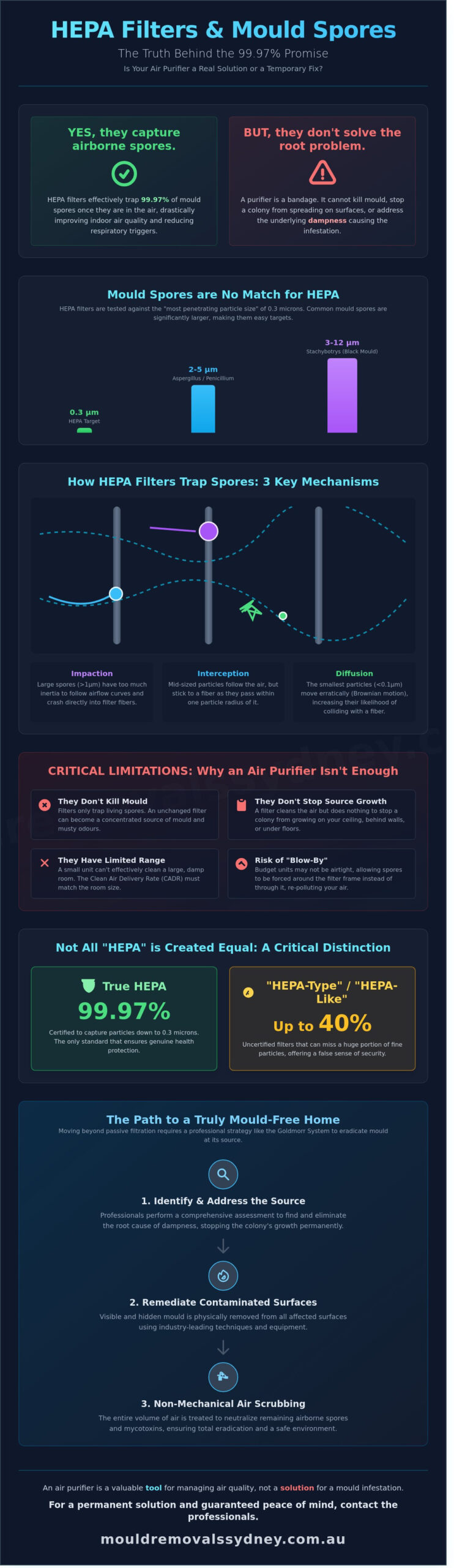
HEPA stands for High-Efficiency Particulate Air. For a filter to carry this label in Australia, it must meet strict performance standards, specifically trapping 99.97% of particles that are 0.3 microns in size. Since most mould spores range between 3 and 100 microns, they’re significantly larger than the filter’s threshold. So, does HEPA filter remove mould spores from your home? The short answer is yes. These filters are incredibly effective at capturing spores once they become airborne.
However, you must distinguish between trapping a spore and eliminating an infestation. A filter acts as a vacuum for the air; it doesn’t treat the source. While it stops spores from circulating, it won’t stop a colony from growing on your ceiling or behind your wardrobe. Our master technicians often see homeowners rely on “HEPA-type” or “HEPA-like” filters. These are not the same. Genuine True HEPA filters are tested to the 99.97% standard, whereas “HEPA-type” versions often fail to capture up to 40% of fine particulates, leaving your family at risk. Don’t settle for inferior hardware when your health is on the line.
The Role of HEPA in Indoor Air Quality
Air purifiers equipped with True HEPA filters work by cycling the air in a room multiple times per hour. In a standard 20-square-metre room, a high-quality unit can reduce the “spore load” significantly within 30 minutes. This is a game-changer for the 2.7 million Australians living with asthma. By stripping airborne contaminants out of the environment, you reduce the physical triggers that cause respiratory distress and itchy eyes. It’s the gold standard for maintaining a healthy breathing zone while you wait for a professional remediation team to handle the root cause.
Common Misconceptions About Air Purifiers
One dangerous myth is that air purifiers “kill” mould. They don’t. They capture biological matter and hold it. If the filter isn’t changed according to the manufacturer’s schedule, it can actually become a source of odour. Additionally, a filter cannot reach mould growing inside wall cavities, under carpets, or within subfloors. It only cleans what passes through the intake. The Clean Air Delivery Rate (CADR) is also limited; a small A$150 unit won’t clear a large, damp lounge room effectively. For a permanent solution that goes beyond the air, you need a scientific approach like the Goldmorr System. It’s that simple. It’s that easy.
The Science of Spore Capture: How HEPA Filters Work
Understanding the physics behind air purification helps answer the vital question: does HEPA filter remove mould spores? The short answer is yes, but the effectiveness depends on how the filter handles different particle sizes. Mould spores in Sydney homes typically range from 1 to 20 microns in diameter. Because a certified HEPA filter must trap 99.97% of particles sized at 0.3 microns, these relatively large spores are easily ensnared by the dense web of borosilicate glass fibres.
High-efficiency particulate air (HEPA) filters don’t act like simple sieves. They use three distinct mechanical processes to clean your air. Interception occurs when spores following the airstream come within one-particle radius of a fibre and stick to it. Impaction targets larger spores that possess too much inertia to follow the curving air paths; they crash directly into the filter mat and become embedded. Diffusion handles the smallest particles by forcing them into a zig-zag pattern, known as Brownian motion, until they eventually collide with a fibre.
In Sydney’s coastal suburbs, high humidity levels often exceed 70%, causing spores to absorb moisture and increase in mass. This makes the density of the filter mat even more critical. If the filter isn’t dense enough, the increased weight of damp spores can lead to structural failure of the filter media. A high-quality system ensures that even under these heavy loads, the airflow remains consistent without compromising the 99.97% capture rate.
Micron Sizes and Mould Species
Common Sydney species like Stachybotrys, often referred to as toxic black mould, produce spores ranging from 3 to 12 microns in size. While Penicillium and Aspergillus spores are smaller, usually between 2 and 5 microns, they are still significantly larger than the 0.3-micron gap in a HEPA mesh. The 0.3-micron size is used as the industry benchmark because it represents the “most penetrating particle size,” or the hardest diameter to catch, yet a True HEPA filter captures these with nearly perfect efficiency. If you’re noticing a musty smell despite running a purifier, our professional mould remediation team can identify the source before it spreads further.
The Importance of Sealed Systems
Buying a high-grade filter is a wasted investment if the purifier housing isn’t airtight. Many budget units suffer from “blow-by,” a problem where air pressure forces mould spores around the edges of the filter frame rather than through the media. This leak allows thousands of spores to bypass the system and recirculate into your living space. To ensure safety, always look for “True HEPA” labels rather than “HEPA-type” or “HEPA-like” marketing jargon. A True HEPA system is tested and certified to ensure the entire unit is sealed, preventing any microscopic spores from escaping back into your home.
The Critical Limitation: Why a Filter Isn’t a Cure for Mould
Buying an air purifier provides a sense of security, but it’s often a false one if you have an active infestation. While the question “does HEPA filter remove mould spores” has a technical “yes” as an answer, a filter only manages the symptoms of a much deeper biological problem. It captures the particles already in the air. It does nothing to stop the source. A single square metre of mould on a damp wall can release 500 million spores into your home every hour. Your purifier simply cannot keep up with that rate of production. Relying on a machine while ignoring the growth is like bailing water out of a sinking boat without plugging the hole.
The Source Control Problem
Visible mould on your bathroom ceiling is usually just the tip of the iceberg. Professional inspections in Sydney frequently reveal that for every patch of visible growth, there’s often three times as much hidden behind plasterboard or under floorboards. Does HEPA filter remove mould spores from these cavities? No. It can’t. Hidden leaks, rising damp, and condensation bypass air filtration entirely. Without the physical removal of the “Mother Colony” using a scientific approach like the Goldmorr System, the biological cycle continues. Air purification won’t stop the structural decay of your timber frames or the crumbling of your plasterboard once the mycelium takes root.
Filter Maintenance and Secondary Contamination
A neglected air purifier often becomes a secondary source of contamination. HEPA filters are designed to trap organic matter. When your home’s humidity levels exceed 60 percent, that trapped dust and spore load becomes a perfect breeding ground inside the machine itself. This turns your “solution” into a distribution system for mycotoxins. Consider these practical risks:
- The Loading Effect: A filter “loaded” with organic matter loses its efficiency within 3 to 4 months in high-mould environments.
- Hidden Costs: Replacement HEPA filters for high-quality units typically cost between A$120 and A$280. In a damp home, you might need three changes a year.
- Disposal Hazards: Removing a contaminated filter can release a concentrated cloud of spores back into your breathing zone. You must wear a P2 mask and seal the old filter in a heavy-duty plastic bag immediately.
Don’t let a machine mask a serious health hazard. If you smell that tell-tale musty odour, your priority must be professional remediation. Our master technicians identify the moisture source and eliminate the colony at the root. It’s that simple. It’s that easy.
Best Practices for Using Air Purifiers in Mould-Prone Areas
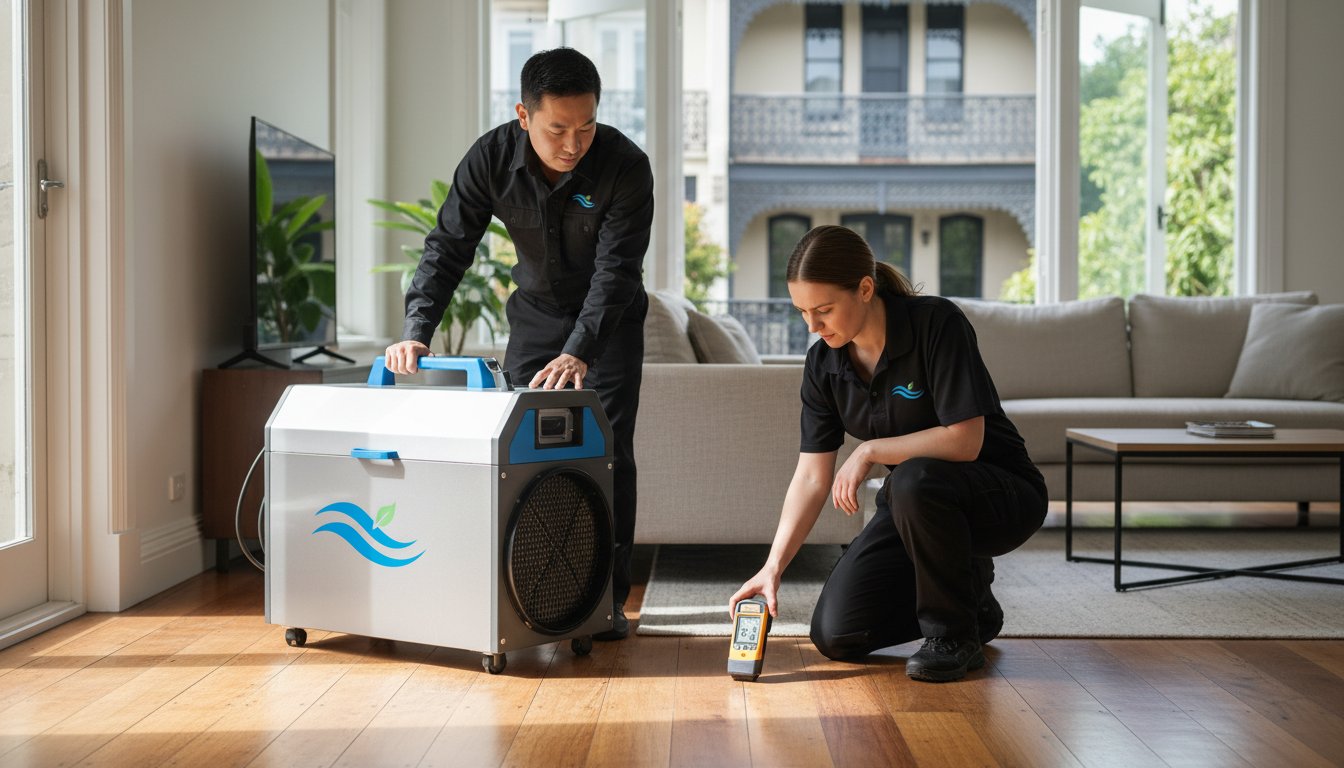
Simply buying a device isn’t enough to guarantee a healthy home. To ensure your investment works, you must place the purifier near known moisture sources like laundries, bathrooms, or poorly ventilated bedrooms. During Sydney’s peak humidity months of February and March, moisture levels frequently climb above 75%. You need to run your unit 24/7 during this window to maintain air quality. While a quality unit helps, remember that its primary job is particle capture. You should always combine filtration with a high-capacity dehumidifier. This multi-pronged strategy keeps indoor humidity below the 60% growth threshold, which stops spores from germinating on your surfaces.
Optimising Airflow in Your Home
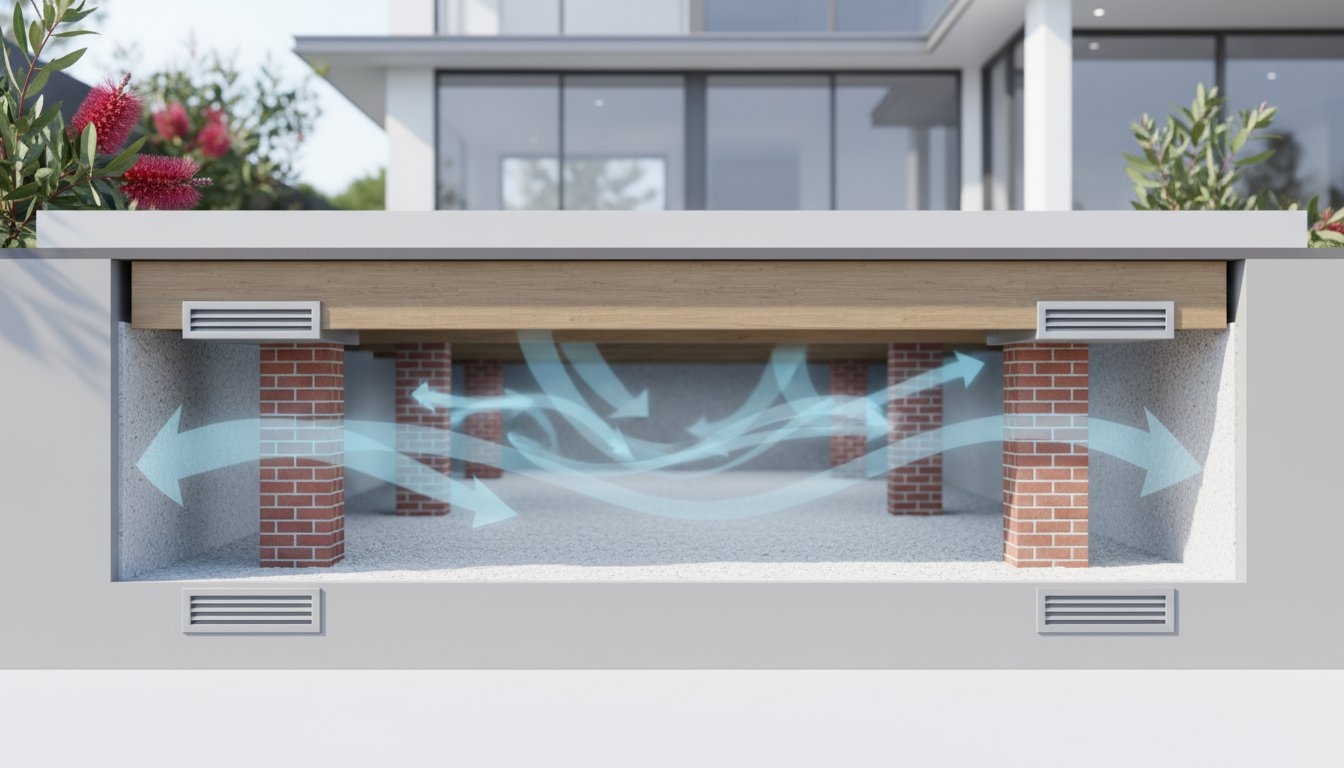
Airflow patterns dictate how well your device performs. Don’t tuck your purifier into a corner or behind a sofa. Central placement is superior because it allows for 360-degree air intake. If your home has a damp subfloor, place units in ground-floor rooms to catch rising spores before they spread. You can use cross-ventilation on dry days to flush the building, but keep windows shut and the air scrubber running when it’s raining outside. This ensures the unit processes the entire room’s air volume at least five times per hour.
Choosing the Right Unit for Sydney Homes
When homeowners ask does HEPA filter remove mould spores effectively, the answer depends on the unit’s capacity. You must calculate your room’s square metre rating against the unit’s Clean Air Delivery Rate (CADR). For Sydney’s older terrace houses, we recommend units with thick activated carbon pre-filters. These are essential for absorbing the musty, earthy odours that signify a hidden fungal problem. Only buy units with “ozone-free” certifications. Some cheaper ionisers produce ozone as a byproduct, which can irritate your lungs and cause long-term respiratory issues.
- Check the CADR: Ensure the unit is rated for a space 20% larger than your actual room.
- Monitor Humidity: Use a digital hygrometer to ensure levels stay between 30% and 50%.
- Filter Maintenance: Replace HEPA filters every 6 to 12 months, or sooner if they look grey.
If you’ve noticed a persistent musty smell or visible growth despite using a filter, your home may require a professional intervention. Speak with our master technicians today to restore your home to a safe, healthy environment.
Beyond Filtration: Total Mould Eradication with the Goldmorr System
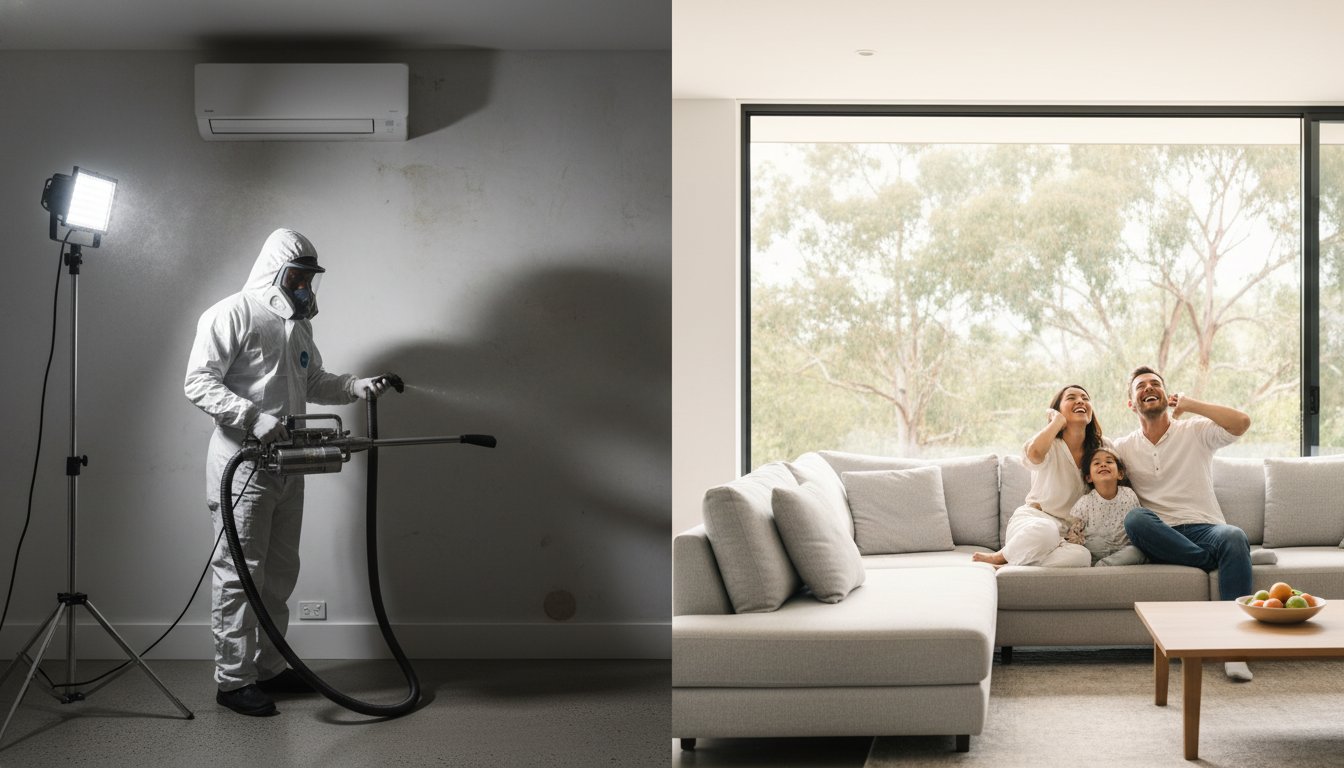
A high-quality air purifier is a helpful tool, but it is never a complete cure for an infestation. If you are asking, “does HEPA filter remove mould spores,” the answer is yes; it traps them within a fine mesh. However, a filter is a passive device. It cannot reach the colonies growing inside your wall cavities or under your floorboards. ABC Mould Cleaning Solutions moves your home from passive filtration to active professional remediation. We utilise the industry-leading Goldmorr System to eliminate spores at the source and within the air column. Our team uses non-mechanical air scrubbing techniques to decontaminate your living space, ensuring that your home is truly healthy, not just temporarily filtered.
Our 3-Step Remediation Process
We follow a proven, scientific protocol to restore your property. This process is designed for maximum efficiency and long-term results.
- Step 1: Comprehensive Inspection. Our master technicians use moisture meters and thermal imaging to find hidden leaks. We identify the exact water source that 85% of DIY attempts overlook.
- Step 2: Surface Treatment and Fogging. We apply specialized Goldmorr products to visible growth. We then use a biodegradable fogging process to neutralise airborne spores in every corner of the room, including areas invisible to the naked eye.
- Step 3: Prevention and Ventilation. We provide air purification and subfloor ventilation recommendations. This final step ensures moisture levels stay low, preventing the “musty smell” from ever returning to your Sydney home.
The Peace of Mind Guarantee
Your family’s safety is our priority, and we believe professional help should be accessible. We promise to beat any written professional quote by 10%. This ensures you receive world-class remediation at an affordable price point. Our Goldmorr solutions are 100% biodegradable. They are completely safe for children, pets, and the environment. You won’t have to deal with harsh chemical residues or long evacuation periods. We handle the hard work so you can enjoy your home again without the anxiety of toxic air.
Don’t just filter the air; clean your home from the inside out. Stop the spread before it causes structural damage or health issues. Get a free mould removal quote today. It’s that simple. It’s that easy.
Stop the Spores and Protect Your Australian Home Today
Understanding does HEPA filter remove mould spores is a vital first step for any homeowner. These filters are highly effective at trapping 99.97% of particles as small as 0.3 microns; however, they only address the spores already in the air. They don’t kill the source or stop mould from growing behind your walls and under floorboards. Relying solely on a purifier is a temporary fix for a problem that requires a permanent, scientific solution.
Our Goldmorr System Master Technicians provide the industry-leading approach needed for total eradication. We use a proven 3-step process that’s safe for your family and pets. Whether you’ve discovered a hidden leak or require our 24/7 emergency water damage response, we’re ready to restore your property immediately. You won’t find better value in Sydney because we’ll beat any written quote by 10%. Don’t wait for the infestation to spread and impact your health.
Schedule Your Professional Mould Inspection & Get a Free Estimate
It’s that simple to get your peace of mind back and ensure your home is truly safe.
Frequently Asked Questions
Can a HEPA filter actually kill mould spores?
No, a HEPA filter doesn’t kill mould spores; it simply traps them within a dense mat of fibres. These filters are designed to capture 99.97% of particles as small as 0.3 microns, which includes most common mould species. While the spores are removed from the air, they remain alive on the filter surface. Without a specialized antimicrobial treatment or a professional fogging process, these trapped spores can stay dormant for months.
How often should I change my HEPA filter if I have a mould problem?
You should replace your HEPA filter every 60 to 90 days if you’re dealing with an active mould infestation in your Sydney home. Standard manufacturer guidelines often suggest 6 to 12 months, but heavy spore loads clog the 0.3-micron pores much faster. A saturated filter reduces your machine’s airflow by up to 40%, making it significantly less effective. Check the filter surface monthly for any visible grey discolouration or a sudden increase in musty odours.
Will an air purifier get rid of the musty smell in my house?
An air purifier only reduces musty smells if it contains a heavy-duty activated carbon stage. While a HEPA filter captures the physical spores, it cannot trap the Volatile Organic Compounds (VOCs) that cause that signature damp scent. Even with high-quality carbon, the smell will usually return within 24 hours if the moisture source isn’t fixed. Professional remediation is the only way to permanently stop the off-gassing from hidden colonies behind your walls.
Is it safe to sleep in a room with a mouldy HEPA filter?
It’s not safe to sleep near a saturated HEPA filter because it can become a secondary source of contamination. If the filter is full, air can bypass the internal seals or push trapped spores back into your breathing zone. This increases your risk of respiratory irritation and allergic reactions during the night. We recommend moving the unit out of the bedroom until you’ve installed a fresh replacement and addressed the underlying dampness in the structure.
What is the difference between a HEPA filter and an Ioniser for mould?
A HEPA filter uses mechanical filtration to trap 99.97% of spores, while an ioniser uses an electrical charge to make particles stick to walls and furniture. Ionisers don’t actually remove the spores from the room; they just move them from the air to your surfaces. Many ionisers also produce ozone, which can irritate lungs at levels above 0.05 parts per million. For genuine removal of airborne threats, a mechanical HEPA filter is the superior and safer choice.
Do I still need a professional if I have a high-end air purifier?
Yes, because even the best air purifier only treats the symptoms rather than the cause. While you might wonder, does HEPA filter remove mould spores, the reality is that spores already settled on surfaces will continue to multiply. A high-end unit won’t touch the thousands of spores embedded in your carpets, curtains, or drywall. Our master technicians use the Goldmorr System to eliminate the source, which is something no consumer-grade machine can achieve.
Can mould grow on the HEPA filter itself?
Mould can and will grow on a HEPA filter if your indoor humidity levels exceed 60%. The dust and organic matter trapped in the filter fibres provide a perfect food source for the spores. If your home is damp, the filter can become a breeding ground within 48 to 72 hours. This is why professional air scrubbing is more effective; we use commercial-grade equipment and industrial dehumidification to ensure the environment doesn’t support new growth.
How much does a professional mould air scrubbing service cost in Sydney?
Professional air scrubbing services in Sydney typically range from A$450 to A$1,500 depending on the property size and contamination levels. A standard three-bedroom home usually costs around A$850 for a full 24-hour cycle using industrial-grade HEPA equipment. Remember, Mould Removals Sydney will beat any written quote by 10%. Send us images of your affected rooms today, and we’ll provide an affordable, fixed-price quote to restore your indoor air quality immediately.