
That small, fuzzy patch in your laundry isn’t just a cosmetic issue; it is an active biological threat to your property’s foundation. While it is tempting to look the other way, the long term effects of ignoring mould can transform a minor cleanup into a A$35,000 structural renovation. You likely feel the constant anxiety of that lingering musty smell and worry if your family’s persistent coughing is more than just a seasonal cold. It is frustrating to keep scrubbing with supermarket sprays only to see the black spots return within 14 days.
We understand that the confusion between temporary cleaning and professional remediation is stressful. You deserve a home that’s safe and a solution that actually lasts. This article reveals why delaying action is a high-stakes gamble with your health and your property’s market value. We’ll walk you through the scientific progression of fungal growth, identify the exact moment a damp wall becomes a medical emergency, and show you how our master technicians use the Goldmorr System for a permanent, expert-led recovery.
Key Takeaways
- Discover how mould colonises a property in as little as 48 hours, turning minor spots into a systemic infestation that requires urgent professional intervention.
- Understand the serious health risks associated with the long term effects of ignoring mould, including the silent threat of toxic mycotoxins and prolonged biological exposure.
- Realise why delaying remediation can double your expenses every few months as mould digests timber and drywall, leading to costly A$ reconstruction rather than simple cleaning.
- Learn why common DIY fixes like bleach often backfire by feeding mould roots and failing to address dangerous airborne spore counts throughout your home.
- Explore how the science-based Goldmorr System uses biodegradable fogging to provide a non-invasive, total room decontamination that restores your family’s safety.
The Cumulative Danger: What Happens When You Ignore Mould?
Mould is not a passive stain on your wall. It is a living, breathing organism that requires only two things to colonise your home: moisture and organic matter. Whether it is the paper backing on your plasterboard, the timber in your wall studs, or the dust in your carpets, your house is a buffet for fungal growth. Once a spore finds a damp surface, the progression from a few isolated spots to a systemic infestation happens with frightening speed. Under the right conditions, a colony establishes itself in as little as 48 to 72 hours.
Ignoring “just a little bit” of growth in the corner of a bathroom or laundry is a mistake that leads to a compounding biological load. As the colony matures, it consumes the material it sits on, weakening the structural integrity of your property. The long term effects of ignoring mould are often expensive and physically taxing. You are not just dealing with an aesthetic issue; you are managing a growing toxic presence that increases in density every single day you delay treatment.
Professional remediation experts refer to this as the “Iceberg Effect.” The visible dark patches you see on your ceiling or skirting boards usually represent only 10% of the actual problem. The remaining 90% is often thriving in the dark, unventilated cavities behind your walls, under floorboards, or inside ceiling voids. By the time the mould becomes visible to the naked eye, the internal “roots” or hyphae have likely already compromised the building materials.
The Invisible Spread of Airborne Spores
Mould reproduces by releasing millions of microscopic spores into the air. These spores are light enough to stay buoyant for hours, searching for new food sources to start the cycle again. Your HVAC system and ceiling fans act as a distribution network, carrying these particles into every bedroom and living space. This explains why residents often experience health issues caused by mold even in rooms that appear perfectly clean. You don’t have to see the mould to be breathing it in. When you ignore the source, you allow the spore count in your indoor environment to reach dangerous levels, far exceeding the outdoor air quality.
Sydney’s Climate: An Accelerator for Mould Growth
Sydney’s unique climate creates a high-pressure environment for property owners. During La Niña cycles, we see relative humidity levels remain above 70% for extended periods, which is the exact threshold mould needs to thrive without a direct water leak. Coastal salt air also complicates the issue. Salt is hygroscopic, meaning it attracts and retains moisture from the air, keeping building materials damp even on days when the sun is out. To understand the specific biology of these local strains, read our What is Mould? guide. If you live in a high-humidity suburb like Marrickville or a coastal area like Bondi, the long term effects of ignoring mould can escalate from a small patch to a A$20,000 structural repair bill in a single season. Don’t wait for the smell to become unbearable. Take action before the spores take over.
Chronic Health Risks: The Biological Toll of Prolonged Exposure
Ignoring mould isn’t just a cleaning oversight; it’s a biological gamble with your family’s health. To understand the long term effects of ignoring mould, you must first understand what you’re breathing. Scientists categorise mould into three distinct threat levels. Allergenic moulds are the most common, typically causing hay fever or skin irritation. Pathogenic moulds are more aggressive, capable of causing serious infections in those with compromised immune systems. The most dangerous, however, are toxigenic moulds.
Toxigenic species produce mycotoxins. These are toxic secondary metabolites that stay in your environment long after the visible spores are wiped away. While short-term exposure might cause a scratchy throat, chronic exposure leads to a “Toxic Load.” This is the cumulative buildup of biotoxins within the human body. When your internal filtration systems, like the liver and kidneys, become overwhelmed by constant spore inhalation, the body enters a state of chronic systemic inflammation. Research into the health effects of mold exposure confirms that these toxins can disrupt cellular function and weaken your natural defences over time.
Respiratory and Neurological Impacts
The respiratory damage from persistent dampness is often permanent. Prolonged exposure is a primary trigger for adult-onset asthma and chronic rhinosinusitis. In Australia, the 2018 Parliamentary Inquiry into Biotoxin-related Illnesses shed light on a condition known as Chronic Inflammatory Response Syndrome (CIRS). This inquiry highlighted that for roughly 24% of the population, genetic predispositions make it nearly impossible for their bodies to clear mould toxins naturally.
Beyond the lungs, the long term effects of ignoring mould often manifest neurologically. Patients frequently report “Brain Fog,” a debilitating lack of mental clarity, alongside chronic fatigue and memory loss. These aren’t just “feeling tired”; they’re signs of neuroinflammation caused by inhaled biotoxins crossing the blood-brain barrier. If your home has a musty smell and you’re struggling to concentrate, the two are likely linked. It’s vital to act before these symptoms become a permanent part of your life. You can get an affordable quote to assess your air quality and start the remediation process.
Vulnerable Groups: Who is at Most Risk?
While mould affects everyone, certain groups face heightened danger. Infants and children are particularly at risk because their lungs are still developing. Studies show that children raised in damp homes are 3 times more likely to develop respiratory issues by age seven. The elderly and those with pre-existing conditions like COPD also see a rapid decline in health when mould is present.
Don’t forget your pets. Animals often act as the “canary in the coal mine” for indoor air quality. Because they spend more time near floor level where spores settle, they often show symptoms first. Look for unusual lethargy, persistent coughing, or skin rashes in your dogs or cats. These are early warning signs that your home’s environment is toxic. For a deeper look at what to watch for, read our guide on Black Mould Symptoms to protect your household from invisible threats.

Structural Decay and Financial Fallout: The True Cost of Neglect
Mould is a biological scavenger that actively digests your home. It doesn’t just sit on the surface; it feeds on organic matter. It breaks down the cellulose found in timber frames, drywall, and wallpaper. This process isn’t a cosmetic flaw. It’s a slow motion demolition of your property’s skeleton. When you allow this to continue, you move past the point of simple cleaning and into the territory of major structural reconstruction.
Compromising Building Integrity
When moisture remains trapped, mould spores colonize structural timber and floor joists. Over 24 months of neglect, this leads to wood rot, a fungal decay that turns solid support beams into brittle, crumbly debris. This compromise in building stability is one of the most dangerous long term effects of ignoring mould. If you’ve suffered a leak or flood, you must act fast. Follow our Water Damage Repair guide to stop fungal decay before it requires a builder to replace your floor frames.
The Escalation of Remediation Costs
The price of delay is staggering. A localized mould issue can often be resolved with a professional Goldmorr fogging treatment for roughly A$600 to A$1,500. If you wait six months, that same issue can escalate into a full strip-out of walls and ceilings, often exceeding A$15,000. Secondary mould damage is the result of unaddressed moisture. This occurs when high humidity from an initial leak causes mould to bloom on furniture, curtains, and clothes in entirely different rooms. This widespread contamination requires specialized air scrubbing and intensive labor from master technicians to rectify.
In the competitive Sydney property market, a history of mould creates a “stigmatised property.” Disclosing major mould issues or visible structural damage can slash a home’s resale value by 10% to 20% overnight. Buyers are wary of the health risks and the hidden costs of remediation. Don’t assume your insurance policy will save you. Most Australian insurance providers exclude mould damage resulting from “gradual seepage” or “lack of maintenance.” If the mould grew because you didn’t fix a leaking pipe or a window seal, you’ll likely be paying the entire repair bill out of your own pocket.
Understanding the long term effects of ignoring mould is the first step toward protecting your biggest investment. Our team provides the expert intervention needed to stop decay in its tracks. We’re so confident in our pricing that we will beat any written quote by 10%. It’s that simple. It’s that easy.
The Myth of the Quick Fix: Why Surface Cleaning Fails Long-Term
Many Sydney homeowners reach for a bottle of supermarket bleach at the first sign of a black spot. This is a critical mistake. Bleach is approximately 90% water. While the chlorine component removes the visible stain, the water stays behind and soaks into porous materials like gyprock and timber. This effectively feeds the roots, or hyphae, of the colony. You aren’t killing the fungus; you’re fertilising it. This cycle is one of the most dangerous long term effects of ignoring mould because it allows the infestation to establish a deep, structural foothold while you think the problem is solved.
DIY “mould killers” also fail to address the invisible threat. Scrubbing a dry mould patch without professional containment is reckless. It agitates the colony and launches millions of microscopic spores into your breathing zone. One square centimetre of mould can harbour up to 1 million spores. If you don’t address the root cause, such as a hidden leak or humidity levels exceeding 60%, the mould will return within 48 to 72 hours. Real remediation requires a scientific approach, not a spray bottle.
- Bleach feeds the roots: It doesn’t penetrate porous surfaces, leaving the “heart” of the mould alive.
- Improper cleaning spreads spores: Agitating dry mould without containment cross-contaminates other rooms.
- Moisture is the engine: Without fixing ventilation or leaks, cleaning is just a temporary cosmetic fix.
The Airborne Spore Problem
You can’t scrub the air with a sponge. When mould is disturbed, spores stay suspended for hours, entering your lungs and your HVAC system. Professional remediation uses specialized equipment like high-volume air scrubbers and HEPA filtration. These machines are designed to capture 99.97% of particles as small as 0.3 microns. To ensure your home is truly safe, you should consider Air Duct Cleaning Sydney to remove contaminants trapped in your ventilation system.
Why “Out of Sight” is Not “Out of Mind”
The “landlord special” involves painting over mould to hide the evidence. This is a temporary cosmetic fix that masks a serious structural threat. Mould thrives in dark, stagnant areas like wall cavities and under floorboards. These hidden colonies continue to off-gas Volatile Organic Compounds (VOCs) and mycotoxins into your living space. Ignoring these hidden pockets is one of the primary long term effects of ignoring mould that leads to chronic health issues and property devaluation. Our master technicians use thermal imaging to find what your eyes can’t see.
Restoring Safety: The Goldmorr System Advantage in Sydney
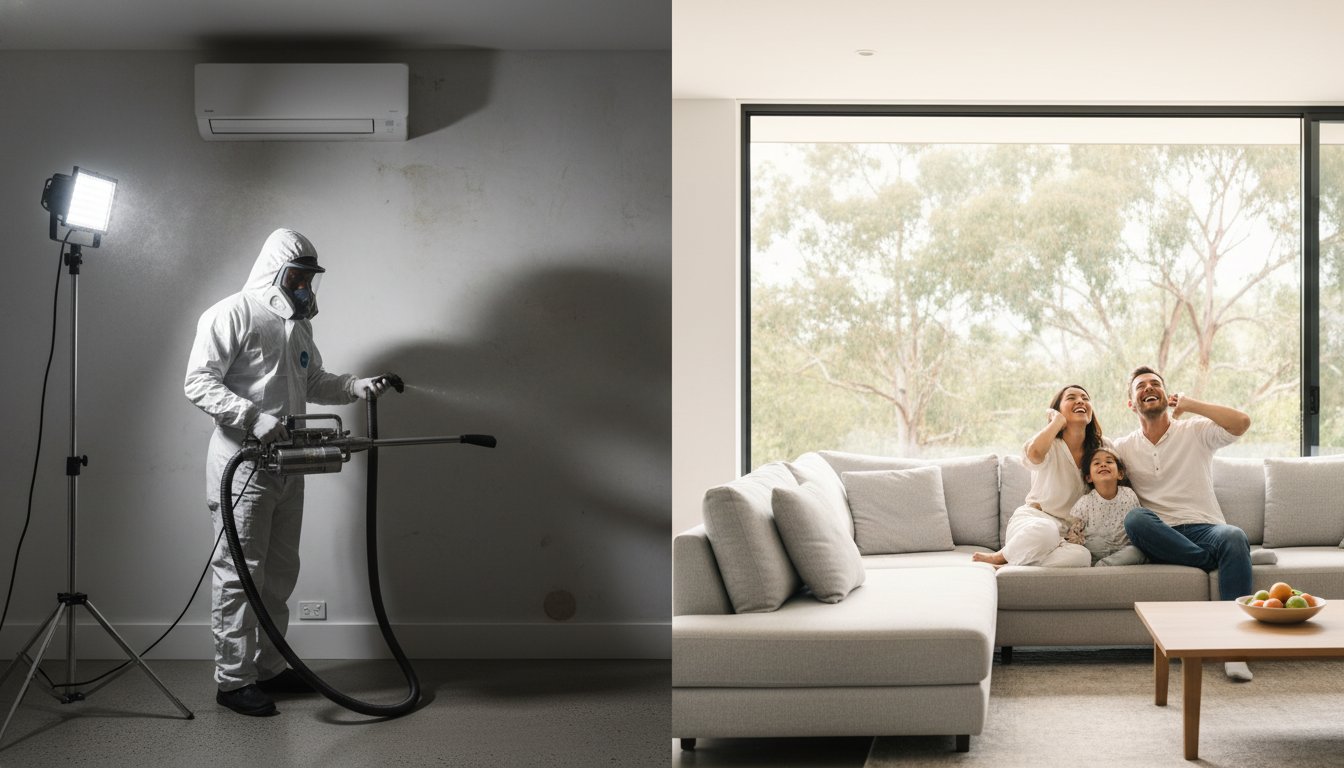
Leaving a mould problem to fester is a gamble with your property and your family’s wellbeing. The long term effects of ignoring mould often result in thousands of dollars in structural damage; sometimes exceeding A$20,000 for extensive ceiling and wall cavity restoration. In Sydney’s humid climate, mould doesn’t just sit on the surface. It colonises deep into porous materials. We use the Goldmorr System, a world-leading, science-based approach that is non-invasive and highly effective. Unlike traditional methods that rely on harsh chemicals or heavy sanding, our system uses biodegradable solutions to achieve total room decontamination.
Professional inspection is the only way to guarantee a mould-free environment. Surface cleaning might remove the visible black spots, but it won’t address the hidden roots. Our master technicians identify moisture sources that DIY checks miss, ensuring the problem stays gone for good. ABC Mould Cleaning Solutions stands by this expertise with a simple promise: we will beat any written quote from a competitor by 10%.
The 3-Step Process to Permanent Removal
Our systematic approach ensures every spore is accounted for. We don’t guess; we follow a proven protocol developed by industry experts to provide lasting results.
- Step 1: Professional Inspection. We pinpoint the moisture source using thermal imaging and moisture meters. Identifying why the mould is there is the only way to stop it from returning.
- Step 2: Surface removal. We apply GM2000, a specialised, safe solution. It targets visible mould on contact without damaging your paint or furniture.
- Step 3: Fogging. This is our secret weapon. We use biodegradable fogging to eliminate airborne spores in every corner of the room, ensuring 99.9% air purity.
Taking Action Today for Peace of Mind
Waiting only makes the remediation more expensive. The long term effects of ignoring mould can lead to permanent respiratory issues for residents. You can get an affordable quote today without a site visit. Simply send us images of the affected area via your smartphone. Our certified master technicians will review the damage and provide a transparent estimate. We’ve helped over 1,200 Sydney homeowners restore their properties in the last 12 months alone. Don’t let your health suffer any longer. It’s that simple. It’s that easy. Contact Sydney’s #1 Mould Removal Service now to secure your home.
Protect Your Property and Health Before Costs Escalate
You can’t afford to let a small patch of mould turn into a structural or medical crisis. Prolonged exposure often leads to chronic respiratory conditions like asthma or persistent fatigue. Beyond health, structural damage to timber and drywall can decrease property value by up to 10% or result in restoration bills exceeding A$15,000. The long term effects of ignoring mould are cumulative; the longer you wait, the more expensive and dangerous the restoration becomes.
Surface sprays and bleach won’t reach the microscopic airborne spores hiding in your wall cavities. Our Certified Goldmorr Master Technicians use a safe, biodegradable, and pet-friendly fogging process that eliminates the problem at its source without damaging your belongings. We’re committed to your safety and your budget, which is why we will beat any written quote by 10%. It’s that simple. It’s that easy. You deserve a home that’s safe, clean, and healthy for your family.
Don’t wait for the problem to worsen—Get your free mould removal estimate today!
Frequently Asked Questions
Can ignoring mould lead to permanent health issues?
Yes, prolonged exposure can lead to chronic respiratory conditions like asthma or hypersensitivity pneumonitis. According to the World Health Organization, residents in damp homes have a 75% higher risk of respiratory symptoms. Ignoring the problem allows spores to settle deep in lung tissue, causing irreversible scarring in vulnerable individuals. Don’t risk your family’s health; our master technicians provide the peace of mind you need through professional remediation.
How long can I wait before mould becomes dangerous?
Mould becomes a health risk within 24 to 48 hours of initial water exposure. It starts colonising surfaces almost immediately, and by day three, spores are often airborne and spreading through your HVAC system. You shouldn’t wait until you see large patches because the long term effects of ignoring mould begin the moment moisture meets organic material. Contact us for a fast estimate before the situation worsens.
Does home insurance cover the long-term effects of mould?
Most Australian standard home insurance policies don’t cover mould caused by neglect or lack of maintenance. If a pipe bursts suddenly, you’re likely covered, but gradual damage from a slow leak is usually excluded. Remediation costs for ignored mould can exceed A$15,000, which comes directly out of your pocket. Check your PDS for specific exclusions. We can provide an affordable quote that we’ll beat by 10% if you find a lower written offer.
Can I just paint over mould to stop it from spreading?
No, painting over mould is a temporary fix that traps the fungus behind a layer of paint where it continues to feed on the drywall. The mould will eventually eat through the new coat, often within three to six months. Our team uses the Goldmorr System to actually eliminate the spores rather than just hiding the unsightly spread. It’s a scientific, industry-leading solution that ensures the mould is gone for good.
What is the most dangerous type of mould to ignore?
Stachybotrys chartarum, commonly known as black mould, is the most hazardous variety to ignore. It produces mycotoxins that can lead to neurological issues and severe respiratory distress. While all mould is a risk, this specific strain requires professional intervention. If you see dark, slimy patches, send us images immediately. Our experts will assess the risk level and provide a safe, effective plan to clear your home.
Is it possible for mould to cause structural failure in a house?
Yes, mould can cause structural failure by consuming organic building materials like timber studs and floor joists. Over a period of 12 to 24 months, untreated mould can reduce the load-bearing capacity of wood by up to 50%. This creates a dangerous environment where floors sag or ceilings collapse. Fixing these structural issues often costs five times more than early professional removal. It’s that simple; early action saves your home.
Why does mould keep coming back after I clean it with bleach?
Bleach only removes the surface colour of mould while the water content in the bleach actually feeds the roots deep inside porous materials. This is why it often returns within 14 days of cleaning. We use a biodegradable fogging process that neutralises spores at the source. It’s a proven system that ensures the long term effects of ignoring mould don’t include a frustrating cycle of regrowth and wasted money.
How do I know if the mould is in my air and not just on the walls?
You can identify airborne mould through persistent musty smells or by experiencing “sick building syndrome” symptoms that improve when you leave the property. If 10% of your wall is covered, your indoor air quality is already compromised. We use non-mechanical air scrubbing and the Goldmorr System to clear the air of invisible spores. Send us photos of your walls today for an affordable quote and restore your home’s safety.