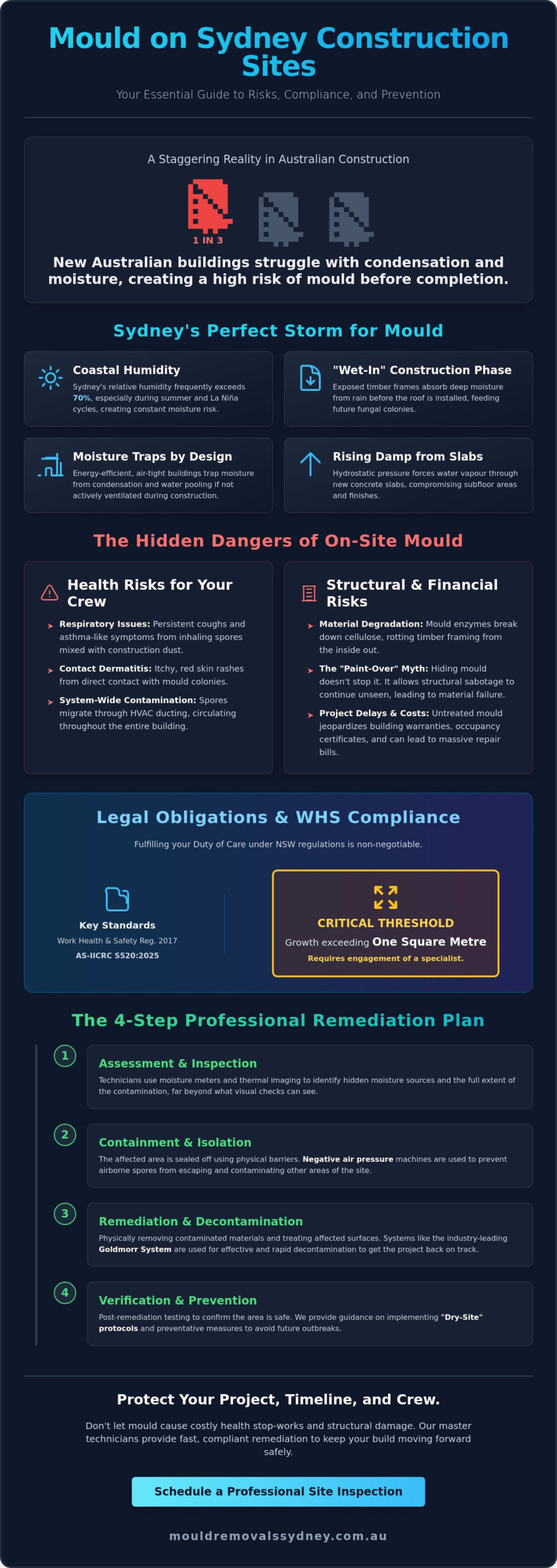
Did you know that one-third of new buildings in Australia now struggle with condensation and moisture issues? It’s a staggering statistic that translates directly into a high risk of finding a mould in construction site zone before the build is even finished. You already know the stress of seeing damp timber or grey spots on fresh plasterboard. It’s not just an eyesore. It’s a legal and health liability that can halt your progress in an instant and lead to expensive health stop-works.
Since the formal adoption of the AS-IICRC S520:2025 standard in December 2025, the benchmarks for professional remediation have never been higher. We’ll show you how to manage these outbreaks effectively to protect your crew from respiratory issues and avoid the massive costs of structural damage. This guide covers the exact steps to comply with SafeWork NSW’s 2025 duty of care requirements, including when to engage a specialist for growth exceeding one square metre. We also preview how our master technicians use the industry-leading Goldmorr System to get your project back on track quickly. It’s that simple.
Key Takeaways
- Understand why Sydney’s coastal humidity and the “Wet-In” phase create the perfect storm for rapid fungal growth on timber and plasterboard.
- Learn your specific WHS legal obligations and how to fulfill your Duty of Care when you discover a mould in construction site outbreak.
- Discover the 4-step professional remediation plan, featuring isolation techniques and negative air pressure to contain airborne spores.
- Implement “Dry-Site” protocols and early-stage subfloor ventilation to prevent moisture build-up and avoid costly project shutdowns.
- Find out how professional inspections using moisture meters and thermal imaging identify hidden threats that standard site checks miss.
The Hidden Dangers of Mould in Construction Sites
Mould isn’t just an unsightly smudge on a wall. It’s a complex fungal organism that thrives by consuming organic matter. In a mould in construction site environment, the abundance of porous materials like unsealed timber, plasterboard, and insulation provides a literal feast for these colonies. When microscopic mould spores combine with abrasive construction dust, they form a dangerous synergy. This mixture irritates the respiratory tract far more severely than simple sawdust or drywall debris alone. Toxigenic mould refers to species that produce chemical byproducts called mycotoxins, which frequently accumulate in damp building voids where moisture levels remain high and airflow is restricted. A prime example is Stachybotrys chartarum (black mould), a fungus that can colonize water-damaged materials and pose significant risks to anyone on the project.
Health Risks for Site Workers
Protecting your crew’s health is a legal requirement under the Work Health and Safety Regulation 2017. Exposure to high concentrations of spores often leads to a persistent, chronic cough or the sudden onset of asthma-like symptoms. Some workers may develop contact dermatitis, which shows up as itchy, red skin rashes. These risks are amplified for individuals with compromised immunity or existing respiratory issues. It’s also vital to understand how spores move. They don’t stay in one corner. Airborne spores easily migrate through partially installed HVAC ducting. Once they settle in the ventilation system, they can circulate throughout the entire building, making professional air purification and scrubbing a necessity rather than an option.
Structural Integrity and Material Degradation
Structural damage is a silent consequence of ignoring a mould in construction site problem. Mould releases enzymes that break down the cellulose in timber framing, effectively rotting the wood from the inside out. Many site managers fall for the “paint-over” myth, thinking a quick coat of primer solves the problem. It doesn’t. Hiding the growth only allows the fungus to continue its structural sabotage behind the scenes. This can lead to catastrophic material failure. Beyond the physical damage, untreated mould issues can jeopardize building warranties and delay the issuance of occupancy certificates. It’s much cheaper to call in the experts for professional mould remediation now than to face a massive legal claim or structural repair bill later. Our master technicians provide the peace of mind you need to keep the project moving safely.
Why Sydney Construction Sites are Breeding Grounds
Sydney’s coastal geography presents unique challenges that most building standards don’t fully address. The city’s relative humidity frequently exceeds 70%, especially during the humid summer months and the increasingly common La Niña rain cycles seen between 2024 and 2026. This high moisture content creates a constant risk for any mould in construction site project. When internal frames are exposed to heavy rain during the “Wet-In” phase before the roof is installed, timber absorbs moisture deep into its grain. This trapped water becomes a long-term food source for fungal colonies once the building is sealed.
New concrete slabs are also major contributors to moisture issues. Hydrostatic pressure can force water vapor through the slab, leading to rising damp in subfloor areas. If this isn’t managed during the early stages of construction, it can compromise floor finishes and structural integrity. Research from the Air Infiltration and Ventilation Centre highlights that mould problems on construction sites are often linked to these early-stage moisture intrusions that go undetected. If you suspect your site has been compromised by recent storms, booking a professional mould inspection is the fastest way to protect your project timeline.
Moisture Traps in Modern Building Design
Modern Sydney developments focus heavily on energy efficiency and air-tightness. While this is great for the end-user, it’s a disaster during construction if ventilation isn’t commissioned early. Inadequate drainage around the building footprint during excavation often leads to water pooling against the foundation. During winter builds, temperature differentials cause heavy condensation in uninsulated wall cavities. Without active air movement, these stagnant building pockets become incubators for spores. You can’t rely on natural drying in a city as humid as Sydney; you need a proactive moisture management plan.
Contaminated Building Materials
Mould often arrives on site before the first brick is laid. Timber stored improperly in the rain or pallets of drywall left on damp ground are primary culprits. Cross-contamination is a massive threat; a single infested pallet can release millions of spores that infect an entire floor. Lift pits and basement levels are particularly vulnerable, as they often collect stagnant water that remains for weeks. It’s a chain reaction. Once the spores find a porous surface and a water source, they take hold. Our master technicians often find that “new” materials are already compromised, requiring immediate remediation to meet safety standards. It’s that simple: if it’s wet and organic, it’s at risk.
Legal Obligations and WHS Compliance in NSW
Managing a mould in construction site isn’t just a matter of site hygiene; it’s a strict legal mandate under the Work Health and Safety Act 2011. As a site manager or developer, you hold a non-delegable Duty of Care to provide a work environment that’s free from biological hazards. This responsibility extends beyond visible growth to the invisible airborne spores mentioned in previous sections. Failing to identify and control these risks can lead to severe penalties from SafeWork NSW. You must also prioritize worker consultation. If your crew discovers mould, you’re legally required to inform them of the findings and the proposed remediation plan. Ignoring these concerns often leads to industrial friction or immediate health-related stop-works.
The financial fallout of a stop-work order is devastating. On a multi-million dollar Sydney development, a single day of downtime can cost upwards of $15,000 in liquidated damages, equipment hire, and labor standing costs. If an inspector finds that you’ve attempted to hide a mould in construction site issue or used unqualified cleaners, they can shut the site down indefinitely. Engaging professional mould removal is often the only way to satisfy WHS inspectors and get your project moving again. It provides the documented proof of safety that government bodies and union delegates demand.
SafeWork NSW Standards for Mould
Current SafeWork NSW guidelines emphasize the use of specialized PPE when dealing with infested materials. This includes P2 or N95 rated masks and disposable coveralls to prevent cross-contamination. You should maintain a detailed mould log that tracks every inspection and treatment. This document is your primary defense during an audit or insurance claim. If multiple workers report respiratory distress, you have a mandatory reporting obligation to health authorities. Don’t wait for a formal complaint to act.
Liability and Insurance Implications
The legal risks don’t end when the building is finished. If an engineer discovers mould on a structural frame, they’ll likely refuse to sign off on the stage completion. This can prevent you from obtaining an occupancy certificate. You also face significant litigation risks from future occupants if mould is trapped behind walls. Most “standard” cleaning crews don’t carry the specific certifications required for biohazard remediation. Using them often voids your professional indemnity insurance for any mould-related claims. Our master technicians ensure every step of the remediation process is documented and safe. It’s that simple. We protect your project from both the fungus and the lawyers.
Managing a Mould Outbreak: The 4-Step Remediation Plan
When you discover a mould in construction site outbreak, speed is your greatest asset. Traditional manual scrubbing is too slow for large-scale developments and often does more harm than good by spreading spores. Our master technicians follow a scientific, four-step protocol designed for maximum efficiency and site safety. This non-mechanical approach ensures your project stays on track without compromising the health of your crew or the structural integrity of the build.
- Step 1: Isolation. We immediately contain the affected area using heavy-duty plastic sheeting. By establishing negative air pressure, we ensure that airborne spores are trapped within the containment zone rather than drifting into previously clean areas of the build.
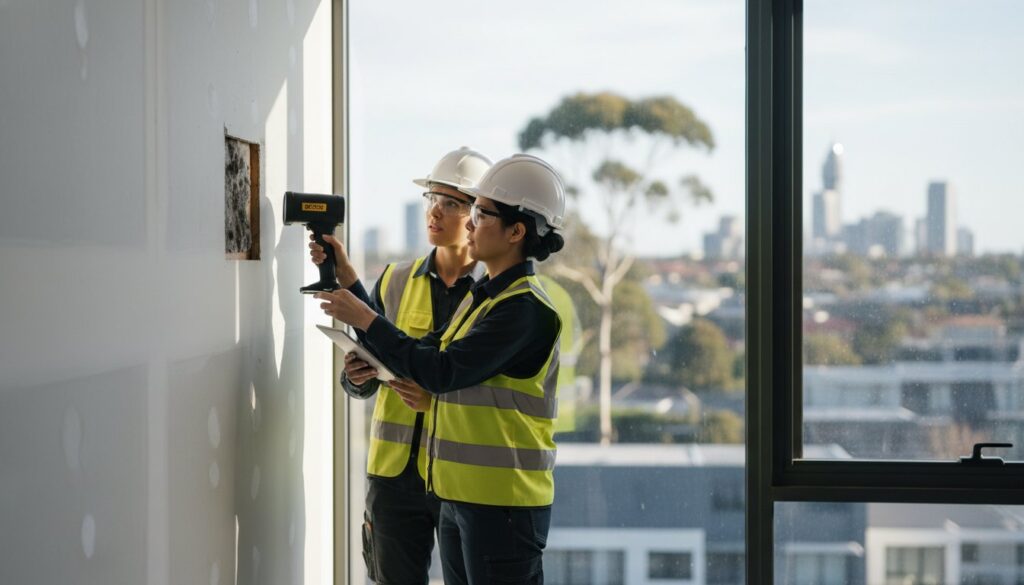
- Step 2: Professional Inspection. We don’t guess. We use moisture meters and thermal imaging to find hidden moisture behind plasterboard and within wall cavities. This identifies exactly where the fungus is hiding.
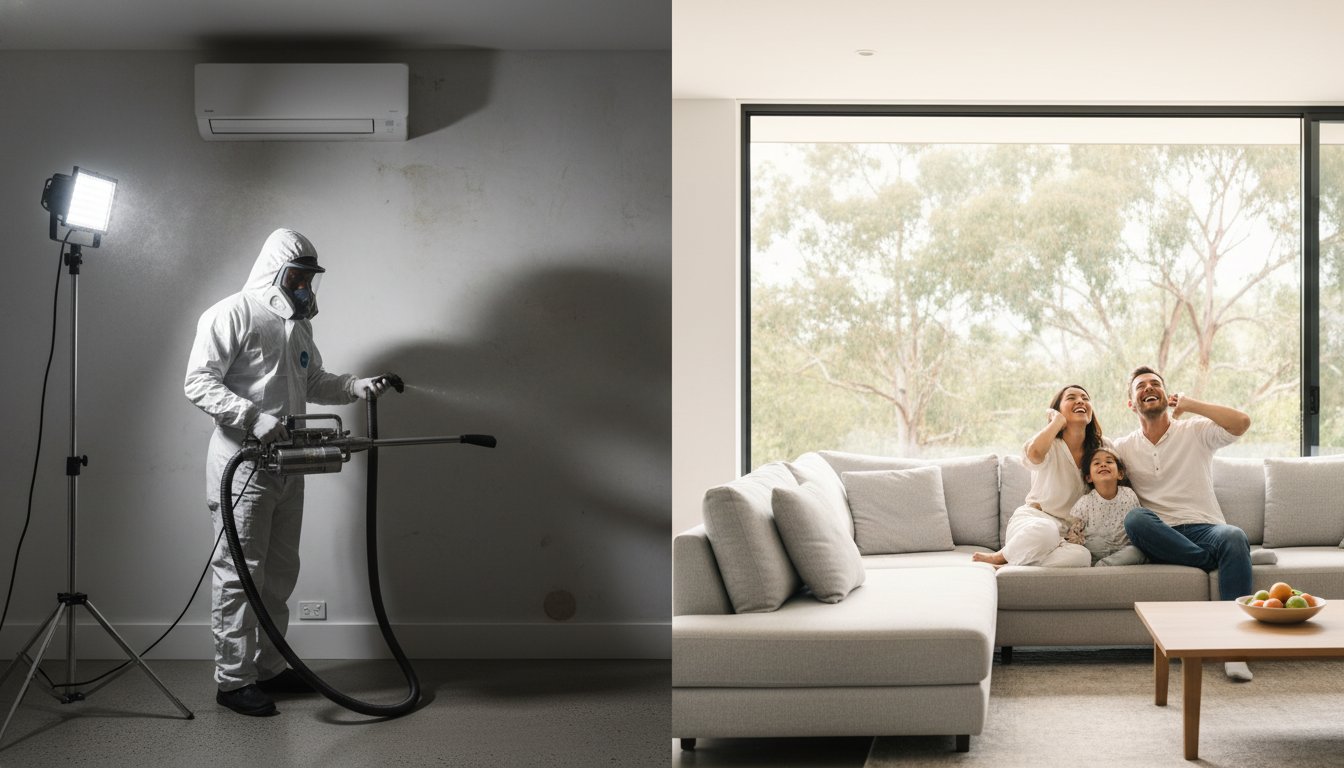
- Step 3: Remediation. This is where we deploy the Goldmorr System. This biodegradable fogging process provides a rapid kill-rate for spores on every surface it touches.
- Step 4: Air Purification. We run industrial HEPA air scrubbers to permanently remove airborne particles. This restores the air quality to a safe, breathable level.
If your site has been hit by moisture and growth, don’t wait for the problem to worsen. Schedule Your Cleaning Now & Get Free Estimate to protect your project timeline.
The Goldmorr Fogging Process
Fogging is vastly superior to manual scrubbing for porous building materials like timber and drywall. While scrubbing only addresses the surface, our biodegradable fogging process penetrates deep into the grain of the wood and the pores of the plasterboard. It’s a non-mechanical solution that reaches inaccessible wall cavities and subfloors where manual tools can’t go. Safety is a priority. The system is safe for people and the environment, meaning other trades can typically return to work in the area shortly after the treatment is complete. It’s that simple. It’s that easy.
Air Scrubbing and Spore Removal
Non-mechanical air scrubbing is essential for restoring site air quality after an outbreak. If your HVAC system was running while mould was present, the spores have likely settled inside the ductwork. In these cases, professional air duct cleaning is mandatory to prevent the system from re-contaminating the building once it’s finished. We wrap up every remediation project with post-remediation testing. This provides the documented proof you need to verify the site is “cleared” for work to resume. We give you the peace of mind that the air your workers breathe is safe.
Prevention Strategies for Sydney Site Managers
Prevention is the most cost-effective way to manage a mould in construction site hazard. Proactive management starts long before the first signs of growth appear. You must implement a strict “Dry-Site” protocol to ensure your materials don’t become a food source for fungi. This includes conducting regular moisture monitoring of timber frames before any plasterboard installation occurs. If timber moisture content exceeds 15% to 20%, you’re inviting an outbreak behind the walls. Train your site supervisors to recognize the subtle, musty smell of early-stage growth. Their noses are often more sensitive than their eyes when it comes to detecting hidden dampness in stagnant building pockets.
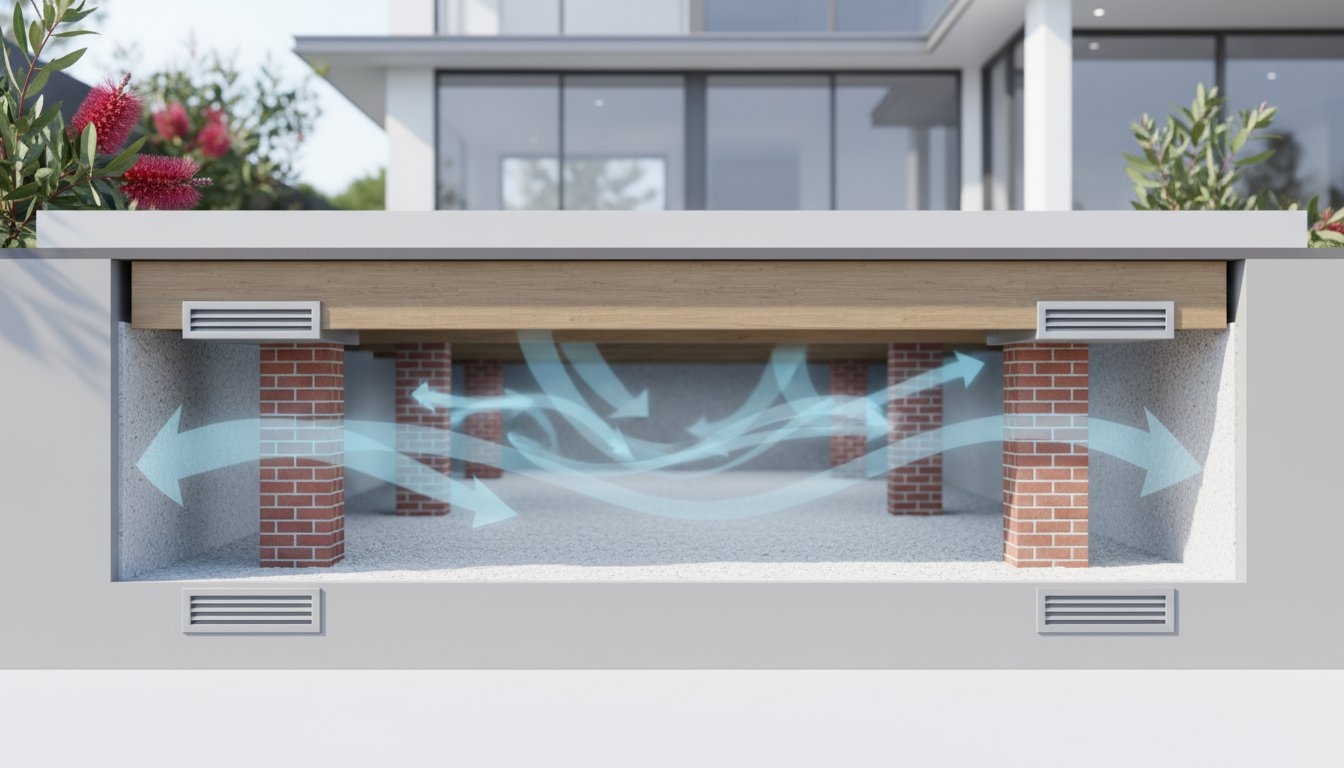
Early-stage subfloor ventilation is another critical factor in new builds. Installing these systems early prevents moisture from concrete slabs and the ground from rising into the structure. This eliminates the humidity issues discussed in earlier sections and provides long-term protection for the building’s future occupants. It’s about creating a safe environment from the ground up.
Material Storage and Handling
How you store materials on-site determines the success of your mould prevention plan. Always tarp timber and drywall properly if they’re stored in open areas. Don’t let materials sit directly on concrete slabs. Elevate them at least 150mm off the ground to prevent moisture wicking. Concrete acts like a sponge and will pull ground water directly into your expensive timber and plasterboard. Be aggressive when accepting deliveries. If a truck arrives with wet or water-stained materials, reject the delivery immediately. One contaminated pallet can release millions of spores, infecting your entire floor within 48 hours. It’s a risk your timeline can’t afford.
When to Call ABC Mould Cleaning Solutions
Sometimes, even the best prevention strategies are overwhelmed by Sydney’s unpredictable coastal weather. When a major rain event hits, you need a partner who understands the urgency of a commercial build. We offer a rapid response with emergency 24/7 service for water damage and mould outbreaks. Our master technicians provide the documented proof of remediation that WHS inspectors require to keep your site open. We are also committed to your project’s bottom line. We will beat any written quote by 10% for commercial sites, ensuring you get world-leading remediation at the most competitive price. Don’t let mould stop your build. Contact our master technicians for a site inspection today. It’s that simple. It’s that easy.
Protect Your Project and Personnel From Mould Liabilities
Managing a mould in construction site zone requires more than just a quick clean. The formal adoption of the AS-IICRC S520:2025 standard in December 2025 has significantly raised the bar for site safety. You must move beyond surface-level scrubbing to scientific remediation. This ensures your project meets SafeWork NSW duty of care requirements and avoids the $15,000 daily costs often associated with health-related stop-works. By implementing “Dry-Site” protocols and early subfloor ventilation, you can prevent most outbreaks before they even start.
When moisture takes hold, our master technicians are ready to deploy the industry-leading Goldmorr System. This non-mechanical fogging process provides the rapid, thorough kill-rate your project demands. We understand the pressure of commercial deadlines and provide the documented clearance you need to resume work safely. We are so confident in our expertise that we will beat any written quote by 10%. It’s that simple. It’s that easy.
Take the first step toward a compliant, healthy build today. Get a Professional Site Inspection & 10% Price Beat Guarantee. We look forward to helping you deliver a safe, high-quality project on time.
Frequently Asked Questions
Is mould on a construction site a legal WHS issue in NSW?
Yes, mould is formally classified as a biological hazard under the NSW Work Health and Safety Regulation 2017. Site managers have a legal duty of care to identify and control these risks to provide a safe workplace. Failing to manage an outbreak can lead to immediate stop-work orders and significant fines from SafeWork NSW. It’s essential to document all remediation efforts to maintain compliance and protect worker health.
Can I just use bleach to clean mould off timber frames?
No, you should never use bleach on porous building materials like timber framing. Bleach is 90% water and cannot penetrate the surface of the wood. It only changes the color of the mould while the water content feeds the roots, causing the colony to return stronger. Professional remediation requires specialized solutions like the Goldmorr System to kill the fungus deep within the wood grain.
How long does a professional mould remediation take on a construction site?
Most professional treatments for a mould in construction site zone are completed within 24 to 48 hours. Our non-mechanical fogging process allows for rapid coverage of large areas without the need for manual scrubbing. This speed is vital for meeting tight project deadlines. Once the air is scrubbed and the surfaces are treated, other trades can typically return to the site shortly after, minimizing costly downtime.
What is the best way to prevent mould during the wet-in phase of building?
Implementing a strict “Dry-Site” protocol is the best prevention strategy during the wet-in phase. This involves tarping all exposed timber and ensuring materials are elevated 150mm off concrete slabs. You should also monitor timber moisture levels regularly. If the moisture content exceeds 20%, you must use industrial fans to dry the frame before installing insulation or plasterboard to avoid trapping spores behind walls.
Do I need to throw away plasterboard that has mould on it?
Yes, plasterboard is a highly porous material that provides an ideal food source for fungal colonies. If the growth has penetrated the paper backing or the core, the board must be removed and disposed of as biohazardous waste. While some surface growth can be treated with professional fogging, replacing contaminated drywall is often the only way to guarantee a safe environment for future occupants and satisfy building warranties.
What PPE do my workers need if mould is found on-site?
Workers must wear P2 or N95 rated respirators to prevent inhaling airborne spores during remediation. You should also provide disposable coveralls and nitrile gloves to prevent skin contact and cross-contamination. SafeWork NSW requires these standards for any site where growth exceeds one square metre. Proper PPE is your first line of defense against respiratory issues and long-term health liabilities for your crew.
Can mould grow on new concrete slabs?
Yes, mould can grow on concrete slabs, especially if they are covered in construction dust or organic debris. While concrete isn’t a food source itself, the dust and moisture trapped on its surface provide everything a mould in construction site needs to thrive. High hydrostatic pressure in Sydney’s coastal areas can also push moisture through the slab, creating a damp environment where colonies can quickly form.
Will insurance cover mould removal on a construction site?
Coverage usually depends on whether the mould resulted from a “sudden and accidental” event like a burst pipe or a major storm. Many standard policies exclude mould caused by poor storage or gradual seepage. Using uncertified cleaners can also void your professional indemnity insurance. Always engage master technicians who provide the documented remediation reports required by insurers to process your claim successfully. It’s that simple.