
Last Tuesday, a homeowner in Annandale discovered that the persistent musty scent in their 1890s terrace wasn’t just “old house charm,” it was actually the result of over 350 litres of stagnant moisture trapped beneath their floorboards. If you’ve noticed cupping timber or recurring mould on your lower walls, you aren’t alone; approximately 75% of heritage properties in the region struggle with rising damp due to poor airflow. Implementing professional subfloor ventilation inner west services is the only way to stop this silent decay before it compromises your home’s structural integrity.
It’s frustrating to watch your beautiful Federation or Victorian home succumb to dampness and high humidity. You want a living space that feels fresh and safe, not one that smells like a cellar and triggers respiratory issues. This guide explains how specialized ventilation systems protect your timber from rot and ensure mould spores are permanently eradicated from your home. We’ll preview the specific moisture challenges of Sydney’s heritage architecture and the industry-leading extraction systems used to keep these historic homes dry for another century.
Key Takeaways
- Understand why the unique architecture of Victorian terraces and Federation homes makes them high-risk zones for trapped moisture and structural decay.
- Discover why standard passive vents often fail and how high-performance mechanical extraction provides the necessary airflow to stop rising damp.
- Learn how our master technicians use thermal imaging and moisture meters to design a custom airflow map tailored to your property’s specific footprint.
- Explore the benefits of specialized subfloor ventilation inner west systems in preventing the serious health risks associated with stagnant air and mould spores.
- See how integrating the Goldmorr System ensures that existing mould is safely eliminated using biodegradable fogging for a complete remediation solution.
The Unique Subfloor Challenges of Inner West Sydney Properties
Subfloor ventilation is the essential process of replacing stagnant, damp air trapped beneath your floorboards with fresh, dry air from the outside environment. In the Inner West, this process is often the only thing standing between a healthy home and a structural nightmare. Many heritage properties in this region were built over a century ago, long before modern building codes addressed moisture management. Without a functional system, the void between the soil and your floorboards becomes a humid microclimate where mould and wood rot thrive.
Inner West architecture, particularly the iconic Victorian terraces and Federation homes, is uniquely prone to moisture retention. These buildings often sit on heavy, clay-based soils that hold liquid water for weeks after a single Sydney downpour. When you combine this ground moisture with Sydney’s average humidity levels, which frequently climb above 70%, the air beneath your home becomes saturated. Proper subfloor ventilation inner west services are required to break this cycle of condensation and decay.
A major hurdle for local homeowners is the presence of “dead air pockets.” In long rows of terraces, side-access is non-existent. Because these homes share common walls, there is no path for natural cross-ventilation to move air from one side of the building to the other. This creates zones of absolute stillness where moisture levels escalate, leading to timber floorboards cupping and joists losing their structural integrity.
Architectural Vulnerabilities in Newtown, Balmain, and Glebe
Homes in Newtown, Balmain, and Glebe often rely on Damp proofing principles that have failed over time. Sandstone foundations are a hallmark of these suburbs; however, sandstone is highly porous. It acts like a sponge, drawing moisture up from the damp earth through capillary action. We also find that modern renovations frequently cause accidental damage. When homeowners install new concrete paths or rendering, they often block the original terracotta air bricks. This simple mistake suffocates the subfloor and forces moisture levels to spike within weeks.
The “Musty Smell” Warning Sign
That familiar “old house smell” in an Inner West terrace isn’t a sign of age; it’s a sign of a biological problem. This odor is caused by Volatile Organic Compounds (VOCs) released by mould and fungi as they consume your floor joists. You aren’t just smelling the subfloor; you are breathing it. The “stack effect” occurs as warm air rises through the home, creating a vacuum that pulls damp, spore-laden air from the subfloor directly into your bedrooms and living areas. If you notice a persistent earthy scent, your subfloor ventilation inner west needs an immediate professional assessment to prevent health risks and timber damage.
Why Passive Vents Aren’t Enough: The Science of Subfloor Dampness
Approximately 65% of homeowners we visit believe that because their property has original terracotta vents, their subfloor is safe. This is the most common misconception we encounter. Passive vents rely entirely on natural wind pressure to move air. In the densely packed streets of the Inner West, heritage houses are often built so close together that natural cross-flow is physically blocked. Without active subfloor ventilation inner west homes become stagnant traps for humid air.
When subfloor humidity levels exceed 70%, the air reaches its dew point against cooler timber joists. This causes liquid condensation to form directly on the wood. This constant moisture leads to devastating structural issues. You might notice wet rot (Coniophora puteana), which softens timber, or the more aggressive dry rot (Serpula lacrymans). Dry rot is particularly dangerous because it can spread through masonry to find new timber sources. The Australian Government ventilation guide confirms that adequate airflow is vital to prevent these structural failures and maintain a healthy building envelope.
The Soil Factor: Clay vs. Sandstone Foundations
Inner West suburbs like Marrickville and Leichhardt sit predominantly on heavy clay soils. Unlike sandy soils found in the Eastern Suburbs, clay has extremely low permeability. After a 40mm Sydney downpour, water doesn’t drain away; it pools under your floorboards for weeks. This moisture is then pulled up through brickwork via capillary action. Without a mechanical system to extract this dampness, your foundations remain perpetually wet, leading to rising damp that ruins internal plaster and paint.
Health Risks of Trapped Subfloor Spores
Your subfloor acts like a pair of lungs for your home. As temperatures fluctuate, air is pushed upward through gaps in floorboards and around skirting boards. If your subfloor is damp, it’s likely filled with millions of microscopic fungal spores. These airborne triggers are a major health risk for residents with asthma or chronic allergies. For more detail on the dangers of these fungi, read our black mould guide. Don’t let your family breathe in toxic air. If you smell a musty odour, it’s time to get a professional assessment before the damage becomes structural and expensive to repair.

Mechanical vs. Natural Ventilation: Selecting the Right System
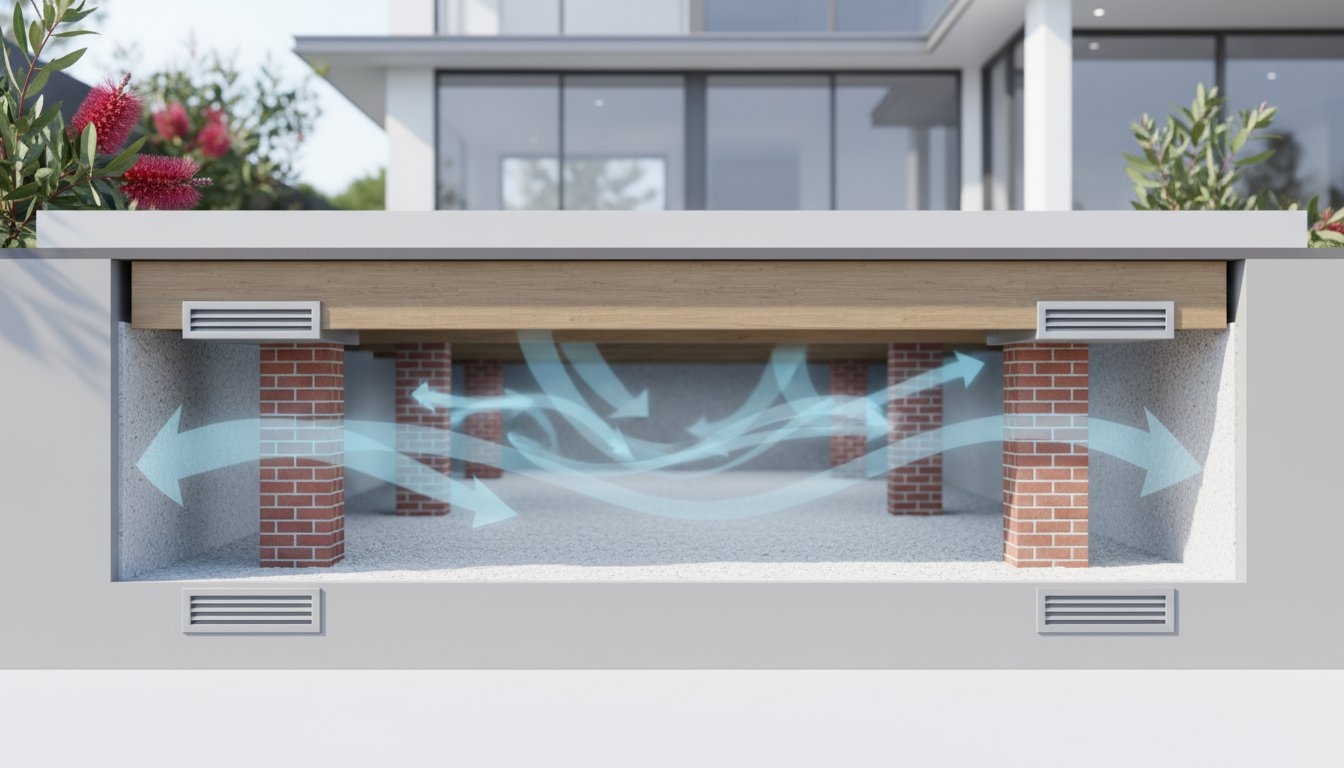
Choosing the correct setup for your subfloor ventilation inner west depends on three specific factors: subfloor clearance height, total square meterage, and the current moisture levels in the soil. A standard terrace house with a clearance of less than 400mm often traps humid air, making passive vents alone insufficient. You need a balanced system. This means for every fan extracting damp air, there must be a corresponding intake point to ensure a complete air exchange every 45 to 60 minutes. NSW Health notes that adequate airflow is critical to prevent mould growth and protect structural integrity. In quiet streets like those in Annandale or Birchgrove, we prioritize low-decibel systems. Our master technicians select fans that operate at under 40dB, ensuring your home remains peaceful while the subfloor stays dry.
- Subfloor Height: Clearances under 500mm usually require mechanical assistance.
- Square Footage: Larger footprints over 100sqm need multiple extraction points to be effective.
- Damp Severity: If you see standing water or salt damp on bricks, passive systems won’t solve the problem.
High-Performance Extraction Fans
For severe damp issues, we install 240V high-performance extraction fans. These units are the industry standard because they move up to 350 cubic meters of air per hour, providing consistent results regardless of wind conditions. We integrate programmable timers and humidity sensors to maximize energy efficiency. We typically set these sensors to trigger the system only when humidity levels exceed 65%. In deep, narrow Inner West terraces, we strategically position fans to eliminate stagnant “dead spots” at the center of the building. This professional approach ensures every corner of your subfloor receives fresh air, stopping rot before it starts.
Passive Vent Upgrades and Solar Options
In some cases, a simple upgrade is the most affordable solution. Replacing original, clogged terracotta vents with modern, high-flow brass mesh can increase natural airflow by 35% to 50%. However, be cautious with solar-powered units in the Inner West. Our narrow alleys and overhanging heritage trees mean many solar panels receive less than 4 hours of direct sunlight daily. During the 2022 La Niña period, many solar systems across Sydney failed exactly when they were needed most because of persistent cloud cover. For reliable, year-round protection, mains-powered mechanical systems remain the expert choice. They work 24/7 to keep your foundations dry, even during Sydney’s wettest months. It’s that simple. It’s that easy.
The 5-Step Inspection and Installation Process
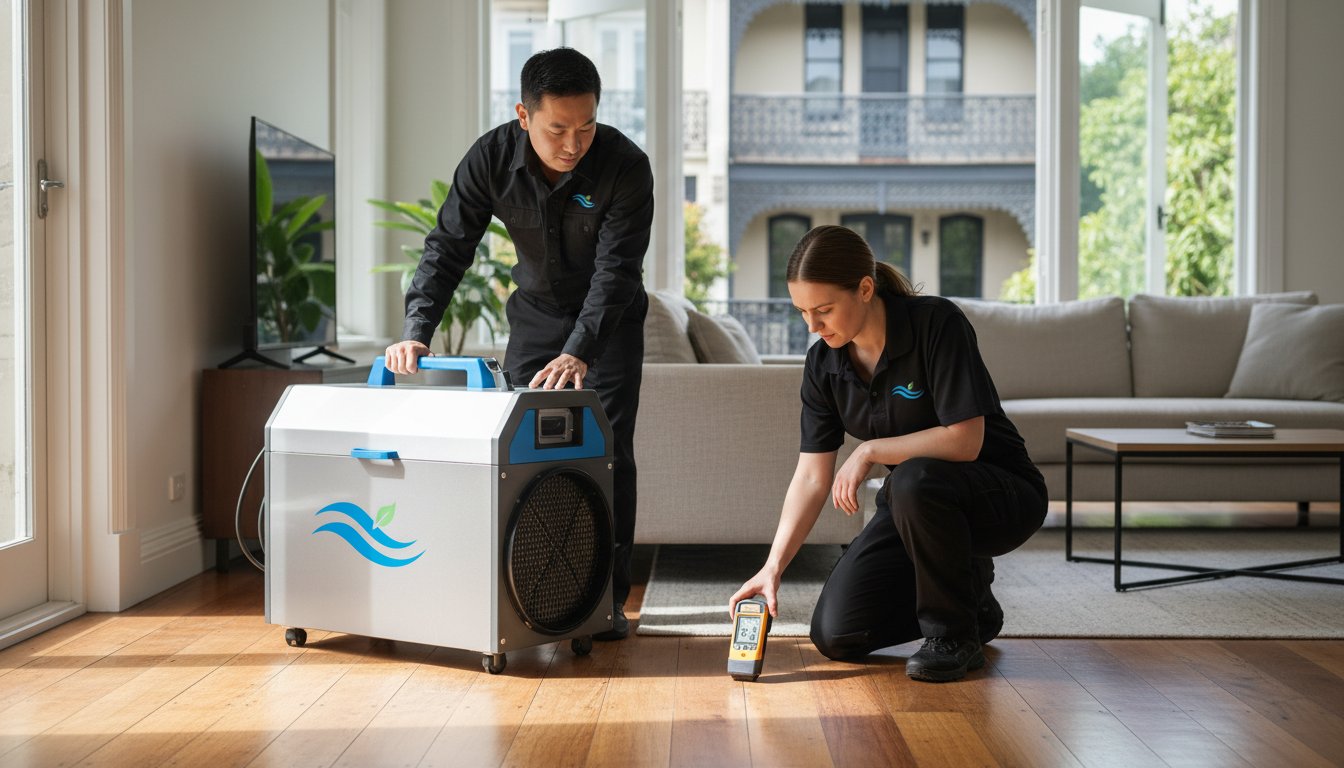
Effective subfloor ventilation inner west requires a scientific approach, not a guess. We follow a rigorous 5-step system to ensure your home stays dry and your family stays safe. Our master technicians start with a professional assessment using moisture meters and FLIR thermal imaging to identify hidden dampness trapped behind foundation walls. We don’t just look for surface mould; we find the exact moisture source that others miss.
Once we identify the problem areas, we design a custom airflow map tailored to your property’s specific footprint. This ensures we eliminate “dead zones” where air stagnates and spores thrive. Before any hardware is installed, our team clears out “construction waste” like old bricks, timber offcuts, and organic debris that often clog subfloor spaces. We then strategically install high-performance fans and precision ducting to create maximum cross-flow. Finally, we conduct performance testing on humidity levels and airflow velocity to verify the system meets our 100% effectiveness standard. It’s a proven process that delivers immediate results.
What to Expect During a Professional Inspection
During our visit, we determine if the issue is rising damp or simply a lack of airflow. These are distinct problems that require specialized solutions. We also check for timber pests because termites are 40% more likely to attack homes with humidity levels exceeding 80%. You’ll receive a detailed report and a fixed-price quote on the spot. We’re so confident in our value that we’ll beat any written quote by 10%.
Customizing for Inner West Constraints
Installing subfloor ventilation inner west means working within the tight constraints of Marrickville or Leichhardt cottages. These heritage homes often have limited crawl space, sometimes with less than 300mm of clearance. We use specialized low-profile equipment to navigate these gaps without compromising the building’s structural integrity. For Victorian and Federation facades, heritage compliance is our priority. We use discreet, color-matched brass or clay vents to ensure the system doesn’t ruin your home’s street appeal. We protect your heritage while solving your dampness issues. Don’t wait for your floorboards to rot because the damage will only get more expensive. Book your professional subfloor inspection today and get peace of mind.
Beyond Ventilation: The ABC Mould Cleaning Integrated Solution
Installing high-quality fans is a vital step for any property, but it is only half the battle if active colonies are already present. Many homeowners believe that simply increasing airflow will “dry out” existing mould. This is a dangerous misconception. If you have visible growth or a persistent musty smell under your floorboards, subfloor ventilation inner west systems might actually move airborne spores into your living areas. You must eliminate the biological threat before the ventilation can do its job effectively. Our master technicians don’t just install hardware; we provide a scientific solution to a biological problem.
We stand by our results and our pricing. ABC Mould Cleaning offers a bold promise: we will beat any written quote by 10%. It is that easy. You get the most advanced remediation technology in Sydney at the most competitive price point available. Don’t let a damp subfloor compromise your family’s health or your home’s structural integrity. Send us images of your subfloor today, and we will provide an affordable, transparent quote to fix the issue for good.
The Goldmorr Advantage for Subfloors
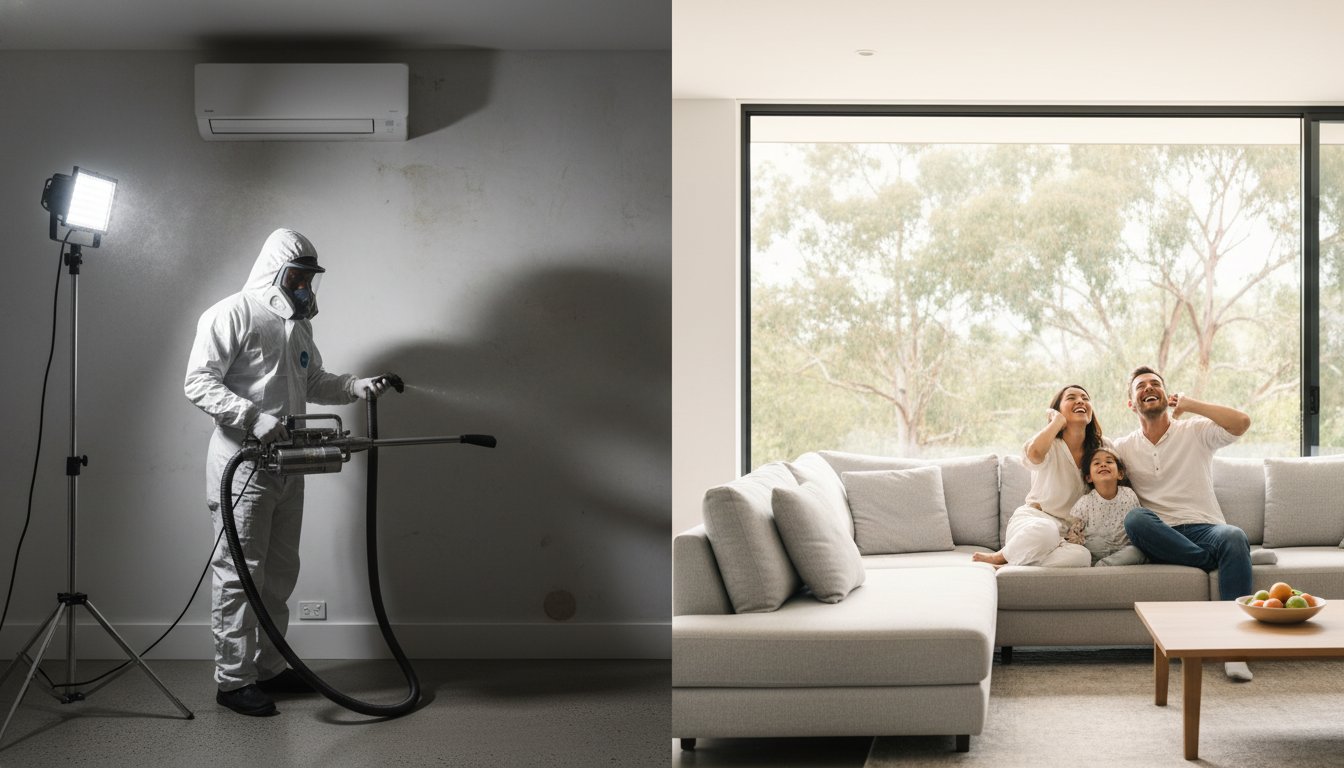
Our team utilizes the world-leading Goldmorr System to handle deep-seated subfloor issues. This process includes non-mechanical air scrubbing, which is far more effective than traditional wiping or scrubbing in tight crawl spaces. We use a specialized biodegradable fogging process that reaches into the tiny crevices and porous surfaces of your brickwork and timber. These are areas that physical cleaning simply cannot touch. Since its inception, the Goldmorr System has been recognized for its safety profile. The solution is non-toxic and 100% safe for pets and families. In most cases, you can remain in the home or return immediately after the treatment is complete. We focus on total elimination, not just a surface-level fix.
Long-Term Prevention and Maintenance
Maintaining your subfloor ventilation inner west system is the key to preventing a recurrence. We recommend annual professional check-ups to ensure your fans are performing at their 100% rated capacity. Dust and debris can often clog intake vents over a 12-month period, reducing efficiency by as much as 25%. Homeowners should also be proactive about their landscaping. Ensure that garden beds and mulch piles are kept at least 150mm away from external air vents. Blocked vents are the primary cause of moisture traps in Sydney’s heritage terraces. If you notice any new damp patches or smells, act quickly. Contact Sydney’s #1 Mould Removal Service for an Inner West subfloor assessment and reclaim your home’s health today.
Secure Your Heritage Home’s Structural Integrity Today
Dampness in Sydney’s heritage properties isn’t just an inconvenience; it’s a structural threat that passive terracotta vents often fail to address. Research shows that mechanical extraction systems can increase airflow by up to 400% compared to natural ventilation alone. By installing a professional subfloor ventilation inner west system, you stop moisture from rotting your floorboards and prevent mould spores from entering your family’s breathing zone.
As Certified Goldmorr Master Technicians, we’ve successfully treated over 1,200 Sydney homes using our proven, scientific remediation process. Don’t wait until musty smells turn into expensive timber repairs. We’re so confident in our pricing that we’ll beat any written quote by 10%. You deserve the peace of mind that comes with a dry, healthy subfloor. It’s that simple. It’s that easy.
Get a Free Subfloor Inspection & Quote – We Beat Any Quote by 10%
Take control of your home’s health and protect your investment for the long term.
Frequently Asked Questions
How much does subfloor ventilation cost in the Inner West?
Subfloor ventilation in the Inner West typically costs between A$1,500 and A$4,500 for a professional installation. Prices vary based on the number of fans required and the difficulty of access under your heritage home. We’ll beat any written quote by 10% to ensure you get the best value for your property. Call us now or send images of your vents to get a fast, affordable estimate.
Will subfloor ventilation stop the musty smell in my house?
Yes, a professional ventilation system stops musty smells by extracting damp, stagnant air from beneath your home. These odors are a direct result of mould spores and high humidity levels trapped in the soil. Once we install the Goldmorr System, the constant air exchange prevents these smells from rising through your floorboards. It’s the most effective way to restore a fresh, healthy environment to your living spaces.
How many fans do I need for a standard terrace house?
A standard terrace house usually needs 2 or 3 high-performance fans to achieve adequate cross-ventilation. Because Inner West homes are often narrow and share walls with neighbors, air can’t move naturally through the foundation. We position fans to ensure 100% air turnover every hour. This prevents dead zones where moisture settles and mould begins to grow in the dark corners of your subfloor.
Does subfloor ventilation use a lot of electricity?
Subfloor ventilation systems are incredibly efficient and typically cost less than A$0.15 per day to run. Most modern fans use low-voltage DC power, consuming between 20 and 40 watts during operation. You’ll enjoy a dry, healthy home without worrying about a high electricity bill. It’s a small price to pay for protecting your home’s structural foundation and your family’s respiratory health.
Can I install subfloor vents myself?
You shouldn’t attempt a DIY installation because incorrect fan placement can actually make dampness worse by creating air pockets. Professional technicians understand airflow dynamics and ensure that air is drawn from the right points to exhaust moisture effectively. We use certified equipment and the Goldmorr System to guarantee results. Don’t risk your home’s structural integrity on a guess; trust our master technicians to do it right.
Is subfloor ventilation noisy for my neighbors?
Our systems are designed to be whisper-quiet, producing less than 40 decibels of sound during operation. This is roughly the same volume as a quiet library or a gentle hum. We use vibration-dampening mounts and insulated ducting so the fans don’t disturb you or your neighbors. You’ll get all the benefits of a dry subfloor without any annoying background noise or complaints from the house next door.
How long does it take to see results after installation?
You’ll see a noticeable drop in humidity levels within just 48 hours of installing subfloor ventilation in your Inner West property. While the air clears quickly, it can take 14 to 28 days for damp timber and masonry to dry out completely. Regular monitoring shows that mould activity ceases almost immediately once the airflow is established. It’s a fast, reliable solution for urgent damp issues that won’t go away.
Does subfloor ventilation help prevent termites?
Yes, dry subfloors are a major deterrent for termites, as these pests require high moisture levels to survive and travel. By keeping your subfloor humidity below 15%, you create a hostile environment for timber-destroying insects. While it doesn’t replace a physical termite barrier, it’s an essential part of a comprehensive pest management strategy for Sydney’s older timber-framed homes. It’s about providing long-term peace of mind.