If mould in your Sydney home or apartment has returned after cleaning, the surface was treated but the cause wasn’t. Moisture has to be removed from the equation before any treatment holds. Without finding what’s feeding the colony, every clean resets the clock. It doesn’t stop it.
Key Takeaways
• Visible mould is a symptom. The moisture pathway feeding it is the real problem, and no surface product resolves that
• The Goldmorr System uses biodegradable, non-mechanical fogging to clear airborne spores that wiping and scrubbing physically can’t reach
• ABC Mould Cleaning Solutions treats apartments, homes, and commercial premises across Sydney Metro, Blue Mountains, and Wollongong
• Quoting is done over the phone using photos, so you get a fast answer without scheduling a site visit
• Call 0488 866 853 or send photos of the affected area to get a quote today
Why Does Mould Keep Returning After You’ve Already Cleaned It?
Because the surface was never the actual problem.
That patch on your ceiling or bathroom wall is the outermost layer of a colony that extends into the substrate beneath it. Scrubbing removes what’s visible. It doesn’t touch the root structure embedded in the material below, and it doesn’t close the moisture pathway that made the colony possible in the first place.
Mould recurrence isn’t a cleaning failure. It’s a method failure.
A bathroom exhaust fan venting into a wall cavity rather than outside. Condensation pooling inside an air conditioner that hasn’t been serviced in years. A subfloor with no ventilation holding moisture against the framing above it. These are sources. The patch on your wall is just where they surface.
That’s why understanding why mould returns after professional cleaning matters more than finding a stronger spray. The answer to recurrence is never a better product. It’s identifying what’s feeding the problem and cutting it off.
What’s the Real Difference Between Mould Removal and Mould Remediation?
These terms get used interchangeably. They shouldn’t be.
Mould removal is the physical elimination of visible growth. Mould remediation is the complete process of returning a space to a normal fungal ecology. That means finding the moisture source, treating the affected substrate, clearing airborne spores from the full air column, and creating conditions where regrowth can’t take hold.
Removal is one step inside remediation. It’s not a substitute for it.
Consider a scenario common across Sydney’s apartment stock. A two-bedroom unit in a concrete slab building has recurring bathroom mould that’s been treated twice in twelve months. It comes back within six weeks each time. A proper assessment identifies the exhaust fan venting into the wall cavity rather than outside, a construction defect that’s been pushing moisture into the plasterboard for years. No surface spray reaches that. Remediation starts with the fan and the wall cavity, not the painted surface above it.
That’s the gap between removal and remediation. It’s not a semantic point. It’s the difference between a result that holds and one that resets.
A Four-Stage Framework for Getting It Right the First Time
Sound remediation follows what practitioners call a source-before-surface approach. Here’s how it applies in practice.
Stage 1: Confirm it’s mould, not staining. Efflorescence, which is the white mineral deposits that appear on masonry, soap scum, and mildew are regularly misidentified as mould. Mould has a fuzzy or powdery texture, a distinct musty smell, and it returns after cleaning. Staining doesn’t.
Stage 2: Find the moisture source. Mould doesn’t grow without a sustained water supply. Is it a leak, rising damp requiring a chemical injection damp-proof course, subfloor moisture, or an unventilated space generating condensation? The answer determines the right approach entirely.
Stage 3: Assess the real spread. What’s visible is the minimum. Airborne spores travel through HVAC systems, settle on soft furnishings, and establish colonies inside wall cavities and ceiling voids. A visible patch in one room may have already seeded growth elsewhere in the property.
Stage 4: Treat source-first. Any method that starts at the surface before Stage 2 is answered is buying time, not solving the problem. The moisture pathway has to be closed before or alongside treatment. Not left open and revisited later.
Don’t let the framework become a reason to wait. If you can already see mould, Stage 1 is done.
Does DIY Treatment Actually Work, or Does It Create a Bigger Problem?
For a small patch on a fully non-porous surface like glazed tile or glass, a DIY approach can hold, provided there’s genuinely no moisture source behind the surface. That’s a narrow set of circumstances.
On painted walls, ceilings, grout, timber, or soft furnishings, surface sprays create a specific downstream problem. They kill the visible colony but leave dead spore material embedded in the substrate. That organic matter still triggers allergic responses, and when the moisture source isn’t closed, a new colony re-establishes faster because the dead material provides a nutrient base to work from.
There’s also a straightforward cost argument. A complete professional mould remediation treats the source, removes airborne spores, and is done properly the first time. Repeated partial treatments, combined with ongoing health exposure during each cycle, almost always cost more in total than a single correct job. The affordable option isn’t the one with the lowest invoice. It’s the one that doesn’t come back.
What Should You Actually Expect From a Professional Mould Removalist?
| Approach | Surface treated | Airborne spores cleared | Moisture source assessed | Recurrence risk |
| DIY surface spray | Visible surface only | No | No | High, certain without source fix |
| General cleaning company | Surface with limited penetration | Rarely | Rarely | Moderate to high |
| Waiting or ignoring | Nothing | No | No | Certain, and worsening |
| Goldmorr System via ABC Mould Cleaning Solutions | Surface, substrate, and air column | Yes, via non-mechanical fogging | Yes | Low when moisture source is resolved |
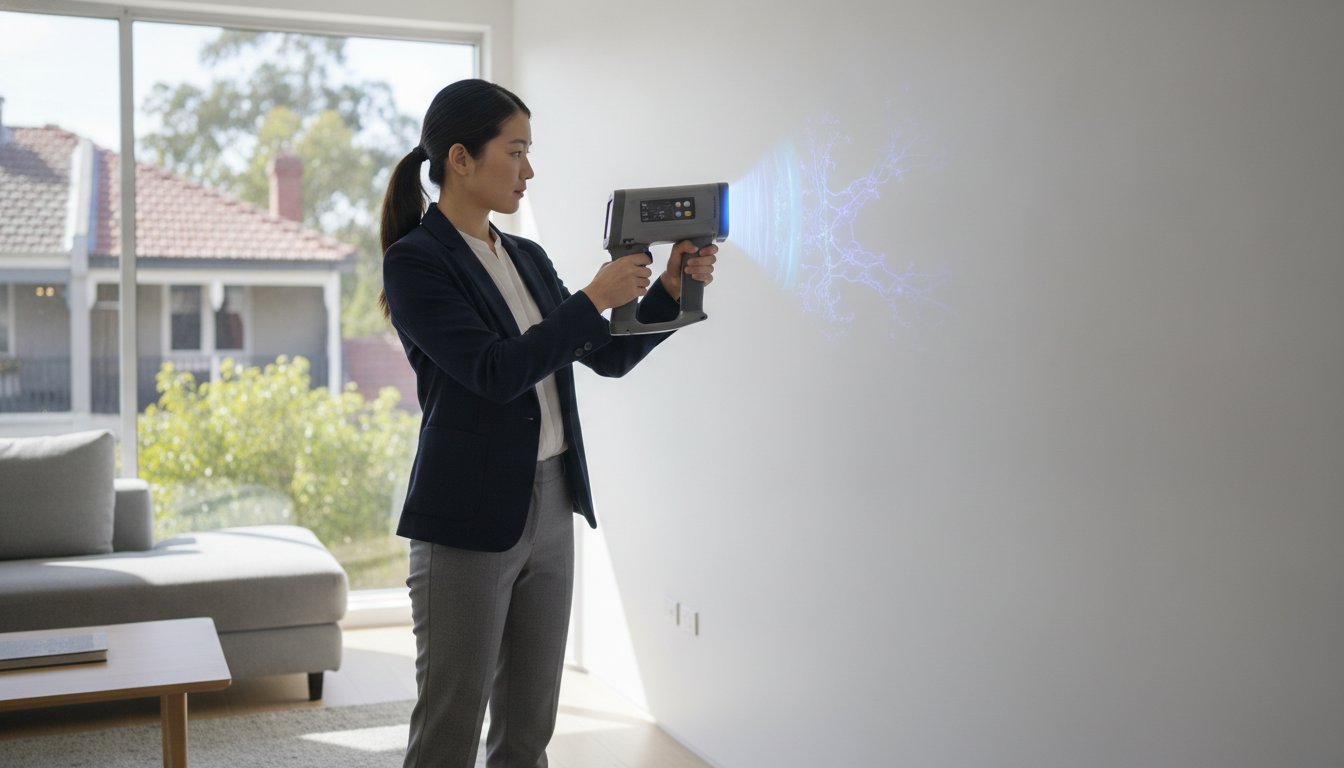
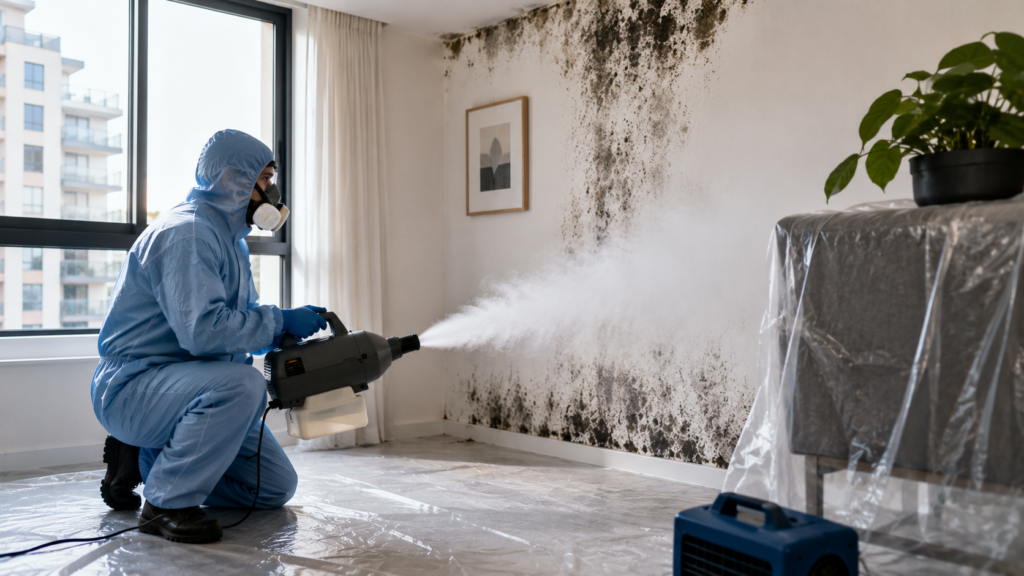
The Goldmorr System is a certified remediation methodology used by approved master technicians. It relies on biodegradable fogging rather than mechanical scrubbing. The fogging penetrates into cavities, behind skirtings, and through the full air column, reaching airborne spores that no surface treatment can access. The products are biodegradable throughout, making the process safe for occupied residential and commercial spaces.
This isn’t a better version of surface treatment. It’s a categorically different approach.
What Happens to Your Air Quality After the Mould Is Gone?
Most people don’t think to ask this until mould shows up again.
Removing visible mould doesn’t clear the air. Spores disturbed during treatment, or circulating through an air conditioning system that wasn’t addressed, stay suspended and viable for days. Non-mechanical air scrubbing addresses this directly. It’s not an optional extra. It’s the stage of the process that determines whether the result actually holds.
If there’s still a musty smell a week after treatment, the air column hasn’t been cleared. That’s the gap.
The surface is the symptom. The air is the source.
For anyone dealing with recurring problems, stopping mould growth on walls permanently means treating both the substrate and the air together. One without the other is an incomplete job.
Who Gets the Most From Professional Mould Remediation?
Professional remediation matters most when the moisture source is structural, the problem is recurring, or previous treatments have already failed.
It’s worth acting on for:
Apartment residents in concrete slab buildings with limited natural ventilation. The thermal bridge between cold concrete and warm indoor air generates condensation that doesn’t stop without intervention. Apartments also tend to have contained footprints, which means jobs are typically completed faster and with less disruption than larger houses. Each apartment is assessed and quoted individually based on its own conditions.
Homeowners dealing with subfloor moisture problems, where inadequate subfloor ventilation drives surface mould from below rather than above.
Office managers and facility coordinators where staff health and air quality represent a genuine liability concern. Mould in air-conditioned commercial spaces spreads faster than in naturally ventilated environments.
Property managers and real estate agents preparing a property for lease or sale. A mould inspection certificate is increasingly expected by tenants and buyers across NSW, and it documents that the problem was resolved at the source rather than painted over.
Anyone who’s had surface treatment twice and watched it return. That pattern is the clearest signal the moisture source has never actually been found.
For households with infants, elderly residents, or anyone managing asthma or respiratory conditions, the guidance on keeping children safe from mould exposure explains why the timeline for acting matters more than most people realise.
ABC Mould Cleaning Solutions works across Sydney’s Eastern Suburbs, Inner West, Northern Beaches, Blue Mountains, Wollongong, and across NSW.
Quoting is done over the phone using photos of the affected area. Send your photos and call 0488 866 853. If you’ve got a written quote from a competitor, ABC Mould Cleaning Solutions will beat it by 10%.
Every day the moisture source stays open, the colony grows. Calling today costs nothing. Waiting costs more than you think.
Frequently Asked Questions
How quickly can mould spread through a property?
According to the US Environmental Protection Agency, mould can begin growing within 24 to 48 hours of water exposure. In sealed environments with limited airflow, which is common across Sydney’s apartment buildings and commercial premises, that growth accelerates because humidity has nowhere to escape. A visible patch today often represents a colony that’s been establishing inside a wall or ceiling void for weeks before it broke the surface.
Is the mould I can see all there is?
Almost certainly not. Visible surface growth is the outermost layer of a colony that extends into the substrate below it. Airborne spores travel through air conditioning systems and can seed growth in rooms you haven’t checked. A proper assessment looks beyond the surface, and that’s the stage DIY treatment simply can’t replicate.
Do I need a site inspection before getting a quote?
ABC Mould Cleaning Solutions quotes over the phone using photos you send through. You get a fast, accurate answer without scheduling a visit or waiting around. If you’d prefer someone to come out and assess in person, there’s a $275 site visit fee. Quoting by photos keeps the process efficient and costs fair for everyone, which is why it’s the preferred starting point.
Can mould affect health even when there’s no noticeable smell?
Yes. Airborne mould spores don’t produce a detectable odour at low concentrations, but they still trigger respiratory responses, particularly in people with asthma, allergies, or compromised immune systems. The musty smell associated with mould comes from microbial volatile organic compounds (MVOCs), which only become detectable once a colony is well established. Absence of smell isn’t absence of spores.
Does DIY treatment with hardware store products actually solve the problem?
On fully non-porous surfaces with no moisture source behind them, it can hold temporarily. On painted walls, ceilings, grout, timber, or any soft material, surface sprays kill visible growth but leave dead spore material embedded in the substrate. That organic matter still causes allergic responses, and the colony re-establishes faster when the moisture source hasn’t been closed. Most people who call for professional remediation have already run through one or two rounds of DIY treatment first.
Who’s responsible for mould in a rented property in NSW?
In NSW, responsibility typically turns on whether the mould has a structural cause, such as a building defect, inadequate waterproofing, or a drainage fault, or whether it results from occupant behaviour like insufficient ventilation. In practice, this distinction is frequently contested. A professional inspection report documenting the moisture source is the most useful tool in that conversation, and it protects you regardless of which way the liability falls.
How do I know if a mould removalist is actually qualified?
Ask specifically whether they hold certification in a recognised remediation methodology, not just general cleaning or pest control experience. ABC Mould Cleaning Solutions are certified in the Goldmorr System, a professional-grade biodegradable fogging methodology used by approved master technicians. That certification, combined with verified reviews, is the baseline of sound due diligence when you’re choosing a health-sensitive service. You can also review the full scope of what professional mould removal services in Sydney should include before making any decision.
About ABC Mould Cleaning Solutions
ABC Mould Cleaning Solutions is a professional mould remediation company serving Sydney Metro, the Blue Mountains, Wollongong, and surrounding NSW regions. They work with apartment residents, homeowners, property managers, and office managers to eliminate mould at the source rather than masking the surface, using the certified Goldmorr System. Services include complete mould removal, non-mechanical air scrubbing, air conditioning mould cleaning, subfloor ventilation, and rising damp treatment. Quotes are provided over the phone using photos for a fast, no-wait answer. Call 0488 866 853 to get started.