What if the refreshing breeze from your split system is actually a delivery vehicle for invisible fungal spores? It’s incredibly frustrating when you try to keep your family comfortable, yet you’re met with a persistent musty smell or unexplained sneezing every time the unit turns on. You shouldn’t have to worry that your cooling system is a breeding ground for bacteria, nor should you fear that a fix requires a complete, expensive replacement. Identifying the early signs of mould in air conditioner units is the first step toward restoring a safe, healthy environment in your Sydney home.
We understand the anxiety that comes with suspected biological growth in your living spaces. This guide will provide you with the certainty you need to protect your family’s health and maintain your home’s air quality. We will explore five critical warning signs that indicate a problem, explain the escalating risks of airborne contamination, and introduce a clear plan for professional removal. By the end, you’ll know exactly how our specialised Goldmorr System targets spores at the source to provide immediate emotional relief and physical safety.
Key Takeaways
- Identify the primary signs of mould in air conditioner systems, such as persistent musty odors and visible speckles, to catch infestations before they spread.
- Learn to distinguish between harmless dust and dangerous fungal growth by examining texture and scent profiles before you take action.
- Understand how your AC unit’s condensation and filter debris create a “perfect storm” for mould colonies to thrive in Sydney’s humid climate.
- Recognize the link between your indoor air quality and health symptoms like sneezing or chronic fatigue to ensure your home remains a safe environment.
- Discover why professional remediation using the Goldmorr System is the most effective way to eliminate both surface growth and invisible airborne spores.
Why Your Air Conditioner is a Breeding Ground for Mould
Your air conditioner does more than just lower the temperature; it acts as a powerful dehumidifier. As warm air passes over the freezing cooling coils, moisture condenses into liquid water. In a perfectly functioning system, this water exits through a primary drain line. However, the internal environment of a split system is dark, cramped, and often damp. These are the exact conditions required for fungal colonies to establish themselves. When you begin to notice the first signs of mould in air conditioner units, it’s usually because this moisture has combined with a steady food source.
Mould is a living organism that requires nutrients to survive. Your AC unit provides a buffet of organic matter in the form of dust, pet dander, and human skin cells that bypass the filters. These particles settle on the damp coils and fan blades, creating a nutrient-rich “biofilm.” If your unit has poor drainage or a blocked drip tray, standing water accumulates, turning your cooling system into a high-speed spore distributor. This isn’t just a hygiene issue; it’s a mechanical failure that compromises your home’s safety.
The Dark, Damp Cycle of HVAC Systems
Inside the chassis of a split system, there is zero UV light to naturally kill off spores. This darkness allows mould to grow undisturbed even when the unit is turned off. During the Sydney shoulder seasons when you might not use your AC for weeks, stagnant air sits inside the unit. This allows microscopic spores to root deeply into the porous insulation and the difficult-to-reach curves of the barrel fan. If your property has recently required water damage repair, the overall humidity in your home is likely higher, making your air conditioner the first place mould will look to hide.
Sydney Climate and AC Vulnerability
Sydney homeowners face a specific set of environmental pressures. Our coastal humidity frequently sits above 70%, which is the threshold where mould growth accelerates. In suburbs like Cronulla, Manly, or Bondi, the salt air can also cause micro-corrosion on the internal components. These tiny pits in the metal provide the perfect anchor points for spores to latch onto. This unique local climate is why finding expert air conditioner cleaning near me is a critical part of home maintenance. Neglecting these environmental factors can contribute to Sick Building Syndrome, where poor indoor air quality leads to persistent health complaints for everyone in the household. Don’t wait for the problem to become visible; proactive intervention is the only way to ensure the air you breathe remains clean and safe.
The 5 Critical Signs of Mould in Your Air Conditioner
Spotting the signs of mould in air conditioner units early can save you from respiratory issues and costly repairs. While some indicators are obvious, others require a closer look at your system’s performance. You don’t need to be a technician to identify these five red flags, but you must act quickly once you find them.
Detecting the “Mouldy Smell”
If you notice a pungent, “wet sock” odour the moment you hit the power button, you’re likely smelling a biological colony. This scent is usually strongest during the first 10 minutes of operation as the fan kicks up stagnant spores. A mechanical smell often resembles burning dust or ozone, but a biological odour is earthy and heavy. Microbial volatile organic compounds (mVOCs) are the specific gases released by active mould as it grows and consumes organic matter inside your unit.
Visual Indicators on Vents and Coils
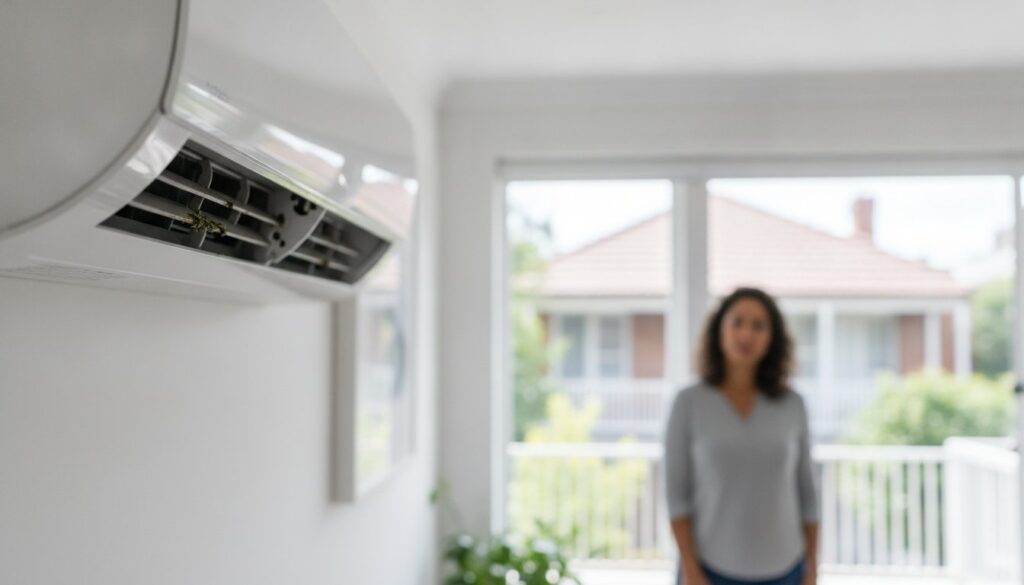
Visible growth is a definitive warning. Use a high-powered torch to look past the louvres and inspect the blower fan, which is the cylindrical drum that spins. Look for black, green, or white speckles that appear “furry” or “slimy” in texture. If you see these deposits, do not poke or attempt to wipe them away with a cloth. Disturbing these colonies can release millions of spores into your living room instantly.
Beyond smells and spots, pay attention to how your unit handles moisture. Excessive condensation or water dripping from the internal chassis is one of the most reliable signs of mould in air conditioner systems. According to the EPA’s guide to mould and moisture, controlling dampness is the most critical step in preventing fungal spread. If your unit is constantly “sweating,” it’s only a matter of time before mould takes hold.
You should also monitor your physical health. If your eyes itch, your throat feels scratchy, or you start sneezing only when you’re indoors with the AC running, your system is likely contaminated. Finally, check your air filters during your monthly maintenance. If you see grey or colourful residue that doesn’t look like standard fibrous dust, it’s a sign of a deeper issue. If you’re unsure what you’re looking at, a professional mould inspection can provide the certainty you need to protect your home.

Mould vs. Dust: How to Tell the Difference
Many Sydney homeowners delay essential maintenance because they mistake dangerous fungal growth for harmless household debris. Dismissing the signs of mould in air conditioner units as “just a bit of dust” is a common error that allows spores to colonise your entire HVAC system. While both can accumulate on your vents, their physical properties and risks are vastly different. You must know how to distinguish them to protect your family’s health and your property’s value.
- Texture and Appearance: Household dust is typically light grey, dry, and fibrous. It looks like lint from a clothes dryer. In contrast, mould often appears as distinct black, green, or yellow speckles. It can look slimy, velvety, or even furry depending on the species and the moisture levels inside the unit.
- The Smell Test: Dust is generally odourless. If your unit produces a dry, “stale” scent, it might just be dusty. However, mould produces a pungent, earthy, or “wet sock” aroma that lingers in the room long after the unit is turned off.
- Growth Patterns: Gravity dictates where dust goes; it settles evenly across flat, horizontal surfaces. Mould is biological and grows in clusters, rings, or irregular patches. It will often colonise vertical surfaces and the underside of louvres where dust cannot easily settle.
Never perform a “wipe test” with your bare hands or a dry cloth. If the substance is mould, wiping it will immediately release millions of microscopic spores into your breathing zone. This can cause an immediate allergic reaction and spread the infestation to your carpets and soft furnishings. If you’re suspicious, keep the unit off and seek a professional assessment.
The Blower Fan Inspection
The blower fan is the cylindrical drum inside your unit that pushes air into the room. Because this component spins at high speeds, dry dust rarely sticks to it in large quantities. If you shine a torch inside and see “clumping” or a thick, mossy layer on the fan blades, you’re looking at a serious biological issue. Moisture acts as the adhesive that allows organic matter to latch onto these moving parts. For a deeper understanding of these fungal types, consult our guide on what is mould for identification help.
Why “Just Dust” is Still a Problem
Even if you confirm the buildup is currently just dust, you aren’t out of the woods. Dust consists largely of human skin cells, pet dander, and fabric fibres, all of which are primary food sources for fungi. When this organic matter meets the condensation on your cooling coils, it creates a nutrient-rich “sludge.” This transition from a dusty unit to a mouldy one can happen in just a few humid Sydney days. Regular filter maintenance is your first line of defence, and you can visit Lifestyle Home Service for professional cleaning solutions that help reduce the organic matter in your home. However, once the growth moves beyond the filters into the internal chassis, professional intervention is the only way to restore safety.
If you feel like you’ve developed a “summer cold” that simply won’t clear, your cooling system might be the primary culprit. When you activate your unit, it doesn’t just circulate air; it blasts microscopic biological contaminants directly into your breathing zone. Recognising the physical signs of mould in air conditioner systems is often easier than identifying the health symptoms, as these reactions frequently mimic common allergies or Sydney’s seasonal hay fever. You shouldn’t have to choose between staying cool and staying healthy.
Immediate reactions often include sneezing, coughing, and itchy eyes that start within minutes of the AC cycling on. These are acute inflammatory responses to the high concentration of spores. Over time, these symptoms can evolve into long-term risks such as chronic fatigue, persistent headaches, and a significant worsening of asthma symptoms. In many Sydney offices and homes, this phenomenon is known as Sick Building Syndrome, where poor indoor air quality leads to a collective decline in well-being. Children and the elderly are at the highest risk, as their immune systems are more vulnerable to the mycotoxins produced by certain fungal species.
Respiratory and Skin Irritations
While addressing the environmental source of toxins is crucial, many people also look for ways to support their body’s internal recovery. For instance, those interested in holistic detoxification might consider services like colonic irrigation Mandurah to help restore gut health and vitality after exposure to poor air quality.
Inhaled spores trigger a rapid inflammatory cascade in the respiratory tract. For some, this leads to a “heavy” feeling in the chest or a persistent dry cough. Beyond the lungs, AC mould is a frequent but overlooked trigger for unexplained skin rashes or eczema flare-ups. If your skin feels itchy or inflamed without a change in your skincare routine, the air you breathe is a likely factor. We provide a detailed breakdown of these specific toxic risks in our black mould guide.
When Symptoms Disappear Outside the Home
You can perform a simple “litmus test” to confirm your suspicions. Pay close attention to your energy levels and respiratory comfort when you leave the house. Do your headaches vanish after an hour at the beach or the shops? If your health improves the moment you step into the fresh air, your indoor environment is almost certainly compromised. While the split system is often the growth site, the resulting contamination may mean you require professional air duct cleaning to fully restore your home’s safety. If your family is suffering from these symptoms, don’t wait for the problem to escalate. Book a professional mould inspection today to gain the certainty you need for a healthy home.
Professional Remediation: The ABC Mould Cleaning Solution
Once you’ve identified the signs of mould in air conditioner units, the temptation to use a store-bought spray is high. However, retail “mould killers” are often surface-level treatments that fail to reach the deep recesses of the cooling coils and internal insulation. These DIY methods frequently rely on harsh chemicals like bleach, which can damage the delicate fins of your heat exchanger and leave behind toxic residues. Professional remediation is not just about cleaning; it’s about biological eradication using evidence-based methods that protect both your equipment and your health.
The Goldmorr Advantage for Air Conditioners
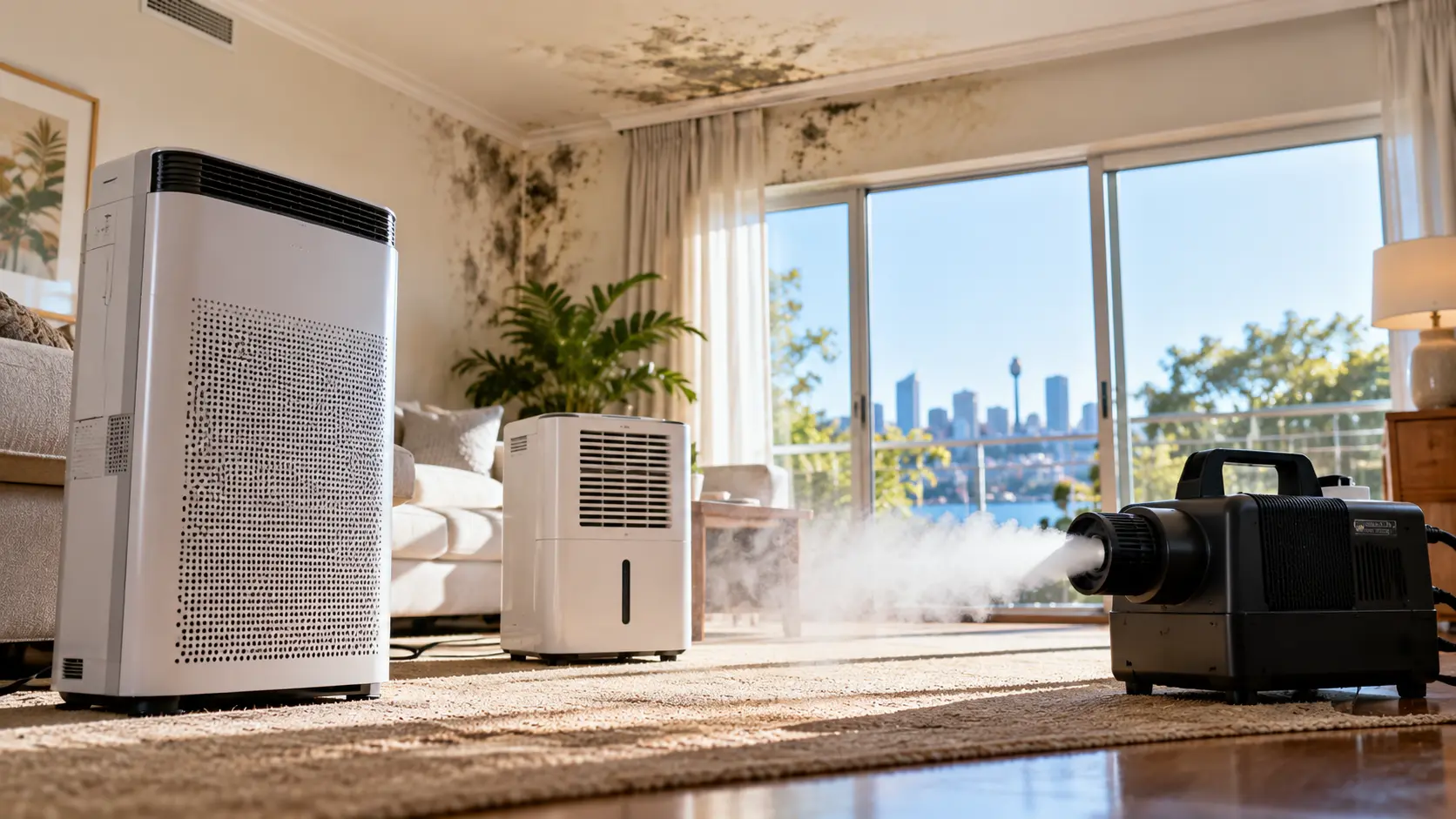
We utilise the specialised Goldmorr System, a proprietary methodology that sets us apart as Sydney’s #1 mould removal service. Our process involves a biodegradable fogging agent that travels through the same pathways as the air in your home. This ensures that every internal surface, from the barrel fan to the narrowest vent, is treated. Unlike standard liquid cleaners, this fogging process targets both visible colonies and the invisible airborne spores that have already escaped into your living areas. It’s a safe, non-toxic solution that provides immediate emotional relief for families and pet owners.
Our specialists don’t just treat the symptom; we identify the source. If your AC is constantly wet, the issue might stem from broader environmental factors like subfloor ventilation failures that trap moisture beneath your property. By addressing these root causes, we ensure that once the signs of mould in air conditioner systems are gone, they stay gone. We treat the air, not just the unit, ensuring your indoor environment is restored to a healthy, safe state through a systematic approach.
Your Next Steps to Clean Air
The first critical step to a mould-free home is a thorough professional assessment. We offer comprehensive inspections for Sydney residents, providing you with a clear, tailored plan for remediation. Our team uses modern technology to leverage digital media and site data, making the inquiry process as streamlined as possible. Don’t let a musty smell turn into a health crisis or an expensive equipment replacement. Book your AC mould inspection today and experience the hassle-free resolution you deserve. Our price-matching guarantee ensures you get the best value for specialised technical expertise, transitioning your home from a state of concern to a state of total safety.
Restore Your Home’s Air Quality Today
Ignoring the early signs of mould in air conditioner units often leads to escalating health risks and preventable structural damage. You now have the technical knowledge to distinguish between harmless household dust and dangerous biological growth. Remember that persistent musty odours and unexplained respiratory issues are urgent signals that your indoor air quality is compromised. Professional intervention remains the only guaranteed way to ensure these spores are completely eradicated from the complex internal components of your split system.
ABC Mould Cleaning Solutions provides the specialized expertise needed to restore your peace of mind and home safety. Our certified Goldmorr System technicians utilize a biodegradable, family-safe fogging process to eliminate colonies at their source. We offer a Sydney-wide 24/7 response to address your concerns with speed and professional care. Don’t let hidden mould impact your family’s health or your comfort any longer. Contact ABC Mould Cleaning Solutions for a Professional Inspection and take the first step toward a healthier, cleaner living environment. We’re ready to help you breathe easy again with a permanent solution.
Frequently Asked Questions
Can mould in my air conditioner make me sick?
Yes, inhaling airborne spores can lead to a range of health complications. When your AC is running, it distributes microscopic contaminants that trigger allergic reactions, asthma flare-ups, and persistent coughing. In Sydney, many occupants report symptoms of Sick Building Syndrome, including chronic fatigue and headaches, which vanish once they leave the property. These physical reactions are often the first signs of mould in air conditioner systems that require immediate professional attention to ensure safety.
How do I check for mould in my split system AC?
You can perform a preliminary check by shining a high-powered torch through the louvres to inspect the blower fan and cooling coils. Look for fuzzy black speckles or a slimy, colourful film that differs from standard grey dust. Additionally, pay attention to the air quality; a heavy, earthy scent upon startup is a definitive indicator. If you see clumping on the internal components or residue on the filters, it’s time to book a professional inspection.
Will a standard AC service remove mould?
No, a routine mechanical service typically only addresses dust filters and gas levels. Most HVAC technicians aren’t trained in biological remediation and lack the specialised equipment to kill fungal spores. A standard wash might even spread the infestation by providing more moisture to the colonies. To effectively eliminate the problem, you need a targeted mould remediation service that uses professional-grade agents to neutralise growth at a microscopic level throughout the entire chassis.
What does AC mould smell like?
Mould produces a distinct, pungent aroma often described as a “wet sock” or earthy scent. This smell is caused by microbial volatile organic compounds (mVOCs) released as the fungi consume organic matter like skin cells and dust. The odour is usually most intense during the first few minutes of operation when the fan first circulates stagnant air. If your room smells like a damp basement every time the cooling kicks in, biological growth is present.
Can I use bleach to clean mould out of my AC?
You should never use bleach to treat an air conditioner. Bleach is primarily water-based and can actually encourage future growth by providing moisture to the roots of the colony. Additionally, the corrosive nature of bleach can damage the delicate aluminium fins of the cooling coils and degrade internal plastic components. This often leads to expensive mechanical failures. Using store-bought chemicals in a ventilation system also risks circulating toxic fumes throughout your living spaces.
How often should I have my air conditioner professionally cleaned in Sydney?
We recommend a professional deep clean at least once a year for most Sydney properties. However, if you live in a high-humidity coastal suburb or have family members with respiratory sensitivities, twice-yearly cleaning is safer. Sydney’s humid summers and salt air create an environment where spores can colonise a unit in just a few weeks. Regular maintenance ensures that moisture levels are managed and organic debris is removed before it can become a food source for the signs of mould in air conditioner units.
Is black mould in an air conditioner dangerous?
Yes, black mould species are particularly concerning because they can produce mycotoxins that impact the central nervous system. When these spores are blasted into a room by your AC, they are easily inhaled by children, the elderly, and pets. Long-term exposure is linked to chronic respiratory conditions and severe inflammatory responses. If you suspect black mould is present, don’t disturb it; instead, contact a specialist to conduct a safe, contained removal process.
What is the Goldmorr System for mould removal?
The Goldmorr System is our proprietary methodology for total biological eradication. It utilises a biodegradable, non-toxic fogging process that penetrates deep into the internal components of your AC where manual cleaning cannot reach. This system is specifically designed to be safe for families and pets while remaining lethal to fungal colonies. It targets both the visible growth and the invisible airborne spores, ensuring your home’s air is purified and safe to breathe immediately.