Did you know that the very act of scrubbing a mould colony could be the reason it spreads to every other room in your house? It is a confronting reality for many Sydney residents, especially since our city is currently a national hotspot for domestic dampness. You likely feel a sense of urgency to wipe away those unsightly black spots to protect your family’s health and your property’s value. We understand that anxiety. It is frustrating to deal with conflicting DIY advice while worrying about the escalating risks of structural damage and respiratory issues.
This article outlines the most dangerous mistakes to avoid when cleaning mould to ensure you aren’t inadvertently aerosolising spores. You will learn why common household “remedies” like bleach are often ineffective and how to safely manage small areas without risking your wellbeing. We provide a clear, professional breakdown of seven critical errors that lead to mould recurrence. By the end, you will know exactly when a simple wipe-down is sufficient and when you need a professional, evidence-based remediation strategy to restore your home’s safety and air quality.
Key Takeaways
- Stop treating mould like simple dust; learn why standard scrubbing triggers a “survival mode” that releases millions of airborne spores into your home.
- Discover the top mistakes to avoid when cleaning mould, including why using bleach on porous surfaces like gyprock actually feeds the underlying fungal roots.
- Master the 1-square-metre rule to safely identify when a mould patch is too large for DIY and requires professional remediation to protect your health.
- Understand the essential PPE requirements, such as N95 masks and eye protection, to prevent skin irritation and long-term respiratory damage during cleanup.
- See how the proprietary Goldmorr System targets both visible surfaces and invisible airborne spores using safe, biodegradable fogging technology.
Why Your DIY Mould Cleaning Might Be Making the Problem Worse
Cleaning mould isn’t like wiping away common household dust. While dust is an inert collection of skin cells and fabric fibres, mould is a living biological organism. It is an opportunistic invader that thrives on organic matter and moisture. One of the most common mistakes to avoid when cleaning mould is treating it as a cosmetic stain rather than a biological threat. When you approach a mould colony with standard cleaning tools, you aren’t just removing a spot; you are interacting with a complex life form.
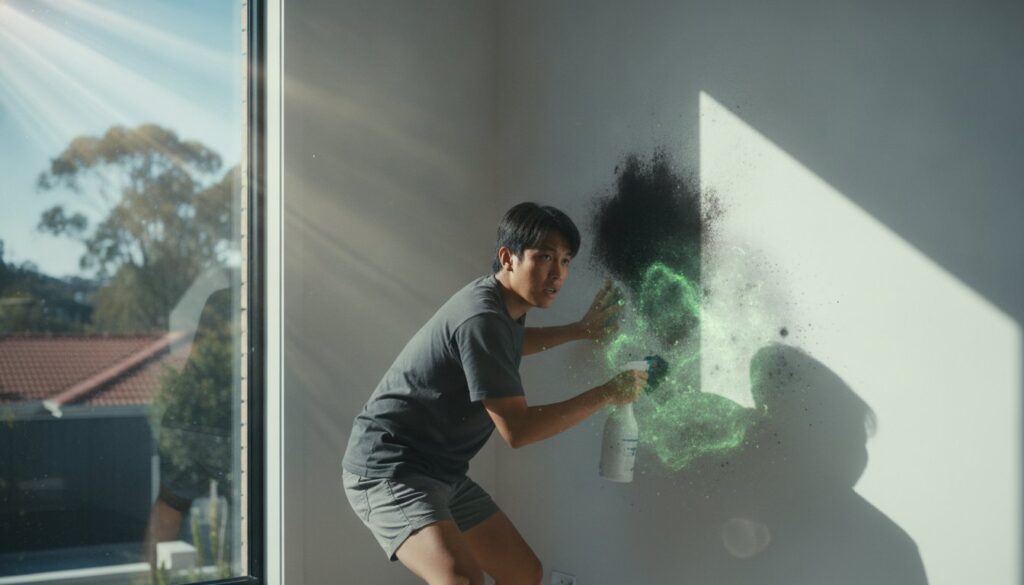
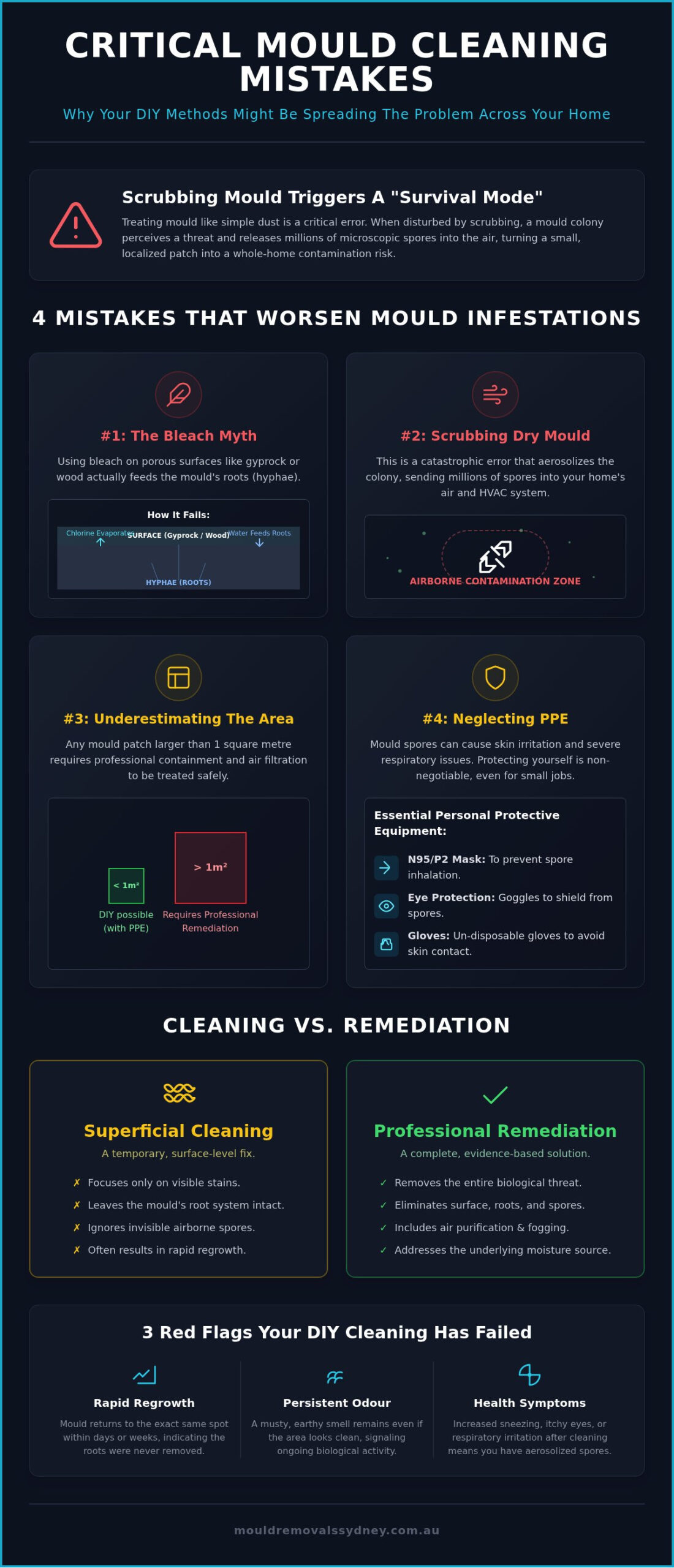
Standard cleaning often triggers a “survival mode” in fungal colonies. When a colony is disturbed by dry scrubbing or the application of ineffective retail cleaners, it perceives a threat to its existence. In response, the mould releases millions of microscopic spores into the air as a reproductive mechanism. This process, known as sporulation, effectively turns a localised patch into an airborne contaminant that settles on your furniture, carpets, and air conditioning vents. This is why a simple weekend cleanup often results in a much larger infestation just weeks later.
Sydney’s unique climate makes these DIY errors particularly costly. Our coastal humidity and high seasonal rainfall provide the constant moisture required for these newly released spores to take root. In our local environment, a failed cleaning attempt doesn’t just stay failed. It escalates. For Sydney homeowners, mould remediation mistakes are defined as any action that spreads this contamination or ignores the underlying moisture source that allowed the growth to begin in the first place.
The Difference Between Cleaning and Remediation
Cleaning focuses on the visible surface. It removes the dark stains you can see but often leaves the root system, or hyphae, intact within porous materials. Remediation is a technical, evidence-based process designed to remove the biological threat entirely. Wiping a wall does nothing to address the spores currently floating in your breathing zone. A professional strategy involves both surface elimination and air purification to ensure the environment is truly safe for occupants. Without managing the moisture levels in the room, any cleaning attempt is merely a temporary delay of the inevitable regrowth.
Common Signs Your Cleaning Attempt Failed
You can tell your DIY efforts didn’t work if the mould returns to the exact same spot within days or weeks. This indicates the roots remain embedded in the substrate. A persistent, musty odour is another clear red flag. If the room smells earthy or damp despite appearing clean, biological activity is still occurring behind your walls or under the floorboards. Most critically, pay attention to your physical wellbeing. If you or your family experience increased health risks of mould exposure, such as sudden sneezing, itchy eyes, or respiratory irritation after you’ve “cleaned,” you have likely aerosolised the spores and contaminated your home’s air quality.
4 Critical Mistakes Homeowners Make with Mould Cleaning
When you find a patch of black mould in your bathroom or laundry, your first instinct is likely to reach for the strongest cleaner in the cupboard. However, acting without a technical plan often leads to the very mistakes to avoid when cleaning mould that professionals see daily. These errors don’t just fail to solve the problem; they often expand the contamination zone across your entire property. To protect your home, you must move beyond superficial cleaning and adopt a remediation mindset.
The Bleach Myth: Why It Doesn’t Work
Bleach is perhaps the most misunderstood tool in the domestic cleaning arsenal. While it is effective at killing bacteria on hard, non-porous surfaces like tiles or glass, it is virtually useless against mould on gyprock, grout, or timber. Bleach is primarily composed of water. When applied to porous materials, the chlorine component stays on the surface and evaporates quickly. This leaves only the water to penetrate deep into the material. This process effectively feeds the fungal roots, known as hyphae, encouraging them to grow deeper into the structure. You are left with a surface that looks white but contains a thriving, hydrated fungus underneath. Additionally, mixing bleach with other household acids or ammonia can create toxic gases, posing a severe immediate risk to your family.
The Danger of Scrubbing Dry Mould
Never touch a dry mould colony with a brush, sponge, or cloth. Dry scrubbing is a catastrophic error that sends millions of spores into your home’s air supply instantly. These spores are incredibly lightweight and can remain buoyant for hours. Eventually, they are sucked into your split system air conditioning or HVAC ductwork. Once inside the ventilation system, they distribute to every other room in the house. To prevent this cross-contamination, you must always mist the area with a fine spray of water or a mild detergent solution first to “lock” the spores in place. Following official guidelines for safely removing mould ensures you contain the threat rather than spreading it.
Beyond the cleaning method, two other critical errors involve safety and strategy. Homeowners frequently skip Personal Protective Equipment (PPE), ignoring the fact that inhaling concentrated spores can lead to long-term respiratory issues. At a minimum, you require an N95 mask, gloves, and eye protection. Finally, remember that mould is a symptom of a moisture problem. If you clean the wall but ignore the leaking pipe or the lack of subfloor ventilation, the mould will return. Identifying the moisture source is the only way to ensure a permanent fix. If you are unsure why the dampness persists, a professional mould inspection can pinpoint the hidden moisture sources before you waste more time on ineffective cleaning.
The Hidden Risks of Improper Mould Remediation
Improperly handled mould creates a cascade of secondary problems that most homeowners don’t anticipate. One of the biggest mistakes to avoid when cleaning mould is underestimating the biological resilience of the organism. When you fail to remediate correctly, you aren’t just leaving a stain; you are permitting a silent threat to colonise your living space. Given that Sydney is identified as having one of the highest incidences of mould in Australia, the stakes for your property and health are exceptionally high.
Fungal exposure leads to documented health effects of mould, ranging from persistent allergic reactions to chronic asthma exacerbation. Beyond the physical symptoms, the structural integrity of your home is at risk. Mould roots, or hyphae, secrete enzymes that break down organic matter. This biological process can eventually compromise building materials like timber framing and insulation. Many owners fall into the “painting over” trap, applying mould-resistant paint over an active infestation. This is a futile tactic; the paint simply hides the growth while the fungus continues to eat the wall from the inside out.
Poorly managed drying efforts can also backfire. Using standard household fans or humidifiers without proper containment often increases the problem. These devices can inadvertently spread spores to unaffected areas or create warm, moist pockets that encourage secondary growth. Effective remediation requires a balanced approach of moisture control and biological elimination.
Airborne Spores: The Unseen Threat
Visible mould is often just the tip of the iceberg. Microscopic spores easily settle into carpets, curtains, and soft furnishings where they can remain dormant until moisture returns. Standard household vacuums usually lack the specialised HEPA filtration required to capture these tiny particles. Instead, they often exhaust the spores back into the room. If you’ve dealt with a significant infestation, professional air duct cleaning is essential. Without it, your HVAC system becomes a delivery network that recirculates contaminants throughout every room in the house.
When Mould Becomes a Structural Issue
Certain species, particularly black mould, are notorious for their ability to destroy drywall and insulation. This degradation is almost always accelerated by unresolved water damage, such as slow pipe leaks or poor subfloor ventilation. Once timber has rotted or gyprock has become water-logged and structurally soft, no amount of cleaning can restore its strength. At this stage, the material is no longer salvageable and must be professionally removed to ensure the safety of the building.
How to Safely Manage Small Mould Issues (And When to Stop)
Not every fungal spot requires a full-scale professional intervention, but you must know the exact threshold for safe handling. The 1-square-metre rule is the industry standard for Sydney homeowners. If the total affected area is larger than one square metre, stop what you are doing immediately. Attempting to scrub large-scale infestations is one of the primary mistakes to avoid when cleaning mould, as it almost always leads to massive cross-contamination and health risks. For small patches, safety and containment must be your absolute priorities.
Personal Protective Equipment (PPE) is non-negotiable. You require an N95 or P2 respirator mask to filter out microscopic spores that standard surgical masks cannot catch. Combine this with long rubber gloves and wrap-around eye protection. You should also choose your cleaning agent carefully. Since we have established that bleach is ineffective for porous surfaces, use a solution of 80% white vinegar and 20% water, or a professional-grade biodegradable solution. These agents are designed to disrupt the biological structure of the mould without introducing toxic fumes into your home.
A Safe DIY Cleaning Protocol
Follow these three steps to ensure you contain the threat while you work:
- Step 1: Seal the zone. Close all doors and windows leading to other parts of the house. Turn off fans and split system air conditioning to prevent air movement.
- Step 2: Mist the surface. Use a fine spray bottle to lightly dampen the mould with your vinegar solution. This “locks” the spores in place and prevents them from becoming airborne when you touch them.
- Step 3: Wipe and bag. Use disposable microfibre cloths and wipe in a single direction. Never use a circular motion, which can rub spores deeper into the material. Place all used cloths in a heavy-duty plastic bag and seal it before leaving the room.
Knowing When to Call a Professional
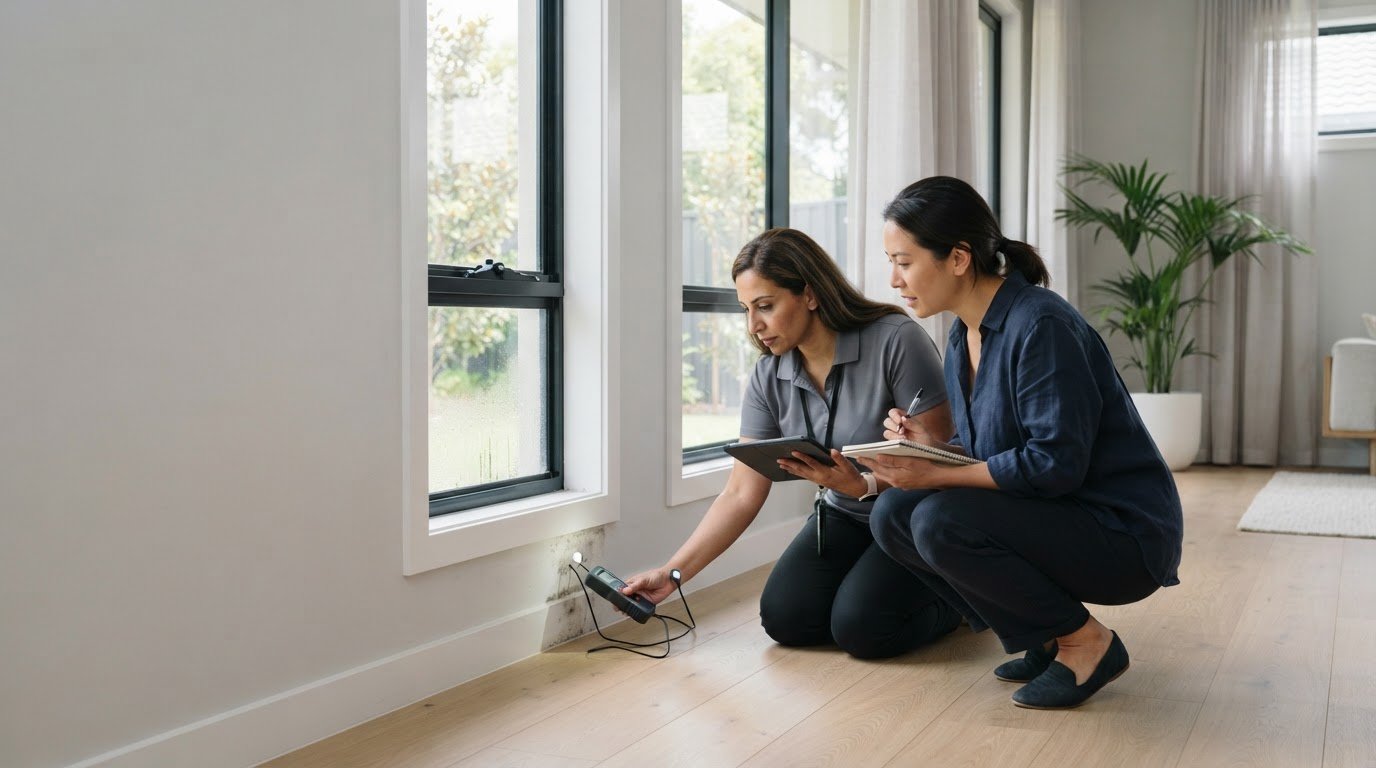
If you can smell a musty odour but cannot see the source, the mould is likely hidden. It could be thriving behind your gyprock walls, under your floorboards, or inside your ceiling cavity. DIY methods are useless against these hidden reservoirs. Booking a professional mould inspection is the only way to identify these growth zones and the moisture sources feeding them. Recurring mould in bathrooms or damp subfloors often signals a systemic ventilation failure that requires a technical solution rather than a superficial cleaning. If your mould problem has exceeded the safe DIY limit or keeps returning, contact us for a comprehensive mould remediation quote today.
Professional Mould Removal: The Goldmorr System Advantage
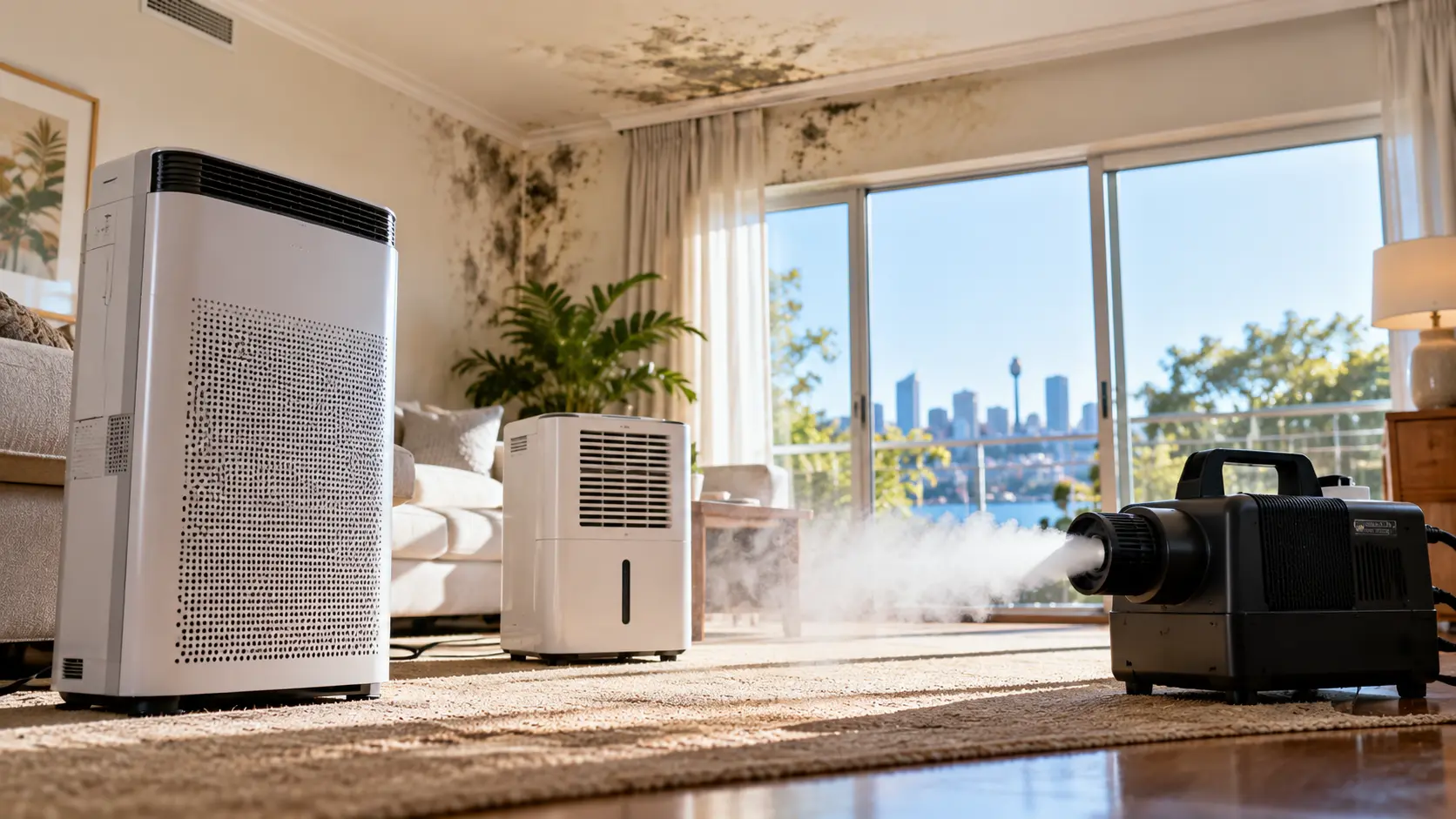
Proprietary technology is the only definitive way to correct a failed DIY attempt. At ABC Mould Cleaning Solutions, we utilise the Goldmorr System to address both visible contamination and invisible airborne threats. This methodology moves beyond the common mistakes to avoid when cleaning mould by treating your home as a complete ecosystem rather than a series of isolated surfaces. Our process combines a high-strength surface treatment with a specialised fogging protocol to ensure no part of the colony remains active.
Safety is our primary objective. The Goldmorr System uses biodegradable chemicals that are non-toxic and safe for families, pets, and the environment. Unlike harsh retail chemicals that linger in your carpets and upholstery, our fogging process breaks down into harmless components after the job is finished. This approach allows us to eliminate the fungal threat without introducing new chemical hazards into your living space. We provide a systematic, evidence-based result that amateur methods simply cannot replicate.
Air Purification & Scrubbing
Surface cleaning alone is insufficient for a healthy home. To achieve a 99.9% removal rate of spores, we deploy industrial-grade, HEPA-filtered air scrubbers. These machines constantly cycle the air within the remediation zone, capturing microscopic particles that are too small for the human eye to see. This process is essential for removing the persistent musty smell associated with fungal growth. By killing airborne bacteria and spores, we restore your indoor air quality to a safe, neutral state. A professional assessment of your Sydney property allows us to determine exactly how many air exchanges are required to clear your specific environment.
Preventing Future Growth
A successful remediation must address the root cause of the moisture. In the Sydney basin, high humidity and poor subfloor airflow are the leading drivers of recurring mould. Because external water ingress from blocked gutters is often a contributing factor, you should visit Gutter Wiz for expert exterior maintenance. We don’t just clean the wall; we provide customized recommendations for long-term humidity control. This often involves the installation of a subfloor ventilation system to ensure consistent airflow beneath your home. This prevents the damp, stagnant conditions that allow mould to return. We stop the cycle of growth at the source, protecting both your structural integrity and your family’s health.
Don’t risk a DIY disaster that could lead to thousands of dollars in property damage or chronic respiratory issues. Our team of highly trained specialists is ready to restore your home to a safe, mould-free condition. Get a professional mould quote today and experience the peace of mind that comes with a guaranteed, expert solution.
Secure Your Sydney Property Against Mould Recurrence
Wiping away a surface stain is never enough when you’re dealing with a living biological threat. You now understand the technical mistakes to avoid when cleaning mould, from the airborne risks of dry scrubbing to the futility of using bleach on porous timber or gyprock. By respecting the 1-square-metre safety threshold and prioritizing moisture management, you can effectively protect your property’s value and your family’s health. Sydney’s humid climate leaves no room for amateur errors that only spread the contamination further.
If your mould issue has already escalated or returns despite your best efforts, it’s time for a professional, evidence-based intervention. We utilize the specialised Goldmorr System and family-safe, biodegradable fogging to target both visible colonies and invisible airborne spores. Our specialists also provide a 24/7 emergency water damage response to address leaks before they trigger fungal growth. Book Your Professional Mould Inspection in Sydney Now to restore your living environment to a safe, healthy state. You don’t have to manage this alone; let the experts provide the permanent resolution you need.
Frequently Asked Questions
Can I use bleach to kill black mould on my walls?
No, you shouldn’t use bleach for mould on porous walls like gyprock or timber. Bleach is primarily water; the chlorine evaporates quickly while the water soaks deep into the material to feed the fungal roots. This is one of the most common mistakes to avoid when cleaning mould. It removes the dark pigment but leaves the biological organism alive to return even stronger.
Is it safe to sleep in a room with mould?
It is not safe to sleep in a room with active mould growth. You inhale thousands of microscopic spores during rest, which can lead to chronic respiratory issues or severe allergic reactions. The World Health Organisation advises that no level of mould exposure is considered safe for health. If you see visible growth or smell a musty odour in your bedroom, relocate until the area is remediated.
How do I know if the mould is making me sick?
Common signs include persistent sneezing, watery eyes, and skin irritation that worsen when you are at home. These symptoms often improve significantly when you spend time in a different environment. According to Asthma Australia, mould is a major trigger for respiratory distress. If your family has “flu-like” symptoms that won’t go away, it is time to book a professional mould inspection.
What is the best way to clean mould without spreading spores?
Containment and misting are the only ways to prevent spores from spreading to other rooms. Seal the room by closing doors and turning off the air conditioning first. Lightly mist the mouldy surface with a vinegar solution to dampen the spores before you touch them. This prevents the particles from becoming airborne, allowing you to wipe the area safely with disposable cloths.
When should I stop trying to clean mould myself?
You must stop DIY efforts if the affected area is larger than one square metre. NSW Health guidelines suggest that large-scale infestations require specialised equipment and professional containment. You should also stop if the mould keeps returning after repeated cleanings or if the moisture source remains unknown. At this point, the risk to your health and property value outweighs any DIY benefits.
Does vinegar actually kill mould or just clean the stain?
Vinegar is a powerful tool that actually kills the fungus by penetrating its biological structure. An 80% white vinegar solution is strong enough to disrupt the hyphae, or roots, of the mould on most surfaces. It is far more effective than bleach for long-term removal. For the best results, spray the solution on the area and let it sit for 60 minutes before wiping.
Can painting over mould stop it from growing back?
Painting over mould is a cosmetic mistake that will not stop the growth. While mould-resistant paint can prevent new spores from landing, it cannot kill an active infestation already living in your walls. The fungus will continue to eat the drywall or timber behind the paint, eventually causing the new layer to peel or discolour. You must remediate the mould biologically before painting.
How much does professional mould removal cost in Sydney?
Costs in Sydney depend on the extent of the damage and the size of the area. Treating a small, localised patch typically ranges from A$300 to A$500. Remediating a single room can cost between A$500 and A$2,000, while a comprehensive whole-house remediation generally ranges from A$4,000 to over A$6,000. These figures cover professional air scrubbing, specialised equipment, and technical labour to ensure the mould is gone for good.