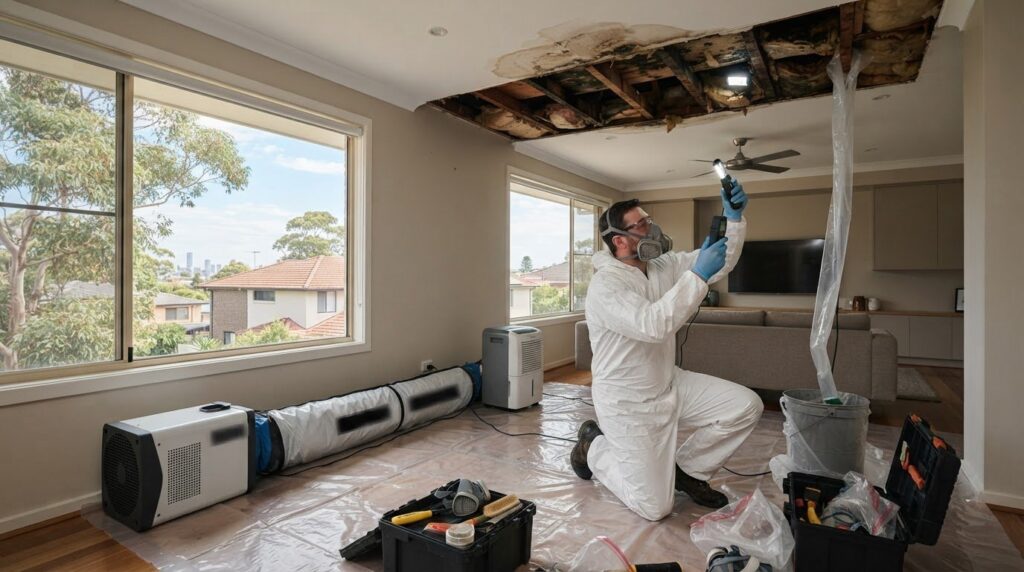
What if a ceiling stain is only the visible sign of a roof leak, with moisture and mould hidden behind the surface? People searching for mould caused by leaking roof repairs Sydney often ask whether to fix the roof or remove the mould first. The practical order is to stop water entering, then assess damp materials and mould. Otherwise, moisture can remain and mould may return.
It’s understandable to feel unsure when the leak seems to have stopped but musty smells, discolouration or damp patches remain. Roof repair, water-damage restoration and mould remediation address different parts of the problem, so the order matters. This guide explains how to spot signs of ongoing or hidden moisture, when a professional assessment can help, and what remediation may involve for your Sydney property.
You’ll also learn how ABC Mould Cleaning Solutions can help after the leak has been addressed, from inspection and treatment to a written report. A photo assessment can provide a same-day quote in many cases, giving you a practical starting point for dealing with the moisture, damage and mould.
Key Takeaways
- Ceiling stains, peeling finishes, damp odours and visible growth can signal water damage, but no single sign reveals the full extent.
- Plan mould caused by leaking roof repairs Sydney in the right order: address water entry first, then assess damp materials and mould.
- Roof repair, water-damage restoration, mould inspection and mould removal each address a different part of the problem.
- Protect people, document damage and avoid disturbing extensive mould or wet, damaged building materials.
- ABC Mould Cleaning Solutions can help with inspection, remediation and a written report. Photo assessments provide a same-day quote in many cases.
Mould Caused by a Leaking Roof in Sydney: Signs and First Priorities
Finding mould after a roof leak can be unsettling, especially if you’re unsure whether water is still getting in or how much of the building is affected. Start with a clear sequence: keep people away from immediate hazards, record what you can see, address the water entry, then assess damp materials and possible mould. A visible patch is a clue, not a complete diagnosis.
A roof leak is the water-entry problem; mould is a possible result of moisture that remains. Treating one doesn’t automatically resolve the other. The Mould overview explains how mould growth relates to its environment. In a home, persistent dampness can support growth on or within affected materials.
Which signs can connect roof leaks with mould?
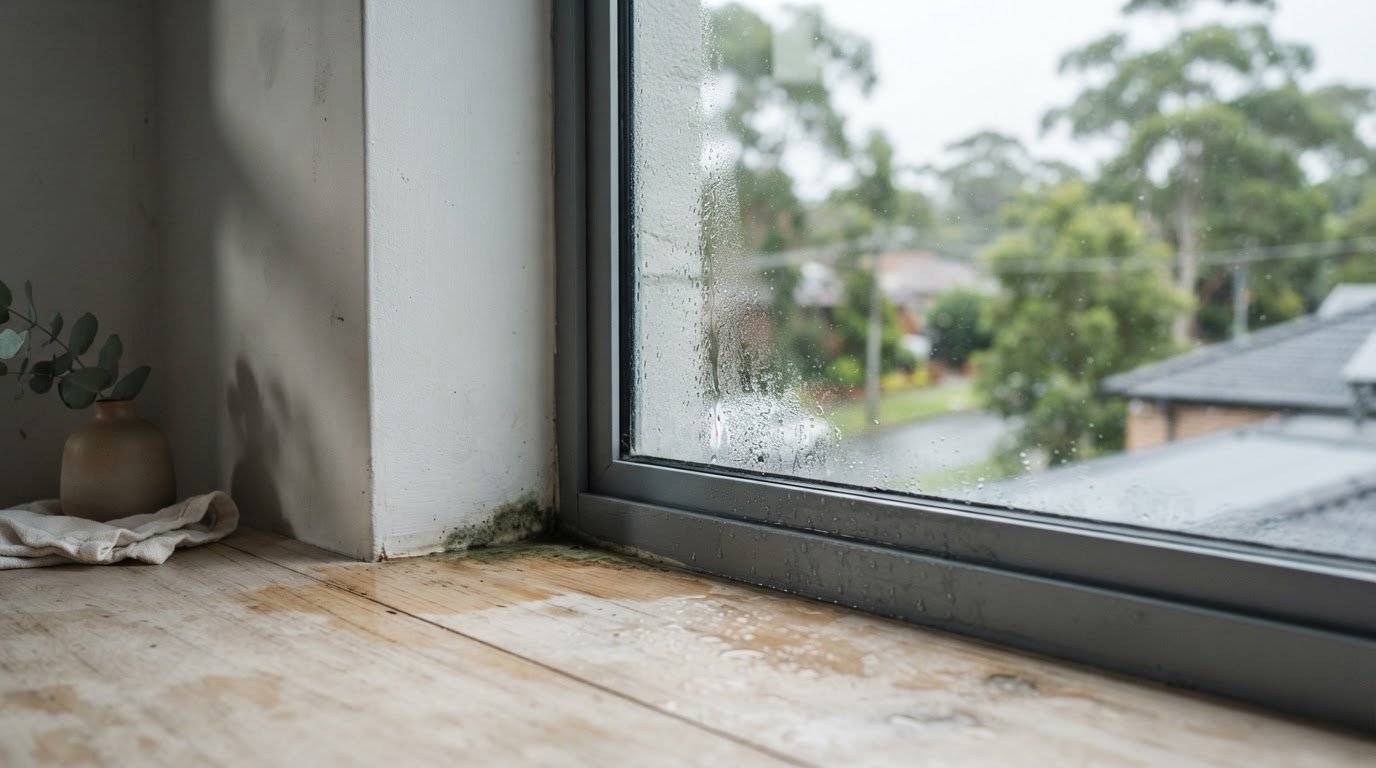
Look for ceiling stains, bubbling or peeling paint, damp patches, a musty odour or visible growth. These signs can follow water intrusion, but none proves by itself that mould is present or that a roof leak is the cause. Note where and when each sign appears, especially whether it becomes more noticeable after rainfall. That timing can help an inspection trace the moisture pattern.
Mould may appear away from the roof entry point. Water can travel along framing or other surfaces before soaking into a ceiling or wall, so the visible mark may be some distance from where water entered. Moisture can also collect in concealed spaces. Don’t assume the affected area ends at the edge of a stain.
What should you do when a ceiling is wet?
Put safety first. Keep clear of a sagging or bulging ceiling, and don’t touch wet electrical fittings or switches. If water is actively entering, avoid the affected area and arrange urgent attention to the leak. Don’t climb onto a wet or damaged roof to investigate. A photo taken from a safe position is a better record than taking a risk.
Once it’s safe, document the damage. Photograph affected rooms and surfaces, and note when you first noticed the problem, whether it changes after rain, and whether the area feels damp or smells musty. This record helps show the pattern without disturbing materials.
Keep the sequence clear:
- Protect people by keeping them away from hazards and wet, unstable areas.
- Document visible signs, including their location and timing.
- Arrange for the roof leak to be addressed so more water doesn’t enter.
- Assess affected materials for lingering moisture and mould, including areas that aren’t visible.
Stopping water entry and assessing mould are separate tasks. Even after a leak is repaired, damp materials may need further assessment. Avoid disturbing extensive visible growth or wet, damaged building materials, as this can spread contamination or expose hidden damage. A professional mould inspection can help establish what’s affected and guide the next steps for mould caused by leaking roof repairs Sydney.
How Sydney Roof Leaks Lead to Damp Materials and Mould
A roof leak can set off a chain of damage, but mould isn’t an automatic result. Water enters through a vulnerable point, reaches building materials and may leave them damp after the rain or visible dripping stops. If moisture persists, mould may develop on suitable surfaces. The extent depends on where water travelled and which materials stayed wet.
Fixing the moisture source is essential because mould treatment alone can’t prevent growth from returning if dampness continues. Roof repair addresses water entry; a mould assessment looks for contamination and moisture-affected areas inside. Both matter, and neither can be judged reliably by looking only at a visible ceiling mark.
Why can mould appear after the leak seems to stop?
The end of dripping doesn’t prove that materials have dried. Plasterboard, timber and insulation may retain moisture, while water can move along framing before becoming visible below. Ceiling cavities and other enclosed spaces can hide dampness. A room may look dry even when materials behind the ceiling or wall lining remain affected.
That doesn’t mean every leak causes mould. The risk depends on whether moisture remains and the conditions in the affected area. A musty smell, returning discolouration or a damp patch that changes after rain can guide further assessment, but these clues don’t reveal the full extent by themselves.
Why do roof repair and mould remediation need separate attention?
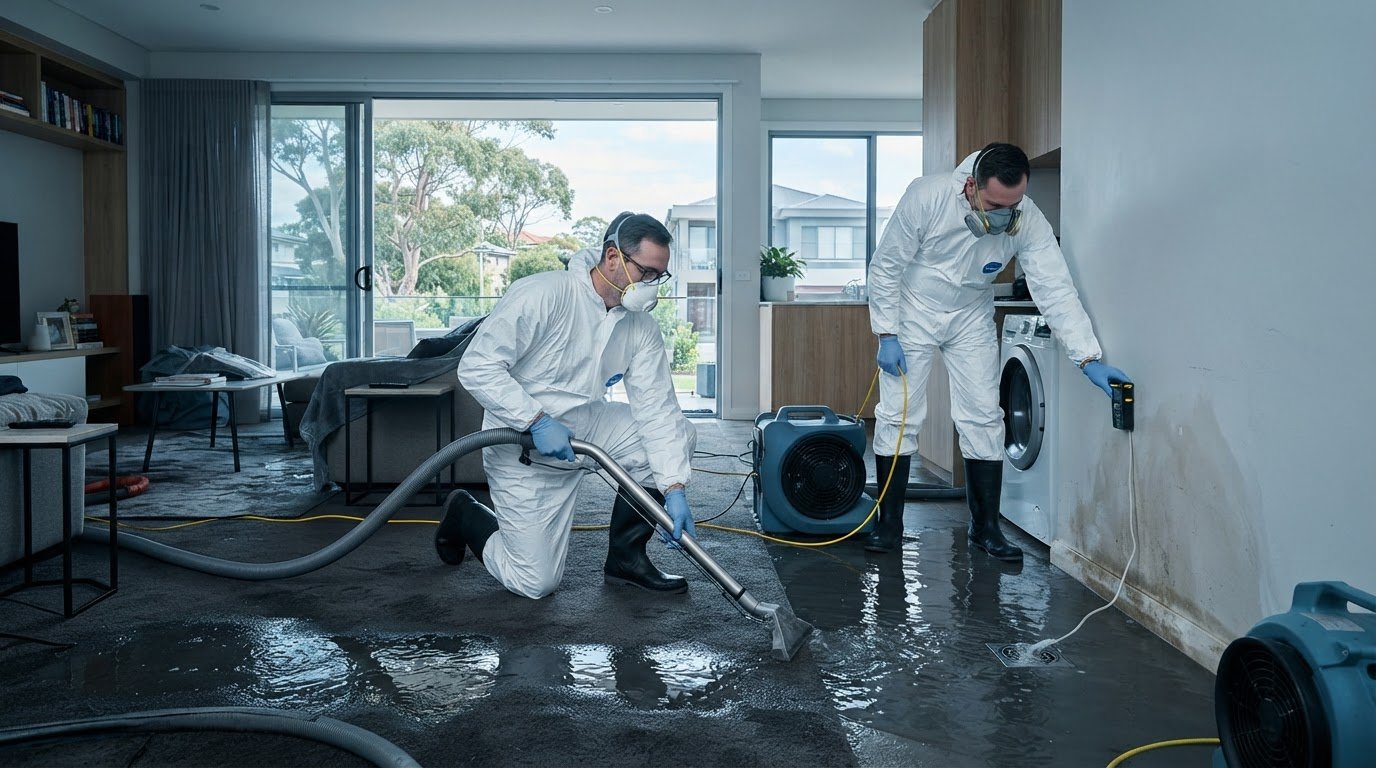
Roof repair aims to stop water entering the building. Water-damage restoration addresses the effects of water on the property, while mould remediation focuses on contamination and affected materials. Treating visible growth alone doesn’t establish whether a leak is still active, concealed materials are damp or the source has been resolved.
A thorough response considers both the cause and the resulting damage. The EPA guidelines for mould remediation also discuss moisture control as part of remediation. They’re a general reference, not an Australian regulation, but the principle is relevant: assessment and treatment should account for ongoing moisture, not just visible growth.
For additional context on the water-damage stage, see this Sydney water damage repair guide. If dampness or mould remains after the leak is addressed, a professional inspection can help identify what needs attention. ABC Mould Cleaning Solutions provides mould inspection and remediation across Sydney and surrounding areas, helping clarify the next steps for mould caused by leaking roof repairs Sydney.
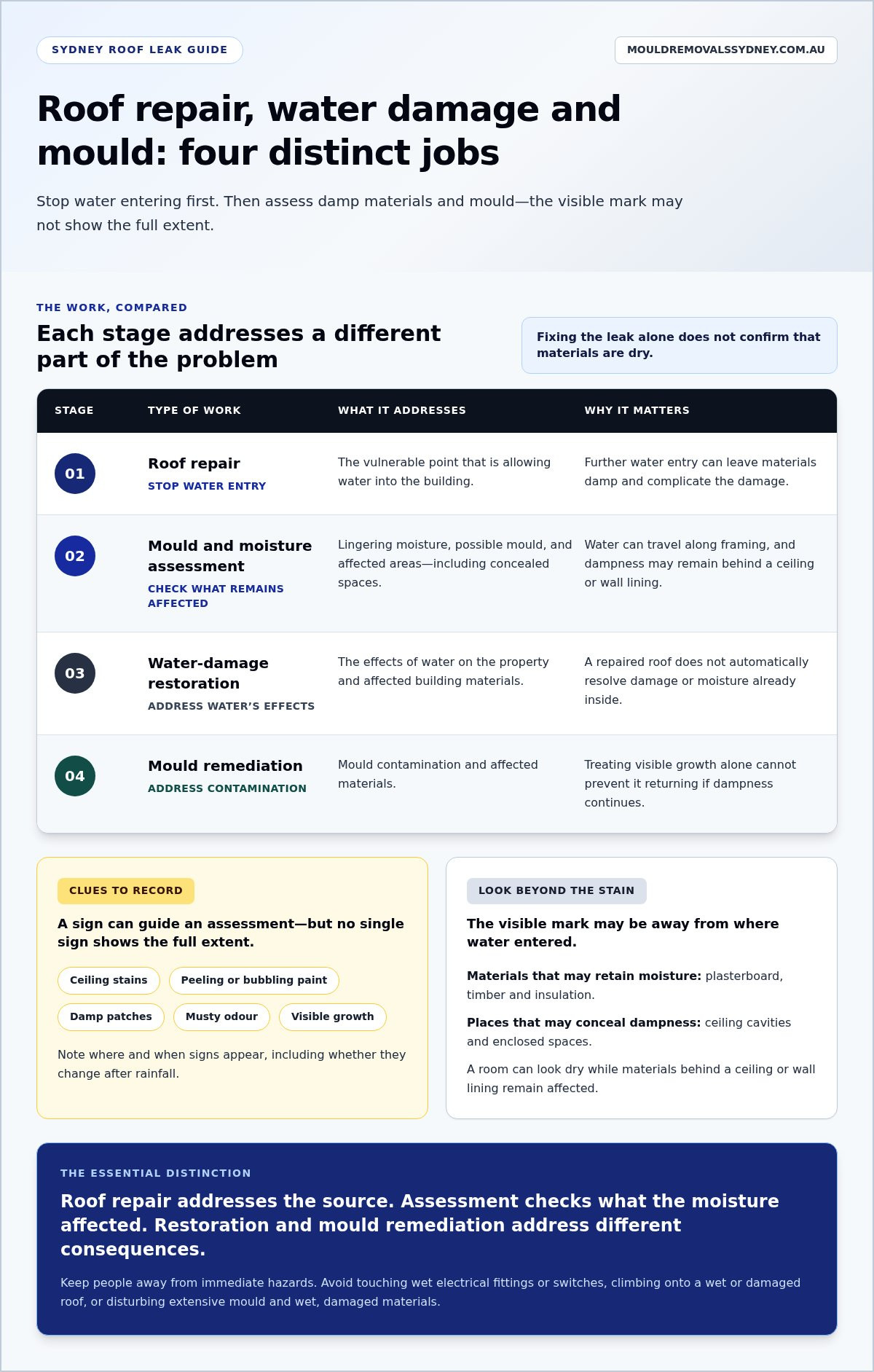
Roof Repair, Water Damage and Mould Removal in Sydney: What Each Stage Covers
After a roof leak, it can be hard to know which work is needed. Separate stopping water entry from assessing and treating damage inside. Each stage has a different purpose, and completing one doesn’t automatically resolve the others.
| Stage | What it addresses | What it can’t resolve by itself |
|---|---|---|
| Roof repair | Stops water entering through the roof. | Doesn’t assess or remove mould inside the property. |
| Water-damage restoration | Addresses water-affected areas and materials. | Doesn’t repair the roof or establish that all mould has been treated. |
| Mould inspection | Assesses suspected mould, moisture and affected areas. | Doesn’t itself stop a leak or remove contamination. |
| Mould removal and remediation | Treats mould contamination in affected areas. | Can’t prevent recurrence if water entry or lingering moisture continues. |
What does roof repair address compared with mould remediation?
Roof repair focuses on the building exterior: finding and fixing the route that lets water in. Mould remediation focuses indoors, assessing affected areas and treating contamination, including concerns about airborne spores. These are connected parts of a response, but they aren’t interchangeable. Mould treatment doesn’t seal a roof, and a repaired roof doesn’t confirm that hidden dampness or mould has been addressed.
ABC Mould Cleaning Solutions provides mould inspection, mould removal and water-damage restoration in Sydney and surrounding areas. Once water entry has been addressed, its mould services can help assess and respond to the effects inside the property.
When is a mould inspection or water-damage restoration relevant?
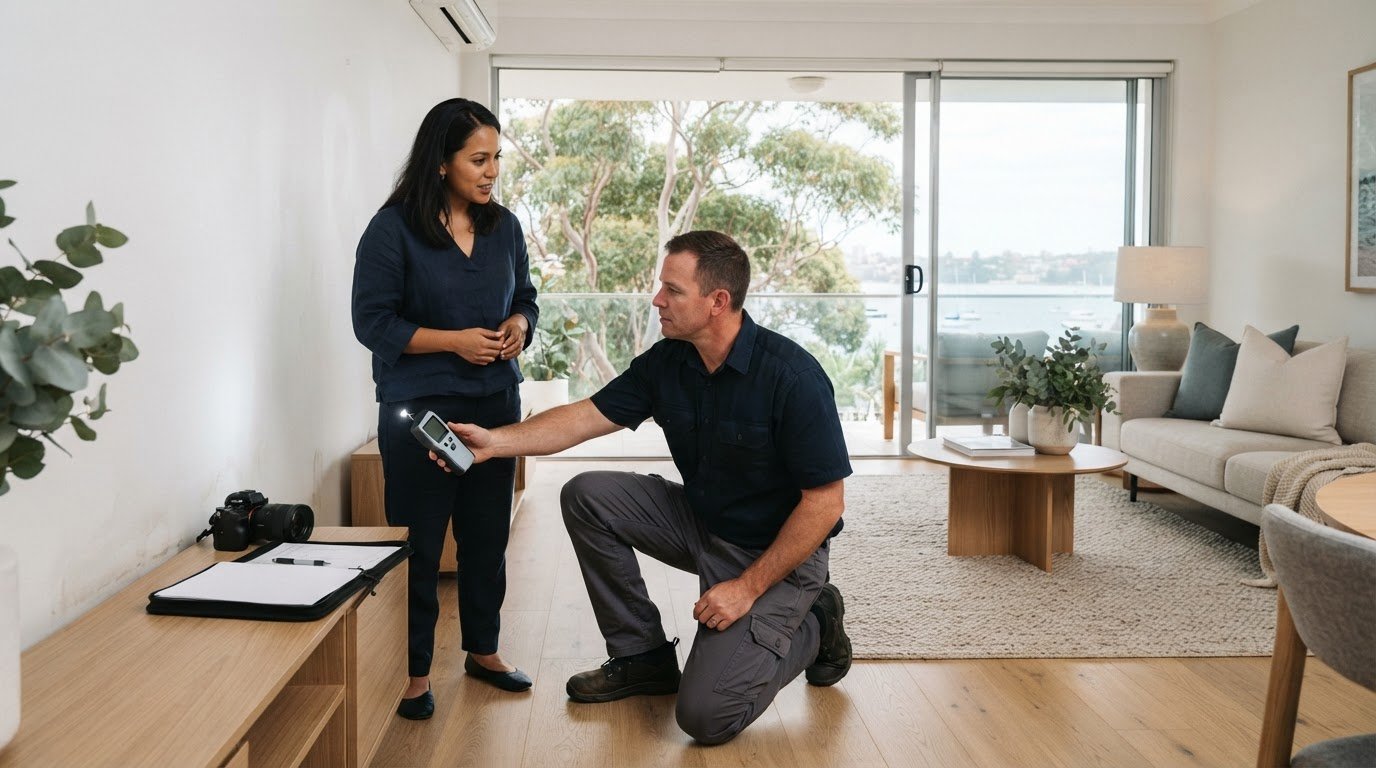
An inspection is useful when visible growth, a persistent musty odour or signs of concealed dampness leave you unsure what’s affected. Assessment can consider air quality, humidity, ventilation and structural dampness, rather than relying on a single visible patch. An on-site inspection is available when deeper contamination is suspected. NSW Health’s guidelines on mould offer local advice on mould and health concerns.
Water-damage restoration is relevant when materials or rooms have been affected by water. Addressing impacted areas can help manage lingering moisture and reduce conditions that may contribute to mould development. The right response depends on what an inspection finds. Not every leak leads to mould, and not every damp area needs the same treatment.
For broader context on the remediation process, read the professional mould removal guide. If you’re unsure whether visible growth or hidden dampness needs assessment, ABC’s mould inspection service can help clarify the next step for mould caused by leaking roof repairs Sydney.
What to Do After a Roof Leak in Sydney: A Practical Plan
A leak can leave questions even after visible water stops: is the source fixed, are building materials still damp, and has mould developed out of sight? Work through these steps in order. They’ll help protect people, preserve a useful record and give an inspection a clearer picture of what happened.
- Protect people first. Keep clear of sagging or unstable ceilings, wet electrical fittings and areas with active water ingress. Don’t touch wet switches or disturb extensive mould or water-damaged building materials.
- Record what you can see safely. Photograph affected surfaces and note the rooms involved. Record when the leak began, whether it’s ongoing and whether signs changed after rainfall or after the leak was stopped.
- Address water entry. Arrange for the roof leak to be repaired. Mould treatment can’t stop water coming through a roof, so the source needs attention as a separate part of the response.
- Assess moisture and mould. Once water entry has been addressed, consider whether dampness or visible growth needs professional assessment. Hidden affected areas may not be obvious from a room’s visible surfaces.
What information should you prepare for an assessment?
A short, accurate record can help an inspection focus on the right places. Note when the leak occurred, whether it’s ongoing, which rooms were affected and what changed after the source was addressed. Photograph stains or visible mould without touching or scraping the area. Mention any musty odour and suspected dampness behind ceilings, walls or other enclosed spaces.
Inspection checklist: leak timing and status; affected rooms and surfaces; photos of visible signs; changes since the leak stopped; musty odours; suspected hidden moisture.
How can you reduce the chance of mould returning?
Prevention depends on resolving moisture, not just treating visible mould. Make sure the water-entry source has been addressed, then follow assessment recommendations for drying affected materials and improving ventilation where appropriate. If a damp patch returns or an odour persists, record the change and arrange further assessment rather than assuming the area is fully dry.
Keep the response focused on the cause as well as the visible effects. An inspection can help identify whether more drying or remediation is needed, while this mould and damp prevention guide provides broader background on managing moisture and mould in Australian homes.
If you’re concerned about lingering dampness or mould after a roof leak, arrange a mould inspection with ABC Mould Cleaning Solutions. A photo assessment can provide a same-day quote in many cases and help you understand a practical next step for mould caused by leaking roof repairs Sydney.
How ABC Mould Cleaning Solutions Helps After a Leaking Roof in Sydney
Once water entry has been addressed, the next step is understanding what remains inside the property. ABC Mould Cleaning Solutions supports property owners across Sydney and surrounding areas with mould inspection, water-damage restoration and mould remediation. The process is straightforward: Call, Quote, Results. Explain what happened, share photos for an assessment or arrange an on-site inspection when deeper contamination is suspected.
What happens during mould inspection and treatment?
An assessment considers affected areas and signs of moisture, including air quality, humidity, ventilation and structural dampness. Photo assessment can provide a same-day quote in many cases. If deeper contamination is suspected, an on-site inspection can assess the situation more closely. ABC provides a written report and a free estimate or quote outlining the findings and proposed next steps.
Where treatment is appropriate, ABC uses the Goldmorr System, a biodegradable fogging process. Goldmorr products are applied only by Goldmorr-approved and trained master technicians. Goldmorr Group has supplied mould-removal solutions since 1998. All treatments are safe for pets, people, and the environment.
How can Sydney property owners take the next step?
Share details that can help shape the assessment: which rooms were affected, whether the roof leak has been addressed, and whether dampness, visible mould or a musty smell remains. Photos can be a useful starting point. In many cases, they allow ABC to provide a same-day quote; an on-site inspection can assess suspected deeper contamination.
The process is designed to give you a clear path forward:
- Call: Explain the leak history and the signs you’ve noticed.
- Quote: Request a free estimate by phone or photo assessment. A same-day quote is available in many cases through photo assessment.
- Results: Receive an assessment, a written report and a treatment plan suited to the findings.
If mycotoxin testing is a concern, optional referrals for testing are available. For mould caused by leaking roof repairs Sydney, keep the responsibilities clear: the roof leak must be addressed separately, while ABC can assess and treat resulting mould and moisture concerns.
ABC’s price-match guarantee is: We Will Beat Any Written Quote By 10%. To request a same-day mould assessment and free estimate, Request a same-day mould assessment or call 0488 866 853.
Take the Next Step Towards a Drier, Healthier Home
A roof leak can leave more than a visible mark. The useful next step is to get a clear picture of what’s happening in your home. Keep a record of changes, note lingering concerns and consider moisture alongside visible mould. That gives you a more informed starting point for deciding what needs attention.
If you’re unsure what remains after the leak, an assessment can help clarify the condition of affected areas and guide your next steps. For mould caused by leaking roof repairs Sydney, the aim is to address the problem methodically, not just the patch you can see.
ABC Mould Cleaning Solutions can provide a free estimate, a written report and, in many cases, a same-day quote from a photo assessment. To arrange an assessment for lingering mould or moisture, request an assessment for lingering mould or moisture or call 0488 866 853.
Frequently Asked Questions
Can a leaking roof cause mould in a ceiling or roof cavity?
Yes. Water entering through a roof can dampen ceiling linings, timber or insulation, and moisture may remain in a roof cavity out of sight. Mould can develop if damp conditions persist, but a leak doesn’t guarantee growth. A ceiling stain alone can’t confirm mould or show where water entered. Avoid opening a cavity yourself if materials are wet or damaged.
What should I do first if mould appears after a roof leak?
Keep people away from any sagging ceiling, wet electrical fittings or unstable materials, then arrange for the water entry to be addressed. Don’t scrape or disturb extensive mould. Once it’s safe, record when the leak occurred, whether it’s ongoing and which rooms are affected. Photos taken without touching the area can help an inspection understand changes over time and identify what needs closer assessment.
Can mould return after a leaking roof has been repaired?
Yes, it can if damp materials remain or water continues to enter through an unresolved source. A roof repair stops water coming in at the repaired point, but it doesn’t establish that concealed areas have dried or existing mould has been remediated. For mould caused by leaking roof repairs Sydney property owners should consider both the moisture source and any resulting contamination when planning follow-up work.
Does a mould inspection check for hidden moisture after a roof leak?
It can. ABC’s mould inspection assesses air quality, humidity, ventilation and structural dampness, including signs that may point to concealed moisture or contamination. An inspection can help determine whether the visible problem may extend beyond the surface, but it isn’t a roof repair. If deeper contamination is suspected, an on-site inspection can assess the situation more closely.
Can ABC provide a quote from photos of roof-leak mould?
Yes. You can submit photos of affected areas for an assessment, and a same-day quote is available in many cases. Include clear images of visible mould, water marks and the surrounding surface, taken from a safe position. Photos help ABC understand visible damage, but suspected deeper contamination may call for an on-site inspection.
Are mould treatments safe for pets and people after a roof leak?
Yes. All treatments are safe for pets, people, and the environment. Keep pets and household members away from wet, damaged materials and visible mould while the area is being assessed, and follow the specific guidance provided for the work.
Does ABC repair leaking roofs as well as remove mould?
ABC provides mould inspection, mould removal and water-damage restoration. Roof repair addresses water entry, while ABC’s services address mould and water damage inside the property. The distinction matters: mould treatment can’t stop a roof leak, and a roof repair alone doesn’t confirm that damp materials or mould have been assessed and treated.