A bedroom mould patch is more than a surface mark. Mould can grow in damp, poorly ventilated areas, including on walls, ceilings, carpets and wood. Bedroom mould removal in Sydney starts with identifying the moisture behind the growth, since cleaning the visible patch alone may not address its cause. If mould keeps returning, spreads across surfaces or comes with a persistent musty smell, a professional inspection can help determine what is happening.
It’s understandable to want a clear answer before deciding what to do. This guide explains what mould is, how to reduce bedroom moisture and ventilation problems, and when professional remediation may be appropriate. It also explains what shapes an inspection quote, including the affected area, its location, the materials involved and the work needed to address the moisture source.
You’ll also find an overview of bedroom mould services and Sydney coverage to help you plan the next steps for your home. Start by considering what may be causing the damp, then determine the treatment needed to address the mould and help prevent it from returning.
Key Takeaways
- Reduce bedroom damp by improving airflow and addressing the moisture source, not just wiping away visible growth.
- Learn when a small surface patch may be manageable and when recurring, widespread or hidden mould calls for professional treatment.
- Understand how the affected area, surface materials and moisture investigation can shape an inspection and remediation quote.
- See how Sydney mould service listings can vary in scope, from cleaning a single surface to treating several affected areas.
- Explore the service options available for inspection, remediation, air purification and longer-term moisture control.
Preventing mould through ventilation and moisture control
In Sydney, summer humidity regularly sits above 70%, making steady ventilation and moisture control important. Preventing bedroom mould starts by reducing dampness and finding its source, rather than treating surface marks alone.
Use a simple daily routine to keep indoor moisture moving outdoors. Open the bedroom window for 10-15 minutes each morning, including in winter, when outdoor conditions allow. Run the bathroom exhaust fan during showers and for 20 minutes afterwards. Keep bedroom doors open when practical, and avoid drying wet laundry in a closed room.
- Move furniture slightly away from external walls so air can circulate behind wardrobes and beds.
- Wipe condensation from windows and sills, then ventilate the room.
- Check for damp bedding, wet carpets or water marks after a leak.
- Use kitchen and bathroom extraction fans when those rooms produce steam.
In NSW, adequate ventilation is one of the seven minimum standards rental properties must meet to be fit to live in, according to NSW Fair Trading. Tenants may be responsible for mould linked to moisture build-up when windows stay closed or bathroom fans aren’t used. A defective window or inadequate ventilation can point to a building issue instead. Tenants should notify the landlord or agent as soon as possible after noticing mould or damp, and record the condition.
Moisture Testing and Cause Identification
Moisture testing can locate dampness behind paint, within carpet or inside a wall. An inspection maps visible staining and uses moisture readings to guide further checks. Look for patterns: mould beside a window may relate to condensation, while a localised patch below a ceiling stain may suggest water entry. Finding the source helps distinguish ongoing moisture from an old, dry mark.
Structural Drying and Moisture Control
Structural drying addresses moisture held in building materials, not just damp air or visible surfaces. In Sydney coastal properties, mould treatment may involve industrial-grade dehumidifiers running for 48 to 72 hours. The drying approach depends on affected materials and how far moisture has travelled. Track damp patches, musty odours and returning growth; these signs can indicate hidden moisture that surface cleaning won’t resolve.
Keep moisture control active after drying. Repair the cause of water entry, ventilate rooms after bathing, and avoid covering damp walls with furniture or stored items. If a bedroom remains musty despite regular airflow, arrange an assessment rather than relying on smell alone. For respiratory health advice about mould in NSW, call your local Public Health Unit on 1300 066 055, as advised by NSW Health. NSW Fair Trading’s call centre can be reached on 13 32 20 from Monday to Friday, 8:30am-5pm.
Can I remove mould myself or do I need a professional?
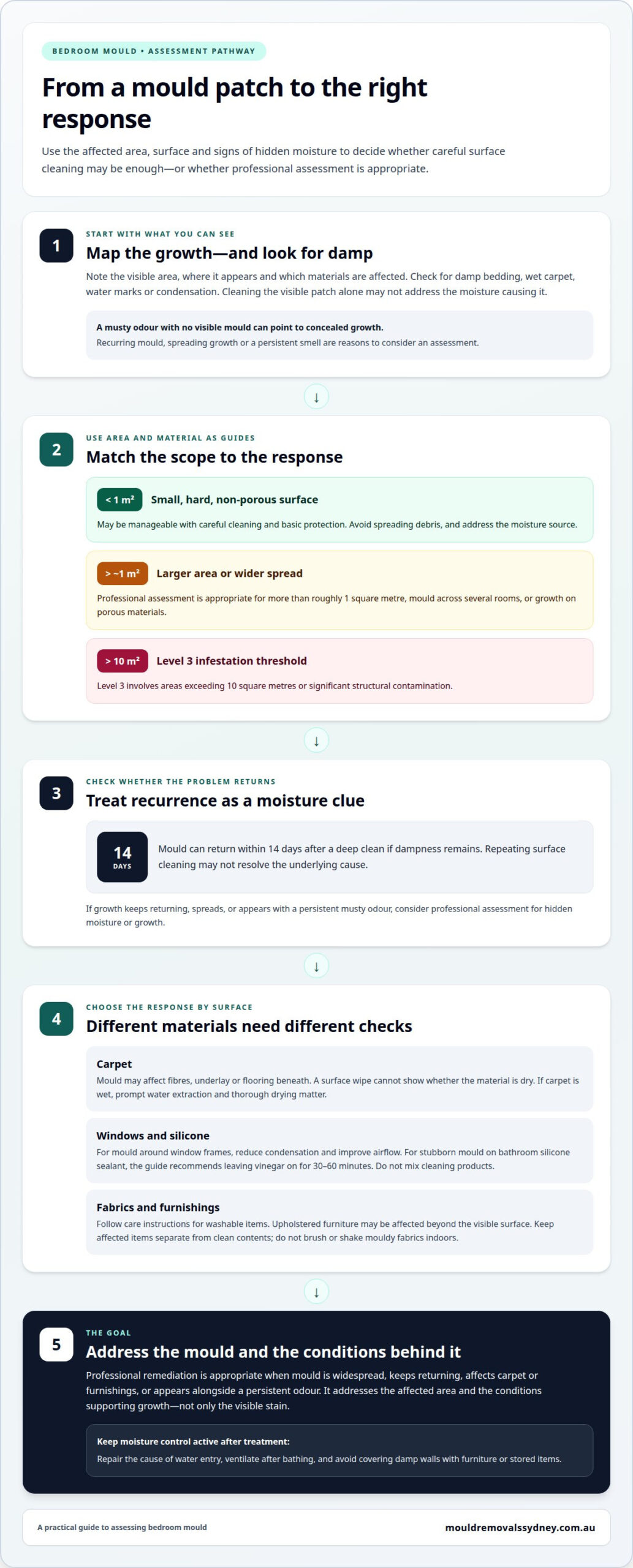
A small mould patch on a hard, non-porous surface may be manageable with basic protection. The guide describes patches under 1 square metre as generally suitable for careful cleaning. More than roughly 1 square metre, mould across several rooms, or growth on porous materials calls for professional assessment. Level 3 infestation involves areas exceeding 10 square metres or significant structural contamination.
Surface cleaning removes visible marks, but it doesn’t necessarily address moisture or hidden growth. Mould can return within 14 days after a deep clean if dampness remains. A musty odour without visible mould can also point to concealed growth that needs specialised treatment. Prioritise identifying the moisture source before repeating the same surface-cleaning routine.
- For a small patch on a hard surface, use basic protection and avoid spreading debris.
- Stop and seek professional help if growth covers a larger area or affects multiple rooms.
- Arrange an assessment for recurring mould, hidden odours or suspected structural contamination.
Carpet needs a different approach from a painted wall. Mould may affect the fibres, underlay or flooring beneath, so wiping the surface won’t show whether the material is dry. A professional assessment can determine the extent of contamination and the appropriate treatment. If carpet is wet, prompt water extraction and thorough drying matter, since lingering moisture can support renewed growth.
Windows often show mould around frames where condensation collects. Clean the affected surface, then reduce condensation and improve airflow around the window. If mould returns, check for ongoing dampness rather than relying on repeated cleaning. For bathroom growth on silicone sealant, the guide recommends leaving vinegar on stubborn mould for 30-60 minutes. Don’t mix cleaning products, and follow product directions for any cleaner used.
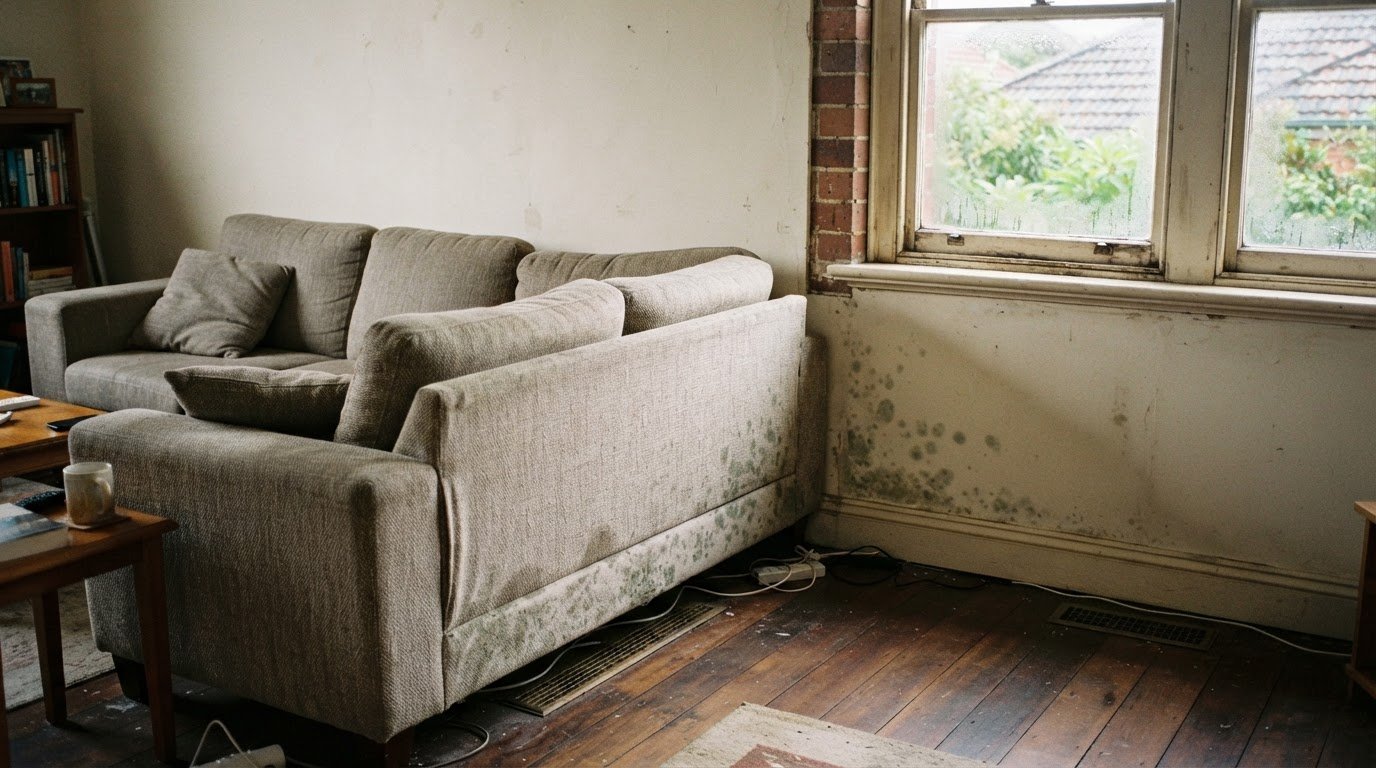
Furnishings also need attention suited to their material. A washable fabric item may be cleaned according to its care instructions, while mould on upholstered furniture can penetrate beyond the visible surface. Move affected items away from bedroom walls and keep them separate from clean contents during assessment. Don’t brush or shake mouldy fabrics indoors, as this can spread residue and spores.
Choose professional treatment when mould is widespread, keeps returning, affects carpet or furnishings, or appears alongside a persistent odour. Professional mould remediation addresses the affected area and the conditions supporting growth, rather than just the visible stain. If you’re dealing with mould in your property, ABC Mould Cleaning Solutions can help assess the treatment needed for effective bedroom mould removal Sydney wide.
Mould inspection and remediation quote factors
A bedroom quote depends on the affected area, surface type, access and moisture source. A spot on a washable wall differs from growth across a ceiling, carpet and adjoining room. The visible patch is only part of the assessment. Treatment also needs to account for whether moisture remains behind the surface or continues entering the room.
An inspection starts by mapping visible growth and noting its location. A mark beside a window may point to condensation, while staining below a ceiling can indicate water entry. An uncomfortable odour without visible mould can prompt investigation for hidden growth. These observations help define the work, rather than treating every bedroom as the same job.
- Area affected: A Level 1 infestation covers less than 1 square metre; Level 3 involves more than 10 square metres or significant structural contamination.
- Materials involved: Painted plaster, carpet, timber and furnishings may need different assessment and treatment.
- Access and scope: A ceiling patch, built-in wardrobe or mould across connected rooms changes the work required.
- Moisture source: Condensation, a leak or dampness behind a wall can require different investigation and follow-up.
For bedroom mould removal in Sydney, useful inspection details include the patch’s location, affected materials and any history of leaks. Note whether growth returns after cleaning, whether a window shows condensation and whether a musty smell persists. Mention allergy concerns and occupied areas during the assessment. These details help distinguish a local surface issue from moisture affecting several parts of the room.
A quote request and an inspection serve different purposes. A quote sets out the proposed scope and cost; an inspection assesses visible mould, moisture and likely causes. The phrase “free quote” doesn’t by itself establish that an onsite inspection is free. Understand what the quoted work covers, including treatment areas, moisture investigation and any drying or air-cleaning steps. Avoid comparing figures without comparing scope.
The price depends on the case and is provided after a quote request. The affected area, materials, access, moisture source and treatment required all shape the cost. Ask for the proposed work to distinguish mould removal from addressing the conditions supporting growth. An inspection should also clarify whether the problem is limited to the bedroom or extends to a damp adjoining wall or ceiling.
A clear scope helps you understand what the quote includes before work begins. Check that it describes the affected surfaces, planned mould treatment and how the moisture source will be addressed. If the ceiling, window and carpet show different signs, each should be considered rather than assuming one cleaning method suits all three.
Mould remediation service coverage in Sydney and NSW
Remediation work in Sydney and NSW is shaped by the affected rooms, materials and moisture source. Professional mould remediation typically takes between 1 and 5 days.
Mould Spore Containment
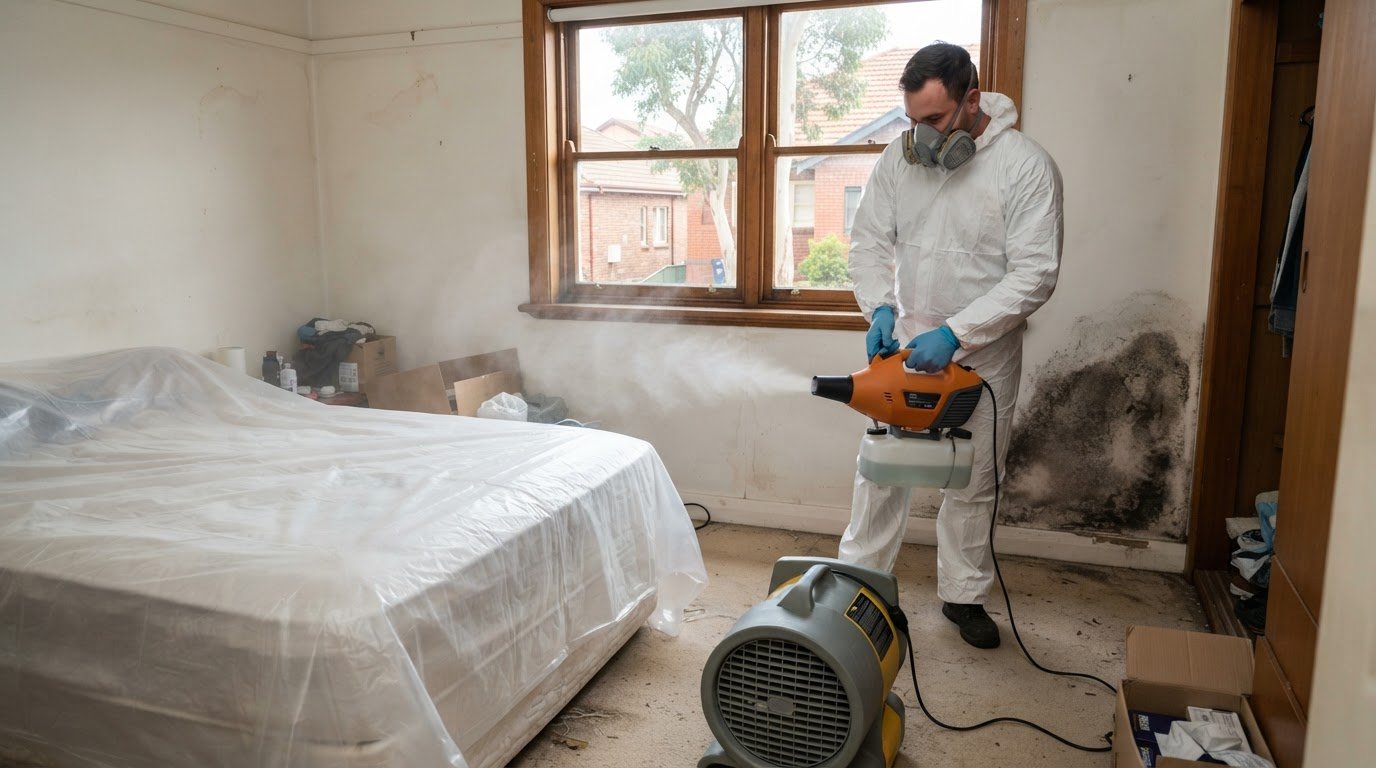
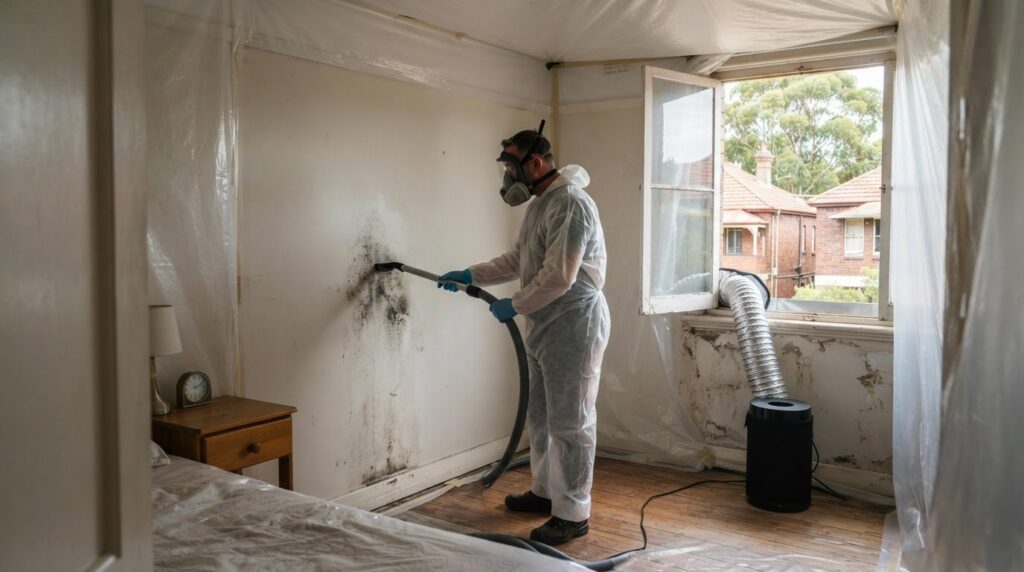
Containment limits the movement of spores from the work area into the rest of the household. During mould cleaning, HEPA filtration is described as capturing 99.97% of airborne spores. Air scrubbing may run 24/7 during remediation. Ask how the work area is separated, how air is filtered, and how adjoining rooms are protected.
Containment matters when visible growth is near a bedroom doorway, shared hallway or household belongings. Before work begins, move loose items away from the affected area and follow the site team’s directions about access. Keep children and pets out of the work zone. The scope should explain how dust and debris are managed during removal.
Room Assessment and Remediation Steps
A room assessment records visible mould, affected materials, moisture signs and the suspected source. The work plan then sets out containment, removal, cleaning and air treatment as needed. Mould on a bedroom ceiling, for example, needs a different assessment from growth on a window frame or carpet. The plan should identify each affected surface and explain the sequence of work.
After removal, moisture control remains essential. Cleaning may not hold if a damp wall or wet carpet stays wet. The assessment should include areas around visible growth, such as the wall behind a wardrobe or flooring beneath a bed. A clear scope distinguishes surface treatment from work to address damp materials or hidden moisture.
Whether residents can stay inside depends on the work area and household access needs. If microbial growth covers more than 10 square metres, residents may need to move out temporarily. Smaller jobs can still require people to avoid a room while containment and air scrubbing operate. Plan sleeping arrangements around the affected bedroom and keep access routes clear.
Compare quotes by matching the scope, not just the headline description. Check whether each proposal covers inspection, containment, removal, air scrubbing, affected materials and moisture control. A quote that describes only visible cleaning isn’t directly comparable with one that includes assessment and treatment of damp materials. In Sydney, remediation typically takes between 1 and 5 days, with the work required and drying needs shaping the schedule.
Service coverage should be clear for the property’s location. For a home in Sydney or elsewhere in NSW, share the suburb, affected rooms and visible signs when requesting a quote. Include details such as ceiling stains, damp carpet or recurring mould near a window. These practical details help establish the likely scope before work is planned.
Mould removal service listings in Sydney
Sydney service listings show why the task description matters as much as the visible mould. Examples range from cleaning bedroom walls and floors to treating ceiling growth across connected rooms. A listing describes a particular job, not a standard scope for every home. Read each description for the affected surfaces, rooms and work involved.
For example, one Sydney listing described mould removal from bedroom walls, followed by sweeping and mopping the floor. Another described professional cleaning in a bedroom affected by water leakage. These are different jobs: visible mould on a wall may need a different assessment from mould linked to wet materials or an ongoing leak.
Other listings describe more extensive work. One task involved mould on a living-room and bedroom ceiling, while another included mould removal alongside a whole-house clean. Listings also cover bathroom and bedroom cleaning with ceiling mould, bedroom windows and an ensuite, and surface mould across two bedrooms. This range shows why room count alone can’t describe the treatment needed.
The listings were based on 129 reviews, but a review count doesn’t explain what each job included. Before comparing descriptions, identify the visible mould, affected surfaces and any moisture signs. A bedroom window with condensation, for instance, presents a different issue from a carpet affected by water leakage. Include those details when explaining the task.
Bleach may remove a visible mark, but cleaning alone doesn’t necessarily address moisture or hidden growth. Mould can reappear after a deep clean if dampness remains. Professional mould remediation assesses the affected materials and likely moisture source, then defines the work accordingly. This distinction matters indoors, where a stain may be just one sign of a larger problem.
- Read the task description: Note whether it names walls, ceilings, windows, carpet or multiple rooms.
- Separate cleaning from treatment: Look for whether the scope addresses dampness as well as visible mould.
- Describe the conditions: Mention water leakage, recurring growth or a musty smell when requesting an assessment.
Use listings as examples of possible job scopes, not as a fixed menu or reliable price guide. The work depends on where growth appears, which materials are affected and whether moisture remains. A bedroom with mould on one accessible surface differs from connected rooms with ceiling stains and damp carpet. Clear descriptions help focus an assessment on the actual conditions.
If visible mould keeps returning or follows water leakage, arrange an assessment before relying on another surface clean. Request a mould inspection to assess the affected areas and determine the treatment scope.
ABC Mould Cleaning Solutions
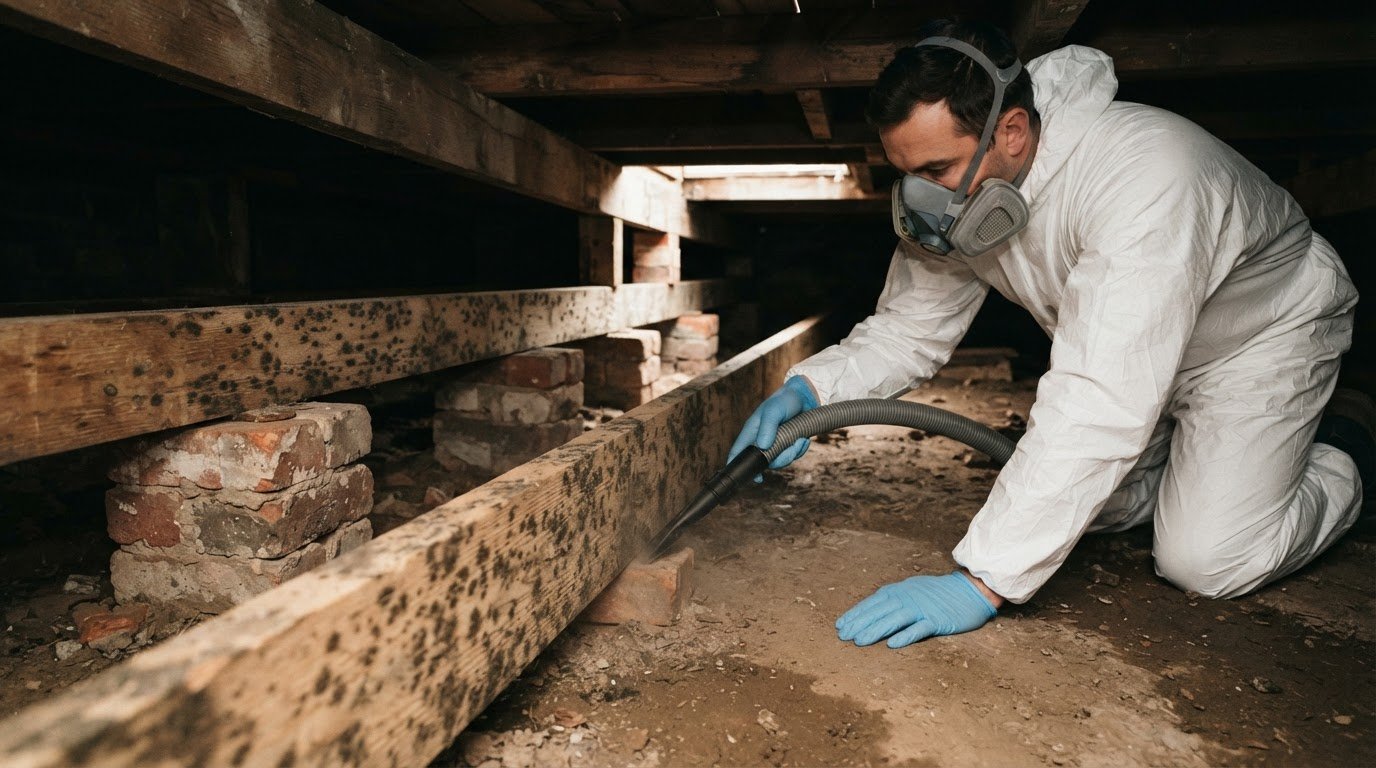
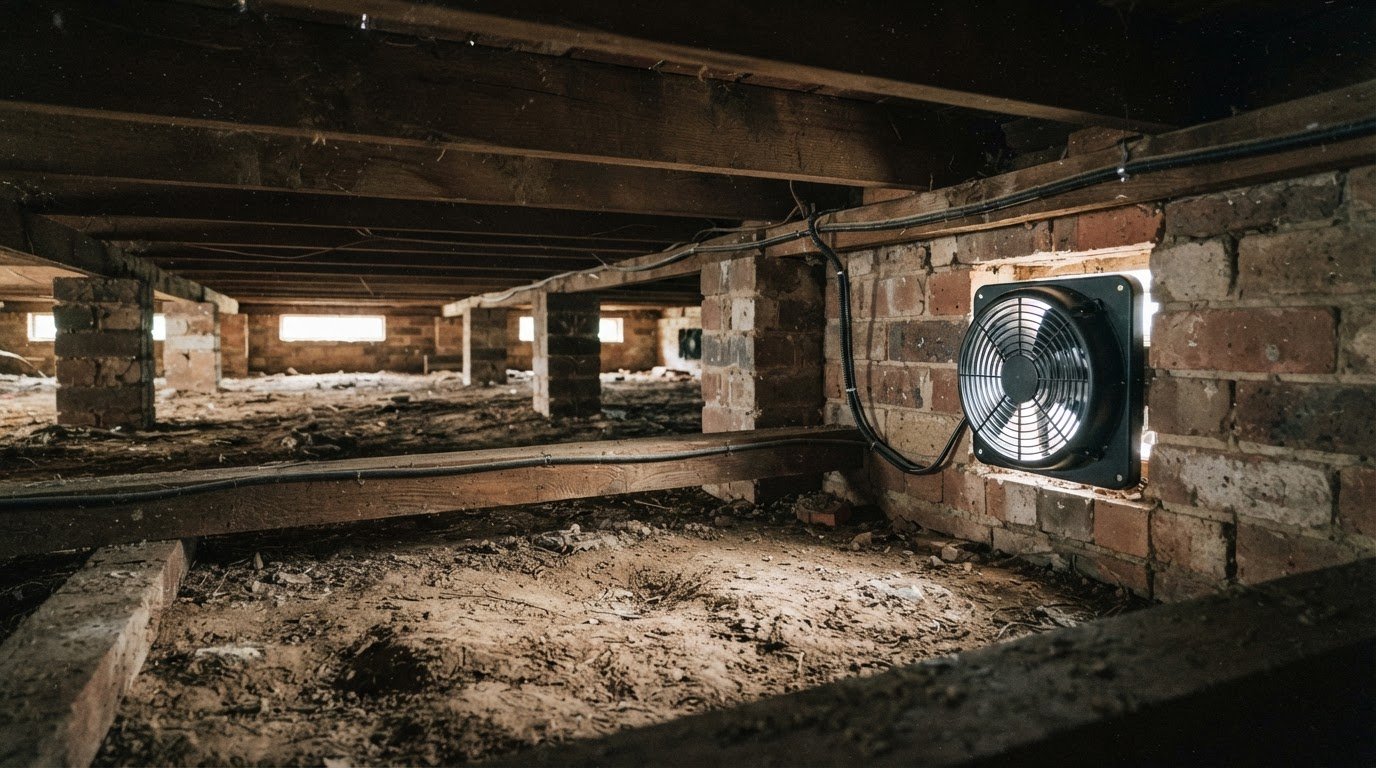
ABC Mould Cleaning Solutions helps Sydney property owners assess bedroom mould, treat affected areas and address the moisture conditions behind recurring growth. Its Mould Inspection Services assess air quality, humidity, ventilation and structural dampness to guide next steps. Mould Remediation and Air Purification & Scrubbing address treatment and airborne spores. Where subfloor moisture contributes to indoor dampness, Subfloor Ventilation System Installation may also help.
Consider professional help if mould keeps returning, affects several surfaces or comes with a persistent musty odour. An inspection can clarify the issue’s scope and suitable options for the property, rather than relying on surface cleaning alone.
Contact ABC Mould Cleaning Solutions to discuss the mould concerns in your bedroom.
Make your next step clear
For bedroom mould removal in Sydney, the next step is to turn concern into a practical plan. Decide what you need resolved: why mould keeps returning, which parts of the room are affected, or how treatment can fit around household routines. A clear priority keeps the conversation focused on your home, not just the visible mark.
Before reaching out, note what you’ve noticed and what matters most to you. For example, record whether the issue affects your sleeping area, whether the room has a persistent musty smell, and what would help you feel ready to use the space again. You don’t need to diagnose the cause. Sharing your observations gives the discussion a useful starting point.
ABC Mould Cleaning Solutions can help you consider the next step for your bedroom. Contact ABC Mould Cleaning Solutions to discuss your concerns. A clear plan can make the path forward feel more manageable.
Frequently Asked Questions
What is mould?
Mould is a type of fungus that grows when microscopic spores settle and develop on damp materials. In a bedroom, it may appear on paint, timber, carpet or stored belongings. Colour and texture vary, so appearance alone doesn’t identify the cause or extent. A musty smell, water staining or recurring marks can also signal a moisture issue that needs attention.
What does a mould cleaning service include?
A professional service can include inspection, removal, air purification and recommendations to reduce future growth. ABC Mould Cleaning Solutions uses the Goldmorr System, a biodegradable fogging process applied only by Goldmorr-approved and trained master technicians. Goldmorr has supplied mould-removal solutions since 1998. Safety precautions may depend on the products used and the conditions in the home, so ask the provider what steps are needed. Optional mycotoxin testing referrals are also available.
Why does mould keep coming back in my Sydney home?
Mould returns when damp conditions continue after visible marks are cleaned. For example, wiping a wardrobe’s back panel won’t resolve moisture trapped between the furniture and an external wall. A leak, condensation or damp building material can keep feeding growth. Note where marks recur and whether they appear after rain, window condensation or a water leak. These patterns help identify what needs attention.
Will insurance cover it?
In Sydney, mould linked to a sudden insurable event, such as a burst pipe, storm damage or roof leak, is often covered by home insurance. Mould caused by long-term condensation or poor ventilation is generally considered maintenance and excluded. The cause and circumstances matter. Keep records of the water event and affected areas, because the distinction between sudden damage and ongoing dampness can affect a claim.
How much does professional mould removal cost in Sydney bedrooms?
The price depends on the case and is provided after a quote request. The affected area, materials, access and work needed to address moisture all influence the scope. A photo assessment can provide a same-day quote for many cases. ABC Mould Cleaning Solutions states: “We Will Beat Any Written Quote By 10%.” A quote should make clear which areas and treatment steps it covers.
What causes mould in Sydney bedrooms, and how can I identify the source of moisture?
Common contributors include condensation, water entry and damp materials. Compare the mould’s location with nearby signs: droplets on glass suggest condensation, while a spreading ceiling stain may indicate water entry. Check whether mustiness is strongest inside a wardrobe or near carpet. A moisture inspection can assess humidity, ventilation and structural dampness, helping distinguish surface condensation from moisture concealed within building materials.
How to safely remove small patches of mould from bedroom walls and ceilings?
A patch under 1 square metre on a hard surface may be suitable for careful cleaning with basic protection. Avoid dry brushing, which can scatter material, and follow the cleaner’s label. Don’t mix cleaning products. Stop if the wall is soft, the ceiling is damp, the patch spreads, or mould returns. Porous materials and moisture behind paint need a different assessment from a small surface mark.
When should I hire a professional mould remediation service in Sydney?
Arrange professional remediation if growth covers more than roughly 1 square metre, affects multiple rooms, returns after cleaning or comes with a persistent musty odour. Areas exceeding 10 square metres or significant structural contamination indicate a more extensive problem. Professional assessment is also useful when carpet, furnishings or concealed building materials may be affected. The inspection can define the work area and identify treatment needs beyond visible marks.