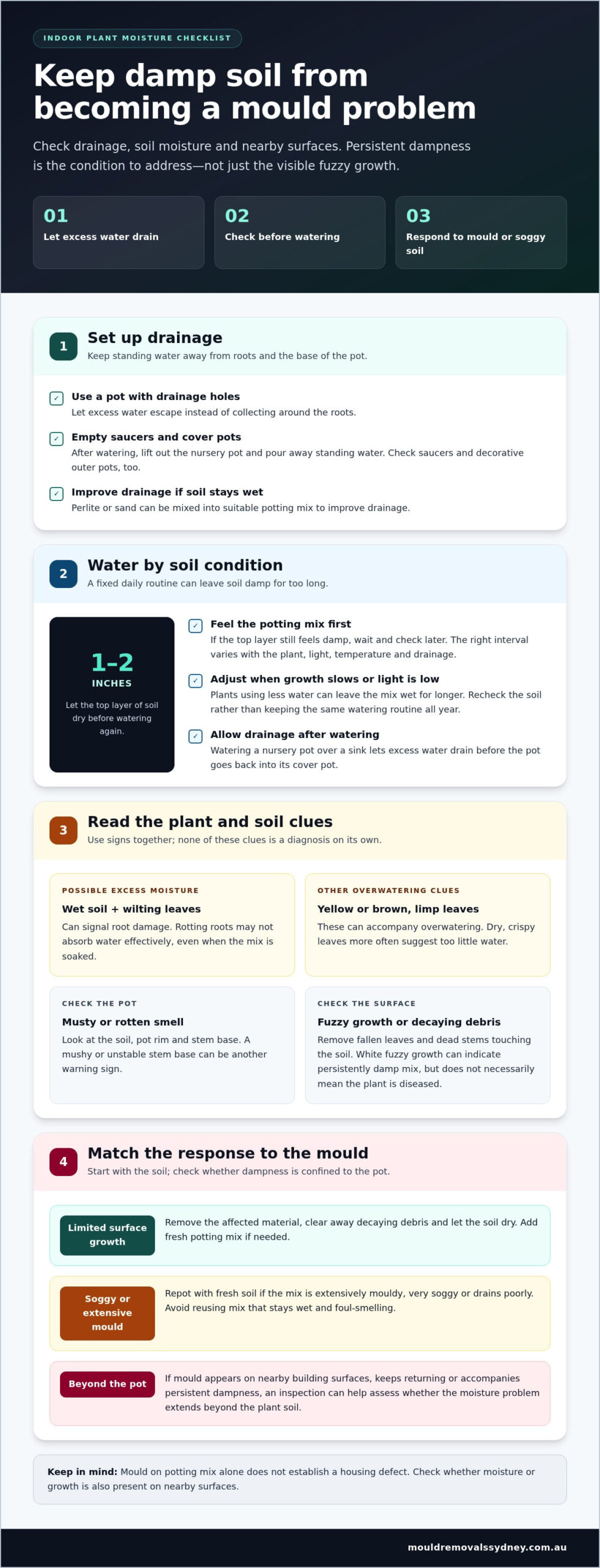
Yes, indoor plants can contribute to mould growth when overwatering leaves the soil and nearby surfaces persistently damp. Mould caused by indoor plants, particularly when overwatering keeps potting mix wet, is more likely where light and airflow are poor. According to the CDC, mould spores can grow when they land in excessively moist areas around plant pots.
It’s understandable to worry when you spot fuzzy growth on the soil or damp patches near a plant. White mould on potting mix is often harmless to people, but it can signal that the soil is staying too wet and may affect the plant over time.
This guide explains how to water according to soil moisture, adjust plant placement and airflow, and manage indoor humidity to reduce the risk. You’ll also learn what to do if mould appears and how to recognise when dampness may extend beyond the pot.
Key Takeaways
- Check the potting mix before watering, and let excess water drain instead of following a fixed schedule.
- Choose pots with drainage and empty saucers or decorative outer pots so water doesn’t collect around the roots.
- Adjust watering when plant growth slows or light levels are low, as damp soil can take longer to dry.
- Give plants room for air to circulate, and watch for condensation or lingering dampness around windows and walls.
- If mould extends beyond the pot or keeps returning, an inspection can help identify the moisture source and the appropriate next step.
Can indoor plants cause mould growth in my home?
Yes. Overwatering can keep potting soil damp, creating favourable conditions for fungi and mould spores to grow on the soil surface or nearby materials.
-
Inspect the Potting Soil
Check the soil surface and nearby plant material before watering again. White, fuzzy growth often consists of saprophytic fungi feeding on dead and decaying matter in potting mix. It can indicate persistently damp conditions, but does not necessarily mean the plant itself is diseased.
Look for fallen leaves, dead stems or other organic debris touching the soil. Carefully remove decaying material, since it can provide more food for fungi. Contaminated or degraded potting mix may also hold moisture unevenly. Note where the growth appears, then compare it with the soil’s dampness and the plant’s condition.
-
Check for Excess Moisture
Smell the soil and inspect the plant’s base for signs of excess moisture. A musty odour near the pot, fuzzy surface growth or soil that stays wet after watering can point to a moisture problem. Check whether the stem base feels mushy or unstable. Potting mix with a rotten smell is another warning sign.
Look at the leaves, too. Yellow or brown, limp leaves can accompany overwatering, while dry, crispy leaves more often suggest too little water. These signs are clues, not a diagnosis on their own. Check the soil and stem together before adding more water, and note whether the odour or growth extends beyond the pot.
-
Trace Mould to Damp Soil
Track when you water and how long the soil stays damp. Repeated watering before the mix has dried can leave the root area continually moist. Excess moisture encourages fungal growth on decaying matter, including material already in the potting mix. Spores can also settle on damp surfaces around the plant.
The U.S. Environmental Protection Agency explains that moisture problems can create conditions in which mould grows. The CDC says mould spores can grow when they land in excessively moist areas around plant pots. These points help explain why fuzzy soil growth may accompany persistent dampness. Check the soil, pot rim, saucer, and nearby surface to see whether moisture is confined to the pot.
-
Consider Repotting or Professional Help
Replace mouldy potting mix or repot the plant if the soil is extensively mouldy, very soggy or drains poorly. For limited surface growth, remove the affected material and let the soil dry before deciding whether fresh mix is needed. Avoid reusing mix that remains wet and foul-smelling.
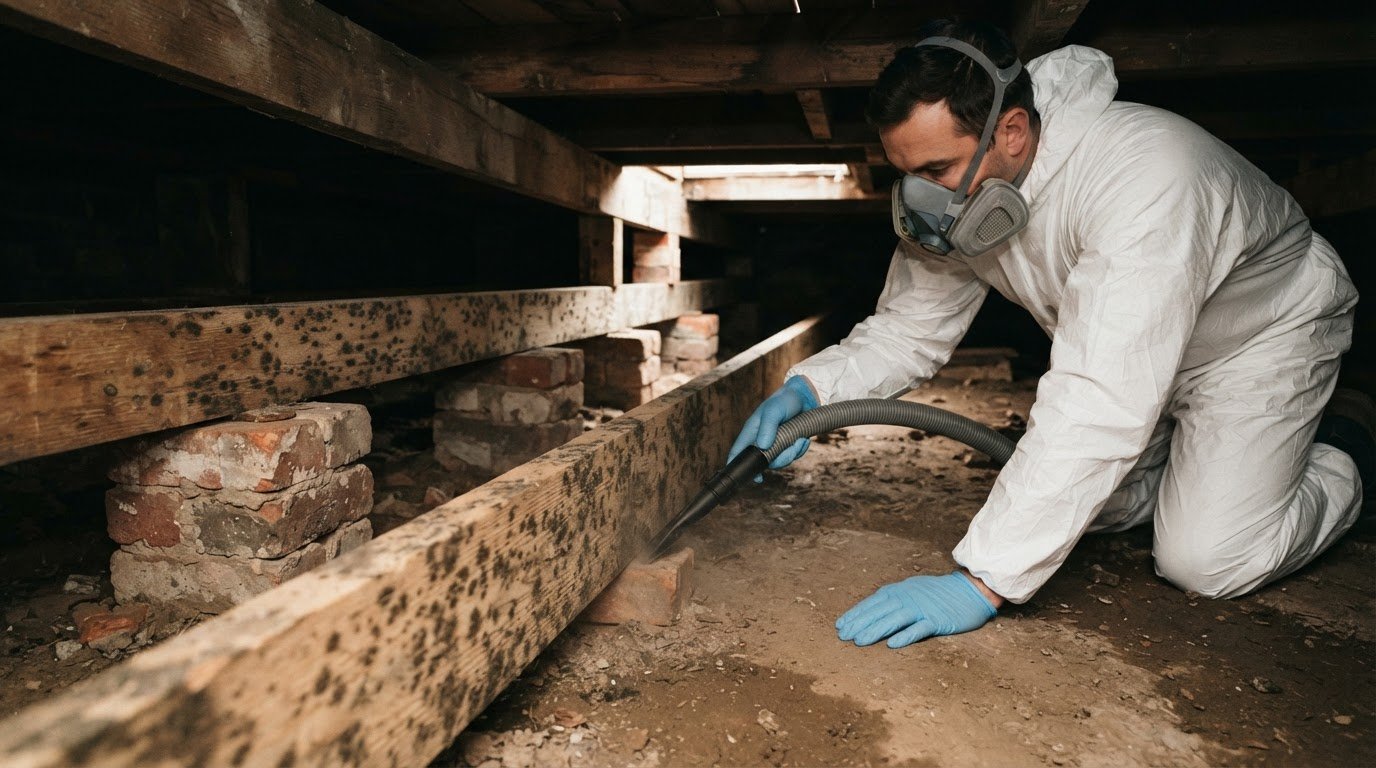
In Australian homes, focus on controlling moisture and addressing visible mould. Mould around a plant alone doesn’t establish a housing defect. Contact a mould remediation professional when growth appears beyond the pot, keeps returning or accompanies damp building surfaces. ABC Mould Cleaning Solutions’ Mould Inspection Services can help identify whether the issue is limited to plant soil or points to a wider moisture problem.
Is mould ever bad?
Yes. Poor drainage can leave roots standing in water, encouraging root rot and keeping potting mix persistently damp.
- Choose a pot that drains. Use a container with drainage holes so excess water can escape instead of collecting around the roots. If you place a nursery pot inside a decorative cover pot, lift it out after watering and empty any standing water. Check saucers and outer pots each time, since trapped water can keep the soil base wet even when its surface looks dry. If water has collected in the cover pot, pause before watering again.
- Check soil moisture before watering. Don’t follow a daily schedule. Feel the potting mix first, because the right interval changes with the plant, light, temperature and drainage. For many houseplants, let the top two inches of soil dry before watering again. If that layer still feels damp, wait and check later. This simple check helps prevent overwatering and gives roots more opportunity to get air between waterings.
- Watch for root rot and adjust the mix. Persistently wet soil can cause root rot and attract fungus gnats. Wilting leaves alongside wet soil can signal root damage: rotting roots can’t absorb water effectively, even when the mix is soaked. Improve drainage by mixing perlite or sand into suitable potting mix. Remove dead leaves and other plant debris from the surface, as decaying material can support mould growth.
- Act on soggy or mouldy soil. For limited surface growth, remove the affected material, let the soil dry, and add fresh potting mix. If the mix is extensively mouldy, very soggy, or drains poorly, repotting with fresh soil may be the simplest option. Water a plant in its nursery pot over a sink, then let excess water drain before returning it to its cover pot. If dampness or mould also affects surrounding building surfaces, a mould inspection can help assess whether the problem extends beyond the pot.
The University of Illinois Extension recommends checking houseplant soil moisture before watering, not following a daily schedule; for many plants, let the top one or two inches dry.
Overwatering during slow growth or in low light
Yes. In Australian homes, overwatering can keep potting mix damp and encourage mould around indoor plants. Adjust watering when growth slows, and consider room humidity as well as soil moisture.
-
Consider Growth and Light Conditions
Reduce watering when houseplants grow slowly, especially during short winter days or in lower-light spots. A plant using less water can leave its potting mix wet for longer after each watering. Check the soil before adding more, rather than following the same routine all year.
Consider whether the plant gets suitable light for its needs. Moving it to a brighter position may help reduce mould risk, as many mould types favour dark, damp conditions. Adjust its position gradually and avoid treating a slow-growing plant as if it still needs the watering routine it had during faster growth. Mould caused by overwatering indoor plants is more likely when growth slows and the soil stays damp.
-
Connect Overwatering to Mould
Track watering alongside how quickly the soil dries. If you water again before the previous moisture has gone, the potting mix can remain damp around the roots and on its surface. Persistent moisture supports fungal growth, particularly when dead plant matter is present. Mould spores can also grow in excessively moist areas around plant pots.
To reduce the risk, pause watering while the mix remains wet and remove dead leaves or other decaying material from the soil. Check the plant and pot again before watering. In an Australian home, mould caused by overwatering indoor plants may be limited to the pot, but dampness on nearby walls or other surfaces calls for checking beyond the plant.
-
Account for Indoor Humidity
Check the room’s humidity as well as the potting mix, since humid indoor air can make damp conditions harder to manage. Keep indoor humidity no higher than 50% all day to help prevent mould growth. If the room feels stuffy or moisture lingers around plants, improve ventilation and avoid adding water to already-wet soil.
Use a hygrometer to monitor humidity, then ventilate or use a dehumidifier when the reading rises above 50%. Keep the plant’s watering needs in view: reducing room humidity doesn’t mean the potting mix should dry out completely. Balance suitable plant care with attention to persistently damp air and soil.
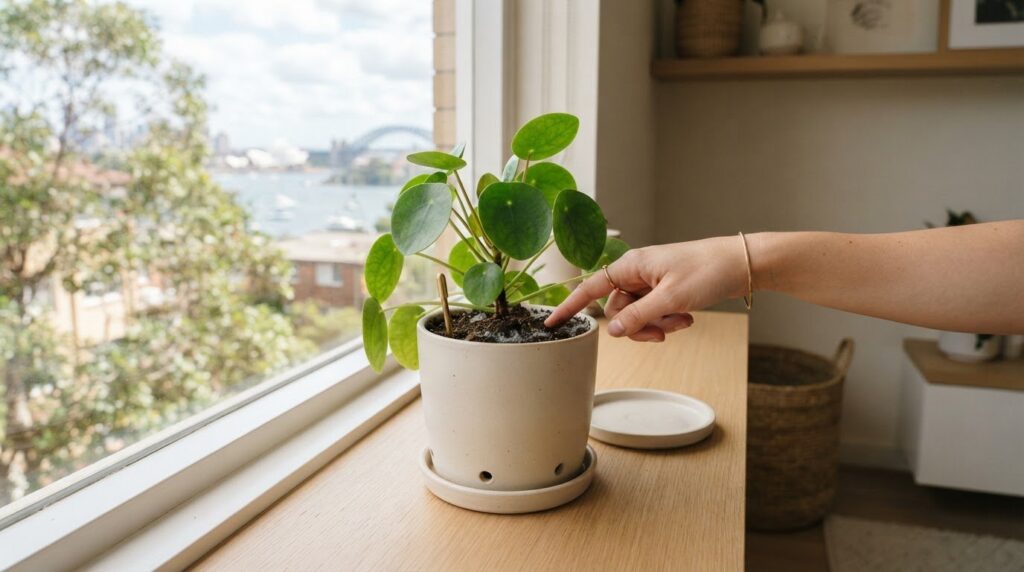
Airflow and plant placement near windows and exterior walls
Give indoor plants room to breathe. Poor air circulation can leave damp areas around leaves, pots, windows and exterior walls.
- Space pots apart. Move crowded houseplants so air can pass between their leaves and containers. A dense group on a windowsill can trap still, humid air, especially when foliage touches the glass or neighbouring leaves. Leave visible space around each pot, and keep leaves from resting against walls. Check the arrangement after watering, when damp foliage and soil can add moisture nearby.
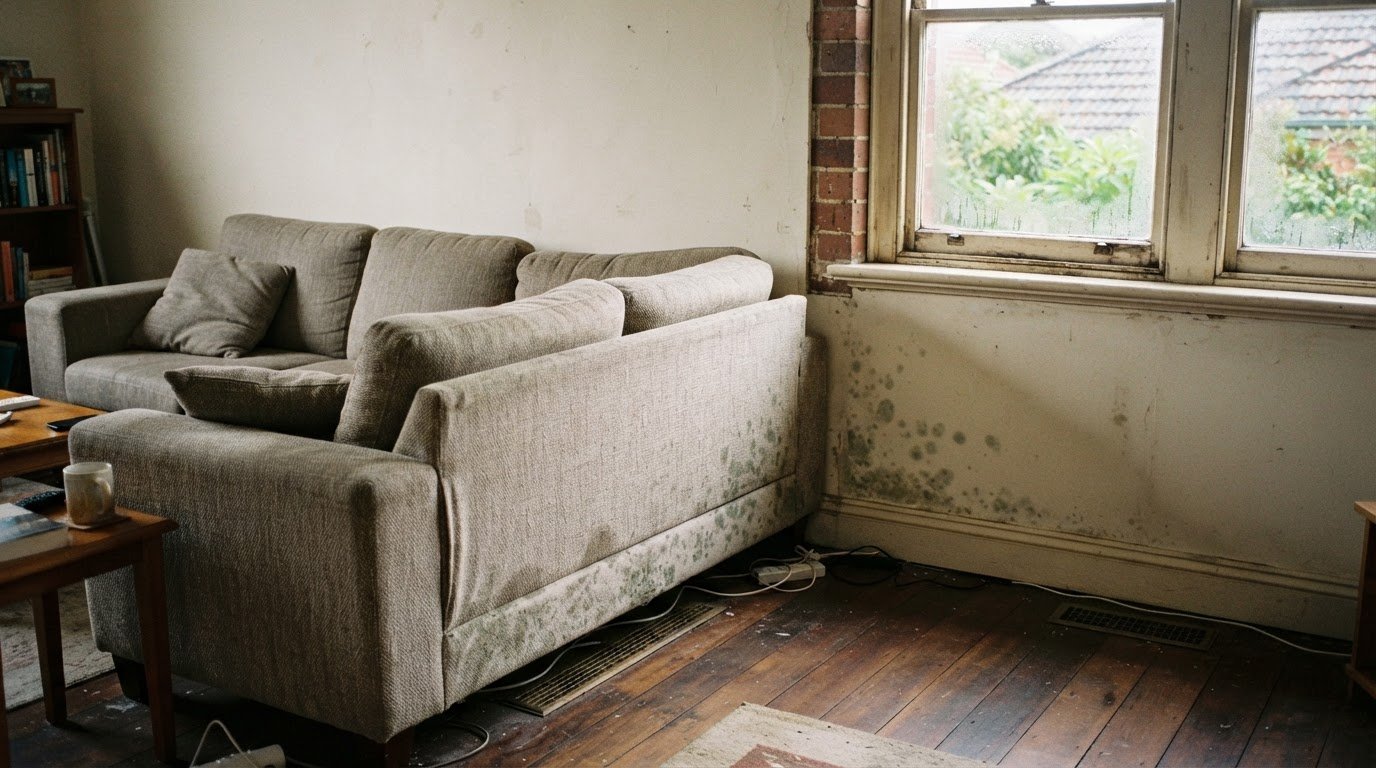
- Check the wall and window area. Look for condensation, damp marks or a musty smell behind plants beside windows and exterior walls. A pot pushed tightly into a corner can conceal changes to paint or the wall surface. Pull it forward to inspect the area, and keep the space clear enough to see and clean. If moisture appears on the window, wall or floor, dry it and address the source.
- Improve air circulation. Open a window when conditions allow, or use a fan to move air through a stuffy room. Aim for gentle movement around the plants rather than directing a strong stream at delicate leaves. A fan can help air circulate, but it won’t remove excess water from a pot or fix a leak. Keep checking soil moisture before watering.
- Move plants with grey mould. Place affected plants somewhere dry and bright, but out of direct sun. Keep them apart from healthy plants while you remove mouldy growth and dispose of it carefully. Don’t move a plant from a poorly ventilated corner to another cramped spot. Recheck nearby leaves and surfaces, since close contact and stagnant air can allow dampness to linger.
- Reassess the placement regularly. Check behind large pots and between clustered plants as part of routine plant care. If a room feels stuffy, try spacing plants further apart or improving ventilation with a fan or dehumidifier. Watch for recurring damp patches around the same window or exterior wall. Persistent moisture there may have a building-related source rather than coming only from plant watering.
Condensation and indoor humidity
Manage room humidity and condensation as well as watering. Both can keep surfaces damp and allow mould to develop.
- Measure indoor humidity. Use a hygrometer to check relative humidity in the room where plants sit. Aim for 30% to 50%, and keep indoor humidity below 60% where possible. In rooms with indoor plants, keep humidity below 50%; ventilate or use a dehumidifier when it rises above that level. These readings help distinguish a damp-air problem from wet soil in one pot.
- Dry condensation promptly. Wipe moisture from windows, walls and pipes when you see it. Condensation left on a windowsill behind a plant can keep nearby surfaces damp, even if the pot drains well. Reduce the moisture source, such as excess room humidity or limited ventilation. Recheck the surface after drying. If condensation returns, the underlying moisture conditions still need attention.
- Look beyond the plant pot. Inspect the window frame, wall and floor around each plant for damp patches or mould. A wet saucer points to trapped watering, while condensation across a window suggests humid room air. Note where moisture appears and whether it returns after you dry it. This comparison helps show whether the problem centres on a plant or affects a wider area.
- Ventilate when humidity rises. Open windows when conditions allow, or use a dehumidifier if a room reading exceeds 50%. Keep air moving around plants rather than letting foliage crowd a damp corner. Dry spills on containers, floors and nearby surfaces immediately. These steps reduce lingering moisture, but don’t compensate for continued overwatering or a leak that keeps the area wet.
- Respond to recurring dampness. If condensation returns on the same wall or window despite drying and ventilation, investigate the moisture source rather than repeatedly wiping the surface. Check whether plants are pressed against the affected area and move them forward to inspect behind them. If mould extends beyond pots or keeps developing on building surfaces, arrange a mould inspection to assess the affected area and identify the next step.
ABC Mould Cleaning Solutions: Air Purification & Scrubbing
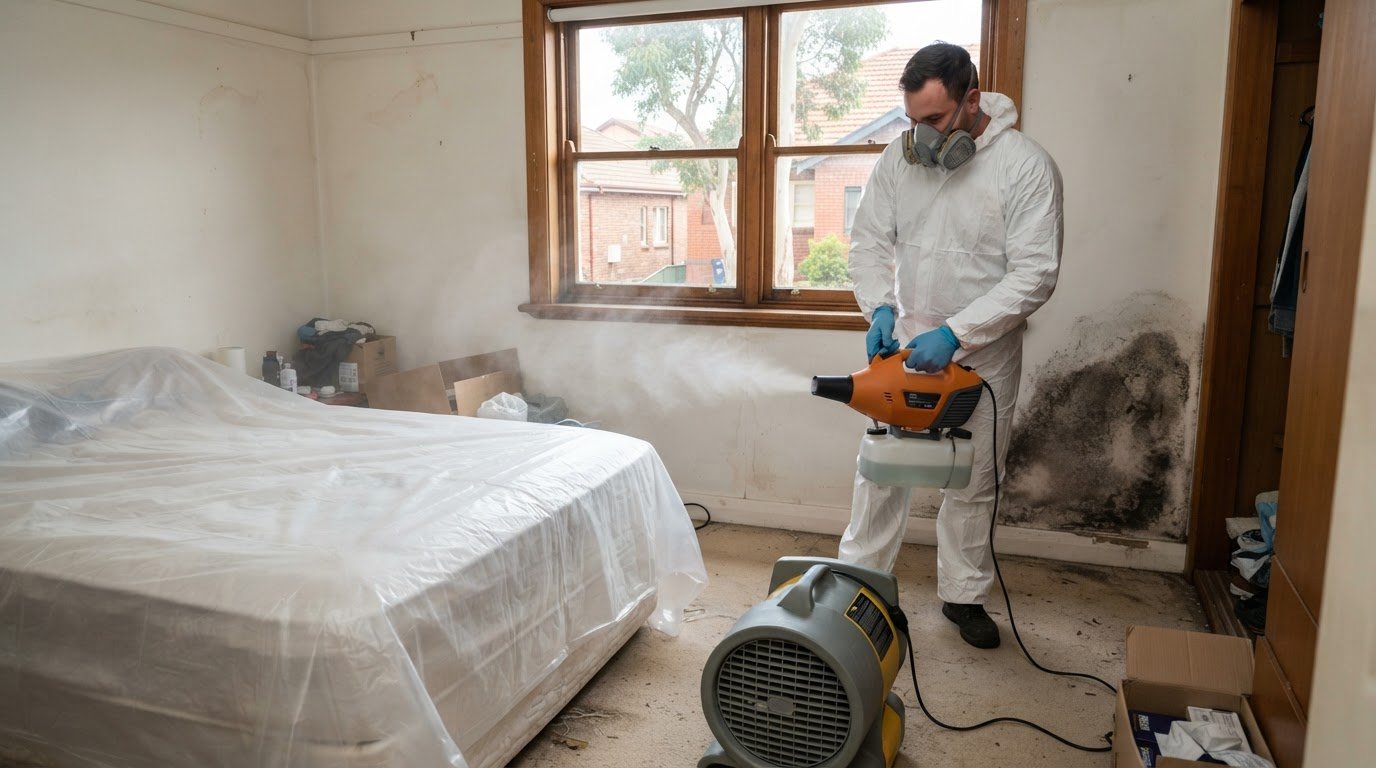
ABC Mould Cleaning Solutions can help when mould extends beyond a plant pot or keeps returning after you address excess moisture. Its Air Purification & Scrubbing and Mould Remediation services address mould on surfaces and airborne spores, while Mould Inspection Services can help identify affected areas and moisture concerns. These services are useful when mould appears on walls, ceilings or other parts of your home, rather than only on potting mix.
For mould linked to indoor plants, continue adjusting watering and airflow to reduce the chance of recurring dampness. If mould is spreading around your home or you’re unsure where it’s coming from, contact ABC Mould Cleaning Solutions or visit mouldremovalssydney.com.au.
Take the Next Step Towards a Drier, Healthier Home
Good plant care can reduce moisture around pots, but mould that spreads onto building surfaces needs attention beyond a change in watering habits. If you’re concerned about mould caused by indoor plants overwatering, check whether growth returns or appears away from the plants. That distinction can help you decide what to do next.
ABC Mould Cleaning Solutions offers Mould Inspection Services to assess affected areas, Mould Remediation to address mould growth, and Air Purification & Scrubbing as part of its response. These services are relevant when the issue extends beyond potting mix or persists after you’ve addressed damp conditions.
Share what you’ve noticed and take a practical next step. Contact ABC Mould Cleaning Solutions to discuss the mould concerns in your home. With the right attention to the moisture source and affected areas, you can move forward with greater clarity and confidence.
Frequently Asked Questions
Can Houseplants Contribute to Mold Growth?
Yes, houseplants can contribute to mould when damp soil or decaying material creates conditions for fungal growth. The plant isn’t necessarily the only moisture source. For example, if mould appears on a wall behind several pots, compare the area with a clear section of the same wall. Growth confined to one pot points more towards the plant’s growing conditions; broader damp patches suggest checking the room as well.
Do I have white mould or a mealybug infestation?
White mould usually forms a fine, fuzzy layer across the potting mix, while mealybugs appear as small, cottony clusters attached to leaves, stems or leaf joints. Look closely at where the white material sits, using a torch if needed. If it’s attached to the plant rather than spread across soil, inspect the foliage and stems for insects before treating it as a soil mould problem.
How do I know if my indoor plants are contributing to high humidity or mould?
Compare conditions near the plants with another part of the room. Check for condensation, damp surfaces or musty odours around clustered pots, and note whether several plants or just one are affected. A hygrometer can show whether room humidity is elevated, while persistently wet soil points to a pot-level issue. If dampness appears well away from the plants, investigate other moisture sources too.
How do I remove mould?
For mould limited to plant soil, wear a mask, remove the visible growth with a clean spoon, and put the material in an outdoor bin. Clean the spoon thoroughly afterwards. If mould covers building surfaces or keeps returning, ABC Mould Cleaning Solutions offers Mould Remediation. Its Goldmorr System is applied only by Goldmorr-approved, trained master technicians; all treatments are safe for pets, people and the environment. Goldmorr has supplied solutions since 1998. Mycotoxin testing referrals are optional. We Will Beat Any Written Quote By 10%.
How do I stop mould coming back?
Address the conditions that allowed mould to return, not just the visible patch. Keep a simple note of when you water, how the soil feels afterwards and whether nearby surfaces become damp. If growth reappears after you’ve adjusted plant care, check for recurring condensation or moisture beyond the pot. Continued growth on building materials may need inspection to identify the source before further cleaning.
Is Moldy Soil Bad for Houseplants?
A light coating of white mould on soil is often harmless to people, but extensive growth can compete with a plant for nutrients and may hinder growth over time. More concerning signs include persistent sogginess, a foul odour or a plant that wilts while its soil remains wet. These clues can point to unhealthy roots. Check the plant’s overall condition, not just the soil’s appearance.
Why is my plant’s soil mouldy?
Soil often becomes mouldy when frequent watering keeps it damp and fungi can feed on dead or decaying plant material. A pot in a cool spot may dry more slowly, so the same watering routine can leave the mix wet for longer. Fallen leaves on the soil add organic matter. Check both the pot’s location and watering pattern to identify what’s sustaining the growth.
What types of mould grow on indoor plant soil?
White, fuzzy growth on potting mix is commonly saprophytic fungi, which feed on dead and decaying plant matter. Grey mould can also affect plants, including older plant parts, and may leave them wrinkled or collapsed. Colour alone can’t reliably identify mould or establish its source. Note whether growth is on the soil or living plant tissue, and isolate a plant showing grey mould.