
Wiping puddles off your windowsills every morning isn’t just a frustrating chore; it’s a clear signal that your property is losing the battle against moisture. You’re likely asking yourself, “How do I reduce condensation before it turns into a health hazard?” With approximately 1 in 3 Australian homes currently experiencing dampness and mould issues, you aren’t alone in this struggle. The musty odours in your bedrooms and the fear of black mould affecting your family’s health are valid concerns that require immediate, professional attention.
We understand the stress of watching your property value being threatened by persistent damp air and high energy bills. This guide provides the definitive roadmap to dry, fresh-smelling indoor air by combining practical daily habits with specialized structural solutions. You’ll discover how to manage moisture effectively, from understanding the latest NCC 2025 ventilation requirements to implementing permanent subfloor ventilation systems. We’ll show you how to stop the cycle of regrowth and protect your property for the long term.
Key Takeaways
- Understand how Sydney’s unique humidity levels and “thermal bridging” create the hidden moisture traps responsible for damp walls and wet windows.
- Master immediate, cost-effective habits like the “Stosslüften” method to answer the urgent question, “How do I reduce condensation?” without spiking your energy bills.
- Evaluate the long-term “set and forget” benefits of professional subfloor ventilation systems compared to the high maintenance and running costs of portable dehumidifiers.
- Learn why the biodegradable Goldmorr fogging process is the gold standard for eliminating airborne spores when surface cleaning is no longer enough.
- Discover how to implement a permanent hybrid strategy that combines daily moisture management with structural solutions to protect your property value and family health.
Understanding Condensation in Sydney: Why Your Home Feels Damp
Condensation is more than just a morning nuisance; it’s a physical transformation where invisible water vapour in your air hits a cold surface and turns back into liquid water. In the humid climate of Sydney, this process happens almost constantly during the cooler months. You’ve likely seen the evidence on your windows or felt the dampness on your walls. Many homeowners ask, “How do I reduce condensation?” only after they notice the tell-tale signs of damage. If left unmanaged, this moisture creates the perfect environment for the emergence of black mould, which can compromise both your property’s structure and your family’s respiratory health.
Sydney’s “danger zones” are predictable. You’ll find condensation pooling on window glass, settling in the stagnant corners of external walls, or hiding behind heavy wardrobes where airflow is restricted. Following the record-breaking 2,500mm of annual rainfall Sydney experienced in 2022, many building materials remain saturated. This historical moisture load makes modern management a necessity rather than an option. If your home feels perpetually damp, you’re likely dealing with a management failure of the “Dew Point.”
The Role of Relative Humidity and Temperature
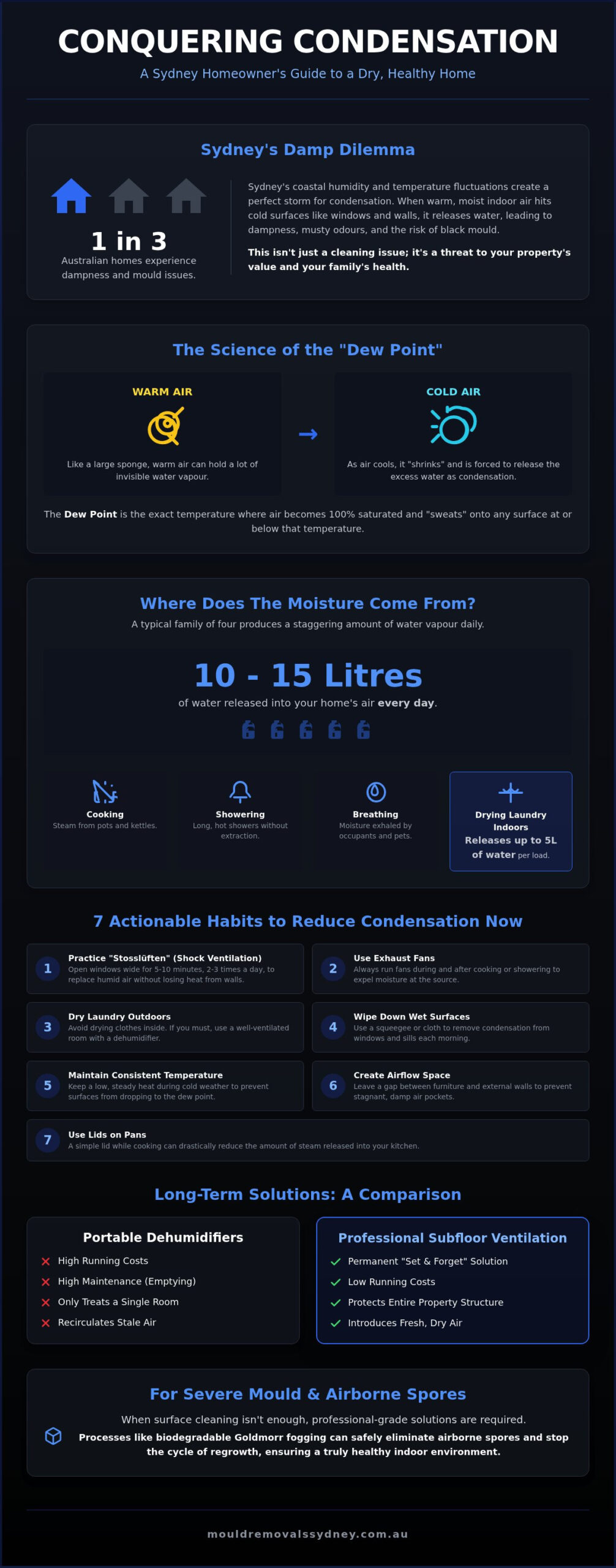
Air acts like a sponge. Warm air is “larger” and can hold a significant amount of water vapour. When that warm air cools down, it shrinks and loses its capacity to hold moisture. The Science of Condensation revolves around the “Dew Point.” This is the specific temperature where air becomes 100% saturated and can no longer hold its water. On a typical 20-degree Sydney morning with high humidity, the Dew Point might be 15 degrees; any surface at or below that temperature will immediately begin to “sweat.”
Why Sydney Homes are Particularly Vulnerable
Sydney properties face a unique set of challenges. Our coastal location means the air is often laden with salt and high humidity, which can degrade building materials over time. Many older Sydney builds were constructed before modern insulation standards or “Passive House” principles were common. These homes lack thermal breaks, meaning the cold from the outside travels directly through the wall frame to the interior surface. Without these modern barriers, asking “How do I reduce condensation?” becomes a question of structural intervention. When your home’s “envelope” isn’t airtight or properly insulated, the temperature difference between inside and outside remains too high, leading to constant moisture fallout. This vulnerability is why 1 in 3 Australian homes now experience dampness and mould issues.
The Science of the Dew Point: Identifying Your Moisture Culprits
Identifying the source of your moisture is the first step toward a dry home. While you might wonder, “How do I reduce condensation?” the answer often lies in the staggering volume of water vapour generated by daily life. A typical family of four releases approximately 10 to 15 litres of water into the indoor air every single day. This isn’t just from showering or boiling a kettle; even basic breathing contributes to the total. When this vapour is trapped inside, it inevitably seeks out the coldest surfaces to settle on, leading to the problems discussed in the previous section.
Common Household Moisture Sources
Daily routines are often the biggest contributors to high humidity. Cooking without a lid or taking long, hot showers without adequate extraction can flood a room with steam in minutes. During Sydney’s frequent wet spells, many residents resort to drying laundry on racks indoors. This practice is a primary driver of dampness, as a single load of washing can release up to five litres of water as it dries. Indoor plants and large aquariums also play a role, creating a “tropical” microclimate that keeps your relative humidity levels dangerously high. Understanding the relationship between mould and moisture is essential for maintaining a healthy environment.
Thermal Bridging and Cold Spots
Thermal bridging occurs when a specific material, such as a metal window frame or a concrete lintel, conducts cold from the outside more efficiently than the rest of the wall. These “cold spots” act like magnets, pulling moisture out of the air. You can often identify these areas using a simple infrared thermometer; if one spot is significantly cooler than the surrounding wall, condensation will form there first. This phenomenon explains the “cupboard effect.” In dark, unventilated wardrobes, cold external walls meet stagnant air, causing mould to grow on organic materials like leather shoes and cotton clothing.
Hidden moisture sources also deserve your attention. Ground moisture frequently rises through floorboards in homes with poor subfloor ventilation, saturating carpets from the bottom up. Additionally, if your property has suffered from previous leaks, inadequate water damage repair can leave structural timbers damp for years. This latent moisture keeps indoor humidity elevated even when you think the problem is solved. If you suspect hidden dampness is affecting your air quality, a professional mould inspection can pinpoint exactly where these moisture culprits are hiding.
7 Actionable Habits to Reduce Condensation Immediately
Managing the moisture you produce daily is the fastest way to see results. If you’re asking, “How do I reduce condensation?” start with your daily routine. Small changes in how you cook, clean, and breathe inside your home can drastically lower the humidity levels that lead to mould. The key to mold control is moisture control, and these seven habits provide an immediate defense against dampness.
- Adopt the “Stosslüften” Method: Instead of leaving a window slightly ajar all day, use the German “shock ventilation” technique. Open several windows wide for five minutes to create a total air exchange without cooling down the walls.
- Implement the “Run-On” Rule: Don’t switch off your bathroom exhaust fan the moment you step out of the shower. Leave it running for at least 15 to 20 minutes to ensure all steam is physically removed from the room.
- Cook with Lids On: This simple habit reduces kitchen steam by up to 80%. It keeps moisture in the pot rather than letting it settle on your ceiling and windows.
- Create a 5cm Furniture Gap: Air must circulate to prevent stagnant pockets. Ensure all heavy furniture is at least 5cm away from external walls to stop the “cupboard effect” mentioned earlier.
- Prioritise Outdoor Drying: Never dry wet laundry on radiators or indoor racks. If you must use a dryer, ensure it’s a vented model that pipes moist air directly outside.
- Manage Indoor Plants: Grouping plants together creates a humid microclimate. Spread them out or move them to well-ventilated areas during winter.
- Wipe Down Surfaces: Use a squeegee on shower screens and windowsills every morning. Removing the liquid water prevents it from evaporating back into the air later in the day.
Optimising Your Ventilation Strategy
Opening windows isn’t always the answer in Sydney. If the outdoor humidity is higher than the indoor level, you’re actually inviting more moisture in. Check your local weather app before opening up. While trickle vents and window locks allow for secure, constant airflow, don’t rely on retail “moisture absorber” tubs. These are merely temporary band-aids that only work in tiny, enclosed spaces like drawers.
Heating and Insulation Tweaks
Your heating strategy affects the dew point. Consistent, low-level heating is far more effective than short “bursts” of high heat. Keeping your walls warm prevents air from reaching its saturation point. Be extremely cautious with unflued gas heaters in modern, airtight Sydney apartments. These units release massive amounts of water vapour directly into your living space. Finally, while draught excluders save energy, they can worsen condensation by trapping moist air if you don’t balance them with a proper ventilation plan.
Structural Solutions: Dehumidifiers vs. Subfloor Ventilation
Daily habits provide an excellent first line of defence, but they can’t always overcome structural moisture issues. If you’ve addressed your cooking and cleaning routines but still find yourself asking, “How do I reduce condensation?” it’s time to look at mechanical solutions. While retail products offer a quick fix, professional structural interventions provide a permanent “set and forget” result that protects your property’s long term value.
Mechanical Ventilation and Subfloor Systems
For modern, airtight homes, positive pressure ventilation or Heat Recovery Ventilation (HRV) systems are becoming the 2026 industry standard. These systems “push” stagnant, damp air out of the building envelope through natural leakage points or dedicated vents. This ensures your indoor air is constantly refreshed without the significant heat loss associated with leaving windows open during a cold snap.
The Pros and Cons of Dehumidifiers
Portable dehumidifiers are a popular choice for targeted moisture control, but they come with ongoing costs. Compressor models are effective in Sydney’s humid summers, while desiccant models perform better during our cooler winters. However, these units require significant electricity to run and constant manual emptying of water tanks. A standard residential dehumidifier can extract between 10 and 20 litres of water from your indoor air every 24 hours. You must also clean the filters regularly. Neglecting maintenance can cause the unit to circulate mould spores throughout your home, worsening the very problem you’re trying to solve.
When structural damp is already present, moisture will continue to overwhelm any portable unit you buy. Persistent dampness in your walls or subfloor requires specialized mould removal Sydney services to ensure the environment is safe before installing permanent ventilation. If you’re tired of emptying water tanks every day and want a professional assessment of your home’s airflow, you can book a comprehensive moisture inspection to identify the best mechanical solution for your property.
When to Call ABC Mould Cleaning Solutions
Habits and structural changes are your first line of defence, but they can’t always reverse existing contamination. If you’ve reached the point where you’re constantly asking, “How do I reduce condensation?” but the musty smell persists, the issue has likely moved into the air you breathe. Visible mould on your walls or ceilings is often just the tip of the iceberg. When condensation is persistent, it creates a deep-seated moisture reservoir that retail cleaners simply cannot reach. Surface cleaning with bleach or supermarket sprays is only 10% of the solution. These products often hide the stain while leaving the root cause and the airborne spores untouched to continue their growth cycle.
Our comprehensive process follows a strict protocol of Inspection, Removal, and Prevention. We don’t just wipe away the problem; we identify why it’s happening and implement a permanent fix. If you notice persistent respiratory issues, damp-feeling bedsheets, or recurring dark spots in your “danger zones,” it’s time to seek professional intervention. Waiting only increases the risk of structural damage and escalating remediation costs.
Professional Air Purification and Scrubbing
After a prolonged damp spell, your indoor air quality can drop to dangerous levels. Our IICRC-trained technicians use professional HEPA air scrubbing to remove fine particulates and mould spores that are too small for the human eye to see. This isn’t just about cleaning; it’s about restoring the environmental safety of your property. We conduct a detailed moisture audit to find hidden leaks or saturated building materials that habits alone won’t fix. This systematic, evidence-based approach ensures that once the moisture is managed, the air remains fresh and safe for all occupants.
The Goldmorr Advantage for Sydney Homeowners
ABC Mould Cleaning Solutions utilizes the proprietary Goldmorr System to tackle contamination at its source. Our biodegradable fogging process is specifically designed to eliminate airborne spores without the need for aggressive, toxic chemicals. This methodology is safe for your family, your pets, and the surrounding environment. We follow a “No-Rip-Out” philosophy, which means we prioritize saving your building materials rather than resorting to unnecessary and expensive demolition. This pragmatic, results-driven method restores your home quickly and efficiently, providing the emotional relief you need.
Don’t let a moisture problem become a permanent health risk or a threat to your property value. If condensation has already led to visible growth or persistent odours, professional intervention is the only way to ensure a fresh start. Book your professional mould inspection today and take the final step toward a dry, healthy home. Our specialists are ready to provide the competent authority and specialized expertise your property deserves.
Secure Your Home Against Persistent Moisture
You now have the technical knowledge and practical tools to answer the question, “How do I reduce condensation?” by balancing smart daily habits with long-term structural improvements. By implementing rapid air exchange and managing your home’s dew point, you can protect your property from the escalating risks of dampness and mould. However, when moisture is rising from the ground or spores have already taken hold, amateur cleaning isn’t enough to restore safety.
ABC Mould Cleaning Solutions provides a permanent path to a dry, healthy home. As specialized Sydney subfloor ventilation experts, we address the root cause of moisture before it ever enters your living space. We utilize the world-class Goldmorr System to eliminate airborne contamination using 100% biodegradable and family-safe treatments that prioritize your well-being. Don’t wait for the next wet spell to threaten your property’s value or your family’s respiratory health.
Get a Professional Moisture Audit & Quote from ABC Mould Cleaning today to secure your property and your peace of mind. You deserve to breathe fresh, dry air every day.
Frequently Asked Questions
Does opening windows actually reduce condensation?
Yes, opening windows is effective, provided the outdoor humidity is lower than the indoor level. This process replaces moisture-laden air with drier air from outside, which lowers the dew point inside your rooms. Use the “shock ventilation” method by opening windows wide for five minutes rather than leaving them ajar all day. This ensures a total air exchange without allowing your walls to cool down significantly.
What is the ideal indoor humidity level to prevent mould?
You should aim to keep your indoor relative humidity between 30% and 50%. Once levels consistently exceed 60%, the risk of mould growth increases dramatically. Use a digital hygrometer to monitor your rooms daily. If you find your levels are regularly high despite your best efforts, it is a clear sign that your property requires a more permanent structural ventilation solution.
Why do I have condensation on my windows even with the heating on?
Heating your home increases the air’s capacity to hold moisture, but it doesn’t remove the water vapour itself. When this warm, saturated air hits the cold surface of a window pane, it reaches its dew point and turns into liquid. To solve this, you must combine consistent low-level heating with adequate ventilation to physically move the moist air out of the building envelope.
Can a dehumidifier stop mould from growing forever?
A dehumidifier is a reactive tool rather than a permanent solution. While it extracts litres of water from the air, it only works in the immediate vicinity of the unit and requires constant power and maintenance. It cannot address the root causes of moisture, such as rising damp or poor subfloor airflow. For a long-term result, you need structural interventions like mechanical subfloor ventilation.
Are some types of Sydney houses more prone to condensation than others?
Older double-brick homes and properties built on sandstone or clay foundations are at much higher risk. These structures often lack modern thermal breaks and adequate subfloor clearance, allowing moisture to migrate easily into living spaces. Sydney’s coastal humidity exacerbates these issues. If you live in an older build, asking “How do I reduce condensation?” usually leads back to addressing the lack of modern insulation and airflow.
How do I know if the moisture is condensation or a rising damp issue?
Condensation typically forms on cold surfaces like windows or in the upper corners of walls where air is stagnant. Rising damp, however, starts at the ground level and often leaves visible “tide marks” on skirting boards or lower masonry. If you’re asking “How do I reduce condensation?” but the dampness is concentrated near the floor, you are likely dealing with a subfloor moisture problem that requires professional inspection.
Will subfloor ventilation help with condensation in my upstairs bedrooms?
Yes, subfloor ventilation reduces the total “moisture load” of your entire home. Humidity naturally rises through floorboards and internal wall cavities. By keeping the foundations of your property dry, you significantly reduce the amount of water vapour that can migrate to the upper floors. This creates a drier baseline for the whole building, making it much easier to manage condensation in upstairs bedrooms and bathrooms.
Is it safe to sleep in a room with heavy window condensation?
Sleeping in a high-humidity environment is not ideal for your health. Persistent condensation quickly leads to the growth of black mould, which releases spores that can trigger asthma, allergies, and other respiratory distress. If you wake up to wet windows every morning, the air you are breathing is likely over-saturated. You should take immediate action to dry the air and protect your long-term well-being.