Is your first instinct to throw away a mouldy heirloom or an expensive leather sofa? Most property owners assume that once spores take hold, an item is a total loss, but that isn’t always the case. Restoring Items Affected by Mould is a precise, scientific process of decontamination rather than a simple cleaning task. It’s natural to feel overwhelmed by the sight of grey fuzz on your possessions, especially when you’re worried about the health risks of spore exposure or the cost of replacement.
We understand the stress of potentially losing sentimental or high-value items to environmental damage. You’ll learn how to identify which materials are truly salvageable and how professional remediation techniques, such as the Goldmorr System and air scrubbing, can return your belongings to a safe condition. This guide provides a clear roadmap for professional restoration, ensuring your items meet the AS-IICRC S520:2025 standard so you can bring them back into your home with total confidence.
Key Takeaways
- Understand why mould damage is more than a surface issue and how its root system, known as hyphae, penetrates deep into your belongings.
- Identify which possessions are salvageable by categorising them into non-porous, semi-porous, and porous materials.
- Discover the scientific approach to Restoring Items Affected by Mould, including professional damage categorisation and strict cross-contamination protocols.
- Learn the immediate steps you must take to stop moisture sources and isolate affected items to prevent further damage.
- Find out how advanced technologies like the Goldmorr System and air scrubbing ensure your restored items remain safe and spore-free.
Why Mould Damage to Belongings is More Than Skin Deep
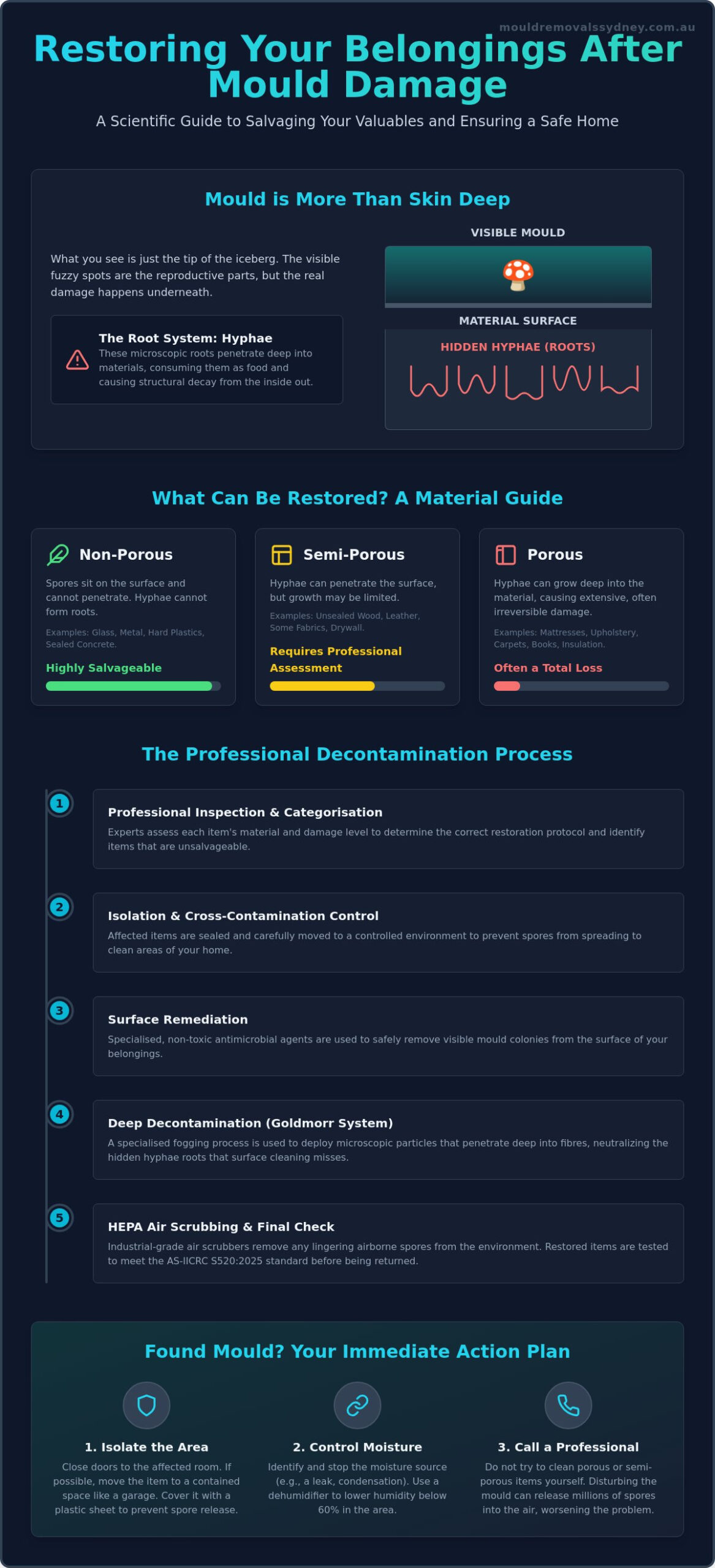
When you spot a fuzzy patch on a leather jacket or the back of a sofa, you’re only seeing the reproductive part of the organism. Think of it as the flower of a weed. Beneath the surface, the root system, known as hyphae, is already weaving through the fibres of your possessions. This biological reality makes Restoring Items Affected by Mould a complex task that demands a scientific approach. If you only clean the surface, you leave the microscopic roots behind to continue their destruction from the inside out.
Surface contamination occurs when spores land on non-porous materials like metal or glass. These are usually easy to save. However, deep-seated infestation happens in porous items like mattresses, curtains, or leather goods, where the hyphae actually consume the material as food. For those looking to replace damaged window treatments with durable alternatives, QLD Shade offers a range of high-quality indoor and outdoor solutions. Without professional intervention, these items will eventually suffer structural failure and permanent staining. A professional approach to Restoring Items Affected by Mould ensures that these invisible threats are neutralised before they rot the material entirely.
Airborne spores are the primary vehicle for this spread. These microscopic particles act like seeds, floating through your home and settling on every available surface. Even in rooms that seem dry, these spores wait for a slight increase in moisture to trigger secondary growth. For a comprehensive overview of indoor mould and how it behaves, it’s clear that one infested item can quickly compromise your entire living environment. Ignoring a single mouldy armchair can lead to a whole-house infestation within days because a single colony can release millions of spores into your breathing zone.
The Danger of Mycotoxins and Airborne Spores
Mycotoxins are the invisible chemical byproducts of certain fungi. These toxins remain on your belongings long after you’ve scrubbed away the visible spots. Keeping improperly restored items in your home poses significant health risks; respiratory issues, fatigue, and skin irritation are common reactions to prolonged exposure. This is particularly true for certain toxic strains, so understanding the risks of black mould is essential for every property owner. Professional air scrubbing is often required to remove these toxins from the environment completely.
Sydney’s Humidity: The Silent Catalyst
Sydney’s coastal climate presents a unique challenge for residents. High humidity levels often exceed 60%, which is the threshold where mould begins to thrive. Poor ventilation in Sydney homes often traps this moist air behind wardrobes and under beds, creating perfect breeding grounds for fungal growth. Professional assessment is vital in the NSW climate to ensure your indoor air quality remains safe. Specialists can identify moisture pockets that DIY methods simply miss, preventing a recurring cycle of damage to your valuables.
The Science of Restoring Mould-Infested Items: The Professional Approach
Professional remediation isn’t just a cleaning service; it’s a technical decontamination process. Restoring Items Affected by Mould requires a systematic, evidence-based approach to ensure that every spore is neutralised. Simply wiping away visible spots is an amateur mistake that leads to recurring growth and ongoing health risks. To achieve a safe result, we follow a rigorous five-step protocol designed to protect both your belongings and your indoor air quality.
- Step 1: Professional Inspection. Specialists categorise every item based on damage severity and material type. This determines which items are candidates for restoration and which must be discarded.
- Step 2: Isolation. We immediately seal affected items to prevent cross-contamination. Moving a mouldy chair through a clean hallway without proper containment can spread millions of spores into unaffected areas.
- Step 3: Surface Remediation. We apply specialised, non-toxic antimicrobial agents to remove visible colonies. This follows the principles of safe mould cleanup to ensure no harsh residues are left behind.
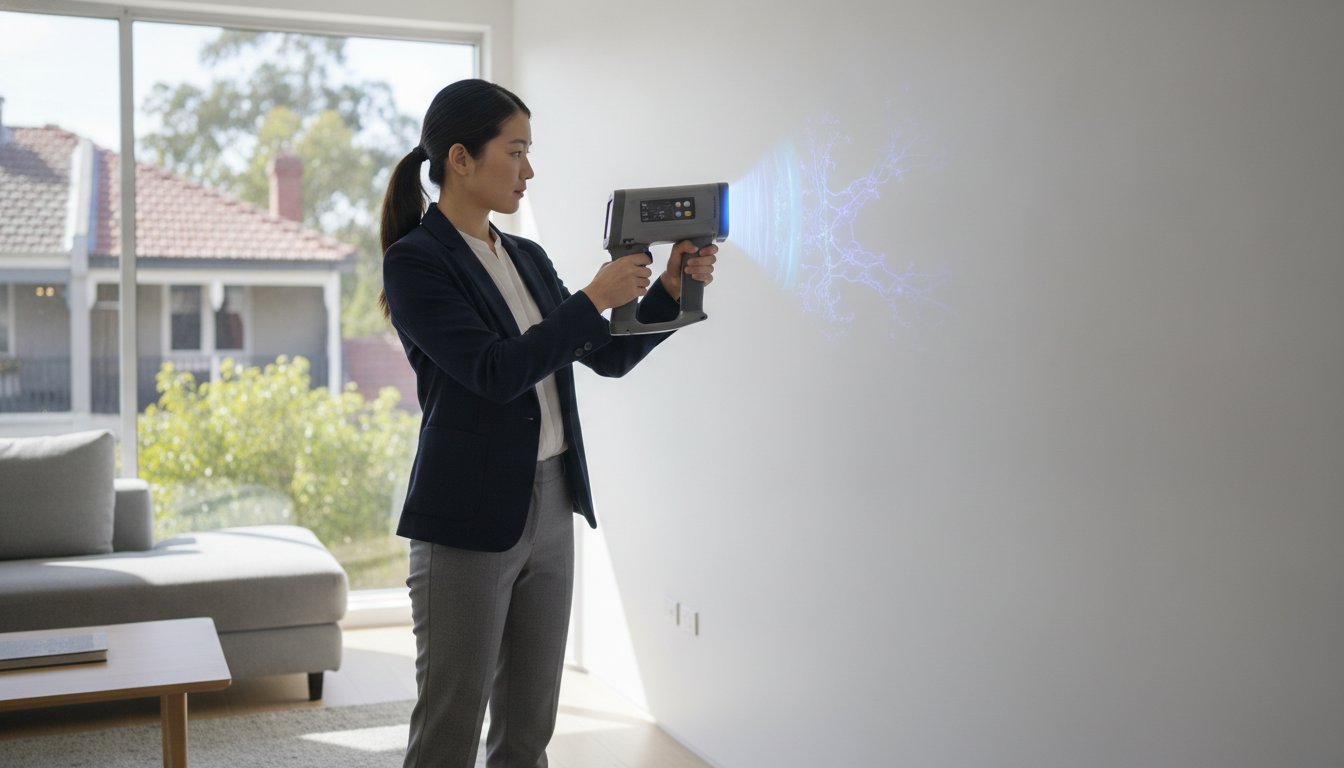
- Step 4: Deep Decontamination. Using the Goldmorr System, we deploy a fogging process that reaches deep into the structural fibres of your goods.
- Step 5: HEPA Air Scrubbing. We use industrial-grade equipment to pull lingering airborne spores out of the environment, ensuring the room stays clean after the items are returned.
If you’re concerned about the state of your valuables, our mould inspection services can provide a definitive assessment of what is salvageable.
What is the Goldmorr System?
ABC Mould Cleaning Solutions utilises the Goldmorr System as our primary unique methodology. It’s a biodegradable fogging process that targets spores at a microscopic level. Traditional wiping only touches what is visible, but this fog travels into the tiniest crevices and upholstery folds where mould hides. The formula is non-toxic and biodegradable, making it completely safe for household items, including furniture and delicate fabrics. It’s a fast-paced, effective solution that avoids the need for aggressive chemicals.
The Role of Air Purification and Scrubbing
You cannot effectively complete the process of Restoring Items Affected by Mould without addressing the air they sit in. If you clean a sofa but leave the air full of spores, the item will be re-colonised within hours. Our HEPA air scrubbers are designed to capture microscopic particles as small as 0.3 microns, which includes even the tiniest fungal fragments. This specialized air purification and scrubbing process removes the invisible threats that cause respiratory irritation. Air scrubbing creates a ‘clean room’ environment for restored goods, ensuring they remain in a pristine, safe state for your family.
Porous vs. Non-Porous: What Can Actually Be Restored?
Material permeability determines whether your belongings can be saved or if they belong in a skip. When we assess a property, we categorise possessions into three distinct groups based on how deeply spores can penetrate. This scientific classification is the foundation of Restoring Items Affected by Mould safely and effectively. Understanding these categories helps manage expectations and prioritises the restoration of high-value assets.
- Non-porous (Glass, Metal, Hard Plastics): These materials have an almost 100% restoration success rate. Because their surfaces are impenetrable, mould cannot grow “into” them. Professional-grade antimicrobial wiping is usually sufficient to return these items to a like-new state.
- Semi-porous (Finished Wood, Dense Plastics): Items like varnished tables or heavy-duty plastic containers fall into this group. While the finish provides a barrier, microscopic cracks or joints can harbour spores. These have a high success rate when treated with specialised agents that penetrate these tiny crevices.
- Porous (Mattresses, Unfinished Wood, Paper): These are the most challenging items because they act like sponges, pulling fungal roots deep into their core. In the past, these were often considered automatic losses. Today, specialist fogging techniques allow us to save many of these items by neutralising spores deep within the material.
Salvaging Textiles and Clothing
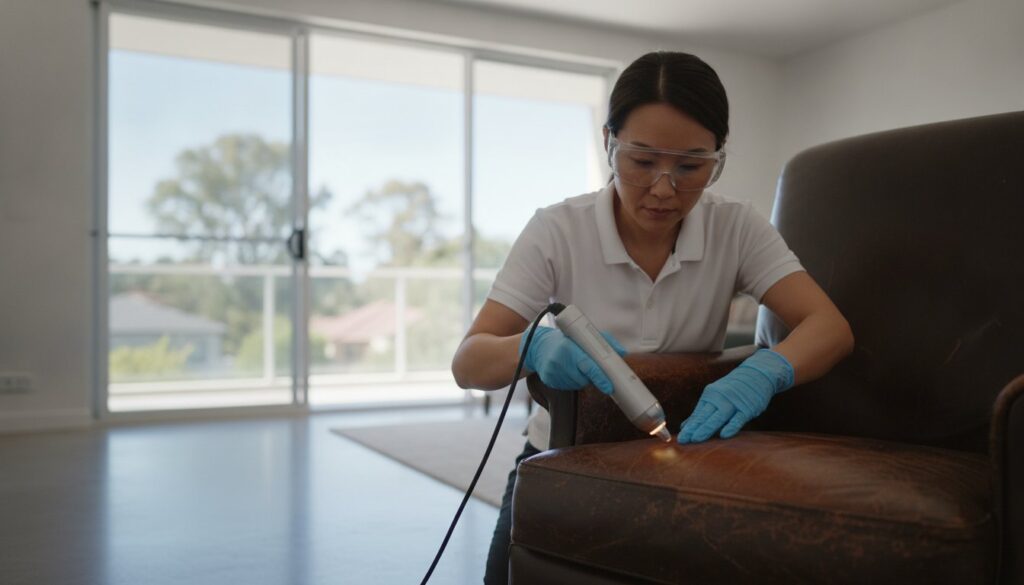
Most property owners try to fix mouldy clothes by running them through a standard wash. This is a risky mistake. Standard 40-degree cycles often fail to kill spores; instead, they risk contaminating your washing machine and spreading the infestation to other garments. Professional antimicrobial treatments are necessary to break down the mould at a molecular level. Leather goods, such as shoes and jackets, require particular care. If caught early, professional restoration can prevent the fungus from permanently staining or “tanning” the leather, which would otherwise lead to structural cracking.
Electronics and Delicate Items
Electronics present a hidden danger that many DIY attempts overlook. Mould thrives on the dust accumulated inside cooling fans and on circuit boards. Simply wiping the exterior of a computer or television provides a false sense of security. If spores remain inside, the heat generated by the device will eventually trigger a massive bloom. Professional fogging is the only way to treat these internal components safely. It allows the antimicrobial agent to reach sensitive circuitry without the risk of liquid damage, ensuring the device is safe to operate without releasing spores back into your breathing zone.
Immediate Action Plan: Protecting Your Valuables Before Experts Arrive
The moment you discover a fungal outbreak, the clock starts ticking. You need to act within the first 24 to 48 hours to have the best chance of Restoring Items Affected by Mould. While professional intervention is necessary for total decontamination, your initial response determines how much of your property can be saved. Don’t panic, but do move with purpose to contain the spread.
Your first priority is to stop the moisture source. Check for leaking pipes, roof gaps, or signs of rising damp. If the environment remains wet, any cleaning attempt is futile. Once the source is addressed, isolate the affected items. Move mouldy belongings to a dry, well-ventilated area, provided you can do so without tracking spores through clean parts of the house. Use plastic sheeting to create a containment zone if necessary.
Avoid the ‘Bleach Trap’ at all costs. Many retail guides suggest using bleach, but this is a mistake that often causes more damage. Bleach is primarily composed of water. While it may discolour the surface mould, making it look ‘gone’, the water component actually feeds the root system (hyphae) deep inside porous materials. This leads to a more aggressive return of the infestation. Additionally, bleach can permanently ruin the finish on semi-porous items and weaken fabric fibres.
Document everything before you touch it. Take high-resolution photos of the damage from multiple angles. This evidence is vital for insurance claims and allows our specialists to perform an initial assessment of damage severity. If you need immediate assistance with an escalating situation, our mould removal sydney team provides an urgent response to secure your property.
Triage Checklist for Homeowners
- Prioritise: Separate ‘High-Value’ heirlooms and expensive furniture from easily replaceable items.
- Protect Documents: If you find damp photos or important papers, place them in a sealable bag and freeze them. This stops mould growth instantly until a professional can safely dry and treat them.
- Safety First: Always wear a P2 or N95 mask when handling infested items. Disturbing mould releases millions of spores into your breathing zone.
Preventing Secondary Growth
In Sydney’s humid climate, moisture levels can spike quickly, triggering secondary growth on previously clean items. Use a dehumidifier to keep indoor humidity below 50% during the first 48 hours. Never use a standard household vacuum on mouldy possessions. Standard vacuums lack HEPA filtration and will simply blast microscopic spores back into the room, contaminating your air and other furniture. For a professional assessment of your indoor air quality, contact ABC Mould Cleaning Solutions today.
Professional Content Restoration in Sydney: The ABC Advantage
Choosing the right specialist is the difference between saving your valuables and sending them to a landfill. ABC Mould Cleaning Solutions provides a comprehensive approach that goes beyond simple surface cleaning. We integrate structural drying with content restoration to ensure that the environment where your items live is as clean as the items themselves. Restoring Items Affected by Mould is only successful if the underlying moisture issues in your Sydney home are resolved simultaneously.
Our Sydney-wide network ensures a fast, urgent response to your property. We understand that mould doesn’t wait, and neither should you. By arriving quickly, we can implement immediate containment and stabilisation protocols to halt the spread of spores. Our technicians use the Goldmorr System, a proprietary methodology that relies on biodegradable, family-safe products. These non-toxic formulas neutralise mould at the source without leaving harmful residues, making them perfect for sensitive household environments.
The final ‘lock’ on our restoration process is our specialised air purification and scrubbing service. Even after items are treated, microscopic spores can linger in the air. Our industrial HEPA air scrubbers act as a final safety net, capturing these particles and preventing re-contamination. This dual-action approach ensures your restored goods remain in a pristine, safe condition long after we leave your property.
Comprehensive Sydney Mould Solutions
We address the root causes of fungal growth to provide long-term protection for your belongings. Often, the primary culprit is unaddressed moisture, which is why we offer expert water damage repair as part of our emergency response. In many Sydney homes, poor airflow beneath the house is the silent driver of dampness. We specialise in subfloor ventilation system installation to prevent rising damp from reaching your wardrobes and furniture again. We are committed to providing the best value in NSW and offer an aggressive price-matching guarantee for any comparable professional remediation quote.
Book Your Free Inspection
Stop the guesswork and get a professional opinion today. Our streamlined digital inquiry process allows you to submit photos of your affected items for a rapid initial assessment. This removes friction and provides you with immediate clarity on what can be saved. During a professional mould inspection, our specialists use moisture meters and thermal imaging to locate hidden dampness and categorise the severity of the infestation.
Don’t throw away your sentimental or expensive possessions until an expert has evaluated them. Most non-porous and semi-porous items can be returned to a safe, healthy state using our advanced techniques. Take the first step toward a mould-free home and contact us to restore your peace of mind. We make the process hassle-free, safe, and effective for all Sydney residents.
Take Decisive Action to Save Your Belongings
Don’t let a mould outbreak dictate what you keep and what you discard. Understanding the science of material porosity and the limitations of retail cleaning products is the first step toward a successful recovery. Restoring Items Affected by Mould is a technical challenge that requires precision; however, with the right professional intervention, many of your most valuable possessions can be returned to a safe, spore-free state. You’ve already taken the right step by educating yourself on the risks and requirements of professional remediation.
By identifying the moisture source and acting within the first 48 hours, you significantly increase the chances of a full restoration. Our specialists at ABC Mould Cleaning Solutions are Sydney’s most affordable professional mould cleaners. We combine the power of the Goldmorr System with a 24/7 Emergency Water Damage response to secure your home against escalating threats. Our methods are designed to be safe for your family while delivering results that meet the highest industry standards.
Save your valuables today; Book a Free Mould Inspection with Sydney’s experts. We are here to provide the clarity and technical expertise you need to resolve this issue quickly and permanently. Your property is worth saving, and we have the tools to make it happen safely.
Frequently Asked Questions
Can clothes with mould be saved?
Yes, clothes can be saved, but you shouldn’t rely on a home washing machine. Standard cycles often fail to kill spores and can contaminate your appliance. Professionals use specialised antimicrobial agents that target mould at a molecular level. This ensures the material is safe to wear again without risking skin irritation or respiratory issues. High-value fabrics and leathers benefit most from this technical approach.
How do professionals remove mould from a couch?
Professionals use a multi-stage process for couches. We start with HEPA vacuuming to remove surface spores, followed by the Goldmorr System fogging process. This fog penetrates deep into the porous foam and upholstery where roots hide. Finally, air scrubbing ensures that any disturbed spores are captured. To see how these professional standards apply to general upholstery maintenance, visit Carpet Cleaner In Manchester. This method is far superior to steam cleaning, which often adds moisture and makes the problem worse.
Is it safe to keep items that once had mould?
It’s safe to keep items only if the root system and mycotoxins have been completely neutralised. Restoring Items Affected by Mould involves more than just removing the visible stains. If the hyphae remain deep within the material, the mould will return as soon as humidity rises. Professional remediation ensures the item is biologically clean and poses no risk to your family’s health or indoor air quality.
Can mould on electronics be cleaned?
Yes, electronics can be cleaned, but you must avoid liquid cleaners that damage circuitry. Mould often thrives inside cooling fans and on circuit boards where dust accumulates. Our professional fogging process reaches these internal components safely. The biodegradable fog neutralises spores without leaving conductive residues. This prevents the device from blowing spores into your room every time the cooling fan turns on.
How much does it cost to restore mouldy furniture?
The cost depends entirely on the item’s material, the extent of the infestation, and the required remediation technique. Porous items like upholstered chairs generally require more intensive treatment than non-porous glass tables. We recommend a professional inspection to categorise the damage and provide an accurate assessment. Investing in restoration is often more cost-effective than replacing high-end furniture or sentimental heirlooms.
Does professional fogging damage delicate items or paper?
Professional fogging is specifically designed to be safe for delicate items. The Goldmorr System produces a fine mist that doesn’t wet surfaces like traditional sprays do. This makes it an ideal solution for books, documents, and fine art. The formula is biodegradable and non-toxic, so it won’t cause yellowing or structural degradation. It’s a highly efficient way to decontaminate your most fragile possessions without risk.
What happens if I just ignore the mould on my items?
Ignoring mould on your belongings will lead to a whole-house infestation. Mould is a living organism that constantly releases reproductive spores into the air. A single infested item acts as a launchpad, spreading contamination to every room in your property. Over time, the fungus will digest the material, causing permanent staining and structural failure. It also creates a persistent health hazard for all occupants.
How long does the professional restoration process take?
Most professional restoration projects are completed within 24 to 48 hours. The exact timeline depends on the number of items and the depth of the infestation. We prioritise speed to prevent further spread and get your home back to a safe state as quickly as possible. Once the items are treated and the air is purified, your belongings are ready for immediate use.