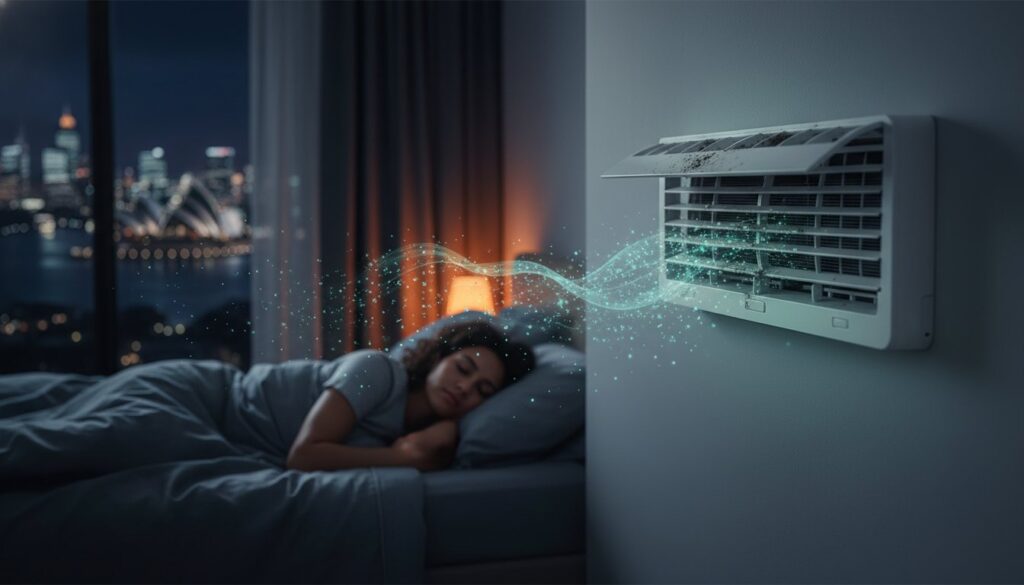
You wake up again with that familiar scratchy throat and a dull headache. You glance at the dark, unsightly specks on your air conditioner vent and a wave of anxiety hits, especially when you think about your children breathing that same air all night. It’s a common concern for Sydney homeowners, and your gut feeling is right to be worried. That musty smell isn’t just unpleasant; it’s a clear warning sign of a serious problem that will only get worse.
This guide will cut through the uncertainty. We’ll provide a definitive answer to the question: is it safe to sleep in a room with a mouldy air conditioner? You will learn about the specific, serious health risks your family is exposed to every night and discover the exact, professional steps you must take to eliminate the airborne spores for good. We’ll cover everything from identifying the immediate dangers to a complete remediation plan, giving you the peace of mind you deserve.
Key Takeaways
- Understand why the answer to “is it safe to sleep in a room with a mouldy air conditioner” is a firm no, and how your AC actively spreads concentrated spores while you sleep.
- Discover the specific health symptoms linked to AC mould exposure, and learn why your body’s defences are lower against airborne spores during deep sleep.
- Learn two simple checks-the “Sniff Test” and a visual inspection-to identify hidden AC mould that can spread spores even when the unit is turned off.
- See the professional steps required to make your bedroom air safe again, especially in Sydney’s humid climate where mould is a recurring problem.
The Hidden Danger: Is it Safe to Sleep with AC Mould?
You rely on your air conditioner for a cool, comfortable night’s sleep, especially during a humid Sydney summer. But what if the very machine meant to provide comfort is actively harming you? To directly answer the question, is it safe to sleep in a room with a mouldy air conditioner? The professional consensus is a firm no. While a single night might not cause lasting damage for a healthy adult, consistent, long-term exposure is a significant health risk, particularly for children, the elderly, and anyone with existing respiratory conditions like asthma.
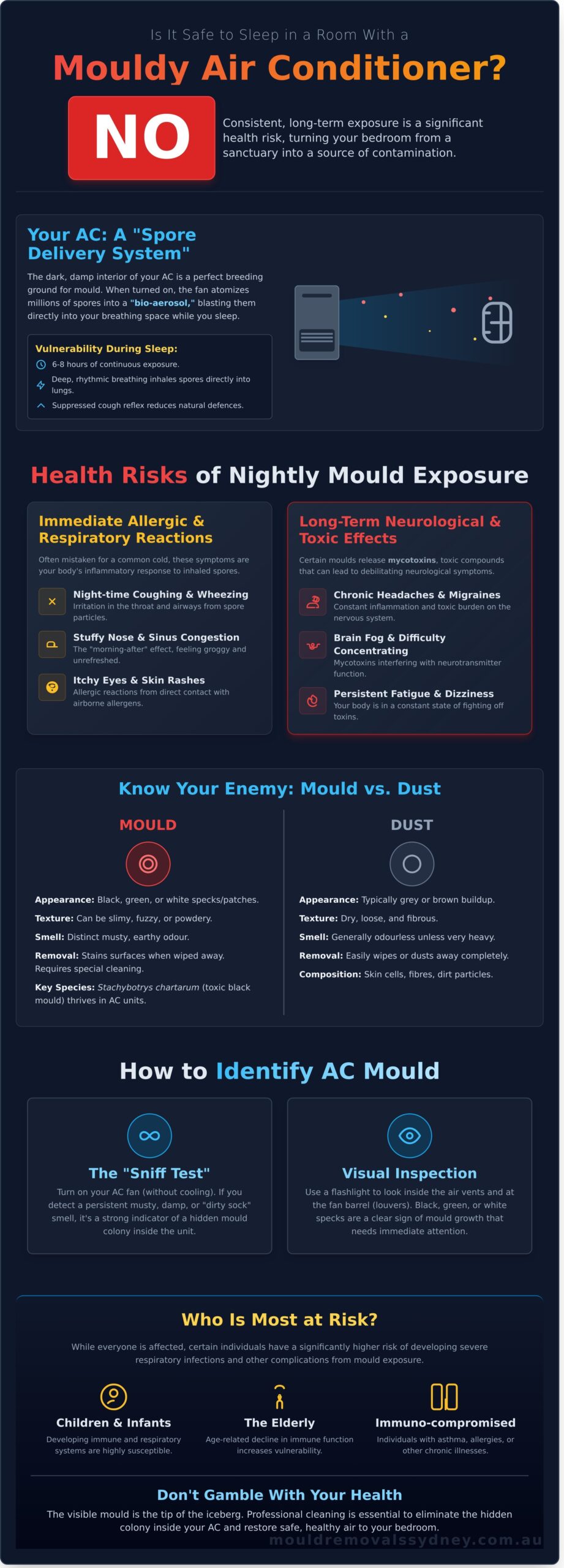
An air conditioner isn’t just another spot where mould can grow; it’s a uniquely effective delivery system for it. The dark, damp interior of your AC unit is a perfect breeding ground. When you turn it on, the powerful fan barrel doesn’t just circulate cool air. It atomises millions of mould spores, turning them into a “bio-aerosol” that is blasted directly into your breathing space. You are most vulnerable during sleep. For 6 to 8 hours, your breathing is deep and rhythmic, and you’re stationary, inhaling a concentrated stream of these microscopic irritants directly into your lungs.
Defining AC Mould vs. Common Dust
It’s crucial to distinguish between simple dust and a fungal colony. Dust on your AC louvers is typically grey, dry, and easily wipes away. Mould, however, often appears as black, green, or white spots, can feel slimy or fuzzy, and will leave a stain behind when wiped. The most infamous of these, Stachybotrys chartarum (toxic black mould), is a species that thrives in the perpetually damp cellulose-rich materials found in AC insulation and ductwork. The constant condensation from the cooling process turns your unit into an ideal petri dish for this and other fungi.
Why Your AC is a “Spore Delivery System”
Think of your split system’s internal fan barrel as a high-speed propeller. As it spins, it collects spores from hidden mould colonies growing on the cooling coils and insulation deep inside the unit. When you power it on, that initial blast of musty air is the system ejecting a highly concentrated cloud of these airborne spores. This constant inhalation is linked to a wide array of documented health risks of mould exposure, from allergic reactions to more severe respiratory issues. The mould you can see on the vents is often just the tip of the iceberg; the real problem is the extensive, hidden colony being weaponised by your unit’s airflow.
Health Risks of Sleeping in a Room with a Mouldy Air Conditioner
So, is it safe to sleep in a room with a mouldy air conditioner? The answer from health experts is a definitive no. When you sleep, your body enters a state of rest and repair, but your respiratory system never switches off. In fact, it becomes more vulnerable. During deep sleep, your natural coughing reflex is suppressed, making it easier for harmful particles to enter your lungs unchallenged. You are breathing concentrated, contaminated air for six to eight hours straight, creating a direct pathway for mould to impact your health.
The danger isn’t just theoretical. It manifests in both immediate discomfort and the potential for chronic illness. Ignoring that musty smell or the black spots on the vents is a serious gamble with your well-being, turning your bedroom from a sanctuary into a source of contamination.
Respiratory and Allergic Reactions
The most immediate effects of breathing mould-contaminated air are allergic and respiratory. You might dismiss night-time coughing, a stuffy nose, or wheezing as a simple cold, but it could be your body reacting to airborne mould spores. Common culprits like Aspergillus and Penicillium thrive in the damp, dark environment of an AC unit and release millions of spores that trigger an inflammatory response. This often leads to the “morning-after” effect, where you wake up feeling congested, groggy, and unrefreshed, only for the symptoms to mysteriously improve once you leave the room.
The Role of Mycotoxins and Neurological Impact
Beyond simple spores, certain types of mould produce toxic chemical compounds known as mycotoxins. These are not living spores but volatile gases that you inhale continuously throughout the night. This is where the health risks escalate from allergic reactions to potential neurological issues. Long-term exposure to mycotoxins has been linked to a range of debilitating symptoms, including:
- Chronic headaches and migraines
- Persistent fatigue that sleep doesn’t fix
- Difficulty concentrating, often called “brain fog”
- Dizziness and sensitivity to light
In severe cases, this constant assault on your immune system can lead to hypersensitivity pneumonitis, a serious lung disease caused by repeated inflammation of the lung tissue.
The risks are significantly higher for vulnerable individuals. For infants, whose immune systems are still developing, and the elderly, exposure can lead to severe respiratory infections. For anyone with pre-existing asthma, sleeping in a room with a mouldy AC can trigger frequent and severe asthma attacks. This situation effectively creates a “Sick Building Syndrome” in your own bedroom. Health authorities worldwide, backed by extensive research detailed in resources like the CDC guidelines on mould, warn against the serious consequences of prolonged exposure. The answer to is it safe to sleep in a room with a mouldy air conditioner is clear, and taking action is vital. A professional air conditioner mould assessment is a critical first step to protecting your family’s health.
Myth vs. Reality: Does Turning the AC Off Make it Safe?
It’s a common and dangerous assumption: if the air conditioner isn’t running, it can’t be spreading mould. You might think that by simply switching it off, you’ve contained the problem. This is a critical mistake. A mould-infested AC unit is a health hazard 24/7, whether it’s on or off.
Many homeowners ask, is it safe to sleep in a room with a mouldy air conditioner if the power is cut? The answer from our certified technicians is always a clear and resounding no. The unit doesn’t become a sealed, safe box just because the fan has stopped spinning. It remains an active source of contamination in your home.
Why “Off” Does Not Mean “Safe”
An inactive air conditioner is far from harmless. The internal cavity acts as a reservoir for millions of mould spores. Simple air currents in the room, created by you walking past, opening a door, or even a slight breeze from an open window, are more than enough to dislodge these spores and send them airborne. The fungus also releases microbial Volatile Organic Compounds (mVOCs), which are gasses that create that signature musty odour and can cause headaches and respiratory irritation. These gasses seep out continuously, no fan required. Furthermore, the unit’s internal drain pan and evaporator coils can remain damp for days after shutdown, creating the perfect “Damp Trap” where mould continues to thrive and reproduce.
The Danger of DIY “Quick Fixes”
Faced with a musty smell, many people turn to what they think are easy solutions. These DIY fixes don’t solve the problem; they often make it worse and create a false sense of security. Before you reach for a spray bottle, understand the risks:
- Spraying Bleach is a Bad Idea: Bleach is highly corrosive to the delicate aluminium fins inside your AC unit, causing permanent damage that can cost hundreds of dollars to repair. More importantly, it rarely kills the mould’s roots. You’re just bleaching the surface colour while leaving the colony intact to regrow, all while releasing harmful fumes into your home.
- Air Fresheners Mask, They Don’t Remove: Using an air freshener is like putting a bandage on a broken leg. It masks the musty warning sign but does nothing to address the thousands of airborne spores you’re still inhaling. The root cause, the mould colony, continues to grow unchecked.
- Cleaning Just the Filter is Not Enough: A clean filter is vital, but it’s only 5% of the solution. Our field data shows that over 95% of mould growth occurs deep inside the unit on the barrel fan and evaporator coils. Leaving this contamination behind means you are still exposed to the serious health effects of mould, which the National Institute of Environmental Health Sciences (NIEHS) confirms can range from allergic reactions to severe respiratory issues.
Ultimately, there is no quick fix for a contaminated system. The only way to be certain that it’s safe to sleep in a room with a mouldy air conditioner is to have the contamination professionally and completely removed by certified experts.
How to Identify and Assess AC Mould in Your Bedroom
You suspect mould in your air conditioner, but you aren’t sure. Before you spend another night breathing potentially contaminated air, you need to know what you’re looking for. A simple visual and sensory check can often confirm the presence of a hidden mould colony inside your AC unit. Don’t wait for the problem to worsen. It will.
Start with the most obvious signs. Turn the unit off and conduct a quick visual inspection of the louvers and directional fins. These plastic vents are often the first place you’ll see the tell-tale black, green, or grey spotting of mould growth. Next, trust your nose. The “sniff test” is a surprisingly effective diagnostic tool. A persistent musty, earthy, or “wet dog” smell coming from the unit, especially when you first turn it on, is a major red flag. This odour is caused by Microbial Volatile Organic Compounds (MVOCs), gases produced by active mould colonies.
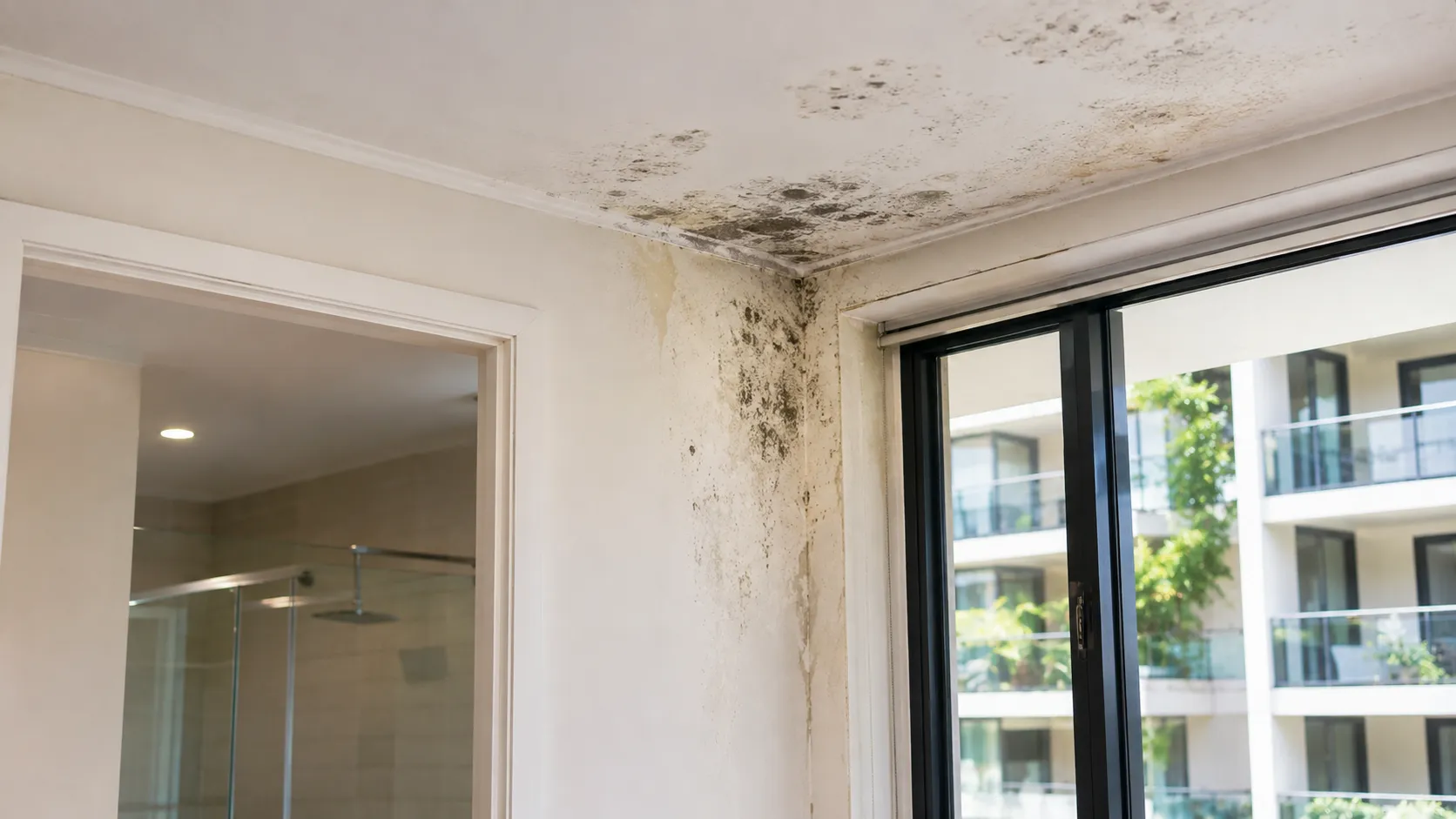
For a deeper look, grab a powerful flashlight and peer past the vents into the fan barrel (also known as the blower wheel). This component is constantly wet from condensation, making it a prime breeding ground. Shine the light on the cylindrical fins; you’re looking for black speckled patterns that look like dirt but won’t easily brush away. Finally, check the unit’s casing and the wall around it for signs of “weeping” or excess condensation. Water stains or damp patches indicate a moisture problem that, according to Safe Work Australia, can lead to significant mould growth in as little as 48 hours.
The 3-Point DIY AC Inspection
If the initial checks raise concerns, a more detailed inspection is your next step. This simple process can help you gauge the severity of the infestation.
- Step 1: Check the filters. Remove the unit’s front panel to access the filters. Healthy filters might be dusty, but they shouldn’t have any fuzzy grey, white, or black growth on them. If they do, airborne spores are being actively circulated through your bedroom.
- Step 2: Inspect the drainage tray. Using your flashlight, locate the condensation drain pan at the bottom of the unit. Standing water or a slimy, gelatinous film is a clear sign that the drainage system is blocked, creating a perfect environment for mould to thrive.
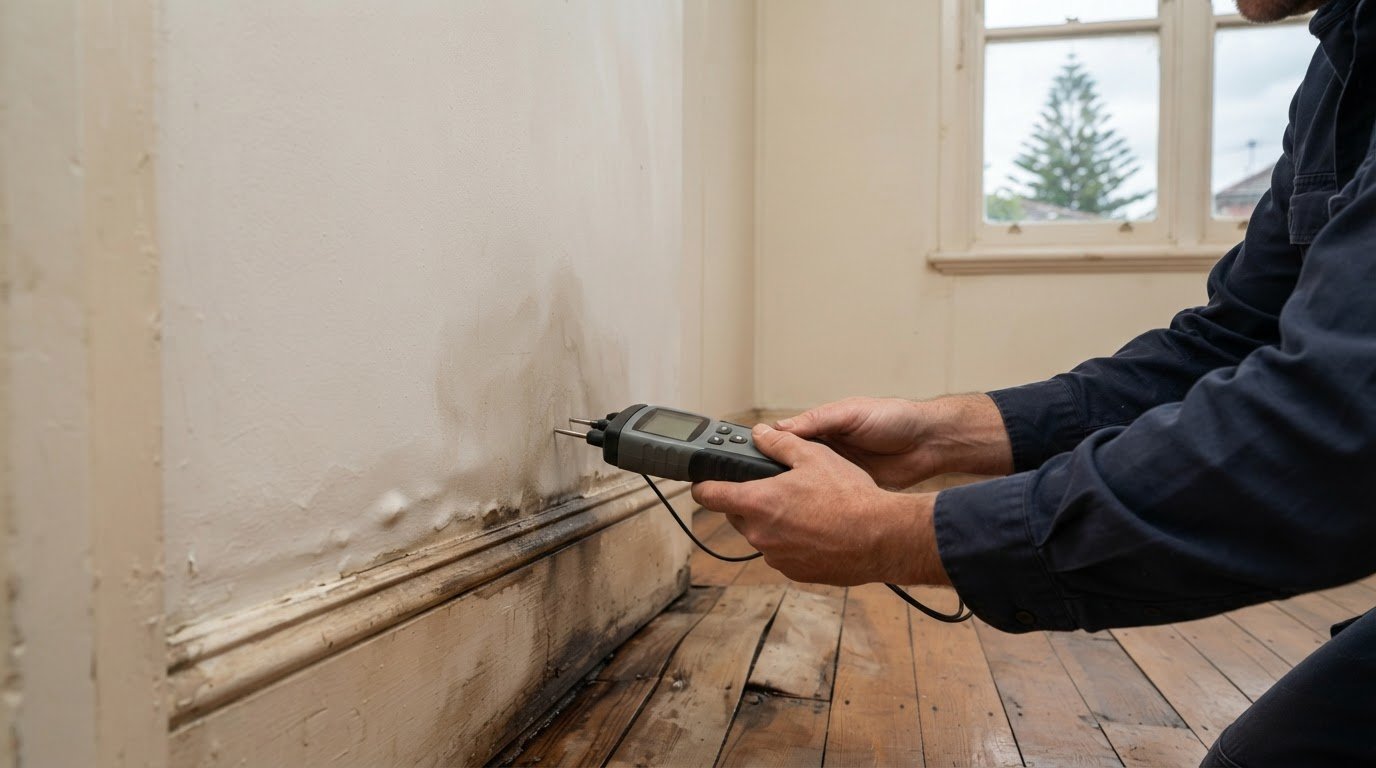
- Step 3: Look for spotting on the wall. Examine the wall surface directly behind and below the air conditioning unit. Any discolouration or dark spotting strongly suggests an internal leak has saturated the plasterboard, leading to a much larger, hidden mould problem.
When to Call a Professional Mould Technician
A DIY clean can sometimes handle minor surface issues, but it can’t address a deep-rooted infestation. The answer to is it safe to sleep in a room with a mouldy air conditioner becomes a definitive “no” when you see these signs. You must call an expert if:
- The musty smell persists even after you’ve cleaned or replaced the filters. This means the colony is located deeper within the unit’s coil or fan barrel.
- You see visible black growth that cannot be easily wiped away from the internal components. This indicates established mould that requires professional remediation.
- You or your family members are experiencing unexplained allergies, coughing, or respiratory issues that seem to worsen at night or only in the bedroom.
If your inspection reveals any of these critical warning signs, don’t risk your health with ineffective chemicals. It’s time for a professional assessment. Contact our expert technicians today for a comprehensive inspection and an effective mould remediation plan.
Professional Solutions: Restoring Sleep Safety in Sydney
Living in Sydney means embracing the coastal lifestyle, but it also means battling persistent humidity. With average humidity levels often soaring above 70% in suburbs from Cronulla to the Northern Beaches, your air conditioner works overtime, creating the perfect damp, dark environment for mould to thrive. This isn’t just an issue of aesthetics; it directly impacts your family’s health. The question of is it safe to sleep in a room with a mouldy air conditioner has a clear answer: no. But you don’t have to accept it as a recurring problem. A professional deep clean and remediation is the only way to restore clean air and your peace of mind.
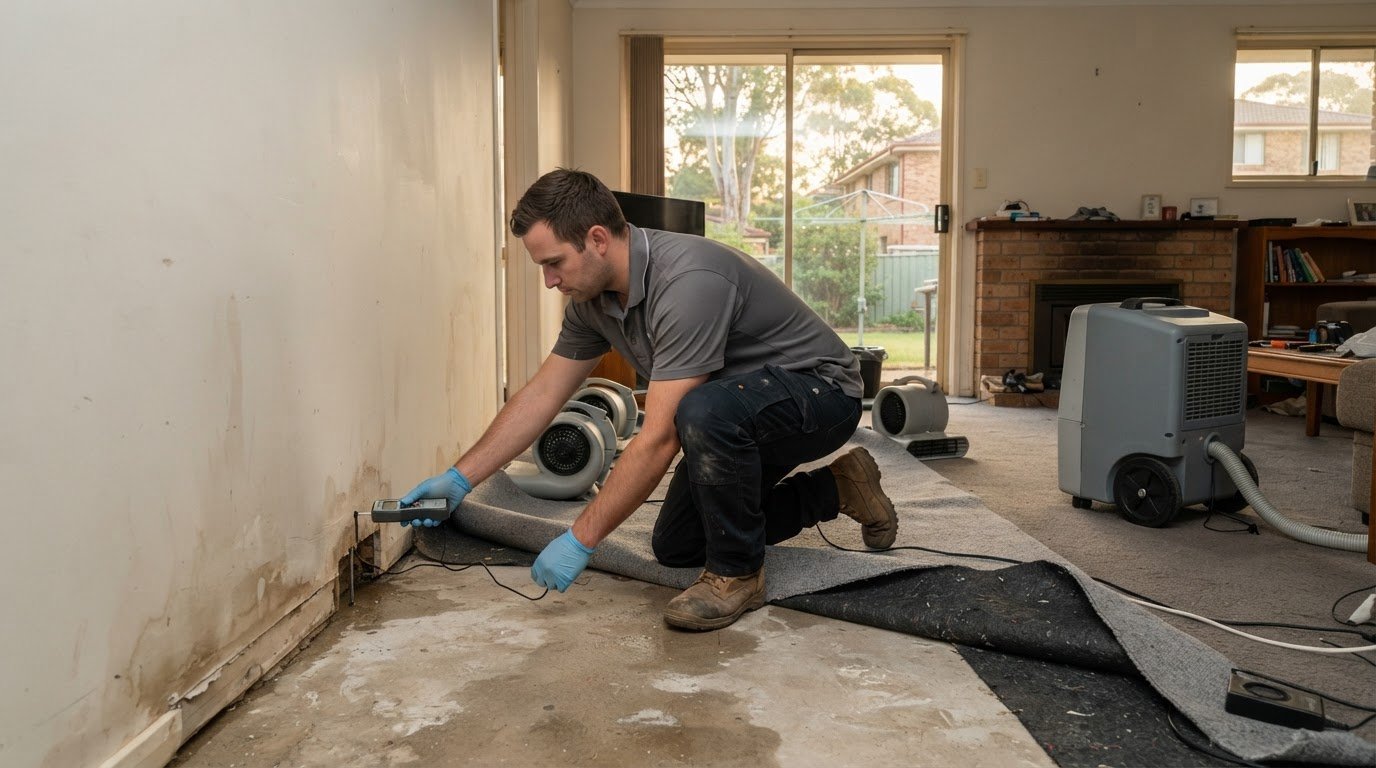
Standard HVAC maintenance often involves a quick filter clean and a surface wipe-down, which does nothing to eliminate the mould colony growing deep within the unit’s barrel fan and evaporator coils. This is where a specialised mould remediation service becomes essential. At ABC Mould Cleaning Solutions, we don’t just clean the visible problem; we eradicate the entire contamination using an industry-leading, proven system.
The Goldmorr Advantage for AC Units
Our approach is built on the world-renowned Goldmorr System, a two-part process that treats both the air conditioner and the air you breathe. First, our master technicians apply a biodegradable fogging solution that atomises into a fine mist. This mist penetrates deep into the unit, reaching every crevice of the evaporator coils and internal components where mould hides, eliminating it at the source. To ensure your safety, our non-mechanical air scrubbing process then removes the microscopic, airborne spores that were inevitably released during the cleaning. This comprehensive treatment is why countless Sydney property owners trust our certified experts to make their homes safe again.
Preventing Future Mould Growth
Eradicating the existing mould is only half the battle. Our goal is to provide a long-term solution to prevent its return. You can contribute significantly by adopting better usage habits and addressing underlying moisture issues in your home. Here are a few expert recommendations:
- Use ‘Dry Mode’: After running your AC on cool, switch it to ‘Dry’ or ‘Fan’ mode for 15-20 minutes before shutting it down. This helps dry out the internal moisture, robbing mould of the water it needs to grow.
- Address Subfloor Moisture: Often, the high humidity in a bedroom is caused by a damp, poorly ventilated subfloor. Installing a professional subfloor ventilation system can reduce the overall moisture load in your home, meaning your AC doesn’t have to work as hard and won’t accumulate as much condensation.
Ultimately, a mouldy air conditioner is a serious health hazard that won’t fix itself. If you’re wondering is it safe to sleep in a room with a mouldy air conditioner, you already know the risks are too high. Don’t wait for symptoms to appear or for the problem to worsen. Take decisive action to protect your family’s health and restore clean air to your home.
Get a free quote for professional AC mould removal in Sydney today.
Restore Your Peace of Mind and Breathe Healthy Air Again
The verdict is clear. The answer to the question, is it safe to sleep in a room with a mouldy air conditioner, is a definitive no. You spend roughly one-third of your life sleeping, and exposing yourself to airborne mould spores night after night poses serious health risks, from persistent allergies to significant respiratory issues. Simply turning the unit off won’t stop the spread or eliminate the spores already contaminating your bedroom’s air. The only effective solution is complete, professional mould remediation to ensure the source is eliminated for good.
Don’t gamble with your family’s well-being. Take decisive action to protect the air you breathe. Our team of Certified Goldmorr Master Technicians uses an industry-leading system to eradicate mould at its source, providing a powerful solution that’s completely safe for pets, people, and the environment. We’re so confident in our expert service and pricing that we promise to beat any written quote by 10%. It’s time to stop worrying and start breathing easy.
Schedule Your Professional AC Mould Cleaning Now & Get a Free Estimate
Frequently Asked Questions
Can a mouldy air conditioner make you sick overnight?
Yes, a mouldy air conditioner can absolutely make you sick overnight. As the unit runs, it circulates a high concentration of mould spores directly into your breathing space. For sensitive individuals, this intense exposure can trigger immediate allergic reactions like coughing, sneezing, itchy eyes, skin rashes, or even an asthma attack. The constant inhalation of these contaminants while you sleep poses a serious and immediate health risk that should not be ignored.
Will an air purifier help if my AC has mould?
An air purifier is a temporary bandage, not a solution. While a purifier with a HEPA filter can capture some airborne spores, it cannot eliminate the source. Your air conditioner will continue to grow mould and actively pump new spores into the room, quickly overwhelming the purifier’s capabilities. To protect your health, the mould infestation inside the AC unit itself must be professionally and completely removed by a certified technician.
How can I tell if the black spots in my AC are mould or just dust?
You can tell the difference by appearance and smell. Dust is typically grey, dry, and wipes away easily without leaving a trace. Mould often appears as splotchy black or green patches, can have a fuzzy or slimy texture, and will usually stain the surface underneath. The most conclusive sign is the smell; a distinct musty, earthy odour is a clear signal of active mould growth, which dust does not produce.
Is it safe for a baby to sleep in a room with a musty AC?
No, it is extremely unsafe for a baby to sleep in a room with a musty AC. A musty odour confirms mould is present, and a baby’s developing respiratory and immune systems are highly vulnerable to mould spores. Exposure can lead to persistent coughing, respiratory infections, and an increased risk of developing asthma. The answer to is it safe to sleep in a room with a mouldy air conditioner is a definitive no, especially for children.
Does clove oil actually kill AC mould?
Clove oil is not an effective or safe solution for AC mould. While it has some minor antifungal properties, it only treats surface-level mould and cannot penetrate the coils and fan barrel where the infestation is rooted. Furthermore, essential oils can damage sensitive electronic components and leave a sticky residue that attracts even more dust and contaminants, worsening the problem over time. Professional, industry-approved treatments are required for safe and total eradication.
How often should I have my split system professionally cleaned in Sydney?
For most Sydney households, a professional deep clean is recommended every 12 months to prevent mould growth in our humid climate. If your home has allergy sufferers, pets, or smokers, you should increase this frequency to every 6 months. Regular cleaning is the most effective way to maintain healthy indoor air quality and ensure your unit runs efficiently, a recommendation supported by groups like the Australian Refrigeration Council (ARC).
Can I clean the inside of my AC unit myself?
You can perform basic maintenance like washing the removable filters every 1-2 months. However, a deep internal clean must be done by a professional. The primary mould growth occurs on the indoor coil, fan barrel, and drain pan, which are inaccessible without proper tools and training. DIY attempts with store-bought chemicals often miss over 50% of the mould and can cause corrosion, leading to costly damage and rapid regrowth of the mould.
What happens if I ignore the mould in my air conditioner?
Ignoring mould in your air conditioner allows the problem to escalate, creating serious health and financial consequences. The mould colony will expand, continuously releasing a higher volume of spores and worsening indoor air quality. This can lead to chronic respiratory issues, increase your electricity bills by up to 25% as the unit struggles to function, and eventually cause irreversible corrosion that requires a complete and costly replacement of the system.