
A denied mould claim isn’t always the end of the matter: Australian home insurance may cover mould when it follows a sudden, accidental insured event, such as flooding or water ingress. If you’re wondering what to do if your mould damage insurance claim is denied, start by gathering evidence that links the mould to that event and review the insurer’s reasons against your policy wording. Policies vary, and mould from moisture in the air is generally excluded.
It’s understandable to feel stuck when mould damage is visible but its cause is disputed. Notify your insurer promptly, and photograph and video affected areas and damaged belongings before cleaning up. Clear records can help show what happened and when. This article explains what evidence can support your position, how to prepare an internal dispute resolution request, and how to limit further damage while your insurer assesses the claim. You’ll also learn when an independent property assessment can help clarify the cause, remaining moisture and necessary remediation.
Key Takeaways
- Notify your insurer promptly and keep a dated record of the damage, communications and claim milestones.
- Build an internal dispute request around the denial reasons, relevant policy wording and supporting evidence such as photos, repair quotes or an independent report.
- Show how the mould may relate to a sudden insured event, rather than moisture in the air alone.
- Photograph and video affected areas and belongings before cleanup, then take reasonable steps to limit further damage while preserving evidence.
- When you need help identifying mould, moisture or appropriate remediation, professional inspection and mould services can help clarify the condition of the property.
What evidence do I need for a mould insurance claim?
Build a clear record linking the mould, its cause and the event you reported. In Australia, insurers assess each claim according to its circumstances and policy wording.
Independent Damage and Cause Assessments
An independent assessment documents property damage and investigates its likely cause using evidence and building expertise. It can identify damage an insurer’s assessor may have missed, assess whether the damage is consistent with the claimed event, and provide a repair scope and cost estimate. This evidence may help respond to a denial disputing the cause or extent of damage.
Mould Causation Evidence
Mould causation evidence links visible growth and moisture conditions to a possible source, such as a burst pipe or water ingress. Keep records of when the water event occurred, when mould appeared, and any reports identifying affected materials. A NATA-accredited laboratory analysis may take 5-10 business days, so record the sample date and retain the resulting report.
Claim notification and assessment timelines: Report sudden water damage to your insurer as soon as possible. Delayed notification can weaken a claim because most policies require prompt notice. A suggested process is to notify the insurer within 1-3 days after discovering damage, submit the claim around Day 14-21, and expect assessment around Day 21-45. These are process guideposts, not policy deadlines. A decision and resolution may fall around Day 45-90.
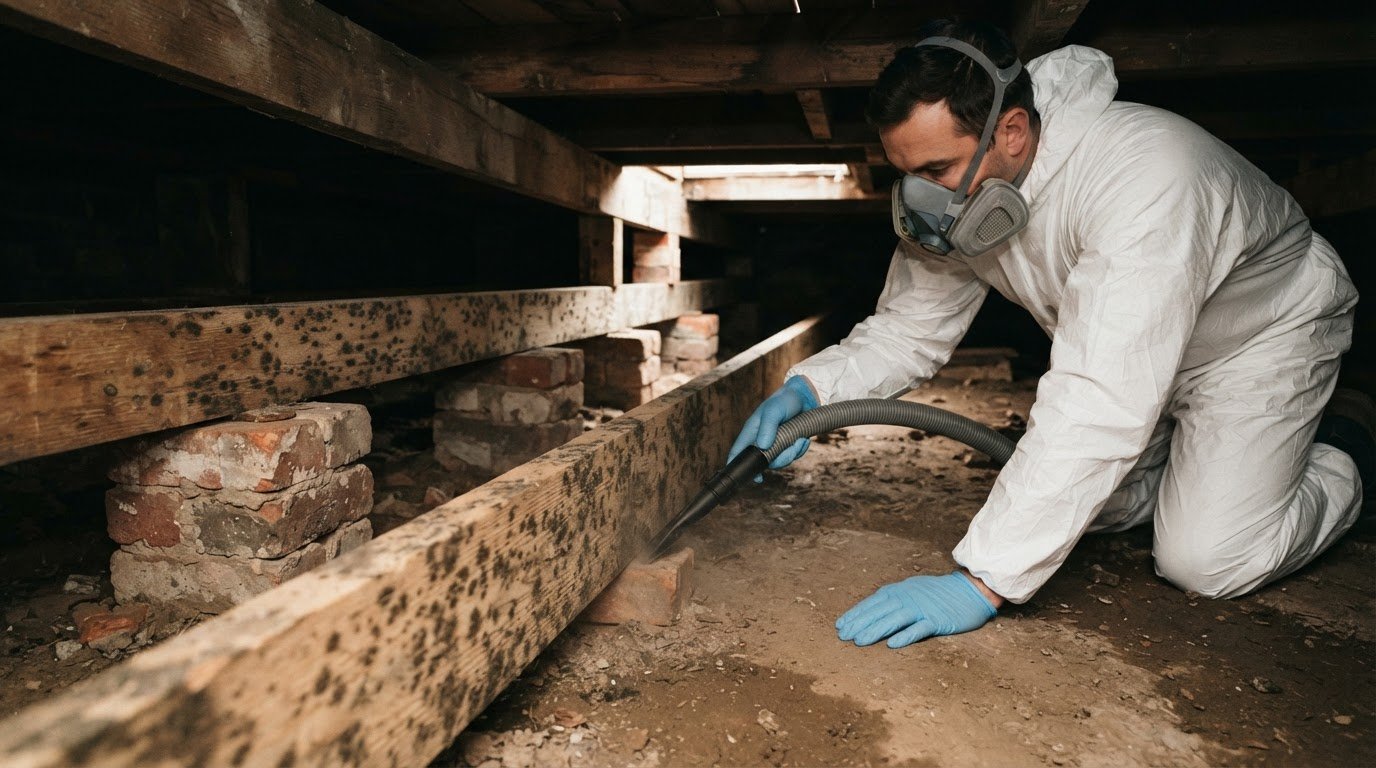
Keep dated copies of your claim form, policy, denial letter, repair quotes, photographs and all insurer communications. A professional property assessment can establish whether moisture remains, whether drying equipment is needed, and whether materials can be cleaned or need replacing. It can also identify mould or contamination and help define the necessary work, rather than assuming every damaged area needs the same treatment.
How can I complain to the Australian Financial Complaints Authority (AFCA) about a denied insurance claim, and what are the time limits? First send an internal dispute resolution request to your insurer; it must respond within 30 calendar days. If the dispute remains unresolved, you can escalate to AFCA free of charge, providing your policy and claim references, denial letter, IDR response, supporting evidence and desired outcome. Lodge promptly after the insurer’s response.
What compensation or remedies can AFCA order if an Australian insurer wrongly denies a mould damage claim? AFCA can consider general insurance disputes involving claims up to A$1,085,000 and award compensation up to A$542,500. Include the remedy you seek, such as reconsideration of the denied claim, and explain how your evidence supports it.
Evidence to include in an IDR request
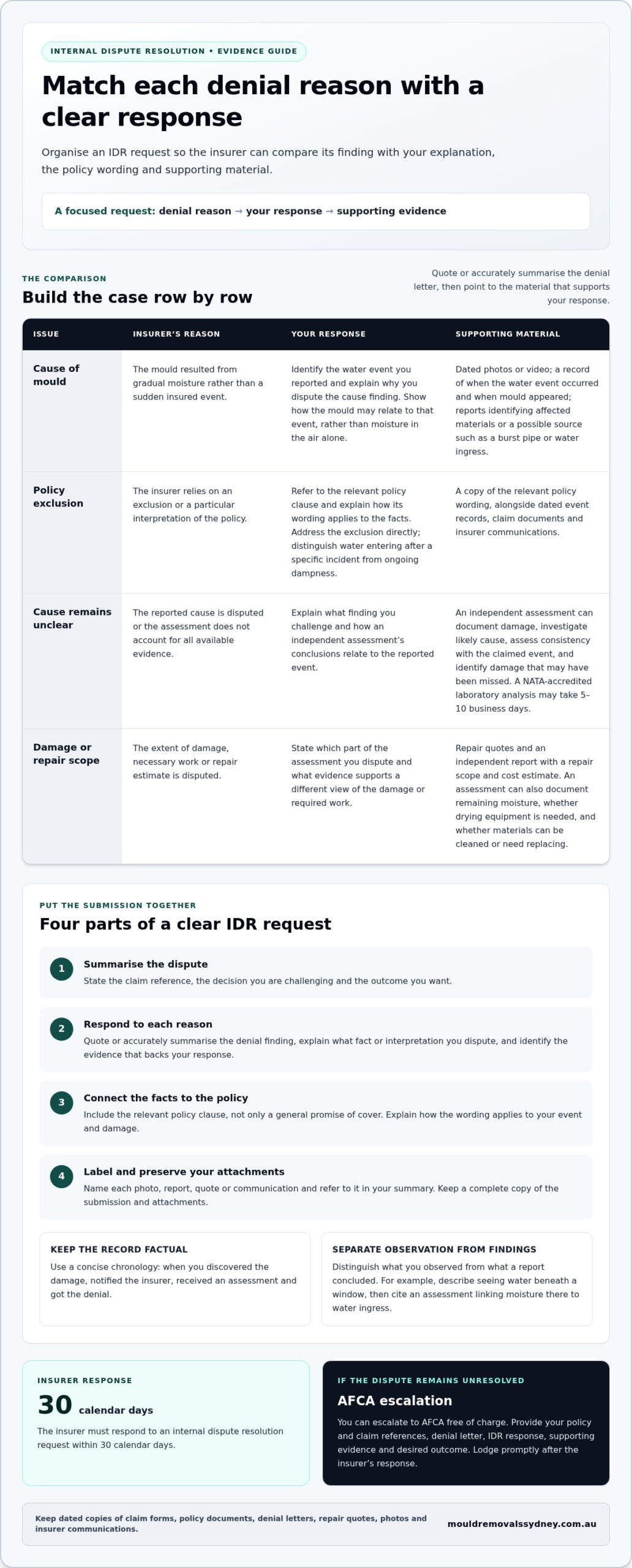
An internal dispute resolution (IDR) request asks your insurer to review its decision. Be specific: identify the reason for denial, explain why you believe it is incorrect, and attach supporting evidence. An organised submission helps the reviewer compare your evidence with the claim file and relevant policy wording.
Begin with a short summary of the dispute. State the claim reference, the decision you’re challenging and the outcome you want. For example, if the insurer says mould resulted from gradual moisture, explain the sudden water event you reported and cite evidence showing when it occurred. Avoid broad statements such as “the decision is unfair” without explaining which finding or policy interpretation you dispute.
Then match each reason for denial to relevant evidence. A simple table can make the links easier to follow:
- Insurer’s reason: Quote or accurately summarise the relevant sentence from the denial letter.
- Your response: Explain what fact, cause or policy interpretation you dispute.
- Supporting material: Identify the attached photograph, report, repair quote or communication that backs your response.
Include the relevant policy clause, not just the policy’s general promise of cover. Explain how its wording applies to the event and damage in your claim. If the insurer relies on an exclusion, address that wording directly. For example, distinguish evidence of water entering after a specific incident from a claim involving ongoing dampness. Don’t assume a clause applies without explaining how it relates to the facts.
Useful attachments may include dated photographs, repair quotes, an independent assessment, the original claim documents and messages exchanged with the insurer. Label each attachment and refer to it by name in your summary, such as “Photo 3 shows the ceiling stain after the reported leak.” If a report identifies moisture behind a wall, highlight the finding and explain how it challenges the insurer’s assessment. Keep a complete copy of your submission and attachments.
Keep your tone factual and your request focused. A concise chronology can show when you discovered the damage, notified the insurer, received an assessment and got the denial. Separate what you observed from what a report concluded. For instance, state that you saw water beneath a window, then cite the assessment linking moisture in that area to water ingress. This helps the reviewer distinguish your observations from technical findings.
If the cause or extent of mould remains unclear, an independent mould inspection can help document the property’s condition. Attach relevant findings to your IDR request and explain precisely which part of the insurer’s decision they address.
Mould damage resulting from an insured event
Australian home insurance may cover mould when it follows a sudden, accidental insured event. Flooding, cyclone damage, water ingress or a burst pipe can provide relevant context, but the policy wording and claim circumstances matter. Mould alone doesn’t establish that an insured event caused the damage.
Many property and contents policies exclude mould damage as a matter of course. However, mould may be considered as part of a claim for another covered event. For example, if floodwater enters a home and mould develops in affected materials, the key questions are whether the policy covers that flood event and whether the resulting mould damage is linked to it.
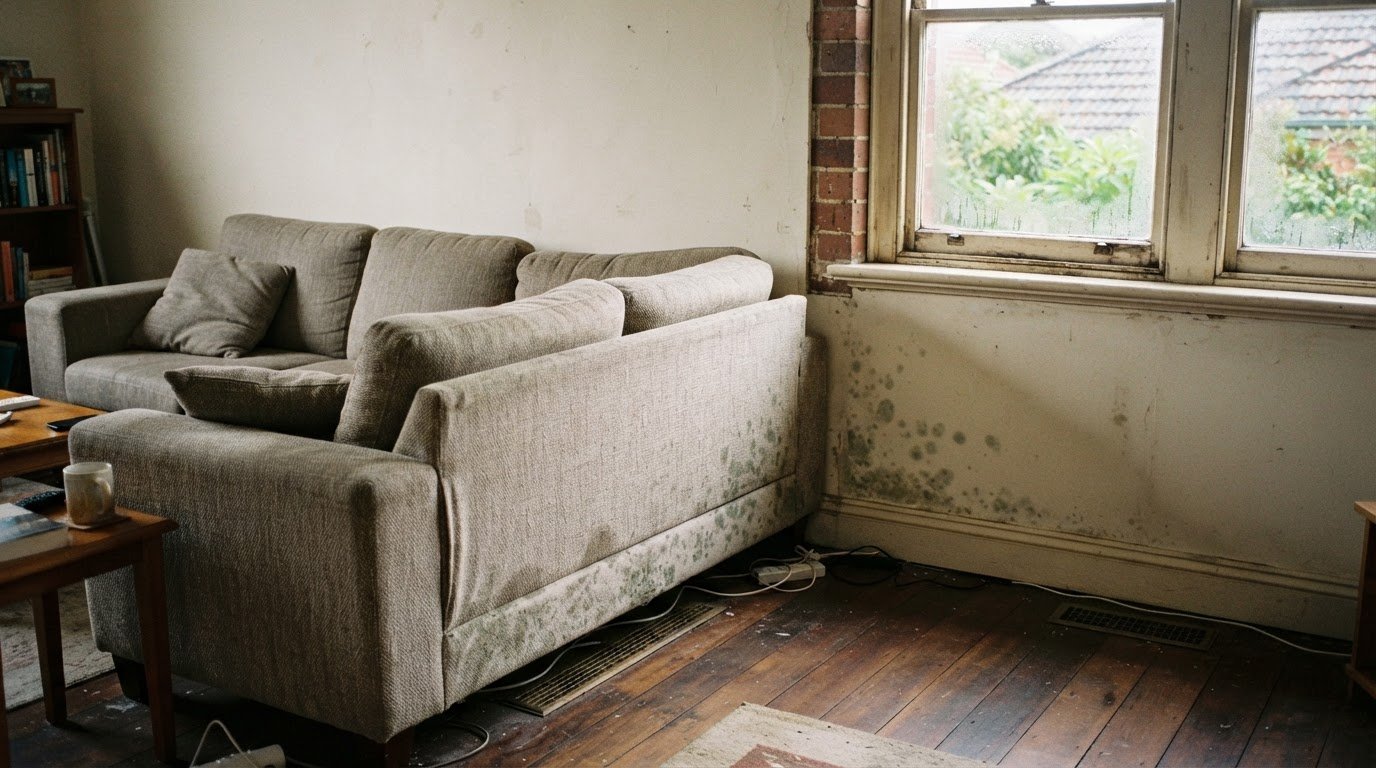
Cause and timing can distinguish an event-related claim from mould caused by moisture in the air. Recurring condensation in a damp bathroom may point to a different cause than mould appearing after a sudden ceiling leak. Mould outbreaks caused only by airborne moisture are generally not covered, so explain the specific event rather than relying on the presence of mould alone.
Describe a burst pipe carefully. Water may run through a property for an extended period before the leak is found, and mould can follow. Record when the pipe was discovered, where the water travelled, and which rooms or materials became damp. How long the water flowed doesn’t by itself determine cover. The insurer considers the event, evidence and applicable policy terms.
Cyclone damage can also lead to mould, for example, when damaged roofing lets water into ceilings or walls. Link the mould to the reported cyclone damage with dated records, photographs and assessment findings. If the insurer disputes the connection, evidence showing the path of water and affected building materials can help clarify whether mould followed the claimed event.
Insurers assess mould claims individually rather than applying the same outcome to every property. They consider the reported event, the source and duration of moisture, the location of mould, the policy’s insured events and exclusions, and evidence of damage. A claim involving sudden water ingress differs from one involving ongoing dampness, even if both result in visible mould.
Keep observations separate from conclusions about cause. You might record, “mould appeared on the bedroom ceiling after water entered through the roof,” then attach an assessment identifying moisture in that ceiling. Don’t present an assumption as a technical finding. A professional assessment can help determine whether moisture remains, which materials are affected, and whether the damage fits the event described.
If a denial says mould arose from gradual moisture, compare that explanation with your evidence and policy wording. Identify the event you reported, the damaged areas and the findings supporting a different cause. This focused comparison can make the disputed link between an insured event and subsequent mould damage easier to assess.
Photographic and timeline documentation
Photographs, video and a dated event log can show how damage changed over time. In Australia, capture affected areas and damaged belongings before cleaning up to record their original condition. Keep the files with your claim documents and note what each image shows.
Start with wide shots that establish the room, then take close-ups of mould, water marks, damaged paint or swollen materials. Photograph the same area from several angles. Include a doorway, window or other fixed feature to identify the location. For example, pair a wide image of the ceiling with close-ups showing the stain’s edge and nearby roof damage.
Use video to connect separate details. Slowly record the affected room, visible mould and any apparent water entry point, such as a ceiling stain beneath a leak. Narrate the room name and what you observe, but distinguish observations from assumptions about the cause. Keep original files and avoid filters, cropping or edits that could obscure the condition.
Create a chronology with the date and time of each event you can establish. Record when you first noticed water or mould, when you notified the insurer, and when an assessor visited. Add later developments, such as a spreading stain or a wet carpet being moved. If you don’t know the exact time, say so rather than guessing. A simple entry might read: “Date: [date]. Bedroom ceiling stain first observed. Insurer notified: [date and time].”
Document belongings before moving or cleaning them. Photograph each damaged item in its original position, then take a close-up showing the damage. Add a brief inventory with the item’s description, location and visible condition. For example, identify a mould-marked bookcase in the spare room rather than writing only “furniture damaged.” Keep purchase records or repair quotes with the matching item entry, when available.
Preserve the sequence of evidence. Keep insurer emails, claim acknowledgements, assessment notes and photos in folders labelled by room or date. Use filenames such as “kitchen-ceiling-before-cleanup” to identify images quickly. Save a backup of original files and don’t replace them with edited versions. Dated records help distinguish the initial damage from changes after discovery.
When you send material to the insurer, refer to each file in your written explanation. For example, state that “Photo 4 shows the wall beside the window on the discovery date.” Match that image with the relevant chronology entry and any assessment findings. This makes it easier to compare the visible damage, the reported event and later changes without relying on memory.
Should I pay for mould remediation or repairs before an insurer dispute is resolved, and how can I limit further damage?
Don’t begin permanent repairs before your insurer has assessed the water damage. Removing a wet ceiling or replacing flooring can obscure evidence about the water’s path and affected materials. Contact your insurer about the assessment and keep its response with your claim records.
That doesn’t mean leaving active damage unattended. After an insured event, policyholders should take reasonable steps to prevent further damage. If it’s safe, ventilate damp areas, remove wet belongings that may deteriorate, and record each action with dated photographs. For example, photograph a soaked rug before moving it, then note where you placed it to dry.
Separate urgent protection from permanent repairs. Moving a wet item or placing a container beneath a drip can limit further damage. Rebuilding a wall or replacing damaged flooring is different: the insurer should assess the water damage first. Keep receipts for necessary temporary measures and record why you took each step.
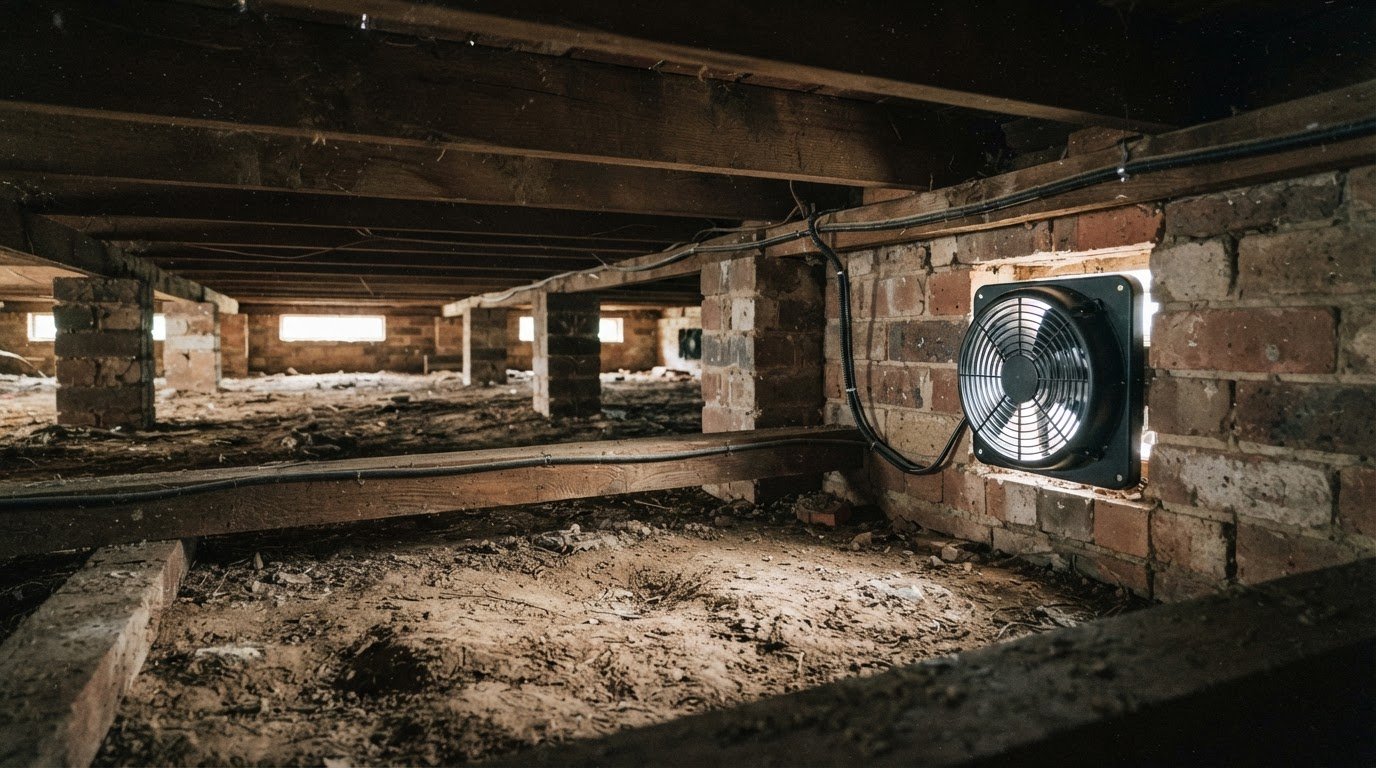
Mould can worsen when moisture remains, so address the source promptly. Attend to leaky showers, pipes, ceilings and rising damp once detected. If a leak is continuing, report it and document its location and effects. Don’t treat visible mould as the only issue. An inspection can establish whether moisture remains behind affected surfaces.
While awaiting assessment, open windows and doors to air damp rooms when safe. Clean hard surfaces and dry soft furnishings thoroughly after treatment. These steps can help limit further deterioration, but don’t conceal affected areas before documenting them. Promptly addressing mould may help limit damage compared with leaving it untreated.
Whether extensive drying, mould treatment or removal of building materials is needed depends on the property’s condition and inspection findings. A professional assessment can identify remaining moisture, determine whether drying equipment is needed, and assess whether materials can be cleaned or need replacing. This scope helps distinguish necessary work from premature repairs.
If mould-affected belongings must be moved, double-bag them first. Photograph each item before bagging, note its location, and keep the record with your claim documents. Don’t discard damaged contents without documenting them unless immediate action is needed to prevent further damage. Keep any related receipts or disposal records.
Before arranging permanent remediation, preserve the insurer’s assessment opportunity and ask how proposed work affects the claim. If mould or moisture needs professional assessment, you can arrange a mould inspection to clarify the affected areas and appropriate next steps.
ABC Mould Cleaning Solutions: Air Purification & Scrubbing
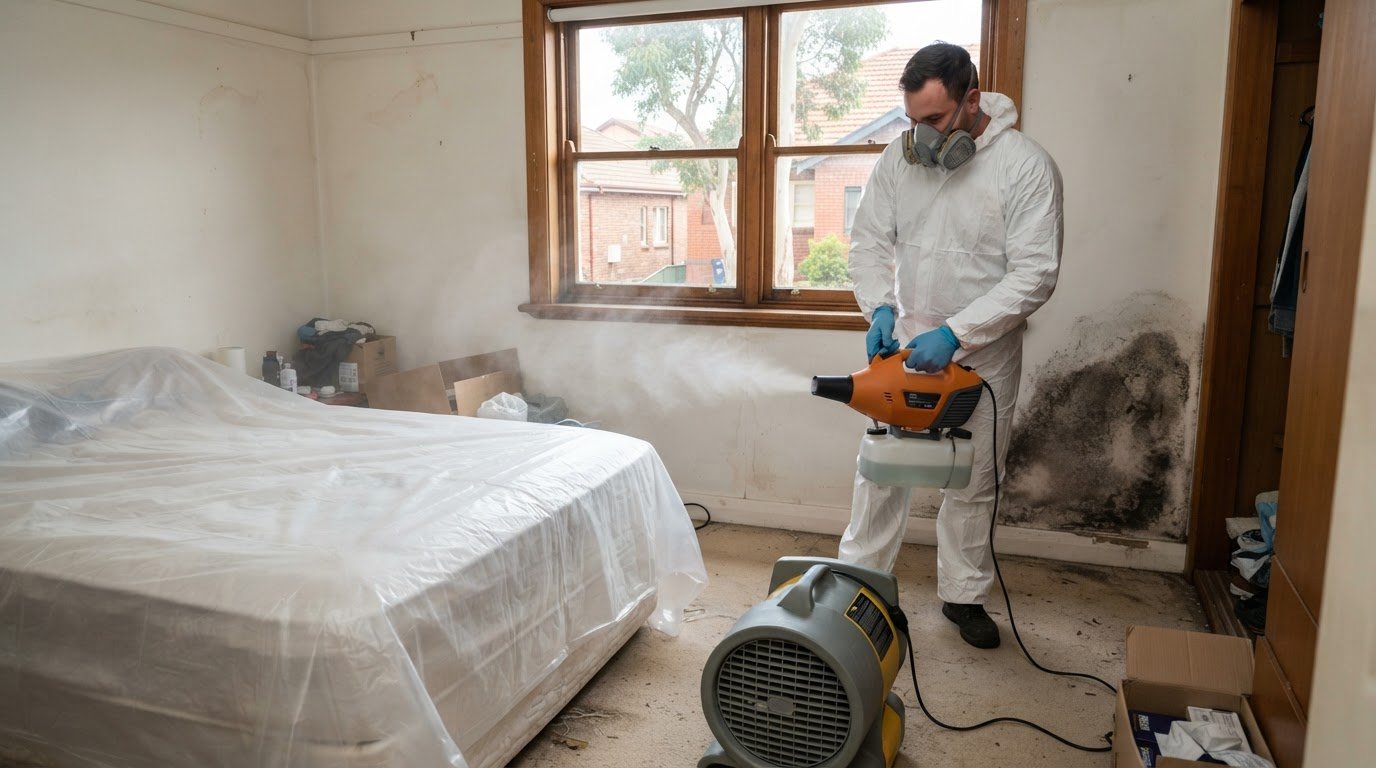
ABC Mould Cleaning Solutions can help when inspection findings show mould or airborne spores remain after water damage. Its Mould Inspection Services assess affected areas, while Mould Remediation and Air Purification & Scrubbing address contamination in the property.
The team uses the Goldmorr System, a biodegradable fogging process designed to address surface mould and airborne spores. An inspection can also identify moisture concerns and inform recommendations to help reduce the risk of future mould growth. If the insurer’s assessment has left questions about affected areas or remediation scope, this specialist assessment may help clarify the property’s condition.
For mould concerns in your property, contact ABC Mould Cleaning Solutions to discuss the next step.
Move forward with a clearer view of the property
If you’re asking, “what if my mould damage insurance claim is denied?”, keep the claim review and the property’s condition as separate priorities. An unresolved insurance decision doesn’t establish whether mould or moisture remains, or what work the affected area needs. A clear inspection can help you plan the property’s next steps while you continue addressing the insurer’s decision.
ABC Mould Cleaning Solutions offers Mould Inspection Services to assess affected areas, alongside Mould Remediation and Air Purification & Scrubbing for mould concerns. These services address the property’s condition, not the insurer’s decision, so keep claim documents and remediation records organised separately.
Contact ABC Mould Cleaning Solutions to discuss your property’s mould concerns and a practical next step. You can keep moving forward with clearer information and a plan focused on the home.
Frequently Asked Questions
Does home insurance cover mould damage?
Home insurance may cover mould when it results from a sudden, accidental insured event, but policies differ. The key distinction is often whether mould followed an event the policy covers, rather than developing from moisture in the air. For example, mould appearing after covered water ingress may be considered alongside the water-damage claim. Read the policy’s insured-event wording and exclusions together, not as separate promises.
Are there any exceptions?
Yes. A general mould exclusion may not settle a claim if mould resulted from a separate insured event. For example, a sudden pipe failure or storm-related water ingress may support a claim for resulting damage, subject to the policy terms. Look for wording about resulting damage, water damage and exclusions. The event, its cause and the link to mould all matter when assessing whether an exception applies.
Why might an Australian home insurance claim for mould damage be denied?
An insurer may deny a claim if it considers the mould arose from gradual moisture, condensation, poor maintenance or another excluded cause. It may also dispute whether a reported event caused the damage, whether notification was delayed, or whether the claimed loss falls within the policy. If you’re asking what to do if your mould damage insurance claim is denied, compare the specific reasons in the denial with your policy wording and evidence.
Does Australian home insurance cover mould caused by a sudden insured event, such as a burst pipe or storm?
It may, if the burst pipe or storm is an insured event under your policy and the mould damage is linked to it. A sudden leak that wets a wall differs from recurring dampness with no clear event. The insurer considers the policy terms and claim circumstances, including where water travelled and which materials were affected. Check whether the policy covers the event and resulting damage, not just mould itself.
Is mould from gradual leaks, poor maintenance, condensation or flooding typically excluded from Australian home insurance?
Mould connected to gradual leaks, poor maintenance or condensation is generally less likely to be covered, as policies commonly exclude mould damage. Flooding needs separate consideration: mould following a flood may be considered when the policy covers the event and the damage is linked to it. Don’t treat every flood or water incident alike. Check the policy’s definitions and exclusions, then compare them with the actual source and timeline of the moisture.
How can I check my Australian home insurance policy for mould damage exclusions and claim conditions?
Read the product disclosure statement and policy schedule together. Search for “mould,” “fungus,” “water damage,” “flood,” “gradual damage” and “maintenance.” Note any exclusions, limits, notification requirements and claim steps. Then compare those clauses with your denial letter and the event you reported. If a clause is unclear, ask the insurer to explain in writing how it applied that wording to your claim.
What evidence should I collect to challenge a denied mould damage insurance claim in Australia?
Gather the denial letter, relevant policy pages, claim reference, dated photos, messages with the insurer, and any repair or assessment reports. Add documents that clarify the source of water, such as a repairer’s findings about a failed pipe, if available. Label each item to show which point in the denial it addresses. Keep originals and a copy of everything submitted, including your explanation of the outcome you’re seeking.
How do I request an internal review of a home insurance claim denial in Australia?
Write to the insurer requesting an internal dispute resolution review. Include your policy and claim references, the denial date, the reason you disagree, relevant policy clauses and evidence supporting your position. State the decision or remedy you want reviewed. Keep a copy and record when you sent it. The insurer must respond to an internal dispute resolution request within 30 calendar days; unresolved disputes can then be taken to AFCA.