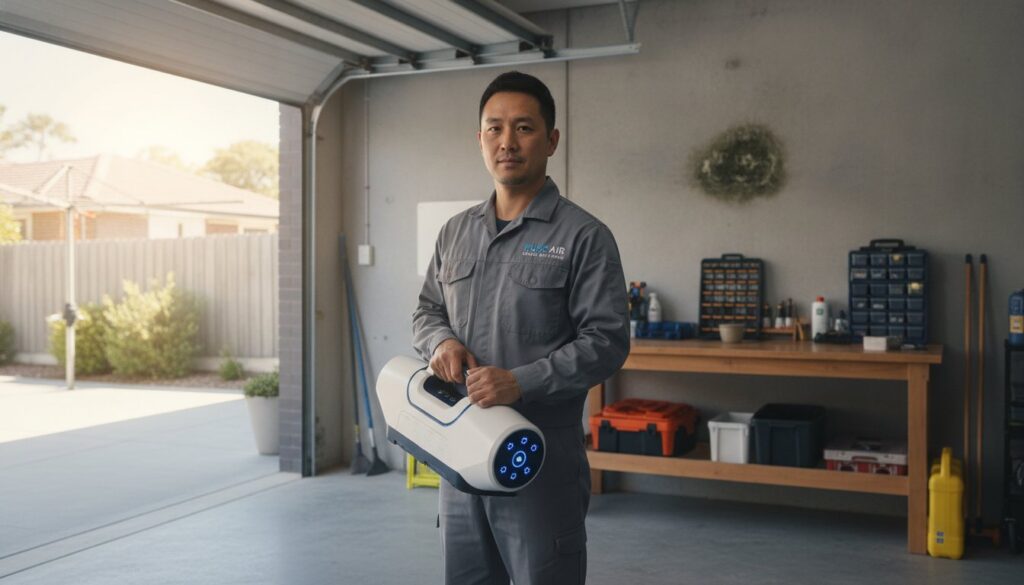
You open your garage door to grab a high-end power tool or check on your car, only to find a fuzzy green film spreading across the workbench and a thick, musty smell hitting your lungs. It’s a frustrating reality for many Sydney homeowners who use their garage for more than just parking. You probably agree that scrubbing the same spots every month feels like a losing battle against the damp. Since Sydney is ranked as Australia’s second-dampest capital city, your garage often becomes a primary breeding ground for spores that eventually drift into your main living areas.
We know you want to protect your expensive equipment and your family’s health from persistent fungal growth. This guide explains why professional garage mould removal is the only way to stop the cycle of recurring damage and musty odours. You’ll learn how our Goldmorr System uses a biodegradable fogging process to eliminate hidden spores that retail sprays simply cannot reach. We will preview the common causes of garage moisture in local properties and show you how our expert remediation restores your space to a safe, dry, and mould-free condition.
Key Takeaways
- Understand why professional garage mould removal is essential in Sydney’s humid climate to protect your health and property.
- Learn why DIY bleach and pressure washing often fail by only masking surface growth while leaving the roots to thrive.
- Discover how the Goldmorr System uses biodegradable fogging to eliminate both surface and airborne spores in porous garage concrete.
- Identify the risks of cross-contamination and how professional air scrubbing prevents spores from entering your main living areas.
- Gain long-term prevention strategies, including the installation of subfloor ventilation to manage ground moisture permanently.
Why Garages are Mould Magnets: The Sydney Context
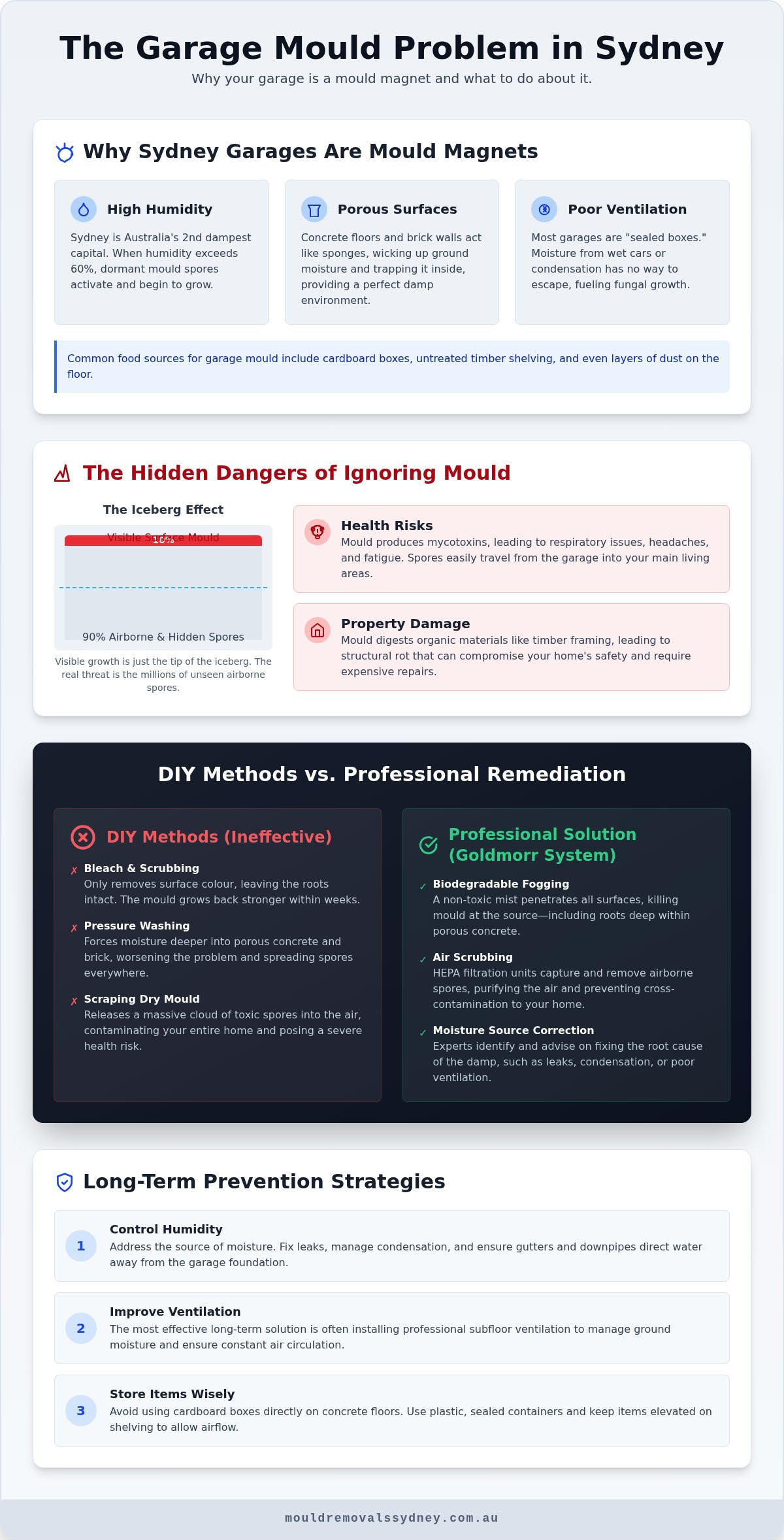
Garage mould isn’t just an aesthetic annoyance; it’s a biological infestation that thrives on high humidity and organic matter. To understand the severity of this issue, you can read a comprehensive overview of mould and its biology. In Sydney, our coastal environment creates a perfect storm for these spores. When relative humidity levels consistently climb above 60 percent, dormant spores activate and begin colonising surfaces. This is why you might see a sudden explosion of growth after a week of heavy rain.
Most Sydney garages are built with porous concrete floors and internal brickwork. These materials act like sponges, wicking up moisture from the ground and trapping it within the substrate. Once the moisture is present, the fungus looks for a food source. Common items found in local garages provide the perfect meal for an infestation:
- Cardboard storage boxes: These absorb moisture from the air and provide easy-to-digest cellulose.
- Untreated timber shelving: Raw wood holds dampness and allows roots to penetrate deep into the grain.
- Dust and organic debris: Even a thin layer of dust on a concrete floor can sustain a colony.
The Role of Poor Ventilation
Why do these spaces stay damp? Most garages lack the essential cross-flow ventilation required to dry out the air. We often see a “sealed box” effect. For example, a car enters during a rainstorm, bringing litres of water on its chassis. You close the door, and that moisture has nowhere to go. It sits in the air, settles on the walls, and fuels the need for professional garage mould removal. There’s also a direct link between damp subfloors and garage walls. If your subfloor is waterlogged, that moisture will inevitably migrate into the garage structure through the foundations.
Moisture Sources: From Leaks to Condensation
Identifying the “causation” is our priority. Rising damp often occurs when the damp-proof course in your garage foundation fails or was never installed. This allows ground water to move upward through the brickwork. Temperature fluctuations also play a major role. On cold Sydney nights, the warm air inside the garage hits the cold metal of the garage door, creating heavy condensation. This water drips onto the floor and creates a permanent damp zone. Finally, check your perimeter. Poorly maintained gutters or blocked downpipes often dump thousands of litres of water right against your garage footings, saturating the walls from the outside in. Don’t wait for the damage to become structural; effective garage mould removal starts with addressing these external moisture sources.
The Hidden Dangers of Ignoring Garage Mould
Ignoring a fuzzy patch of growth in the corner of your garage is a high-stakes gamble. This isn’t just a cosmetic issue or a project you can put off until next season. It is an active biological threat to your property and your family’s health. The United States Environmental Protection Agency (EPA) notes that the key to controlling mould is controlling moisture, and in a poorly ventilated Sydney garage, moisture is often winning. When you leave an infestation untreated, you’re allowing mycotoxins to accumulate. These toxic byproducts can cause chronic respiratory issues, headaches, and fatigue in healthy individuals.
Spores don’t respect boundaries. Every time you open the internal door to your home, a draft pulls airborne particles from the garage into your kitchen and living areas. Beyond health, the structural integrity of your home is at risk. Mould digests organic material to survive. If it’s visible on your garage walls, it’s likely already attacking the timber framing behind the scenes. This can lead to expensive structural rot that compromises the safety of the entire building. Professional garage mould removal is essential to stop this decay before it requires major construction work.
Air Quality and Airborne Spores
Visible growth represents only about 10 percent of the total fungal load in your garage. The real danger lies in what you can’t see. Millions of microscopic spores remain suspended in the air, waiting for a chance to land and spread. Never attempt to scrub or scrape dry mould. This “disturbs” the colony and creates a massive spike in airborne spore counts. Without professional air scrubbing equipment to capture these particles, you’re effectively hosing your lungs with contaminants. For more specific details on the risks of toxic strains, read our guide on What is Black Mould?.
Protecting Your Valuables
Sydney’s humidity turns common garage storage habits into a financial disaster. Cardboard boxes are a primary food source; they absorb moisture like a sponge and rot from the bottom up. We frequently see expensive leather car interiors, heirloom documents, and designer handbags ruined by “foxing” and fungal stains. Electronics and mechanical tools are equally vulnerable. Spores can grow inside circuitry, while the trapped moisture causes rapid corrosion of metal parts. The cost of professional garage mould removal is a fraction of the price of replacing a workshop full of tools or a car’s upholstery. Booking a professional mould inspection can identify the source of moisture before your valuables are lost for good.
Professional Garage Mould Removal vs. DIY Methods
Many homeowners reach for a bottle of bleach at the first sign of a fungal colony. This is a mistake. Bleach is a surface-level oxidiser that removes the colour from the fungus but leaves the roots, or hyphae, alive within the porous concrete. Since Sydney garages are often built with high-absorption materials, the mould simply regrows within weeks. You might think a pressure washer is a faster solution. It isn’t. High-pressure water forces moisture deep into the brickwork and concrete substrate. This trapped dampness creates a permanent breeding ground, leading to more severe health problems for anyone using the space.
Household cleaners also fail to address the airborne spore load. While you might wipe a shelf clean, millions of microscopic particles remain suspended in the air. Without professional-grade PPE, you risk inhaling these contaminants. A standard hardware store dust mask provides zero protection against microscopic spores. Professional garage mould removal requires specialised respirators and containment strategies to keep your family safe.
When DIY is Sufficient (and When It Isn’t)
DIY methods are generally safe for small, isolated spots on non-porous surfaces like metal shelving or plastic bins. If the growth covers less than a square metre and is on a smooth surface, a mild detergent can work. However, deep-seated infestations in concrete or brickwork are a different story. If you notice a persistent musty smell, you have a hidden problem. This odour is caused by microbial volatile organic compounds (mVOCs) being released by active colonies. Never use a standard household vacuum to clean these areas. Most domestic vacuums lack the sealed HEPA filtration needed to trap spores. You will simply blow the contaminants out of the exhaust and across your entire home.
The Professional Advantage
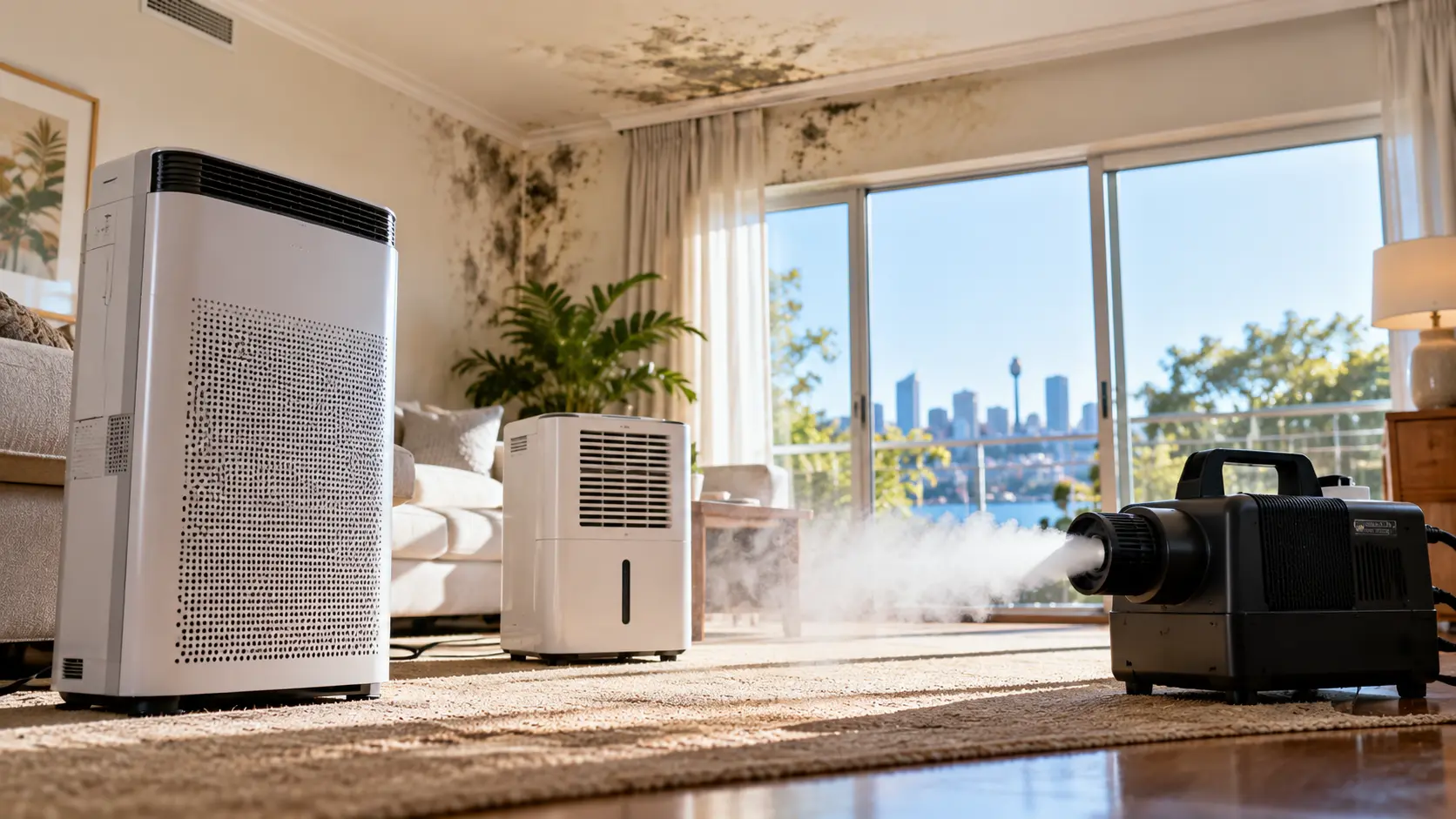
The primary benefit of hiring specialists is our access to industrial-grade Air Purification & Scrubbing equipment. We don’t just clean the surface; we scrub the air to ensure the spore count returns to safe levels. Our teams use thermal imaging technology to map hidden moisture sources behind garage walls or under the slab. This evidence-based approach finds the “causation” of the dampness rather than just treating the symptom. We provide long-term results that a spray bottle and a rag cannot match. If you are tired of the recurring musty smell, it’s time to book a professional mould inspection to secure your home’s health and structural integrity.
The ABC Mould Cleaning Process: Eradicating Spores for Good
Effective garage mould removal requires more than a bucket of soapy water. Our technicians follow a rigorous five-step protocol designed to eliminate the source of the infestation and prevent its return. We don’t guess where the moisture is hiding; we use science to find it. This systematic approach ensures that your garage isn’t just clean on the surface, but biologically safe for your family and your belongings.
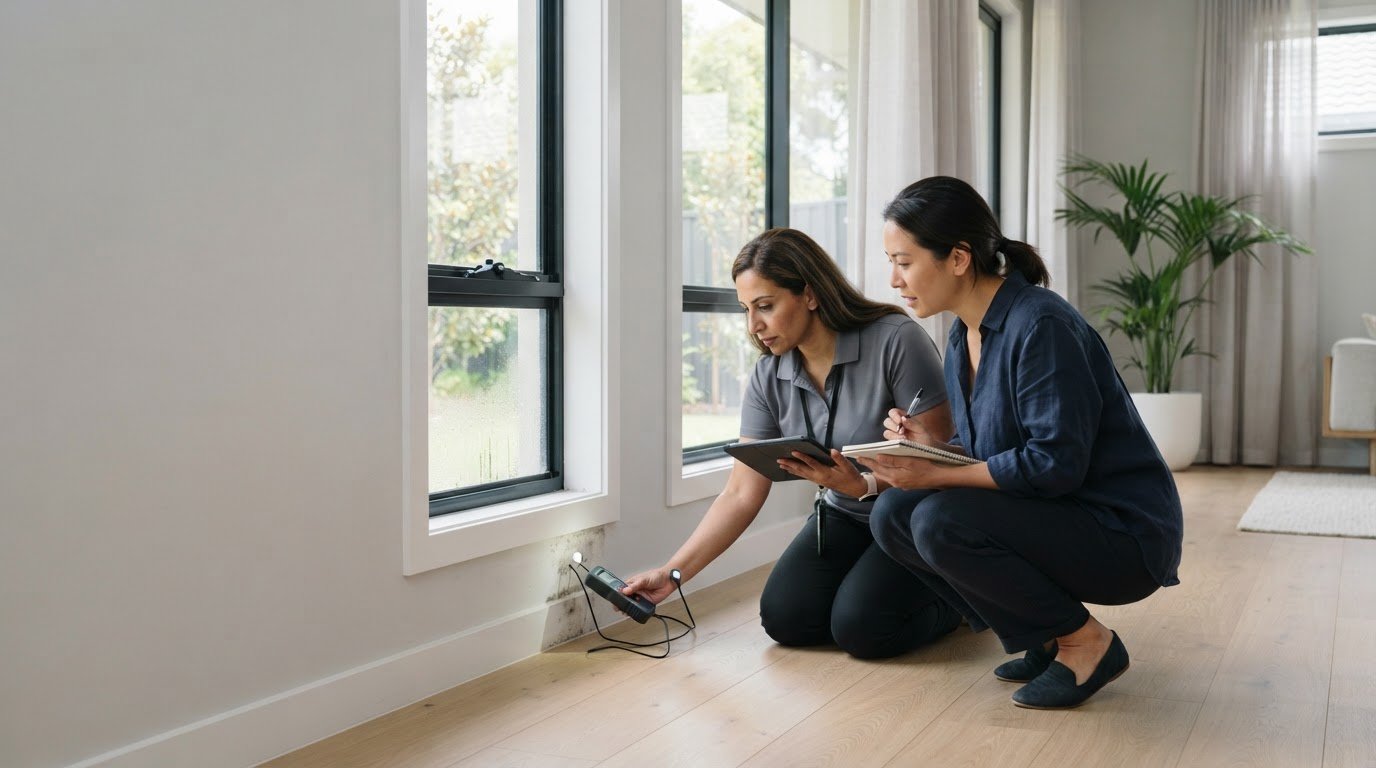
- Comprehensive Mould Inspection: We begin with moisture mapping and thermal imaging to locate the precise “causation” of the dampness.
- Containment and Air Scrubbing: We seal the garage to prevent cross-contamination. High-efficiency Air Scrubbing units run throughout the process to capture disturbed spores.
- Surface Treatment: Our team applies specialised, non-toxic cleaning agents to remove visible colonies from brickwork, concrete, and timber.
- The Goldmorr System Fogging: We deploy a proprietary biodegradable fog that seeks out and eliminates airborne and hidden spores in every corner of the garage.
- Post-Remediation Testing: We verify the results with air quality testing to ensure the space meets strict safety standards.
The Goldmorr System Difference
The Goldmorr System is the gold standard for treating porous garage concrete. Traditional liquid cleaners cannot penetrate deep into the substrate, but our biodegradable fogging process reaches into every crack and crevice. This mist eliminates spores on contact without leaving toxic residues behind. It’s completely safe for families, pets, and the environment. By following the standards of Sydney’s #1 Mould Removal Service, we ensure that your property receives the most advanced remediation technology available today.
Air Purification & Scrubbing
Air Scrubbing is the mechanical removal of airborne particles from the environment through high-efficiency filtration. During any remediation, billions of spores are disturbed and become airborne. We use industrial HEPA filtration units that remove 99.97 percent of these contaminants, ensuring they don’t settle back onto your clean surfaces. If your garage is attached to your home, we often recommend air duct cleaning to prevent spores from circulating through your HVAC system. This step is vital for protecting the air quality of your entire household. Don’t risk your family’s health with half-measures; contact us today for professional mould remediation that actually works.
Preventing Mould Recurrence in Your Garage
Completing a professional garage mould removal project is only the first half of the battle. To ensure the spores don’t return, you must address the environmental conditions that invited the infestation in the first place. Passive airflow, such as occasionally opening a window or the main door, is rarely sufficient during Sydney’s intense humidity cycles. You need a proactive strategy that manages moisture at the source, especially during the peak mould season from February to June. By implementing structural changes and better storage habits, you can transform your garage into a permanently dry, safe environment.
- Eliminate organic food sources: Replace all cardboard boxes with airtight plastic containers. This removes the cellulose that fungi need to survive.
- Manage ground moisture: Ensure your gutters and downpipes are clear. Blocked drainage systems dump water directly into your garage footings, leading to rising damp.
- Use technology: Run a high-capacity dehumidifier during humid months to keep relative humidity levels below the critical 60 percent threshold.
- Elevate your storage: Keep items off the concrete floor using metal or plastic shelving units to allow air to circulate underneath.
Structural Solutions and Ventilation
If your garage suffers from persistent dampness despite regular cleaning, the issue is likely structural. Installing active subfloor ventilation is the most effective way to prevent moisture from rising through the floor slab. These systems create constant, mechanical airflow that extracts damp air before it can settle on your walls or valuables. After remediation, we also recommend sealing porous concrete floors with anti-microbial coatings. This creates a non-porous barrier that prevents moisture from being wicked up from the ground. Finally, inspect your perimeter drainage. If water “pools” against the garage wall after rain, you may need to install ag-lines or improve the soil grading to direct water away from the foundation.
Maintenance Checklist for Homeowners
Consistency is the key to long-term prevention. Conduct monthly inspections of “hot spots,” specifically in dark corners and behind large shelving units where air remains stagnant. On dry, sunny Sydney days, keep the garage door open for several hours to flush out any trapped moisture. If you discover a roof leak or plumbing issue, you must address the water damage immediately. Even 48 hours of dampness is enough to trigger a new colony. Don’t let your investment in garage mould removal go to waste by ignoring these simple maintenance steps. A proactive approach is always more cost-effective than repeating a full remediation process.
Secure Your Home With Expert Garage Remediation
Leaving a damp garage untreated is a serious risk to your property’s structural integrity and your family’s respiratory health. You now understand that Sydney’s high humidity requires more than a quick wipe with bleach or a hardware store spray. Professional garage mould removal is the only reliable way to penetrate porous concrete and eliminate the microscopic airborne spores that eventually drift into your main living areas. By combining our advanced Goldmorr System with the long-term moisture control strategies we’ve discussed, you can reclaim your space and protect your expensive tools and cars from permanent damage.
Our Goldmorr System Certified Technicians are ready to restore your garage to a safe, dry condition. We provide a 24/7 emergency water damage response and a competitive price-matching guarantee for all written quotes. Stop the cycle of recurring growth and musty smells today. Get a Free Quote for Professional Garage Mould Removal in Sydney and breathe easier knowing your property is in expert hands. We look forward to helping you restore the safety and air quality of your home.
Frequently Asked Questions
Is mould in the garage a serious health risk?
Yes, garage infestations are a major health concern because spores easily migrate into your living areas through internal doors. Inhaling mycotoxins can trigger asthma, allergic reactions, and chronic sinus issues in healthy individuals. Since many Sydney residents use their garages as workshops or home gyms, you may be spending significant time in a contaminated environment. Professional remediation ensures these airborne threats are eliminated, protecting your family and any vulnerable occupants in the home.
Can I use bleach to remove mould from my garage walls?
No, you should never use bleach on porous garage surfaces like concrete or brickwork. Bleach is primarily water based; while the chlorine whitens the surface, the water penetrates deep into the substrate and actually feeds the fungal roots. This leads to rapid regrowth once the visible stain disappears. Instead, professional remediation uses specialised agents that reach into the pores of the material to kill the colony at its source without adding excess moisture.
How long does professional garage mould removal take?
Most professional garage mould removal projects are completed within one to two business days. The exact timeframe depends on the size of the space and the level of contamination on stored items. A typical session includes a comprehensive inspection, containment, surface cleaning, and the Goldmorr fogging process. If significant subfloor ventilation work is required to address the root cause, the timeline may extend. Our team focuses on efficiency to return your space to a safe state quickly.
Why does the mould in my garage keep coming back every winter?
Recurring winter growth is usually the result of condensation and poor airflow. During Sydney’s cooler months, warm air inside the garage hits cold metal doors or uninsulated brick walls, creating liquid water. If your garage lacks mechanical ventilation, this moisture remains trapped, allowing dormant spores to reactivate. Without addressing the underlying humidity levels through subfloor ventilation or dehumidification, surface cleaning will only provide a temporary fix. Professional garage mould removal finds and fixes these environmental triggers permanently.
Is the Goldmorr fogging system safe for my pets and family?
Yes, the Goldmorr System is completely safe for all occupants, including pets and children. We use a proprietary, biodegradable fogging agent that targets fungal spores without leaving behind any harmful chemical residues or toxic fumes. You won’t need to vacate your home for days after the treatment. This method is specifically designed to be environmentally friendly while providing a level of total spore eradication that traditional liquid cleaners simply cannot achieve in a large, porous garage space.
Do I need to throw away everything stored in my garage if I find mould?
You don’t have to discard everything, but porous materials like cardboard, old carpets, and upholstered furniture are difficult to salvage once infested. These items hold moisture and provide a food source for fungal roots. Non-porous items made of metal, plastic, or glass can usually be professionally cleaned and decontaminated. We recommend assessing the value of each item against the risk of reintroducing spores into your freshly cleaned garage. Switching to plastic storage bins is a vital preventative step.
Will professional mould removal get rid of the musty smell?
Yes, professional remediation effectively eliminates the signature musty odour associated with damp garages. This smell is caused by microbial volatile organic compounds (mVOCs) released by active fungal colonies. By using our Goldmorr fogging process to kill both surface and airborne spores, we remove the biological source of the scent. Unlike air fresheners that merely mask the smell, our process cleans the air and the substrate, leaving your garage smelling fresh and neutral once the treatment is complete.
How much does it cost to remove mould from a standard double garage?
The cost of remediation depends on the extent of the growth, the amount of stored inventory that requires cleaning, and the moisture source. Factors such as the need for industrial air scrubbing or subfloor ventilation installation will influence the final price. Because every garage has unique drainage and construction challenges, we provide tailored quotes based on a professional inspection. We offer a price-matching guarantee for all written quotes to ensure you receive the best value for expert remediation services.