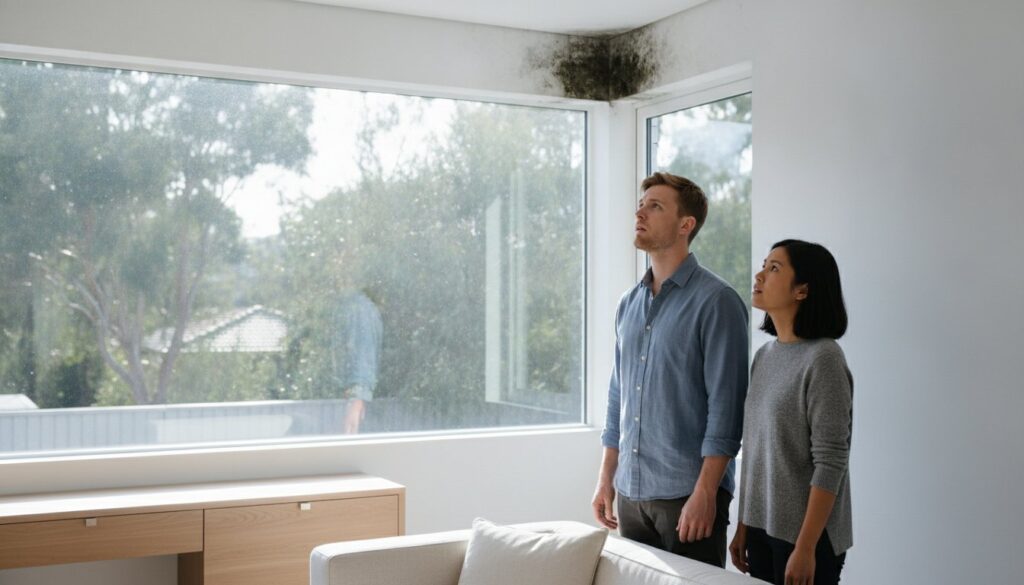
Nearly 20% of all property maintenance disputes in New South Wales now involve mould, proving that these stubborn spores are much more than a minor cleaning chore. You’re right to feel concerned when you spot a suspicious dark patch or catch a lingering, musty scent in your hallway. It’s incredibly frustrating to watch “cleaned” spots reappear just weeks later, and the anxiety regarding health risks for your family or pets is a heavy burden to carry. If you’ve been searching for “Signs of Mould in My Home: What Should I Do?”, you need more than a temporary DIY spray. You need a professional roadmap to secure your property’s value and your family’s well-being.
This expert guide provides the clarity you need to stop guessing and start taking decisive action. You’ll learn how to identify hidden infestations in your Sydney home and discover the exact steps required to eliminate them permanently. We will break down the latest AS-IICRC S520:2025 standards for professional remediation and explain why surface wiping often fails to solve the underlying issue. Finally, we’ll show you how our specialized Goldmorr System targets invisible airborne spores using biodegradable technology to restore your home’s air quality and your peace of mind.
Key Takeaways
- Learn to distinguish between surface dirt and active fungal growth by identifying specific “musty” odour profiles and visual discolouration on walls and ceilings.
- Identify the health-related “red flags,” including persistent respiratory symptoms and skin irritation, that often signal a hidden mould infestation.
- Take immediate control if you notice the Signs of Mould in My Home: What Should I Do? by isolating the area and cutting off the moisture source to prevent further spore travel.
- Discover why DIY wiping fails and how professional diagnostic tools like thermal imaging uncover the 90% of mould that remains invisible to the naked eye.
- Understand the professional remediation process, including advanced air purification and subfloor ventilation, to ensure the root cause is eliminated for good.
Recognising the First Signs: Visual and Odour Indicators
The first warning of a fungal infestation isn’t always a visible stain. Often, it’s a persistent, earthy odour that hits you as soon as you enter a room. This “musty” scent is caused by microbial volatile organic compounds (mVOCs) released as the fungi grow and consume organic material. If you find yourself wondering about the Signs of Mould in My Home: What Should I Do?, trust your nose first. A smell that resembles damp soil or wet socks usually points to active growth, even if your walls look perfectly clean. Don’t ignore this sensory signal; it’s your home’s way of telling you that the air quality is already compromised.
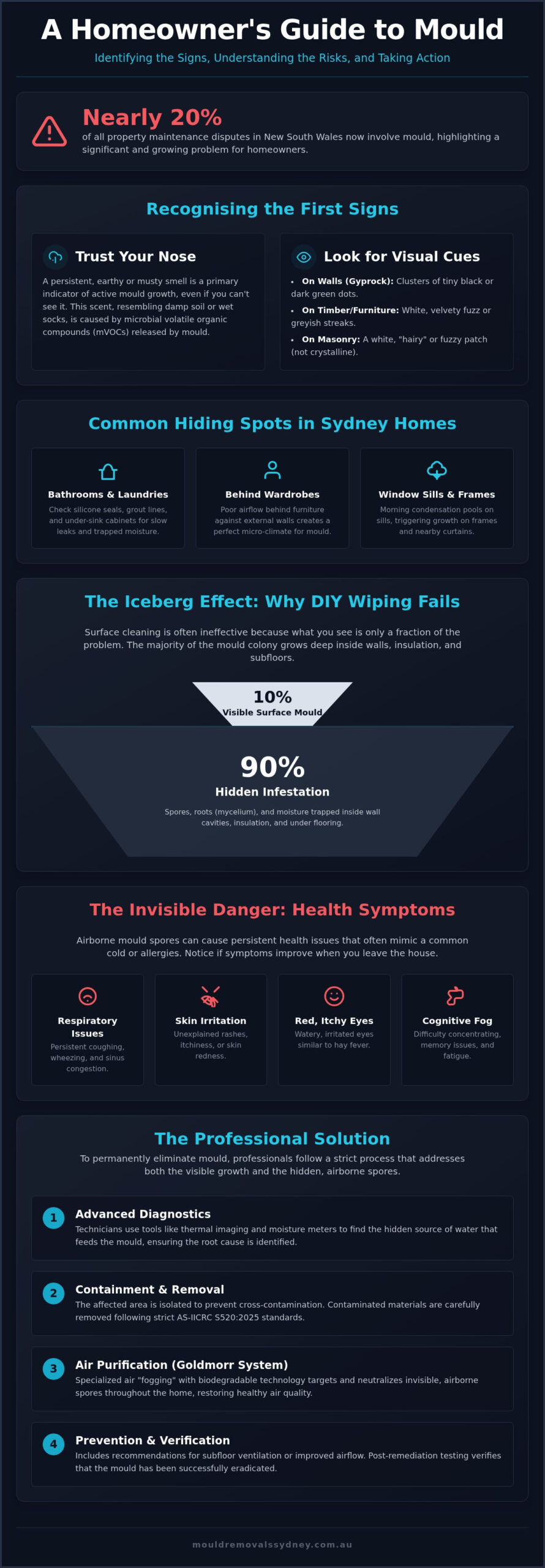
When visual cues do appear, they vary significantly based on the surface. On porous Gyprock, mould often looks like clusters of tiny black or dark green dots. On timber furniture or skirting boards, it might present as a white, velvety fuzz or greyish streaks. Indoor mold thrives on these materials because they provide a steady food source of cellulose. It’s vital to remember the “iceberg effect.” What you see on the surface is often just the tip. By the time spores penetrate the outer layer of your paint or wallpaper, the colony is likely well-established inside the wall cavity or insulation where it can grow unchecked.
Common Hiding Spots in Sydney Homes
Sydney’s unique climate, characterized by high humidity and coastal breezes, creates specific hotspots for fungal growth. Check these areas regularly:
- Bathrooms and Laundries: Inspect the silicone seals around your tub and the grout between tiles. Open the doors of under-sink cabinets to check for slow pipe leaks that create damp, dark environments.
- Behind Wardrobes: Furniture pushed flush against external walls prevents airflow. This creates a “micro-climate” where moisture traps, leading to rapid growth on the back of the unit.
- Window Sills: Our humid mornings lead to heavy condensation. If this water isn’t dried daily, it pools on the sill and triggers mould on the window frame and nearby curtains.
Differentiating Mould from Dirt or Efflorescence
Not every dark mark is a biohazard, but misidentifying the problem can lead to costly delays. You can perform a simple “sooty test” by gently wiping the area with a damp cloth. Dirt or soot usually wipes away cleanly or smears like dust. Mould, however, often leaves a persistent stain in the material and feels slightly slimy or furry to the touch. In many Sydney brick homes, you might notice a white, powdery substance on masonry. This is often efflorescence, a harmless salt deposit caused by water evaporating through the brick. If that white patch looks “hairy” rather than crystalline, you’re dealing with white mould.
Don’t adopt a “wait and see” approach if you suspect a problem. The Signs of Mould in My Home: What Should I Do? question requires immediate action because spores multiply exponentially. Waiting for the patch to grow larger only increases the airborne spore count, putting your family’s respiratory health at risk. Proactive identification is the only way to prevent a minor moisture issue from becoming a structural nightmare.
The Invisible Warning Signs: Health Symptoms and Structural Changes
While visual patches are concerning, the most dangerous elements of a fungal infestation are often the ones you cannot see. Airborne spores can circulate through your ventilation system and settle deep within your carpets and upholstery. If you’ve been asking yourself about the Signs of Mould in My Home: What Should I Do? because of a sudden onset of health issues, the answer lies in understanding how these spores interact with your body and your home’s structure. For a deeper understanding of moisture management, refer to A Brief Guide to Mold, Moisture, and Your Home.
Health symptoms often provide the first clue. Many residents report persistent coughing, wheezing, or sinus congestion that feels like a never-ending cold. A key indicator is whether these symptoms alleviate when you leave the house for work or travel. High spore counts are also linked to skin irritation, red eyes, and a cognitive “brain fog” that makes focusing difficult. If these invisible signals are present, booking a professional mould inspection service is the most efficient way to confirm the extent of the contamination.
Structural changes are equally telling. Moisture trapped behind surfaces causes bubbling paint, peeling wallpaper, and warped floorboards. These aren’t just cosmetic issues. They indicate that the underlying timber frames and drywall are being compromised. Over time, fungal growth eats away at organic building materials, potentially leading to expensive structural failures if left unaddressed. Identifying the Signs of Mould in My Home: What Should I Do? is a critical step in protecting both your family’s health and your property’s market value.
Who is Most at Risk in Your Household?
Vulnerable groups, including children, the elderly, and those with pre-existing respiratory conditions like asthma, are the first to feel the effects of high spore concentrations. Pets are also susceptible. Watch for signs of lethargy, excessive scratching, or unusual sneezing in your dogs or cats. It’s a common misconception that only “Black Mould” is dangerous. Many varieties of fungi produce mycotoxins that can impact your health, making professional identification essential for a safe living environment.
Structural Indicators of Hidden Moisture
Damp patches on walls that never seem to dry out, even during Sydney’s sunnier days, are a major red flag. You might also notice a “heavy” or humid feeling in specific rooms, regardless of the outdoor weather. This often indicates a failure in your home’s moisture barrier or the presence of rising damp. When moisture moves upward through porous masonry, it creates a constant supply of water for fungal colonies to thrive behind your skirting boards and within your wall cavities.
What Should I Do First? Immediate Steps for Sydney Residents
When you discover a fungal outbreak, your first instinct might be to reach for a bottle of bleach. Stop. Taking the wrong approach can actually worsen the contamination by spreading spores into previously unaffected areas. If you are currently asking, Signs of Mould in My Home: What Should I Do?, you must follow a systematic protocol to secure your environment. Immediate action prevents the issue from escalating into a full-scale structural remediation project.
Follow these five essential steps to manage the situation safely:
- Step 1: Identify the moisture source. Mould cannot survive without water. Look for leaking pipes, condensation on window sills, or poor subfloor ventilation caused by Sydney’s coastal humidity.
- Step 2: Isolate the area. Close doors and windows to the affected room. This prevents air currents from carrying spores into other parts of your home.
- Step 3: Avoid DIY mistakes. Never dry-scrub or use undiluted bleach on porous surfaces. These actions often trigger a massive spore release.
- Step 4: Document the damage. Take clear, high-resolution photos. These are vital for insurance claims and help specialists assess the severity of the growth.
- Step 5: Call the experts. If the visible patch is larger than a dinner plate, you need professional mould removal Sydney services to ensure the air is safe.
The Dangers of Incorrect DIY Cleaning
Bleach is a common but ineffective tool for porous materials like Gyprock or timber. It merely whitens the surface while the water content in the bleach feeds the roots (mycelium) deeper into the material. This leads to a rapid, more aggressive regrowth within weeks. Scrubbing at dry mould is even more dangerous. It aerosolizes millions of microscopic particles, significantly increasing the risk of health effects of mold exposure. If items like carpets, mattresses, or soft toys are heavily infested, they usually cannot be salvaged and must be disposed of following strict containment protocols.
Managing Air Quality Until Help Arrives
Controlling the atmosphere is your best temporary defense. Run a dehumidifier to drop the relative humidity in the room below 60%. This effectively puts the mould into a dormant state, slowing its growth. If you have access to a HEPA air scrubber, use it to filter out airborne contaminants. Air purification is the critical first step in remediation because it physically removes the microscopic triggers from your breathing zone before they can settle elsewhere. Taking these proactive measures protects your family while you wait for a technical assessment. Don’t let the Signs of Mould in My Home: What Should I Do? question linger; act now to stabilize your home’s air quality.
Why ‘Wiping it Away’ Isn’t Enough: The Case for Professional Inspection
Cleaning visible patches with a cloth is a temporary fix that ignores the biological reality of fungal growth. When you ask, Signs of Mould in My Home: What Should I Do?, you must understand that the human eye is a poor diagnostic tool. Up to 90% of a mould infestation is often invisible, existing as microscopic spores in the air or hidden colonies thriving behind your Gyprock. Surface wiping only addresses the aesthetic issue, leaving the root system and the airborne threat completely intact. This is why mould often returns more aggressively just weeks after a DIY cleaning attempt, and why many property owners turn to professional Mold Remediation and Testing Services to ensure the job is done correctly the first time.
Professional technicians use a suite of advanced diagnostic tools to see what you cannot. Moisture meters detect water presence within building materials, while thermal imaging cameras identify cold spots and leaks hidden deep inside wall cavities. Air-cell sampling provides a definitive count of airborne spores, confirming if the environment is safe for your family. If you suspect hidden growth, booking a comprehensive mould inspection service is the only way to map the true extent of the problem and prevent long-term structural damage.
What Happens During a Professional Mould Inspection?
The goal isn’t just to find the mould; it’s to find the “why.” Our specialists perform source detection to pinpoint the exact moisture intrusion, whether it’s a pinhole pipe leak or a failure in your subfloor ventilation. We then conduct extent mapping to determine if spores have migrated to other rooms through your HVAC system. This data allows us to develop a tailored mould remediation plan that targets both the source and the symptoms simultaneously.
The Goldmorr Difference
Traditional remediation often involves aggressive scrubbing or abrasive chemicals that can damage your property. We utilize the Goldmorr System, a proprietary methodology that centers on biodegradable fogging. This process aerosolizes a specialized agent that reaches spores in ceiling voids, wall cavities, and other inaccessible areas that manual cleaning cannot touch. It is non-toxic and biodegradable, ensuring your home is safe for immediate re-entry once the process is complete. This “no-scrub” alternative is significantly more effective than retail cleaners because it eliminates the airborne threat, restoring your home to a healthy state without the need for harsh, corrosive substances.
Restoring Your Home: Professional Remediation and Prevention
Restoring your property requires more than just removing the visible growth; it demands a total environmental reset. If you have identified the Signs of Mould in My Home: What Should I Do?, the final phase is professional remediation. This process begins with strict containment to prevent cross-contamination. We use negative air pressure and HEPA-grade air scrubbing to strip spores from the atmosphere while we treat surfaces. The job isn’t finished until we conduct final air clearance testing to prove your home meets safety standards and is fit for habitation.
A successful outcome depends on eliminating the moisture source. This often involves immediate Water damage repair to seal leaks or dry out structural timbers. Without addressing the root cause, even the most thorough cleaning is merely a temporary pause before the next outbreak. Our goal is to transform your home from a damp environment into a dry, hostile place for fungal growth.
The Importance of Subfloor Ventilation
Sydney homes are frequently built on sandstone foundations and heavy clay soils. These materials naturally retain moisture, which then evaporates into the subfloor space. If this damp air isn’t moved, it seeps into your living areas, causing warped floorboards and musty smells. Mechanical ventilation is the solution. By installing high-performance subfloor fans, we pull stagnant, humid air out and replace it with fresh, dry air. This effectively stops ‘Rising Damp’ and prevents fungal colonies from establishing a foothold under your home’s structure.
Your Long-Term Prevention Checklist
Maintaining a healthy home is an ongoing commitment. Use this checklist to stay ahead of moisture issues before they require professional intervention:
- Gutter Maintenance: Clear debris every six months to prevent water overflow into your wall cavities.
- Roof Inspections: Check for cracked tiles or failing flashing after major Sydney storms.
- External Venting: Ensure your bathroom and laundry exhaust fans vent directly outside, never into the roof space.
- Humidity Monitoring: Keep indoor relative humidity levels between 30% and 55% using dehumidifiers during the wet season.
Don’t let a small patch turn into a major health crisis or a structural liability. If you’ve spotted the Signs of Mould in My Home: What Should I Do?, take the final step to secure your property. Book a professional inspection today to ensure your home remains a safe, dry, and healthy sanctuary for your family.
Secure Your Property and Health Today
Ignoring the early indicators of fungal growth only leads to escalating repair costs and prolonged health risks for your family. By now, you understand that a musty odour or a small patch on the Gyprock is often just the surface of a much larger airborne problem. If you’ve been searching for Signs of Mould in My Home: What Should I Do?, the answer is to stop the spread before it compromises your home’s structure. Surface wiping is never enough; true safety requires targeting the invisible spores that linger in your breathing zone.
Our specialists provide affordable, professional service across all Sydney suburbs. We utilize the proprietary Goldmorr System to eliminate airborne spores safely and effectively without harsh scrubbing. Whether you need an urgent 24/7 emergency water damage response or a comprehensive preventative assessment, we have the technical expertise to restore your peace of mind. Don’t wait for the problem to reappear.
Get a Professional Mould Inspection & Free Quote Today
Take the first step toward a drier, healthier living environment. We’re here to help you reclaim your home from mould for good.
Frequently Asked Questions
Is it safe to sleep in a room with mould?
No, sleeping in a room with active fungal growth is not recommended because it leads to prolonged exposure to airborne spores. During sleep, your respiratory rate is steady, meaning you inhale higher concentrations of mycotoxins over several hours. This often triggers nighttime coughing, wheezing, and morning sinus congestion. If you’ve identified the Signs of Mould in My Home: What Should I Do?, the first step is to relocate to a clean room until the area is professionally remediated.
Can I just use vinegar to kill mould in my Sydney home?
While a 4:1 vinegar-to-water solution can kill approximately 80% of fungal species on non-porous surfaces, it’s ineffective for deep-seated infestations. Vinegar doesn’t penetrate porous materials like Gyprock or timber where the roots thrive. In Sydney’s humid climate, vinegar often fails to prevent rapid regrowth. For a permanent solution, you need a professional system that addresses the moisture source and neutralizes airborne spores simultaneously.
How long does professional mould removal take?
Most professional remediation projects for a standard Sydney home are completed within one to two days. Small, localized treatments in a single bathroom may take only a few hours. Larger whole-house projects involving subfloor ventilation installation or extensive water damage restoration require more time for containment and air scrubbing. We provide a specific timeline after our initial inspection so you can plan your schedule with certainty.
Does insurance cover mould removal in Australia?
Insurance coverage typically depends on the root cause of the moisture. Most Australian policies cover mould remediation if it results from a sudden, “defined event” like a burst pipe or storm damage. However, mould caused by poor maintenance, gradual leaks, or lack of ventilation is usually excluded. Check your Product Disclosure Statement (PDS) or speak with your provider to confirm if your specific situation qualifies for a claim.
Will mould come back after professional treatment?
Mould will not return if the underlying moisture issue is correctly identified and eliminated. Our process focuses on source detection to ensure leaks are sealed and humidity is controlled through solutions like subfloor ventilation. If you follow our post-treatment maintenance checklist and keep indoor humidity below 60%, your home will remain a hostile environment for fungal growth. We stand by our results with evidence-based clearance testing.
What is the difference between black mould and regular mould?
The term “black mould” often refers to Stachybotrys chartarum, which is known for producing high levels of mycotoxins. However, the color alone doesn’t determine the danger level. Many green, grey, or white moulds are equally hazardous to your respiratory health. If you are worried about the Signs of Mould in My Home: What Should I Do?, don’t focus on the color. Professional air sampling, such as the comprehensive inspections and testing provided by My Pure Environment, is the only way to identify the specific species and risk level.
How do I know if the mould is inside my air conditioning unit?
If you notice a musty odour immediately after turning on your split system, it’s a strong indicator of internal growth. You may also see small black spots on the directional louvres or dust buildup that looks “fuzzy.” Because air conditioners recirculate air, an infested unit can spread spores throughout your entire home. We recommend specialized split system aircon cleaning to sanitize the internal coils and drainage pans.
Can I stay in my house during the Goldmorr fogging process?
You must vacate the property during the actual fogging process, but you can typically return within a few hours. Our Goldmorr System uses a biodegradable, non-toxic agent that is safe for occupants and pets once it has settled. Unlike traditional abrasive cleaning methods that use harsh chemicals, our process is designed for maximum efficiency with minimal disruption. We’ll give you a clear “all-clear” time once the treatment is finished.