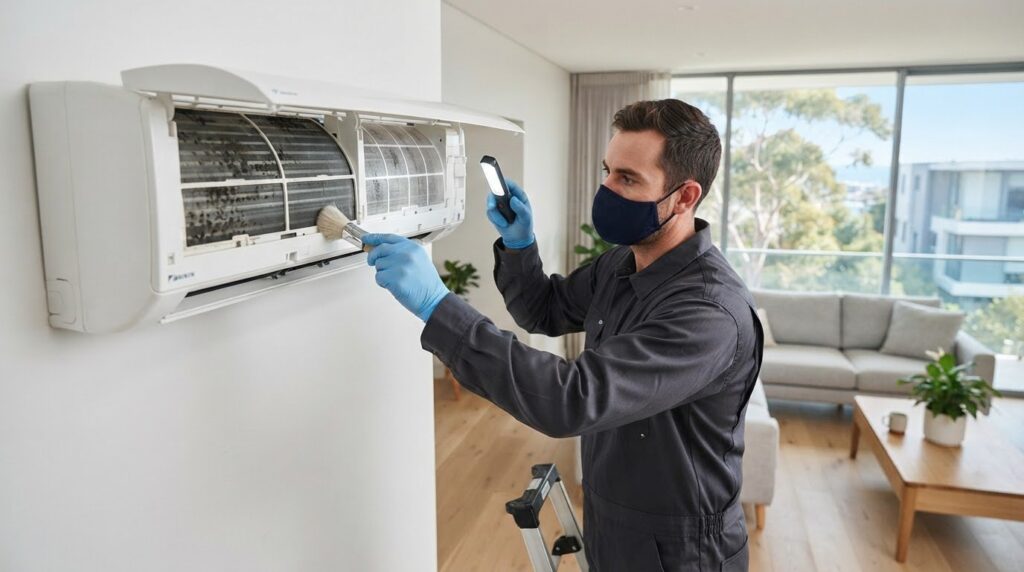
A fixed cleaning interval won’t suit every split system. Inspect your unit regularly and arrange split system aircon mould removal in Sydney if you notice visible mould, condensation inside the unit or a musty smell. These signs may point to mould growth that needs attention.
It’s reasonable to expect an air conditioner to keep a room comfortable without affecting the air circulating through your home. But mould can enter through cracks or holes and spread inside the unit. If left unchecked, it can cause serious health problems for people with allergies or asthma.
This guide explains what affects cleaning frequency, what to look for during an inspection and what mould removal involves. You’ll learn how moisture contributes to mould growth, why extensive mould may need professional cleaning, and how a clean unit can support better airflow and indoor air quality. The aim is to help you recognise when routine checks are enough and when it’s time to act.
Key Takeaways
- Set a cleaning routine around your unit’s use and condition, and learn which cleaning steps help remove built-up grime.
- Recognise how moisture and mould inside an air conditioner can affect airflow and indoor air quality.
- Know what to look for during a split system inspection, including musty odours, condensation and visible growth.
- Understand how mould removal and sanitising differ from routine cleaning, and when extensive growth calls for professional attention.
- See what professional assessment can involve and how air purification and mould remediation may help address the wider issue.
How Often Should Your Air Conditioner Be Cleaned?
There isn’t one cleaning interval that suits every Sydney home. Check your split system regularly, and base professional cleaning on visible dirt, moisture, odours, usage and the unit’s condition.
In Chatswood and other North Shore suburbs, humid conditions or frequent air conditioning use can make the indoor unit worth monitoring closely. Check the filters and accessible surfaces, and arrange an inspection if you notice condensation, a musty smell or visible mould.
Disassembly, Degreasing and Sanitising
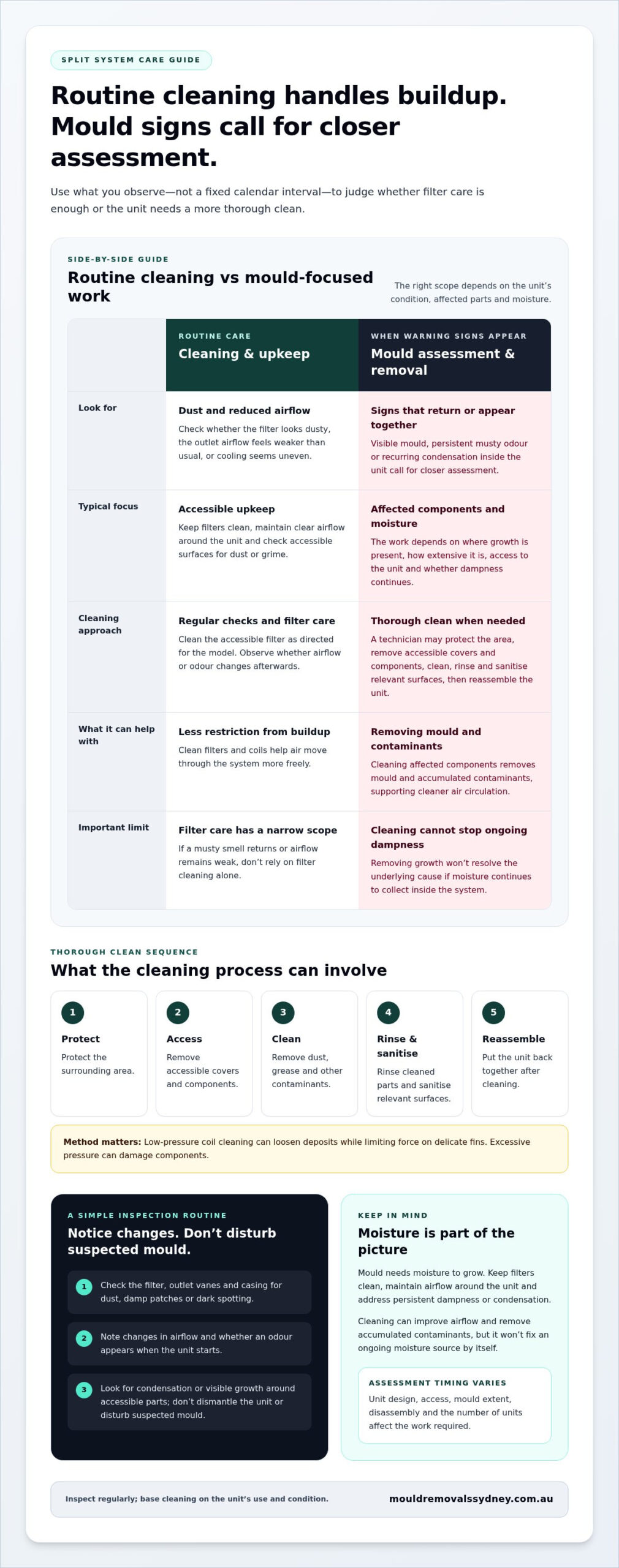
A thorough clean follows a sequence: protect the surrounding area, remove accessible covers and components, then clean away dust, grease and other contaminants. The technician rinses cleaned parts and sanitises relevant surfaces before reassembling the unit.
Ask what the cleaning covers, especially the filters, coil and drainage areas. For split and ducted air conditioners, low-pressure coil cleaning can loosen deposits while limiting force on delicate fins. Excessive pressure can damage components, so the cleaning method matters.
Service Duration and Mould Prevention
How long does professional split system aircon mould removal take? It depends on the unit’s design, access, mould extent and the work needed for disassembly, cleaning, rinsing and sanitising. A straightforward clean takes less work than a job involving extensive growth or several units.
How can you prevent mould returning in a Sydney split system? Keep filters clean, maintain airflow around the unit and address persistent dampness or condensation. After cleaning, watch for musty odours and visible growth. Moisture allows mould to grow and spread.
Low-pressure coil cleaning can remove built-up grime that restricts airflow across the heat-exchange surface. Clean filters and coils help air move through the system more freely, while removing accumulated contaminants supports cleaner indoor air circulation. Cleaning improves the unit’s condition, but won’t resolve an ongoing moisture source by itself.
Cleaning services for split systems and ducted air conditioning vary with the number and type of units, access, contamination and the work required. The price depends on the case and is given after a quote request; factors include unit condition, mould extent, disassembly needs and whether multiple systems need cleaning. This helps distinguish a standard clean from more involved mould removal.
Schedule cleaning based on what you observe, not just a calendar reminder. If the unit develops a persistent musty smell, visible mould or recurring condensation, arrange an assessment rather than relying on filter cleaning alone. For split system aircon mould removal in Sydney, the right cleaning scope depends on the growth, affected components and moisture conditions around the unit.
Indoor air quality and airflow
A split system moves room air across its filter and indoor coil, then circulates it back into the space. If mould grows inside the unit, air can pass near affected surfaces whenever the system runs. Mould can enter through cracks or holes and spread inside an air conditioner.
Airflow can also suffer when dust, fibres and other contaminants collect on filters or coils. A clogged filter restricts air entering the unit, while deposits on the coil can interfere with air moving across its surface. You may notice weaker airflow from the outlet, uneven cooling between rooms or a system that runs without reaching its usual comfort level.
Follow a simple observation routine. Compare the outlet airflow with its usual strength, and check whether the filter looks dusty. Note any change in smell when the unit starts, especially a musty odour that returns during operation. Look for condensation or visible growth around accessible parts, but don’t reach inside the unit or disturb suspected mould.
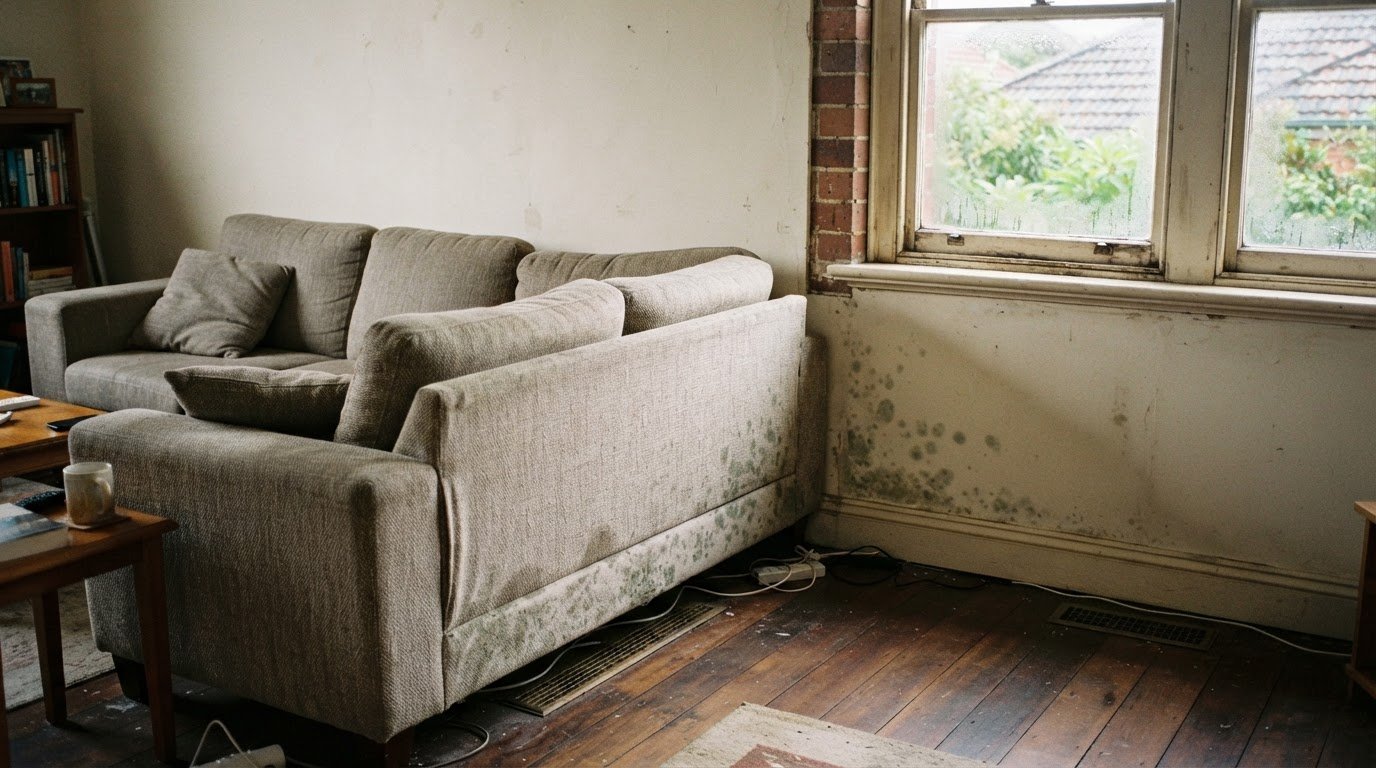
Mould needs moisture to grow, so a damp indoor unit can support continued growth. Condensation may be a clue, particularly when it appears alongside a musty smell or visible spots. Cleaning affected components can remove mould and accumulated contaminants, supporting cleaner air circulation. It won’t address the underlying cause if moisture continues to collect inside the system.
Mould and bacteria are different types of contaminants, so don’t assume one visible mark identifies everything inside a unit. A musty smell, visible growth on a coil and persistent condensation are practical warning signs that call for closer assessment. Unchecked mould in air conditioners can cause serious health problems for people with allergies or asthma.
Air quality depends on more than the indoor unit. Dust entering through an open window, indoor activities and moisture elsewhere in the home can also affect the air. Treat the air conditioner as one part of the picture: clean its accessible filter as directed for the model, keep the outlet clear, and observe whether airflow or odour changes after cleaning.
If a musty smell returns soon after filter care, or airflow remains weak, arrange a closer inspection rather than repeatedly running the system. Note when the smell occurs, whether the unit has visible condensation and which rooms have reduced airflow. These observations help identify whether mould, restricted airflow or another issue needs attention.
Inspection and assessment of air conditioning systems
Regular checks can help identify mould before it spreads through an air conditioning system. Look for condensation inside the unit, a musty smell or visible growth on coils and other parts. These signs matter most when they appear together or return after cleaning.
Begin with a visual check of accessible areas. Look at the filter, outlet vanes and casing for dust, damp patches or dark spotting. Don’t dismantle the unit or disturb suspected mould. Instead, note where you see growth and whether the system’s smell changes when it starts or stops.
Check airflow as part of the same assessment. Compare the air from each outlet with its usual strength, and note rooms that cool unevenly. Reduced airflow can have several causes, including a dirty filter or deposits on the coil. A musty odour or visible growth alongside weak airflow makes a closer inspection sensible.
Pay attention to condensation that collects inside the unit or repeatedly appears around the same area. Mould needs moisture to grow, so dampness can help explain why growth develops. Note when condensation occurs, whether it follows operation and whether the area dries between uses. These observations help distinguish a brief surface condition from an ongoing moisture concern.
A useful inspection records the location and pattern of each sign. For example, note whether visible growth is on the coil, near the air outlet or around another component. Record recurring odours, airflow changes and condensation together. Photos taken from a safe distance can document changes over time without touching affected surfaces.
A professional assessment should connect visible signs with the components that need attention. It can consider the filter, coil, fan area and drainage path, alongside access and the amount of visible growth. Extensive mould may require professional cleaning rather than filter care alone.
Keep checking the unit regularly, especially after noticing a musty smell or dampness. If the same signs return, repeated surface cleaning may miss the underlying source. An assessment can establish the likely cleaning scope and identify whether moisture, restricted airflow or contamination needs further attention.
- Record: the location of visible growth, condensation and odours.
- Compare: outlet airflow with its usual strength and note affected rooms.
- Avoid: touching mould or opening components during a basic visual check.
Clear observations make an inspection more useful. Share when symptoms occur, which components show signs and whether cleaning changed the smell or airflow. This helps focus the assessment on the air conditioning system’s condition and the next practical step.
Mould removal and sanitising
In Australia, there isn’t one universal cleaning method for every split system. Follow the manufacturer’s maintenance instructions, and keep water away from electrical components during cleaning.
Mould is a fungus that can grow and spread inside air conditioners, particularly where moisture remains. Removing visible marks alone may not address growth on a coil, fan or drain area. The cleaning method should match the affected components, the extent of growth and how easily those areas can be accessed.
Before cleaning, switch the unit off and isolate its power according to the manufacturer’s instructions. Don’t pour liquid into the casing, spray electrical parts or scrape mould from internal components. These actions can damage the system or disturb material inside the unit. Clean only parts the manufacturer identifies as user-accessible, such as a removable filter.
Professional cleaning generally works through the unit methodically. Accessible covers and components are removed as appropriate, then dust, grease and mould deposits are loosened and removed. Coils and other suitable surfaces are rinsed using a controlled method, with care around electrical parts. Sanitising follows cleaning, and components are reassembled once the work is complete.
Sanitising is not a substitute for removing visible contamination first. A surface covered in dirt or mould needs appropriate physical cleaning before a sanitising product can reach it effectively. Product directions matter too: the surface, application method and contact time must match the label. Avoid mixing household chemicals, and never apply a product inside an air conditioner unless its instructions allow that use.
After cleaning, check the unit for remaining visible deposits, moisture and normal airflow. A lingering musty smell or recurring condensation can indicate that the problem needs further assessment. Mould needs moisture to grow, so cleaning without addressing persistent dampness can leave conditions that support renewed growth.
- Before cleaning: switch off and isolate power according to the unit instructions.
- During cleaning: avoid spraying electrical components or disturbing internal mould.
- After cleaning: check for remaining growth, dampness, odours and airflow changes.
Extensive mould inside an air conditioner may require professional cleaning because internal components can be difficult to reach safely. A professional assessment can identify affected areas and the cleaning steps needed. If mould returns after cleaning, investigate moisture and condensation rather than repeating surface wiping alone. Addressing both contamination and its moisture conditions is central to a thorough result.
There isn’t one cleaning method for every split system. Follow the manufacturer’s maintenance and safety instructions, use cleaning products only as their labels allow, and consider professional cleaning for extensive internal mould.
Professional mould removal in Sydney
Professional mould removal is most useful when growth extends beyond an accessible filter. Split system coils, fan barrels and drainage areas can be difficult to inspect or clean thoroughly without opening the unit. Extensive mould may require professional cleaning because surface wiping can leave contamination on internal components.
A sound process starts by identifying affected areas and likely moisture sources. The technician considers visible growth, condensation, odours and airflow changes, then determines which components need cleaning. In a Sydney home, recurring dampness matters: removing mould without addressing ongoing moisture can leave conditions that support regrowth.
The work should match the problem. A unit with a dirty filter needs different treatment from one with growth on its coil or fan. For multiple systems, each indoor unit needs its own assessment. Clear findings explain which areas require cleaning, whether sanitising is appropriate and what moisture conditions need attention.
During cleaning, suitable components are accessed and treated using methods appropriate to the unit. Dust, grease and visible mould are removed from affected surfaces, with care around electrical parts. Coils may need controlled rinsing, while other components require methods suited to their material and access. The unit is then reassembled and checked for remaining visible contamination and airflow.
Professional work should also leave you with practical next steps. Ask for a clear explanation of the areas inspected, the components cleaned and any moisture concerns identified. For example, a recurring musty smell after cleaning is a reason to reassess dampness or less accessible areas, rather than simply wiping the casing again.
- Before work: note which unit smells musty and when the odour appears.
- During assessment: identify visible growth, condensation and affected components.
- After cleaning: observe airflow, odours and signs of renewed moisture.
Choose professional cleaning when mould is extensive, returns after basic care or appears on internal parts. Cleaning the filter alone won’t address growth on a coil or fan. A professional assessment is also useful when the source of dampness is unclear or multiple indoor units show signs.
For Sydney split systems, the clearest takeaway is to treat mould removal as more than a surface clean. The work should address affected components and consider the moisture conditions that allowed growth. Request a mould assessment if visible growth or a persistent musty smell points to a problem inside your unit.
ABC Mould Cleaning Solutions: Air Purification & Scrubbing
ABC Mould Cleaning Solutions can help when mould or a persistent musty smell needs more than routine filter care. Its services include Mould Inspection Services, Mould Remediation and Air Purification & Scrubbing, helping address affected areas and airborne spores.
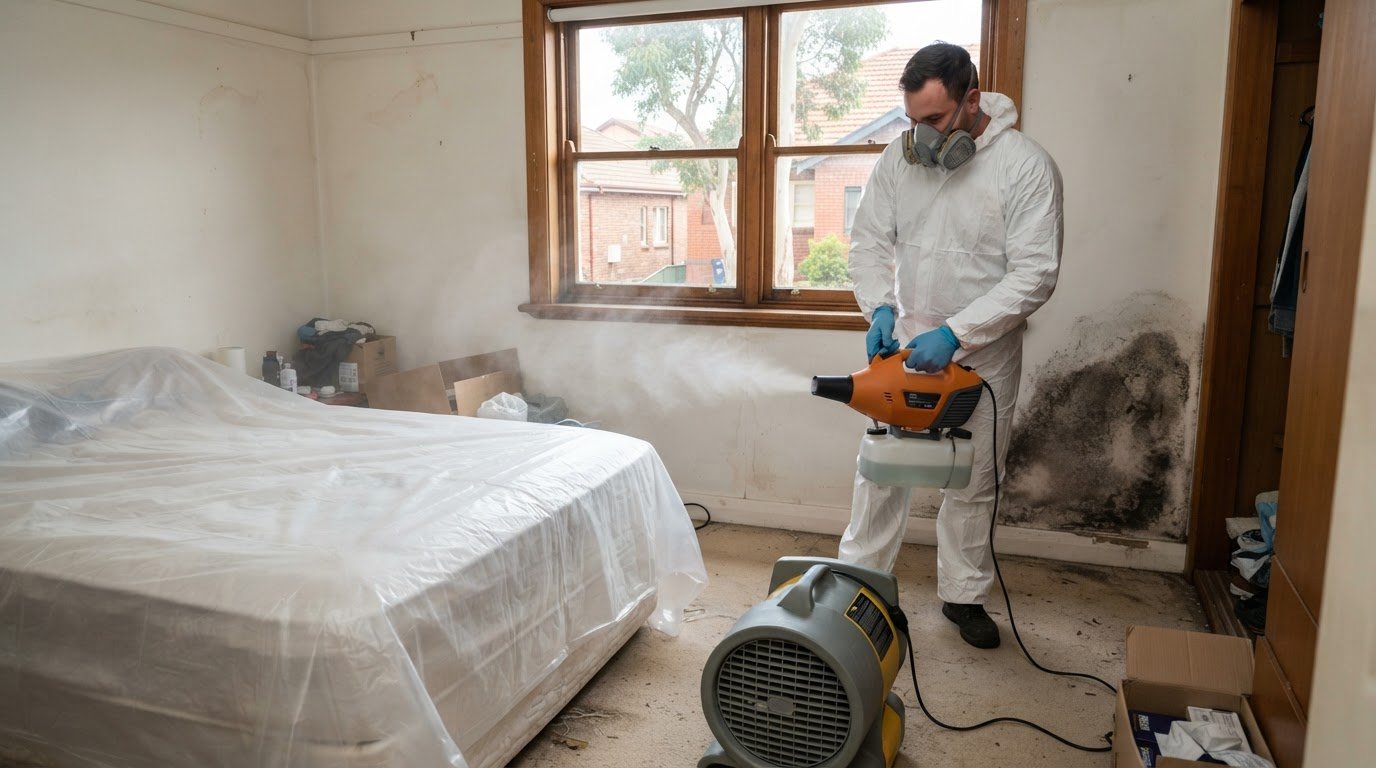
The team uses the Goldmorr System, which involves a biodegradable fogging process. The broader approach includes inspection, mould removal, air purification and recommendations to help prevent future growth. This is relevant when visible mould extends beyond accessible parts, or signs return after cleaning.
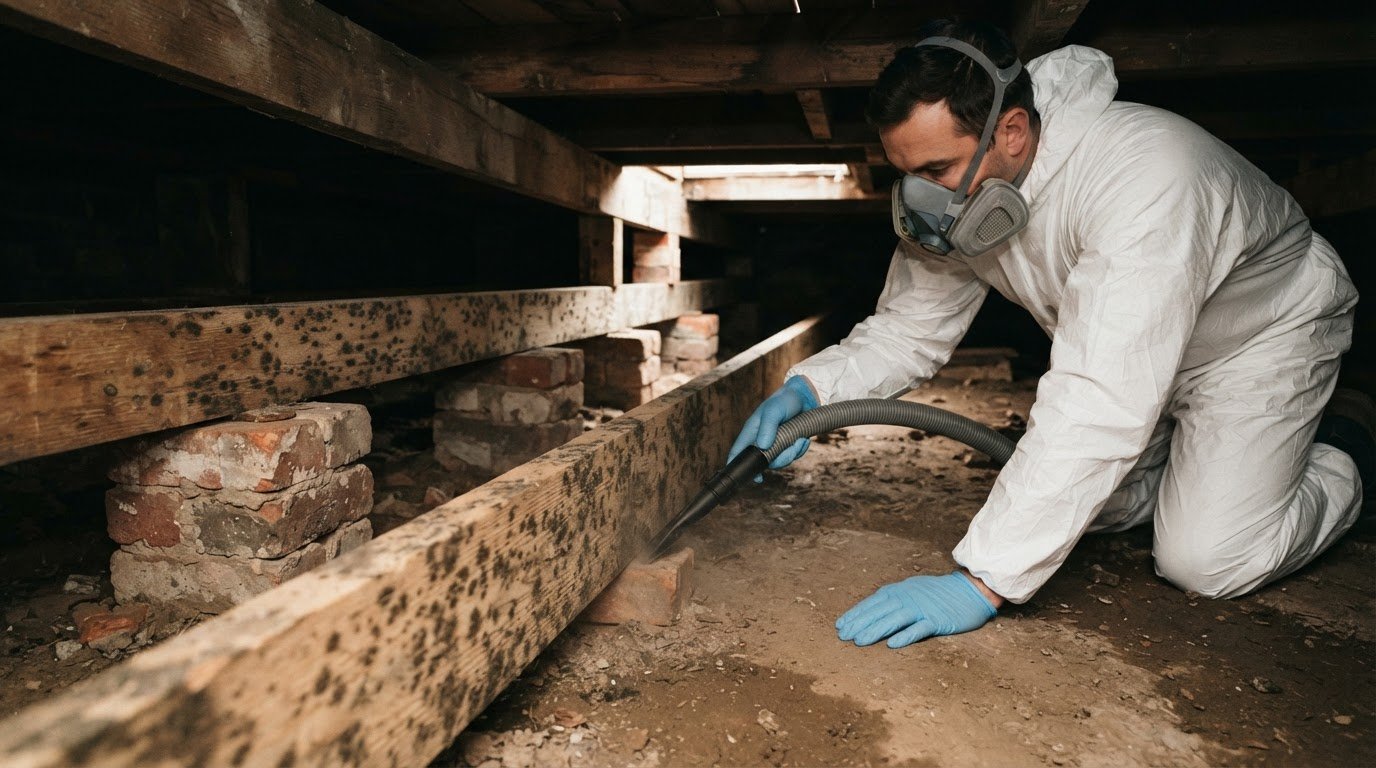
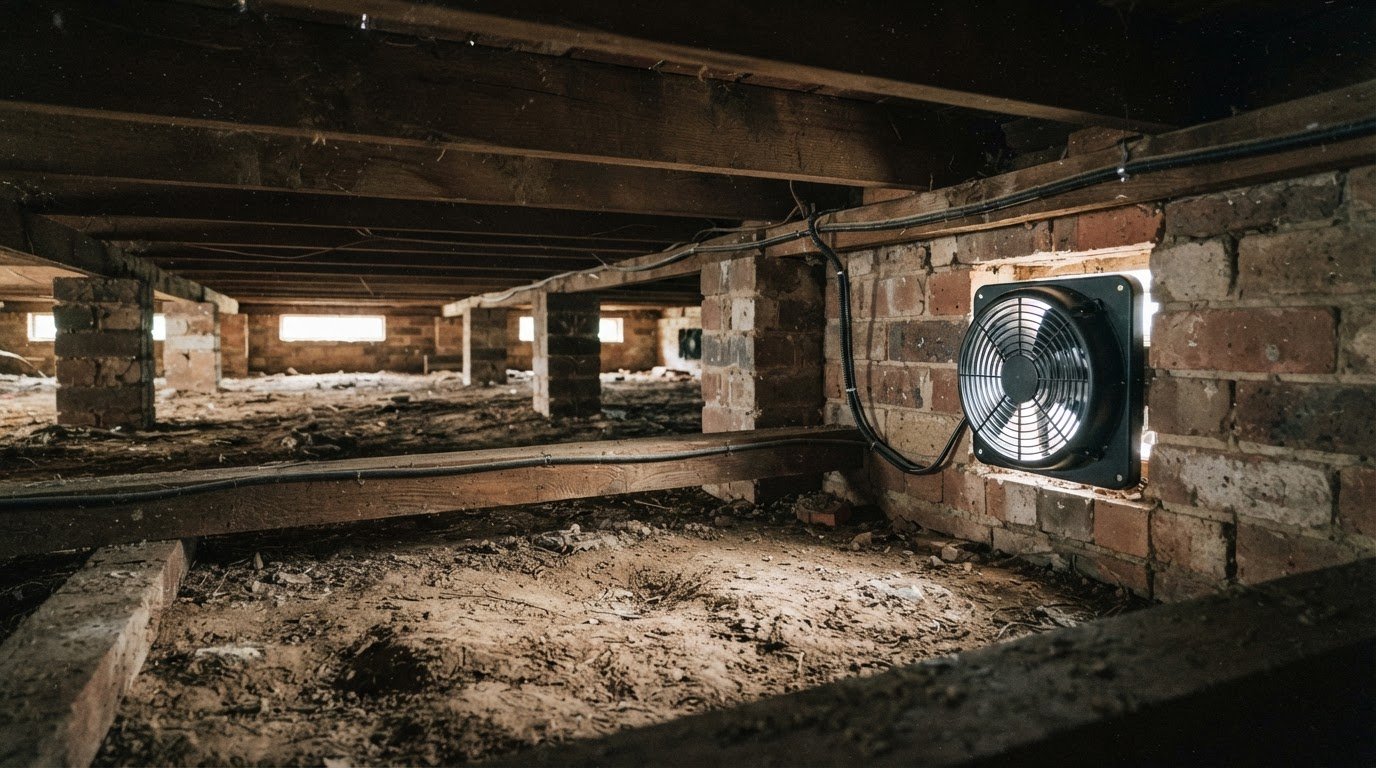
If you’re also dealing with dampness beneath the home, Subfloor Ventilation System Installation may address that separate moisture concern. The right next step depends on where mould appears and what the inspection finds.
Contact ABC Mould Cleaning Solutions to discuss mould concerns in your split system.
Take the Next Step Towards a Cleaner System
A recurring mould concern is a reason to move from observation to a clear plan. Note what you’ve noticed, such as a musty smell, visible growth or moisture, and share those details when arranging an assessment. That gives the conversation a practical starting point.
For split system aircon mould removal in Sydney, ABC Mould Cleaning Solutions offers Mould Inspection Services to assess the issue, Mould Remediation to address affected areas, and Air Purification & Scrubbing. The appropriate next step depends on the signs in your unit and the areas requiring attention.
You don’t need to work out the cause alone. Start with a professional assessment, then use its findings to guide the response and ongoing care. Contact ABC Mould Cleaning Solutions to discuss your air conditioner mould concerns and take a practical first step towards a cleaner system.
Frequently Asked Questions
How often should I get my unit cleaned?
Check your split system regularly, then arrange cleaning when its condition calls for it. For example, a unit used often in a bedroom may collect dust differently from one used occasionally in a spare room. Follow the manufacturer’s filter-care instructions and note changes in odour, airflow or visible condition. A fixed calendar interval can’t account for differences in use, moisture and indoor dust.
Hidden Threats in Your Air?
Air moving through an affected air conditioner can carry airborne mould spores and other contaminants into the room. You can’t assess those particles by sight alone, so consider the unit’s condition alongside recurring musty odours or visible growth. ABC Mould Cleaning Solutions offers Air Purification & Scrubbing to address airborne contaminants as part of a broader mould response, rather than relying on fragrance to mask an odour.
Why is this service so important to my health?
Unchecked mould in air conditioners can cause serious health problems for people with allergies or asthma. Visible growth or a persistent musty smell is worth acting on, particularly if someone in your household has either condition. Don’t treat the air conditioner as the only possible source of indoor mould, though. Consider the whole room and any damp areas when deciding what needs assessment.
What’s really hiding in your air conditioner?
Inside the unit, mould may be present on coils or other components, while dust and grime can collect around filters and airflow pathways. Condensation can provide moisture that supports mould growth. These issues aren’t always visible from the room. A closer assessment helps distinguish a dirty, accessible filter from growth or contamination deeper inside the system.
How do I remove mould from a split system air conditioner safely?
Switch off the unit and follow its manufacturer’s instructions before handling an accessible filter. Don’t spray liquid into the casing, reach into internal components or disturb visible mould. Use only cleaning methods and products permitted by the unit instructions. If growth is inside the system or extensive, professional cleaning is the safer practical step because coils and electrical components need careful handling.
Can I clean mould from a split system aircon myself, or should I hire a professional?
You can care for user-accessible parts, such as a removable filter, when the manufacturer’s instructions allow it. Internal growth is different. If mould appears on a coil, returns after filter cleaning or accompanies persistent condensation, professional assessment can identify affected components and suitable cleaning. ABC Mould Cleaning Solutions provides Mould Inspection Services and Mould Remediation for these concerns.
What does professional split system aircon mould removal cost in Sydney?
The price depends on the case and is given after a quote request. Relevant factors include the unit type, access, extent of mould, affected components and whether more than one system needs attention. ABC Mould Cleaning Solutions states: “We Will Beat Any Written Quote By 10%.” Ask for a quote that reflects the work required for your particular system.
What is included in a split system air conditioner mould cleaning service?
The work can involve inspection, removal from affected areas, air-conditioning cleaning and air purification, with a written report. ABC Mould Cleaning Solutions uses the Goldmorr System, supplied since 1998, and Goldmorr products are applied only by Goldmorr-approved, trained master technicians. All treatments are safe for pets, people, and the environment. Mycotoxin testing referrals are optional.