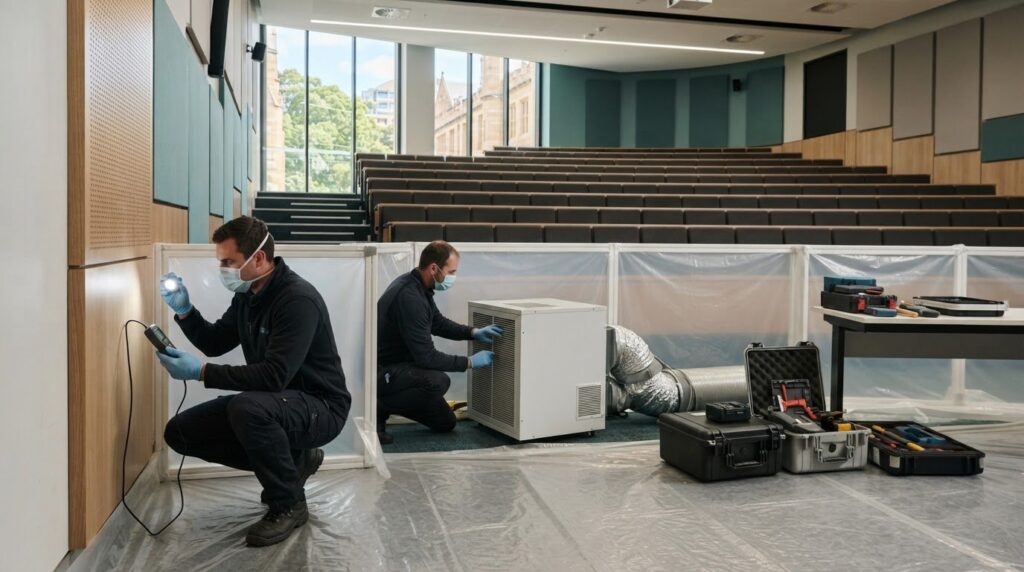
The fastest way to reopen a lecture hall isn’t necessarily the fastest way to solve a mould problem. Effective university lecture hall mould abatement looks beyond visible patches to consider moisture, ventilation and the risk of recurrence, while accounting for classes and campus operations.
Surface cleaning may improve the appearance of a patch, but it doesn’t establish how far the issue extends or whether moisture is contributing. A thorough response starts with inspection, then coordinates mould removal and air purification with the building’s conditions and practical prevention measures. ABC Mould Cleaning Solutions uses the Goldmorr System, which includes biodegradable fogging as part of its specialist approach.
This guide compares surface-only cleaning with a more comprehensive remediation process and explains the key stages of a lecture hall response. You’ll learn how facilities teams can coordinate moisture management, ventilation considerations and campus scheduling, then plan next steps around the building and its occupants. The aim is a considered response that addresses the issue and helps reduce conditions that can bring it back.
Key Takeaways
- Plan university lecture hall mould abatement as a coordinated response to affected materials, moisture conditions and building systems, not just visible growth.
- Use inspection findings to set the treatment scope, from targeted removal to a more comprehensive remediation plan.
- Compare approaches by how they address visible mould, airborne-spore considerations, moisture investigation and recurrence prevention.
- Coordinate room access, teaching schedules and relevant campus teams before work begins to help manage disruption.
- Consider how inspection, removal, air purification and practical prevention recommendations can work together in a site-tailored plan.
Why university lecture hall mould abatement needs a building-wide view
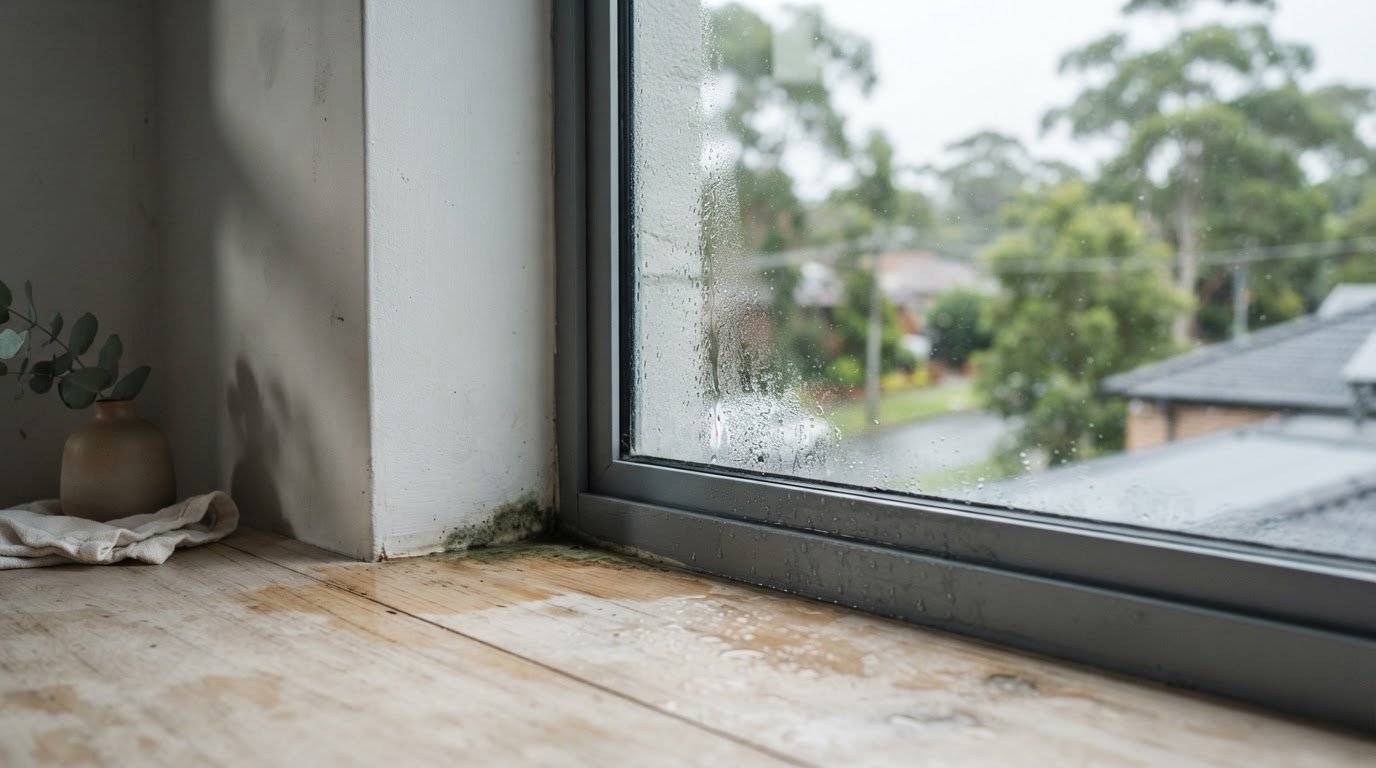
A patch on a wall may be the visible part of a wider moisture problem. Simply wiping it can leave the underlying cause unaddressed and overlook ventilation, furnishings and room use. A coordinated response helps facilities teams identify what needs attention and plan work around the people who use the space.
Lecture hall mould abatement is the coordinated assessment and removal of mould, alongside attention to moisture conditions that can support its return. This building-wide view distinguishes abatement from cosmetic cleaning alone. For context on indoor mould and general principles of mould remediation, consider both visible growth and the conditions around it.
What makes lecture halls different from smaller rooms?
A large room can have affected areas in different locations, from walls and seating to stage spaces or ceiling cavities. Rows of furniture and equipment may restrict access, while work overhead can require additional planning. High occupancy and scheduled teaching also mean facilities teams need to coordinate room access, nearby activities and the timing of assessments or treatment.
Consider ventilation and air-conditioning systems during assessment, particularly where dampness or visible growth is near vents, grilles or system components. Their proximity doesn’t prove they are the source. It does make their condition and relationship to the affected area relevant to the assessment, rather than treating a surface in isolation.
Which signs should trigger an assessment?
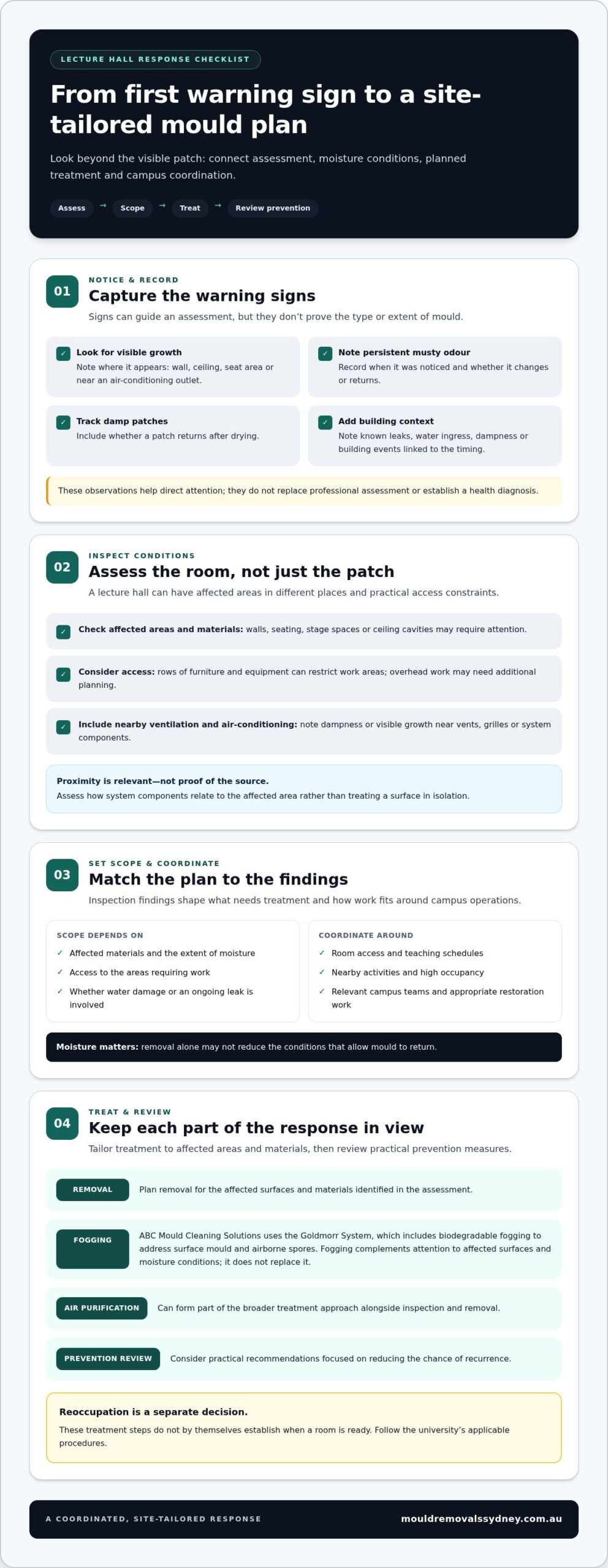
Arrange an assessment when staff notice visible growth, a persistent musty odour or damp patches that return after drying. These are warning signs, not proof of the type or extent of mould, and they don’t establish a health diagnosis. An inspection can help clarify what is affected and whether moisture may be contributing.
Give the facilities team useful context. Record:
- Where the sign appears, such as on a wall, ceiling, seat area or near an air-conditioning outlet.
- When it was first noticed and whether it has changed or returned.
- Any known recent leak, water ingress or dampness in the area.
- Whether the odour or damp patch appears at particular times or after specific building events.
These observations help direct attention, but they don’t replace professional assessment. For university lecture hall mould abatement, connect the signs in the room with access, building systems and possible moisture conditions. That gives the response a stronger basis than appearance alone.
How a professional lecture hall mould abatement process works
A thorough response follows a clear sequence: inspect affected areas, investigate moisture conditions, set the scope, remove mould and review prevention measures. Each step informs the next. A treatment plan for a small area of affected wall material may differ from one involving ceiling spaces, nearby furnishings or ongoing water damage.
Professional lecture hall mould abatement combines inspection, moisture investigation, planned removal and prevention review. This sequence helps facilities teams understand the work required before coordinating access and campus operations. For Australian campuses, the plan should also reflect relevant local requirements and the university’s own procedures.
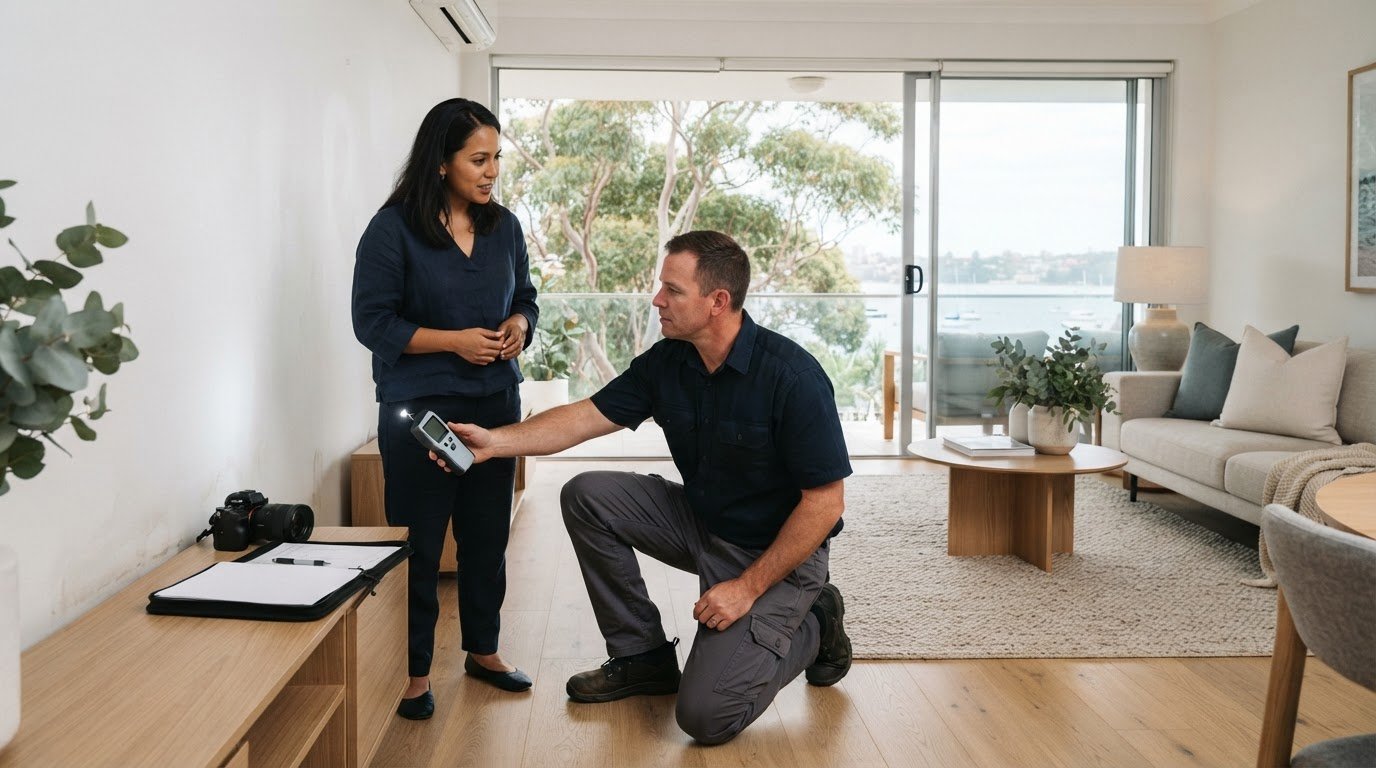
Assessment, scope and moisture-source investigation
Assessment considers visible growth, surrounding surfaces and relevant building conditions, including dampness and nearby ventilation or air-conditioning components. The scope depends on the affected materials, access to work areas, and the source and extent of moisture. Identifying and addressing moisture matters because removal alone may not reduce the conditions that allow mould to return.
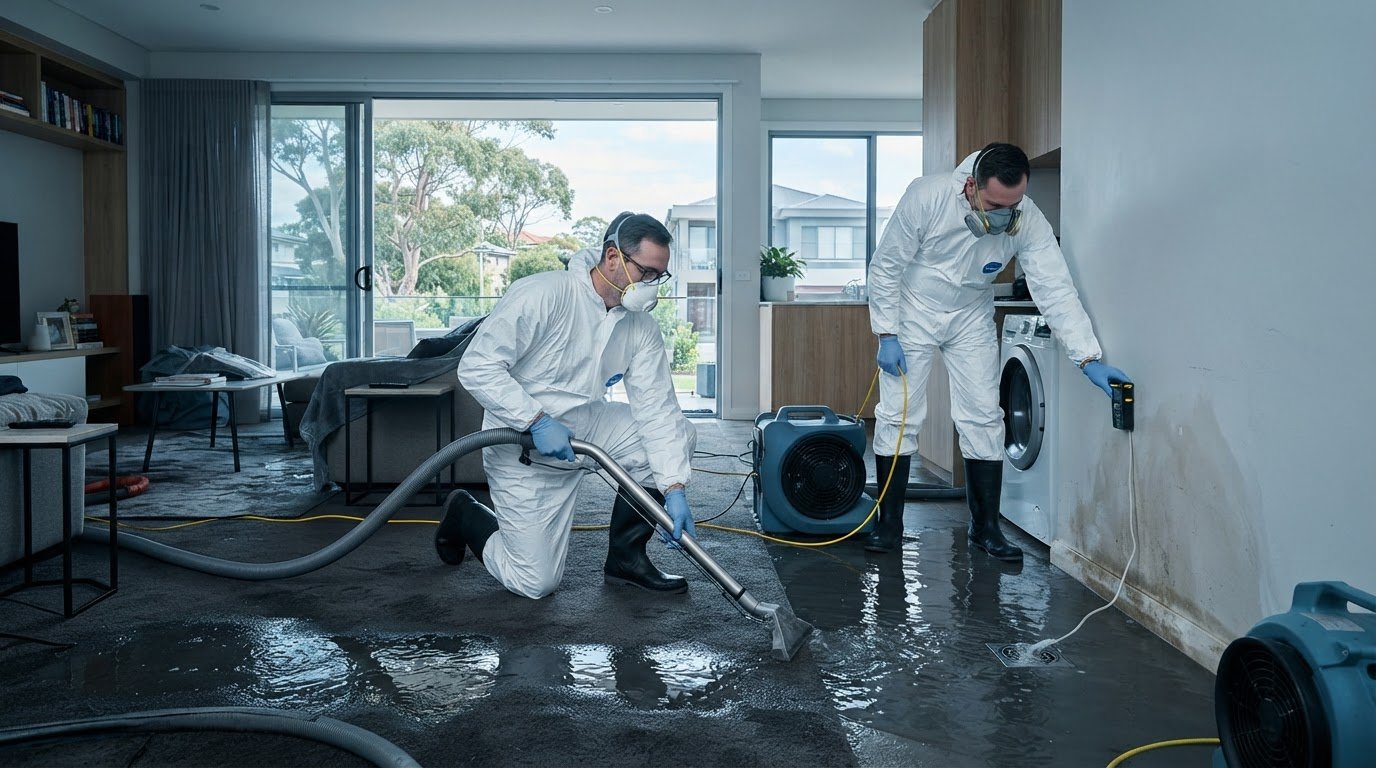
If a leak or water damage is part of the issue, coordinate the response with the appropriate restoration work. ABC’s guide to water damage repair explains why moisture management is a key consideration after water intrusion.
Removal, fogging and air purification
Once the assessment informs the plan, treatment can be tailored to the affected areas and materials. ABC Mould Cleaning Solutions uses the Goldmorr System, which includes a biodegradable fogging process to address surface mould and airborne spores. Fogging complements appropriate attention to affected surfaces and moisture conditions; it does not replace it.
Air purification can also form part of the broader treatment approach. Inspection, removal and air purification address different aspects of a mould concern, while practical recommendations focus on reducing the chance of recurrence. These steps don’t by themselves establish when a room is ready for reoccupation. That decision should follow the university’s applicable procedures.
For a lecture hall with visible growth, water damage or concerns about air quality, a site-tailored mould inspection can help clarify the next steps. ABC Mould Cleaning Solutions provides commercial mould inspection and remediation across Sydney and surrounding regions.
Mould abatement options for lecture halls: compare scope, not just appearance
A surface can look clean while moisture or mould elsewhere remains unaddressed. For university lecture hall mould abatement, compare the scope of each option: what it examines, what it treats and whether it considers conditions that could contribute to recurrence. The right approach depends on inspection findings, affected materials and the extent of the issue.
| Approach | Visible mould | Airborne-spore considerations | Moisture investigation | Prevention planning |
|---|---|---|---|---|
| Surface cleaning | Focuses on accessible visible marks. | Doesn’t necessarily assess airborne-spore concerns. | Usually limited unless separately investigated. | May not identify conditions that could cause recurrence. |
| Targeted removal | Addresses identified affected areas or materials. | Can include controls suited to the work scope. | Can consider moisture near the affected area. | May include recommendations for that location. |
| Coordinated professional remediation | Uses inspection findings to define treatment across the affected scope. | Considers airborne-spore concerns as part of the site plan. | Investigates relevant moisture conditions and contributing sources. | Can include practical recommendations to help reduce recurrence. |
This comparison describes general differences in scope, not a guaranteed outcome. The EPA’s Mold Remediation in Schools and Commercial Buildings guide also provides a useful framework for considering assessment and planning in non-residential spaces.
When is surface cleaning unlikely to be enough?
If growth returns after cleaning, moisture may remain or the affected area may not have been fully addressed. A small, accessible mark is different from recurring growth across multiple surfaces, materials or hard-to-reach spaces. In an institutional setting, appearance alone doesn’t define the scope. Use inspection findings to determine whether targeted removal or broader remediation is appropriate.
What should a broader abatement plan consider?
A broader plan considers affected materials and nearby areas, as well as ventilation pathways and moisture conditions. Air purification can complement mould removal, but it doesn’t replace investigation and management of the moisture source. If ventilation pathways are relevant to the assessment, see this guide to professional air duct cleaning.
ABC Mould Cleaning Solutions tailors inspection, removal, air purification and prevention recommendations to the site. For a lecture hall in Sydney or surrounding regions, explore commercial mould inspection and remediation as a starting point for defining the scope.
How to plan lecture hall abatement around campus operations
Good planning helps facilities teams manage disruption without losing sight of the work required. Treat university lecture hall mould abatement as a coordinated campus project: organise access, share relevant information and align the work plan with teaching and site procedures before treatment begins.
What should facilities teams prepare before treatment?
Start with a clear record of the issue and the practical constraints around the room. This gives facilities, cleaning teams and relevant health or safety staff a shared basis for planning. Use a checklist to gather:
- Location and extent: Note visible signs, affected materials and nearby areas that may need access or assessment.
- Moisture history: Record known leaks, water damage, dampness and any previous recurrence, including dates where available.
- Room logistics: Identify furniture, teaching equipment, stage areas, ceiling access points and ventilation components near the affected zone.
- Timetable and communication: Map teaching schedules and room bookings, then inform staff and occupants through established university procedures.
Coordinate the facilities lead, cleaning teams and relevant health or safety staff before work starts. Confirm who will manage room access, communicate schedule changes and relay site information. Plan ventilation arrangements around the assessment and treatment scope, the building’s systems and current institutional procedures, rather than relying on a generic approach.
How should reopening and prevention be approached?
Reopening decisions should follow the project findings and the university’s applicable site procedures. Don’t assume that appearance alone or a set time period determines whether the room is ready for use. Keep the decision-making process clear, with relevant campus staff informed about the work completed and any conditions that still need attention.
After treatment, document the areas addressed, relevant observations and any follow-up moisture-management actions. For example, record whether a known water-damage issue needs further attention or whether ventilation conditions require ongoing review. Assign responsibility for follow-up so prevention recommendations don’t get lost when the room returns to the timetable.
For Sydney facilities teams, discussing the lecture hall’s affected areas, moisture history and operational constraints can help shape a site-tailored plan. Discuss lecture hall mould abatement with ABC Mould Cleaning Solutions.
ABC Mould Cleaning Solutions: a coordinated response for Sydney lecture halls
University lecture hall mould abatement needs to account for the room, its building systems and the way the campus operates. ABC Mould Cleaning Solutions provides commercial mould inspection, removal and air purification across Sydney and surrounding regions. Its approach is tailored to site conditions, helping facilities teams plan around inspection findings, affected areas and known moisture concerns.
What does ABC’s mould abatement approach include?
Inspection helps identify the affected area and shape the treatment plan. Findings inform which surfaces need attention and whether surrounding areas or moisture conditions should also be considered. Removal addresses surface mould, while air purification complements that work as part of a coordinated service approach.
ABC’s Goldmorr System uses biodegradable fogging to address surface mould and airborne spores. It forms part of a tailored treatment plan alongside inspection and removal, rather than replacing attention to affected materials or moisture management. Where site conditions make it relevant, water damage restoration or subfloor ventilation can also support moisture management. Prevention recommendations give facilities teams practical follow-up steps to help reduce conditions that could contribute to recurrence.
What are the next steps for a university facilities team?
Start by documenting what’s been observed. Note the affected locations and materials, any known water damage or leaks, signs that have returned, and constraints around access or room use. This information gives the assessment a useful starting point and helps clarify how the lecture hall fits into campus operations.
When planning a professional assessment, outline the room’s use, access needs, teaching schedule and known moisture concerns. These details help shape a site-specific response without assuming every lecture hall needs the same treatment. ABC’s commercial mould services are available to properties across Sydney and surrounding regions, with the scope guided by site conditions and inspection findings.
If your university is managing visible mould, recurring dampness or concerns about a lecture hall, take the next step. Contact ABC Mould Cleaning Solutions to discuss the room, its access requirements and its moisture history, and plan a considered response with your facilities team.
Take the Next Step Towards a Better-Planned Response
Effective university lecture hall mould abatement looks beyond visible marks. Inspection findings, moisture conditions and affected building materials help determine the right scope, while facilities teams can plan access and teaching schedules to manage disruption. A coordinated approach also considers prevention, so the response addresses more than appearance alone.
ABC Mould Cleaning Solutions provides commercial mould removal and air purification across Sydney and surrounding regions. Its service approach brings inspection, removal and prevention recommendations together, with the Goldmorr System’s biodegradable fogging process included in a treatment plan tailored to the site.
Give your facilities team a clear starting point: record what you’ve observed, note known moisture concerns and consider room access needs. Then arrange a professional mould assessment for your Sydney facility to discuss a considered response for your lecture hall. With useful information and a coordinated plan, the next steps can feel more manageable.
Frequently Asked Questions
What is university lecture hall mould abatement?
University lecture hall mould abatement is a coordinated process of assessing mould and moisture conditions, defining the treatment scope, removing affected mould and considering environmental factors that may contribute to recurrence. It goes beyond cosmetic cleaning, which may improve visible marks without establishing whether nearby materials or moisture sources also need attention. Facilities teams can use inspection findings to plan the response and coordinate campus operations.
How is mould removed from a university lecture hall?
Mould removal starts with an inspection to understand the affected areas, materials and relevant moisture conditions. Findings help shape a tailored plan, which may include removal from affected surfaces and air purification as a complementary measure. ABC Mould Cleaning Solutions uses the Goldmorr System’s biodegradable fogging process to address surface mould and airborne spores. The scope depends on the site, and moisture concerns should also be considered.
Can a lecture hall remain open during mould abatement?
Whether a lecture hall can remain open depends on the project plan, affected areas, access requirements and the university’s site procedures. Work affecting a ceiling space or a busy seating area may call for different arrangements from treatment in a restricted section. Facilities teams should coordinate room use, occupant communication and access with relevant campus staff. Reopening decisions should follow project findings and applicable institutional procedures, rather than an assumed universal rule.
Does mould abatement include air purification?
Air purification can complement surface treatment as part of a coordinated mould abatement approach. ABC Mould Cleaning Solutions includes air purification alongside inspection and removal, with site findings informing the treatment plan. Its Goldmorr System uses biodegradable fogging to address surface mould and airborne spores. Air purification does not replace investigating and managing moisture conditions, which may contribute to mould returning if left unresolved.
What causes mould to return after a lecture hall has been cleaned?
Mould may return if moisture conditions remain unresolved, affected materials weren’t fully addressed, or the cleaning scope didn’t include all relevant areas. Recurrence doesn’t identify a specific cause on its own. For example, a damp patch that reappears may warrant attention to moisture conditions as well as the visible surface. An inspection can help clarify the affected scope and inform practical prevention recommendations for the building.
How long does mould abatement take in a lecture hall?
There’s no single timeframe for mould abatement in a lecture hall. Duration depends on inspection findings, affected materials, the extent of the work and practical access, including room bookings or ceiling access needs. Moisture-related work may also affect the project scope. Facilities teams can plan more confidently once the site has been assessed and treatment requirements are understood. Avoid setting reopening dates based only on a general estimate.
Who should coordinate mould abatement at a university?
Facilities leadership should coordinate the response, bringing in relevant campus teams such as cleaning staff and health or safety personnel in line with university procedures. The facilities lead can organise room access, share inspection details, align work with teaching schedules and clarify who communicates with staff and occupants. A clear coordination plan helps teams manage operational needs while keeping attention on affected areas, building conditions and follow-up moisture management.